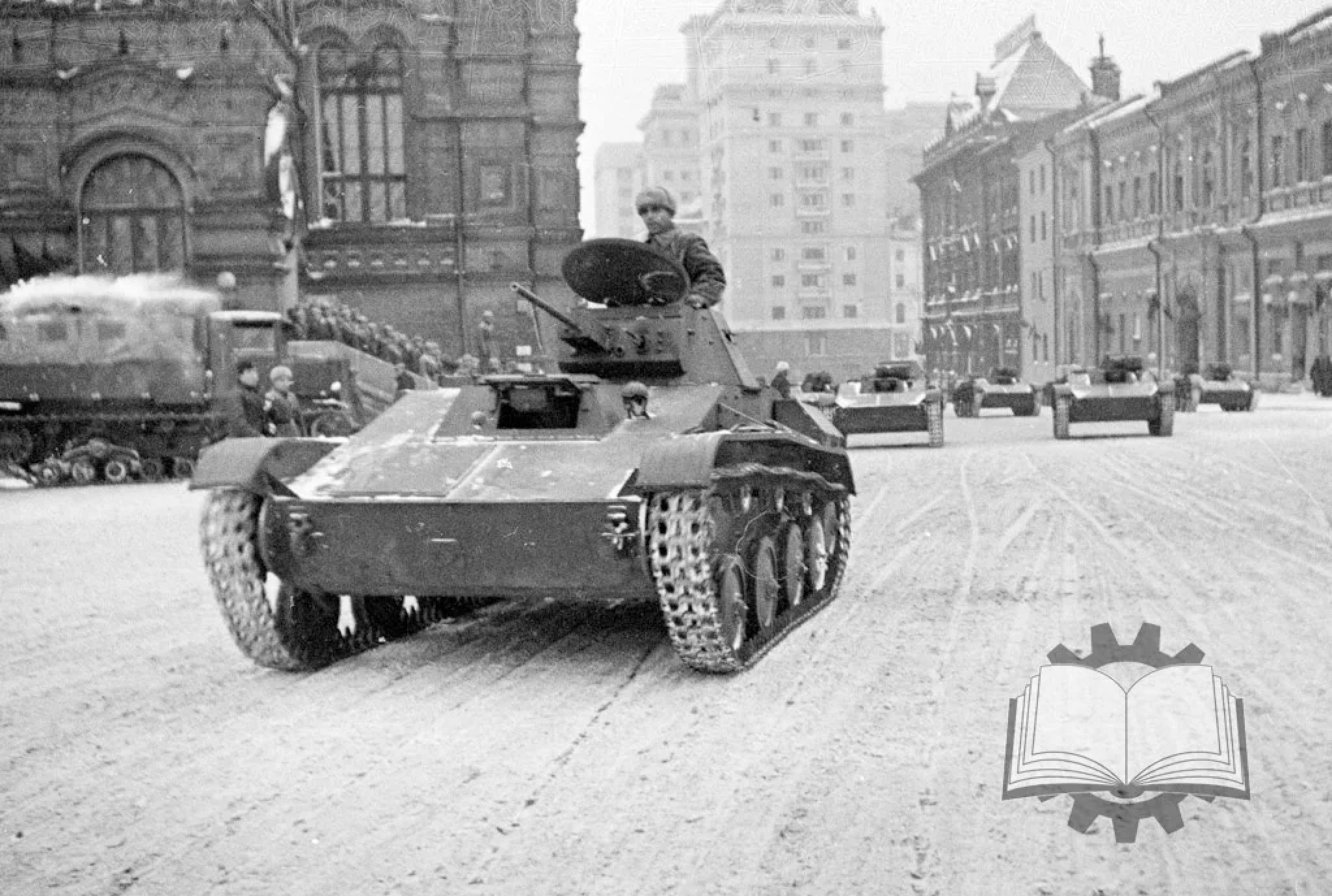
An article by Yuri Pasholok from the WARSPOT website, dated July 18, 2016
The history of the T-60 tank’s development is atypical for Soviet tank manufacturing. Not only was this vehicle adopted for service even before its first blueprint had been drawn up, but from the very beginning, the plan was to produce it by the thousands at three factories simultaneously. Although the final production figures turned out to be significantly lower than the initial plans, more than 5,500 vehicles built is a very respectable number. Produced for less than a year—from September 1941 to July 1942—the T-60 became the most mass-produced light tank in history. These tanks, which appeared on the front lines at the height of the Battle of Moscow, made their own—and quite significant—contribution to the fight against the enemy during the country’s most difficult time. July 20, 2016, marks the 75th anniversary of the T-60.
Simpler, lower, thicker
On July 17, 1941, GKO Decree No. 179ss “On the Production of T-60 Light Tanks at Plant No. 37 of the People’s Commissariat for Medium Machine Building” was signed. Instead of the planned production of the T-50, the plant switched to producing a slightly simplified T-40 amphibious reconnaissance tank. The initiative by N. A. Astrov and V. P. Okunev was supported by higher-ups, since the T-50 was not expected to be ready before October 1941, and Plant No. 37 was not particularly well-suited for the production of this rather heavy vehicle.
Meanwhile, things weren’t exactly straightforward with the T-60, which was based on the T-40. The fact is that the T-40 hulls and turrets, which were produced by the Ordzhonikidze Plant in Podolsk, had a rather complex design. The biggest problems arose with the turrets, which had a complex shape. The high defect rate for the hulls and turrets was one of the main reasons for the T-40’s production schedule falling behind, and the switch in mid-July from cemented armor to homogeneous armor only partially solved the problem.
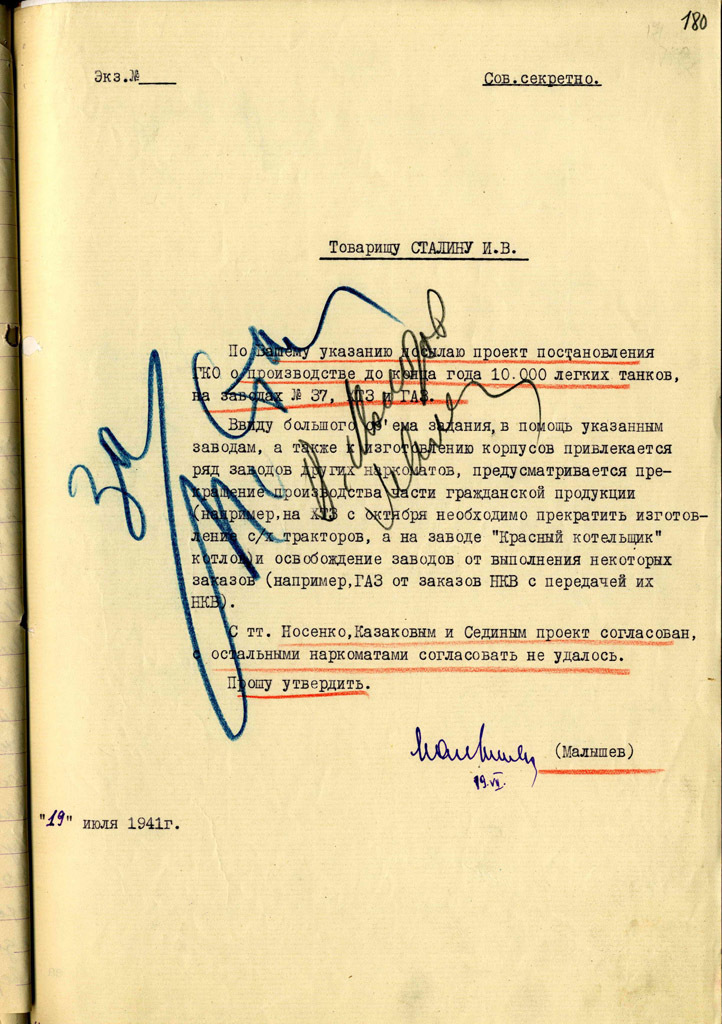
A memorandum with an attachment to the draft GKO Resolution No. 222, the adoption of which paved the way for the T-60 to become a reality
Meanwhile, on July 20, 1941, the State Defense Committee (GKO) issued Resolution No. 222ss, “On the Production of 10,000 Light Tanks.” According to the decree, Kharkiv Tractor Plant (KhTZ) became one of the main manufacturers of the T-60, responsible for producing 3,500 tanks. Plant No. 37 was to produce the same number. Another 3,000 T-60s were to be produced at the Molotov GAZ Plant, the main supplier of engines, transmissions, road wheels, and other components and assemblies for the T-40. For such large-scale production, even with homogeneous armor on the hull and turret, the T-40s were completely unsuitable; their design clearly needed to be simplified.
On July 23, NKSM Order No. 360ss was issued, instructing the Design Bureau of Plant No. 37 to develop a simplified design for the hull and turret of the T-60 tank. Just two days later, a technical meeting was held at Plant No. 37 to discuss the design of the T-60 tank, based on the T-40, and its future production by the GAZ and KhTZ plants. However, actual work on the “simplified T-40” had begun even earlier. The earliest drawings of the new tank discovered by the author are dated July 22—that is, even before NKSM Order No. 360ss. The factory design bureau, headed by Astrov, set a world record for the speed of tank development: the drawings for the final groups were submitted as early as July 28, meaning the entire documentation development cycle took just one week. This is confirmed by the dates stamped on the drawings.
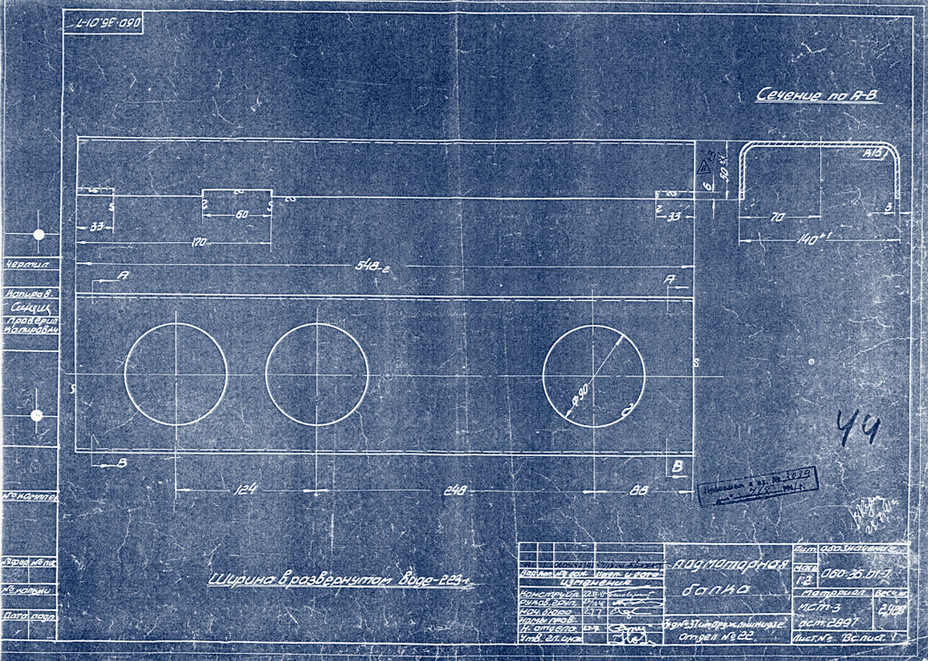
One of the 060 drawings, first dated July 22, 1941
Another problem arose during the design phase. The fact is that, in accordance with GKO decrees, Plant No. 37 was developing two tanks with the T-60 designation at the same time. This delicate problem was solved simply: the new vehicle was assigned the drawing index 060, which was also used periodically in correspondence. Initially, there were also plans to assign the T-70 designation to the 060. And although this designation was used only a few times, that was enough to confuse researchers. In correspondence, this tank is referred to as the “T-60 with a simplified hull,” the T-60M, and simply the T-60. By the fall of 1941, the “060” designation had become firmly established, but as late as 1942, some factories still occasionally referred to it as the T-70 or T-60M in their correspondence.
Although the T-40, T-30, and T-60 were identical in a number of components and assemblies, the “simplified” version is certainly worthy of being called a new tank. Since amphibious capability was no longer a requirement, the T-60’s hull was completely redesigned. As a result, the tank’s overall height was reduced from 1,905 to 1,735 mm—a record for tanks developed and mass-produced during World War II. The armor layout was also completely different from that of the T-40. The hull took on a wedge-shaped form, and the side panels, to improve manufacturability, were assembled from two halves. As required by the technical specifications, the armor thickness at the front increased to 20 mm, and on the sides—to 15 mm. The total weight increased only slightly—to 5,800 kg. (For more details on the tank’s exterior, see the photo gallery “The T-60 from All Angles.”)
Along with the hull, the turret was also simplified. It now had a faceted shape, which significantly improved manufacturability. The thickness of the turret’s front was 20 mm, while the sides and rear were 15 mm thick.
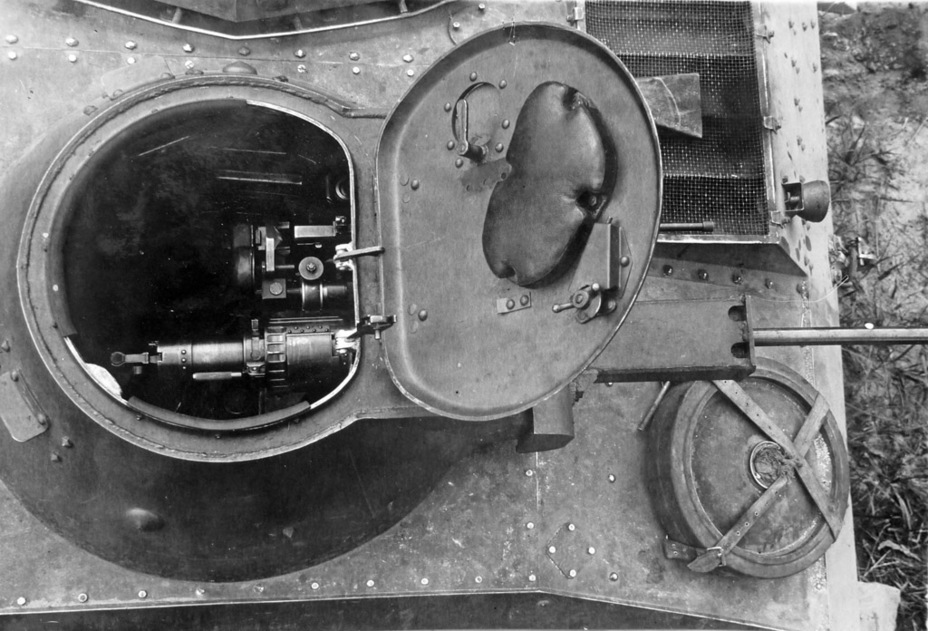
A prototype of the TNSH cannon, tested on the T-40
The last aspect that required further refinement was the armament. In this regard, the history of the T-60 completely mirrored that of the T-30. Initially, the plan was to retain the DShK as the tank’s primary armament, but it turned out that the manufacturer, Plant No. 507, could not supply that many machine guns. For this reason, an alternative armament was quickly found—a modified 20-mm ShVAK aircraft cannon. The cannon itself, designated TNSH, was adopted for service even before a prototype had been manufactured.
Resolving the issue regarding armament caused a slight delay in submitting the documentation for the T-60 to the manufacturing plants.
Victims of Delays
The deadlines set by GKO Resolution No. 222ss proved to be too strict. According to the plan, the technical documentation for the “060” was to be sent to the design bureau of Plant No. 37 by July 27. In reality, however, by that date only the development of the documentation had been completed (excluding the installation of armaments), and distribution of the documentation to the plants began on the 28th. The Kharkiv Tractor Plant began receiving the first drawings on July 28, but the bulk of the documentation did not reach the plant until August 10.
Meanwhile, by mid-August, the Ordzhonikidze Plant in Podolsk had completed the hull of the “060” prototype. Assembly of the “060” prototype tank began at Plant No. 37 on August 17, 1941; the turret was taken from a T-40, along with its standard armament—a 12.7-mm DShK machine gun. The machine gun itself, however, was never actually mounted on the tank. The prototype tank was distinguished by its cast, spoked road wheels. The design bureau of Plant No. 37 developed them as a simpler-to-manufacture alternative to the road wheels produced by GAZ named after Molotov, which were manufactured using welding and stamping.
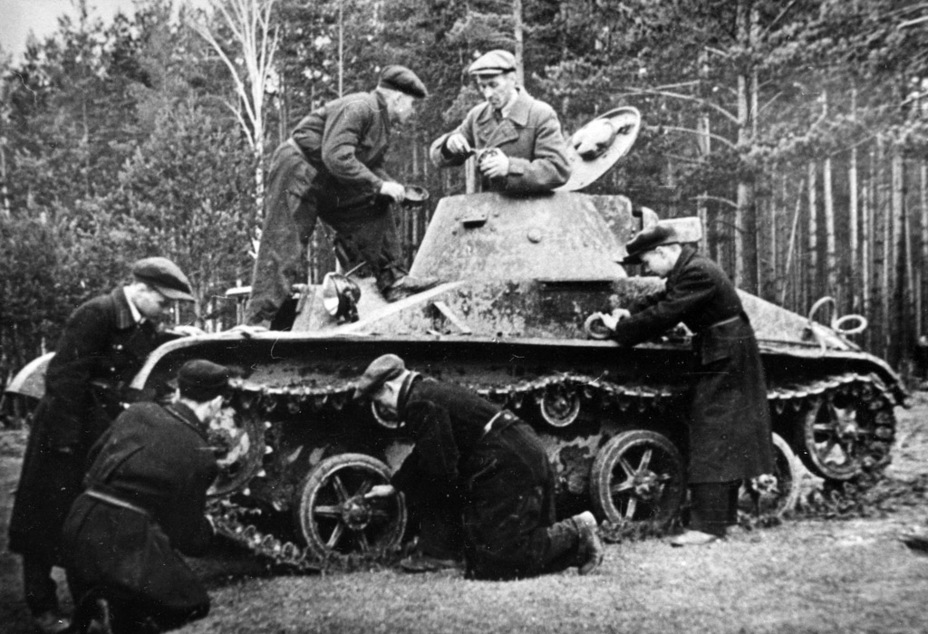
A prototype of the T-60 tank in Gorky, 1942
By the end of August, the prototype T-60 was completed. Astrov and Okunev personally drove it from Moscow to Gorky, where the vehicle became the benchmark for future production at the Molotov GAZ plant. This trip gave rise to a number of rumors suggesting that Astrov and Okunev had supposedly remained in Gorky. This is not true: both of them returned to Plant No. 37, where production of the T-30 was just getting underway. No one in their right mind would have deprived the plant of its chief designer and senior military representative at such a critical stage.
Meanwhile, at KhTZ, the situation with the T-60 turned out to be extremely complicated. As of August 16, the plant had still not received the technical specifications for tank acceptance, and there were no spare parts lists. Despite the delay in receiving the drawings, preparatory work for launching T-60 production had already begun at the plant in early August. On August 8, a joint meeting was held between the management of KhTZ and KhEMZ (Kharkiv Electromechanical Plant), following which the plants divided the manufacturing of the necessary parts among themselves.
The Kharkiv T-60 faced its biggest challenges regarding the delivery of hulls and turrets. The partner factories involved in hull production delayed the start of production for various reasons. One of the reasons for the delay in turret deliveries was the need to redesign the armament system to accommodate the TNSh. As a result, the documentation for the turrets was not finalized until the end of August.
In addition, the manufacturers of tank hulls were already swamped with other orders. A series of delays resulted in the tank production target for August not being met. The first prototype hull, “060,” for the Kharkiv Tractor Plant (KhTZ) was not assembled at the Voroshilovgrad Plant of the October Revolution National Corporation for Machine-Building Technology until the end of the month.
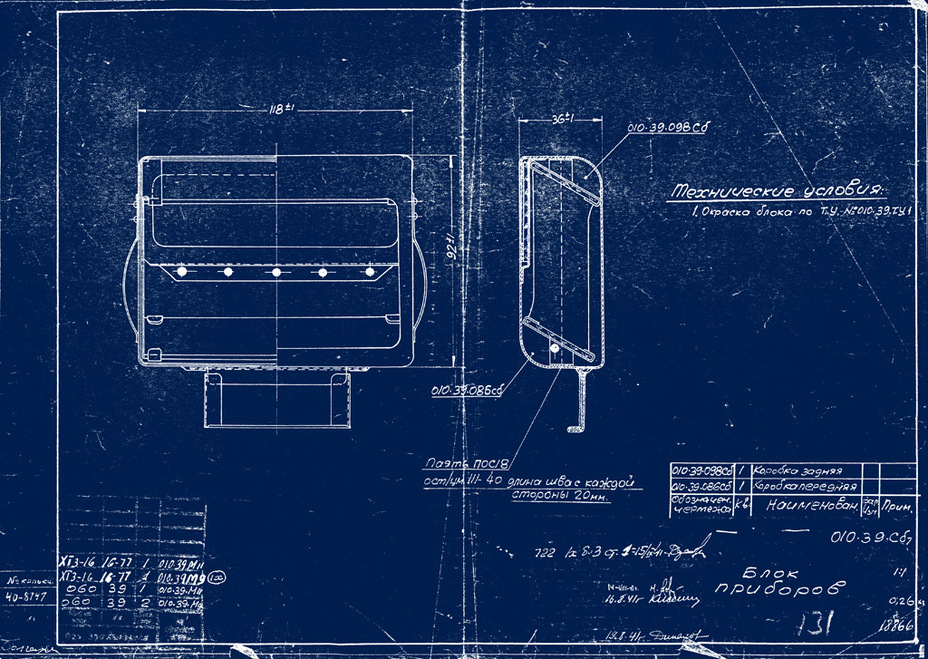
As can be seen (in the table on the left side of the drawing), the factory design bureau standardized some of the components of the HTZ-16 armored tractor and the T-60 tank
The problems did not end there. The fact is that the plant, in collaboration with NATU, took the initiative to propose the HTZ-16 armored tractor—based on the SKHTZ-NATU—for the army. Its production was approved on the same day as the T-60, by GKO Resolution No. 219ss of July 20, 1941. The problems with the HTZ-16 turned out to be the same as those with the T-60: the factory had built the chassis with a large margin of safety, but there were no armored hulls. For quite understandable reasons, HTZ gave preference to its own design. Moreover, there were rumors among the leadership that the T-60 project would be taken away from them, but when Malyshev arrived at KhTZ, he gave them a stern reprimand, and work on setting up T-60 production immediately accelerated.
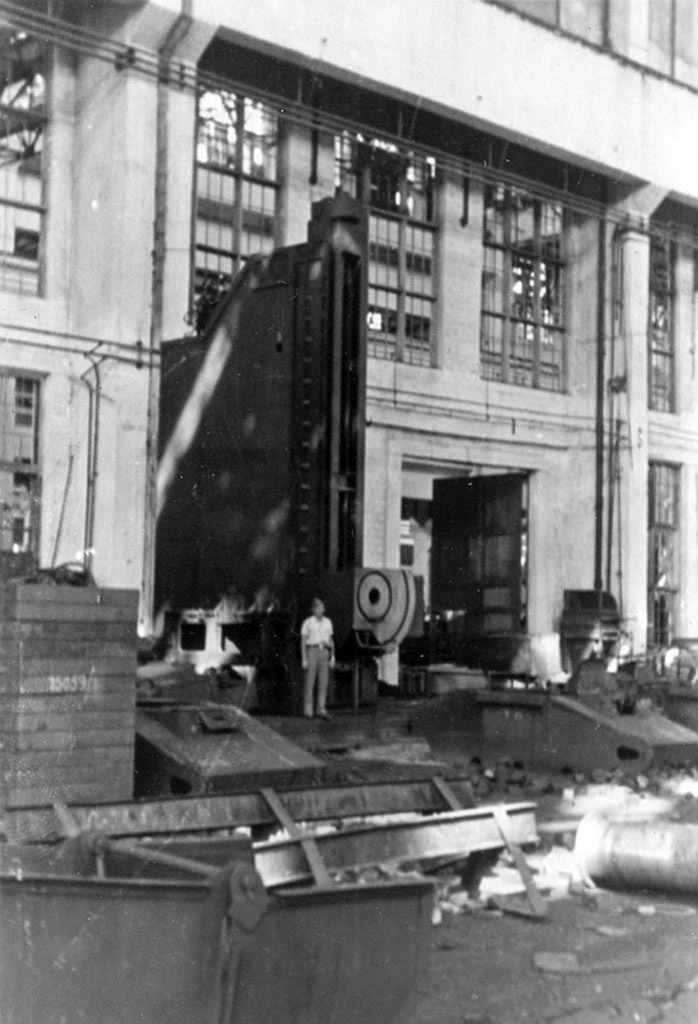
The T-60 tank bodies captured by the Germans in Kramatorsk, which never made it to the Kharkiv Tractor Plant
Despite the measures taken by People’s Commissar Malyshev, the production of a number of parts was delayed. Several workshops at KhTZ continued working on components and assemblies for the armored tractor. On September 10, KhTZ received the first two sets of hulls with turrets from the “Krasny Kotelshchik” plant (Taganrog). On September 13, 1941, nearly a month after the planned start of production, the first T-60 was finally assembled at KhTZ using a hull and turret from the Voroshilovgrad Plant. By the time the first vehicle was assembled, the plant had 12 sets of hulls and turrets that had arrived from three different partner plants. However, during September, the plant assembled and shipped only 7 tanks to the troops, which was equal to the number of engines available at the plant.
The evacuation of the Kharkiv Tractor Plant (KTP) began as early as September 17; some of its equipment was successfully transported to Krasnoarmeysk, a suburb of Stalingrad. The history of the T-60 tanks produced there at Plant No. 264 deserves its own account. As for the Kharkiv-built T-60s, their fate remains unclear. The 71st Separate Tank Battalion received two tanks; the whereabouts of the rest are unknown.
Tanks Instead of Trucks
In August, GAZ named after Molotov faced the same problems as KhTZ. A delay in sending out the T-60 documentation to partner plants resulted in the housing production plan being derailed. Although the Vyksa Crushing and Grinding Equipment Plant (DRO) had assembled the first prototype hull by mid-August as part of production testing, there was no talk of starting mass production. According to representatives of the Main Armored Vehicle Directorate (GABTU), the actual delivery of hulls from partner factories to the Molotov Plant was not expected until September 1 at the earliest. Nevertheless, throughout August, the plant was in full swing preparing for the production of the new product. Following the example of their colleagues at KhTZ, the plant’s design bureau adapted a significant portion of the received documentation to its specific needs.
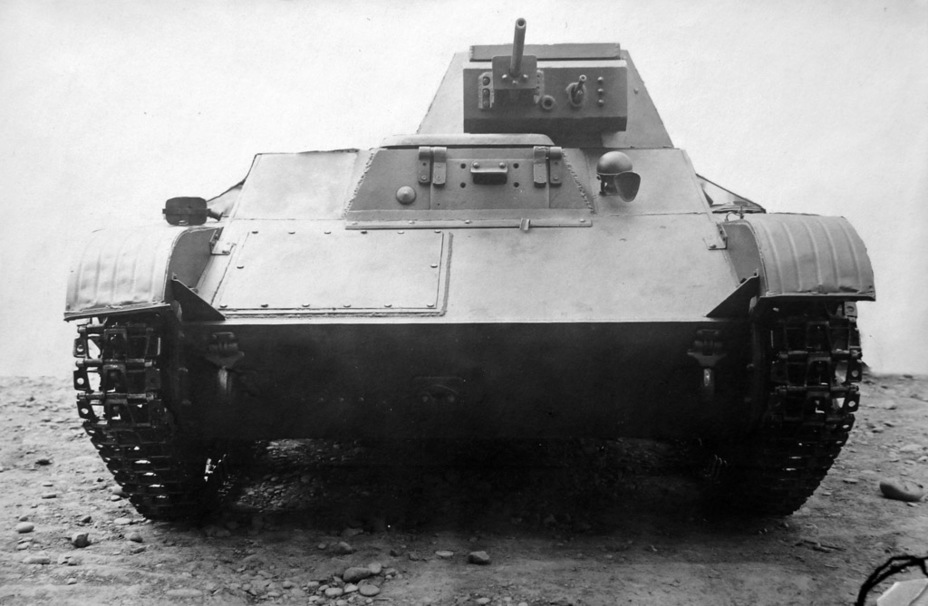
This is what the T-60 tanks produced by the Molotov-named GAZ plant looked like from the fall of 1941 through the winter of 1942
The plant also faced production-related problems. As of August 1941, the Molotov GAZ Plant, in addition to preparing for the production of the T-60 tank, was manufacturing a whole range of wheeled vehicles. MS-1 chassis for the BA-20 light armored cars were sent to the Vyksa DRO plant, while GAZ-07 chassis for the BA-10M gun-mounted armored cars were shipped to the Izhora plant. The plant was the country’s sole manufacturer of 1.5-metric-ton trucks, which were as essential to the front as air itself, and no one relieved GAZ of the responsibility to produce them. In addition, serial production of the GAZ-64 reconnaissance vehicle began in August, as well as that of the GAZ-61 command vehicle; the latter used the same engine as the T-40/T-60. Based on the GAZ-61, the GAZ-61–416 was developed; after the T-20 artillery tractor was discontinued, “Komsomolets” was designated as the standard tractor for the ZIS-2 57-mm antitank gun.
After the GAZ-11 engine production shop was taken away from the plant in late 1940 (and production of M-105 aircraft engines was launched in its place), the plant was not able to resume production of the engines needed for its own operations until mid-summer. In addition to everything else, even before GKO Decree No. 222 was issued, GAZ was responsible for producing a significant portion of the components for light tanks.
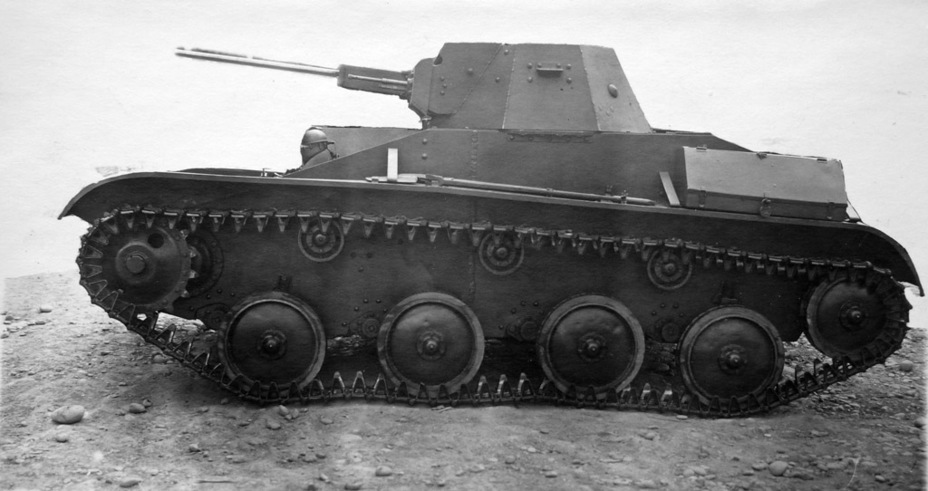
Due to a shortage of electrical equipment, most tanks from the early stages of the war were not equipped with headlights
In September, the situation at GAZ remained in limbo due to a shortage of hulls. As of mid-September, the Murom Plant of the People’s Commissariat of Railways had only laid the foundations for four sets of hulls and turrets, without having manufactured a single one. The Novokramatorsk Plant of the People’s Commissariat for Heavy Machinery had laid the foundations for 32 hulls with turrets, but had not completed a single set by the middle of the month. As of the same date, the Vyksa Plant of the State Defense Order had laid the foundations for six hulls and turrets, having completed two sets. The first hull with a turret arrived from Vyksa at GAZ on the 17th, and the first tank was assembled that same day.
A new body shop, designated “Shop No. 5,” was set aside at the plant for the production of the T-60. As was the case with KhTZ, intervention from higher-ups was required to expedite the T-60’s entry into production at GAZ. In early September, plant director I. K. Loskutov was summoned to a meeting at the Central Committee of the All-Union Communist Party of Bolsheviks (VKP(b)). At the meeting, chaired by G. M. Malenkov, the leadership of the State Armaments Committee (GABTU) demanded that the directors of tank-manufacturing plants accelerate the start of production. This demand fully applied to Loskutov as well. It was precisely at this moment that GAZ began its gradual shift from automobile production to tank production.
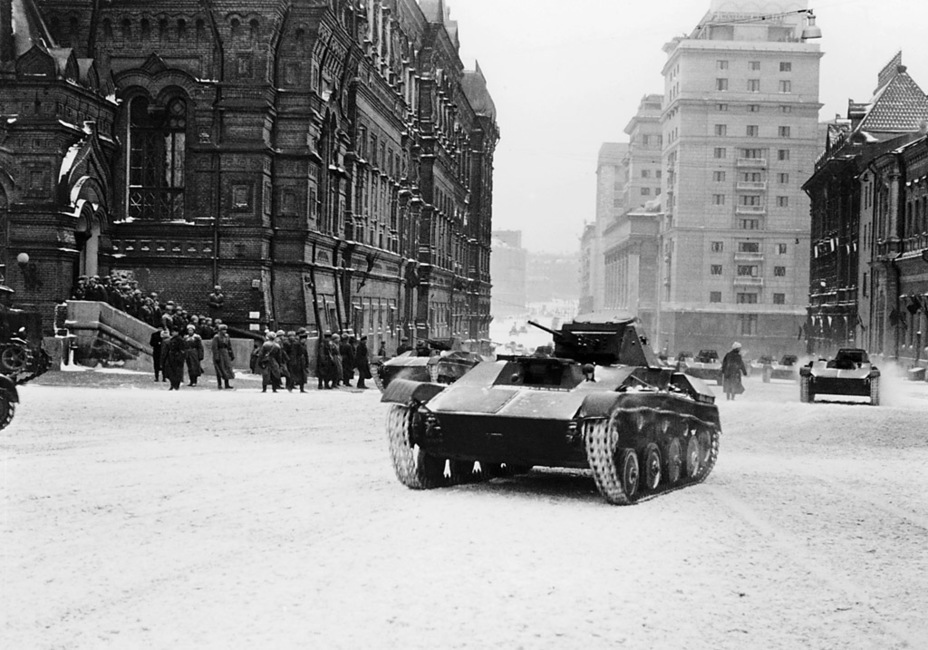
T-60 tanks of the 33rd Tank Brigade at the parade on November 7, 1941
Actual mass production of the T-60 at GAZ did not begin until October 1941. In the first ten days of October, Astrov and Okunev left Plant No. 37 at GAZ. At their new post, Astrov became deputy chief designer, and Okunev became senior military representative. During the first five days of the month, only 5 tanks were delivered instead of the planned 15; by October 20, 69 T-60s had been delivered.
On October 20, a telegram arrived at the plant personally from Stalin, in which he demanded that T-60 production be increased to 10 tanks per day. Malyshev arrived in Gorky to assess the situation, and his energetic actions contributed significantly to turning things around. Despite the existing problems, by October GAZ was able not only to meet its monthly tank production quota but even to slightly exceed it.
The increase in T-60 production came at a high cost: by the end of October, vehicle production at GAZ had come to a virtual standstill. The GAZ-61–73 and GAZ-61–416 models were taken off the production line because they used an engine that was in short supply. Production of the GAZ-64 was suspended, and deliveries of the GAZ AA and GAZ AAA trucks dropped to a minimum.
The evacuation of Plant No. 37 to Sverdlovsk introduced some confusion into the history of the T-60’s development. Seeing the dire shortage of hulls and turrets, the plant’s management proposed sending a number of turrets for T-30 tanks to Gorky; in addition, nine completed T-30s in need of repair were sent to GAZ. The exact number of hulls and turrets sent to GAZ is unknown; however, as of the summer of 1942, 47 sets were still at the plant. The hulls were never put to use, but it can be stated with certainty that several dozen T-60s were produced with conical turrets mounted on them. Such tanks were, for example, part of the 33rd Separate Tank Brigade, whose vehicles were featured in the November 7 parade on Red Square. In addition, Plant No. 37 supplied a certain number of cast road wheels.
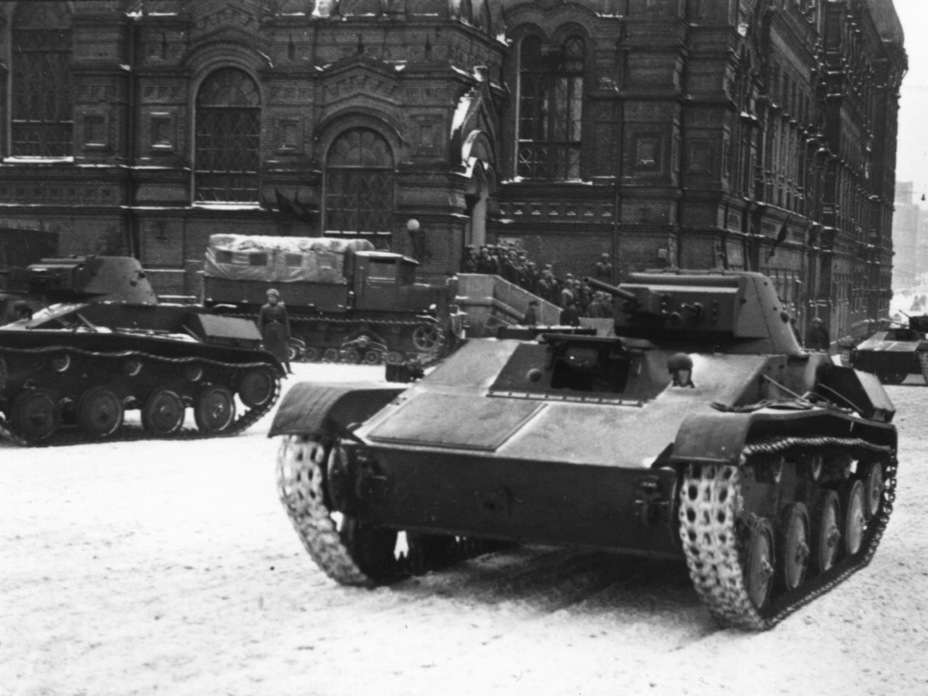
T-60 tanks with turrets from the T-30
Due to problems associated with the winter operation of tanks, a series of experimental tests were conducted at the plant. Tracks with increased pitch and length were developed, as well as removable spurs for the tracks. The possibility of modifying the running gear was explored: it was proposed to reduce the diameter of the road wheels and increase their number from 8 to 16 (8 on each side). This decision was motivated by the desire to distribute the ground pressure more evenly.
In addition, on a trial basis, the GAZ Design Bureau developed a leaf-spring suspension for the T-60 in case of disruptions in the supply of torsion bars. And in case of supply disruptions for tire treads, the possibility of replacing the rubber with wooden treads was being considered. They also had to abandon plans to install radios on the T-60. As a result, this vehicle turned out to be the only Soviet tank of the wartime era that was not equipped with radios at all. The rest of the electrical equipment also had to be simplified.
Although GAZ named after Molotov was unable to fully comply with GKO Directive No. 222ss, the workers in Gorky managed, through incredible efforts, to launch full-scale production of these much-needed tanks. While the customer accepted only 3 T-60s in September, that number had risen to 215 by October, and in 1941 alone, the Molotov GAZ Plant produced 1,314 tanks. Of this number, 137 were chassis on which M-8 multiple-launch rocket systems were mounted. From a supplier plant, the Molotov GAZ Plant became one of the largest tank manufacturers not only in the USSR but in the world.
In addition, after Astrov joined the leadership of the plant’s design bureau, GAZ became the leading developer of small and light tanks. Further work on Project 060 was carried out in Gorky; as for Plant No. 37, due to its evacuation and the relatively long delay in resuming production, it lost its status as the lead enterprise responsible for the tank’s development.
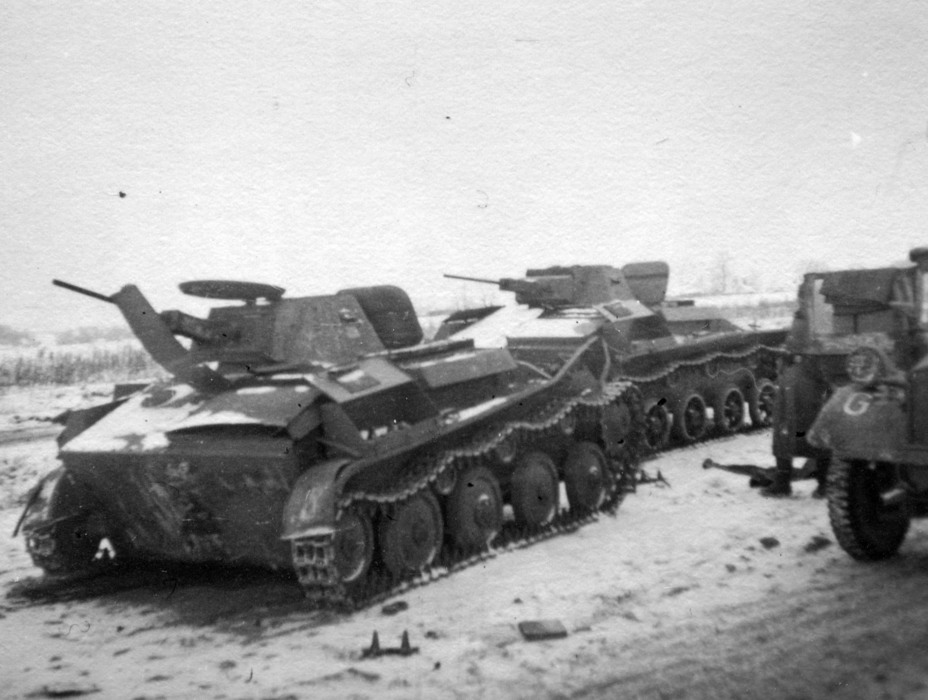
T-60 tanks assembled in November and December. One of them is equipped with spoked cast road wheels. Only a few tanks with such road wheels were produced at the Molotov GAZ plant.
Undoubtedly, the development and production of the T-60 were largely a matter of necessity. The firepower of its 20-mm cannon was sufficient only for engaging lightly armored targets, and its armor provided protection against large-caliber machine guns at best. Nevertheless, it was better to have such a tank than none at all. The T-60 served quite well as an infantry support vehicle, and it also fulfilled the role of a reconnaissance tank. Small, fairly agile, and quiet, this tank played an important role in the battles of late 1941 through early 1943. On the Leningrad Front and in Karelia, the T-60 remained in service until the fall of 1944.
Sources
-
-
- Central Archives of the Russian Federation
- Russian State Archive of Socio-Political History (RGASPI)
- Russian State Archive of Cultural and Artistic History
- Author’s Photo Archive
- Evgeny Ivanov’s Photo Archive
-