There are some military vehicles whose return to production seems almost impossible to imagine. The BMP-1 certainly belongs in that category. It entered service with the Soviet Army back in 1966, while licensed production of the Czechoslovak BVP-1 version began in 1970. Over the next two decades, Czechoslovak factories produced 17,697 vehicles before production finally ended in 1989. More than three and a half decades have passed since then, and the entire concept of the infantry fighting vehicle has changed almost beyond recognition. Modern IFVs routinely weigh 30–40 tons, while simple daytime sights have given way to thermal imagers, digital fire-control systems, and even active protection systems. The BMP-1’s career as a newly manufactured vehicle should have ended long ago.
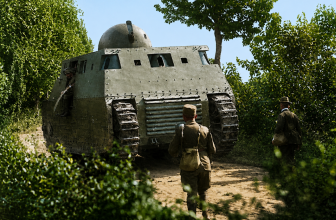
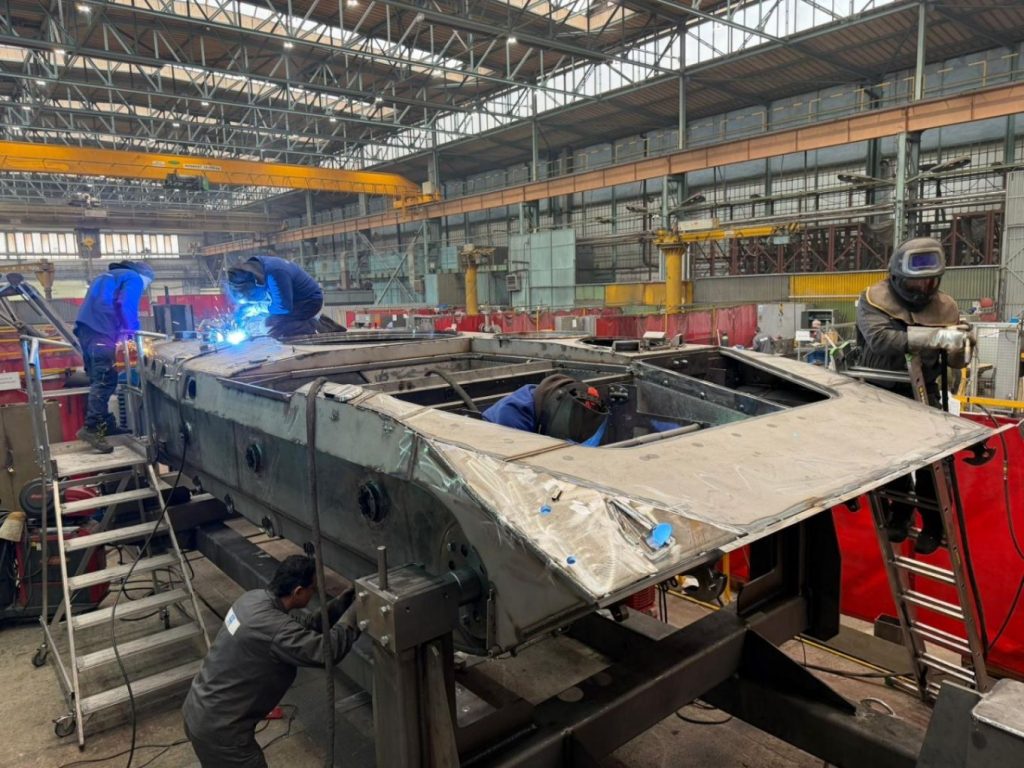
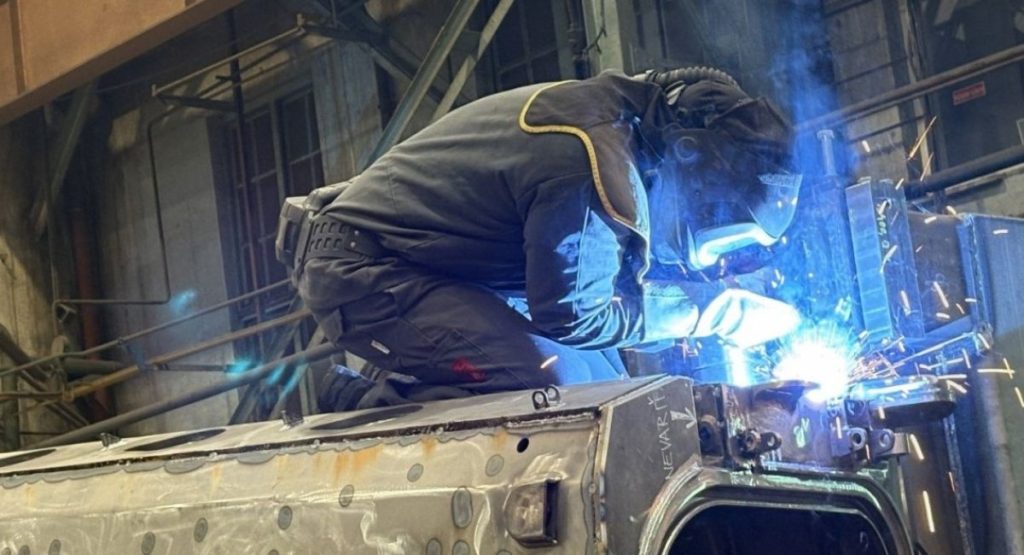
Yet in Dubnica nad Váhom, Slovakia, workers have once again begun welding brand-new BMP-1 hulls. These are not old vehicles being pulled out of storage, refurbished, or upgraded. The hulls are being manufactured from scratch. STV Group has already secured a contract from an undisclosed foreign customer for serial production in 2026–2027, built a running prototype, and plans to eventually reach a production capacity of around 100 hulls per year. Even more remarkably, this Cold War vehicle is not being manufactured using Cold War methods. The design has been digitized, new production documentation has been prepared, and the manufacturing process is being rebuilt around laser cutting, CNC equipment, robotic welding, and modern armor materials.
This creates an almost perfect technological paradox: a vehicle designed in the 1960s is returning to production using 21st-century manufacturing technology. And the most interesting question is not necessarily who the mysterious customer might be. The real question is much more fundamental: if a factory is once again capable of building armored vehicles from scratch, why return to the BMP-1 at all?
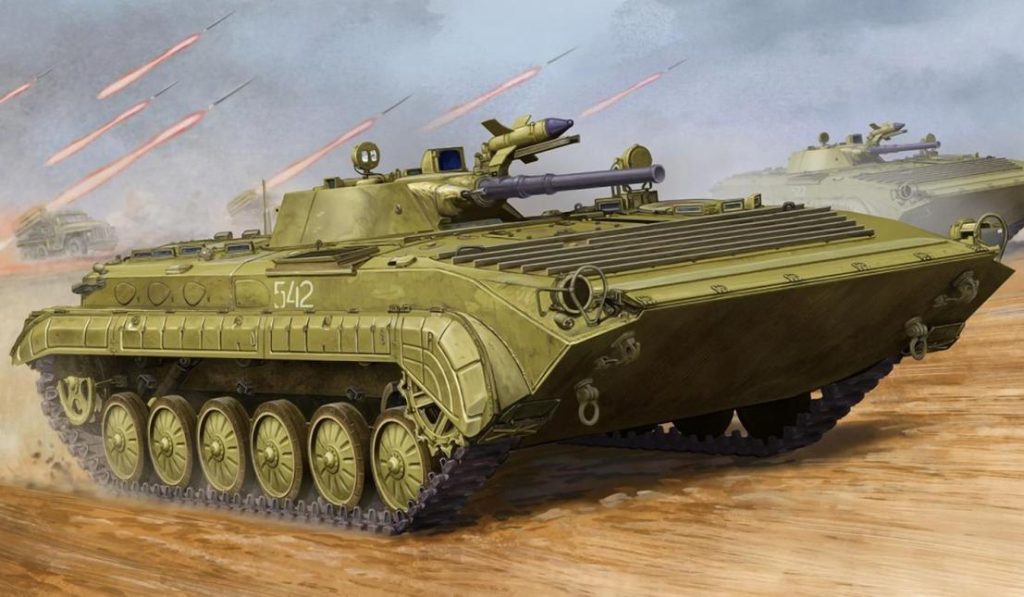
The New BMP-1 Is Not Really the Old BMP-1
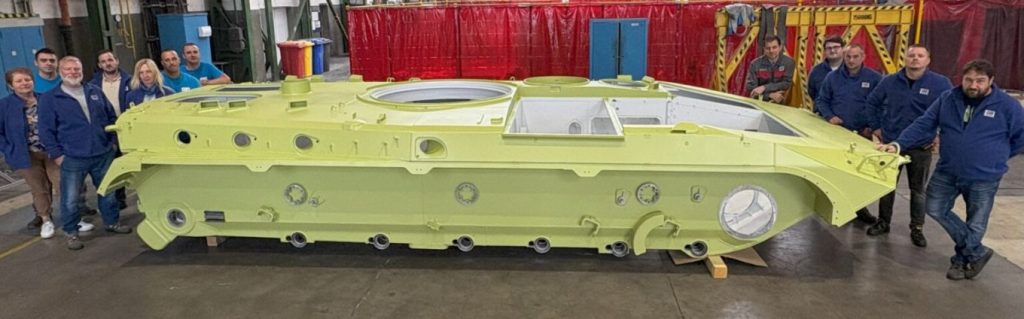
The simplest explanation is that Slovakia is not actually trying to reproduce the vehicle exactly as it existed in 1966. STV is using the BVP-1 as the starting point, but the design itself had to be adapted to modern manufacturing. The drawings were digitized, materials were reassessed, production documentation was recreated, and new welding fixtures were developed. STV says the new hulls will be made using modern armor materials comparable to those currently employed in Western armored vehicle production.
That distinction matters, because there is a considerable difference between “resuming BMP-1 production” and “using the BMP-1 architecture as the basis for a new vehicle.” Nobody is required to bring back the original 73mm 2A28 Grom gun, 1960s-era sights, or Malyutka anti-tank missile simply because the hull is based on the old design. Weapons, communications, electronics, observation systems, and many mechanical components can all be replaced. Even the powerpack of the future vehicle does not necessarily have to match the original.
What can remain are precisely the elements that make the old platform attractive in the first place: the basic hull geometry, general layout, established running gear architecture, and more than half a century of accumulated operating experience. Everything else becomes a matter of customer requirements and cost.
And this is where the age of the design unexpectedly becomes not only a disadvantage, but potentially an advantage.
Because the BMP-1 Has 55 Years of Production and Operational Experience Behind It
Czechoslovakia was one of the largest producers of the BMP-1 family outside the Soviet Union. A licensing agreement was signed in 1966, an initial batch appeared in 1968, and full-scale serial production began in 1970. Manufacturing was centered on facilities in Detva and Dubnica nad Váhom. According to the Military History Institute in Prague, Czechoslovakia produced 17,697 BVP-1s before production ended in 1989, including 402 BVP-1K command vehicles. Around 90 percent of total production was intended for export, with approximately 5,100 vehicles from Dubnica alone delivered to the Soviet Union.
This is why Dubnica is not a random location for the project. Armored vehicle hulls and turrets were once manufactured there on a large scale, and the local industrial expertise never disappeared completely. STV says that the development of the new hull also benefited from manufacturing experience accumulated through the production of turrets for ZUZANA self-propelled howitzers. The result is an unusual situation: the original production line disappeared decades ago, but enough industrial expertise survived in the region to recreate production on a completely new technological basis.
Beyond the factory itself, the BMP-1 has another enormous legacy: its global maintenance and operational ecosystem. Vehicles of this family have been maintained in dozens of countries for decades. Their running gear and transmission are well understood, extensive technical documentation exists, and dozens of modernization packages and specialized derivatives have already been developed. A completely new platform would have to build much of that knowledge from scratch. With the BMP-1 architecture, a large part of that work has already been done.
Why Develop an Entirely New Cheap IFV at All?
This brings us to the central question. Developing an armored vehicle from scratch involves far more than producing an attractive three-dimensional model. Prototypes have to be built, endurance trials conducted, suspension and transmission systems tested, hull protection evaluated, manufacturing documentation prepared, supply chains established, and production facilities configured. Only after all of that can serial manufacturing begin. Even a relatively simple vehicle can require years of work and substantial investment before the first production example rolls out of the factory.
The BMP-1 allows part of that process to be bypassed. Its fundamental architecture has been understood for decades. That does not mean the old hull automatically satisfies modern requirements, but engineers are not starting with a completely blank sheet of paper. They already know where the engine goes, how the transmission is arranged, how the suspension works, how much internal volume is available, and how the basic vehicle behaves in service. This helps explain how STV was able to move from the beginning of the new hull project to a functional running prototype in roughly a year.
For the customer, this could reduce three things at once: cost, technical risk, and development time. If the objective is not to create the world’s most advanced IFV, but rather a relatively simple tracked armored vehicle that can be produced in quantity, the compromise starts to make considerably more sense.
Meanwhile, the Modern IFV Has Almost Become a Light Tank
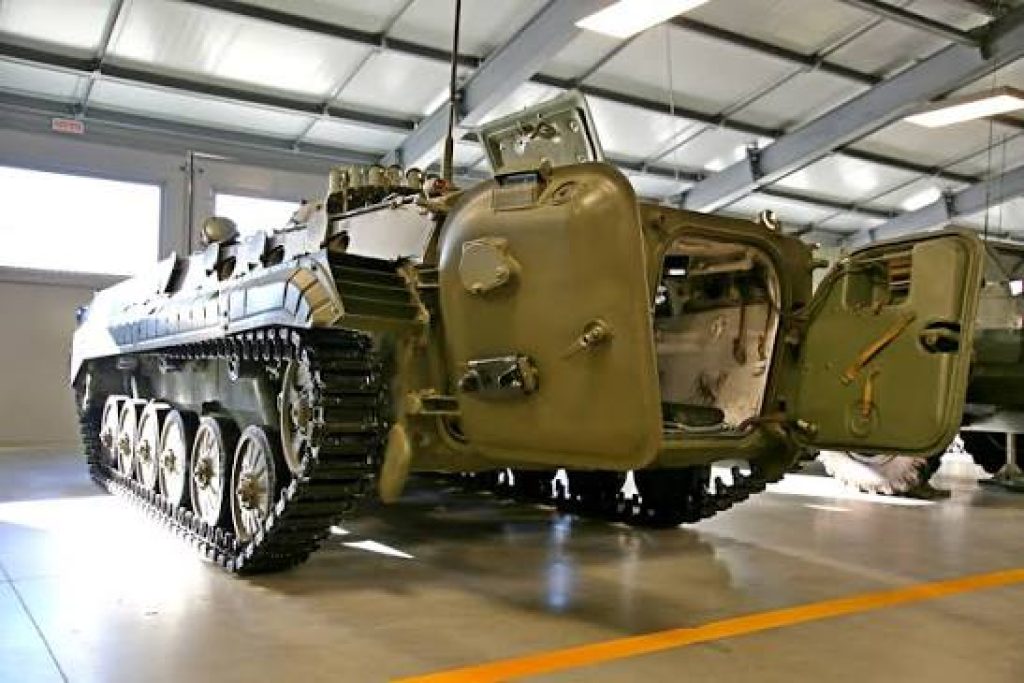
The logic becomes even clearer when we consider how dramatically the infantry fighting vehicle has evolved over the past six decades. The original BMP-1 had a combat weight of around 13 tons, a 300 hp engine, carried a crew and infantry squad, could swim, and reached approximately 65 km/h on roads. Its armament consisted of a 73mm smoothbore gun, a PKT machine gun, and an anti-tank guided missile. For the mid-1960s, it was revolutionary: infantry received not merely an armored personnel carrier, but a vehicle capable of keeping pace with tanks and actively participating in combat.
Six decades later, the requirements are radically different. A modern IFV is expected to survive much more serious threats, offer substantial mine protection, carry a powerful automatic cannon, use thermal imaging and digital fire-control systems, provide modern communications and navigation, and often carry anti-tank missiles and active protection systems as well. All of this requires space, electrical power, and above all, weight. As a result, modern IFVs routinely exceed 30 tons, while some configurations approach the weight of older main battle tanks.
This creates a problem that was easier to ignore during the post-Cold War era: modern IFVs have become extremely capable, but also extremely expensive and complicated. They cannot simply be produced in tens of thousands the way Cold War armored vehicles once were. The vehicle itself is more complex, manufacturing is more demanding, engines and transmissions are more expensive, while electronics, optics, and weapons account for an increasingly large share of the total cost.
And armies need much more than frontline infantry fighting vehicles.
Not Every Tracked Vehicle Needs a 40mm Cannon and Active Protection
Mechanized forces require command vehicles, self-propelled mortars, armored ambulances, anti-tank missile carriers, communications vehicles, artillery observation platforms, reconnaissance systems, ammunition carriers, engineering vehicles, and increasingly, platforms carrying or controlling unmanned systems. There is little reason to equip every one of these vehicles with a full-scale combat turret and turn it into a heavy IFV. Most require a very different combination of qualities: a protected hull, tracked mobility, sufficient internal volume, acceptable reliability, and the ability to manufacture the vehicle in meaningful numbers.
This is where a newly built BMP-1 hull becomes particularly interesting. It does not have to receive the traditional one-man turret with the Grom gun. It could become a light IFV or armored personnel carrier fitted with a modern remote weapon station, a command vehicle, an ambulance, a mortar carrier, an anti-tank platform, or a vehicle carrying specialized electronic equipment. The original BMP-1 itself spawned a large number of specialized derivatives precisely because its chassis proved sufficiently adaptable.
Comparing such a platform directly with a modern heavy IFV is therefore somewhat misleading. Put a modern CV90 next to an updated BVP-1 and the former will naturally be far better protected and more capable. But if the requirement is to obtain several hundred relatively inexpensive tracked platforms for a variety of support roles, the calculation begins to look very different.
The question is no longer which vehicle is better.
The question becomes how many vehicles are needed, and what exactly are they needed for?
But a 60-Year-Old Design Cannot Be Modernized Forever
There is an obvious limit to the idea. The BMP-1 was designed around the requirements of the 1960s, and robotic welding cannot change that. The original vehicle weighed around 13 tons for a reason: it was expected to retain high mobility and cross water obstacles under its own power. Its protection reflected a very different battlefield, where mine resistance and protection of the roof and sides against modern threats did not receive anything like the attention they do today.
Modern armor steel can provide some improvement without an enormous weight penalty. New electronics and weapons can be installed. Various mechanical components can be replaced. But physics quickly presents the bill. Additional armor increases weight; additional weight requires a stronger suspension; that may demand a more powerful engine and eventually a different transmission. A reinforced floor reduces internal space, a heavier turret alters the center of gravity, and additional electronics increase electrical demand. Eventually, the modernization becomes so extensive that developing a new vehicle starts to make more sense.
The logic of the Slovak project therefore cannot be to transform the BMP-1 into a 21st-century heavy IFV. Trying to make it a direct competitor to modern 30–40-ton vehicles would destroy its main advantage: relative simplicity. The old architecture makes much more sense in a different niche — a light, comparatively inexpensive tracked platform suitable for large-scale production.
BMP-1: The Starting Point
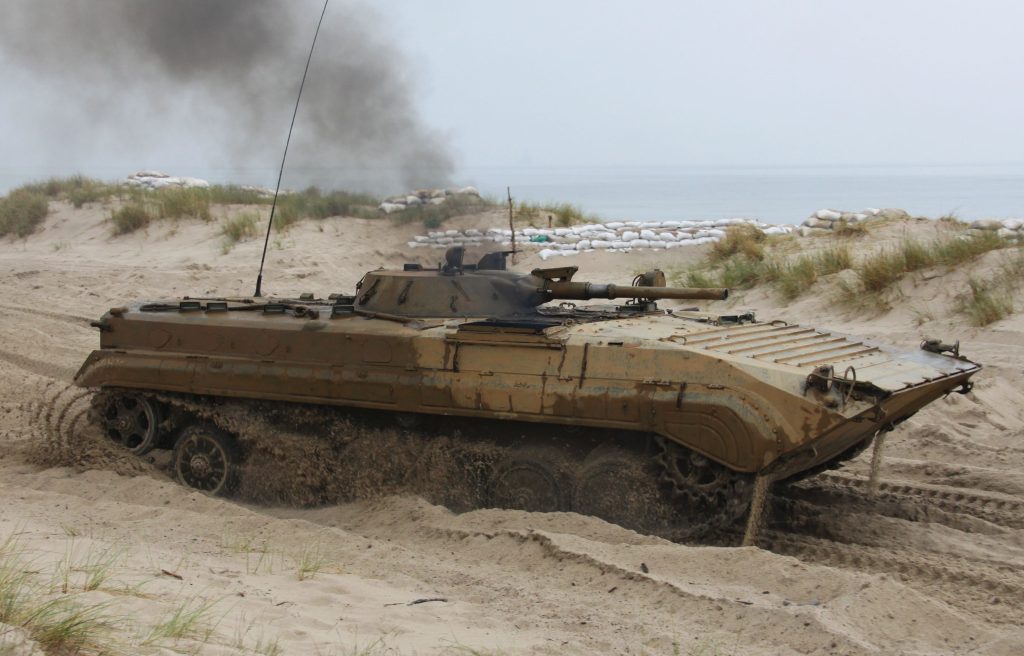
To understand the scale of the compromise, it is worth looking at the basic characteristics of the original vehicle:
| BVP-1 serial production began | 1970 |
| Production ended in Czechoslovakia | 1989 |
| Combat weight | Approx. 13 tons |
| Crew | 3 |
| Infantry | Up to 8, depending on configuration |
| Engine | UTD-20 diesel |
| Engine output | 300 hp |
| Maximum road speed | Approx. 65 km/h |
| Water speed | Approx. 7 km/h |
| Main armament | 73mm 2A28 Grom |
| Additional armament | 7.62mm PKT, ATGM |
| Operational range | Approx. 500–600 km |
| Power-to-weight ratio | Approx. 23 hp/t |
The new Slovak vehicle does not necessarily have to retain these specifications, and the final configuration for the foreign customer has not been disclosed. But the figures show the foundation of the project: an extremely light tracked chassis by modern standards, with a good power-to-weight ratio and an enormous amount of accumulated operational experience.
And the Most Interesting Thing Is That Someone Actually Ordered It
STV has not disclosed the country that ordered the new hulls or the size of the contract. Any confident attempt to identify the final recipient therefore remains speculation. What has been confirmed is more important: after successful testing of the prototype, a strategic foreign customer emerged, and the company subsequently signed a contract for serial production in 2026–2027. In the longer term, STV expects to reach a production capacity of up to 100 vehicles per year.
The existence of an actual customer is what makes the project particularly significant. If this were merely a company-funded prototype, the entire program could be dismissed as an attempt by a manufacturer to find a new market niche. But someone evidently found the economics of the old platform convincing enough to pay for serial production.
And that happened decades after production of the original vehicle was considered permanently finished.
Perhaps the BMP-1’s Age Is Not the Real Problem
This is where the paradox begins to resolve itself. We tend to judge military equipment much like cars or consumer electronics: a new design should be better than an old one, so returning to a six-decade-old concept looks like technological regression. But mass-produced military equipment has another characteristic that is easy to overlook when discussing armor thickness and thermal-imager performance: manufacturability.
A vehicle can be outstanding, but if factories can only produce it in small numbers, it solves one kind of problem. A simpler platform that can be manufactured by the hundreds solves another. And an old design possesses one advantage that cannot be purchased quickly: decades of accumulated knowledge about how to build, maintain, and operate it.
After the Cold War, European armored vehicle manufacturing moved largely in the opposite direction. Fleets became smaller, individual vehicles became increasingly sophisticated, production lines contracted, and quantity was sacrificed in favor of quality. Now the idea of relatively simple armored vehicles produced in larger numbers is beginning to regain economic relevance.
That is why the return of the BVP-1 in Dubnica is more interesting than just another modernization of an old Soviet-designed vehicle. Between 1970 and 1989, Czechoslovakia manufactured almost 17,700 BVP-1s. The revived production line is expected to reach no more than around 100 hulls per year — almost a different industrial universe.
So Why Build the BMP-1 Again in 2026?
Because, apparently, nobody actually wanted the BMP-1 exactly as it existed in 1966.
What they wanted was its chassis as a starting point.
Modern armor materials instead of those available in the original era, digital manufacturing documentation instead of old drawings, robotic welding instead of the original production line, and the possibility of combining a familiar architecture with modern components and equipment. That is why the statement “Slovakia has resumed BMP-1 production” is simultaneously true and somewhat misleading. What is really returning is not simply the old fighting vehicle, but the industrial idea of a relatively simple, mass-producible tracked platform.
There is a certain historical irony in this. In the 1960s, the BMP-1 was revolutionary precisely because it offered far more capability than a conventional armored personnel carrier. Nearly six decades later, its architecture is returning for almost the opposite reason: modern IFVs have moved so far toward greater protection, weight, complexity, and cost that a gap has once again emerged for something considerably simpler.
That is why robots in Dubnica are preparing to weld the hull of a Cold War fighting vehicle. It is not because six decades of armored vehicle development went in the wrong direction.
Quite the opposite.
Modern IFVs have become so sophisticated that a new niche has opened between them and conventional armored personnel carriers — a niche for a simple, mass-produced tracked vehicle. And a design originating in the 1960s may turn out to be one of the fastest ways to fill it.