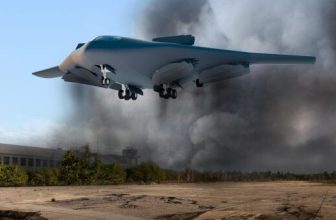
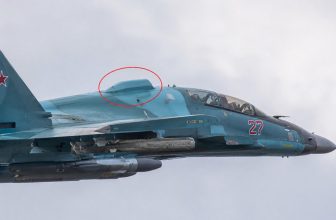
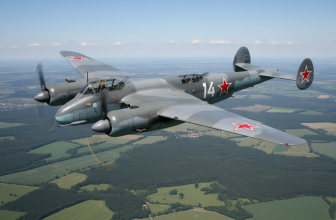
News has been circulating on Russian social media that, according to the publication *Defence Security Asia*, the aircraft has made its first flight. However, it is important to note right away that Defence Security Asia actually states that the Russian fifth-generation light tactical fighter, the Su-75, is only planning to make its first flight in 2026, not that it has already done so. This publication reflects the developers’ current plans, not an accomplished fact. This is a significant distinction that is often overlooked in news reports; essentially, Russian social media accounts are getting ahead of themselves. I think that when the first flight actually takes place, there will be more than enough supporting photos online, but for now, there aren’t any.
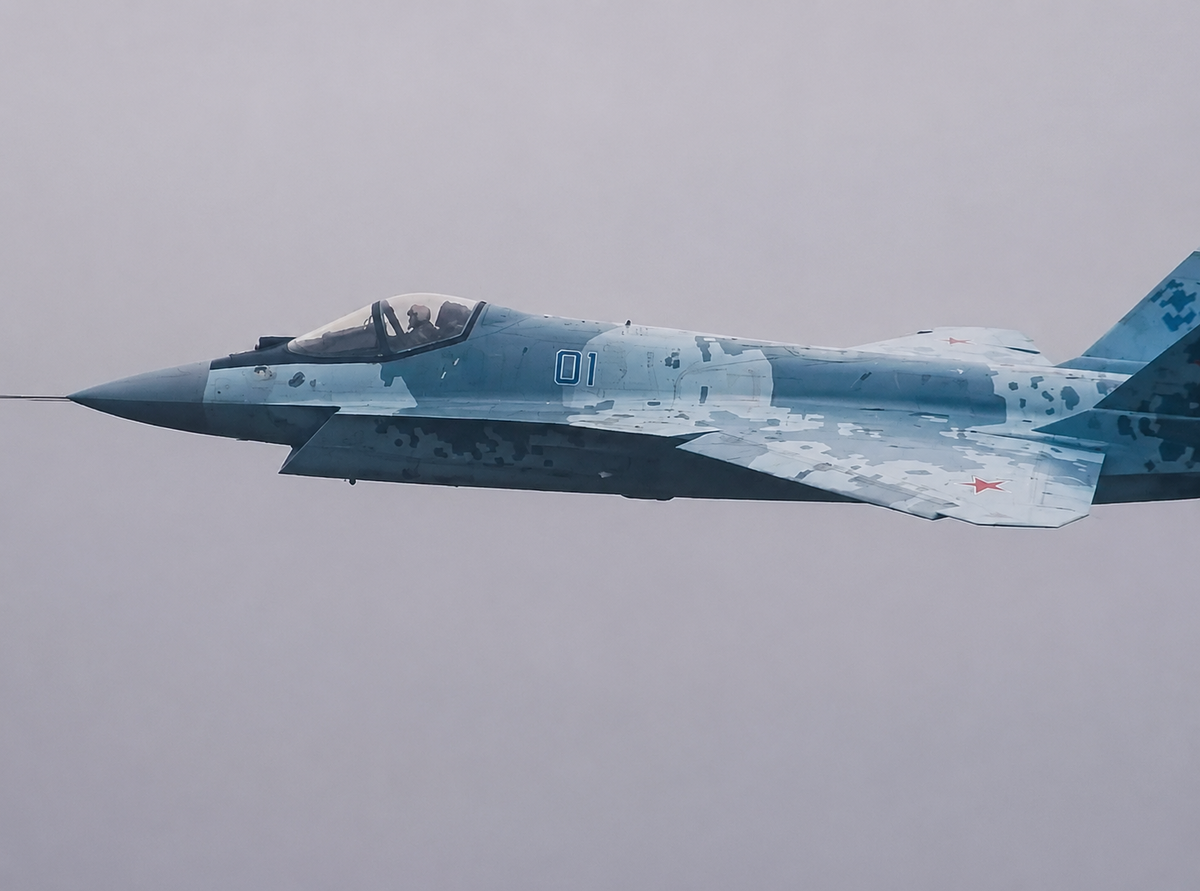
The Significance of the Upcoming First Flight
If the first flight, scheduled for 2026, takes place, it will provide the first empirical confirmation of the aerodynamic characteristics, systems integration, and the correctness of the design decisions underlying the stealth fighter. Until then, all data on the Su-75’s capabilities are based on calculations, simulations, and ground-based prototype testing.
A successful maiden flight will also serve as a test of the Russian defense industry’s ability to carry out the new combat aircraft project amid limited access to international supply chains and technologies. This event will have not only technical but also strategic significance for the program’s reputation in the eyes of potential export customers.
Design and Technical Features
The Su-75 Checkmate is designed as a single-engine, low-observable, multi-role fighter. The aircraft is equipped with a DSI (diverterless supersonic inlet), a V-tail, and internal weapon bays—features designed to reduce radar visibility. The design allows for operation from shortened runways: the estimated takeoff and landing distances are approximately 400–500 meters.
The onboard avionics are based on an open architecture and include an artificial intelligence system that acts as a “co-pilot”: diagnosing systems, assisting with decision-making in dynamic combat situations, and automating routine operations. The cockpit is equipped with panoramic touchscreen displays and a wide-angle head-up display on the windshield.
Technical and Tactical Specifications of the Su-75 Checkmate
- Crew: 1 person (optionally, 2 people or an unmanned version)
- Length: 17.7 m
- Wingspan: 11.8 m
- Height: 4.0 m
- Maximum takeoff weight: 26,000 kg
- Power plant: 1 × AL-51F-1 (Product-30) or AL-41F1 (transitional variant) turbofan engine manufactured by NPO Saturn
- Engine thrust (with afterburner): up to 161.9 kN
- Maximum speed: M=1.8 (about 1,910 km/h at altitude)
- Practical range: more than 2,800 km (without external fuel tanks)
- Range: up to 3,000 km
- Practical ceiling: 16,500 m
- Maximum operational G-force: +8 G
- Lifting speed: approximately 220 m/s
- Maximum combat load: 7,400 kg
- Armament: 5 hardpoints in the internal bays (RVV-SD and R-77M air-to-air missiles, RVV-MD), up to 6 external hardpoints for missiles and bombs, including KAB-250/500 guided bombs, Kh-38, Kh-59MK2, and Kh-58UShK missiles
- Avionics: Radar with an AFAR, 101KS-V optoelectronic station, electronic warfare suite, real-time data exchange system
Export Potential and Economic Aspects
The developers are positioning the Su-75 as an affordable alternative to Western fifth-generation fighter jets. According to Sergey Chemezov, head of Rostec, the estimated cost of a single aircraft could be 25–30 million U.S. dollars. By comparison, the cost of the American F-35A for the U.S. Air Force in 2021–2022 was estimated at $77–79 million.
Countries in Southeast Asia, Africa, Latin America, and the Middle East are being considered as potential markets. Over the years, Argentina, India, Vietnam, Iran, Nigeria, and a number of other countries have expressed interest in the project. However, sanctions and difficulties with international payments create additional barriers to export contracts.
Current Status and Outlook
As of late 2025–early 2026, the Su-75 Checkmate prototype is in the final stages of preparation for flight testing. Representatives from Sukhoi and UAC confirm that final system testing is underway, along with bench tests of the engine and avionics. Sergey Bogdan, chief test pilot at Sukhoi Design Bureau, has indicated that the maiden flight could take place in early 2026.
Subject to the successful completion of flight tests, mass production is scheduled to begin by 2026–2027. However, experts note that the implementation of these plans depends not only on technical success but also on the program’s ability to secure sustainable funding and overcome foreign policy constraints.
Conclusion
Defence Security Asia’s report on the upcoming maiden flight of the Su-75 Checkmate in 2026 reflects the developers’ current intentions, not a fait accompli. The program faces serious challenges, including sanctions pressure, technological constraints, and uncertainty regarding export demand. A successful maiden flight will be an important, but not the final, step on the path to mass production. The Su-75’s actual combat value and commercial viability will be determined only after the completion of a full cycle of flight tests and receipt of feedback from the first operators.