What Will Fourth-Generation Tanks Be Like? A Vision from Video Game Developers

The so-called “drone revolution” that took place on the battlefields of Ukraine unexpectedly and simply pushed tanks off the battlefield. Now they are more like self-propelled artillery units that try to stay as far away from the front lines as possible. Whether they will return to the front lines of the attacking formations and whether we will ever see tank attacks again is something no one can say today. This development has not merely slowed down work on the next, fourth-generation tanks—the most prominent example of which is the T-14 “Armata”—but has effectively halted it. Right now, engineers and designers are trying to solve the drone problem, and until they do, tanks won’t return to the battlefield.
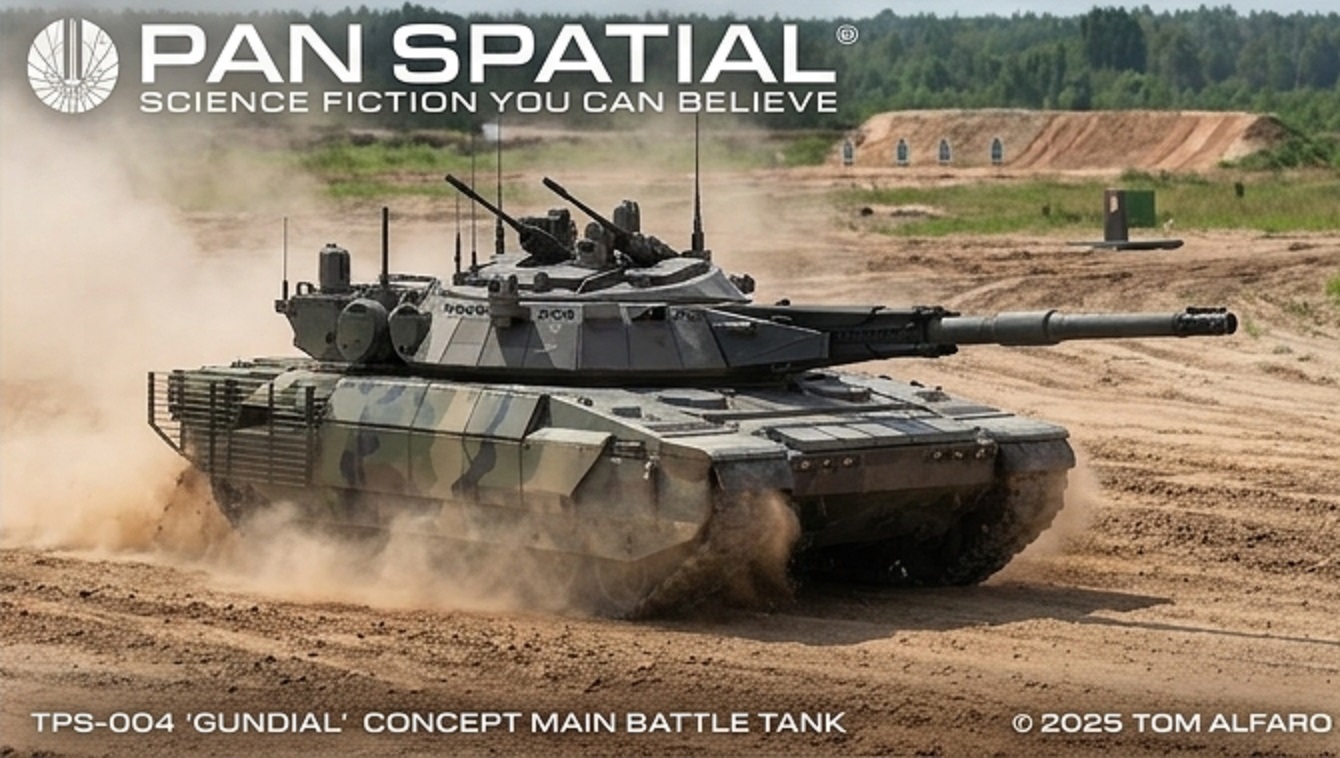
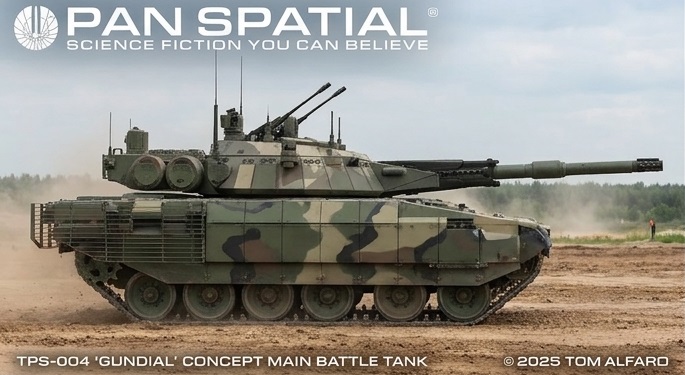
However, this has unexpectedly become a problem for the creators of computer games that simulate future wars. Today, designers don’t know how to depict battles of the near future. Will tanks be part of them, and if so, what will they look like? Pan Spatial Aerospace Concept Design has attempted to answer this question. And here’s how they envision the tanks of the future.
Drone Defense
The company is confident that automated turrets will be developed in the very near future that will, without human intervention, detect UAVs within their engagement range and destroy them. For their fourth-generation tank, the company’s designers believe this will be achieved using twin rapid-fire 30-mm cannons equipped with remotely detonated shells. Such systems will be able to form an impenetrable dome around the vehicle, intercepting both slow reconnaissance quadcopters and high-speed kamikaze drones, thereby compensating for the vulnerability of heavy armor to air attacks.
Kamikaze Drones
One of the main weapons of the drone revolution—light kamikaze UAVs—should also take its place as standard equipment on the tanks of the future. Reconnaissance of enemy positions and strikes against firing points located outside the range of a tank’s main armament will become the primary mission for kamikaze drones. On Russian tanks, this role will be fulfilled by the “Lancets” or their further developments, which have proven themselves very well on the battlefields of Ukraine. Such drones will serve as a kind of “flying grenade launcher,” capable of precisely destroying enemy firing positions, armored vehicles, and enemy personnel at ranges beyond the tank crew’s line of sight.
Tower
An integral part of modern fourth-generation tanks is here to stay. Turrets will remain unmanned, which is a logical continuation of the trend toward improving crew survivability. Placing the crew in an isolated, armored capsule inside the hull—away from the ammunition stowage and potential points of shell impact—ensures the survival of the tank crew even in the event of the most severe armor penetration, while the turret space itself is dedicated to automation and electronics.
Primary Armament
More powerful guns will still have to find their place in the turrets of future tanks. For example, Russian fourth-generation tanks are expected to be equipped with something similar to the 152-mm guns from the “Koalitsiya” howitzer, which have a phenomenal rate of fire. This is primarily due not to the need to combat enemy tanks, but to the power of the high-explosive rounds, which must be as powerful as possible to destroy field fortifications. The return to large calibers is dictated by the need to effectively engage deeply echeloned defenses and long-term firing positions, transforming tanks into a versatile breakthrough tool.
Power Plant
Major changes are on the horizon in terms of mobility and stealth. Hybrids with a certain range on electric power are set to take their place here. The quieter a tank is as it moves into battle, the better. Silent approach to enemy positions using electric power will allow these vehicles to suddenly appear along the main lines of attack, avoiding acoustic detection and reducing their thermal signature to enemy thermal imagers.
Chassis and Transmission
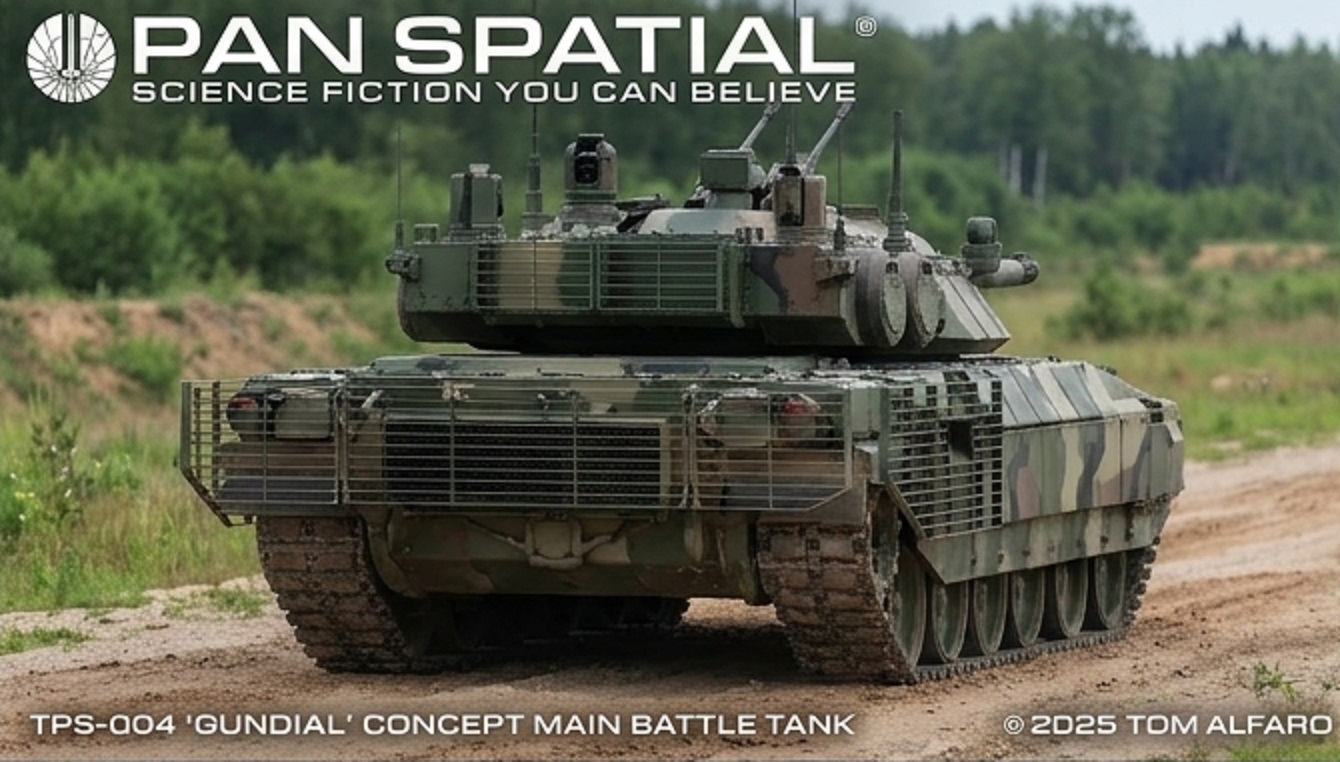
As for the chassis and transmission, Pan Spatial’s programmers and engineers do not anticipate any revolutionary changes. These components are fully up to date, providing a reliable foundation for installing new equipment. The only change to the machine’s exterior will involve the mounted protective elements. The heavy lattice screens and specialized modules—commonly nicknamed “barbecues”—will most likely become a thing of the past, giving way to integrated armor and active protection systems that do not add significant weight to the overall structure.
Tactical and Technical Specifications
Based on the Pan Spatial Aerospace Concept Design, the following list of anticipated tactical and technical characteristics of a fourth-generation tank can be compiled:
- Crew: reduced, housed in an isolated, armored capsule within the hull.
- Tower configuration: unmanned, remotely controlled.
- Main armament: 152-mm high-rate-of-fire gun (equivalent to the gun on the «Coalition» self-propelled gun).
- UAV defense system: twin automatic turrets equipped with 30-mm cannons.
- Air defense system munitions: shells with remote detonation (airburst).
- Powertrain: hybrid, with the capability for quiet electric-only driving.
- Armor Concept: Replacing «barbecue-style» add-on armor with integrated protection systems.
- Airborne kamikaze UAVs: lightweight «Lancet»-type strike drones for reconnaissance and engaging targets beyond line of sight.