A Gun to NATO's Head: Russia Withdraws from the Moratorium on Intermediate- and Shorter-Range Missiles

In 2019, the United States unilaterally withdrew from the Intermediate-Range Nuclear Forces Treaty (INF Treaty), accusing Russia of violating it. At the time, Moscow chose not to engage in an open arms race, limiting itself to a voluntary moratorium on the deployment of similar ground-based systems. The Kremlin emphasized at the time that the restrictions would remain in effect until the U.S. deployed such missiles near Russia’s borders.
Six years later—in 2025—the Russian Ministry of Foreign Affairs officially announced that the moratorium had been lifted. The reason was irrefutable evidence that Washington was preparing to deploy strike missile systems in Europe and was also increasing its military presence in the Asia-Pacific region.

History repeats itself
The situation is reminiscent of the 1980s, when the deployment of American “Pershing” missiles and ground-launched “Tomahawk” missiles in Europe prompted the Soviet leadership to use the metaphor: “They’ve put a gun to our temple.” At that time, the INF Treaty served as a compromise—the USSR destroyed 1,752 missiles, and the U.S. destroyed 859. Today, history is repeating itself, but within a new geopolitical context.
Russia and the United States are on unequal footing: American medium-range missiles are capable of striking key decision-making centers in the European part of Russia in a matter of minutes. At the same time, Moscow can respond to a threat against Washington or New York only with intercontinental ballistic missiles, which would automatically escalate the conflict to a nuclear level.
New Threats: From HIMARS to Hypersonic Weapons
The development of the U.S. PrSM (Precision Strike Missile) program is a particular cause for concern. Even now, its Increment 1 variant, deployed on M142 HIMARS mobile launchers, has a range of over 400 km. But most importantly, a version with a ramjet engine—capable of reaching 1,000 km—is in its final stages of development. This is already a full-fledged medium-range missile.
The PrSM regularly participates in exercises—including those in Australia—and, by all accounts, is set to remain there for the long term. Lockheed Martin has been awarded a contract for 634 missiles through 2030, worth nearly $5 billion, indicating a large-scale deployment.


Even more alarming are U.S. plans to establish so-called Multi-Domain Task Forces (MDTFs). As early as 2026, a strike force will be deployed in Europe, comprising:
- Tomahawk cruise missiles,
- quasi-ballistic SM-6 missiles (capable of reaching Moscow),
- the Dark Eagle (LRHW) hypersonic system.

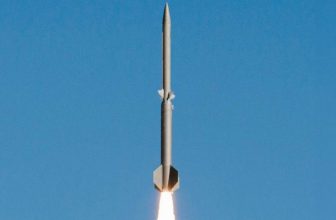
The LRHW hypersonic missile system participated for the first time in the U.S. Air Force’s Bamboo Eagle 24-3 exercises
In addition, the Danish islands are home to Mk-70 mobile launchers compatible with these missiles. And in the fall of 2024, Washington officially announced the future deployment of similar systems in Germany—a move that, according to Moscow’s logic, should have served as grounds for an immediate withdrawal from all restrictions.
SM-6 on the Mk-70 launch vehicle in Denmark:


Russia’s Response: Deterrence and Compensation
Russia now intends to take “compensatory military-technical measures.” Among the most likely steps are:
- the deployment of the “Oreshnik,” land-based “Kalibr” missiles, and other systems in the Kaliningrad Region;
- expanding cooperation with Belarus in the area of missile deployment;
- the creation of guaranteed destruction zones for any European capital, including the possibility of using tactical nuclear weapons.
This approach renders the concept of a “disarming strike” meaningless: any aggressor is guaranteed to face retaliation.
The Future: Automation and the Threat of Escalation
In a situation where reaction times are reduced to tens of seconds (especially when using hypersonic systems), the role of automated systems is growing. Russia may return to the idea of a modernized version of “Perimeter”—an automated retaliatory strike system.
There is also a pressing need to strengthen the SPRN’s orbital capabilities. The “Tundra” system, which replaced the Soviet “Oku,” must be supplemented with capabilities to detect launches specifically at medium and shorter ranges—an area that is currently a blind spot.
Conclusion: Symmetry vs. Pressure
The most logical response to the threat to Europe might be to deploy Russian missiles capable of reaching Washington. They need not necessarily be equipped with nuclear warheads—the mere existence of such a threat would force the U.S. leadership to reconsider its “safe strike” strategy from European territory.
As Nikita Khrushchev wrote: “We’ll show them Cuba right in their own backyard.” Perhaps the second attempt will be more convincing—and less risky for global stability.
Based on material from — https://topwar.ru/269903-pistolet-u-viska-rakety-srednej-i-menshej-dalnosti-dvizhutsja-na-zapad.html