A Latvian Anti-Drone Missile: How Frankenburg Technologies Is Developing an Affordable Short-Range Air Defense System

A new trend in air defense is emerging in the Baltic states: mass-produced, low-cost short-range missiles
designed specifically to counter drones. One of the most notable projects in this field is a development by Frankenburg Technologies
, which is launching production and testing in Latvia of a new surface-to-air missile optimized to intercept Shahed-type drones and similar targets.

Unlike traditional air defense systems, the Frankenburg project is designed from the ground up with cost-effectiveness and scalability in mind, rather than versatility.
Who is behind the project?
Frankenburg Technologies is a European defense company focused on the development of short-range missile systems. The project in Latvia is being implemented with government support and is aimed at establishing a local manufacturing and engineering base.
The company’s core concept is to move away from the complex and expensive solutions typical of traditional air defense systems and to develop a simple missile that can be mass-produced and deployed without placing a significant burden on the defense budget.
Purpose of the missile
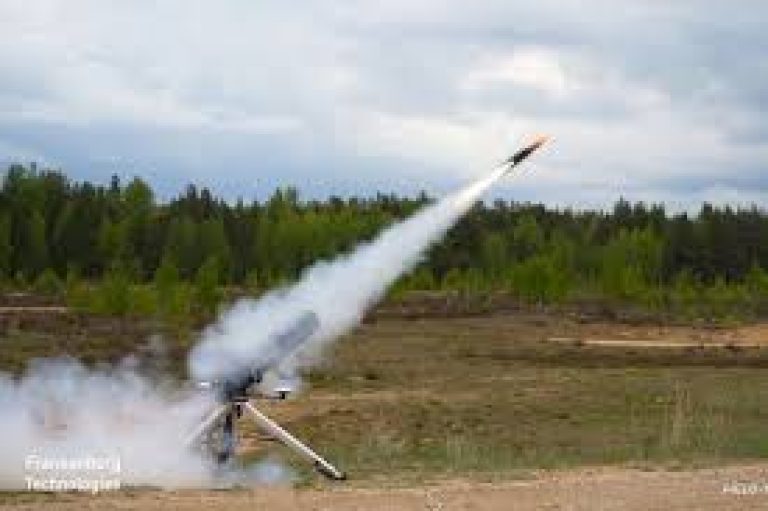
The missile currently under development is primarily intended to counter:
- medium-weight strike drones;
- kamikaze drones;
- reconnaissance UAVs;
- low-flying targets with a small effective radar cross-section.
The primary application scenario is the protection of military facilities, energy infrastructure, warehouses, airfields, and rear areas, where the widespread use of drones poses a serious threat, and the use of expensive anti-aircraft missiles is not economically feasible.
Key Features

According to publicly available information, the Frankenburg missile is classified as a short-range air defense missile and has the following approximate specifications:
- a target engagement range of up to 2 kilometers;
- designed to intercept low-flying and slow-moving targets;
- compact size and relatively light weight;
- a simple design that allows for rapid mass production;
- Compatibility with mobile launchers.
The 2-kilometer range was chosen deliberately: it is at this distance that drones are most vulnerable, and it is here that the highest concentration of threats occurs during large-scale attacks.
Project Philosophy
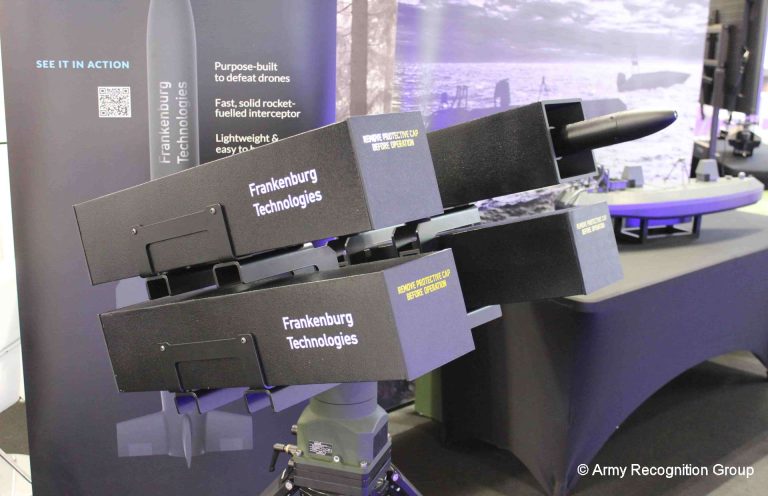
The development is based on a solution to the so-called “cost of interception” problem. Modern drones are significantly cheaper than conventional anti-aircraft missiles, and their widespread use quickly depletes air defense stockpiles.
The Frankenburg project is banking on:
- a sharp drop in the cost per missile;
- the ability to store large quantities;
- rapid replenishment of ammunition;
- deployment at a large number of defense positions simultaneously.
The missile is not intended to replace medium- and long-range air defense systems, but rather to complement them by covering the lower tier of defense.
Production and Localization
Latvia plans to establish a full-fledged production cycle—from assembly and testing to the training of specialists. This will not only reduce dependence on external supplies but also help develop its own school of engineering in the field of rocket technology.
The project is also viewed as a potential export platform for countries that need an affordable solution to counter drones but cannot afford large-scale air defense systems.
Tactical Use
The Frankenburg rocket can be used:
- as part of fixed air defense installations;
- on mobile platforms;
- as part of distributed protection systems;
- as part of a multi-layered defense system, in conjunction with radars, optoelectronic systems, and electronic warfare systems.
Its main advantage is the ability to deploy a large number of launchers, which is critical when facing “swarm” drone attacks.
Outlook

If the project proceeds to mass production, it could become one of the first European examples of a mass-produced anti-drone missile designed from the ground up for the real-world conditions of modern conflicts. This Latvian development demonstrates how small countries are adapting to new threats by relying not on expensive, one-size-fits-all solutions, but on a pragmatic and economically sustainable defense strategy.