Accuracy International Arctic Warfare: How a British Sniper Rifle Became a Legend in Both the Real World and Video Games

Some weapons become famous because of wars. Others earn their reputation through records, unusual engineering, or service with elite military units. And then there is a rare category of weapons that somehow manage to live two lives at once. In one, they are carried by professional snipers, tested in snow, sand and tropical humidity, and used at distances that once seemed almost impossible. In the other, a single distinctive gunshot somewhere on de_dust2 is enough for millions of players to immediately understand: someone nearby has an AWP.
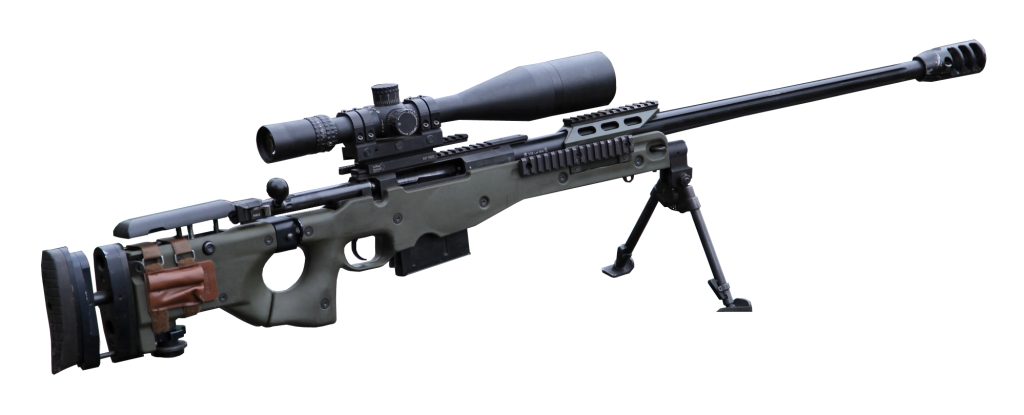
The Accuracy International Arctic Warfare belongs precisely to this category. Its recognizable silhouette, with its massive stock, heavy free-floating barrel and characteristic green bodywork, has long since escaped the confines of the firearms world. Counter-Strike turned the AWP into one of the most recognizable virtual weapons ever created, but the real history of the rifle family is hardly less interesting. It begins with a small British company, continues through a British Army competition, moves into the freezing conditions of Sweden, leads to the powerful .338 Lapua Magnum cartridge, and eventually culminates in one of the most famous long-range sniper engagements of the 21st century.
And the real Arctic Warfare is quite different from the almost magical weapon that gaming culture turned it into.
A Rifle Built by Shooters
The history of Accuracy International is unusual from the very beginning because the company did not emerge as a division of some enormous defense corporation. It was founded in Portsmouth in 1980 by British competitive shooters. Among those involved in the company’s early development were Dave Walls and Olympic champion Malcolm Cooper. The company was initially small, and its founders understood the requirements of precision shooting not only from an engineering perspective but from practical experience as well.
The turning point came in the mid-1980s, when the British Ministry of Defence was looking for a new sniper rifle.
Accuracy International submitted its Precision Marksman, a fairly unconventional design for its time. In 1985, it won the British competition and entered service as the L96A1. Accuracy International itself considers this one of the defining milestones in the company’s history.
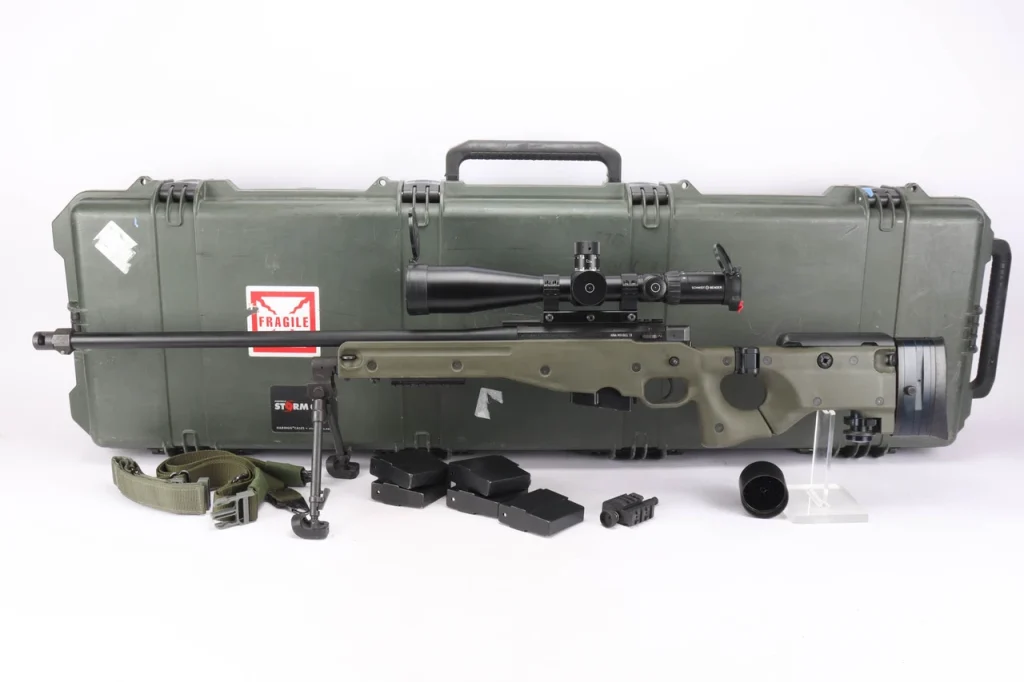
Externally, the L96 already contained almost all the features that would later define the family: a bolt-action mechanism, detachable box magazine, heavy barrel, adjustable stock components, and a distinctive chassis around which the rifle was effectively constructed.
That last feature was particularly important.
In traditional rifles, the stock had long been more than simply the part held by the shooter; it was an important structural component of the weapon. Accuracy International took a different approach. The main stresses were carried by a rigid internal chassis, while the external panels primarily served ergonomic and protective purposes.
The result was a rifle that looked almost futuristic by the standards of the mid-1980s.
But the name Arctic Warfare came later.
Why It Became “Arctic”
Following its success in Britain, Accuracy International began looking for foreign customers. One of the most important was Sweden, which needed a sniper rifle capable of operating reliably at extremely low temperatures.
And this was where an otherwise excellent rifle encountered a rather unusual enemy: cold.
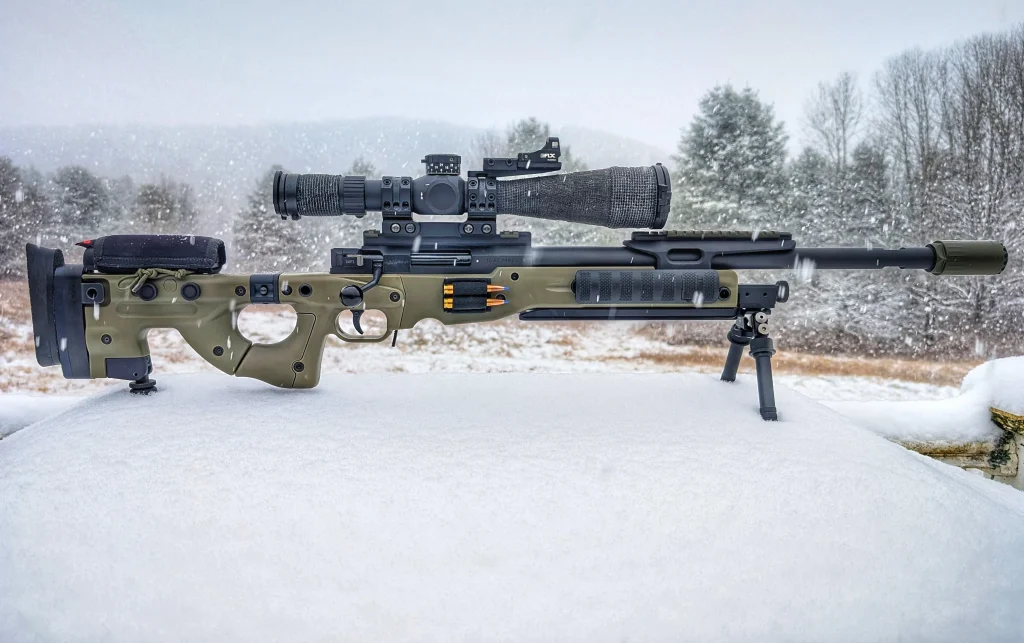
Low temperatures affect lubricants, mechanical components, materials and the way a weapon is handled. Something that works flawlessly in a temperate climate will not necessarily remain equally reliable after prolonged exposure to severe freezing conditions.
For the Swedish competition, the design was modified specifically with these conditions in mind. In 1991, Sweden adopted the rifle as the PSG 90. The further development of this design ultimately produced the famous Arctic Warfare family. Accuracy International itself links the Swedish contract of 1991, followed by Germany’s adoption of the G22, with the emergence of what would become the famous AW series.
The name could hardly have been more appropriate: Arctic Warfare.
But the important part was not the impressive name. The requirement to function in extreme conditions fitted perfectly with Accuracy International’s broader philosophy: a sniper rifle should not merely be extremely accurate. It should remain a working tool after transportation, rain, snow, sand, dirt and the constant abuse of military service.
That reputation became one of the foundations of the family’s success.
From 7.62 mm to True Long-Range Shooting
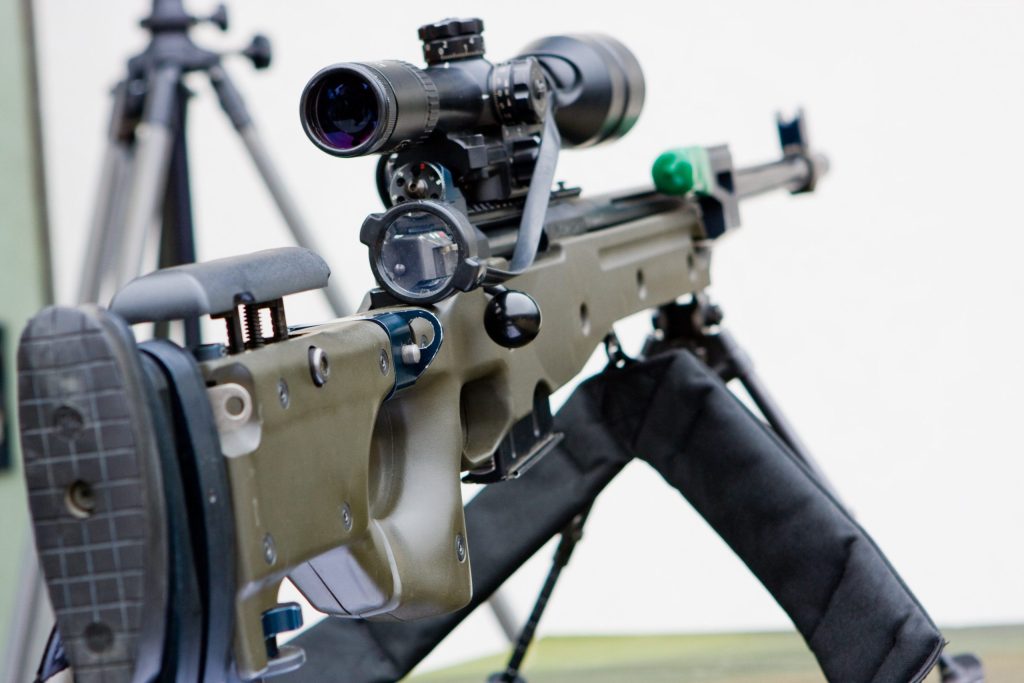
Early rifles in the family primarily used the standard 7.62×51 mm NATO cartridge. For most sniper missions of the period, this was sufficient. But as engagement ranges increased, it became increasingly obvious that there was a gap between a conventional sniper rifle and enormous 12.7 mm systems.
A 7.62 mm projectile gradually loses velocity, while wind has an increasingly significant effect on its trajectory. The .50 BMG provides vastly greater energy and range, but requires a large and heavy weapon and was originally developed for a very different purpose.
Something in between was needed.
That solution became the .338 Lapua Magnum, an 8.6 mm cartridge designed for precision shooting at extended ranges. Its heavier projectile retains velocity and stability better, particularly once the distances involved are no longer measured in several hundred meters but in a kilometer or more.
Accuracy International enlarged its rifle family to accommodate the new cartridge, creating the Arctic Warfare Magnum — the AWM.
And this is where the story begins of the rifle most closely associated with the British L115.
The L115A3 Is Related to the Gaming AWP — But They Are Not the Same Rifle
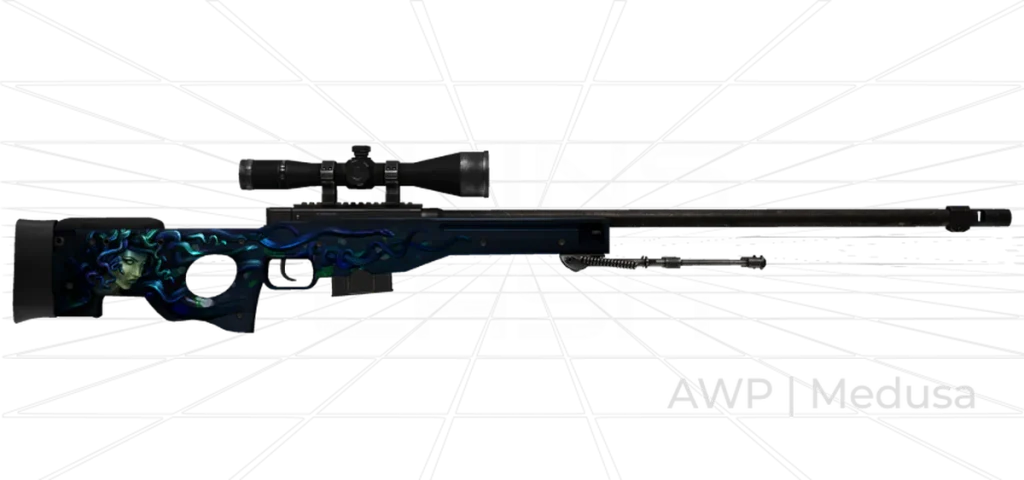
The designations used within the family can easily become confusing. AW, AWM, AWP, L96 and L115 are often mixed together into a single image.
In reality, they represent an entire family of related systems.
The L96A1 was the original British military rifle. Arctic Warfare represented the further development of that concept. The AWM was the Magnum version designed around more powerful cartridges. The British L115A3 became one of the best-known military implementations of this Magnum line.
Accuracy International received the contract for the L115A3 in 2008. In British Army service, the rifle formed part of the Sniper System Improvement Programme, which included not only the weapon itself but new day and night sights, rangefinders, observation equipment and other accessories. The first systems were sent to Afghanistan as early as May 2008.
The L115A3 used the .338 Lapua Magnum cartridge, designated 8.59 mm by the British Army.
This clearly demonstrated why the new caliber had been needed in the first place. The British Army notes that the heavier 8.59 mm projectile is less affected by deflection at extreme ranges than the 7.62 mm ammunition used by the L96.
Yet the L115A3 remained a reasonably portable weapon.
It weighed approximately 6.8 kg, measured 1,300 mm in length, fed from a five-round magazine, and produced a muzzle velocity of roughly 936 m/s. The British Army listed its effective range as more than 1,100 meters.
During testing, however, the results proved even more interesting. In 2008, the British Army’s official Soldier magazine reported that shooters were regularly hitting targets at nearly a mile — roughly 1.5 kilometers — with the L115A3.
Then something happened that permanently transformed the rifle into a legend.
2,475 Meters
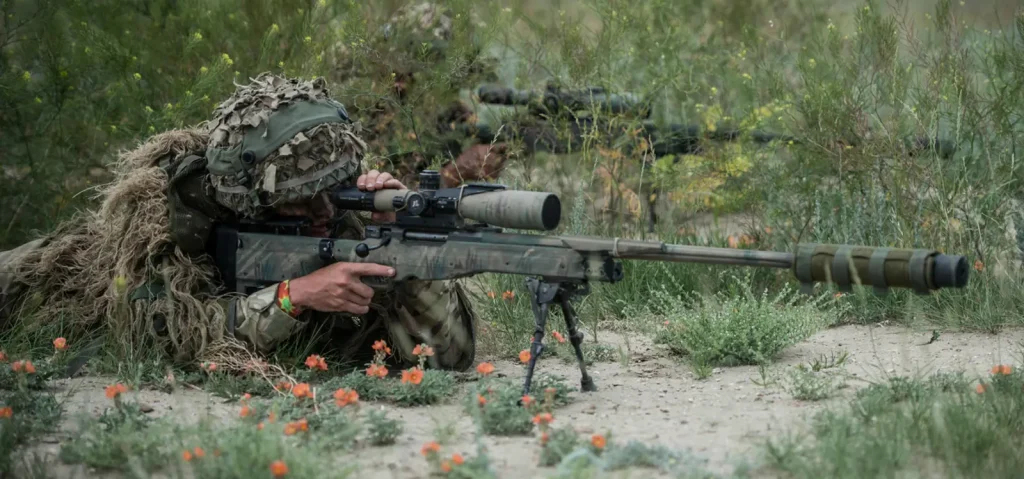
In November 2009, British sniper Craig Harrison was operating in Afghanistan’s Helmand Province. During an engagement, he had to fire at enemy combatants at an extraordinary distance.
The range was 2,475 meters.
Harrison used an L115A3 chambered in .338 Lapua Magnum and achieved two hits on enemy combatants at that distance, before disabling a nearby machine gun with another shot. At the time, the achievement was widely recognized as a record for a confirmed sniper kill.
What makes the story particularly interesting is the difference between the rifle’s stated performance and what happened in practice.
The British Army listed the L115A3’s effective range as more than 1,100 meters. During testing, experienced shooters were reliably engaging targets at around 1,500 meters. Harrison fired at almost two and a half kilometers.
This does not mean that the L115A3 suddenly becomes a “2.5-kilometer effective-range rifle.” Quite the opposite: Harrison’s achievement demonstrates just how extreme the engagement was. At such distances, accurate range estimation, air temperature and density, wind conditions along different sections of the bullet’s trajectory, the characteristics of the ammunition, and the experience of the shooter all become enormously important.
That is why the record cannot be attributed solely to the weapon.
Accuracy International created a system capable of making such a shot possible. But the final distance between technical possibility and an actual hit still depended on the man behind the rifle.
It might seem that Harrison’s achievement should have been the event that made the Arctic Warfare famous around the world.
For millions of people, however, the rifle had already become a legend for an entirely different reason.
The AWP
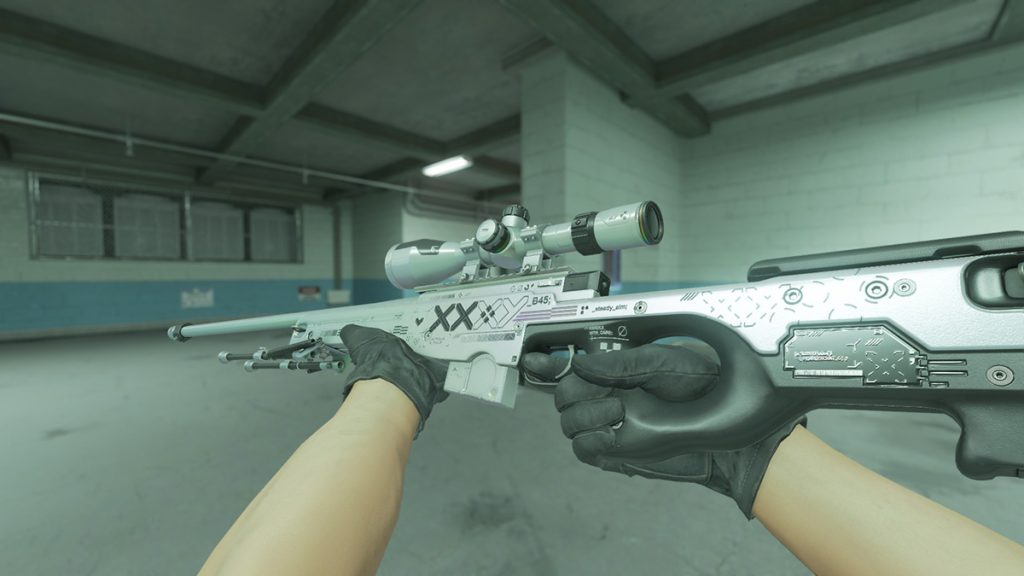
Ask someone with little interest in firearms where they first encountered an Accuracy International rifle, and the answer may be surprising.
Not the British Army. Not Afghanistan. Not a firearms magazine.
Counter-Strike.
The AWP has been present in the series almost from the beginning and gradually became one of the game’s defining weapons. Even its name developed a life of its own. In gaming communities around the world, the AWP became more than simply a combination of three letters; it created an entire role and style of play around the player carrying it.
PC Gamer has described the AWP as one of Counter-Strike’s iconic weapons. Within the game’s mechanics, it occupies a unique position: it is expensive, seriously limits mobility, and places enormous importance on the first accurate shot, but in the right hands it can change the course of an entire round almost instantly.
The game even created its own psychology around the weapon.
An experienced player does not necessarily need to see an opponent carrying an AWP. Sometimes hearing its distinctive, thunderous report is enough to change routes, approach the next corner more cautiously, or abandon an attempt to cross an exposed section of the map altogether.
The weapon begins influencing the battle before it has even hit anyone.
That may be one of the reasons why the virtual AWP became so enormously popular.
The Real AWP Is Nothing Like Counter-Strike
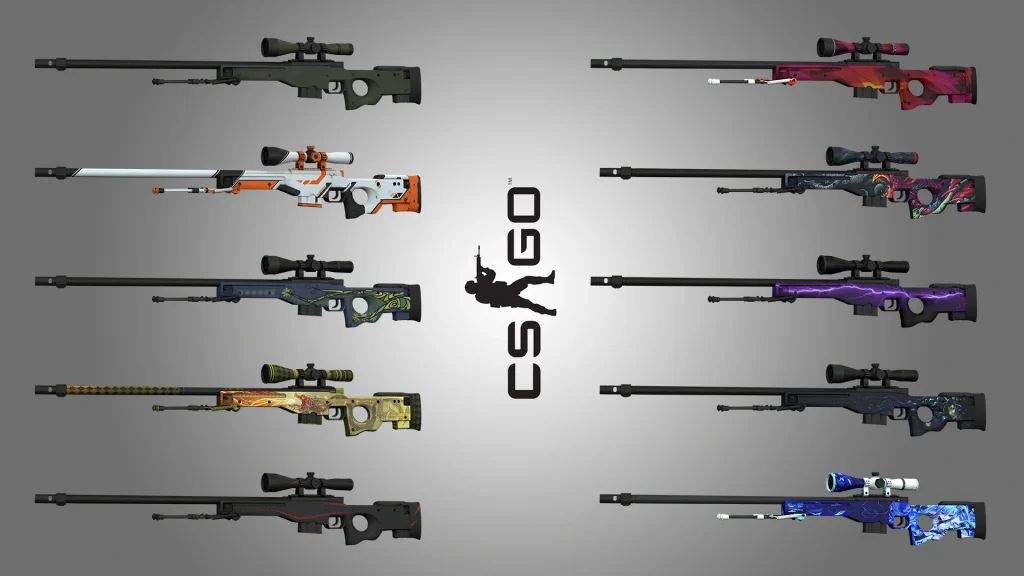
Naturally, video-game mechanics have only a limited relationship with real-world precision shooting.
In Counter-Strike, the AWP became something close to a portable cannon: a hit often means an immediate kill, while the weapon’s balance is built around enormous single-shot power, a slow rate of fire, high cost and the need to carefully select firing positions.
A real sniper rifle exists in an entirely different world.
For a professional shooter, cartridge power and mechanical accuracy are only part of the equation. Range must be determined, wind assessed, atmospheric conditions taken into account, the target’s position studied and numerous other factors considered. The sniper is also part of a pair or a larger team and performs far more tasks than simply pulling the trigger.
There is another amusing source of confusion as well.
The gaming AWP is often directly associated with the L115A3 and the .338 Lapua Magnum cartridge, although this is not entirely accurate. The Accuracy International family contains numerous related models, while Counter-Strike’s interpretation has, over decades, effectively evolved into its own composite image of the Arctic Warfare family.
The real rifle used by Craig Harrison and the famous green AWP from Counter-Strike are therefore close relatives, but they should not be treated as exactly the same weapon.
Mass culture, however, had little reason to care about such distinctions.
When a Video Game Becomes More Powerful Than Advertising
It would be difficult for any firearms manufacturer to imagine a more effective way of making the silhouette of its product instantly recognizable.
Accuracy International has supplied its systems to military and law-enforcement organizations around the world. The company itself says that over its history its products have been delivered to more than 70 countries.
But even that reach cannot be compared with the audience of Counter-Strike.
Millions of players spent countless hours looking at the distinctive Arctic Warfare silhouette on their screens. They became familiar with its green bodywork, the shape of its stock, its long barrel and oversized telescopic sight. For many people, the virtual AWP became the visual definition of what a modern sniper rifle was supposed to look like.
The result was a rather unusual cultural phenomenon.
Normally, game developers select a famous weapon because it is already well known. In this case, the process began working in both directions. Real Accuracy International rifles already had a serious military reputation, while Counter-Strike multiplied their recognition far beyond the firearms community.
The AWP stopped being merely the name of a rifle.
It became part of the language of video games.
Arctic Warfare Continued to Evolve
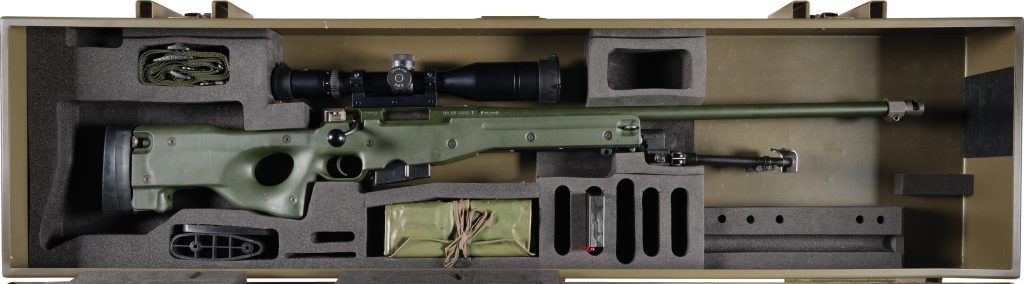
It would nevertheless be a mistake to imagine the AW family as a weapon frozen somewhere in the era of Counter-Strike 1.6 and the war in Afghanistan.
Accuracy International continued to develop the original concept. New chassis systems appeared, ergonomics improved, equipment mounting systems changed and the range of available calibers expanded. Modern descendants of the original L96 are now significantly different from the rifles of the 1980s, although the basic engineering principles — and even the family resemblance — remain easy to recognize.
The company continues to place particular emphasis on reliability under harsh conditions. Modern Accuracy International rifles are tested in extreme cold, heat, ice, mud, sand and dust, as well as against drops and prolonged hard use.
In a sense, the story has come full circle.
The requirement for extreme reliability was what once transformed an ordinary British sniper rifle into the Arctic Warfare. Decades later, the same principle remains one of the defining characteristics of Accuracy International’s weapons.
Two Legends, One Rifle Family
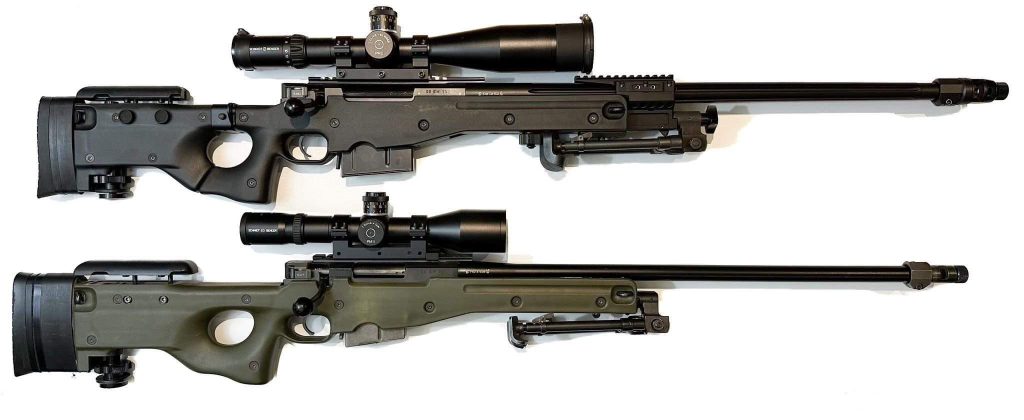
The history of the Arctic Warfare is unusual even by the standards of famous firearms.
It was not created to set records, and certainly not to become a video-game icon. Accuracy International’s founders wanted a highly practical sniper system: accurate, durable, comfortable for a professional shooter and capable of continuing to function after exposure to freezing temperatures, heat, sand and the constant abuse of military service.
An entire family grew from that practical idea.
The L96 entered British Army service. The Swedish competition helped transform the design into the Arctic Warfare. Magnum versions expanded the system’s long-range capabilities. The L115A3 and .338 Lapua Magnum became one of the best-known combinations for extreme-range precision shooting, while Craig Harrison’s 2,475-meter shots entered sniper history.
But another Arctic Warfare existed alongside it.
The green AWP sat beside virtual crates on de_dust2, changed hands after rounds, and made players think twice about peeking around a corner after hearing a single unmistakable shot.
Eventually, the rifle’s real and virtual reputations began reinforcing each other. In the military world, Accuracy International became one of the best-known manufacturers of precision rifles. In popular culture, the AWP became almost synonymous with the sniper rifle itself.
Perhaps that is the ultimate level of recognition a weapon can achieve: when millions of people recognize its silhouette even though they have no idea what its real-world prototype is actually called.