"Filin." The Forgotten Missile That Marked the Start of the USSR's Journey Toward Tactical Nuclear Weapons

When people think of Soviet missiles, they usually mention the “Katyusha,” the R-7, the “Skad,” the “Luna,” the “Tochka,” the “Oku,” and the “Iskander.” Compared to them, the “Filin” has been all but forgotten. For most people, it’s more the name of a bird than a weapons system. Yet it was precisely in the mid-1950s that the “Filin” became one of the USSR’s first serious attempts to create a mobile tactical missile system for the ground forces.
It did not achieve widespread fame. It was quickly overshadowed by later systems. But the significance of the “Filina” lies elsewhere: it was one of the first steps toward a new military missile that could not only be tested but actually deployed by the troops. It marked the transition from experimentation to a practical weapon.
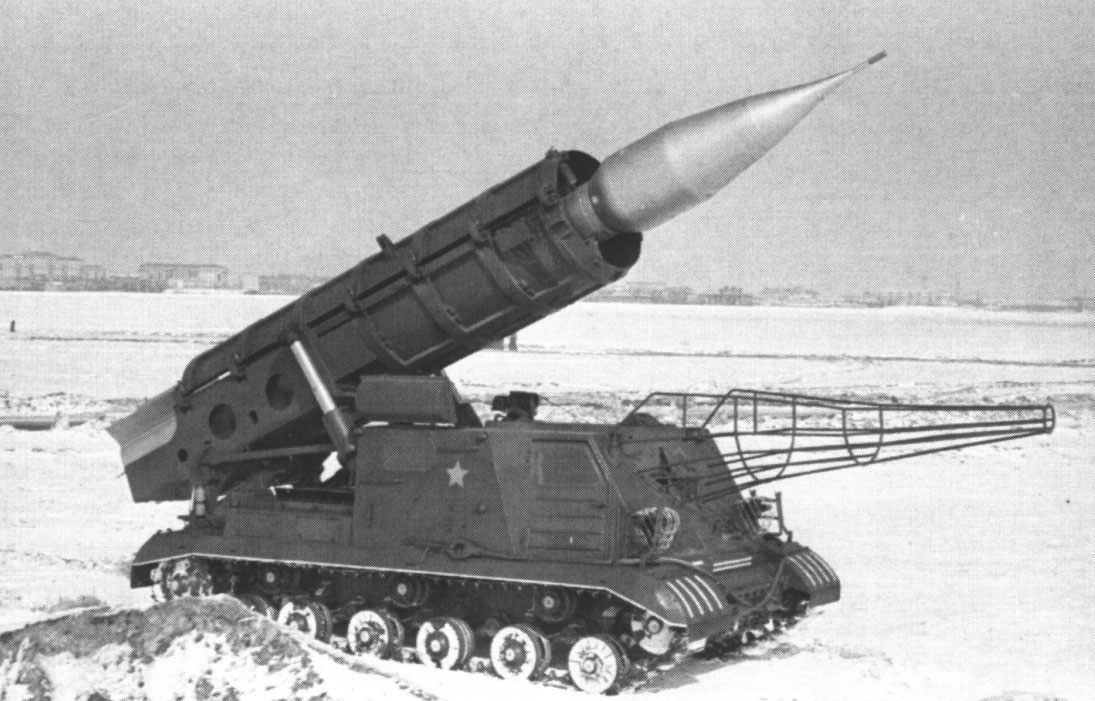
What is “Filin” in the strictest sense?
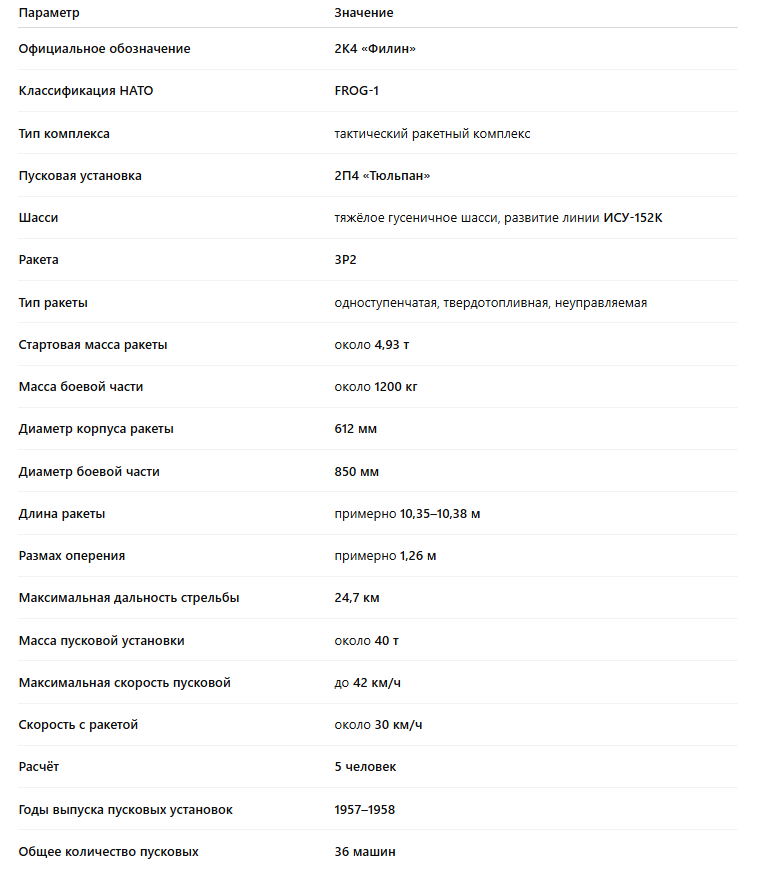
The “Filin” is the 2K4 tactical missile system. In the West, it was known as the FROG-1. The system consists of a self-propelled launcher, a 3R2 solid-fuel unguided missile, training equipment, and mission control software.
The missile is unguided. It is not a high-precision weapon, but rather a means of delivering a powerful warhead to the target area. Compared to later systems, the “Filin” appears crude and like a stopgap. But for its time, it was a serious piece of equipment: a large solid-fuel missile mounted on a self-propelled chassis, designed for the tactical battlefield of the nuclear age.
Why Did the USSR Need Such a System?
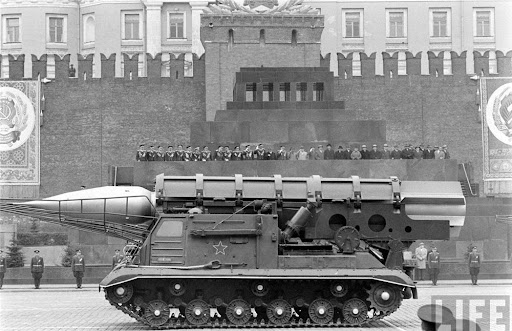
Mid-1950s—Military leaders around the world are rethinking warfare in the context of tactical nuclear weapons. Artillery is no longer sufficient to meet all operational requirements. Aviation depends on weather conditions, air superiority, and the time it takes to reach the target. A mobile and rapid means of striking targets at tactical depth was needed.
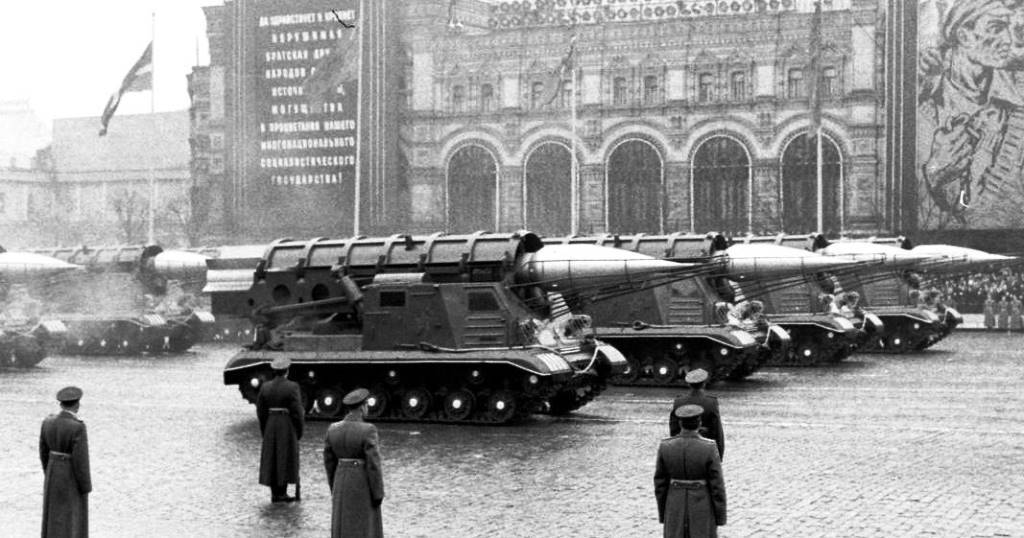
The “Filin” was conceived primarily as a carrier of a nuclear warhead on the battlefield. The question was this: how to deliver not just a projectile, but a special warhead to the target—and to do so from a mobile ground platform. The “Filin” became part of the Soviet response to an early-stage nuclear war: a self-propelled missile system was intended to strike command centers, troop concentrations, airfields, or supply hubs.
What the complex looked like
The most striking feature is its appearance. It is no longer a cannon or a wartime rocket launcher. It is a large 2P4 “Tulip” self-propelled launcher mounted on a heavy tracked chassis, carrying a large rocket with an over-caliber warhead. It’s technology from a transitional era: still crude, heavy, and almost artillery-like in feel, yet already operating according to the logic of rocket-propelled weapons.
The launcher was built on a heavy chassis derived from the ISU-152K series. The system weighs about 40 metric tons. Its maximum speed is up to 42 km/h; with a missile attached, it is about 30 km/h. It is not a vehicle designed for rapid maneuvering, but neither is it a stationary behemoth. It is a mobile system that can be transported, deployed, and used outside of concrete fortifications.
The 3R2 rocket had a launch mass of about 4.9 metric tons and a maximum range of approximately 24.7 km. For the mid-1950s, this was a formidable tactical strike weapon.
Technical Specifications of the 2K4 “Filin” System
Why the “Filin” was uncontrollable and what that meant
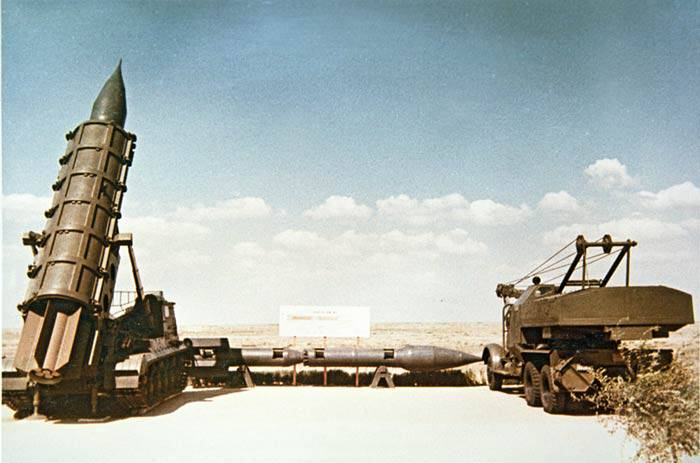
Today, the word “missile” almost automatically conjures up images of guidance and precision. But in the 1950s, this was not the norm for tactical systems. The “Filin” was unguided. Guidance was provided by the launcher, and from there the rocket flew like a ballistic projectile, stabilized by spin. Accuracy was low. Such systems were not designed to hit a window or even a single hangar. The objective was to deliver a powerful warhead to the target area. For conventional high-explosive fragmentation warfare, this is unimpressive. For tactical nuclear use, the logic is different: the impact effect outweighs the dispersion.
“Filin” belongs to an era when the focus was on power, agility, and a new mode of delivery, rather than on precision craftsmanship.
Why is it mentioned less often than “The Moon”?
The “Luna” proved to be more successful both as a class and as a historical symbol. In the late 1950s and early 1960s, systems emerged that better met the military’s requirements, were easier to operate, and had a longer service life.
Against this backdrop, the “Filin” quickly came to be seen as an early, intermediate step. It was too heavy, too dependent on first-generation logic, and too closely tied to the early phase of Soviet nuclear-missile thinking. The technology fades into the background not because it was unimportant, but because something more mature is taking its place. The “Filin” fell victim to its own historical position: too early to become a cult classic, and too transitional to remain in the spotlight.
Why It Can’t Be Called a Failure
The “Filin” remained in the shadow of better-known missile systems, but it was no coincidence that it appeared in the mid-1950s. It became one of the Soviet Union’s first concrete steps toward developing mobile tactical missile weapons for the army. True, the system quickly became obsolete and did not achieve great fame. But its historical significance lies elsewhere: it demonstrated how Soviet military technology was learning to translate the new nuclear era into the language of land warfare. Therefore, the “Filin” is important not as the pinnacle of development, but as an early and highly revealing stage in a major turning point.
Source — https://dzen.ru/a/aedzMoI7Bm6h2O4X