There is a shot counter hidden inside the grip of Estonia’s service rifle. It does not help the soldier aim or tell them how many rounds remain in the magazine. Instead, it tells the armorer how much work that particular rifle has done. One may have seen a handful of training sessions; another, years of intensive firing. They can look much the same while needing very different maintenance.
That detail offers a useful way into the thinking behind the R20 Rahe. Estonia acquired a modern American-made rifle, but the customer’s requirements are the more interesting part: a weapon that accommodates different shooters, uses a modular design, and keeps a record of each individual rifle’s service.
An Estonian Name, an American Pedigree
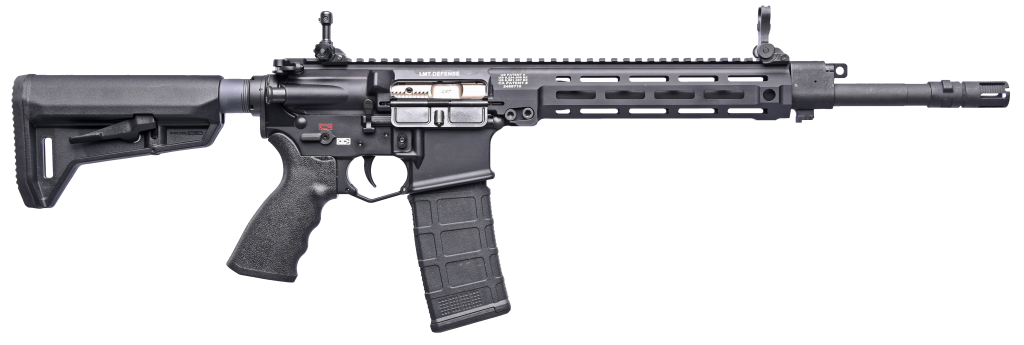
Rahe means “hail” in Estonian. Behind the name is a family of rifles made by Lewis Machine & Tool, better known as LMT. The silhouette is immediately familiar: a magazine ahead of the trigger guard, a telescoping stock, a distinctive pistol grip, and a top rail for sights. It is a development of the American AR platform, the family that includes the famous M16 and M4.
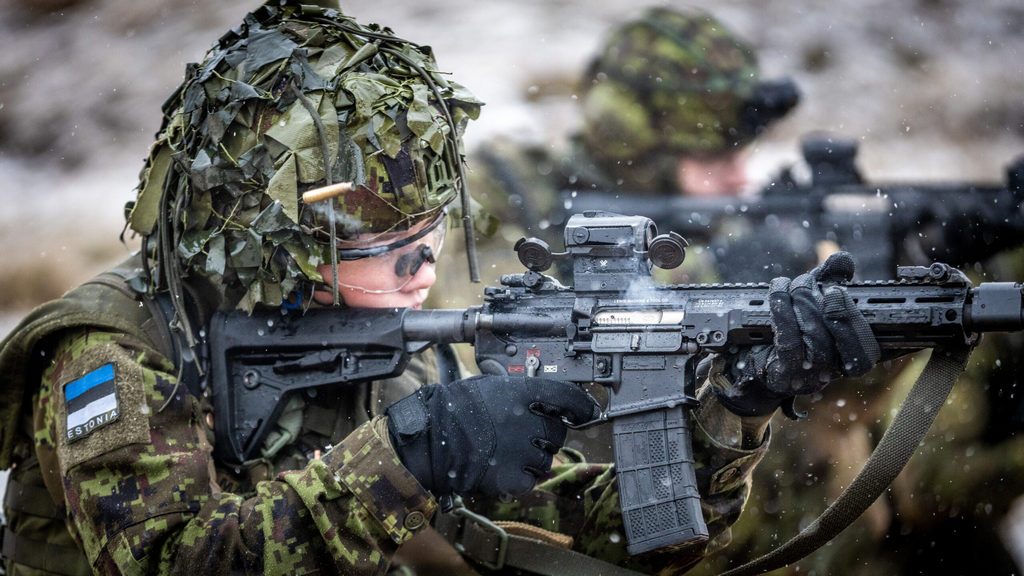
In Estonia, the new weapons replaced Israeli Galils and Swedish AK 4s. The latter designation can be misleading: the AK 4 is Sweden’s version of the German G3, rather than a member of the Kalashnikov family. Once replaced, the older weapons were inspected and placed in reserve.
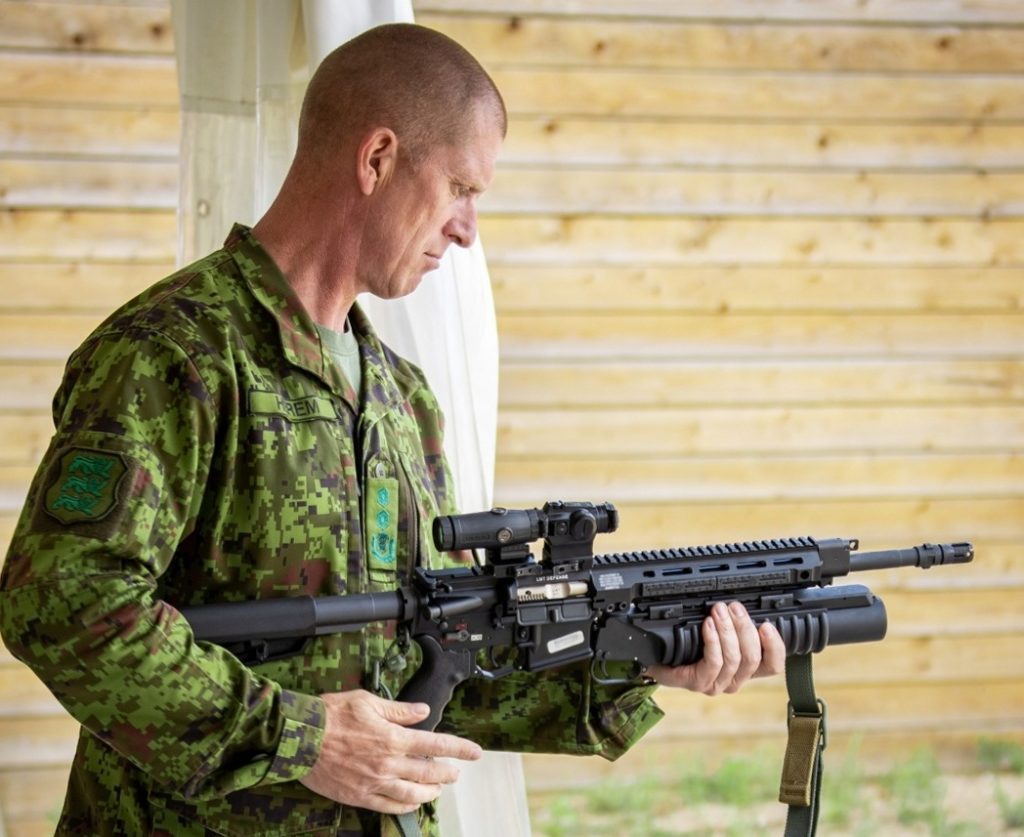
The contract with LMT was signed on July 1, 2019, and the first shipment arrived in the summer of 2020. Deliveries included 5.56 mm assault rifles, 7.62 mm precision rifles, and underbarrel grenade launchers. From the outset, the purchase covered weapons for different roles, along with accessories and instructor training. The next challenge was to make all that equipment convenient for its users—and manageable for the technicians looking after it.
A Familiar Shape, a Different Gas System
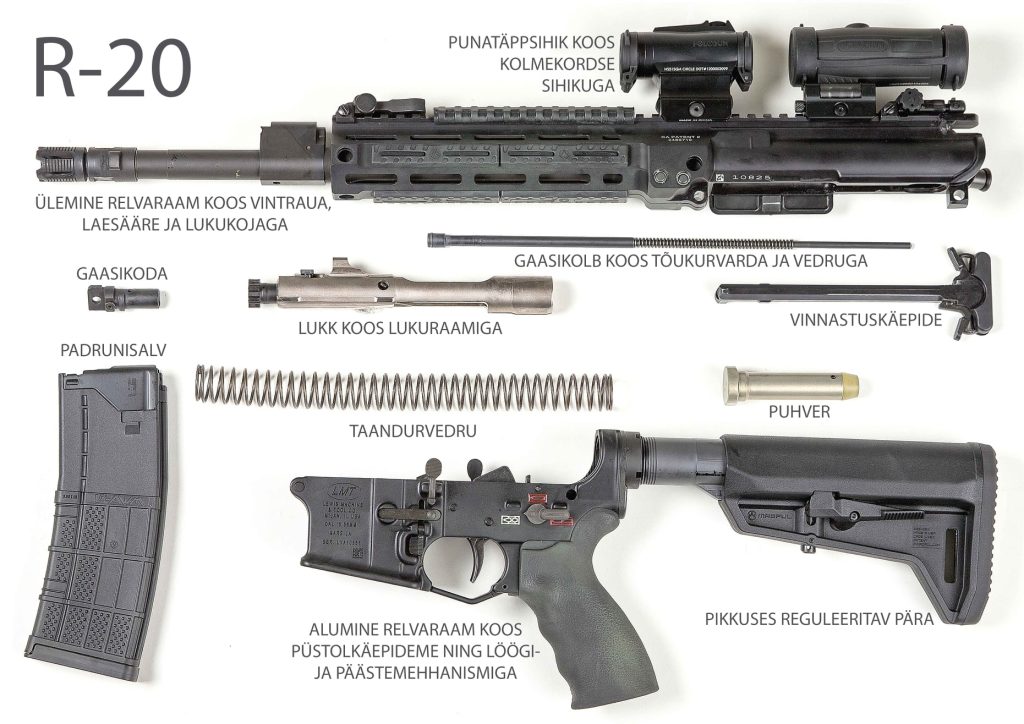
The most significant mechanical feature of the Rahe is hidden inside: its action uses a short-stroke gas piston. In the conventional M16, propellant gases travel through a tube into the bolt carrier, where they do the work. In LMT’s piston design, those gases act on a separate assembly near the barrel, which transfers an impulse to the bolt carrier.
This reduces the amount of hot gas and combustion residue entering the bolt carrier group directly. However, the piston also adds components, weight, and mechanical loads of its own. Its presence alone does not establish superiority over every rifle using another system: reliability depends on how the whole weapon is engineered.
According to LMT, the Estonian configuration has a single-position gas setting. There is a plausible rationale for this in a general-issue military rifle: fewer settings for the user to get wrong. That is an engineering interpretation of the choice, rather than a published statement of the Estonian customer’s requirements.
The standard rifle nevertheless remains relatively light. The Estonian Defence Forces’ official specification lists the R20 at 3.32 kg. The counter and piston have not turned it into a heavy rifle of an earlier generation.
Why Make the Handguard and Receiver One Piece?
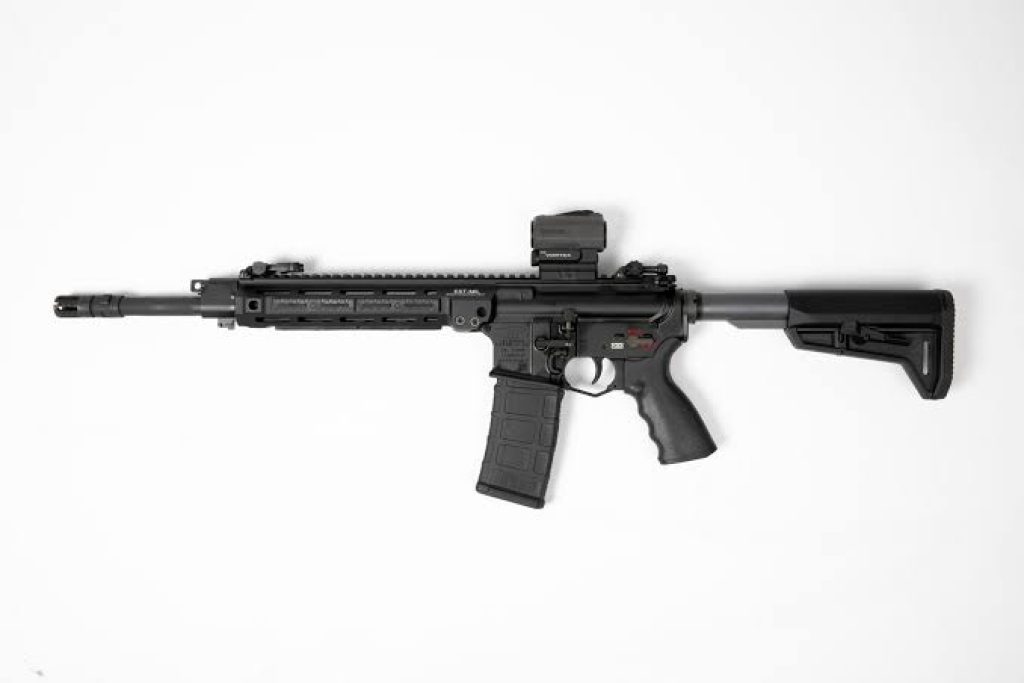
The rifle’s upper assembly uses LMT’s proprietary system: the upper receiver and handguard form a single component. For the shooter, this gives the sight and devices mounted on the handguard a shared, rigid foundation. There is no joint between two separate assemblies to introduce another potential source of movement.
The barrel remains a replaceable module. The practical benefit is especially clear during maintenance: a worn assembly can be replaced while retaining the rest of the rifle. LMT says the design minimizes shifts in the mean point of impact when changing barrels. That is the manufacturer’s claim about the system; it should not be read as a promise that checking the zero is unnecessary.
There is a trade-off. The army gains a convenient maintenance system but depends on compatible components from a particular manufacturer. “Modular” does not mean it can be assembled from any parts that happen to look suitable.
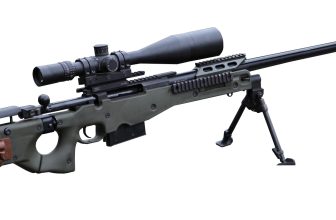
The Rahe family includes the standard R20, the shorter R20 S, and the 7.62 mm R20 L. Their shared pedigree helps standardize weapon handling, but a 5.56 mm rifle cannot become a rifle chambered for the substantially larger cartridge through a barrel swap alone: that requires an appropriately sized platform.
Right-Handed, Left-Handed—and Wearing Winter Gloves
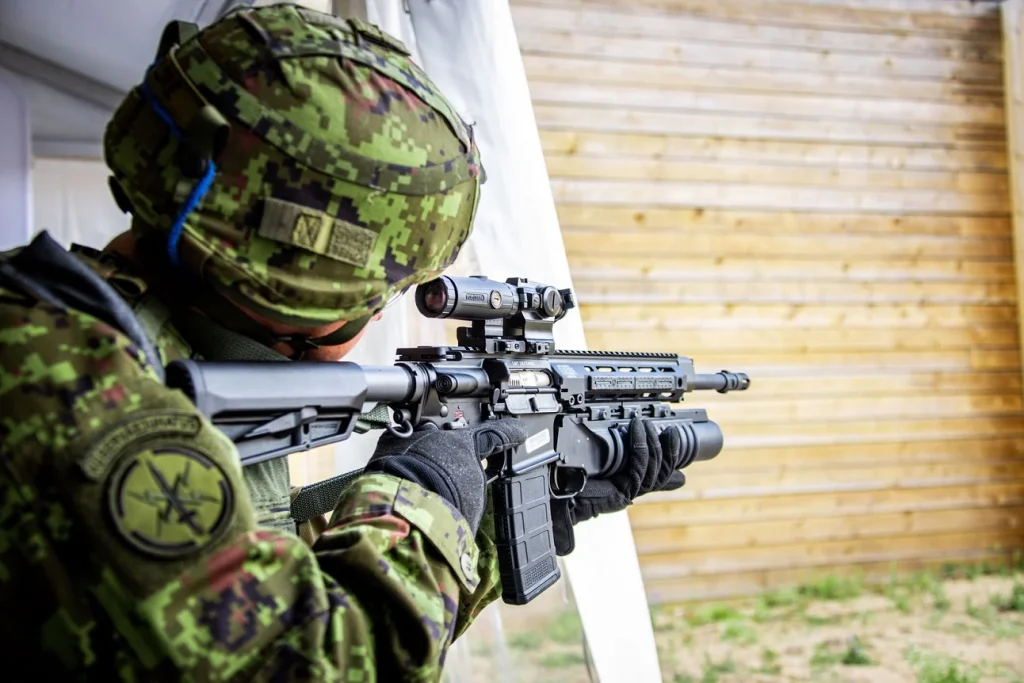
Some changes look modest beside the piston and monolithic receiver, yet the shooter encounters them constantly. The LMT MARS controls are accessible from both sides. The safety, magazine controls, and bolt controls do not force left-handed users to keep adapting to a weapon designed primarily for the right hand.
The Estonian configuration includes an enlarged trigger guard for use with gloves. The telescoping stock allows the rifle’s length of pull to be adjusted to the shooter and their equipment. Such details rarely lead an advertising brochure, but they help determine how comfortable a rifle is to carry and handle every day.
There is another, less visible difference: the “European-style” trigger mechanism allows the safety to be engaged with the hammer uncocked. A conventional AR-15 trigger mechanism does not provide that option. The customer gained a familiar handling feature while retaining the American platform.
A Rifle with Its Own Mileage Record
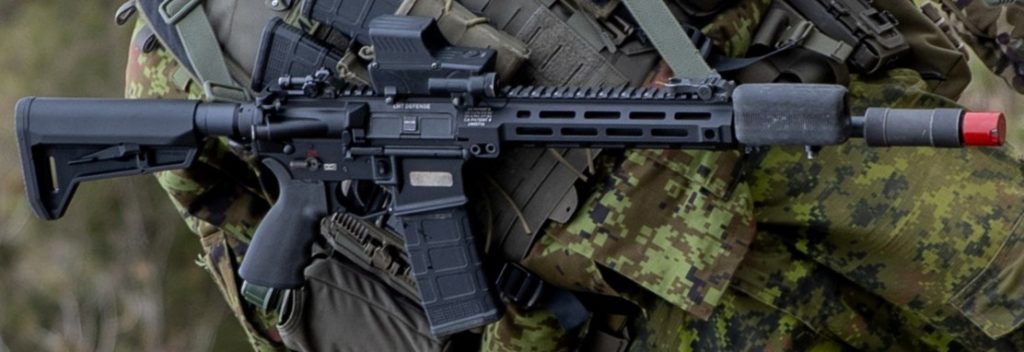
That brings us back to the device in the grip. A counter is useful because the date a weapon was issued says little about its wear. Two rifles made in the same year can have very different service histories: one is used regularly on the range, while the other spends most of its time in storage.
The project involved Visible Assets, the supplier of the RuBee system. According to the company, the contract included integrated shot counters and weapon identification technology. LMT also described armory electronics and maintenance notifications.
These records can help schedule inspections and component replacement according to actual use. However, the number of shots fired remains only one indicator of condition: it cannot, by itself, describe corrosion, damage, or the quality of care. The electronics give the armorer more information; inspection and maintenance remain the armorer’s responsibility.
Here, the word “modern” acquires a tangible meaning. A new rifle should be comfortable to shoot, accommodate the necessary sights, and allow repairs without replacing the entire weapon. The army also needs to know what happens to thousands of individual rifles after they leave the armory.
In the Rahe, that concern for a long service life sits literally in the soldier’s hand. The soldier sees a familiar rifle and another target. The armory gains another entry in that particular weapon’s history.
Selected Specifications of the Rahe Family
| Cartridge | 5.56×45 mm | 5.56×45 mm | 7.62×51 mm |
| Weapon weight | 3.32 kg | 3.15 kg | 4.25 kg |
| Barrel length | 367 mm | 310 mm | 411 mm |
| Magazine capacity | 30 rounds | 30 rounds | 20 rounds |
Figures are taken from the Estonian Defence Forces’ official weapon specifications. The weight of sights and other accessories must be considered separately.