India is preparing to install new BrahMos launchers on warships that entered service when personal computers were still a novelty and should, by conventional standards, have yielded to their successors long ago. The ships in question are the destroyers INS Ranvir and INS Ranvijay, the last representatives of the Soviet Project 61ME design, built in Mykolaiv specifically for the Indian Navy. If the most likely upgrade configuration is confirmed, each could carry 16 supersonic missiles—the same number as modern Indian destroyers commissioned three decades later.
They Were Not Second-Hand Soviet Warships
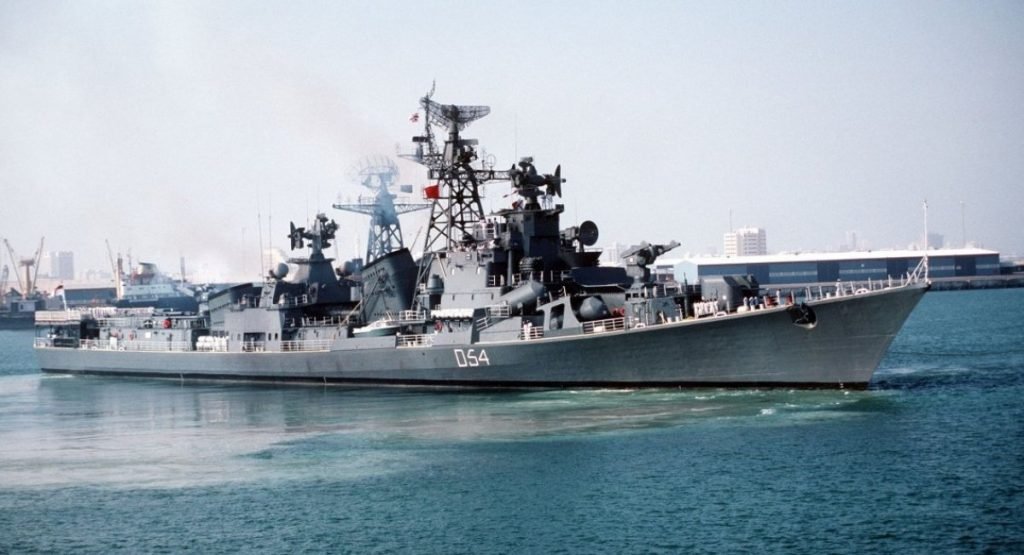
The history of the class is easy to misunderstand. The Rajput-class ships did have Soviet names and were temporarily listed with the Soviet Black Sea Fleet during their trials, but India did not buy used vessels taken from the Soviet Navy’s existing inventory. All five were laid down to a dedicated Indian order at the 61 Communards Shipyard in Mykolaiv and transferred to the customer after completing their trials.
The design was based on the Soviet Project 61 large anti-submarine warfare ship, known in the West as the Kashin class. In the 1960s, it looked almost futuristic, with its sleek silhouette, extensive anti-aircraft armament, and all-gas-turbine propulsion. The design was substantially modified for India. The ships were expected to escort an aircraft carrier, hunt submarines, and repel air attacks, while also carrying anti-ship missiles and a permanently embarked helicopter. The export version received the designation Project 61ME and was classified as a destroyer by the Indian Navy.
The lead ship, Nadezhny, was laid down in Mykolaiv in 1976. The Indian flag was raised aboard her at Poti, Georgia, in May 1980, and she became INS Rajput. She was followed by Gubitelny, Lovkiy, Tverdy, and Tolkovy, which entered Indian service as INS Rana, INS Ranjit, INS Ranvir, and INS Ranvijay. The last of them joined the Indian Navy in late 1987. India therefore received not discarded Soviet warships, but a purpose-built class constructed in the Soviet Union and adapted to Indian requirements.
Five Ships, Three Surviving Hulls
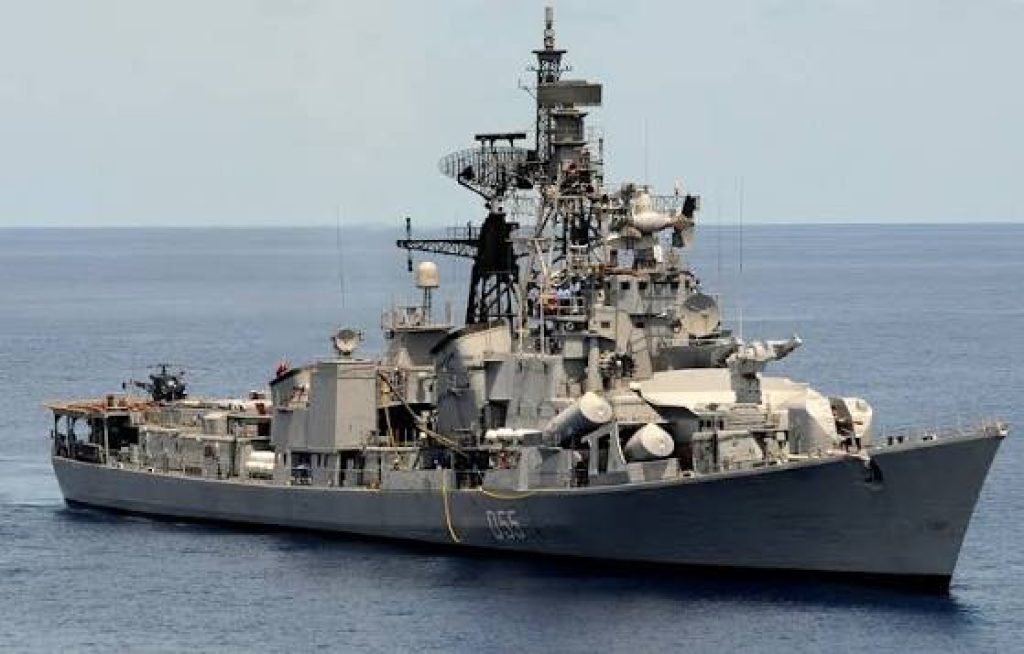
Three of the five destroyers remain in service. INS Ranjit was decommissioned in 2019 and later used as a target during a naval exercise. The lead ship, INS Rajput, served for 41 years before being retired in May 2021. INS Rana, commissioned in 1982, INS Ranvir, commissioned in 1986, and INS Ranvijay, commissioned in 1987, continue to serve.
These are no longer the same ships that once left the Black Sea. Over decades of service, India repeatedly replaced their radar, sonar, and missile systems. Soviet-built hulls and gas turbines now coexist with Indian electronics, Israeli Barak surface-to-air missiles, and Italian-designed 76 mm guns. The destroyers also became some of the first naval platforms to carry BrahMos. In 2008, INS Ranvir conducted the first launch of a BrahMos missile from a vertical launcher aboard a moving warship.
On INS Ranvir and INS Ranvijay, eight BrahMos missiles were installed in a vertical launching system at the stern, replacing one of the two original launchers for the Volna surface-to-air missile system. Four inclined launchers for Soviet P-15 Termit anti-ship missiles, known in the West as Styx, remained in the bow. The result was a warship typical of India’s incremental approach to modernization: a modern strike weapon operating alongside a missile system whose origins go back to the 1950s.
What India Has Ordered
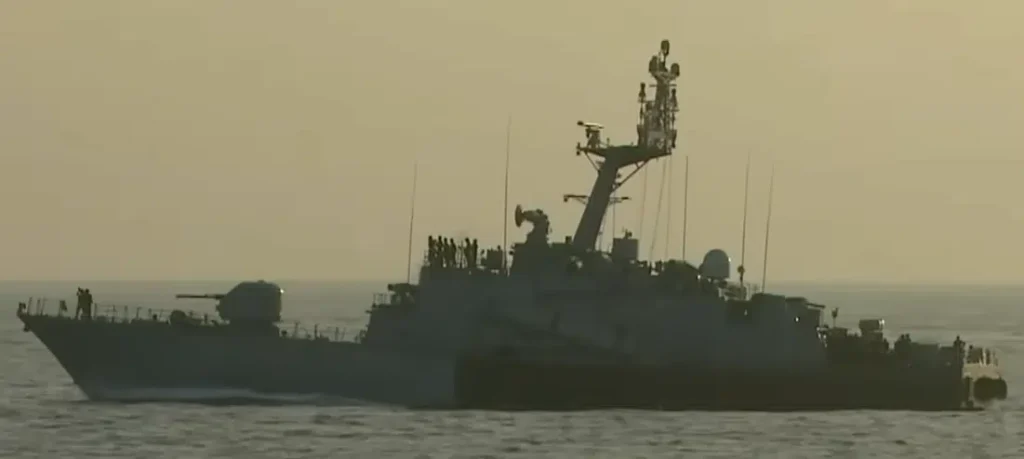
On October 6, 2026, India’s Ministry of Defence signed a contract with BrahMos Aerospace worth 6.615 billion rupees, or approximately $68 million. The company is to supply BrahMos launchers and fire-control systems for Indian Navy ships. At least 68 percent of the project’s content must be sourced domestically.
The official announcement did not identify the vessels involved. However, material displayed during the signing ceremony referred to two Veer-class ships and two Ranvir-class ships. The latter designation most likely refers to INS Ranvir and INS Ranvijay. The third surviving destroyer, INS Rana, has recently been used as a test platform for India’s new VL-SRSAM air-defence system and has a different configuration in its stern section.
The most plausible upgrade would remove the four remaining P-15 launchers from INS Ranvir and INS Ranvijay and replace them with four twin-cell inclined BrahMos launchers. The same arrangement had previously been fitted to INS Rajput. Combined with the eight missiles already housed in the aft vertical launcher, this would increase each ship’s total BrahMos load to 16.
For now, however, this remains a well-founded assessment rather than an officially announced configuration. The Indian Ministry of Defence has confirmed the purchase of launchers and fire-control systems, but has not disclosed which ships will receive them or how many missiles will be carried aboard each vessel. The contract’s value also covers shipboard equipment, not the procurement of the missiles themselves.
An Old Ship with the Punch of a Modern Destroyer
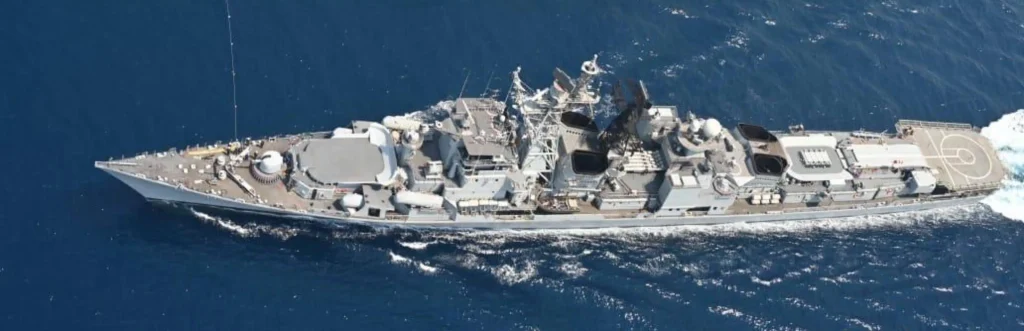
If the project follows the expected configuration, the two 40-year-old ships will carry a missile salvo comparable to that of modern Kolkata- and Visakhapatnam-class destroyers. BrahMos can engage both ships and targets ashore, giving the veterans substantial offensive power. The change would not require the entire ship to be rebuilt: removing the obsolete and bulky P-15 missiles and their inclined launchers would free a suitable location for the new system.
The logic behind the modernization becomes clearer when the ships are judged by the Indian Navy’s requirements rather than the age of their hulls. New destroyers are expensive and take years to build. INS Ranvir and INS Ranvijay are already part of the Eastern Fleet, have trained crews, and remain capable of operating across the Indian Ocean. Replacing the thoroughly outdated P-15 simultaneously increases their striking power and simplifies the Navy’s weapons inventory, as BrahMos steadily becomes the standard heavy missile of India’s surface fleet.
Sixteen modern missiles, however, do not turn an old hull into a new warship. The age of the propulsion system, the condition of the machinery, the limitations of the air defences, and the remaining structural life of the hull do not disappear. INS Ranvir and INS Ranvijay may acquire the offensive punch of a modern destroyer, but not its survivability, reduced signature, or ability to defeat a complex air attack. The engineering task is also far from trivial: the new launchers must be integrated into an old design, supplied with power, connected to the fire-control system, and arranged to carry heavy three-ton missiles safely.
That is what makes this modernization more interesting than a routine weapons contract. Ships designed in Leningrad, built in Mykolaiv, and handed over to India through the Soviet naval base at Poti may enter their fifth decade with the missile salvo of a much newer destroyer. Their Soviet weapons are gradually disappearing, but the ships themselves remain in service—now as carriers of a missile that India regards as one of the leading symbols of its own defence industry.