It could be concealed beneath a cloak, fired almost silently, and required neither gunpowder nor a burning match. One glance at a balestrino is enough to imagine an assassin hiding in the shadowy gallery of an Italian palace, waiting for his victim to come within range.
This is why the miniature crossbow is often called an “assassin’s weapon.” Popular culture has turned it into the perfect instrument for covert murder: compact, quiet, and powerful enough to eliminate an enemy with a single shot.
The real history of the balestrino, however, is both more complicated and more interesting. It was indeed a concealable and dangerous weapon, but historians have found no evidence of medieval “assassins’ guilds” armed with pocket crossbows.
A Small Crossbow from the Renaissance
The Italian word balestrino simply means “small crossbow.” It appears in Italian inventories and documents from the early 15th century, although most surviving examples are believed to date from the 16th to the 18th centuries.
The balestrino should therefore be regarded not so much as a medieval weapon, but as one belonging to the Renaissance and early modern periods.
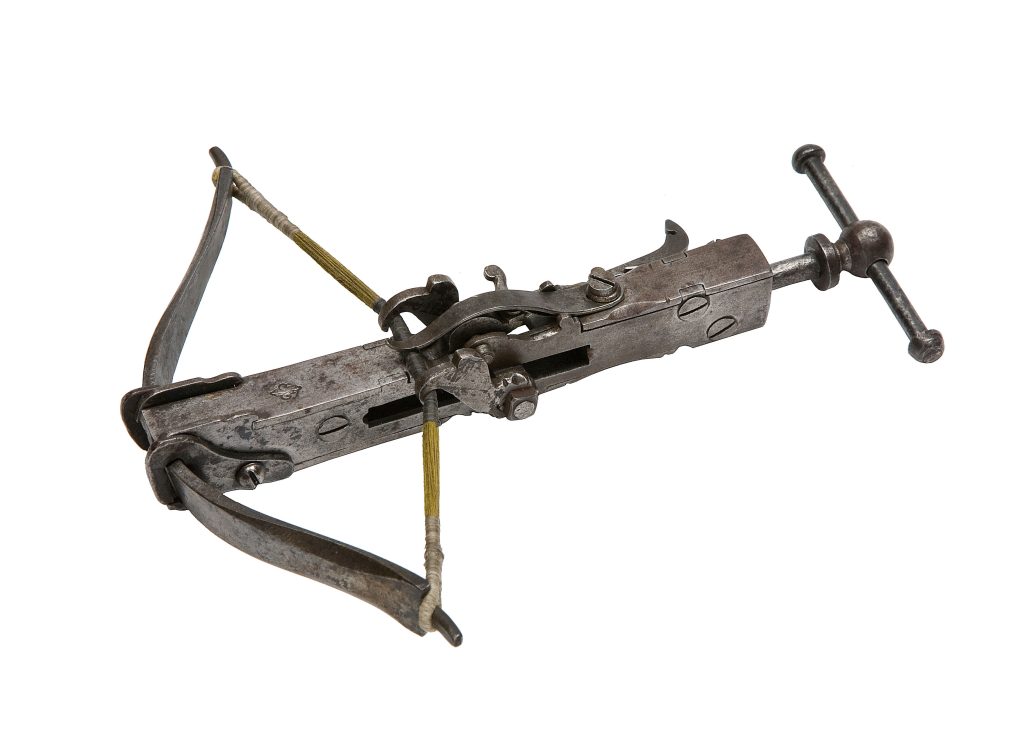
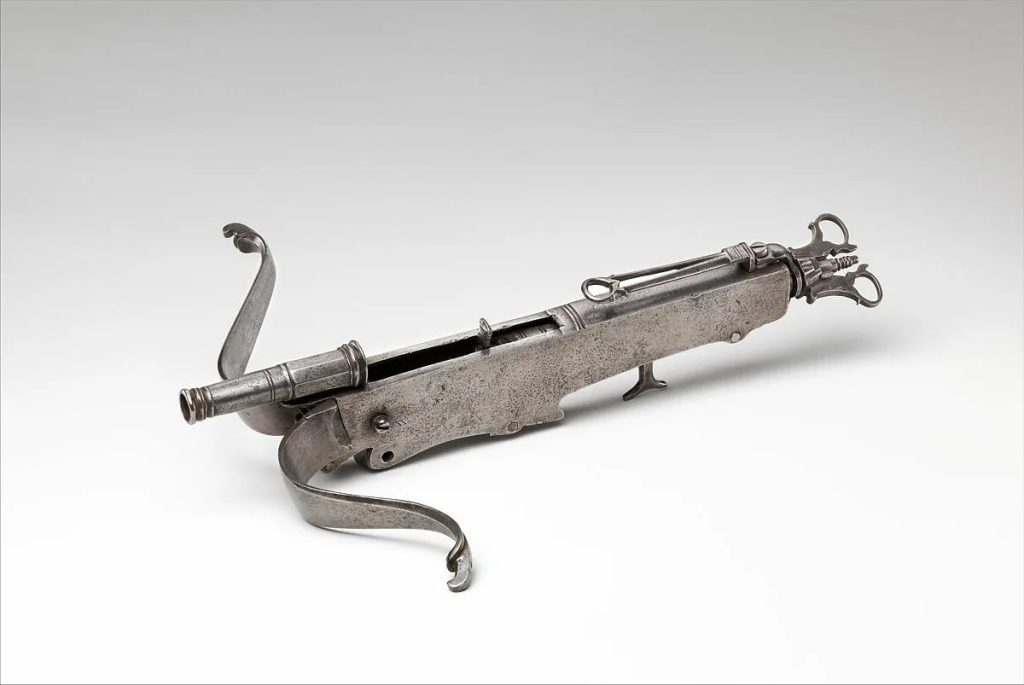
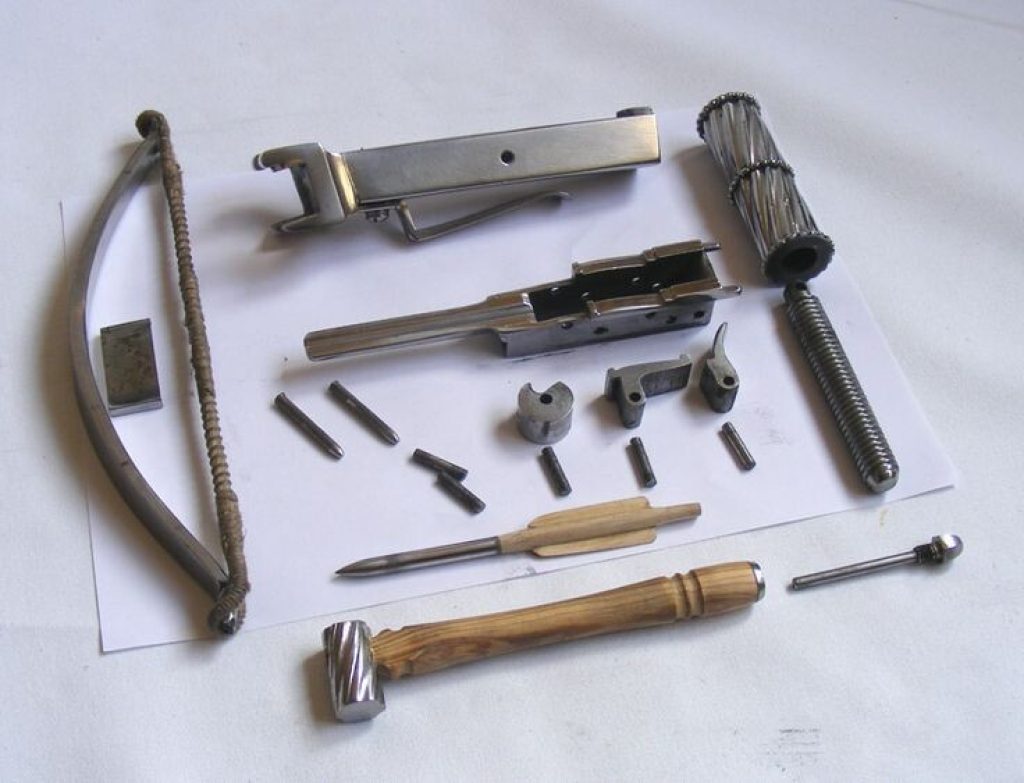
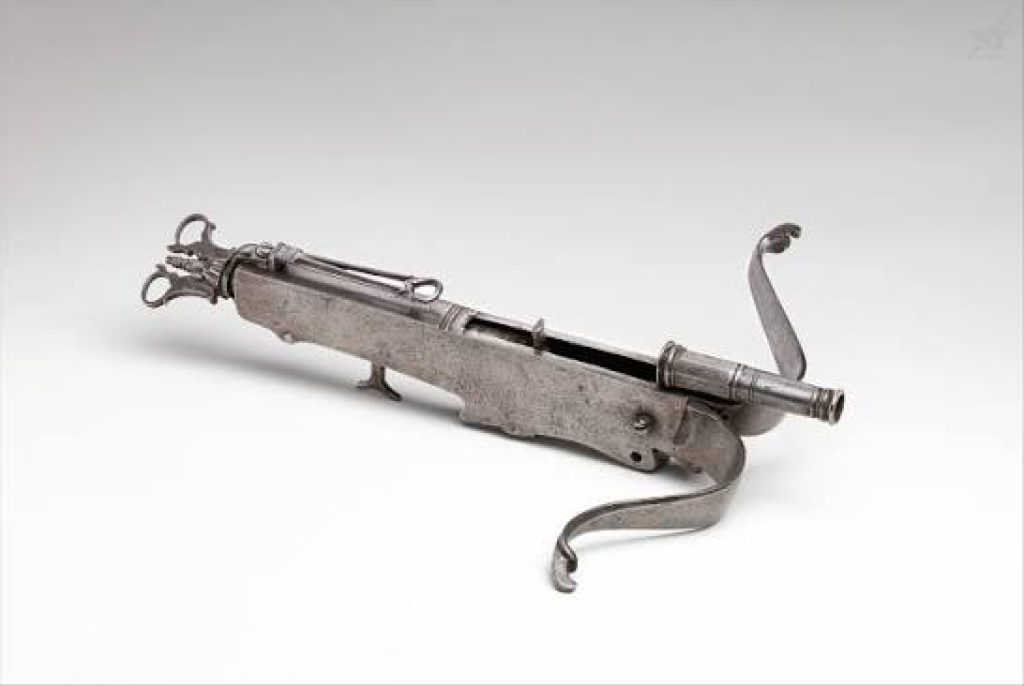
In appearance, it resembled a greatly reduced full-size crossbow. Most known examples had a metal tiller, a steel bow, and an internal screw mechanism for drawing the string. Some were fitted with a hook that allowed the weapon to be carried on a belt.
The balestrino in the Metropolitan Museum of Art measures 28.6 centimetres in length and 21.8 centimetres in width, and weighs approximately 700 grams. It was not exactly a pocket weapon in the modern sense, but it could certainly be concealed beneath a loose cloak or other clothing.
Before firing, the user turned a screw at the rear of the weapon. The internal mechanism moved forward, caught the string, and then slowly drew it back. Once a short bolt had been loaded, the weapon was ready to fire.
This system allowed a very stiff steel bow to be drawn, but it had an obvious disadvantage: reloading took time. The balestrino could deliver one sudden shot, but it was poorly suited to a prolonged fight.
Was It Just a Weak Toy?
The balestrino is sometimes described as an almost harmless self-defence weapon—a Renaissance equivalent of a less-lethal pistol. According to this interpretation, the short movement of the string prevented the small bolt from reaching a dangerous velocity.
Museum evidence contradicts that claim.
According to researchers at the Metropolitan Museum of Art, some balestrini had draw weights exceeding 200 pounds, or 91 kilograms. Certain small crossbows may even have reached 300 pounds—approximately 136 kilograms. Tests conducted with modern reconstructions suggest that such weapons were neither decorative models nor toys.
Draw weight alone, of course, does not determine the power of a crossbow. Because of its short power stroke, a balestrino transferred less energy to its bolt than a full-size military crossbow with an equally stiff bow. It was not designed to penetrate knightly plate armour at a considerable distance.
But it was certainly not safe. A sharp metal bolt fired from a few metres away could cause a serious or fatal wound.
The memoirs of the French nobleman Guichard Déageant, published in 1690, mention a small steel crossbow observed in one of Spain’s colonies. According to the account, a young boy could use it to strike a target the size of a coin from twenty or twenty-five paces, with the bolt penetrating deeply into a wooden plank. This is a single and not entirely verifiable story, but it shows that contemporaries did not regard such weapons as mere curiosities.
Why Was It Called an Assassin’s Weapon?
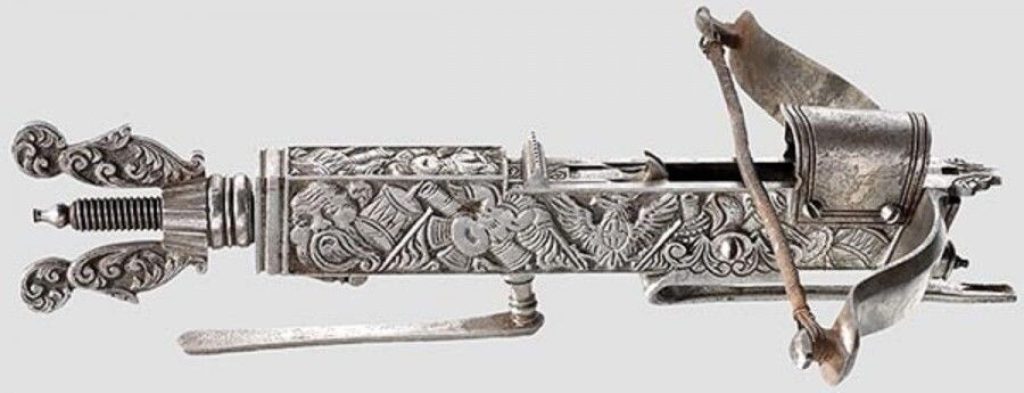
The reasoning seems obvious. The balestrino was considerably smaller than an ordinary crossbow, could be hidden beneath clothing, and did not produce the flash and loud report of a firearm.
A crossbow could also be loaded in advance and kept ready to fire. An archer had to draw a bow immediately before shooting, while a crossbowman only needed to aim and press the trigger.
Authorities understood the danger presented by small, concealable crossbows. Researchers have identified 16th- and 17th-century Italian laws prohibiting the possession of such weapons. In some regions, offenders faced several years of service in the galleys—a remarkably severe punishment for owning what some modern writers describe as a harmless toy.
There is, however, an important qualification: the expression “assassin’s crossbow” appeared only in modern historical and collectors’ literature. Contemporary documents simply called the weapon a balestrino.
Nor do we possess a substantial collection of reliable accounts describing assassinations carried out with these weapons. In theory, a balestrino was well suited to a surprise attack at close range. But the fact that a weapon could be used for murder does not mean that murder was its primary purpose.
A small concealed crossbow might just as plausibly have served for personal protection during a journey, home defence, or as a weapon of last resort.
What About Poisoned Bolts?
Almost every story about a secret weapon eventually acquires a dose of poison.
The balestrino was supposedly loaded with poisoned needles, allowing even a weak hit to kill its victim. The idea is perfectly suited to novels, films, and video games, but there is no reliable evidence that poisoned balestrino bolts were widely used.
Poisoning a crossbow bolt was theoretically possible. In practice, however, the poison had to be prepared correctly, preserved, and introduced into the victim’s body in sufficient quantity. The shooter also risked accidentally injuring himself while loading the weapon.
More importantly, a powerful balestrino did not necessarily need poison. A short steel bolt striking the head, neck, or chest could be deadly on its own.
Poisoned bolts cannot be completely ruled out in isolated cases, but there is no reason to treat them as an essential part of the balestrino’s history.
A Weapon for Women, Merchants, and Frog Hunters?
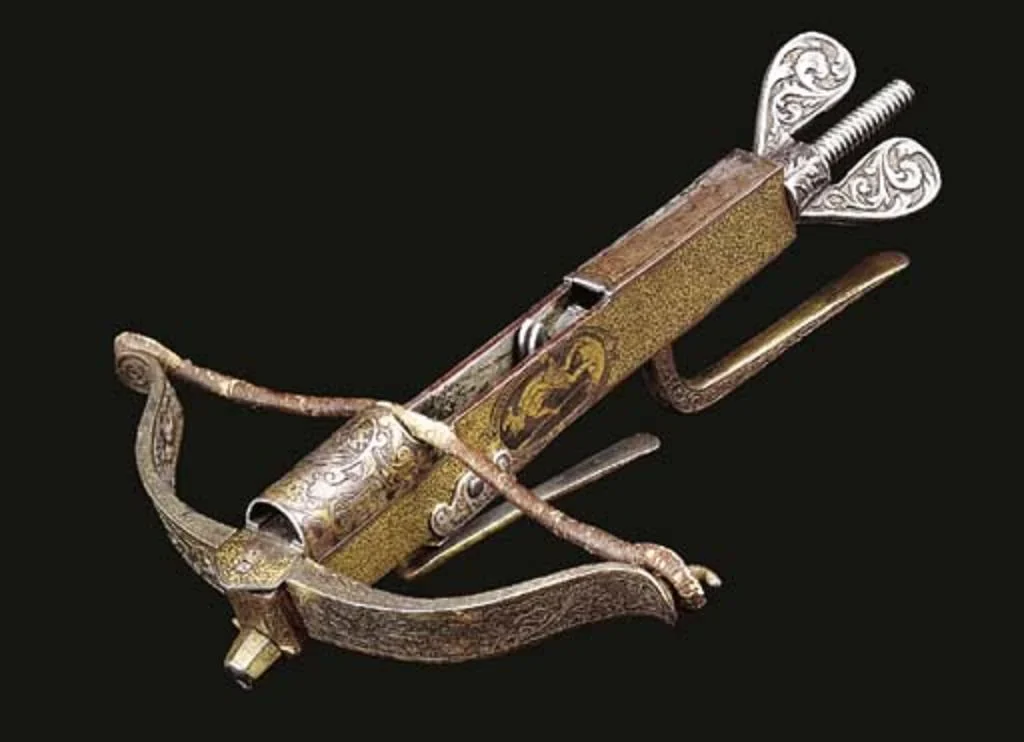
Another legend presents the balestrino primarily as a weapon of personal protection for women. Noblewomen and wealthy townspeople supposedly carried it because they were unable to defend themselves with a sword.
Museum catalogues, however, distinguish the balestrino from small crossbows made for women or children. The balestrino was generally even smaller, often had an all-metal tiller, and used a distinctive internal spanning mechanism. The intended use of one type of crossbow should therefore not automatically be applied to another.
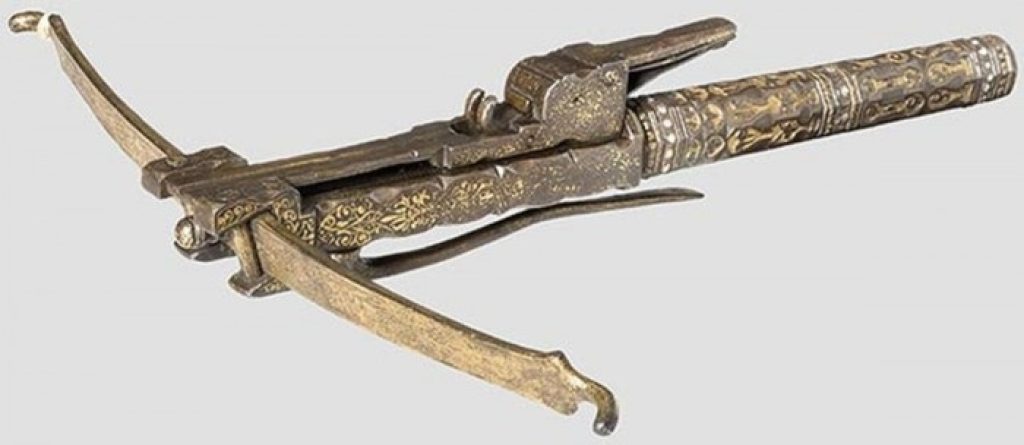
Some small crossbows were indeed used for entertainment, target shooting, and hunting small animals. European sporting crossbows of the 17th and 18th centuries were often richly decorated, serving as displays of their owners’ wealth as well as practical weapons.
This may be the origin of stories about shooting birds, rats, and even frogs. Yet there is no convincing evidence that frog hunting was the principal—or even a common—purpose of the balestrino itself.
Moreover, many surviving balestrini are relatively plain. The Metropolitan Museum example has only modest engraved lines and a few decoratively shaped metal components. It looks less like an aristocratic toy than a compact and entirely functional weapon.
Why Do We Know So Little About It?
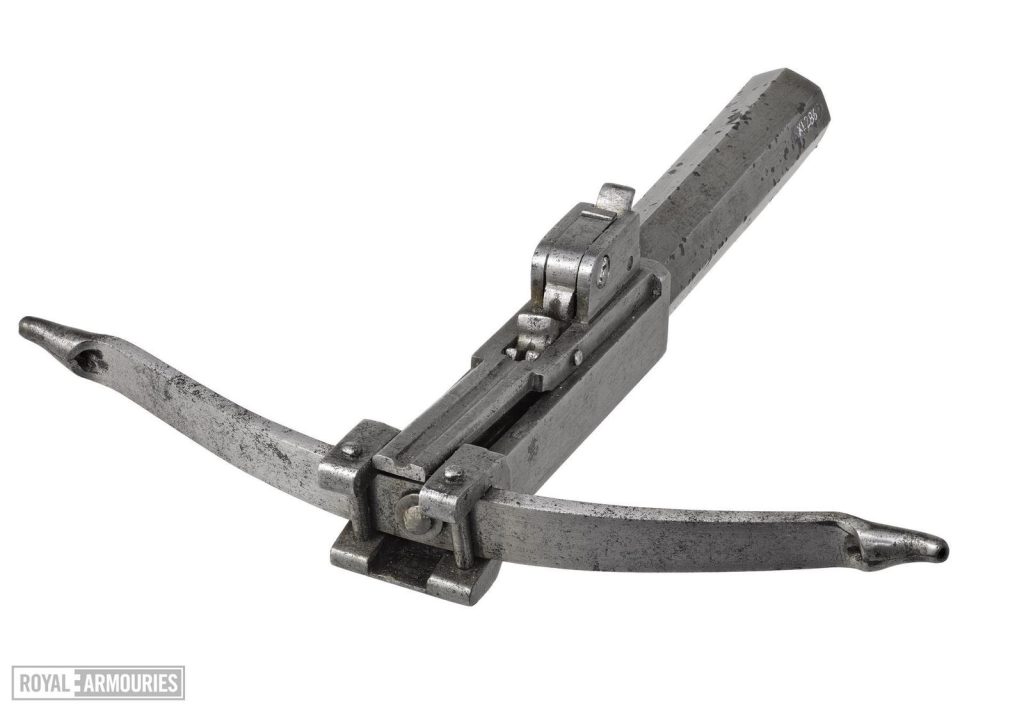
The main problem is the very small number of surviving examples. When the Metropolitan Museum catalogue was prepared, researchers knew of only about two dozen balestrini, and some of those may have been later copies or reconstructions.
Individual examples were modified, repaired, or assembled from components made at different times. Many bear no signatures, dates, or makers’ marks. Determining exactly where each weapon was manufactured—and what it was originally intended for—is therefore extremely difficult.
We do not even know how widely the balestrino was used. It may have been a rare weapon produced only in small numbers. Some miniature crossbows may have been commissioned individually and designed for very different purposes.
Researchers believe the balestrino was probably the ancestor of the pistol crossbows of the 18th and 19th centuries, although no continuous line of development has yet been established.
So Was the Balestrino Really an Assassin’s Weapon?
The question cannot be answered with a simple yes or no.
There is no evidence for a special class of professional killers who regularly carried balestrini. “Assassin’s crossbow” was not a historical term, while stories about poisoned bolts, women’s self-defence, and frog hunting are based largely on assumptions.
But it would be equally wrong to dismiss the balestrino as a harmless toy.
It was a small, almost silent, and easily concealed weapon. Some examples had extraordinarily stiff steel bows and could inflict fatal wounds at close range. Italian authorities considered these crossbows dangerous enough to prohibit them under threat of severe punishment.
The balestrino probably had no single universal purpose. It might have been used for personal protection, concealed carry, target shooting, hunting—and, when the occasion demanded it, murder.
It is precisely this uncertainty that made it such a perfect weapon of legend. An ordinary sword leaves little room for the imagination. A small steel crossbow hidden beneath a cloak seems to tell its own story—one of conspiracies, palace corridors, and a shot that nobody heard.