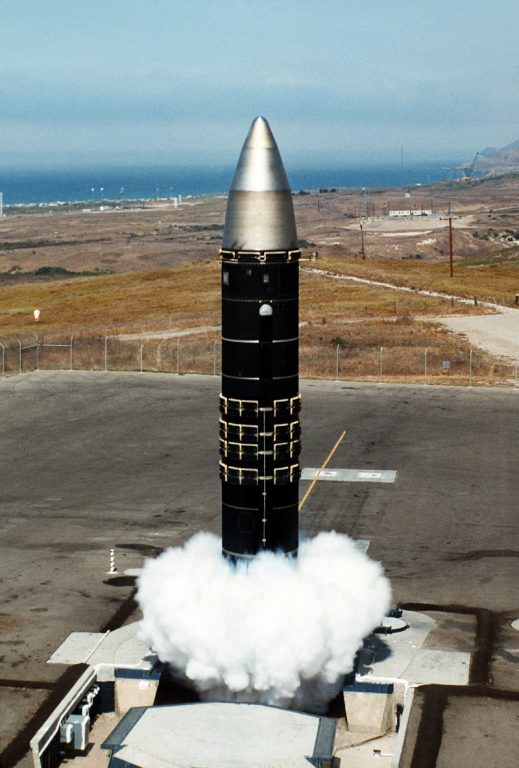
Sometimes the strangest and most futuristic objects aren’t from movies at all, but from the real history of technology. One such example is the navigation “core” of the Peacekeeper ICBM (officially the LGM-118A), which, at the height of the Cold War, represented the pinnacle of engineering in the field of autonomous guidance of moving objects over vast distances.
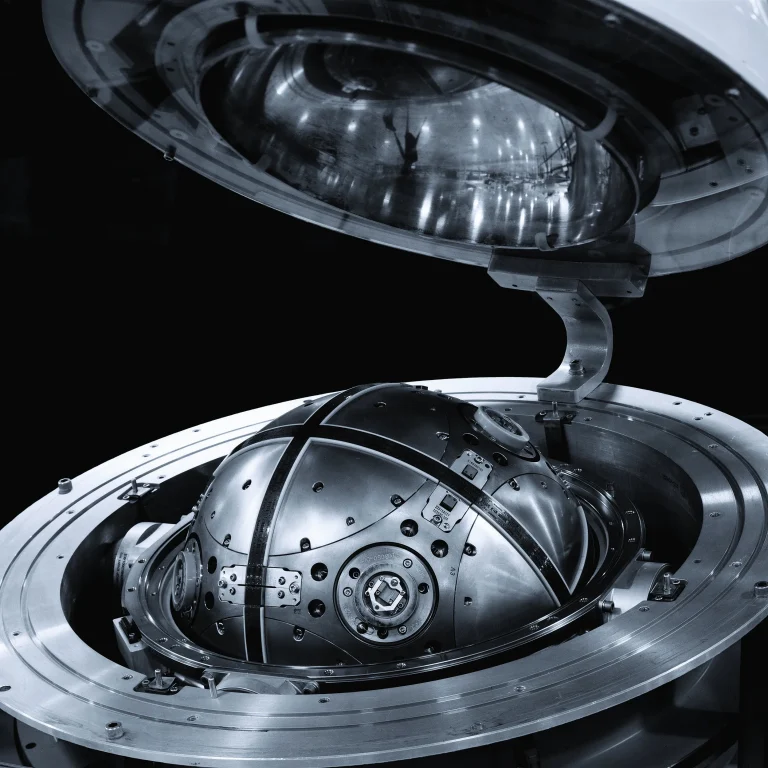
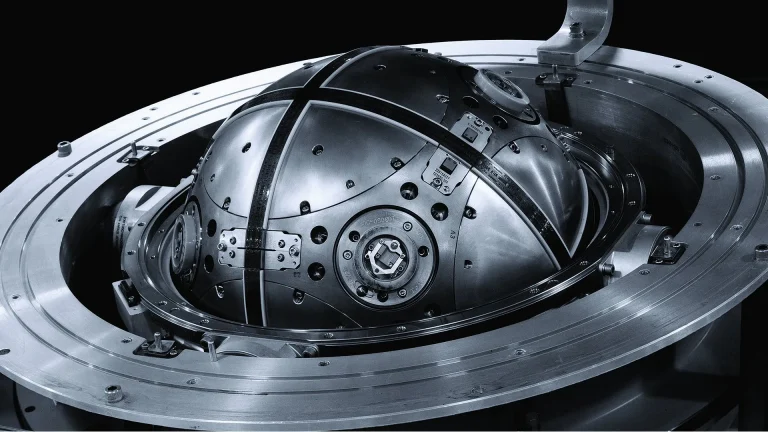
We’re talking about the Advanced Inertial Reference Sphere (AIRS)—an advanced inertial navigation system whose design and complexity would be right at home in any science fiction movie. But this wasn’t a prop—it was an actual component of an intercontinental ballistic missile.
Contents:
What is AIRS and why is it unique?
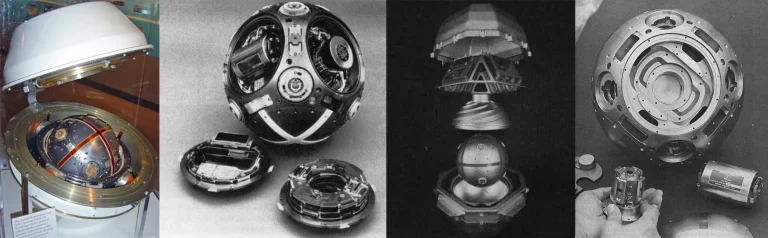
At the heart of any ballistic missile lies the ability to accurately determine its position and course without relying on external signals. Today, GPS and other satellite systems are used for this purpose, but in the 1970s and 1980s, such technologies were either unavailable or unreliable in wartime conditions. Therefore, engineers took a radical step: they created a fully autonomous orientation system that relies on nothing but its own sensors.
AIRS consisted of a sphere floating in a frictionless fluid, inside which were housed high-precision gyroscopes and accelerometers. It was something like an ideal mechanical “compass” for a rocket, capable of measuring changes in orientation and acceleration with remarkable precision.
How it works: from momentum to position
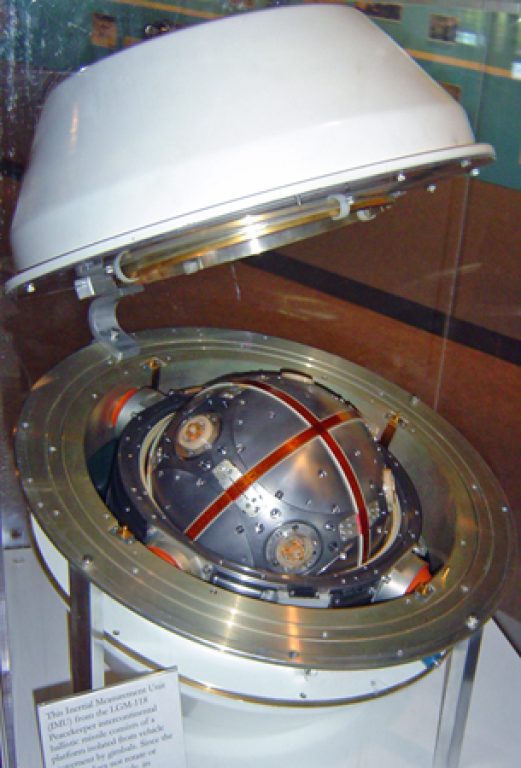
This system is called an inertial navigation system (INS). The principle is quite simple: if you know where you were at the start and can track all changes in your motion (acceleration and turns), you can calculate your new position based on this data. This is the same principle used by modern smartphones and drones—only it’s many times more complex and accurate.
In the case of AIRS:
- Gyroscopes measure angular velocities;
- Accelerometers measure linear acceleration;
- Numerical processing of this data makes it possible to calculate the missile’s position in three-dimensional space without external signals.
This approach was critically important because external sources (such as GPS) could be blocked or disrupted in the event of a nuclear war.
It wasn’t just a sensor—it was an engineering masterpiece
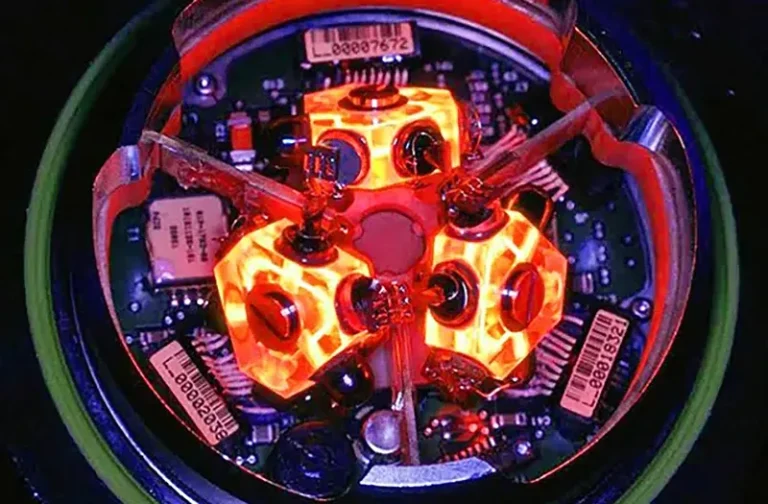
The scale of the AIRS structure was staggering: the system consisted of approximately 19,000 individual components. Each of the three accelerometer sensors cost hundreds of thousands of dollars and took months to manufacture. All of these components were assembled to mesh and move inside the sphere with almost no friction, thanks to a special hydraulic system.
As a result, the navigation accuracy was phenomenal: the inertial navigation system produced such small errors that its contribution to the missile’s inaccuracy was on the order of one percent of the total error. This meant that at a distance of thousands of kilometers, the deviation from the target was measurable in tens of meters rather than kilometers—an incredible achievement for its time.
Why was such precise navigation important?
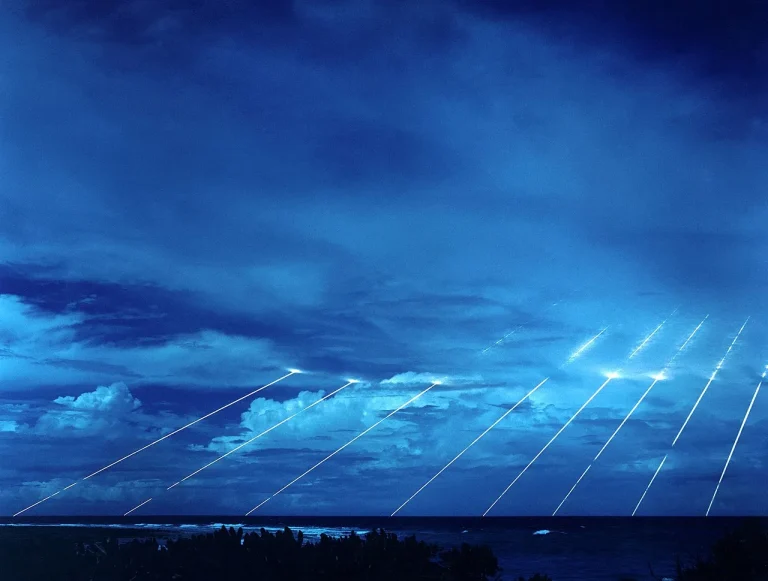
The Peacekeeper ICBM was designed to strike precise, stationary targets—such as enemy ballistic missile silos—in the event of a conflict escalation. To minimize damage around the target and increase the chances of neutralizing specific targets, the missile had to deliver its warheads with maximum precision. And it was AIRS that made this possible in the 1980s.
By comparison, another missile from that era, the Minuteman III, had a margin of error about six times greater than that of the Peacekeeper due to its navigation system.
Why is this system no longer used?
Building the AIRS was incredibly expensive and complex. It required a large number of parts, extremely precise manufacturing, and enormous production costs.
With advances in technology, non-inertial navigation systems using external sources (such as GPS) have become accurate, lightweight, and relatively inexpensive. This meant that such a massive mechanical system was no longer justified in most applications. Of course, in the case of strategic weapons, the need for autonomy remains, but new approaches strike a balance between autonomy and cost.
The Legacy of AIRS
At first glance, AIRS might seem like a strange relic from the past—complex, bulky, and out of place in the age of microprocessors, GPS, and MEMS sensors. But it was precisely this system that marked the culmination of many years of evolution in inertial navigation systems, as engineers sought to answer the question: How can we know our exact position when we can’t rely on anything around us?
This approach reminds us that technology does not evolve in a linear fashion: sometimes the pinnacle of engineering is not miniaturization or digitization, but rather the full realization of ideas that work under the most extreme conditions.