The Era of Cheap Anti-Drone Missiles: Why Canada Is Developing the CM-70 Spear Interceptor

Modern air defense has unexpectedly encountered a problem that, just ten years ago, many military analysts considered minor. It turns out that even the most powerful and technologically advanced air defense system can prove economically ineffective in the face of the mass deployment of inexpensive drones.
The conflict over Ukraine has effectively become the first major war of the drone era. Thousands of attack drones, FPV systems, and loitering munitions have begun to systematically overwhelm air defense systems, forcing them to expend extremely expensive missiles to destroy relatively inexpensive targets. But now the situation is reaching a new level. Russia is gradually ramping up production of jet-powered versions of the “Geranium,” which are already beginning to rival full-fledged cruise missiles in performance. And this means that traditional methods of countering drones could very quickly become obsolete.
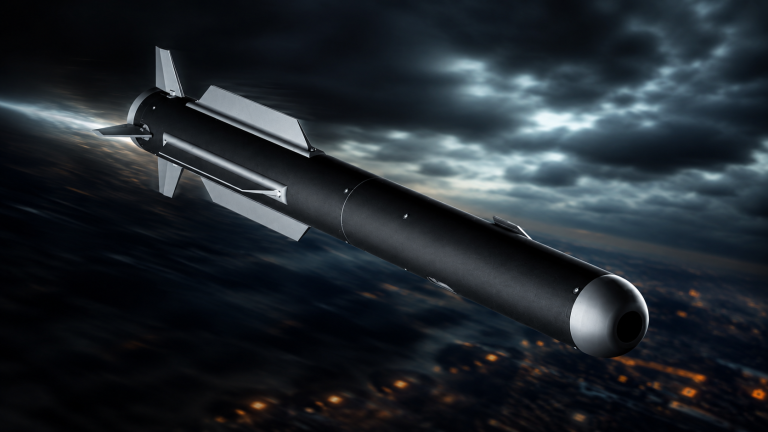
Against this backdrop, projects involving low-cost, specialized anti-drone missiles are beginning to attract increasing attention. One of the most interesting examples has unexpectedly turned out to be the Canadian CM-70 Spear—a compact interceptor developed by North Vector Dynamics, which is being designed specifically as a mass-produced and relatively inexpensive means of countering drones.
Why the “Gerani” Jet-Powered Weapons Are Changing the Entire War
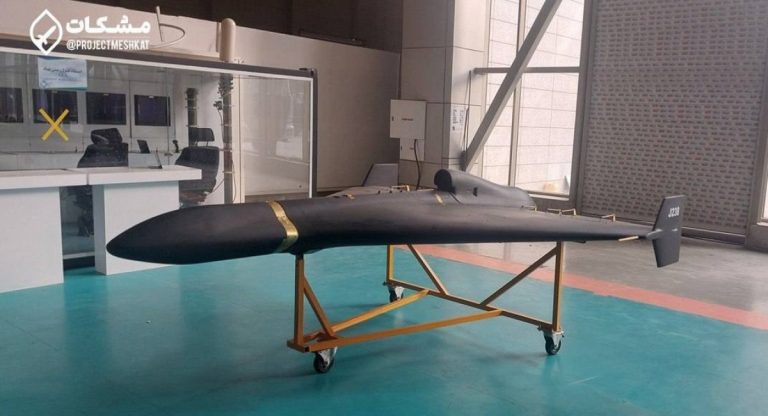
The first versions of the Shahed and the Russian “Geranium” drones were viewed more as cheap flying mopeds. They were slow, noisy, and relatively easy targets. But the main problem was their sheer numbers. Even a primitive drone begins to pose a serious threat when launched by the dozens at once.
Now the situation is changing even more dramatically. Russia is actively developing jet-powered versions of the “Geran”—the Geran-3, Geran-4, and Geran-5. Some of them are already capable of reaching speeds of several hundred kilometers per hour, and certain versions are, in fact, approaching the performance characteristics of compact cruise missiles.
This is precisely where the main problem with modern air defense begins.
Most inexpensive interceptors and FPV anti-drone systems were designed to counter relatively slow propeller-driven targets. But a jet-powered drone drastically reduces reaction time. It is faster, more difficult to intercept, and capable of attacking at significantly higher speeds.
In fact, a new category of threat is emerging—something halfway between a conventional drone and a cruise missile.
Why Missiles That Cost Millions Are Losing the War of Attrition
The most pressing problem facing modern air defense is not even a technical one, but an economic one.
Using missiles that cost hundreds of thousands or millions of dollars against cheap drones is extremely uneconomical. If the enemy is capable of producing drones by the thousands, and each air defense missile costs as much as a small house or even an airplane, then the war gradually turns into a game of attrition.
That is precisely why, today, militaries around the world have suddenly begun looking for the cheapest possible interceptors.
In essence, a new class of weapons is emerging: “disposable anti-drone missiles.” They must be:
— compact;
— very inexpensive;
— mass-produced;
— fast enough to intercept jet-powered targets.
And the CM-70 Spear fits perfectly into this concept.
What Is the CM-70 Spear?
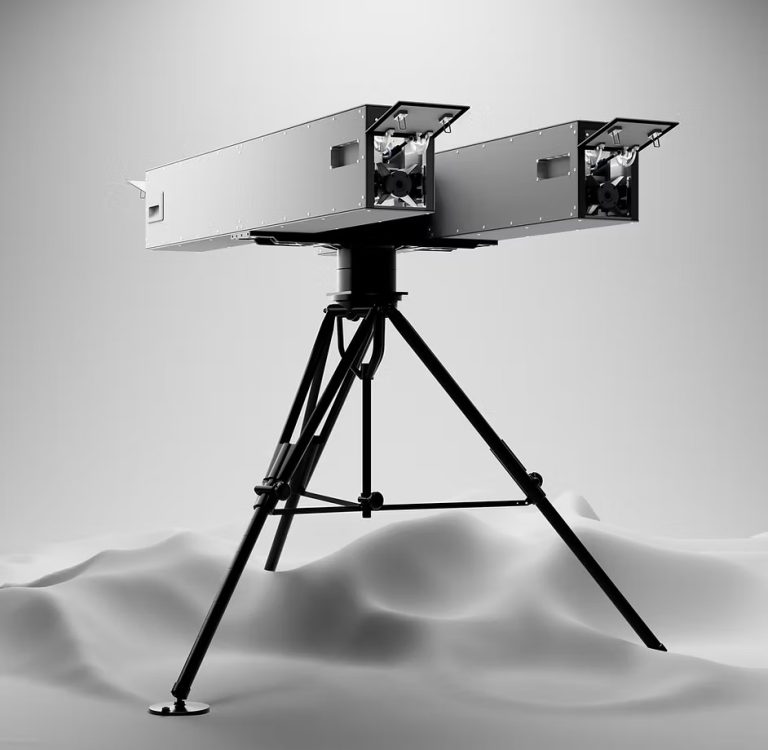
The Canadian CM-70 looks almost like a toy compared to classic anti-aircraft missiles. It is only about 72 centimeters long and weighs approximately 2.5 kilograms. But that is precisely the philosophy behind the project.
This is no longer a “large air defense missile” in the traditional sense. It is, rather, an ultralight, high-speed interceptor that can be mass-produced.
At the same time, the claimed performance specifications look extremely impressive. According to the developers, the CM-70 is capable of reaching speeds exceeding 1,000 km/h. This makes it potentially capable of taking on even the new-generation “Geranium” jet-powered missiles.
The range is relatively short—about 3.5 kilometers. But for a short-range anti-drone system, that’s quite sufficient. Especially if such missiles can be launched in large numbers.
It is also interesting that the missile uses a semi-active laser guidance system with artificial intelligence components. This is a very characteristic feature of the new era of weaponry. Even extremely inexpensive systems are gradually being equipped with AI components, since modern drone warfare is already becoming impossible without automation.
The world is moving toward “drone-based air defense”
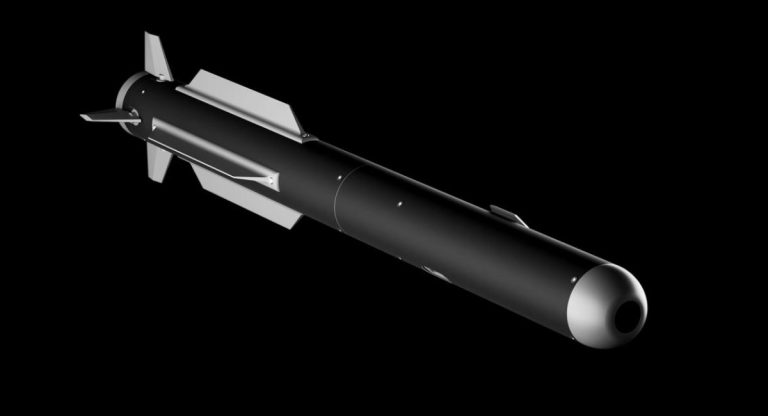
The most interesting thing is that the line between drones and missiles is gradually beginning to blur.
Modern anti-drone systems are increasingly taking the form of disposable, autonomous interceptors. They are equipped with their own guidance systems, AI components, the ability to independently search for targets, and an extremely low-cost design.
In fact, a new type of air defense system is taking shape:
not massive batteries of complex air defense systems,
but thousands of inexpensive, autonomous interceptors.
That is precisely why projects like the CM-70 are generating so much interest. This is no longer just about a new missile, but about an attempt to completely transform the economics of air warfare.
The war of the future may be a war of consumables
The most important point about the CM-70 is that modern warfare is increasingly becoming a contest of industrial capabilities.
In the 20th century, nations sought to develop the most advanced weapons possible. Today, the ability to rapidly produce vast quantities of relatively inexpensive systems is increasingly proving to be more important.
“Gerani” jet aircraft, FPV drones, maritime drones, and low-cost interceptors—all of these are part of the same transformation.
And perhaps a new philosophy of war is emerging right now:
not a few extremely expensive systems,
but gigantic swarms of inexpensive autonomous machines that will destroy one another in the air with virtually no human intervention.