The predecessor of the “Iskander” that struck fear into the West: the Soviet medium-range ballistic missile “Oka.”

In the 1980s, at the height of the Cold War, Soviet designers created a system that could have become a key element in any military conflict—a precise, mobile, and virtually invulnerable (by the standards of the time) tactical ballistic missile. It was called the “Oka.” But instead of seeing action in actual combat, it was scrapped for political reasons long before the end of its service life. It’s simple—the Americans were genuinely afraid of this behemoth and realized that the “advantage lay with the Soviet Union” in this matter.
In the 1970s, existing tactical missiles, such as the “Elbrus,” rapidly became obsolete. It quickly became clear that they no longer met the requirements of modern warfare.
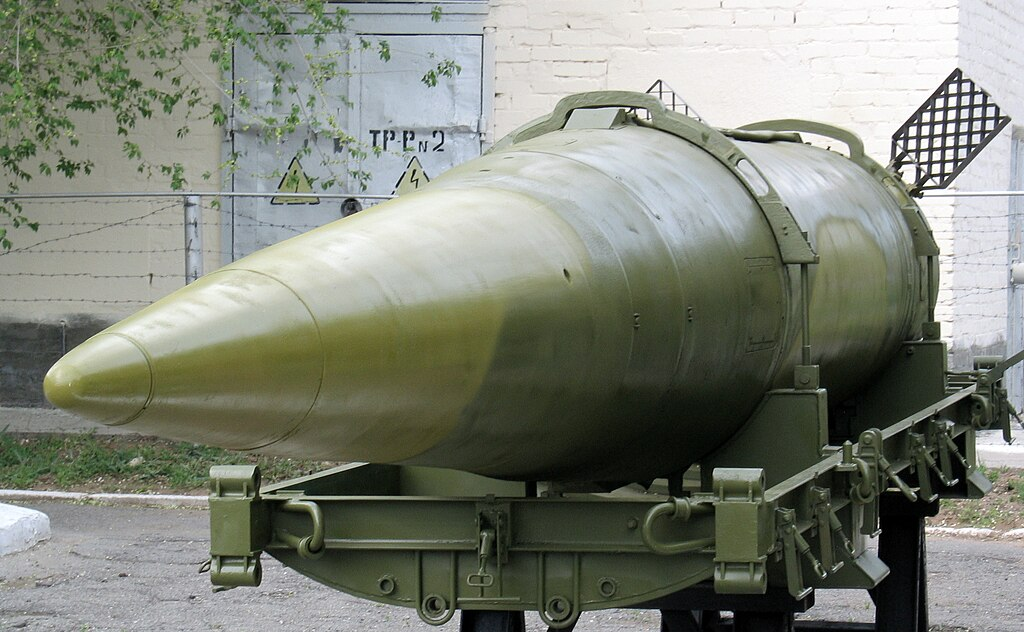
The Soviet command understood that, in order to effectively engage targets, it was necessary to dramatically improve accuracy, range, and rate of fire. While most countries were limited to a margin of error in the hundreds of meters, the USSR aimed for the tens. This is precisely what determined the need to create a new operational-tactical system—the OTR-23, better known as “Oka.”
Contents:
The Beginning of Development: An Engineering Breakthrough Amid the Arms Race
Work on the project began in 1973 at the Kolomna Machine-Building Design Bureau (KBM), under the leadership of Sergei Nepobeditmy. He was a man whose career had been directly linked to the development of rocket technology since the days of Ballistika-45.
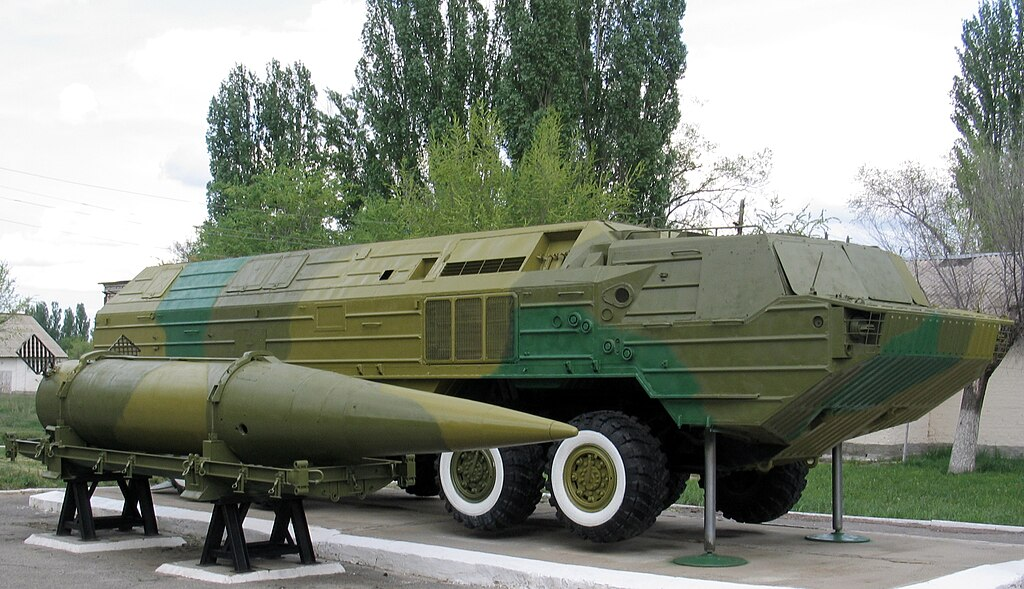
The goal was not simply to create a new rocket, but to develop a fully autonomous system capable of operating without external support. The project involved the “Titan” Design Bureau and the Votkinsk Plant, where mass production later began.
The first flight tests took place in 1976 at the famous Kapustin Yar test site. Over the course of three years, 26 launches were conducted, demonstrating the system’s high operational stability.
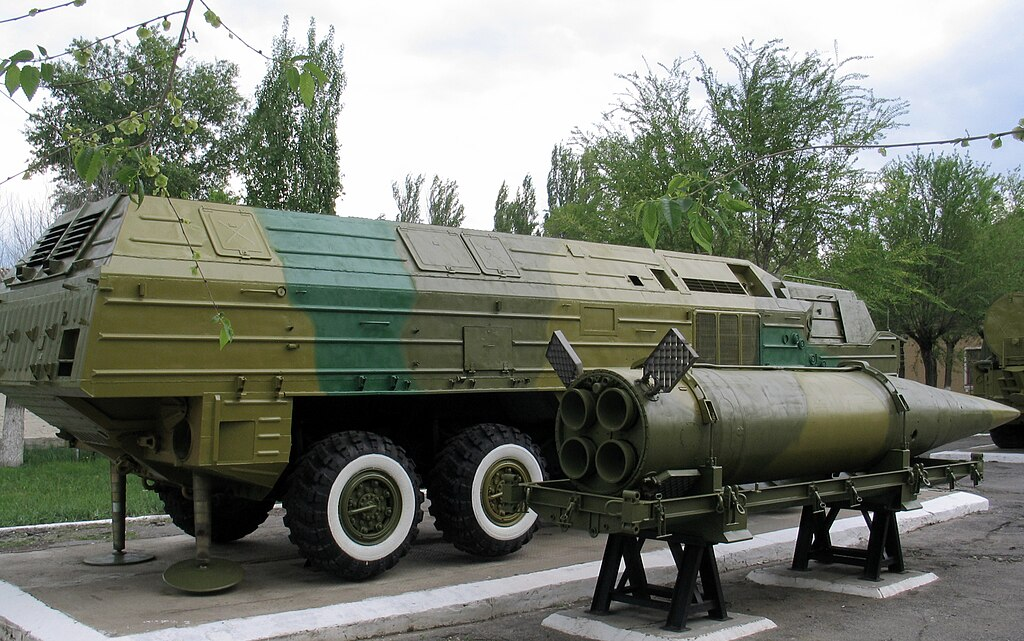
State tests were conducted from 1977 to 1979, during which three launch vehicles, two reentry vehicles, and two transport modules were tested. At this stage, the identified shortcomings were promptly corrected, allowing the system to be adopted for service as early as 1980.
Design: When Everything Runs on Its Own
The Oka’s main achievement was its combination of mobility and precision. The 9M714 missile was a single-stage solid-fuel missile equipped with a detachable warhead. The guidance system was based on inertial navigation but allowed for radio correction in later versions.
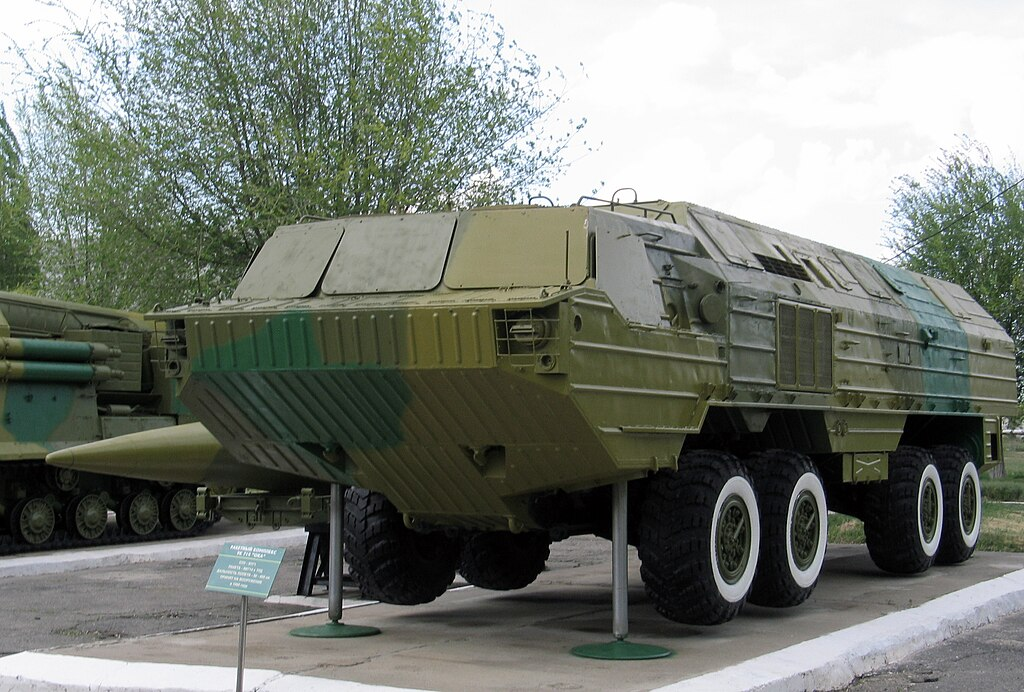
The warhead could be nuclear, high-explosive fragmentation, or cluster—the choice depended on the mission. The trajectory reached an altitude of 120 km, and the speed during the active phase reached 4M.
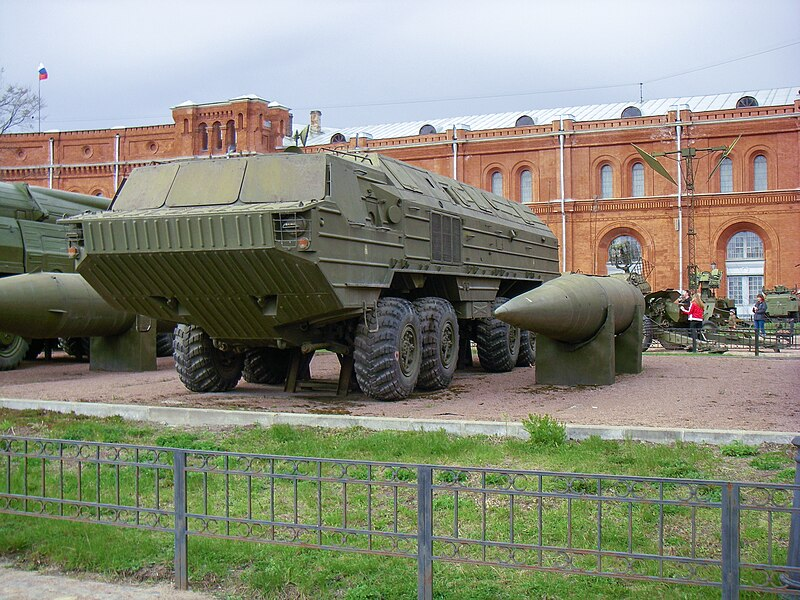
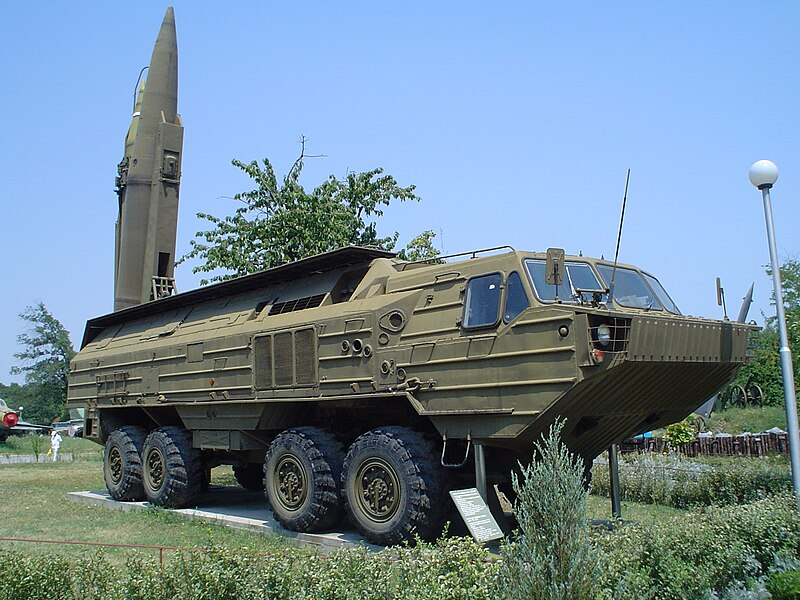
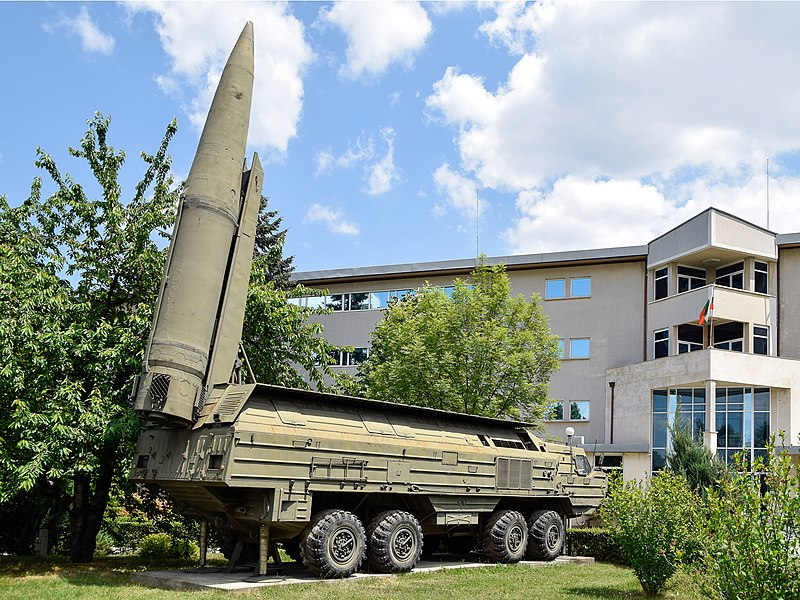
The 9P71 self-propelled gun, built on a BAZ-6944 chassis, offered a high degree of autonomy. The vehicle could cross water obstacles, conceal itself, and quickly take up a position. It took less than five minutes to prepare for launch. This mobility made the system extremely difficult to detect and destroy.
The 9T230 transport-and-loading vehicle allowed for the transport of two additional missiles, which enhanced the combat readiness of the units.
Modernization of the “Oka-U”: A Step Toward a Controlled Strike
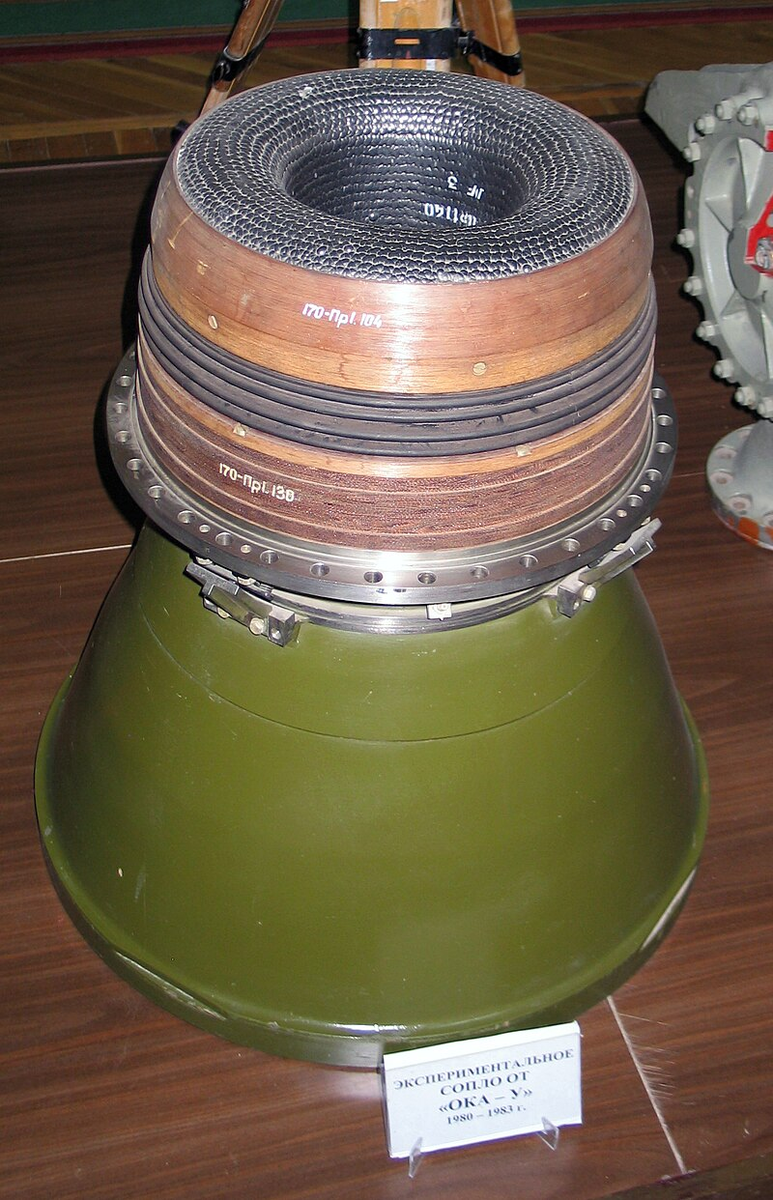
In 1982, development began on an upgraded version—the “Oka-U”—equipped with a radar homing head. This made it possible to adjust the flight path in real time.
Integration with reconnaissance and strike systems was also planned, in which target designation could be transmitted from A-50-class aircraft. However, due to the signing of the Intermediate-Range Nuclear Forces Treaty in 1987, the project was scrapped.
Exports: Soviet Power Abroad
The “Oka” was not only in service with the Soviet Army but was also exported to Warsaw Pact countries. A total of eight self-propelled launchers and 24 missiles were delivered to Bulgaria, four launchers and 18 missiles to the GDR, and a similar number to Czechoslovakia.
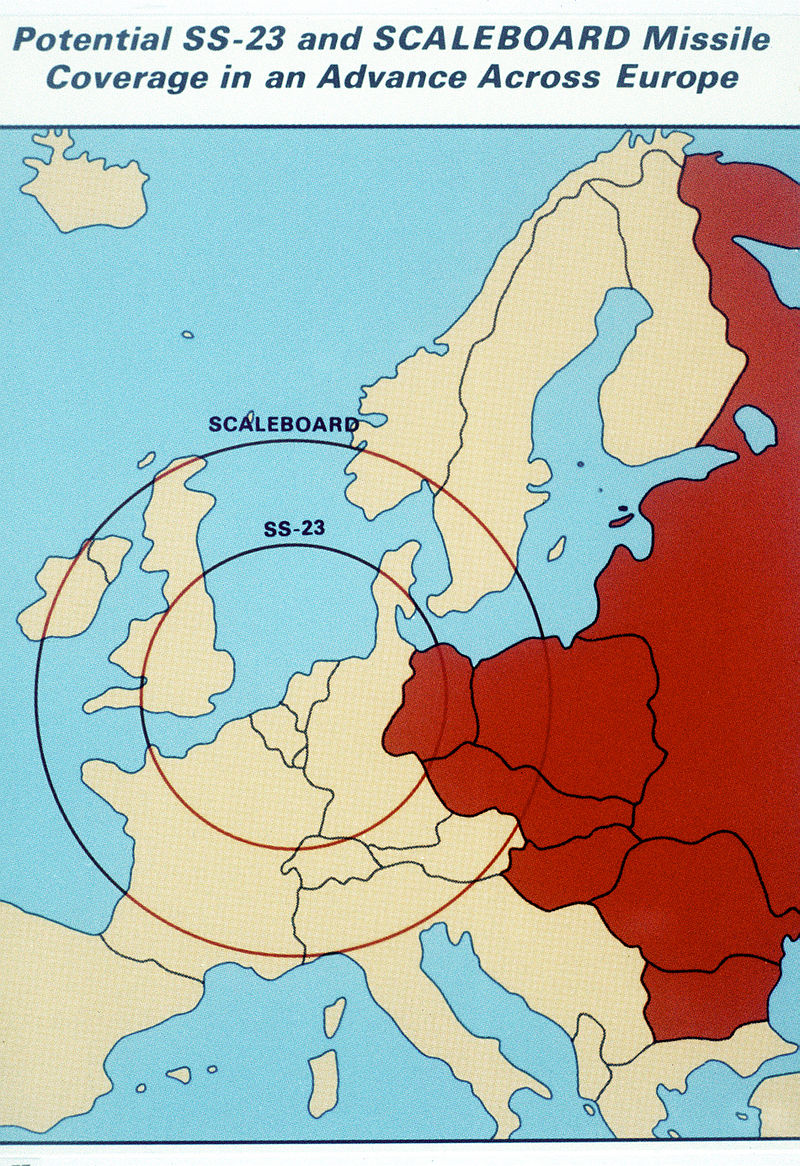
These systems were in service with missile brigades, providing local armies with significant strategic capabilities. Following the dissolution of the Warsaw Pact, all of the systems were destroyed under an agreement with the United States.
End of Life Cycle: Dismantling and Oblivion
The “Oka” played an unexpectedly important role in international negotiations. Although its range did not formally fall under the terms of the INF Treaty, Gorbachev decided to include it on the list of weapons to be destroyed. This decision, though largely symbolic, had a significant impact on the balance of power in Europe. The system fell victim to a political compromise before it even had a chance to prove itself in actual combat.
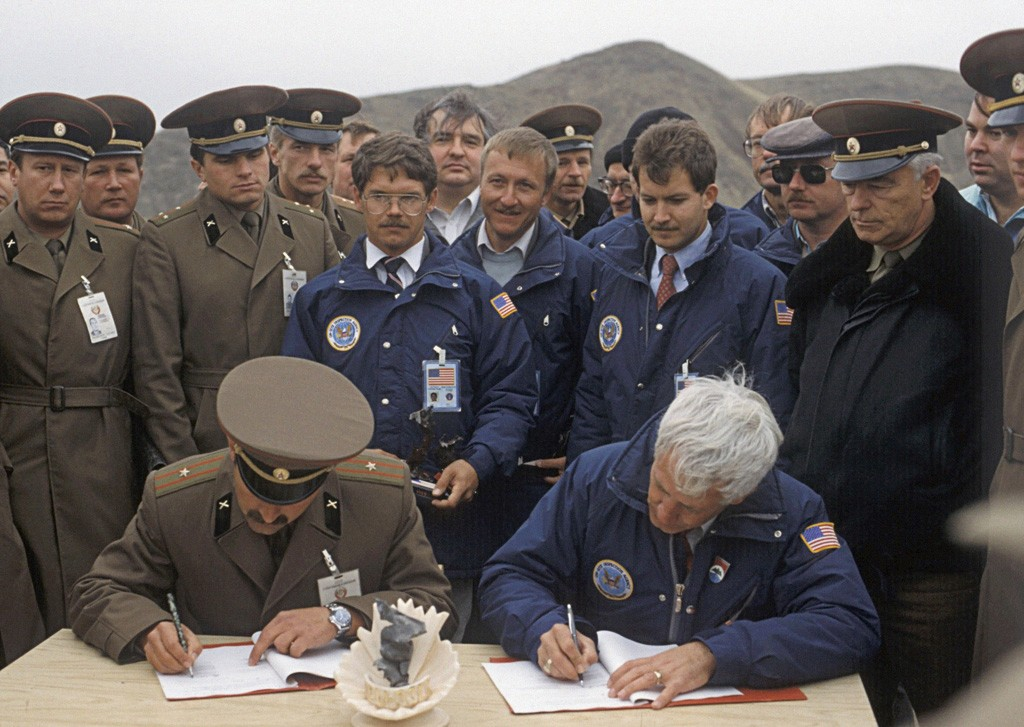
The destruction process began immediately after the treaty was signed. The last missiles were destroyed in Kazakhstan in 1989. In Bulgaria, Slovakia, and Germany, the destruction continued into the early 2000s. All systems were dismantled under the supervision of foreign observers. Some of the equipment was transferred to museums—for example, preserved examples of launchers and missiles can be seen in St. Petersburg and at the Kapustin Yar test site.
Technological Legacy: A Footprint in the Future
Despite being taken out of service prematurely, the “Oka” influenced the development of subsequent systems. Many of the design solutions used in its construction formed the basis for new Russian operational-tactical systems, such as the “Iskander.”
Software, control systems, and methods for countering missile defense systems have been developed in both civilian and military projects.
Sincerely, Ivan Vologdin
A Comparison of the Oka and the Iskander
If we compare the ancestor and the descendant, then:
Key Differences
- Range and Accuracy: The Iskander outperforms the Oku in range (500 km versus 400 km) and significantly in accuracy. Thanks to its optical guidance system, the Iskander is capable of striking targets with a circular error probability (CEP) of 5–7 meters, whereas for the “Oka,” this figure—even with corrections—never fell below 30 meters.
- Guidance: The “Oka” used an inertial guidance system with optional radio correction, while the Iskander was equipped with a multi-level guidance system, including satellite (GLONASS) and optical correction, making it resistant to jamming.
- Maneuverability and Evasion of Missile Defense Systems: The Iskander is capable of performing active maneuvers during the terminal phase of its flight path, making it virtually invulnerable to modern missile defense systems. The “Oka” also maneuvered, but to a lesser extent.
- Capabilities: The Iskander supports a much wider range of warheads, including high-precision penetrator warheads and electromagnetic charges.
- Exports and status: The “Oka” was destroyed under the Intermediate-Range Nuclear Forces Treaty (INF Treaty), while the “Iskander” is actively used and exported abroad (for example, to Armenia, Kazakhstan, India, and the UAE).
| Specifications | 9K79 “Oka” (SS-23 Spider) | 9M723 “Iskander-M” |
|---|---|---|
| Missile Type | Operational-Tactical Ballistic Missile | Operational-tactical ballistic missile (quasi-ballistic trajectory) |
| Launch Range | Up to 400 km | Up to 500 km |
| Starting weight | About 2 metric tons | 3,800 kg |
| Length of the rocket | ~6.4 m | 7.3 m |
| Housing Diameter | 0.85 m | 0.92 m |
| Warhead Mass | Up to 450 kg | 480 kg |
| Accuracy (RMS) | 100–150 m (according to NATO), up to 30 m (according to Soviet data) | 10–30 m (depending on the guidance type), up to 5–7 m (with optical guidance) |
| Guidance System | Inertial Navigation System (INS), Radio Correction | INS, GLONASS, optical homing head (GSN), correlation homing |
| Pre-startup preparation time | Up to 15 minutes | 4–16 minutes |
| Mobility | 9P71 Self-Propelled Launcher on an 8×8 Chassis | 9P78 self-propelled launcher on an 8×8 chassis (BAZ-6909 or MAZ) |
| Interval between runs | At least 10 minutes | 1 minute |
| Operating Temperature Range | From −40 °C to +50 °C | From −50 °C to +50 °C |
| Combat Units | High-explosive, cluster, nuclear (up to 100 kt), chemical (theoretically) | High-explosive, cluster, volumetric, penetrating, electromagnetic, nuclear (according to reports) |
| Overcoming Missile Defense | Active maneuvering along the flight path, decoys | Intense maneuvering, decoys, low observability, variable flight path |
| International Status | Destroyed under the INF Treaty (1987–1989) | It is exported and does not violate existing agreements (according to the Russian Federation’s position) |
Source — https://dzen.ru/a/aGSLEGd302caNKWu