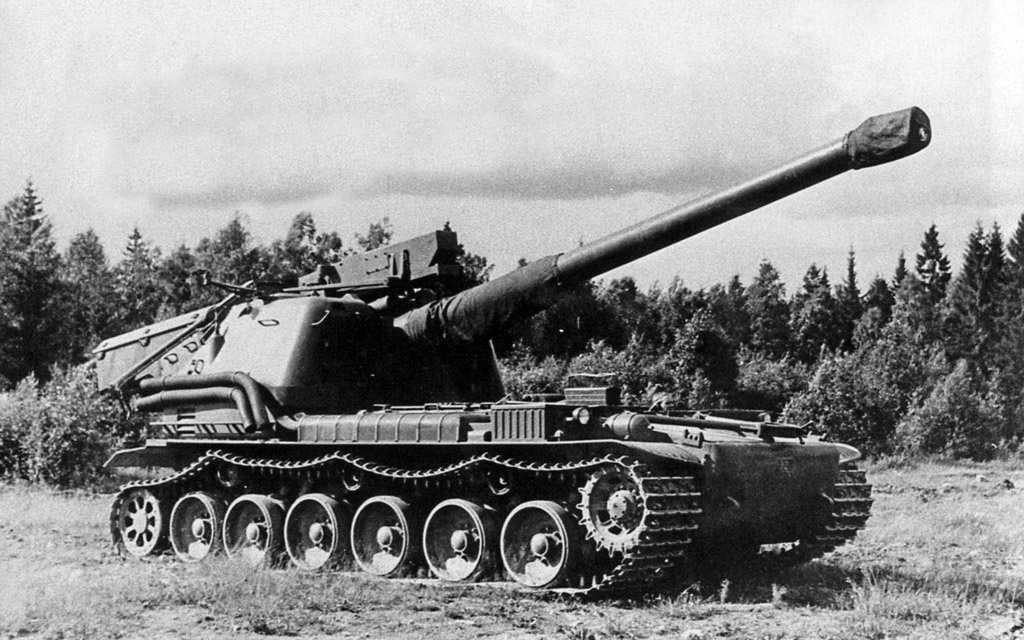
The History of the Swedish AKV 151 Experimental Self-Propelled Artillery System
Swedish self-propelled artillery first appeared during the interwar period. At that time, Landsverk held a monopoly, while the artillery components were traditionally designed and manufactured by Bofors. These “sworn friends” maintained a symbiotic relationship for a long time. On the one hand, Bofors, as the weapons developer, was considered indispensable; on the other hand, no other Swedish company could design tracked chassis better than Landsverk. The situation developed similarly in the postwar period, at least initially.
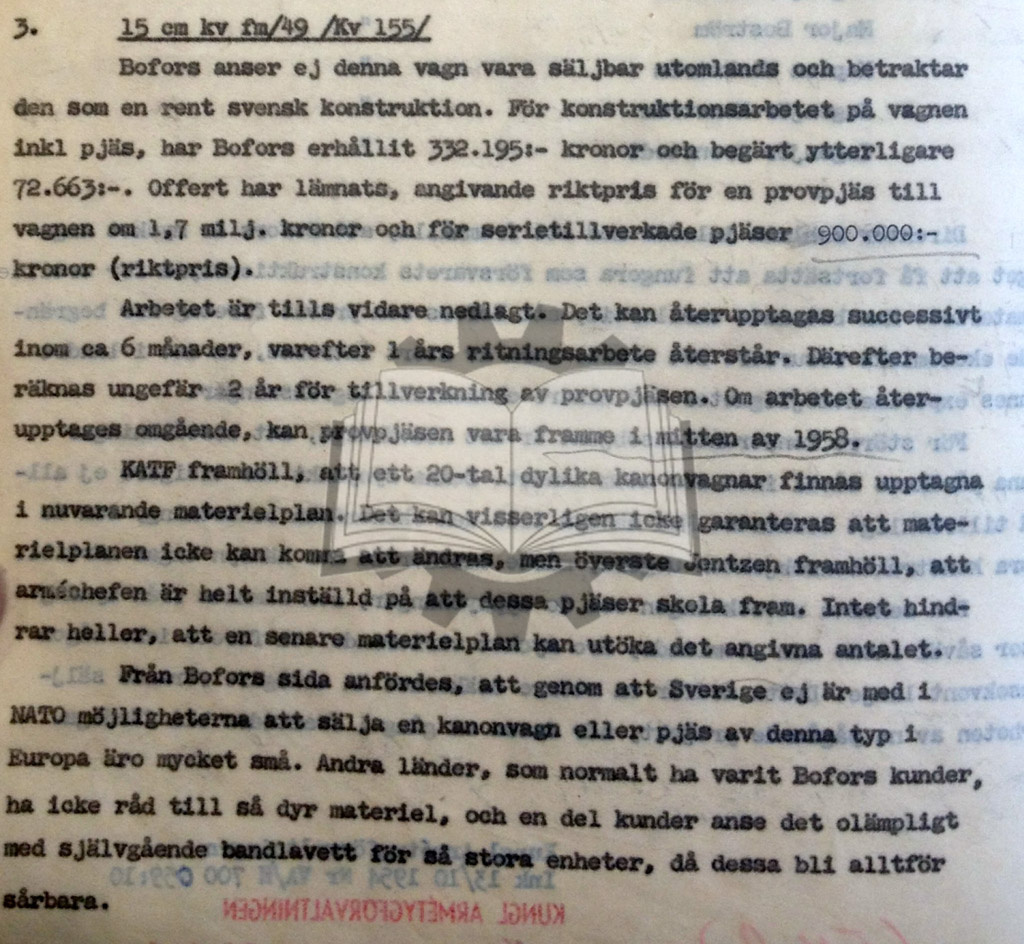
On September 22, 1954, a new self-propelled gun, designated KV 155, was first mentioned in correspondence
The situation began to change only toward the end of the 1940s. This was partly due to the fact that all manufacturers, including Landsverk, began to fall behind. At that time, Bofors decided to develop its own self-propelled gun. It was designated the 15 cm kv fm/49; the project emerged against the backdrop of efforts to reequip the Swedish Army with long-range, large-caliber artillery. The Swedish Army needed a self-propelled gun that would, at a minimum, complement the 152-mm 15.2 cm kan m/37 gun. However, the first such self-propelled gun to be built as a prototype was a combat vehicle that represented a direct development of the concepts behind the 15 cm kv fm/49. This was the AKV 151; it was built as a metal prototype, but the design was never intended for mass production.
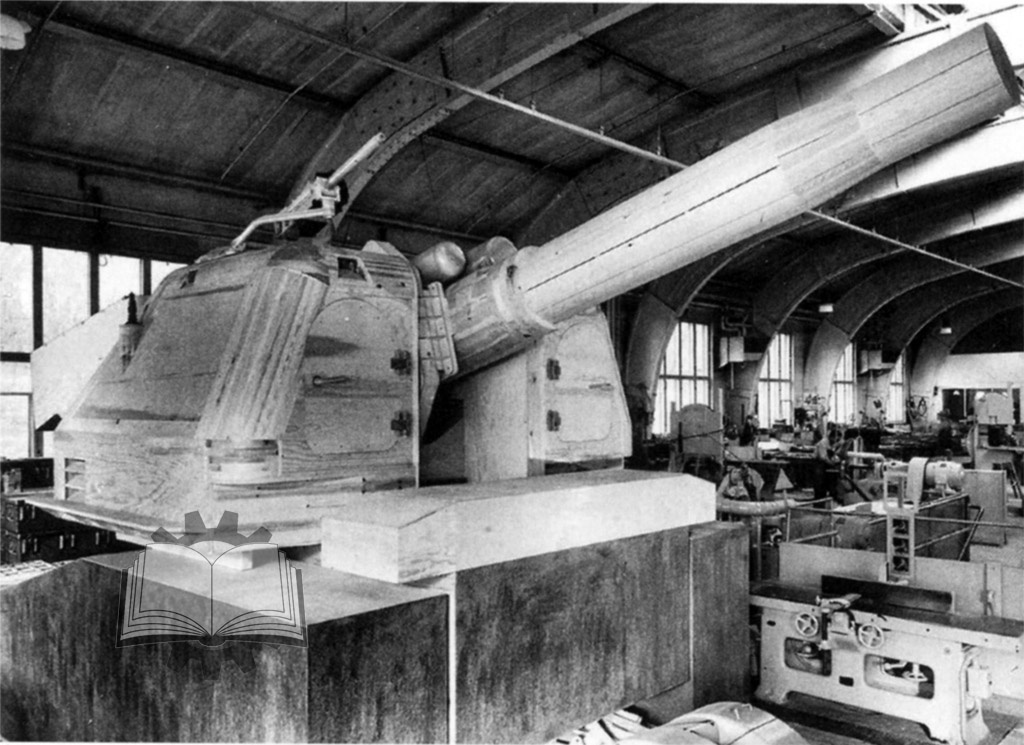
The new self-propelled gun is equipped with a turret-mounted gun and a magazine-fed loading system
On January 21, 1949, Bofros presented a preliminary design for the 15 cm kv fm/49. The correspondence lists several designations for this self-propelled gun: 15 cm kan självgående lavettage (152 mm gun on a self-propelled carriage), VK 150-5, and 15 cm kanonvagn fm/49. The vehicle, conceptually similar to American self-propelled guns, was characterized by high mobility. As required by the specifications, the combat weight was 30 metric tons, and the estimated maximum speed was to reach 40 km/h. The barrel length was increased to 50 calibers, resulting in a muzzle velocity of 850 m/s and a firing range of up to 25 kilometers.
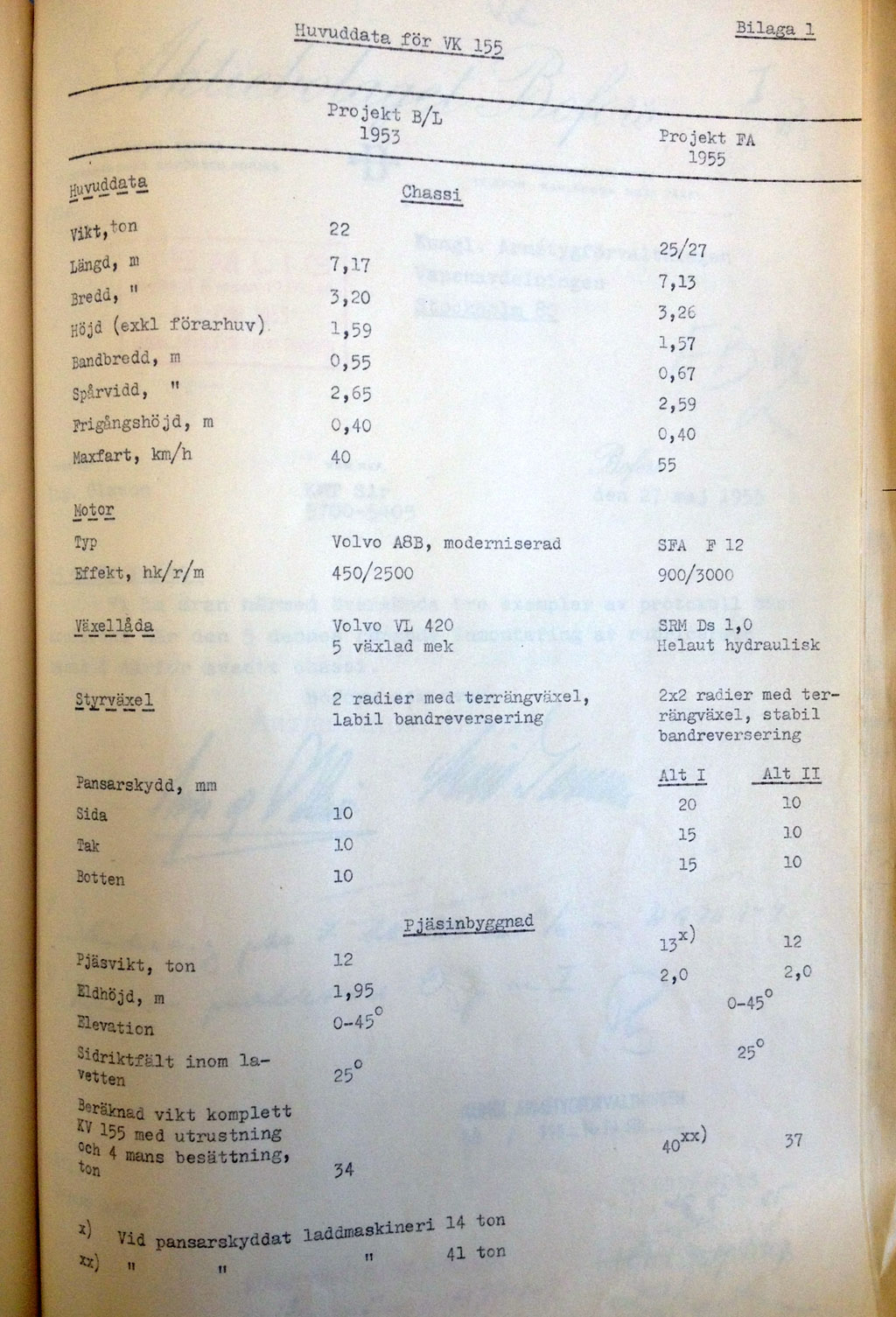
The KV 155 was expected to weigh 37–40 metric tons. What a naive assumption.
However, the rate of fire of the 15 cm kv fm/49 looks far more interesting: according to calculations, it was supposed to reach 15 rounds per minute—a fantastic rate for a gun of this caliber. This was achieved through mechanized loading and unitary rounds. The gun was supposed to have a magazine for 5 unitary rounds that could be quickly reloaded. A sum of 425,000 Swedish kronor was allocated for further development. At KAFT, the self-propelled gun project was overseen by Erik Gillner and Sven Berge. Berge later became closely associated with Bofors and played a major role in helping the arms giant rise to the top of the Swedish tank-building industry.
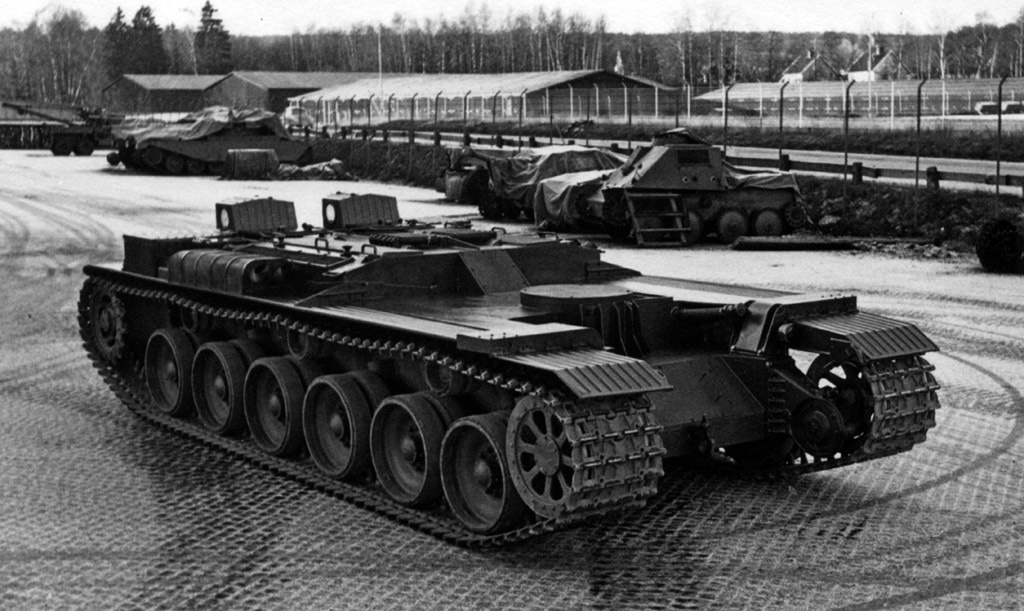
The AKV 151 chassis was based on the Krv tank
Although only one sketch of the 15 cm kv fm/49 is known to exist, its development took quite a long time. On May 5, 1953, the caliber was changed. It was decided to switch from 152 mm to the 155 mm caliber, which was more familiar to a number of countries. At the same time, it became increasingly clear that the project would never make it off the drawing board. Bofors certainly had extensive experience in gun design, but the 15 cm kv fm/49 seemed highly questionable—especially from the crew’s perspective. Not to mention that Bofors had little experience in developing tracked chassis. None at all. This was in contrast to Landsverk, which by the early 1950s had nevertheless begun developing new models of armored vehicles, including self-propelled guns.
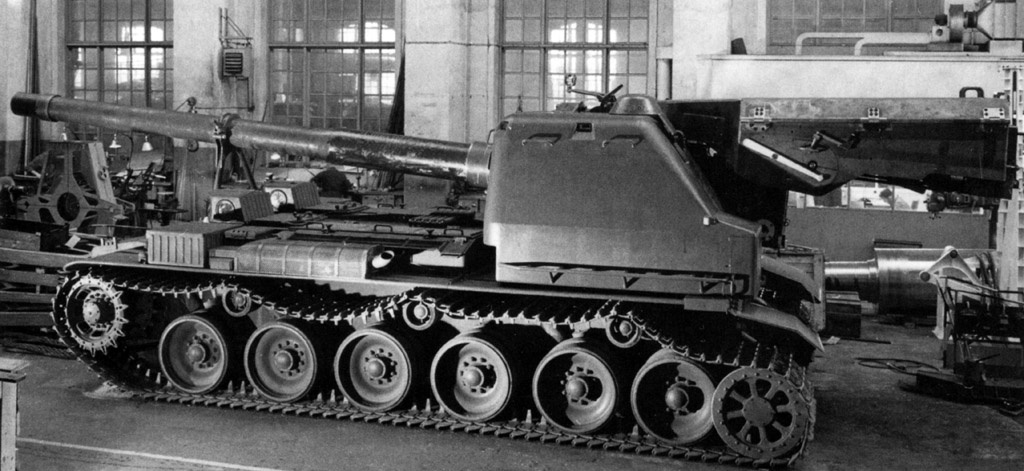
With the turret and armament installed
On September 22, 1954, a new self-propelled gun designated KV 155 was first mentioned in correspondence. Its combat weight was estimated at 30–33 metric tons, and the SPG was to be equipped with an 11-round magazine. Its rate of fire was estimated at the same 15 rounds per minute. Meanwhile, in June 1955, it became clear that the KV 155 would be heavier and, more importantly, that its chassis would not be based on the Bofors design. Correspondence indicated that the KV 155 would be based on the “Tanketka,” as the Krv tank was called (it was originally named EMIL). The combat weight was initially estimated at 37 metric tons, but was later revised to 40–45 metric tons. This adjustment was made due to an increase in armor thickness. The KV 155 was designed to be a highly maneuverable combat vehicle: a 900-horsepower Volvo SFA F 12 engine was intended to propel it to a speed of 55 km/h.
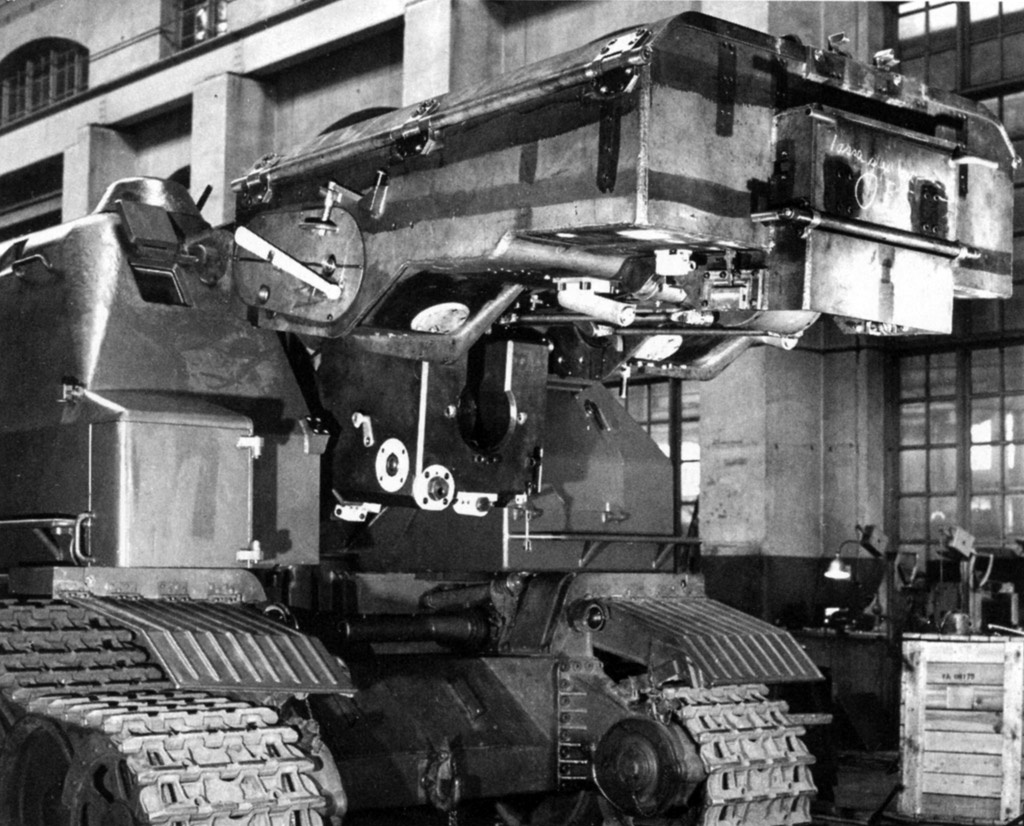
At the rear of the unit was a magazine holding 14 rounds
Development of the KV-155 project continued in 1956. According to the new specifications dated April 19, 1956, the magazine capacity was increased to 14 rounds, while maintaining a rate of fire of 15 rounds per minute. Each cartridge had a total length of 1,732 mm and weighed 85 kg. With a barrel length of 7,750 mm, the 15.5 cm Kanon L/55 had a muzzle velocity of 860 m/s. The gun mount, weighing 16 metric tons, provided elevation angles ranging from -3 to +45 degrees, with a horizontal firing arc of 15 degrees to the left and 15 degrees to the right. The mount’s dimensions were significantly larger than those of the 15 cm kv fm/49, but it appeared far more practical. And this time, the project moved beyond the drawing board, albeit with a long delay.
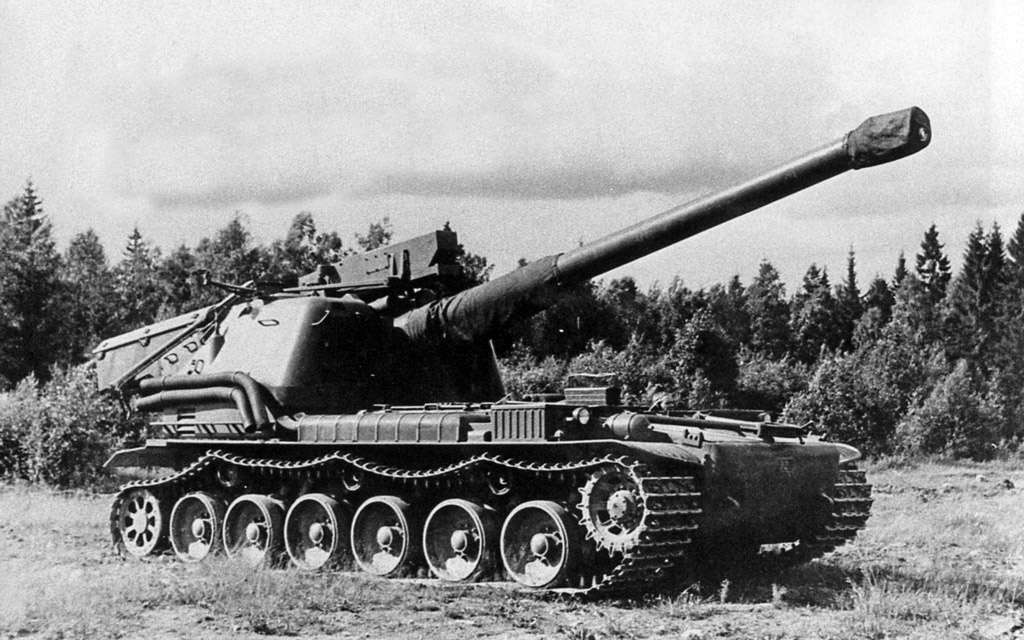
During testing
In 1958, the project was renamed AKV 151 (Artillerikanonvagn, 15 cm caliber, first type). Lanfdsverk, as was the case with the Krv, worked significantly faster than the “artillerymen.” As was often the case with the Swedes, the actual performance specifications differed significantly from the design specifications. For starters, the actual power output of the Volvo SFA F 12 engine was 700 l.s., not 900, as originally anticipated. Furthermore, the combat weight of the AKV 151 turned out to be much higher than expected. It amounted to 50.8 metric tons—that is, nearly 10 metric tons more than the original specifications for the KV 151. It is possible that Bofors later used this excess weight to “bury” the Landsverk chassis.
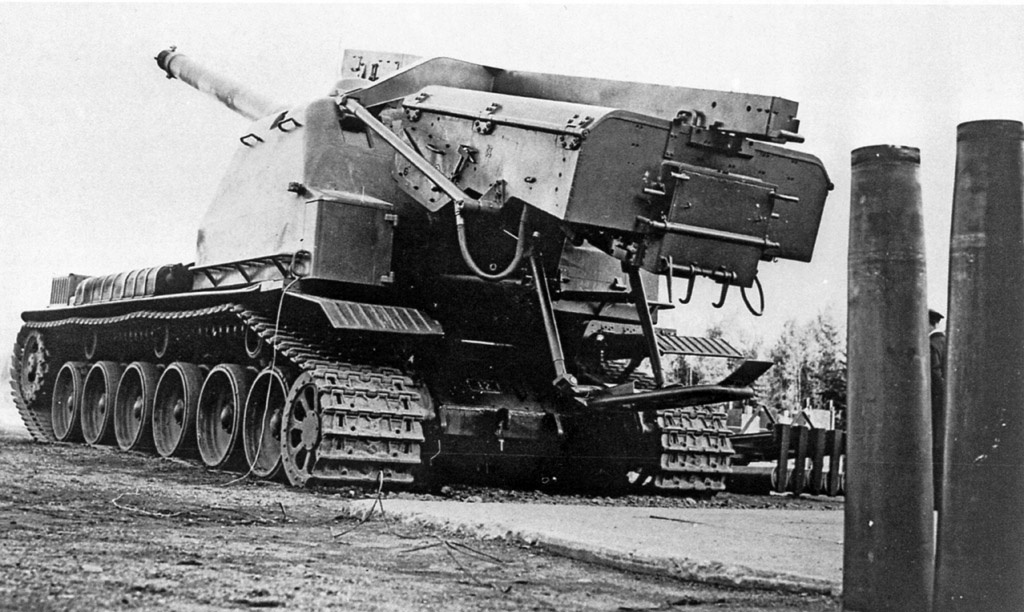
Before firing, the self-propelled gun “crouched down”
From a design standpoint, the AKV 151 was a direct evolution of the Krv, which by 1958 had already been successfully “scrapped.” This was due to Bofors, which was unable (or unwilling) to finalize the turret’s design. Landsverk didn’t overcomplicate things, simply reconfiguring the Kranvagn chassis so that the rear became the front. The engine was moved back slightly to make room for the driver and radio operator, and the total crew consisted of seven people. To accommodate the turret, the chassis had to be lengthened by two road wheels; when in the firing position, the “sloth” would lower, thereby providing a more stable firing platform.
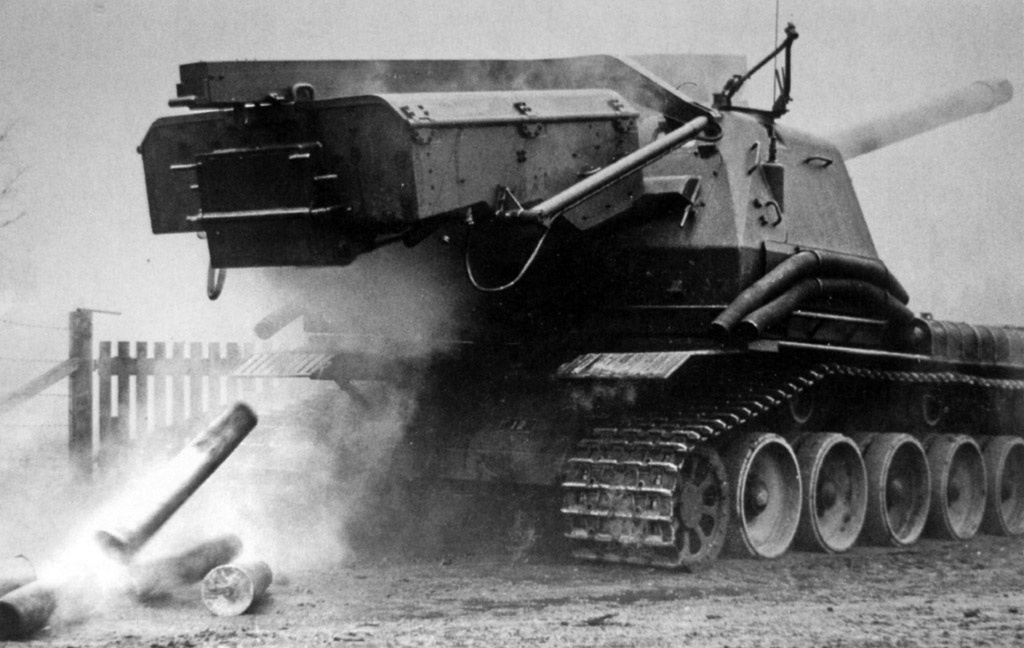
During the shooting
Due to delays with the gun assembly from Bofors, the AKV 151 was manufactured in 1960. It must be said that Landsverk handled the task quite successfully. Yes, it exceeded the weight limit by nearly 10 metric tons, but its highway speed reached 54 km/h. And the platform itself proved to be stable. The artillery unit from Bofors proved to be quite successful. The new concept called for a tactic in which the self-propelled gun would move into position, fire its entire ammunition load, and then quickly withdraw. Afterward, a specialized vehicle would reload the gun.
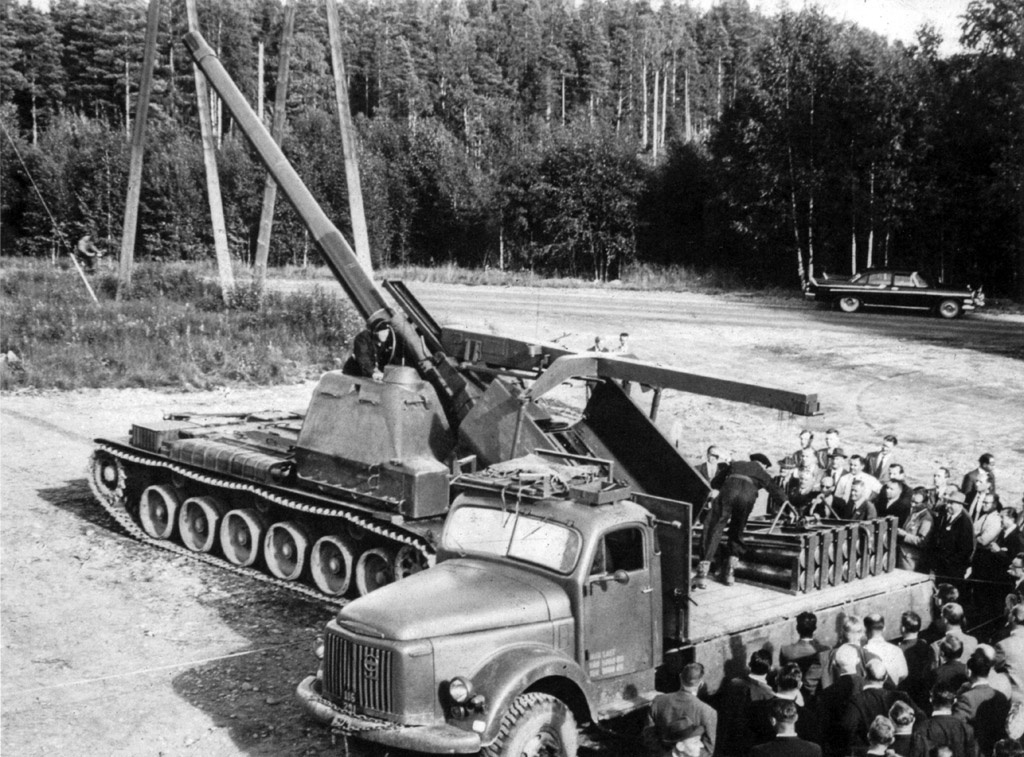
The Recharging Process
It should be noted that in April 1958, when the AKV 151 was under discussion, there was talk of producing 12 self-propelled guns of this type. The main problem was that by 1960, Bofors no longer considered the Landsverk part of its self-propelled gun program (nor had it done so between 1955 and 1959). Since the Krv program had been shut down by 1960, the AKV 155 chassis had no future. Even before it was built, Bofors had proposed several preliminary designs based on the Strv 103. In theory, they were lighter. In practice, however, the production Bkan 1 turned out to be even heavier than the AKV 155, and its mobility was noticeably lower. But the era of Landsverk-based self-propelled guns had already passed.
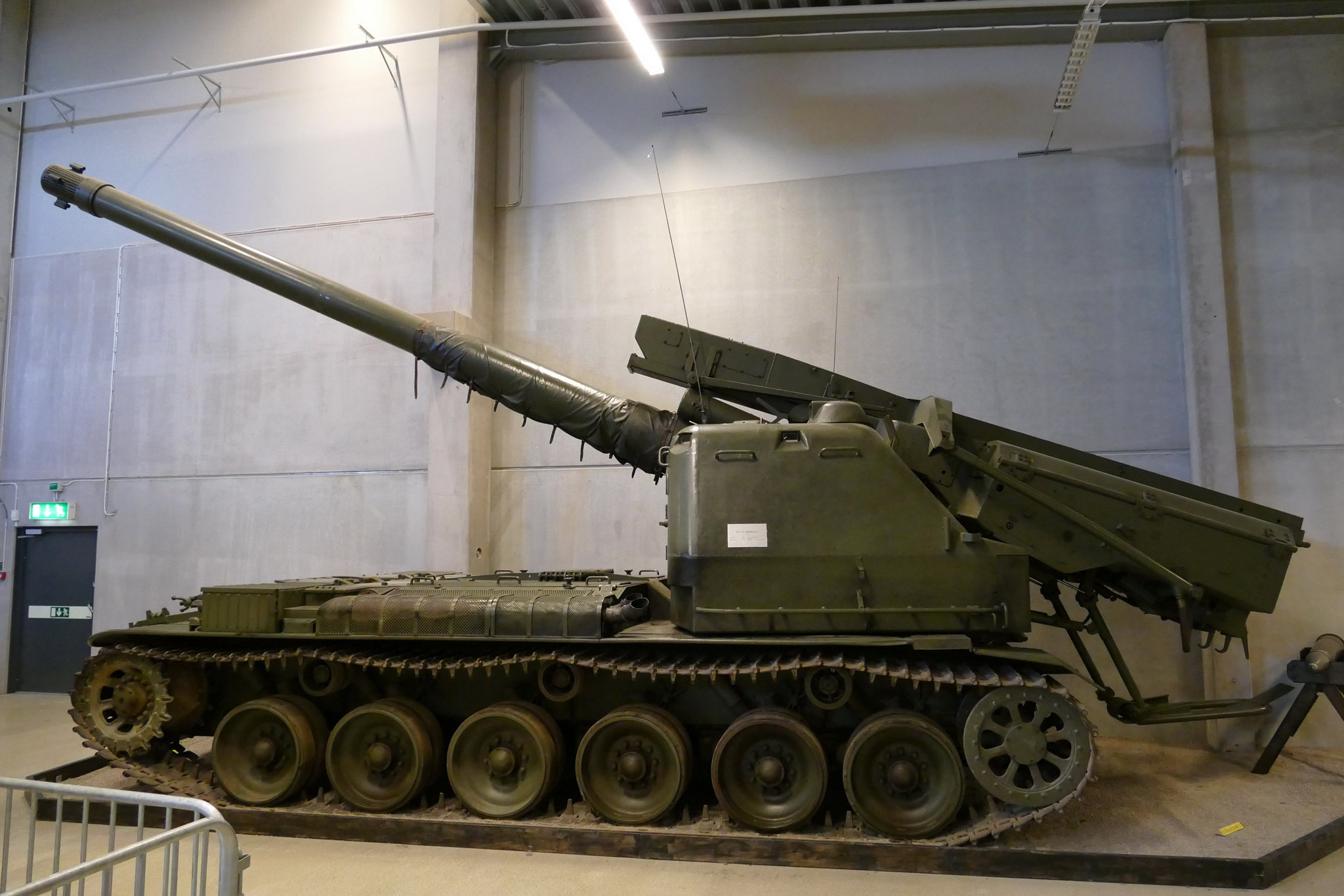
AKV 151 at the Arsenalen Museum
Today, the AKV 151—the only surviving example—has made it to the present day. The self-propelled gun can be seen on display at the Arsenalen Tank Museum. It is so enormous that it had to be placed against a wall so it wouldn’t block the view of the other exhibits. That said, the production-model Bkan 1 is only slightly shorter than its predecessor. At the same time, Bofors ended up with a heavier self-propelled gun with chronically low mobility. This raises the question: was it worth “overdoing” the AKV 151? It didn’t turn out any better.
The author would like to express his deep gratitude to Carl Blomster and Viktor Nurland of Sweden for their assistance in preparing this material and for the materials they provided.
List of Sources:
-
-
- Tankett fm/49 AKV and KRV, Christer Baadstöe, PANSAR 2–2011
- Karl Blomster’s Archive
- tanks.mod16.org
- Arsenalen.se
-