Yuri Pasholok. A gun with a conical barrel for the predecessor of the "Tiger"

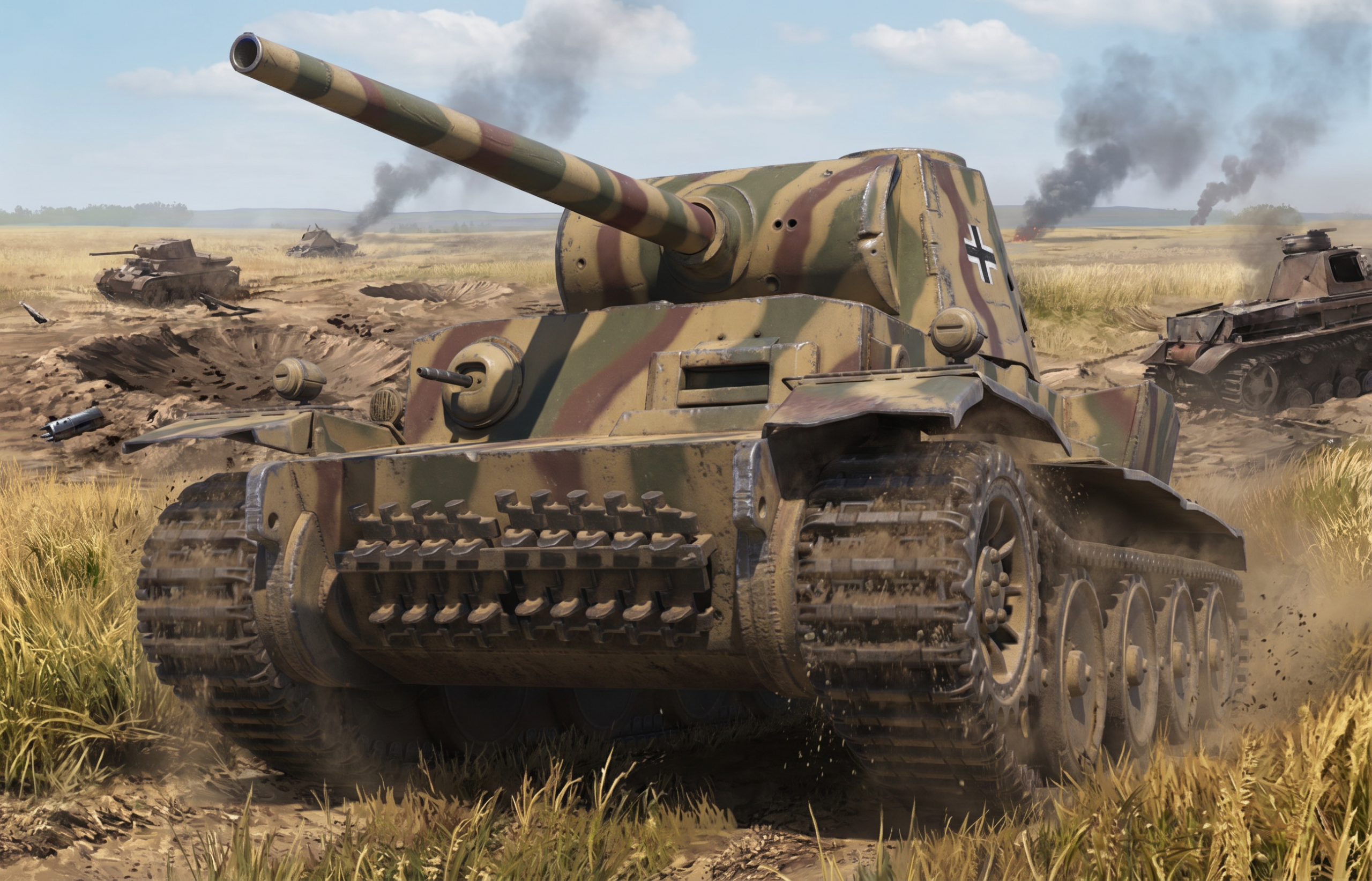
The History of the 7.5/5.5 cm Waffe 0725, a tank gun with a conical barrel that was developed for the German VK 36.01 heavy tank
German tank armament was characterized by conservatism for quite some time. For medium tanks, two models were selected—the 37-mm 3.7 cm KwK gun, with the ballistic characteristics of the 3.7 cm Pak antitank gun, and the 7.5 cm KwK L/24 75-mm tank gun, designed for support tanks. In the second half of the 1930s, there seemed to be a growing realization that more powerful guns were needed, but neither the long-barreled 75-mm guns, nor the 105-mm guns—whose ballistics were similar to those of the leFH 18 howitzer—nor the 149-mm guns—similar to the 15 cm sIG 33—ever progressed beyond the design and prototype stages. Thus, a situation arose that bordered on farce, in which German heavy and medium tanks were armed with the same armament, which was already obsolete in a number of respects.
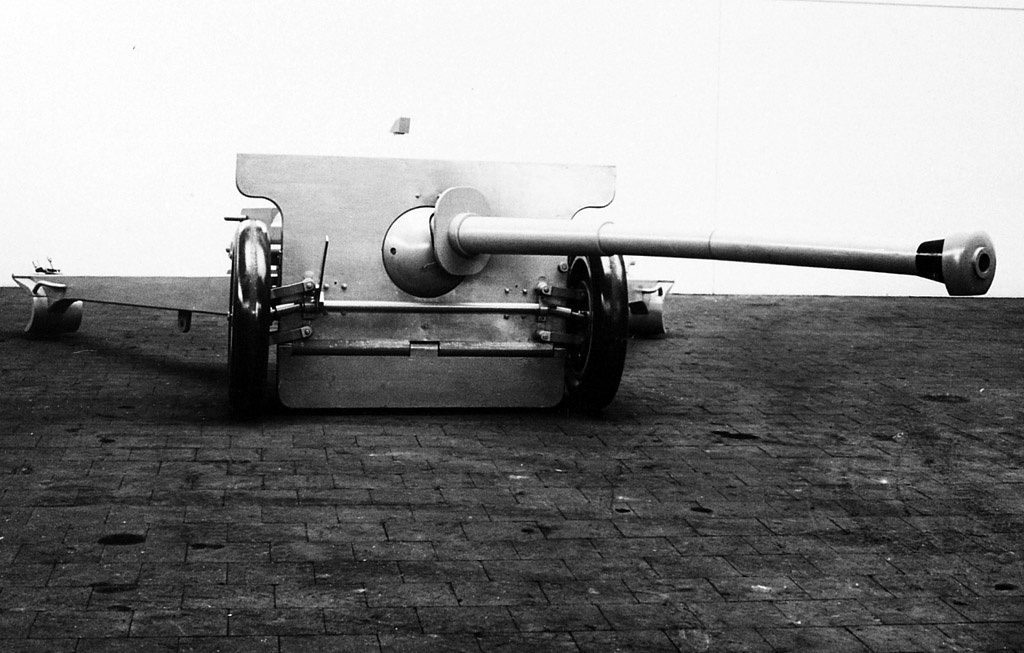
A model of the 55/75-mm gun with a tapered barrel, which was developed by Rheinmetall
The situation began to change only in early 1941, and even then only under direct pressure from Hitler; without it, German heavy tanks would have remained equipped with “short-barreled” guns. Moreover, the breakthrough came from the flank, so to speak, since the Krupp turret with the 88-mm KwK L/56 gun (the future 8.8 cm KwK 36 L/56) was being developed for the VK 30.01(P). This tank was developed independently of the structures of the 6th Section of the Armaments Department, and it was not until the spring of 1941 that they realized the threat posed by the Tank Commission’s development. At the same time, a review of the armament of German medium tanks began. However, the German military simply could not do without outlandish ideas, which is why strange guns began to appear—including those with conical barrels.
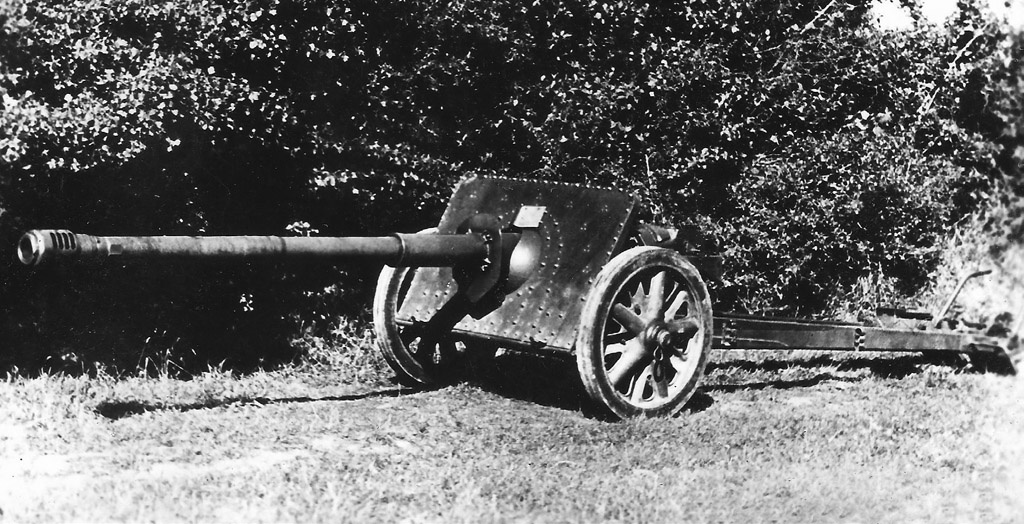
The Krupp gun prevailed
As early as 1939, Krupp began developing anti-tank weapons with a conical barrel bore. This concept was based on the work of German designers Karl Puff and Heinrich Gerlich. They worked in the field of small arms, but the same principles applied to larger systems as well. At the same time as Krupp, Rheinmetall began work on such guns and created the first anti-tank gun with a tapered barrel bore—the 4.2 cm Pak 41—in which the caliber gradually decreased from 42 to 28 mm. The barrel tapered toward the muzzle. Using the same principle, Krupp and Rheinmetall developed 75-mm-caliber guns, in which the barrel tapered further to 55 mm.
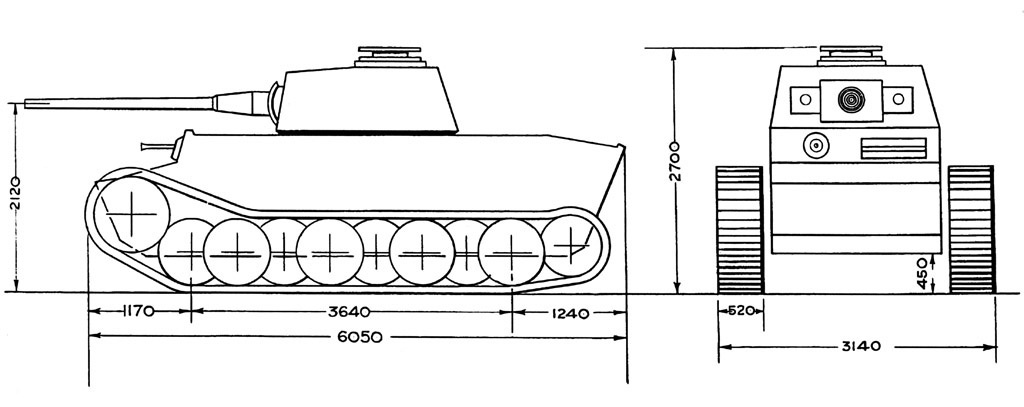
Sketch of the VK 36.01 with a 7.5/5.5 cm Waffe 0725 gun
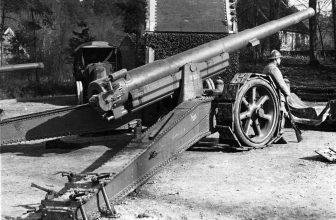
The competition was won by Krupp’s design, which was later adopted as the 7.5 cm Pak 41. The gun had a long barrel (4,100 mm), consisting of a main tube 3,100 mm long and a conical section with a limited service life. For this reason, the conical section of the barrel was removable, meaning that the barrel’s limited service life was relative. At the same time, the projectile’s muzzle velocity was truly phenomenal for those times—1,260 m/s. Due to the specific design of the 7.5 cm Pak 41’s barrel bore, it used exclusively sub-caliber armor-piercing shells. Moreover, initially they had only a tungsten core, meaning that every shot meant a kilogram of tungsten was lost.
It was similar to a towed gun in terms of ammunition, but otherwise the cannon was quite different
So, on May 26, 1941, Hitler held a meeting during which significant changes were made to the heavy tank development program. From that day on, the development timeline for the Pz.Kpfw. Tiger Ausf. E and the VK 45.01(P) began; in addition, the VK 36.01 heavy tank was redesigned in terms of its armament. Instead of the 105-mm gun, which had the ballistics of a howitzer, it was decided to install a 75/55-mm gun with a conical barrel. In fact, initial designs for it already existed—the designation 7.5/5.5 cm Waffe 0725 was mentioned at the meeting. At that time, Hitler expressed the opinion that the kilogram of tungsten expelled with every shot was not exactly ideal.
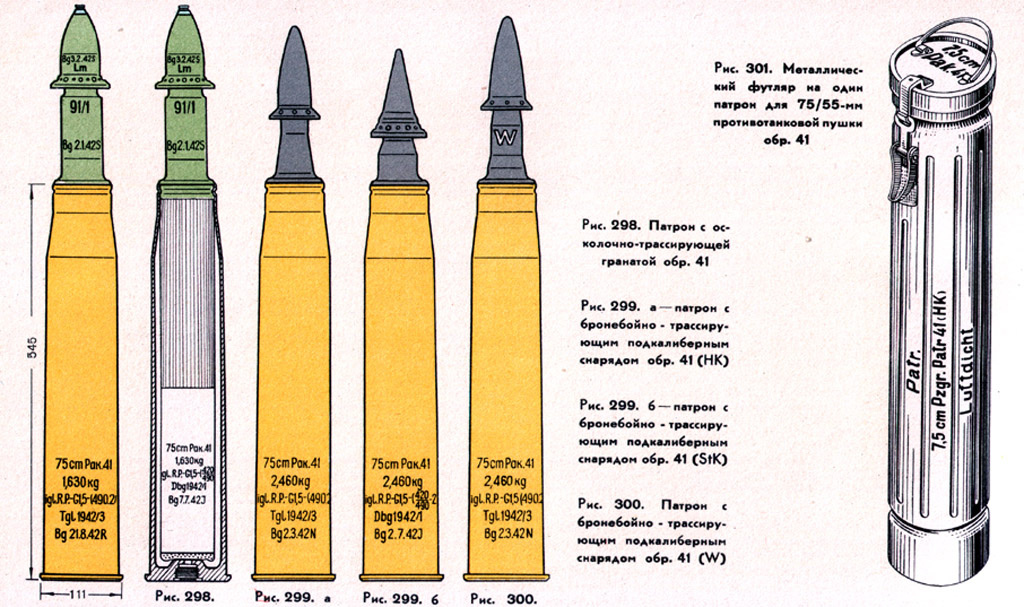
7.5/5.5 cm Waffe 0725 Ammunition Lineup
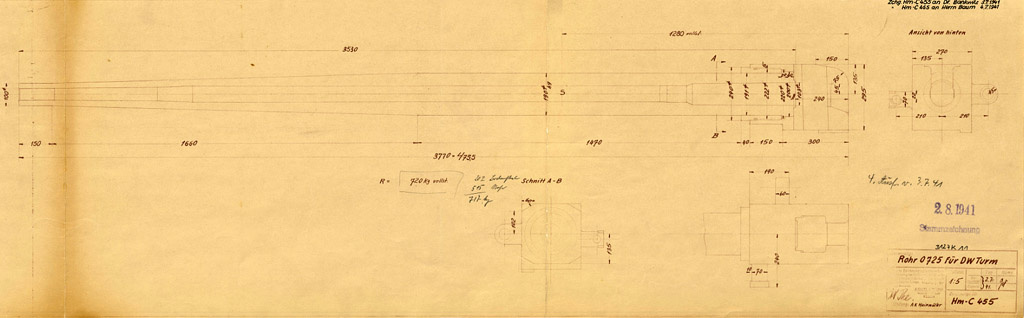
In any case, on May 28, 1941, Section 6 of the Armaments Department issued a directive to Krupp to modify the VK 36.01 turret (designated D.W. turm) to accommodate the 7.5/5.5 cm Waffe 0725. However, as was customary, the gun was not an exact copy of the 7.5 cm Pak 41. The initial, “classic” design of the 7.5/5.5 cm Waffe 0725, which appeared in drawing Hm-C 455 dated July 2, 1941, called for a gun with a total barrel length of 3,770 mm (as indicated, 75.5 calibers, but this is a bit tricky, given the variable barrel caliber). Unlike the towed system, the tank-mounted version did not have a muzzle brake. At the same time, the barrel was heavier than that of the 7.5 cm Pak 41: it weighed 720 kg, compared to 516 kg for the towed system.
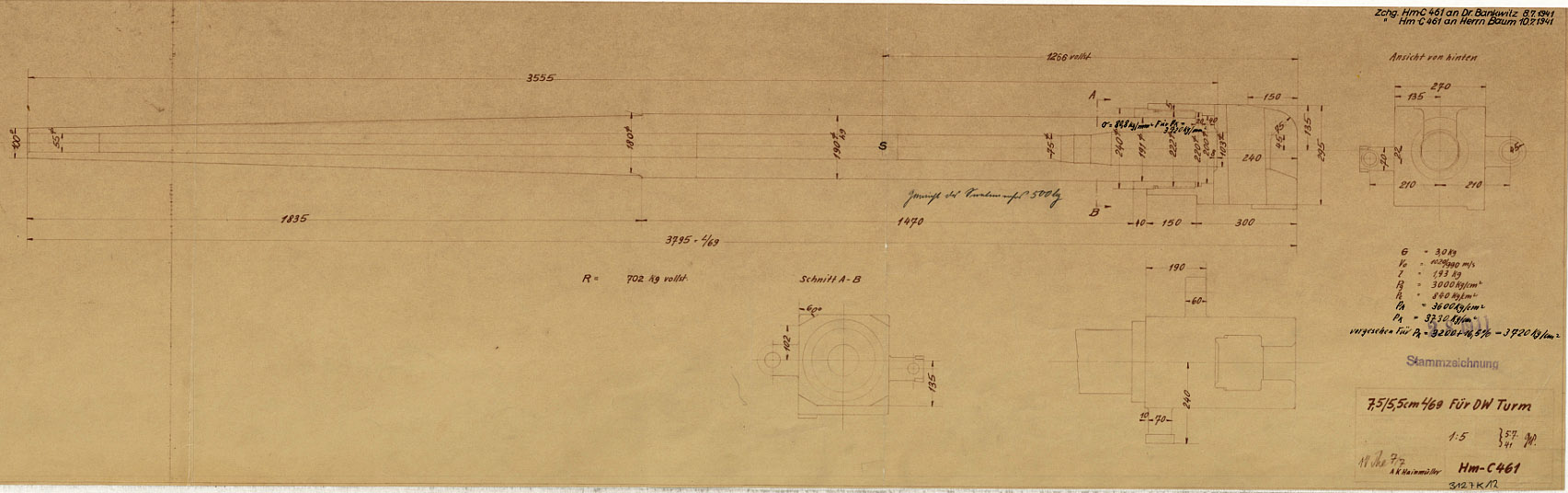
A modified version of the 7.5/5.5 cm Waffe 0725 barrel. Its conical section was shorter, but the barrel itself was longer—3,795 mm—and its length in calibers was, as it were, shorter—69 calibers.
The trick is that this barrel, which is mentioned in various sources, was not the final version of the 7.5/5.5 cm Waffe 0725. Just a few days later, on July 5, 1941, a revised version of the barrel appeared. Its tapered section was shorter, but the barrel itself was longer—3,795 mm—and the length in calibers was actually slightly shorter—69 calibers. This was because the tapered section was shortened, while the main barrel became longer. Incidentally, the barrel’s weight was reduced to 702 kg. The projectile’s muzzle velocity decreased to 1,020/990 m/s, but overall, that’s still quite substantial.
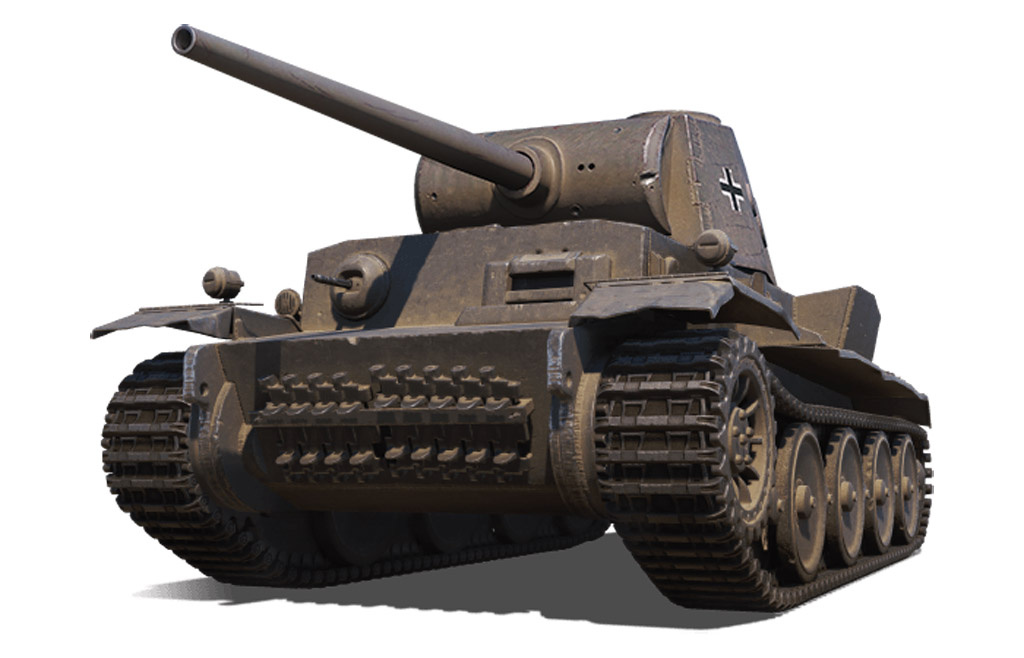
Refurbishment of the VK 36.01 with the 7.5/5.5 cm Waffe 0725
According to the contract signed with Krupp, eight such guns were to be manufactured—two in November 1941, three in December, and another three in January 1942. In reality, however, only one such system was delivered in December 1941, and that was the end of it. As it turned out, guns with conical barrels had an advantage only at close range; at longer ranges, more traditional systems proved to be at least as good. In addition, Rheinmetall-Borsig, with Hitler’s approval, began work on another gun with a 75-mm caliber. The first prototype had a barrel length of 60 calibers; at a distance of 1,400 meters, a shell from this gun penetrated a 100-mm-thick plate mounted at a 60-degree angle from the vertical. In February 1942, a variant with a barrel length of 70 calibers appeared. It was on par with the 7.5/5.5 cm Waffe 0725 at all ranges, using standard ammunition. Against this backdrop, further work on the “conical” shells became completely pointless.
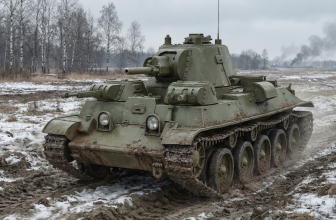
A hypothetical scenario depicting the combat use of the VK 36.01 tank equipped with the 7.5/5.5 cm Waffe 0725. Image generated by lmarena.ai
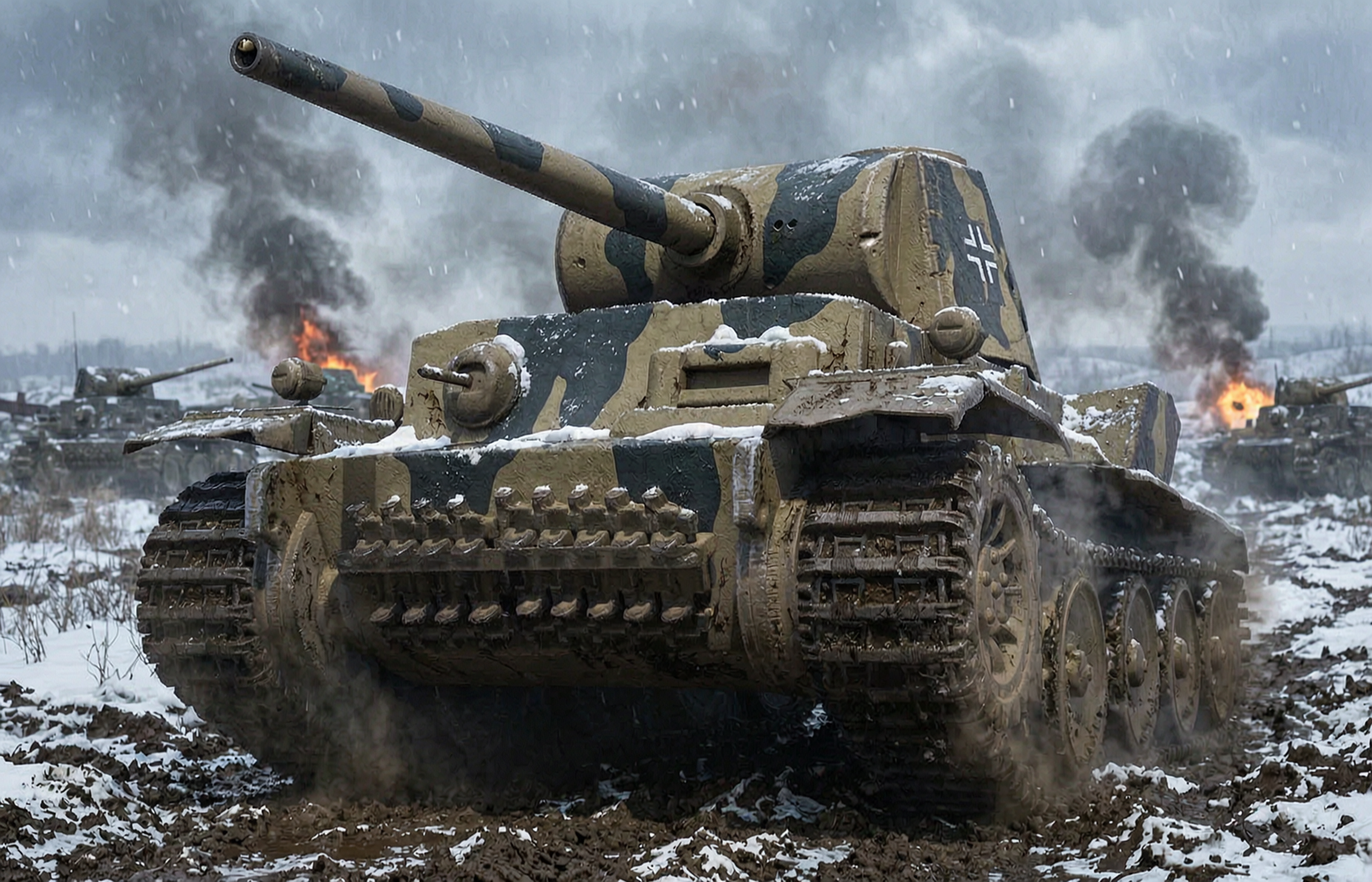
A hypothetical combat scenario involving the VK 36.01 tank equipped with the 7.5/5.5 cm Waffe 0725. Image generated by lmarena.ai
List of Sources:
-
-
- BAMA (Bundesarchiv)
- NARA
- Panzer Tracts No. 6 — Schwere-Panzerkampfwagen D.W to E-100, Thomas L. Jentz, Hilary L. Doyle, Panzer Tracts, 2001
- Germany’s Tiger tanks, D.W. to Tiger I: design, production & modifications, Thomas L. Jentz, Hilary L. Doyle, Schiffer Publishing, 2000
-