The T-27M Light Tank Instead of the T-40?

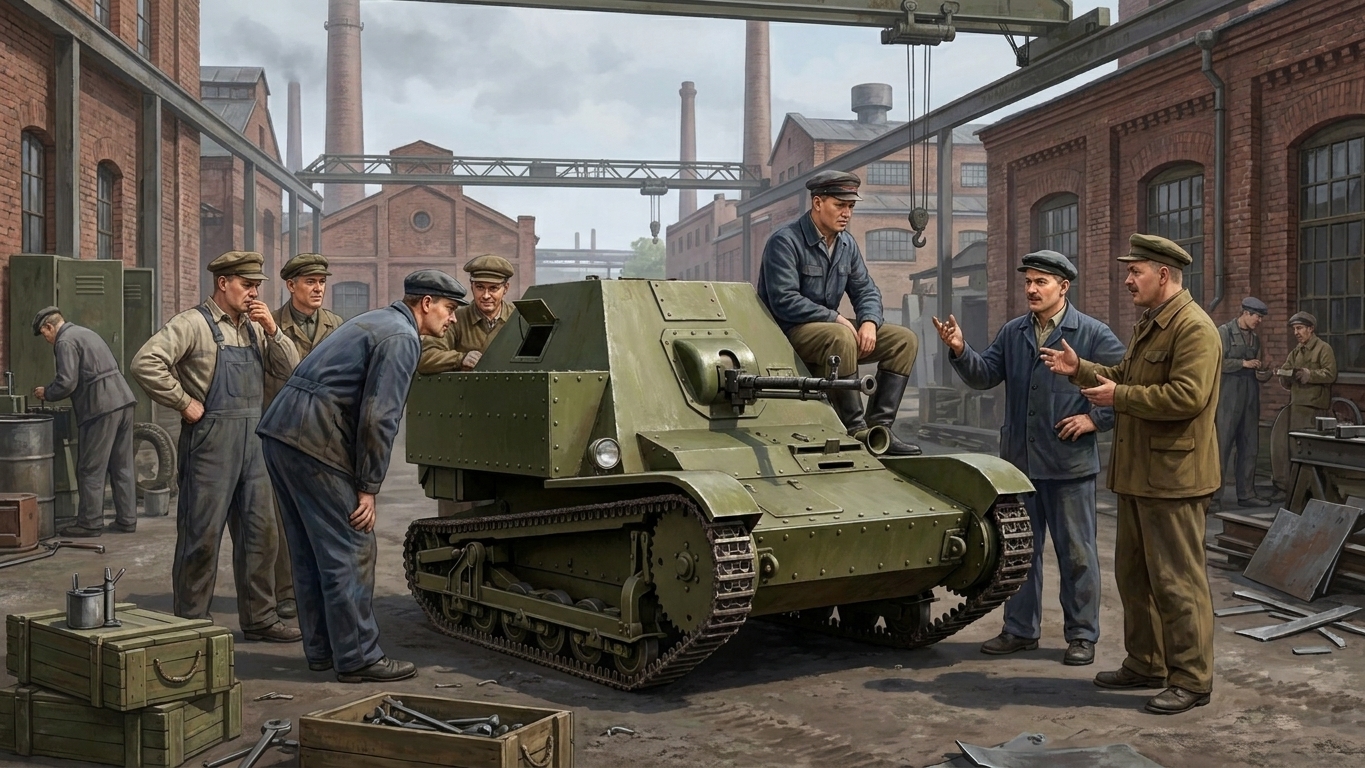
Once upon a time, in the glorious city of Gorky, at an automobile plant, there lived a group of design engineers. The atmosphere was tense—it was the harsh year of 1941. There was a severe shortage of mobile firing positions at the front, so the engineers remembered the good old T-27 tankette. The little vehicle was nimble, but here’s the problem: its armor was as thin as tin, and the little engine from an old truck could barely keep it moving.
The designers gathered around the blue drafting table at the design bureau, shook hands, and said, “We’ll turn this orphaned little tank into a real steppe wolf!”
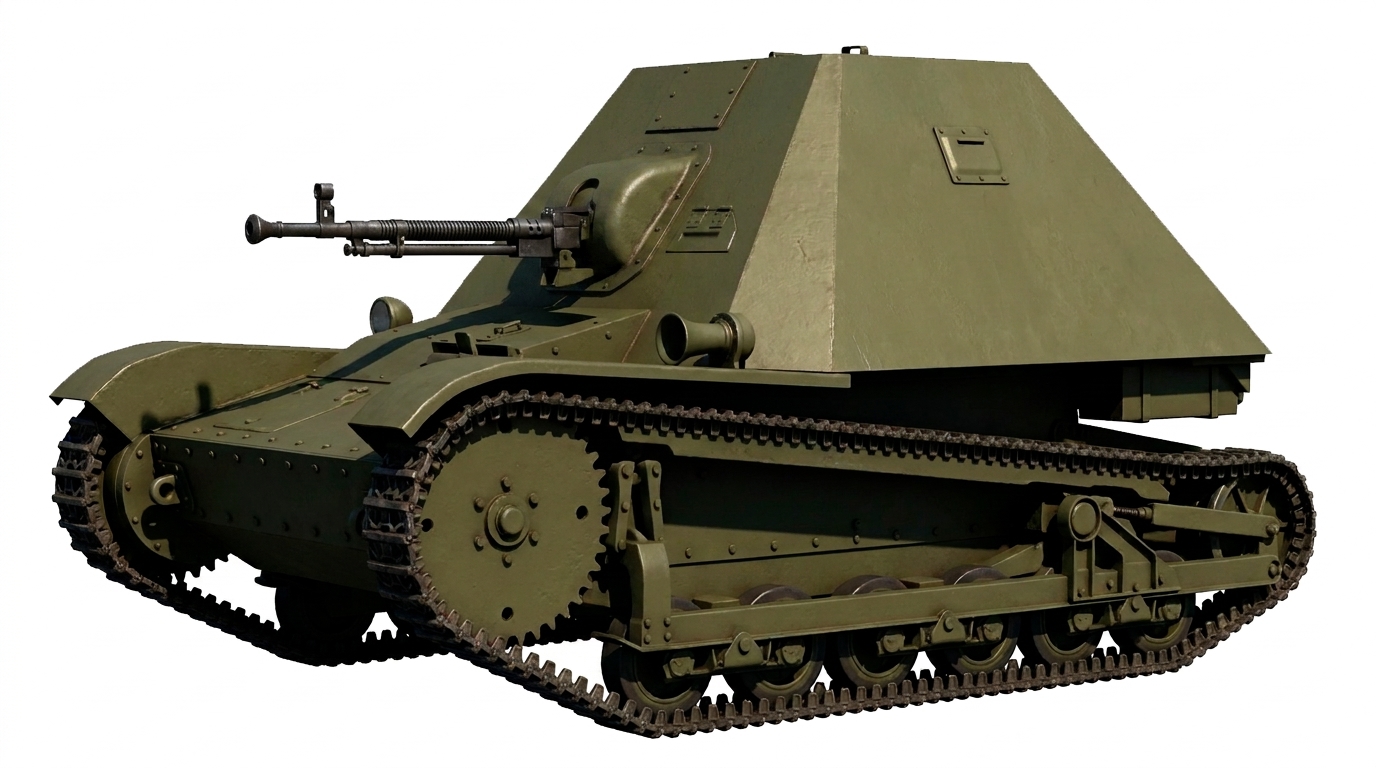
Instead of the old, feeble engine, they managed to squeeze a powerful “heart” into the chassis—the new GAZ-11 six-cylinder engine [1]. The very same one that churned out 85 horsepower! To make room for the engine and ensure enemy bullets bounced off like peas, they completely redesigned the entire armored hull. They made it extraordinary—in the shape of a truncated pyramid, with both the front and the sides tilted at a precise 30-degree angle toward the sky [1]. The steel plates were cast to be superb, smooth, and 22 millimeters thick [1].
They didn’t spend much time deciding on the armament. They mounted a battle-tested heavy machine gun—the legendary 12.7-mm DShK.
The craftsmen rolled their creation out of the workshop, started the engine, and the factory workers gasped. The tankette, weighed down to 3 metric tons [1], roared as it spewed exhaust and sped down the highway at 60 kilometers per hour! It was moving so fast that the testers could barely keep their caps on. And when it turned into a plowed autumn field, it plowed through the mud as smoothly as a knife through butter, maintaining its 30 kilometers per hour where ordinary cars would have gotten stuck on their bellies [1]. Its power was now enough to make any heavy tank envious—a full 28 horsepower per metric ton [1]!
They sent the “Steppe Wolf” straight to the front lines. And here it is—the first battle.
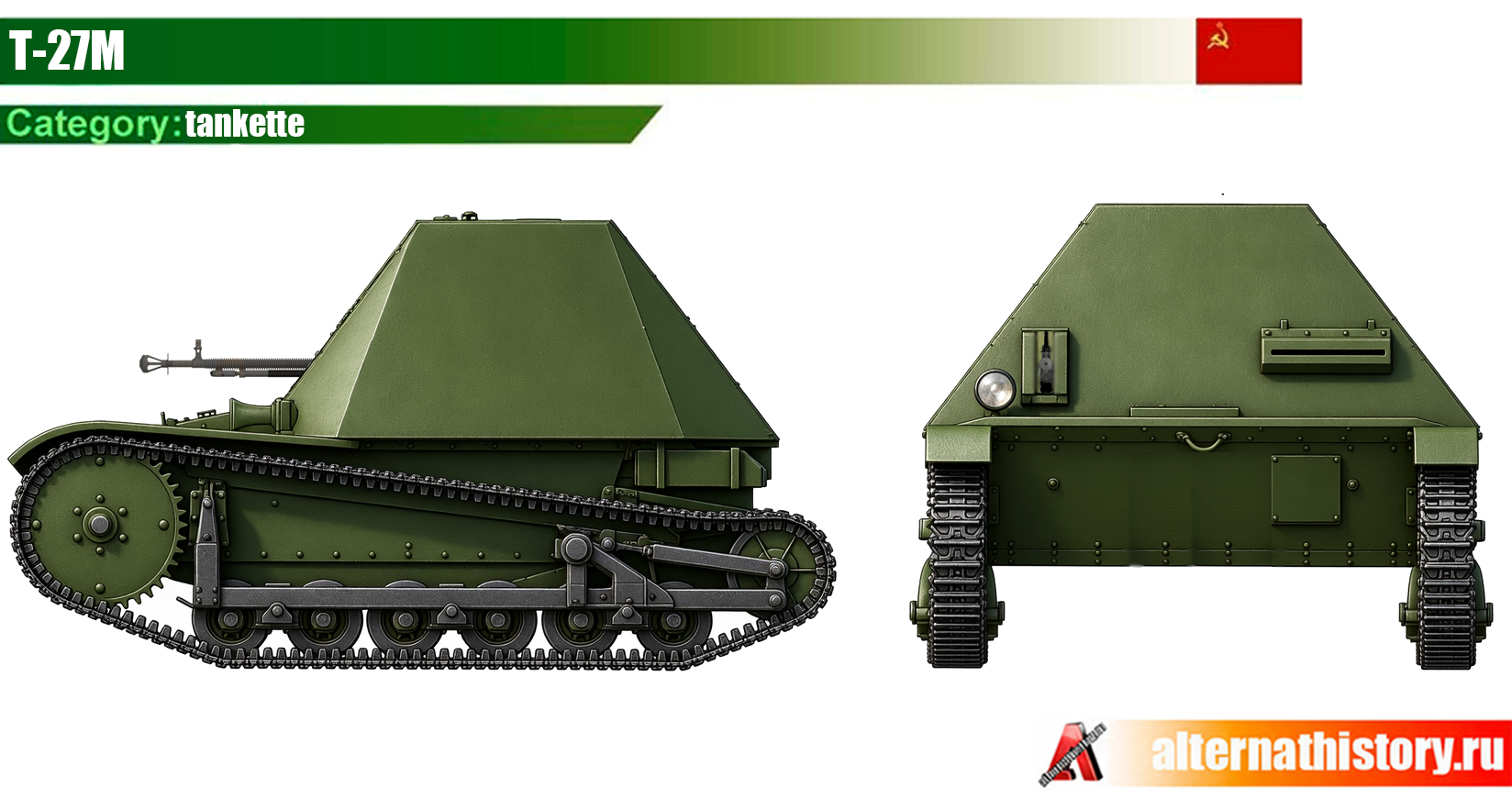
German infantrymen took up positions in the trenches and extended their long Panzerbüchse 38/39 anti-tank rifles [1]. They saw a small, unprecedented armored box—fierce and fast—rushing toward them. They began firing their anti-tank rifles point-blank. The 7.92 mm bullets struck the sloped sides and front of the tankette at breakneck speed, but they could not defy the laws of physics. The effective armor thickness at an angle was a solid 26 millimeters [1]! German armor-piercing projectiles ricocheted in all directions with a terrifying clang, shattering into dust, but could not penetrate the vehicle even from a hundred meters away [1]. The tankette proved completely invulnerable to infantry anti-tank weapons [1].
At that point, a German battery of 37-mm Pak 35/36 cannons entered the fray [1]. The tankette’s commander, spotting the guns from a distance, merely smirked. From a range of 700–800 meters, the German shells ricocheted harmlessly off the sloped armor. Realizing that at a distance of less than 500 meters the Pak gun would indeed penetrate it [1], the tankette’s crew skillfully exploited its incredible maneuverability [1].
The tank zigzagged across the field, came in from the flanks, took cover behind the undulating terrain, and positioned its hull in a “diamond” formation, increasing its armor’s effectiveness to an unassailable 35 millimeters [1]. In response, the large-caliber DShK machine gun opened fire. Its heavy bullets didn’t just mow down the infantry—at a distance of half a kilometer, they easily split the shields of those very same German 37-mm guns, putting their crews out of action.
The tankette smashed through the enemy barricade, saved our infantry battalion, and returned to the regiment as a hero. Thus, the Gorky engineers proved that if you combine sound ballistics with a powerful engine and the correct armor angle, even a small tankette can become a formidable force on the battlefields of 1941 [1].
Registered speed on the highway: 60 km/h—but you can’t go that fast or the undercarriage will fall apart; in a field: 30 km/h. The ground clearance prevents driving on muddy plowed fields or snow deeper than 23 cm. The suspension broke down quickly—the vehicle is heavy and travels at high speeds.