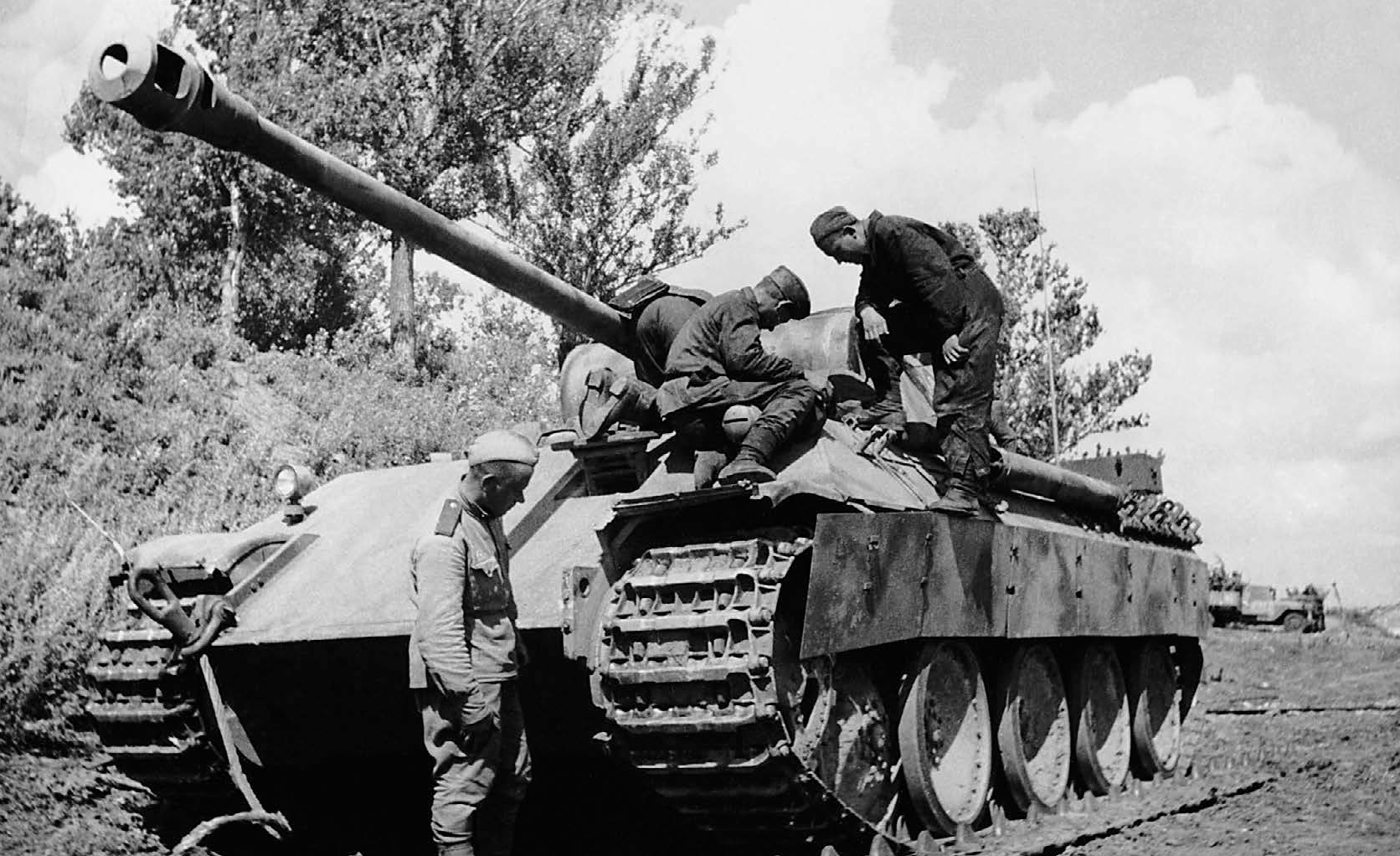
A German Pz.Kpfw. Panther Ausf. D tank under evaluation in the Soviet Union
During World War II, certain models of armored vehicles appeared that served as catalysts for the enemy to develop more advanced tanks and self-propelled guns. It must be said that the development of such combat vehicles met with mixed success. Initially, in 1940, the Soviet military was unpleasantly surprised by the German Pz.Kpfw.III Ausf.G medium tank. It did not surpass Soviet tanks in terms of armor protection or armament, but it outperformed the T-34 in terms of crew comfort, visibility, and mobility. This prompted the development of the T-34M. A year later, it was the Germans’ turn to be surprised—and this time, they were the ones who saw the T-34.
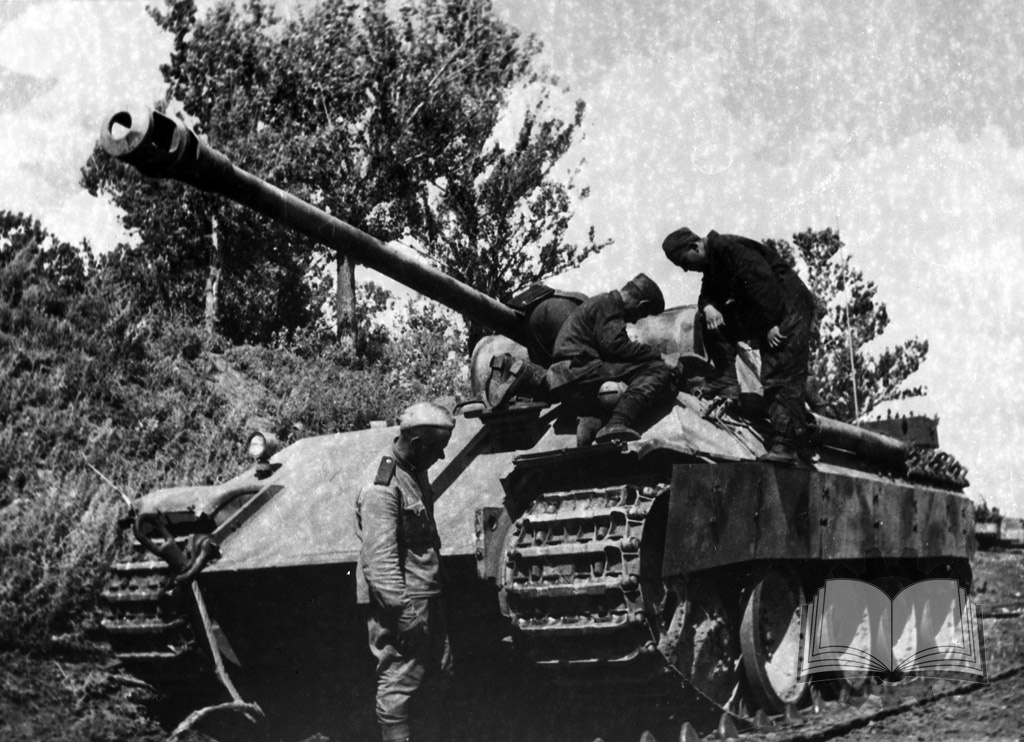
An Examination of One of the Pz.Kpfw. Panther Tanks Lost During the Battle of Kursk
Once the Germans finally took notice of the new Soviet medium tank, work began on developing a German counterpart. This led to the creation of the Pz.Kpfw. Panther, which was destined to become the most widely produced German medium tank. Toward the end of the war, this goal was indeed achieved, at least in terms of the number of tanks available to the troops. At the same time, the vehicle proved to be controversial, especially in terms of classification. In the Soviet Union, this tank—known as the T-V—was most often classified as a heavy tank. The vehicle aroused considerable interest among Soviet military personnel and tank designers.
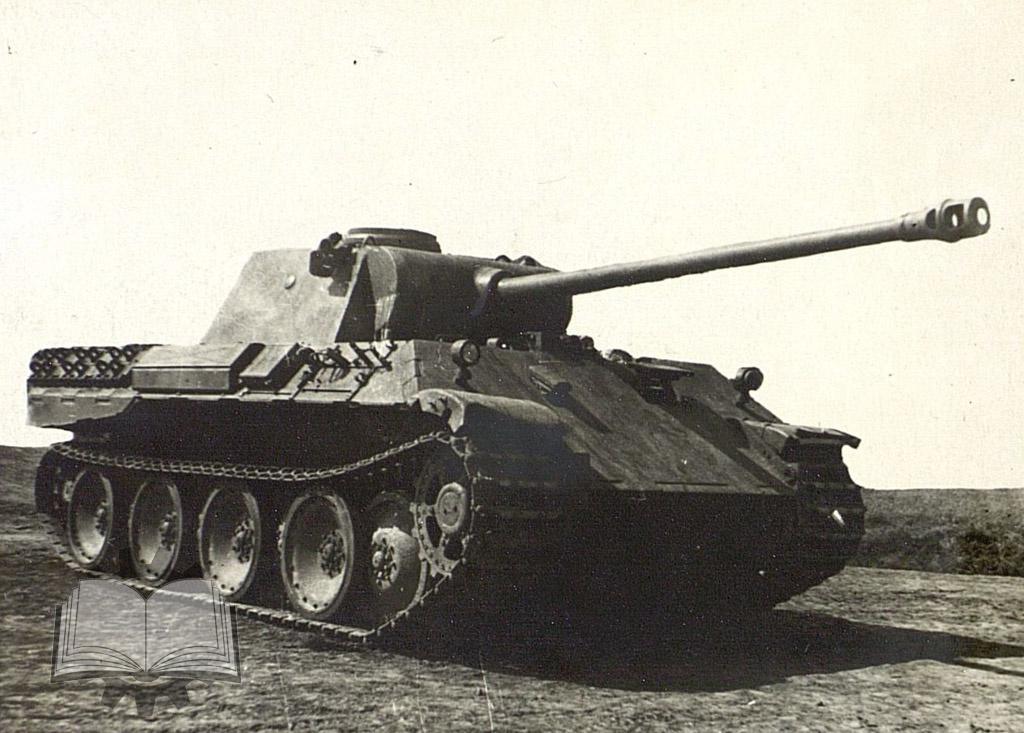
One of the T-Vs—as we called them—during testing in Kubinka
The Pz.Kpfw. Panther was first deployed in July 1943, during Operation Citadel. The Soviet military was unaware of the twists and turns the Panther was experiencing at that time. Meanwhile, the situation was developing in a highly ambiguous manner. Undoubtedly, the new German tank proved to be an extremely formidable opponent. But despite its superiority over Soviet tanks, it did not perform as expected. Initially, the 10th Tank Brigade had 200 Pz.Kpfw.Panther Ausf.D tanks, but by 8 a.m. on July 5, 1943, 16 of them had already been knocked out of action. After two days of fighting, less than a quarter of the tanks remained operational, and by the evening of July 7, there were only 7 combat-ready tanks left.
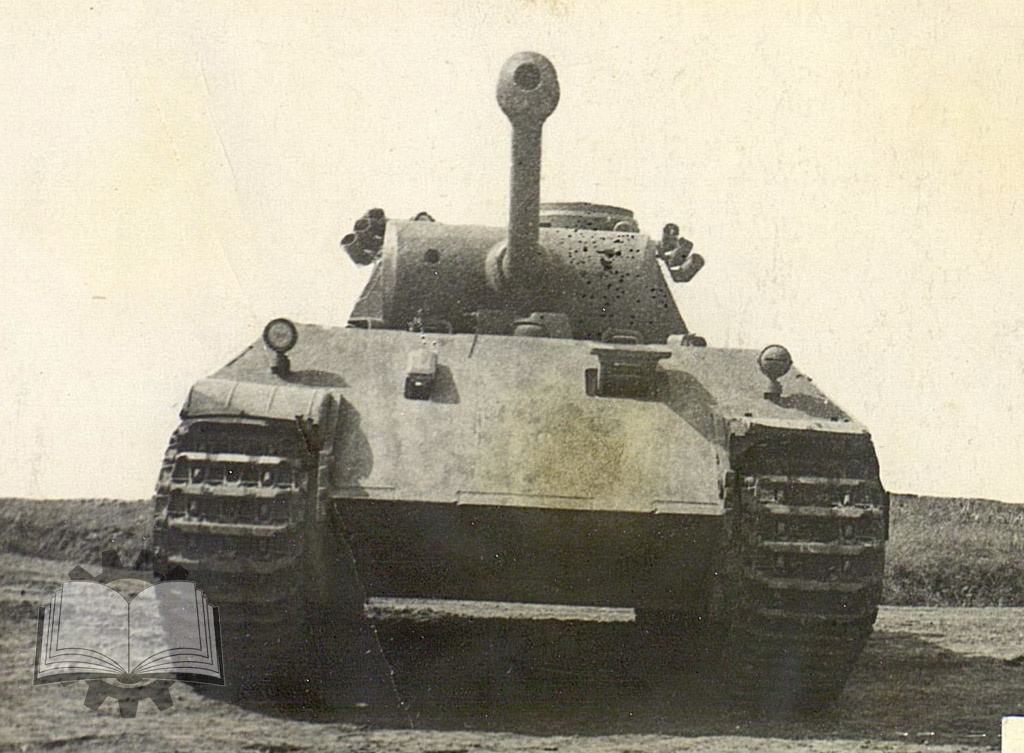
We considered this tank to be heavy—in terms of weight
Soviet intelligence learned in May 1943 that the German army was receiving a new type of tank. However, the initial reports were extremely inaccurate. For example, one of the intelligence reports from May 1943 mentions a certain “Panda S” tank. The Soviet side received its first more or less reliable information from the British on July 9, 1943—that is, already during the Battle of Kursk. It arrived, however, before reports from the Kursk salient began to come in. We also knew nothing about the problems the Germans were experiencing with the “Panther.” By July 21, out of 200 tanks, 41 were operational, 85 required repairs, 16 were sent for major repairs, and 58 “Panthers” were irretrievably lost.
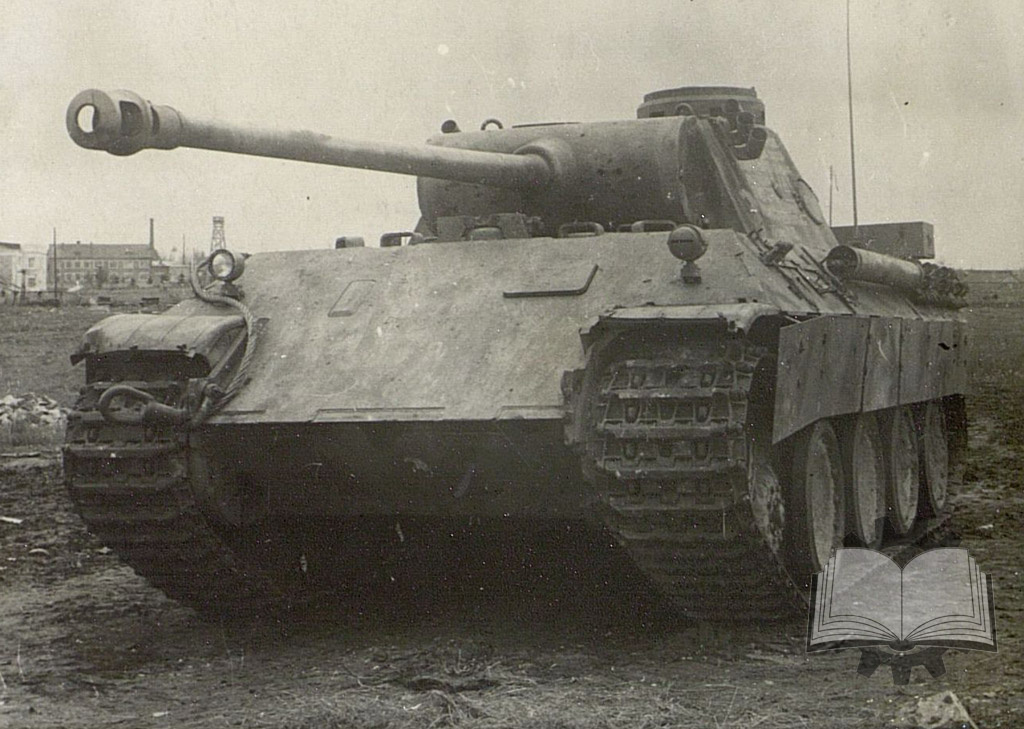
We never had a shortage of “Panthers.” Quite a few of them were captured at the Kursk Bulge.
The examination of the new German tank began on July 20, 1943. Of the 31 tanks examined, 22 had been disabled. All the hits were either on the side or the rear; Soviet guns were unable to penetrate the front. A tank with turret number 441 was fired upon right there on the spot, with the same result—the front of the hull remained intact. The frontal armor of the new German medium tank proved too tough for the 76-mm F-34 tank gun. At that time, the tank was classified as a heavy tank. This conclusion was based on the vehicle’s combat weight. This misconception can also be traced in subsequent documents. It should be noted that Soviet experts were not alone in this view: the British also considered the Pz.Kpfw. Panther to be a heavy tank.
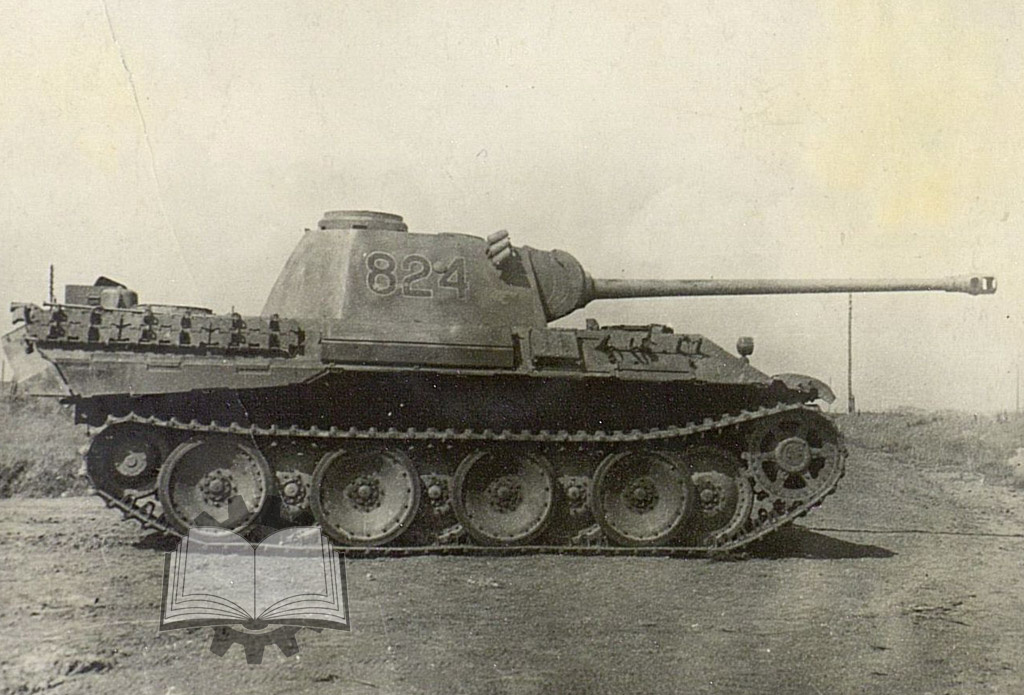
They mainly tested the 824 turret
It must be said that there were no major problems with the captured “Panthers.” There were enough of them both for live-fire tests and for selecting a specimen for a thorough examination. In the latter case, they chose the tank with turret number 824. It was captured on July 17, 1943, near the village of Novoselovka in the Kursk Region by tank crews from the 3rd Mechanized Corps under the command of Major General S.M. Krivoshein. By the time of its capture, the tank had traveled 452 kilometers—a considerable distance for an early “Panther” model. The tank was sent to the NIBT Test Range in Kubinka; however, during testing, it traveled only 58 kilometers on the highway and 162 kilometers on dirt roads.
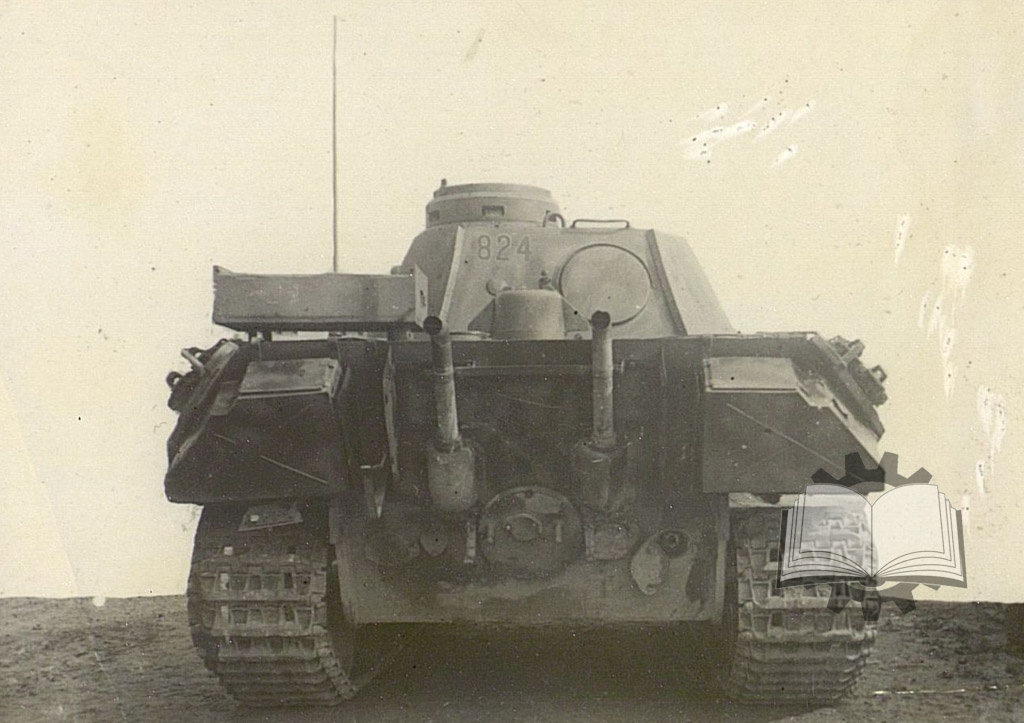
There is a non-standard box at the stern
At the NIBT Test Range, the German medium tank was also considered a heavy tank. For this reason, it was compared to the new Soviet heavy tank, the IS-2. Strange as it may seem, the comparison turned out to be quite appropriate. The fact is that the IS-2’s combat weight was only one metric ton higher, and in terms of dimensions, it exceeded the Pz.Kpfw. Panther Ausf. D only in overall length. As for the other dimensions, the German vehicle claimed a dubious victory. Its hull was 130 mm longer, 360 mm wider, and 180 mm taller. Its ground pressure was also slightly higher.
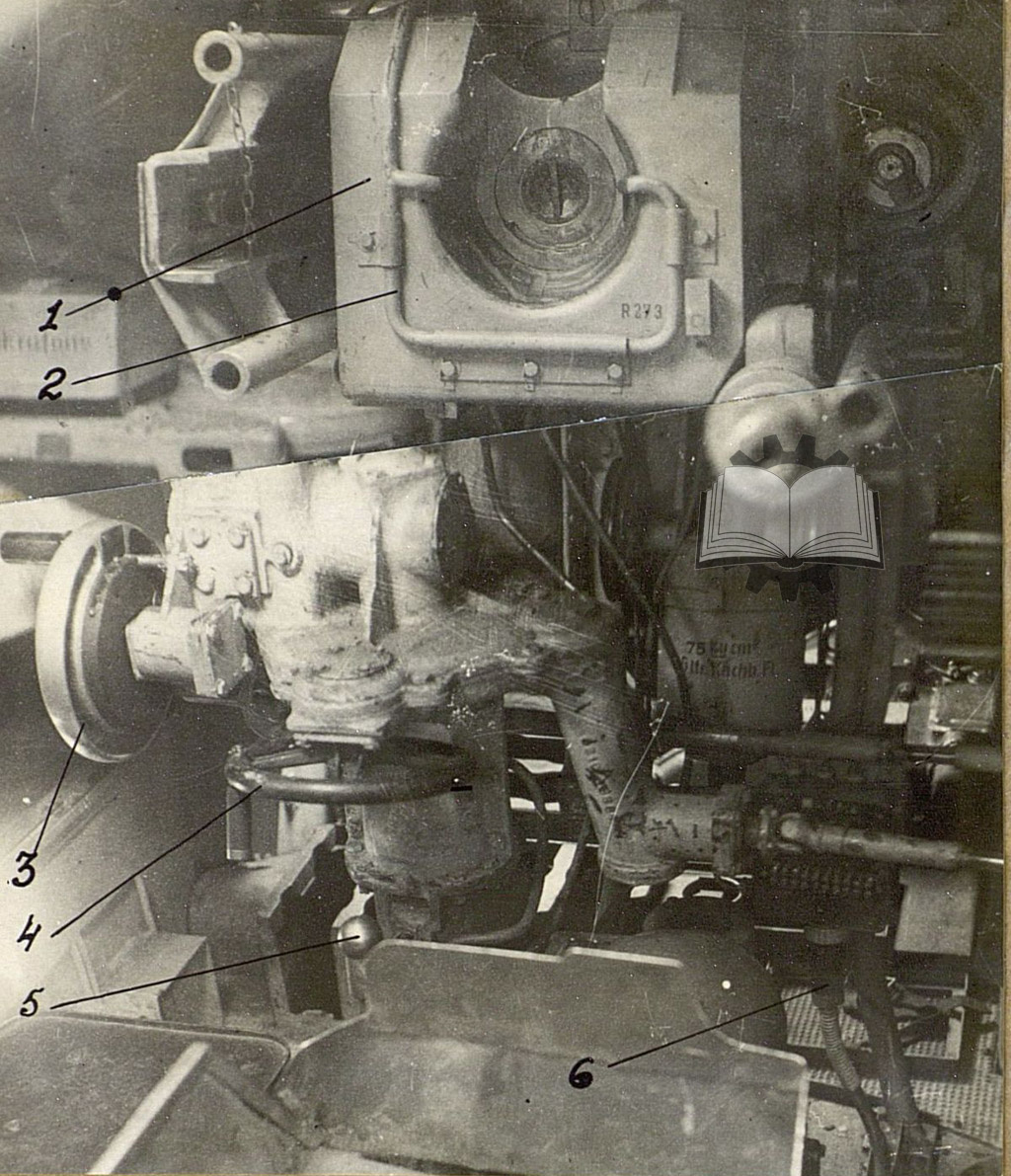
Inside the fighting compartment
At the same time, the German medium tank outperformed the IS-2 in terms of specific power. During testing, a maximum speed of 50 km/h was achieved. The vehicle’s high maneuverability and the very well-designed servo-driven planetary steering mechanism were noted. While driving on the highway, the average speed was 35 km/h. Operational experience showed that the captured German tank could run on Soviet B-70 gasoline. The average speed when traveling unimpeded on a dirt road was 15.8 km/h, though frequent breakdowns occurred. The Maybach HL 210 engine was identified as the least reliable component, deemed to be in substandard condition. This is in addition to its high fuel consumption. For the Panther, it was 595 liters per 100 kilometers. For the IS-2 on a snow-covered dirt road, fuel consumption was 440 liters per 100 kilometers.
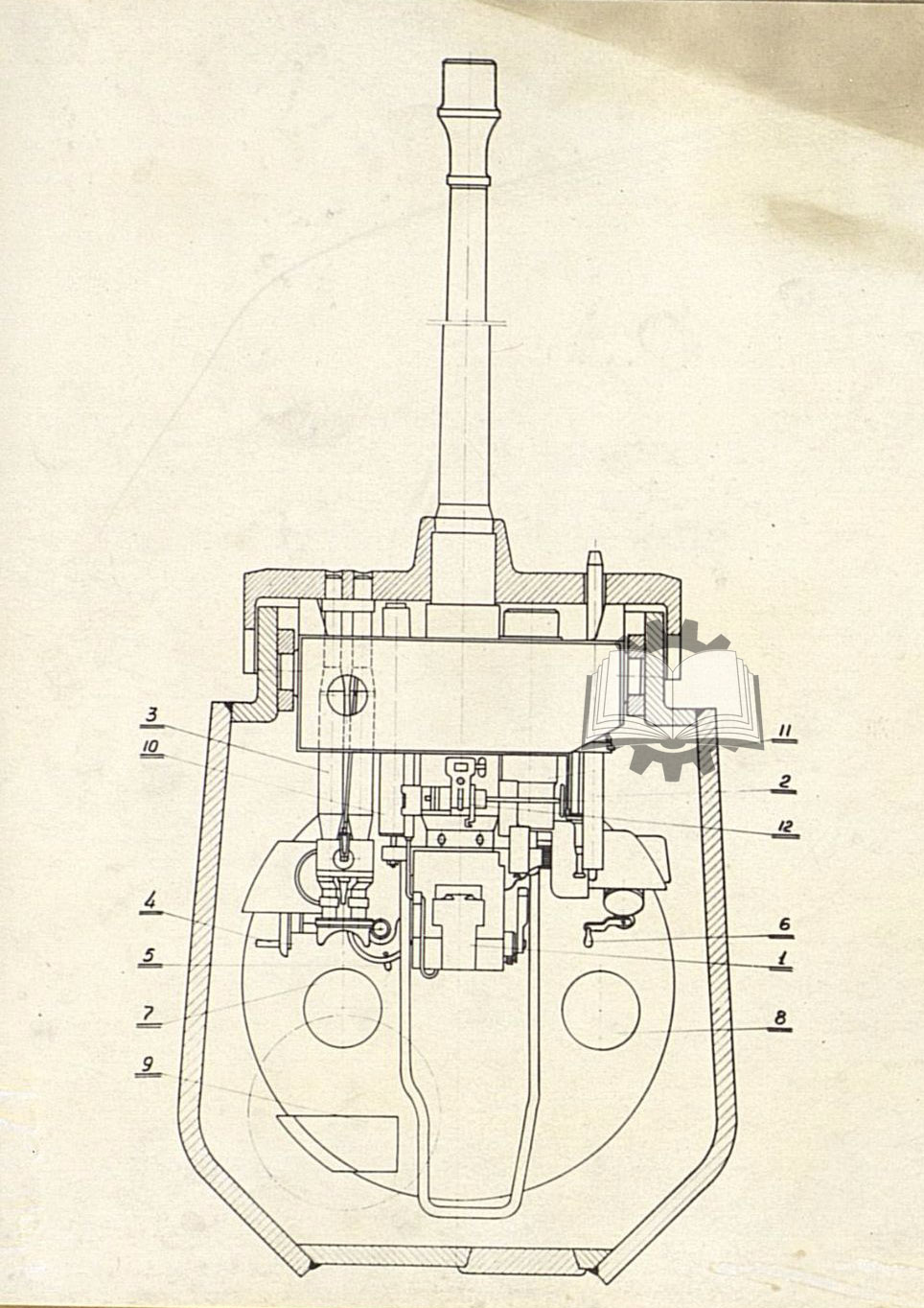
Organizational Chart of the “Panther” Combat Unit
Soviet testers rated the German tank’s armament very highly. The 7.5 cm KwK 42 L/70 proved to be a threat even to the IS-2’s frontal armor. As practice showed, this gun was more dangerous than the 8.8 cm KwK 36 L/56, which was mounted on the Pz.Kpfw. Tiger Ausf. E. In addition, the gun’s ammunition load included a sub-caliber shell, which further increased its penetration. Testers noted that on earlier guns, the sub-caliber round was effective at ranges of 500–600 meters, whereas on the Panther’s gun, this range increased to 2 kilometers. Thanks to the gun’s well-designed aiming mechanisms, a high-quality sight, and an electric firing mechanism, the rate of fire reached 6–8 rounds per minute.
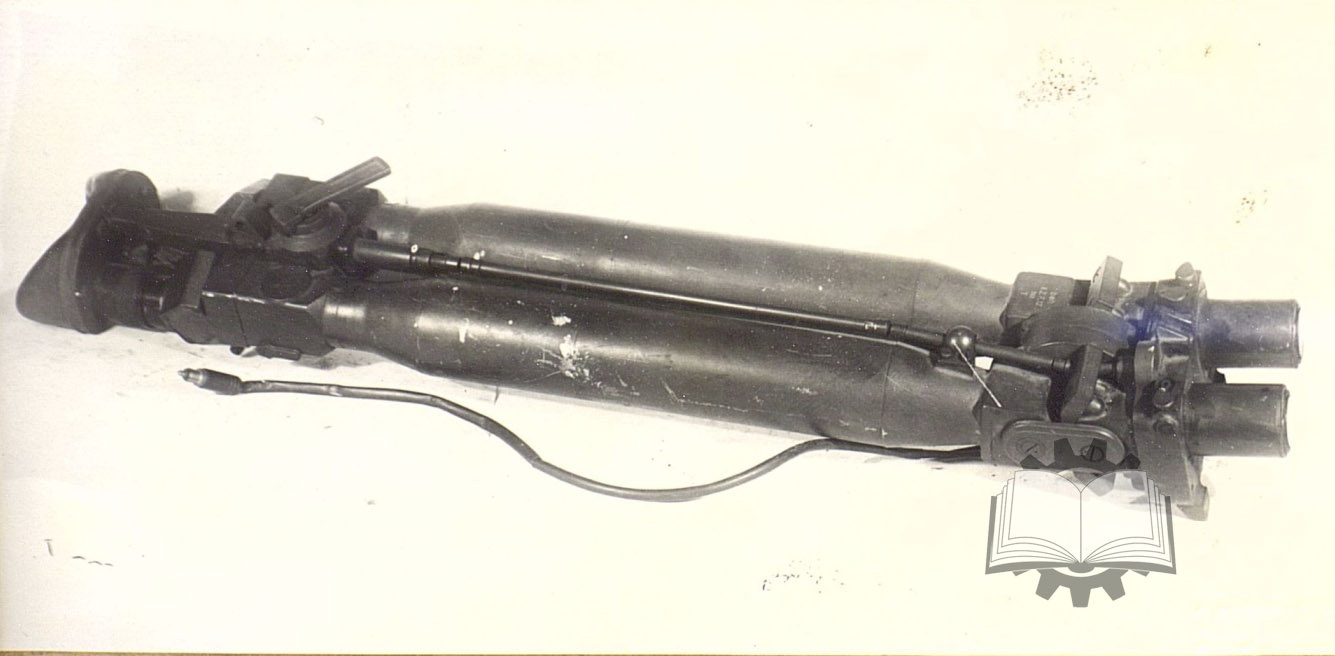
TZF-12 Binocular Telescopic Sight
The assessment of the German tank’s fighting compartment turned out to be somewhat different. It was rated lower than that of the Pz.Kpfw.III. This was partly due to the rather narrow turret, which also featured a turret ring (polik). On the one hand, the turret was still larger than that of the Pz.Kpfw.III, but on the other hand, the gun was also significantly larger. As a result, a situation arose in which a tank that was significantly larger in size ended up feeling more cramped. Worse still, visibility was significantly reduced. In fact, only the commander could observe the battlefield; the gunner and loader did not even have observation slits. A comical situation arose in which the German tank’s visibility became worse—and quite significantly so—than that of Soviet combat vehicles. This, among other factors, explains the numerous instances of “Panther” tanks being destroyed by flanking fire.
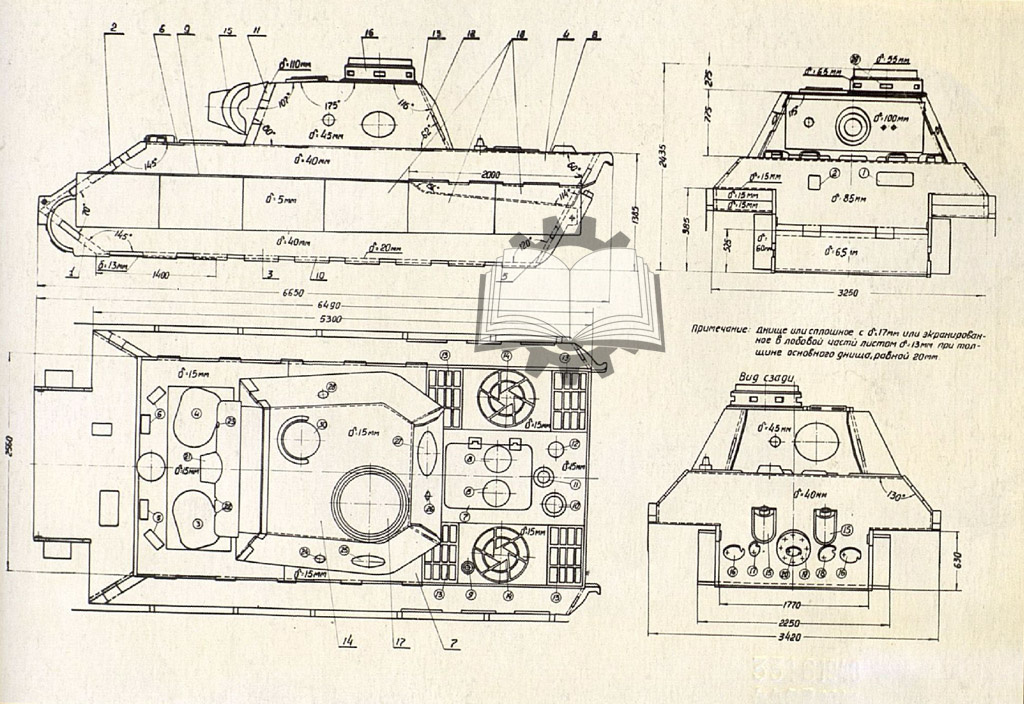
Booking Chart. It should be taken with a grain of salt, as the thicknesses and dimensions are subject to some inaccuracies.
The German tank’s running gear received an unambiguously positive evaluation. The testers noted the highly competent design of all running gear components, which, in their opinion, featured a well-thought-out layout. The running gear required minimal time for maintenance. Particular attention was paid to the tank’s centralized suspension lubrication system, which was proposed for use on domestic vehicles. The torsion bar suspension, featuring two parallel torsion bars per road wheel, also received high praise. According to the testers, this suspension provided a smooth ride while maintaining sufficient strength in the torsion bars.
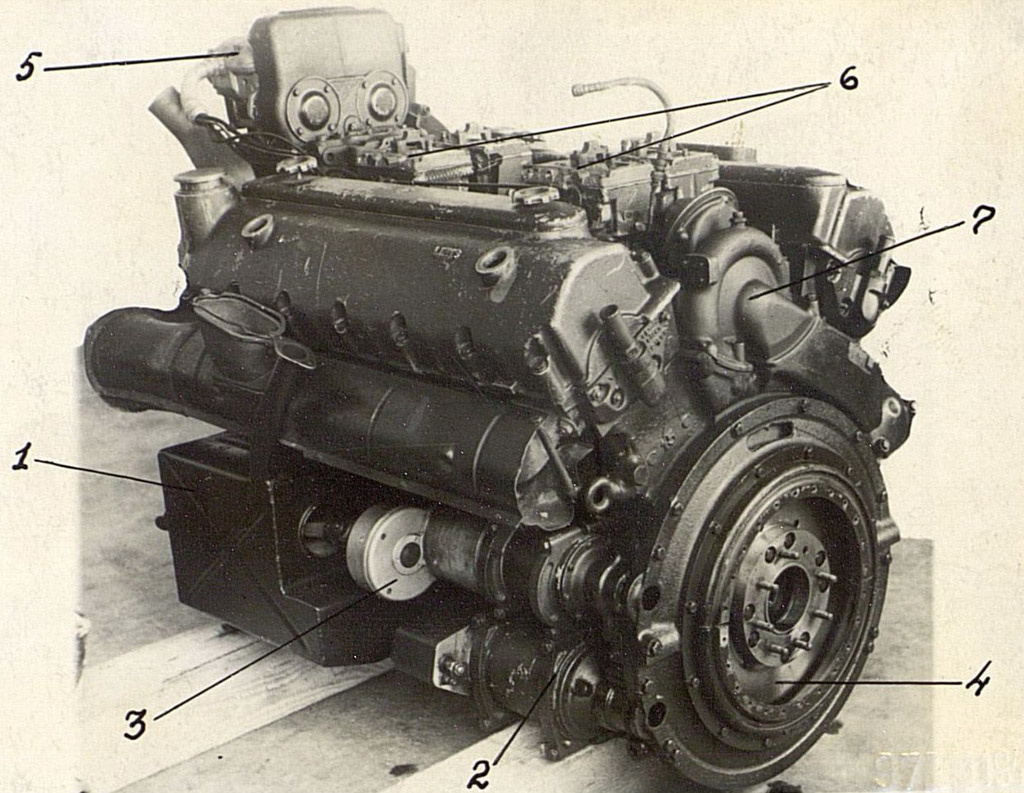
Maybach HL 210 engine
The design of the German tank’s hull aroused great interest among Soviet specialists. It differed significantly from its predecessors in two respects—the angle of the armor slats and their thickness. There was little doubt that the Soviet T-34 served as the model. From a layout perspective, the Pz.Kpfw. Panther differed significantly from the Soviet medium tank; nevertheless, the source of inspiration was easily discernible. These differences in layout significantly influenced the hull’s design. The placement of the transmission in the front section meant that the hull had to be made quite tall and long. It was 20 centimeters taller than the T-34, and a meter longer. This explains its substantial combat weight.
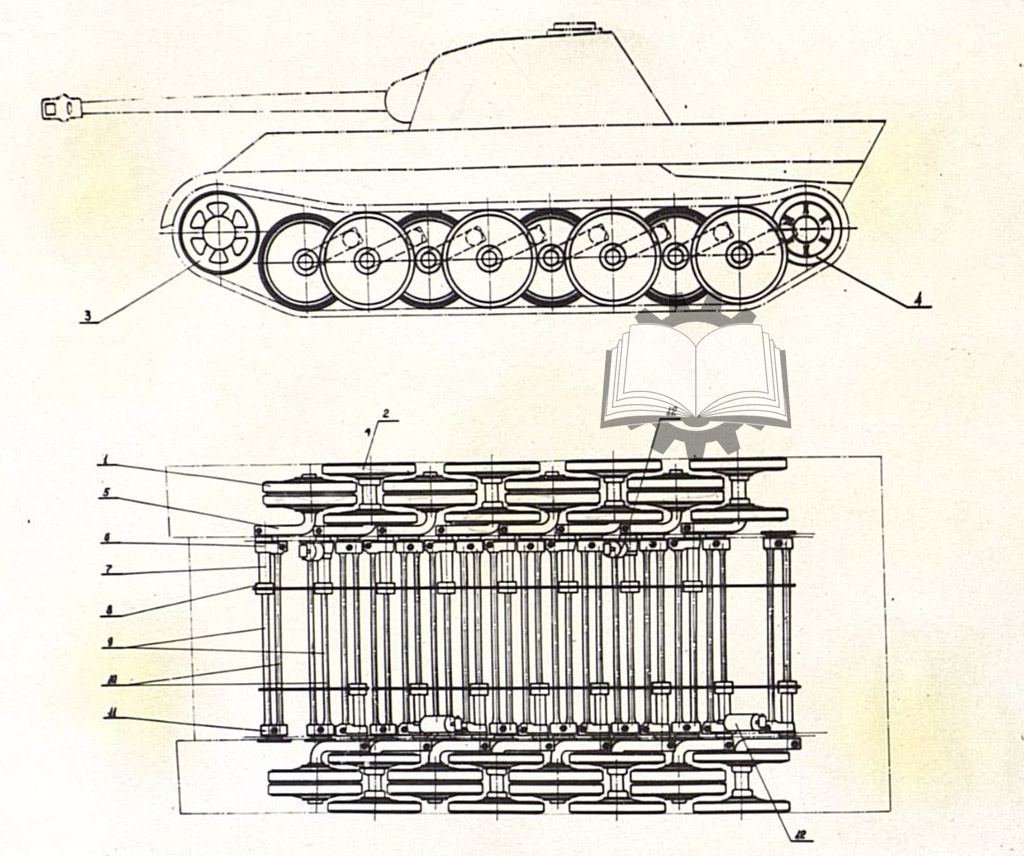
Chassis Diagram
The method used to join the armor plates on the Pz.Kpw.Panther attracted a great deal of interest. Previously, German vehicles had been assembled using butt welding. In the case of the Pz.Kpw. Panther, however, the hull plates were assembled using a tongue-and-groove joint. This solution was not revolutionary; for example, this type of joint was used by some factories that assembled the T-34. However, the T-34 used a slightly different type of tongue-and-groove joint, and even then, it was applied only in specific areas. In the case of the German tank, most of the hull—as well as the turret—was assembled in this manner. The use of this joint increased the strength of the welded connections. Following a study of the German welding method, this type of joint was adopted on a number of Soviet tanks. The front armor plates of the IS-2—which had a straightened nose—and the T-44 were joined using this tenon joint.
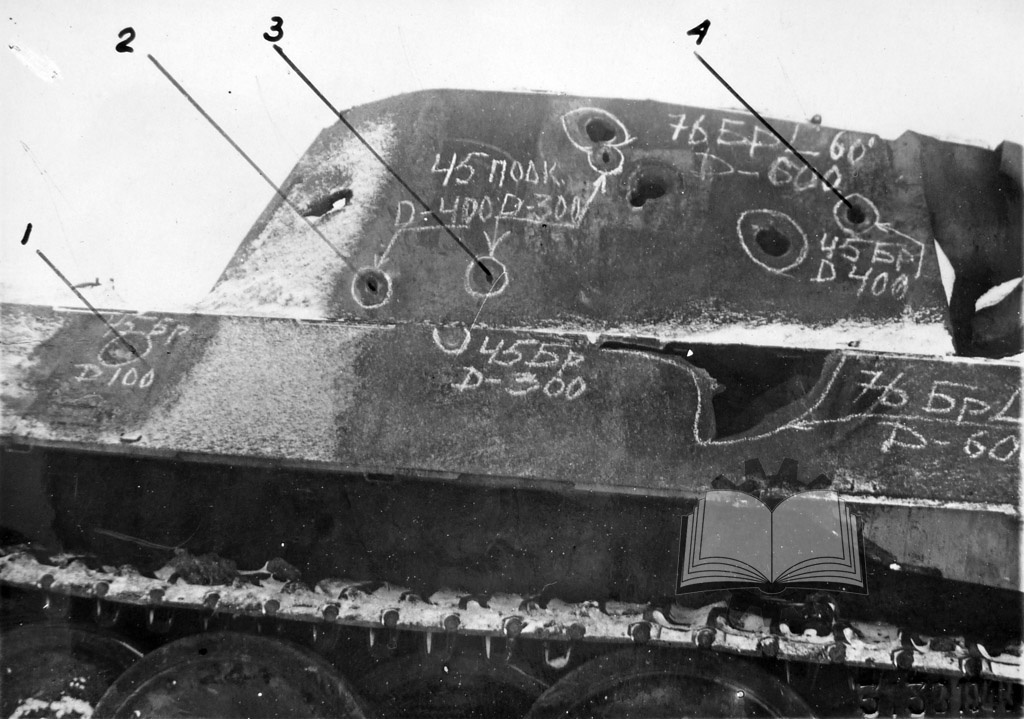
In theory, a 45-mm armor-piercing shell shouldn’t have been able to penetrate the Panther’s hull. But it did.
The new German tank also featured differentiated armor. From the very beginning, the Pz.Kpfw. Panther had a significant difference in the thickness of its sides and front. The upper frontal plate was 80 mm thick, while the lower one was 60 mm thick; both plates were mounted at a 35-degree angle. This significantly improved the hull’s protection. The thickness of the side armor also increased, though only slightly—to 40 mm—with the plates mounted at a 50-degree angle. In theory, this armor was supposed to provide protection against 45-mm guns from the sides. But that was in theory; in practice, the situation was quite different.
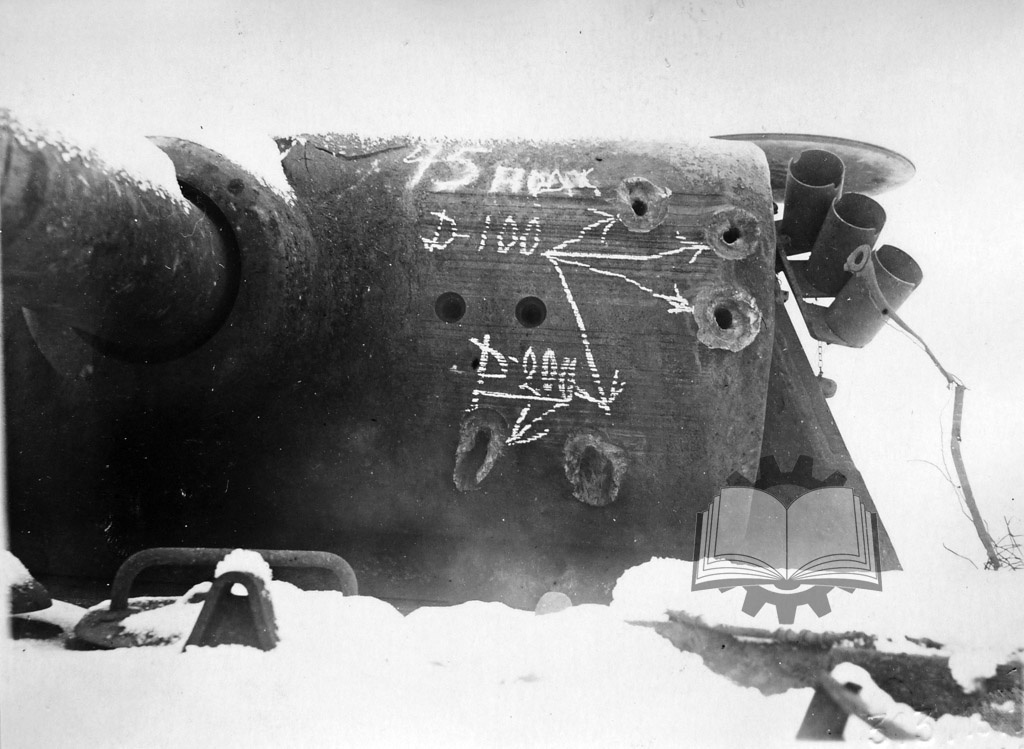
At point-blank range, the “Panther” was vulnerable to 45-mm sub-caliber shells fired directly at the front of its turret
During firing tests involving several tanks of this type, shots were also fired from a 45-mm tank gun mounted on a T-70 light tank. An armor-piercing shell failed to penetrate the sloped side even from a distance of 100 meters, but it did manage to penetrate the side near the running gear from a distance of 500 meters. In theory, the tanks’ vertical sides were protected by 5-mm screens, but in practice, these were very often missing. At a distance of 300 meters, the rear was penetrated, and at a distance of 400 meters, the turret side was penetrated. The tank was then fired upon with sub-caliber shells. Most notably, the movable armor of the gun mantlet was penetrated at a range of 100 meters. It had a cast construction, which reduced its resistance.
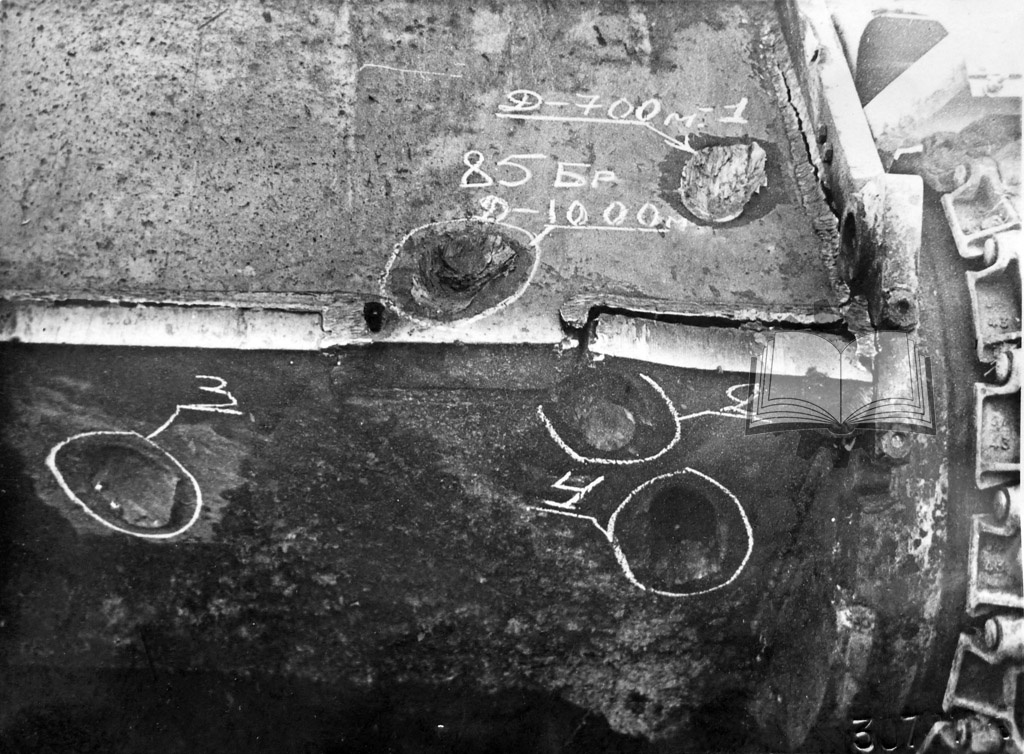
The bad news is that the 85-mm shell didn’t penetrate the front of the hull
The front of the hull and the turret were fired upon with an 85-mm D-5 gun. The results were extremely disappointing: it turned out that the upper front section of the hull could not be penetrated even at a range of 100 meters. When the front of the hull was fired upon, ricochets were observed, which were facilitated by the optimal angles of the armor plates. The penetrations that were achieved resulted either from hits to areas weakened by previous strikes or to the joints between the front and side armor plates. At the same time, the welds began to fail upon impact.
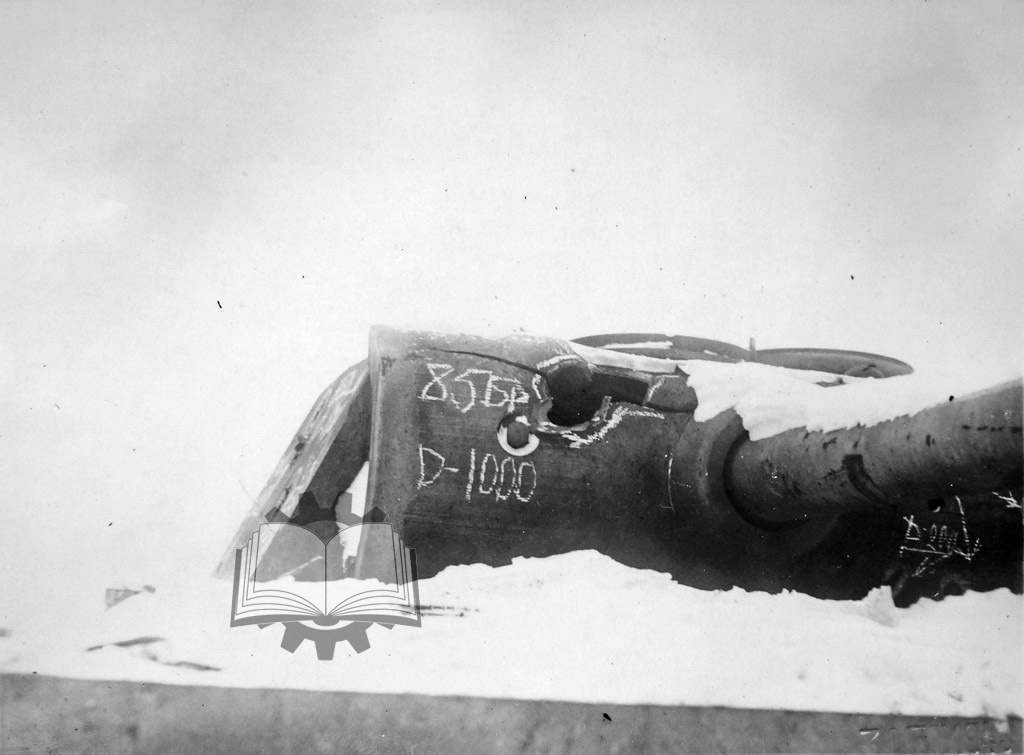
But putting on the tower mask is easy
The fire from the 122-mm D-25t gun system, which was mounted on the IS-2 tank, proved to be far more effective. The very first shot, fired from a distance of 1,400 meters, yielded a positive result—the armor was penetrated. This firing gave rise to the myth that the shell penetrated the front of the hull and broke off the stern plate. In reality, the shot was fired at the side of the turret of tank No. 535. The shell penetrated the left side and sheared off the right side, tearing it from the turret and flinging it several meters backward. As it later turned out, the penetration range for a frontal hit on the “Panther” exceeded 2 kilometers.
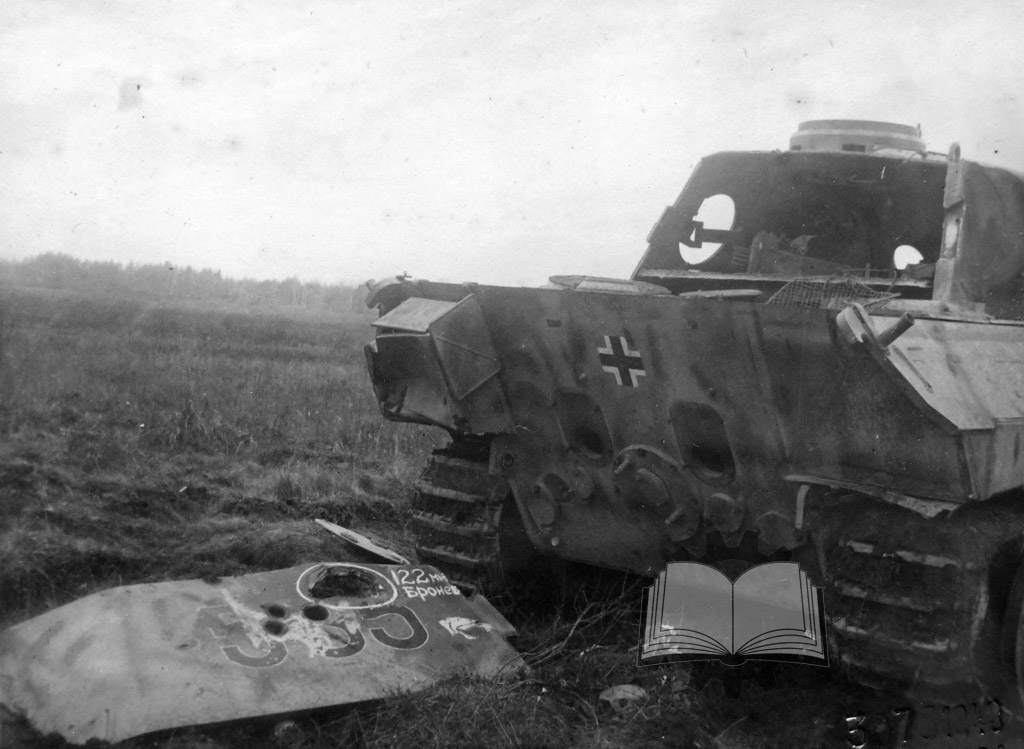
That very same broken-off section of the tower
The “Panther” was also fired upon with a 152-mm ML-20 howitzer. When hit from a distance of 1,200 meters, the shell ricocheted off the upper frontal plate of the hull, creating a 360 × 470 mm breach at the point of impact. Another tank was also hit in the side of its turret. When a high-explosive fragmentation shell struck the turret, it created a 350 × 370 mm breach; the shell then exploded inside, partially destroying the turret. Thus, the ML-20 also proved to be an effective weapon against the new German tank.
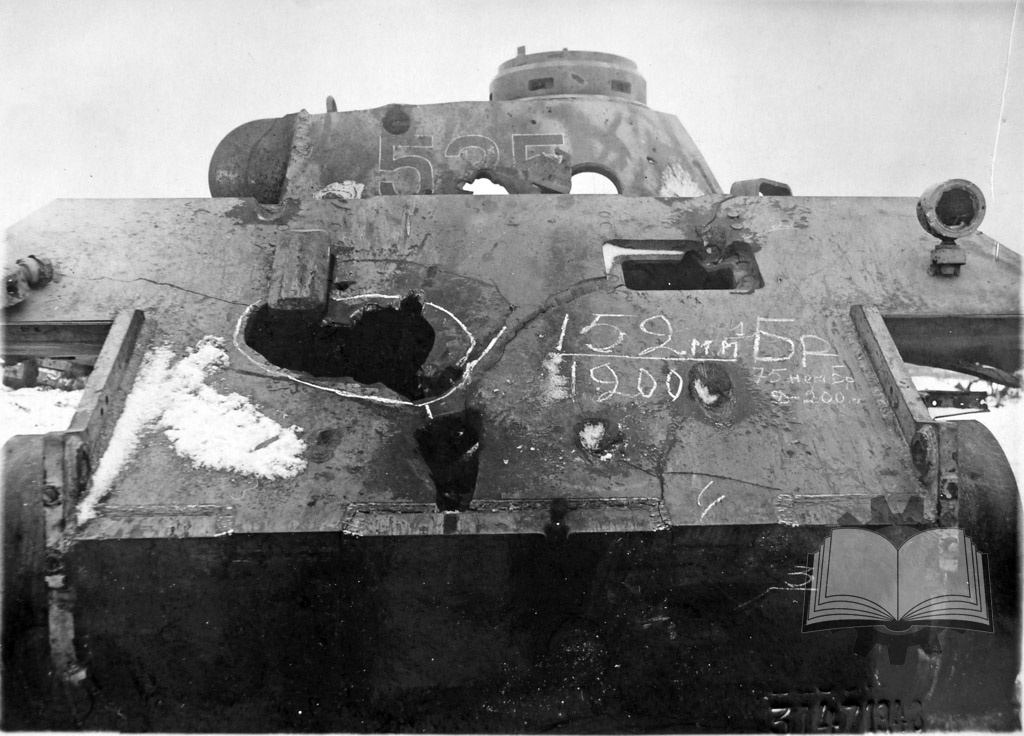
Ricochet of a 152-mm shell
Overall, the “Panther” was highly regarded by Soviet experts. Based on its dimensions and weight, testers classified the German medium tank as a heavy tank destroyer designed to engage armored targets at long ranges. Correct conclusions were drawn regarding the armament of Soviet tanks. As an alternative to the D-5, a 100-mm gun with the ballistics of the B-34 naval gun was proposed. Two guns were under development—the S-34 (TsAKB) and the D-10 (Design Bureau of Plant No. 9). The D-10 emerged victorious in the competition, but with one caveat. It turned out that the front armor of the “Panther” could be penetrated at a range of 1,200 meters, but penetration could not be achieved at a range of 1,500 meters. In any case, the 100-mm gun was subsequently installed in the T-54 tank.
List of Sources:
-
-
- CAMO RF
- RGAKFD
-