The Tank Lost Weight but Kept Its Gun: Why Europe Might Want the 34-Ton Kárpat

For decades, tank design followed a simple rule: if a vehicle had to shoot like a tank and survive like a tank, it would inevitably end up weighing like a tank. This logic produced 65–70-ton giants that require heavy transporters, reinforced bridges, and considerable fuel supplies. The designers of the CFL-120 Kárpat decided to test the opposite idea: what happens if you retain a full-size 120mm gun but remove several dozen tons from the vehicle carrying it?
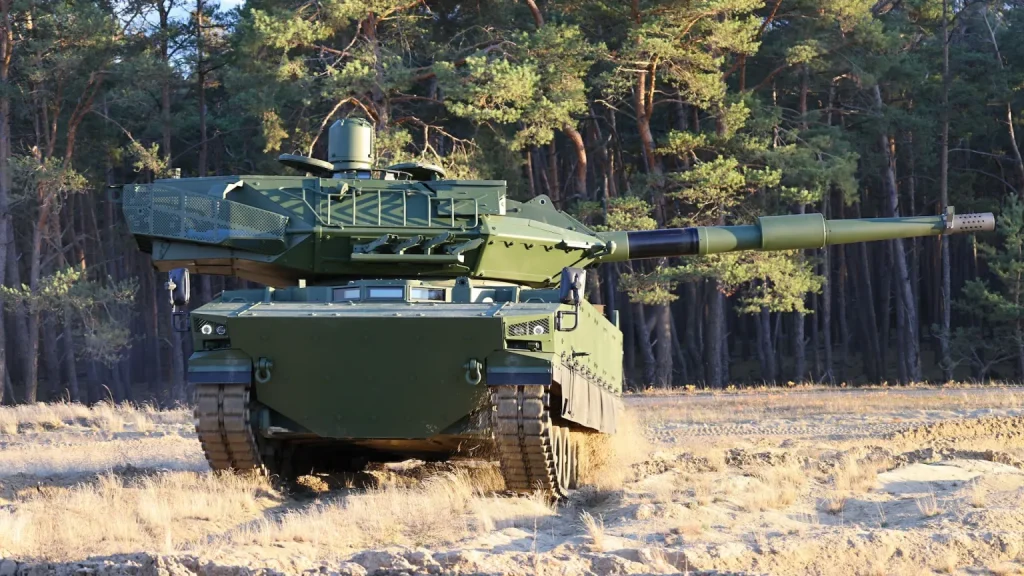
The result is a 34-ton machine—almost half the weight of a modern main battle tank. It can fire standard NATO ammunition, reach 70 kilometers per hour, and looks as if someone installed a full-size tank turret on a chassis that had not yet finished growing.
The Kárpat is not merely a defense-show mock-up. In November 2026, it made its first public appearance at Slovakia’s Záhorie Military Testing Area, driving across rough terrain and firing its 120mm gun. Its developers must now answer a more difficult question: who needs a light tank at a time when the battlefield is becoming increasingly dangerous for every kind of armored vehicle?
Turkish Legs, an Italian Fist, and a Slovak Passport
The Kárpat emerged from an unusual international partnership. Türkiye’s FNSS supplied the tracked chassis, Italy’s Leonardo provided the turret, while the CSG industrial group took responsibility for production and marketing the vehicle from Slovakia.
The design is based on the Kaplan MT platform, which already exists outside promotional brochures. Its original version carries a 105mm gun, weighs around 30 tons, and has entered Indonesian service under the name Harimau. An initial batch of 18 vehicles was jointly manufactured by Türkiye and Indonesia, with deliveries completed in 2024. The Kárpat’s running gear therefore comes from a production vehicle that has undergone testing and entered operational service.
This chassis carries Leonardo’s HITFACT Mk II turret, which can be equipped with either a 105mm rifled gun or a 120mm smoothbore weapon. The latter uses standard NATO ammunition and has a reduced recoil force, allowing it to be installed on comparatively light tracked and even wheeled platforms. The ammunition is stored separately from the crew compartment to reduce the consequences of an internal detonation. In the configuration demonstrated so far, the gun is manually loaded. The crew therefore consists of four people: commander, gunner, driver, and loader. An automatic loading system can be installed at the customer’s request, potentially reducing the crew to three. Secondary armament includes a coaxial 7.62mm machine gun and provisions for a remotely operated weapon station.
The result resembles an international construction set made from three proven components: a Turkish platform, an Italian turret, and a Slovak production base. This is one reason why development moved comparatively quickly. The engineers did not have to design an entire tank from scratch—they connected existing systems and made them work together.
A Real Gun on Something That Is Not Quite a Tank
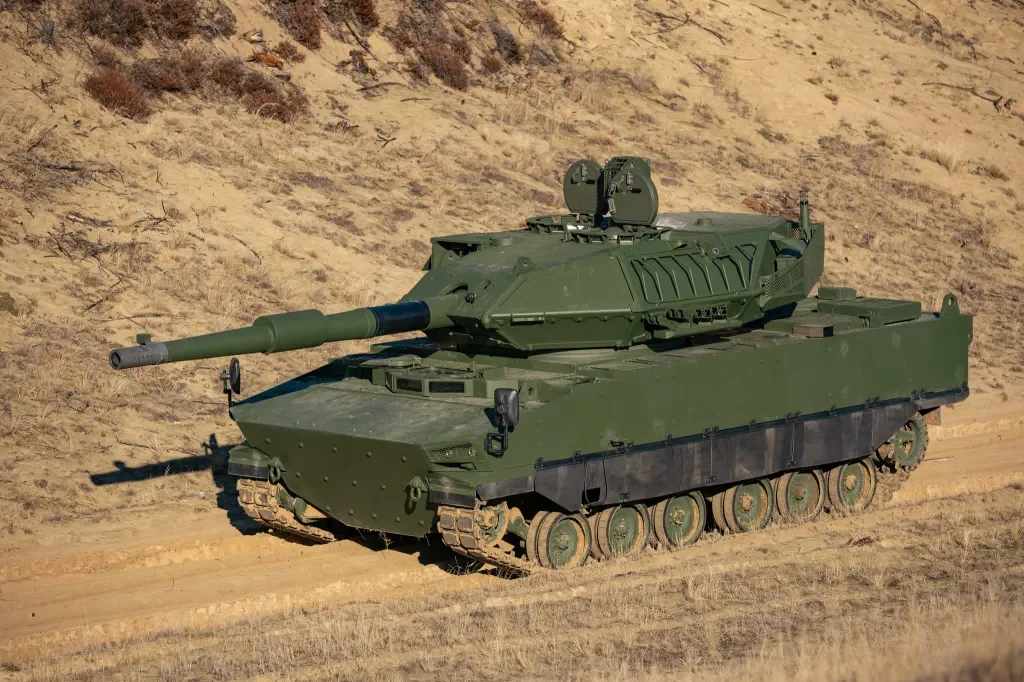
The Kárpat’s most obvious advantage is impossible to miss. Its 120mm gun belongs to the same category as the weapons carried by modern main battle tanks. In theory, this means a 34-ton vehicle can engage many of the same targets as much heavier Leopard 2s, Abrams, or Leclercs.
But sharing the same gun does not make these vehicles equal. A main battle tank is designed not only to deliver a hit but also to survive the response. A considerable portion of its mass comes from multilayered frontal armor and reinforced protection for the turret, hull sides, and underbody.
The Kárpat offers a different bargain: its crew receives tank-level firepower, high mobility, and a reduced burden on transport infrastructure, but must give up the protection of a full-size main battle tank. Its exact armor rating remains classified. All that is publicly known is that modular add-on armor is available and an active protection system can be fitted as an option. The vehicle shown so far did not carry one.
It therefore makes more sense to view the Kárpat not as a lightweight Leopard but as a mobile anti-armor gun with a turret. It can detect a target, fire first, and change position, but it should not be expected to trade direct hits with a heavy tank.
That distinction can easily disappear behind the marketing phrase “main battle tank-level firepower.” The firepower may indeed be comparable. The protection is not.
Why Save 30 Tons?
Reducing weight provides advantages that are not always obvious in photographs from a firing range. The Kárpat is easier to transport by rail and road, places less strain on bridges, requires lighter recovery vehicles, and should consume less fuel.
Its maximum road speed is 70 kilometers per hour, its range is approximately 450 kilometers, and its power-to-weight ratio is listed as 21 horsepower per ton. The engine is mounted at the rear, as in a conventional tank. Its developers claim this layout improves acceleration and mobility over soft ground and rough terrain.
These qualities may appear secondary to major military powers, but not every country can afford to purchase and maintain a fleet of heavy main battle tanks. The tank itself is only part of the expense. An army must also acquire transporters, recovery vehicles, replacement engines, suitable bridging equipment, and an entire support infrastructure.
The companies behind the Kárpat hope to attract countries that want a 120mm gun without buying the entire logistical ecosystem that follows a 65-ton tank. FNSS previously suggested that such a vehicle could cost roughly one-third as much as a modern main battle tank, although the final price would depend heavily on armor, electronics, and support packages. For comparison, Leopard 2A8 export packages can amount to around $30–35 million per vehicle once associated equipment and services are included.
The Kárpat is therefore selling more than reduced weight. It offers access to tank-level firepower without requiring a country to purchase and sustain a complete heavy-tank fleet.
Armor Always Wants Another Serving
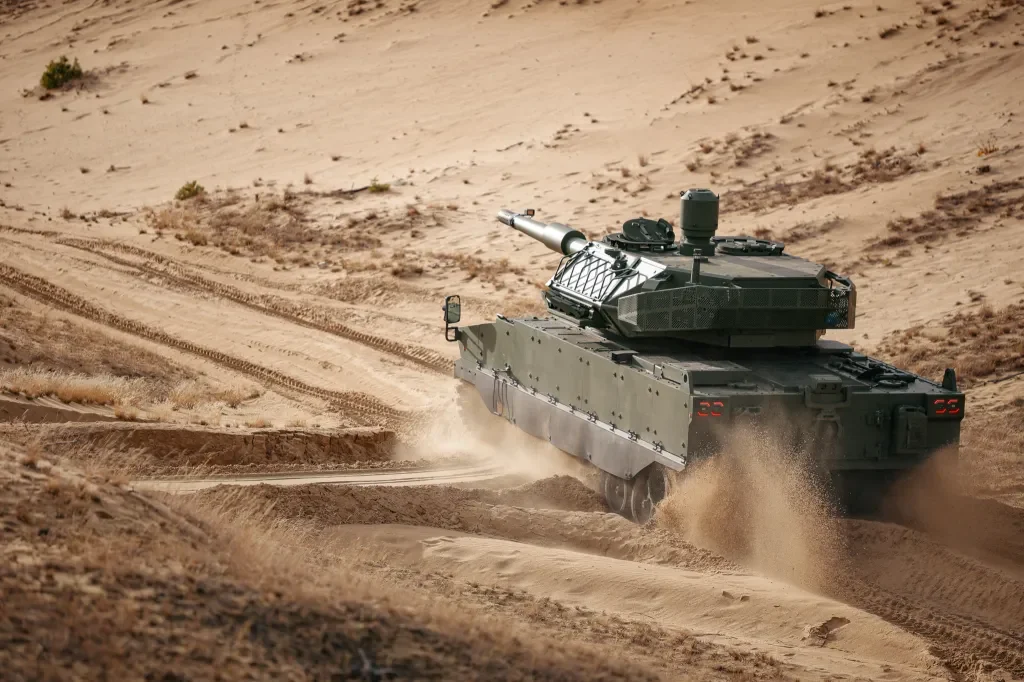
The problem begins when a light vehicle is prepared for a genuinely dangerous battlefield. First, the customer adds side and roof armor. Then comes explosive reactive armor, followed by an active protection system, a remote weapon station, drone-detection equipment, electronic jammers, and additional power supplies.
Every system increases weight. The suspension comes under greater strain, range decreases, and the original mobility advantage slowly disappears. At some point, a 34-ton “light tank” may approach 40 tons while still remaining less protected than a vehicle designed from the beginning as a main battle tank.
This is the permanent trap facing light armored vehicles. Installing a large gun is comparatively straightforward. Building a protected volume around it that can withstand mines, anti-tank missiles, top attacks, and small drones is much harder.
The Kárpat is arriving at a time when threats to armored vehicles no longer come primarily from the front. A traditional tank could face the enemy with thick frontal armor while hiding its weaker sides. Modern surveillance and precision weapons allow vehicles to be attacked from above, from the flank, or from behind. Under these conditions, the difference between 34 and 65 tons may matter less than the quality of active protection, concealment, and coordination with reconnaissance assets.
Built for Combat, but Not for Tank Duels
None of this means the Kárpat is useless. It has a clear operational niche. The vehicle can accompany wheeled and tracked formations, destroy fortified positions, provide direct-fire support to infantry, and engage hostile armor from prepared ambushes. It could be particularly useful where a heavy tank is too expensive, too heavy for local bridges, or simply excessive for the mission.
The Kárpat looks most convincing as a mobile fire-support vehicle. Its 120mm gun can engage almost any ground target, while its lower weight makes it easier to move between sectors. Modern thermal sights, a laser rangefinder, and hunter-killer capability allow the commander to search for the next target while the gunner engages the current one.
What the vehicle must not become is a cheap substitute for a main battle tank. If commanders send Kárpats into frontal assaults simply because they have “the same gun,” the savings will quickly turn into losses. Its protection lies in mobility, a low silhouette, careful positioning, and the ability to fire first.
In other words, the Kárpat may be capable of destroying a heavy tank. That does not mean it can replace one.
Verdict
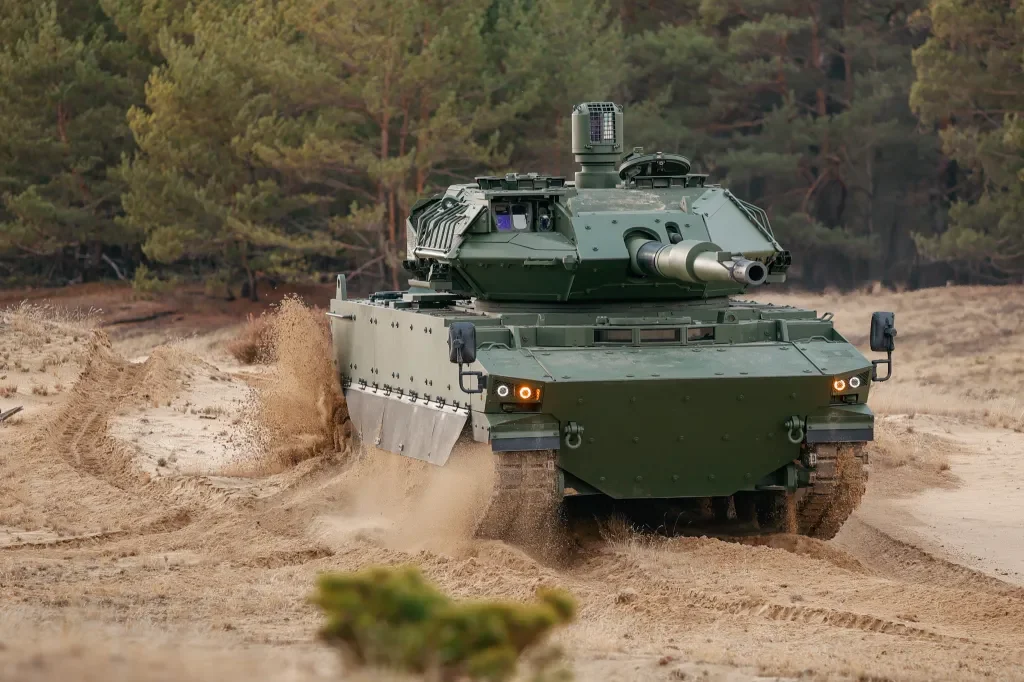
The CFL-120 Kárpat is interesting not because it introduces a revolutionary technology, but because it combines familiar qualities in an unusual proportion: the gun of a main battle tank, the weight of a heavy infantry fighting vehicle, the mobility of a reconnaissance vehicle, and an armor rating its manufacturer prefers to discuss without revealing exact figures.
Its first public live-fire demonstration proves that this is no longer a static model. The companies behind the project say the vehicle is ready for serial production and claim that deliveries could begin within 19–20 months of an order. No customer, however, has yet publicly committed to buying it.
The Kárpat’s future will not depend on whether it can shoot accurately. That part appears relatively clear. The real question is whether an army genuinely needs a 120mm gun on a light tracked chassis—and whether it can use such a vehicle as a mobile hunter rather than as a discounted heavy tank.
The Kárpat has lost almost half the weight while keeping the big gun. Now it must prove that, along with those unwanted tons, its designers did not discard the very things that help a tank survive long enough to fire again.