The World of the Triassic Period. Triassic Synapsids. Cynodonts and “True” Mammals


An article from the “Tales of a Young Biologist” channel on Yandex Zen.
Cynodonts were the most advanced synapsids among those that survived the Great Extinction at the boundary between the Permian and Triassic periods. They were warm-blooded, covered in fur, and had a dentition differentiated into incisors, canines, and molars; their secondary palate (which formed at the beginning of the Triassic) allowed them to chew and breathe at the same time. The lower jaw was already largely formed by the dentary bone, while the “excess” bones migrated to the middle ear, forming a hearing organ distinct from that of reptiles and earlier forms of synapsids. It is even possible that the sweat glands of cynodonts from the second half of the Triassic began to transform into mammary glands, and they were already nursing their young with milk.
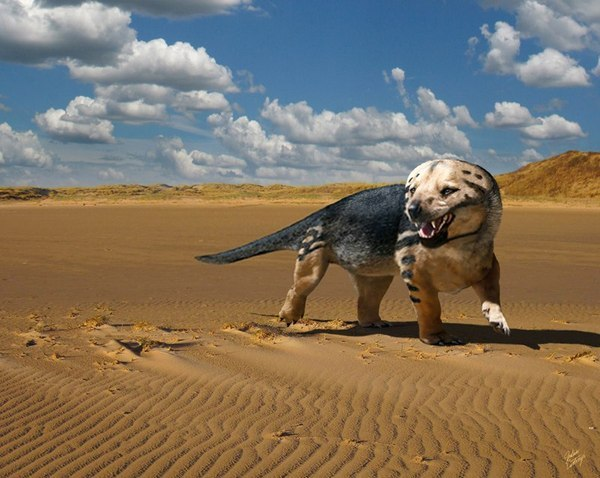
Fluffy? Fluffy… Fanged? Fanged… What else do you need?
Such a resemblance to mammals is not surprising, since it was the cynodonts that became their direct ancestors. However, they also possessed characteristics that linked them to more primitive synapsids and even to reptiles. These characteristics included the presence of a cloaca (a dilation of the terminal section of the intestine into which the ducts of the excretory and reproductive systems open), egg-laying, and forelimbs that were “upside-down.” Interestingly, modern monotremes (the platypus and the echidna) share these same archaic features, but they are mammals, whereas cynodonts are cynodonts. Although, in principle, from a cladistic perspective, all modern mammals are cynodonts, as they are direct descendants.
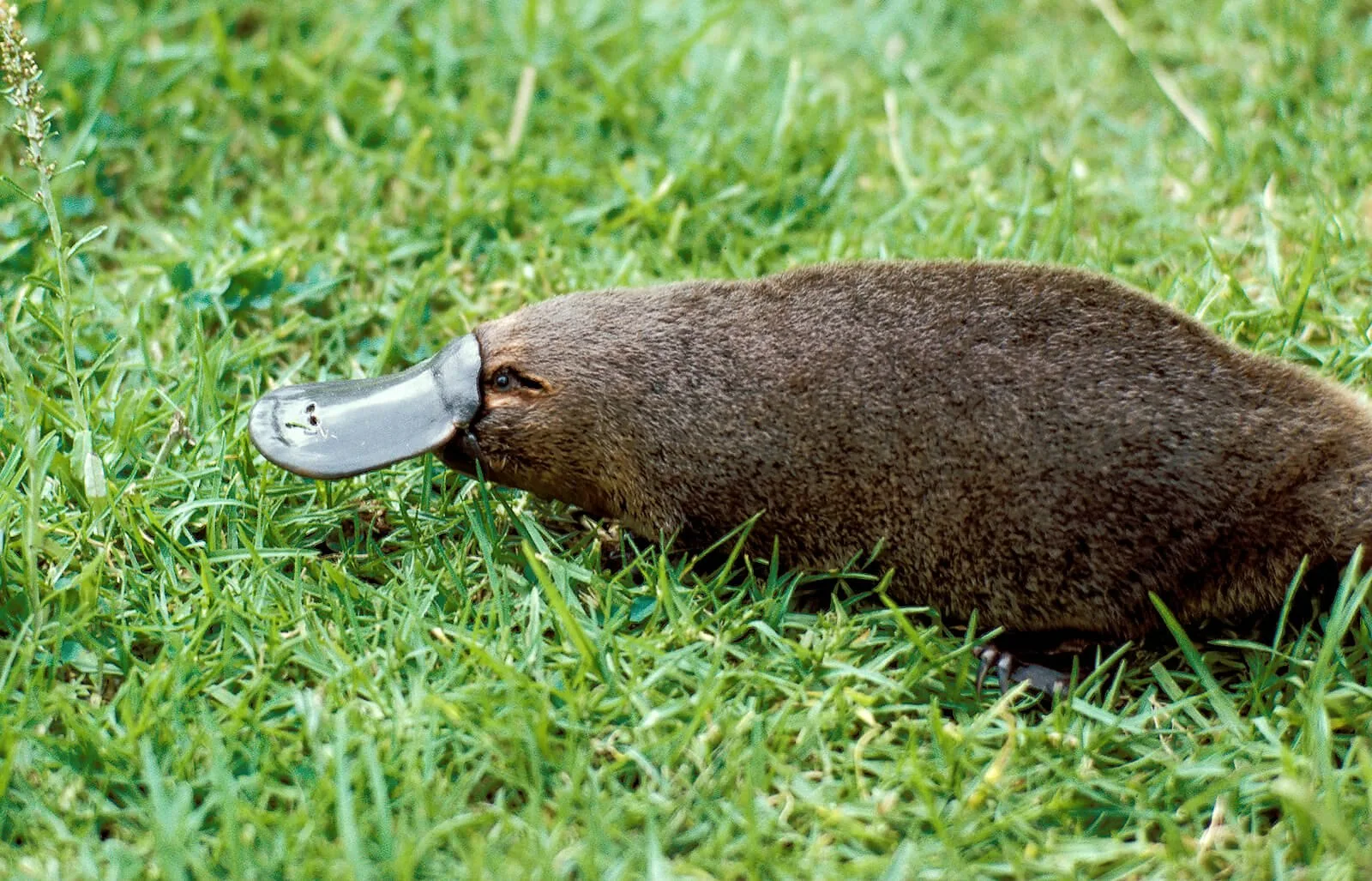
A Modern Cynodont
And this raises the question: where is the line between “still” cynodonts and “already” mammals? No matter which major characteristic you choose, the platypus, for example, is “still” a cynodont. That leaves us with distinguishing cynodonts from “true” mammals solely based on such minor anatomical details as the structure of the jaws (especially the lower jaw and the temporomandibular joint) and the inner and middle ear. Okay, Late Triassic cynodonts and early mammals are practically indistinguishable to the naked eye (and even to the trained eye!). The difference, as they say, is razor-thin. They were all fairly small animals. Mostly omnivorous, but there were also herbivores and small predators (which hunted insects, small diapsids, and their own kind). Although there were also fairly large (about the size of a good-sized wild boar) herbivores, such as members of the homphodont group.
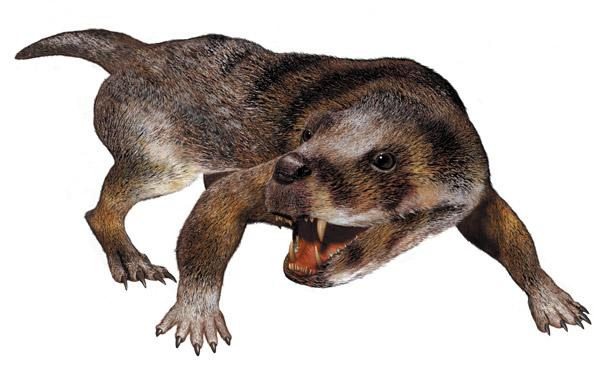
Trinaxodone
Early Triassic cynodonts, on the other hand, tried their hand at becoming a large size class among predators and causing a bit of havoc in ecosystems. They started with small (platoon-sized) but very toothy trinaxodonts. Their teeth were fully differentiated, but the upper row did not close completely over the lower row, which ruled out chewing; moreover, these teeth were replaced throughout their lives, just like in reptiles. The trinaxodon (one of the best-studied cynodonts) hunted anything it could handle—and it could handle almost any animal its own size. But the cynognath was a whole different story! It grew up to 2.5 meters in length, weighed over a hundred kilograms, and was quite agile, as it was nearly able to fully extend its elbow joint. It was a highly competitive predator, quite large for the first half of the Triassic period. It hunted prey comparable in size to itself and even larger (dicinodonts, listrosaurs, and others). Most pseudozoochids nervously kept their distance!
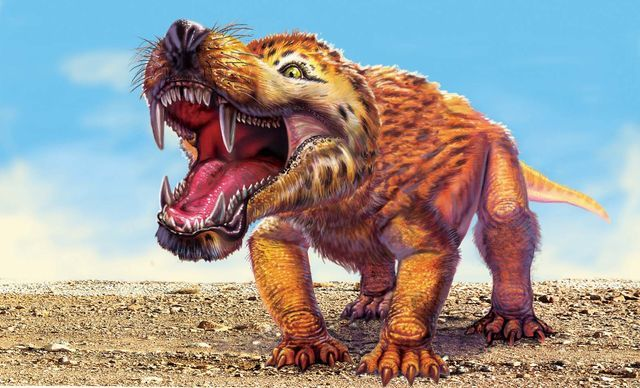
Cynognathus
At the end of the Triassic (practically at the same time as the dinosaurs), “true” mammals also appeared. Scientists, however, are now completely confused about which ones to consider “true” mammals and which ones to classify as mammalomorphs or mammaliaformes. They’re, as they say, creating unnecessary distinctions! The same charamiids (the first “mammals” that definitely switched to a plant-based diet) were sometimes classified as mammaliforms and sometimes as allotheria (“other beasts”). The ancestors of modern monotremes were sometimes classified as the most primitive mammalomorphs, and other times their divergence from the common ancestor was dated as early as the Jurassic Period. In short, it’s all a mess! But the fact remains. By the end of the Triassic, mammals had already appeared and almost immediately hid in the forest litter and the darkness of night. The age of the dinosaurs was dawning!