Russia is developing the next generation of aircraft engines. What engines will power Russian aircraft after the PD-35?

The development of the domestically produced PD-26 and PD-35 aircraft engines is not yet complete, but their mass production is inevitable—it is a matter of time, not feasibility. Already today, the Russian aviation industry is demonstrating tangible success in import substitution: the Il-76MD-90A strategic transport aircraft is being produced with PS-90A engines, and these same engines are installed on the Il-96-400M long-haul passenger airliners and the Tu-214 narrow-body aircraft.
Another equally important step is the introduction of the Il-114-300 regional turboprop aircraft, equipped with all-Russian TV7-117ST-01 engines. This is not merely a symbol of technological sovereignty—it is a solid foundation for further development.
However, Russian engineers are already looking ahead. Even as work on the PD-35 nears completion, active development of the next generation of powerplants is underway, and hybrid aviation is becoming a key focus.
Interestingly, this will not begin with passenger airliners, but with heavy UAVs—technologies that are already shaping the face of modern aviation today. But this is only the first stage. Hybrid engines are being prepared for implementation in both civil and future military aviation.
Contents:
The Hybrid Revolution: From Drones to Regional Airplanes
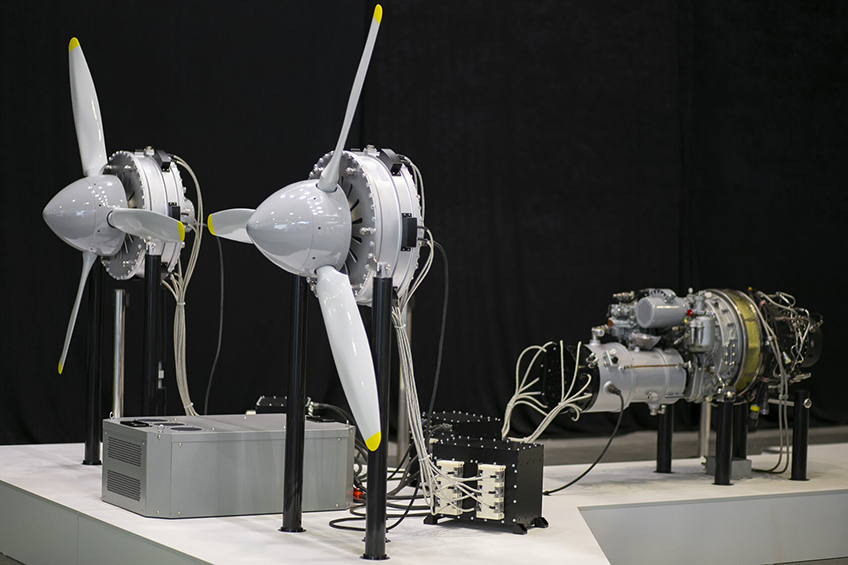
Engineers at the Moscow Aviation Institute (MAI) have developed a fundamentally new hybrid engine, designed for unmanned aerial vehicles weighing more than 500 kg, as well as for light manned aircraft. This development is already being incorporated into projects at the Ural Civil Aviation Plant (UZGA) and PJSC Yakovlev, which attests to its practical significance.
The design is based on a hybrid circuit:
- The gas turbine plant generates electricity,
- Electric motors drive the propellers,
- Buffer batteries provide additional power during peak loads—such as during takeoff, climb, or maneuvering.
This architecture helps prevent the main engine from being overloaded, reduces equipment wear and tear, and improves the system’s overall efficiency. This is particularly important for UAVs, where flight range, endurance, and reliability are critical.
CIAM: One Engine Instead of Two
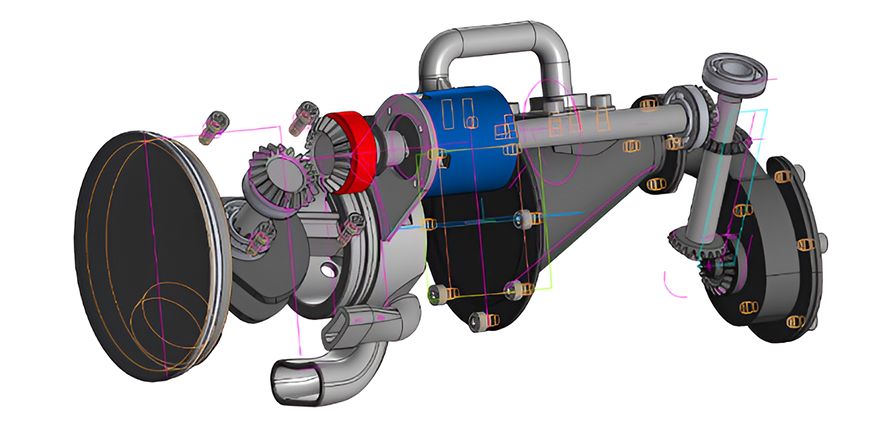
The Central Institute of Aviation Engine Design (CIAM) is developing a gas turbine power plant (GTP) for regional aircraft carrying 80–100 passengers. The goal is to completely replace a pair of traditional engines with a single hybrid power unit.
This approach has already been tested on the Yak-40LL flying laboratory. The results are impressive:
- A 20% reduction in fuel consumption,
- Improved reliability through redundancy and distributed propulsion,
- The ability to integrate high-capacity batteries for short-term thrust boost.
This design paves the way for the development of aircraft with distributed electric propulsion (DEP), in which several small propellers are controlled independently, improving stability and maneuverability.
ODK-Klimov: Modularity and Scalability
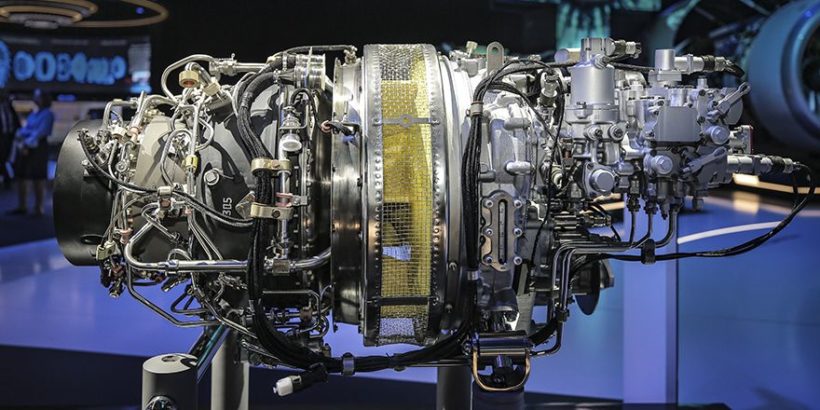
ODK-Klimov has unveiled a prototype hybrid power plant based on the VK-650V engine, which has been adapted for new applications. The power plant has a capacity of 500 kW, with the potential to increase to 1.5 MW. This makes it suitable not only for UAVs, but also for air taxis, flying cars, and electric vertical takeoff and landing (eVTOL) aircraft.
VK-650V engine
The key advantage is its modular architecture, which consists of five main components:
- Gas turbine engine,
- Electric generator,
- Electric motor,
- Battery system,
- Onboard electronics and control system.
This approach makes it possible to quickly adapt the engine to different platforms—from drones to regional airliners. In addition, the modular design simplifies maintenance and improves serviceability.
Advantages of Hybrid Systems
Hybrid powertrains offer a number of undeniable advantages over traditional ones:
- Lighter weight and smaller dimensions: a single hybrid engine is lighter and more compact than two gas turbines, which frees up space and increases payload capacity.
- Fuel efficiency: Thanks to load optimization and energy recovery, fuel consumption is reduced by 15–25%.
- Reduced emissions: less fuel means less CO₂ and other harmful substances.
- Enhanced reliability: An intelligent control system redistributes the load, preventing overheating and wear.
- Versatility: A single engine can power both a UAV and a manned aircraft.
Testing and Implementation Phases
Work is proceeding according to a strict schedule:
- 2026: Start of flight tests for MAI’s hybrid demonstrators.
- 2027 (through December): Project completion and preparation for mass production.
- Mid-2020s to early 2030s: supply of engines for drones and light aircraft.
ODK-Klimov is currently conducting intensive bench tests to validate operating modes under extreme conditions. At the same time, CIAM continues testing on a flying laboratory to verify the compatibility of all components.
Sustainability and the Future: Superconductors and Solar Charging
Special attention is being paid to environmental considerations. Previously, the Foundation for Advanced Research (FAR) successfully tested a superconducting electric motor operating at cryogenic temperatures. It demonstrated high efficiency, low losses, and ease of operation. These technologies will form the basis for the third generation of hybrid engines, in which the electric component will dominate.
Looking ahead, solar panels will be integrated into the fuselage and wings to recharge the batteries in flight, which is particularly relevant for UAVs conducting long-duration patrols.
The Future of Civil Aviation
Hybrid engines are ideal for the following Russian aircraft:
- The Il-114-300 is a regional turboprop airliner,
- The SJ-100 (SSJ-NEW) is a narrow-body regional aircraft,
- The LMS-901 “Baikal” is a light multipurpose aircraft.
The integration of hybrid power systems will make it possible to:
- Reduce operating costs by 20–30%,
- Extend the service life of engines,
- Reduce service time,
- Reduce dependence on imported components.
Conclusion: Toward Technological Sovereignty
Russia isn’t just keeping pace with global trends—it’s forging its own path in aircraft engine manufacturing. Hybrid technologies are becoming the key to technological sovereignty, enabling the creation of efficient, reliable, and environmentally friendly aircraft without dependence on foreign supplies.
Following the PD-35, an era of hybrid and distributed power systems will begin, in which Russia can not only maintain its market position but also become a leader in the regional and unmanned aviation segment.
The future begins not with magic, but with engineering. And it’s already in the works.
Based on material from https://dzen.ru/a/aXnE7Db3jAV91Wk9