Would animals from the Paleogene and Neogene periods have survived on Earth today?


An interesting article from the “Citadel of the Sane” channel on Yandex Zen.
This article continues the “What If” series, which explores—purely as a thought experiment—the possibility of reintroducing extinct animals into the modern biosphere. In this case, we will focus on mammals from the first two periods of the Cenozoic Era—the Paleogene and the Neogene. Reptiles and fish were already discussed in the previous publication.
First, let’s consider the Paleogene (66–23 million years ago). This period was just as hot as the Cretaceous—at the beginning of the Paleogene, the global average temperature was 12 degrees higher than today’s. It gradually cooled afterward, but the polar ice caps did not begin to form until the Neogene. And the climate was humid everywhere. The high temperatures contributed to the evaporation of water from the ocean’s surface—which was more extensive back then, since the water level was 200 meters higher. From the equator, moisture and heat were carried to high latitudes by tropical cyclones of a magnitude beyond imagination… But even they did not harm the biosphere. It was during the Paleogene that the total mass of living organisms on the planet set a historic record.
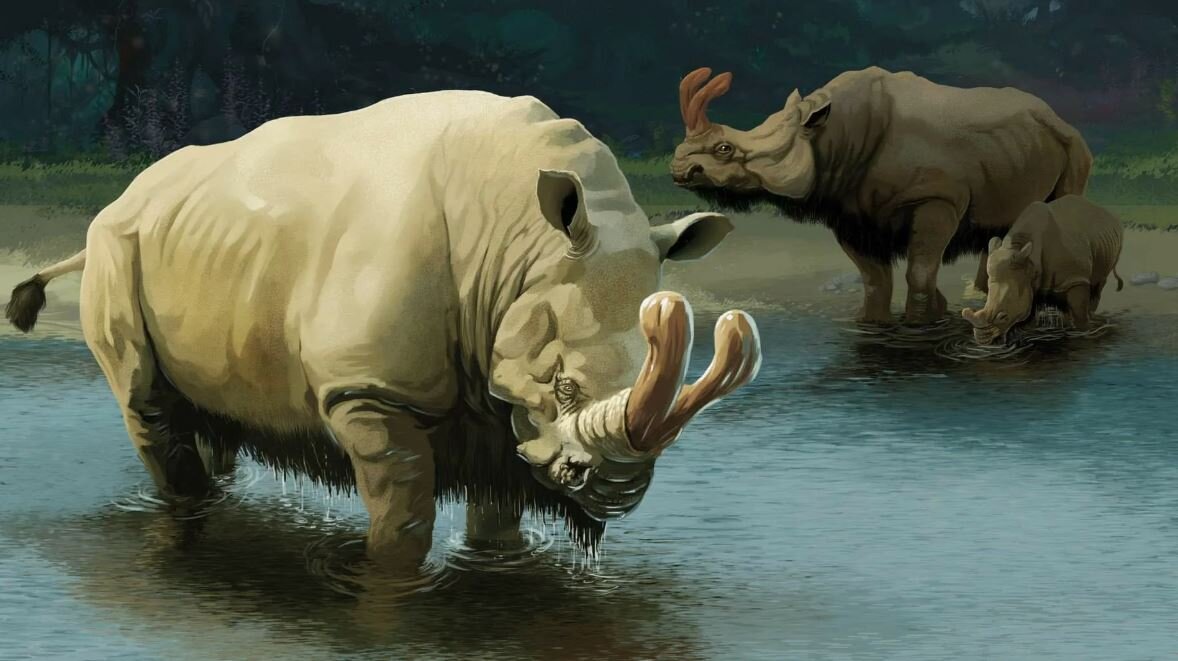
Brontotherium
This is evident, by the way, in the organisms themselves. The fauna of the early Paleogene—which had been recovering from the Cretaceous extinction—was replaced by “indricotherian” fauna, and later, in the Neogene, by “elephantine” fauna. Overall, however, the Paleogene and Neogene are famous precisely for their abundance of large, impressive herbivores. And we’ll have to limit ourselves to those.
We’ll have to, since the transition of small and medium-sized mammals from the Paleogene to the present day is of no interest. There were, in fact, almost no medium-sized ones back then. Those that could grew large enough to deter their natural predators simply by their appearance. The rest preferred to stay small and hide. No one really knew how to run… But the small animals of the Paleogene were so good at hiding that there’s no need to resurrect them as a thought experiment. They made their way into the present day naturally. A telling example of a small mammal from the Paleogene is the mouse deer.
In other words, early mammals were slow-moving, unintelligent (note that the fawns’ heads are small in relation to their bodies), and inefficient. These deer cannot subsist solely on succulent aquatic vegetation; they need to supplement their diet with snails, fish, frogs, and bird eggs. They even hunt… Consequently, the conditions in which these Paleogene-era creatures can survive, while they do exist, are now rare. Tiny, fanged antelopes are few in number.
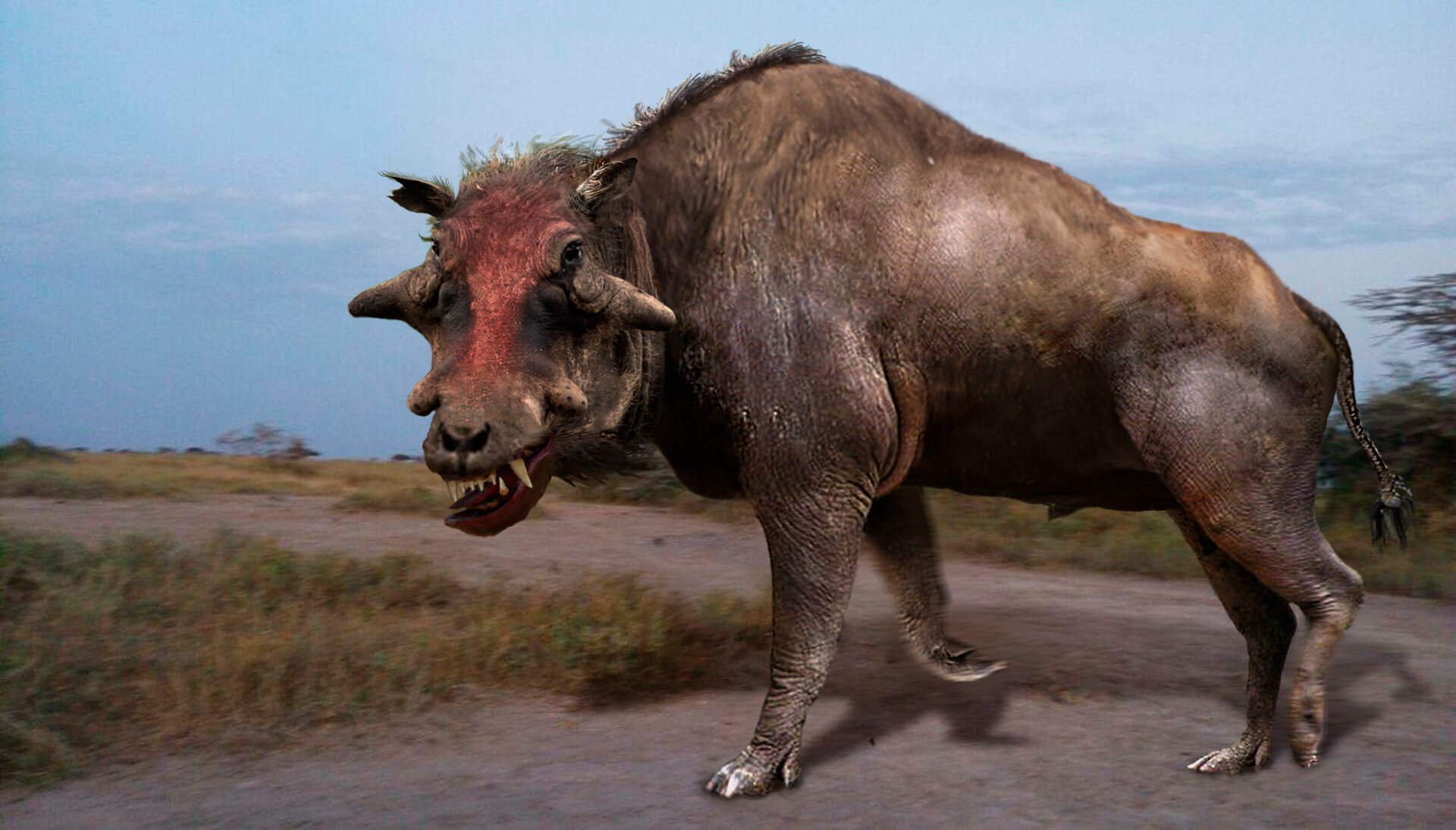
From Deo
…Consequently, the predators of the Paleogene and Neogene periods are not predators at all, but rather pitiable creatures. Their build is marked in bold letters by clumsiness, primitiveness, and slowness. The swift-footed ungulates of the Quaternary Period—and even the cunning, cautious rodents adapted to evade modern predators—will prove out of their reach.
However, as noted above, the Paleogene is famous for its large herbivores. These include the largest mammals in Earth’s history—the indricotheres—which weighed as much as 20–25 metric tons. And when it comes to them, things aren’t quite so clear-cut.
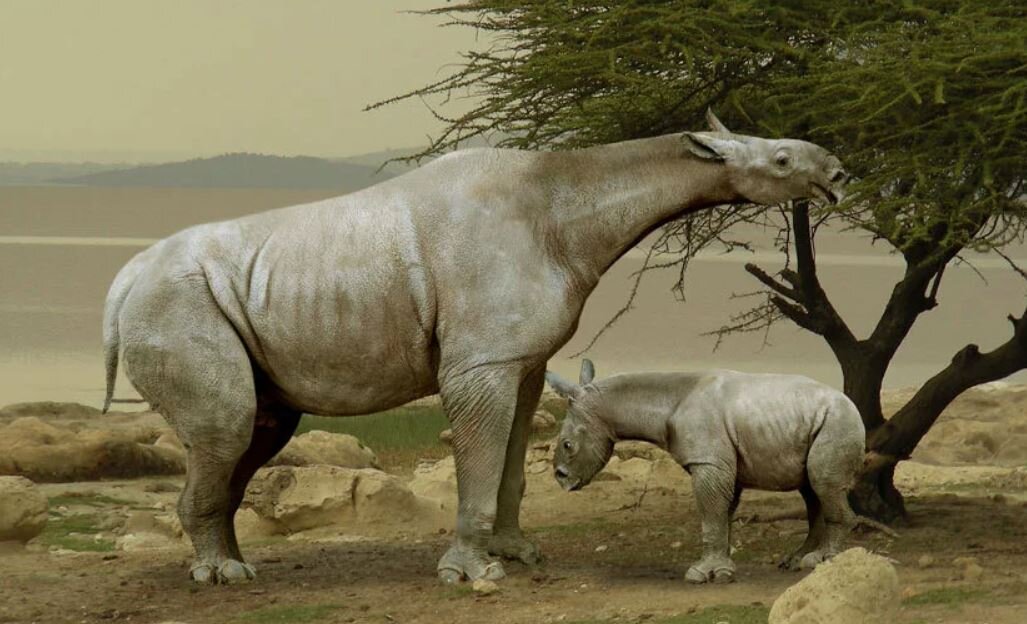
Indricotherium
In modern-day Africa, South Asia, or South America, the indricotherium would find food. Apparently, it ate everything—grass and tree branches—in enormous quantities, since its digestive system left much to be desired. But there is plenty of plant food near the equator… And these giants now have no natural enemies. Indricotheres once grew to such a size because they were too slow, too stupid, and too disorganized to look after their young. So the solution seemed obvious—to give birth to calves already large enough that predators couldn’t get close to them… This, in turn, gave rise to predatory species of ugly giants… But now they’re gone. Hanging in clusters, lionesses might be able to bring down a calf, but—why? Don’t they have anything better to do?
In other words, indricotheres could have survived and sustained a population, but only under very favorable conditions. The critical factors are an abundance of food and the absence of seasonal variation. During the humid Paleogene, there were no dry seasons. Consequently, migration was not practiced. Indricotheres could survive only where food was abundant year-round.
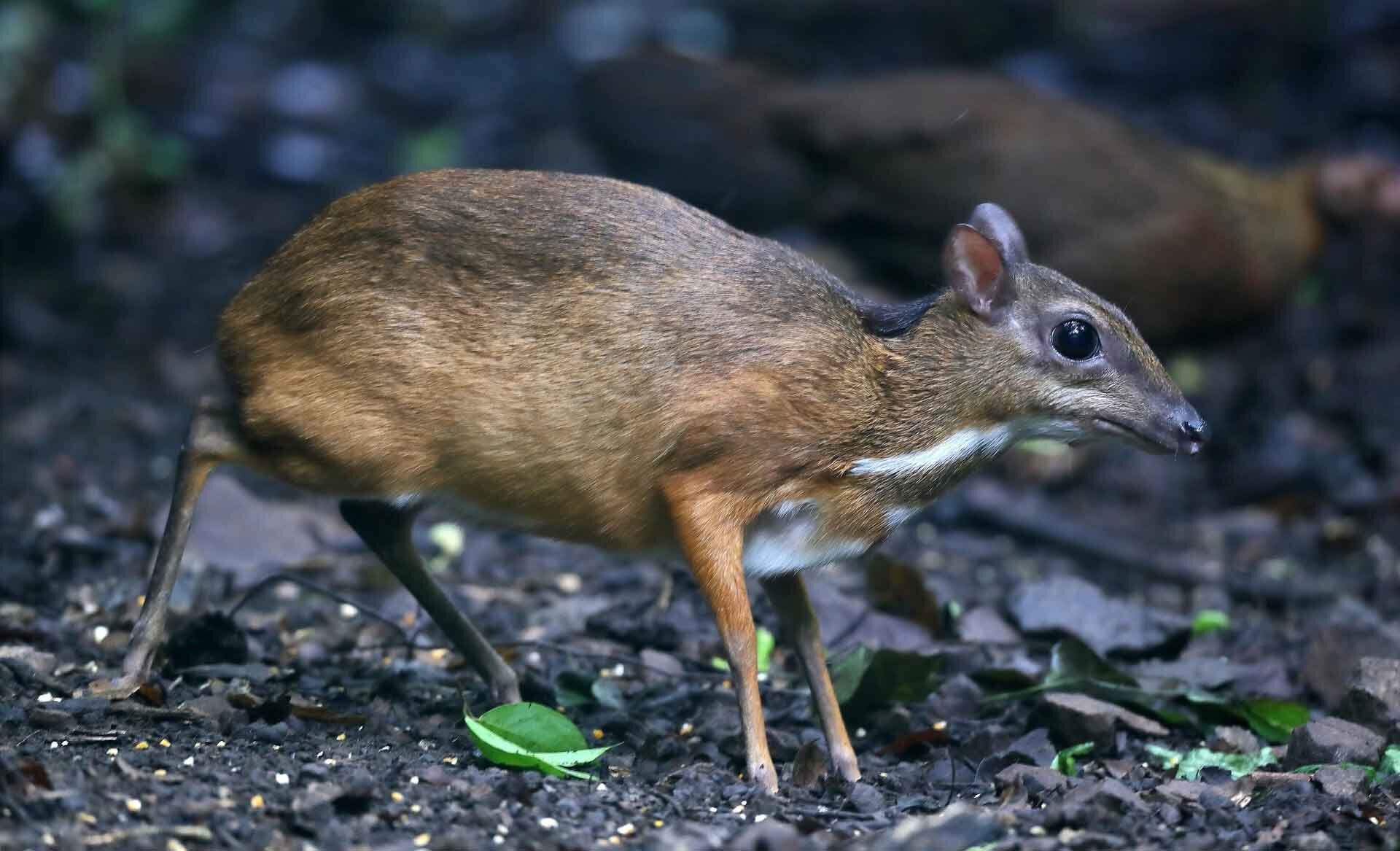
Little Reindeer
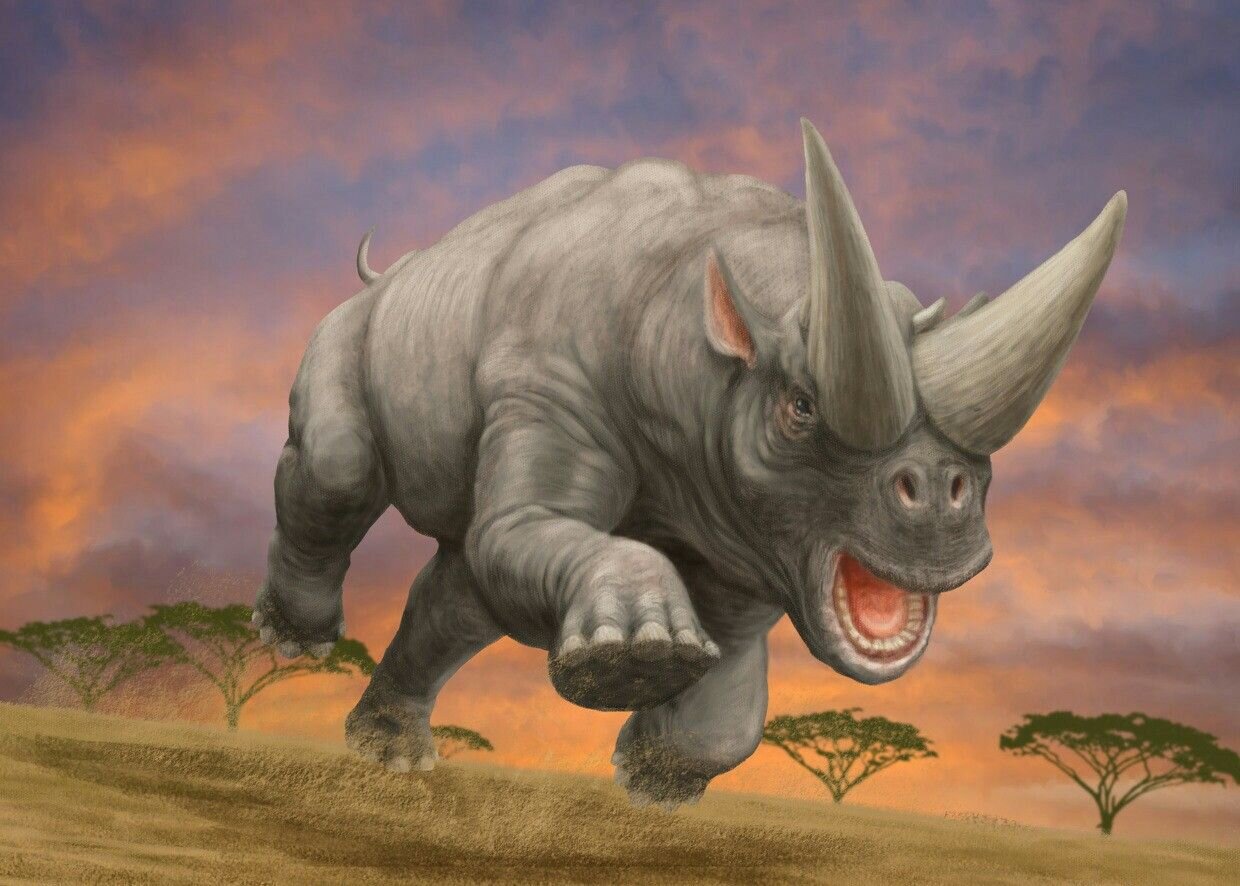
…Toward the end of the Paleogene and at the beginning of the Neogene, there were also a great many species of striking rhinoceroses on Earth. These included both true rhinoceroses—from the order Perissodactyla, such as the Brontotherium—and pseudo-rhinoceroses. Arsinotherium, in particular, belonged to the order Embrytopoda. Its horns were not made of keratin but of bone. Both the arsinotherium and the brontotherium lived about 30 million years ago…
Arsinotherium
And they could survive today—this applies to everything that was part of the Indricotherium. In the modern world, the threat from predators would be less, not greater. Food, however, remains a problem. Even in Africa, rhinos are few in number compared to elephants, let alone even more so compared to even-toed ungulates. Today, the ability to move quickly and maneuver—in search of pastures—has become crucial to the survival of savanna herbivores. Clumsy and slow rhinos lose out in the competition for resources every time it arises. Their ancient counterparts will derive no advantage from their formidable weapons—their bony horns. There is no one to strike with them. Instead, they will prove even more vulnerable in the struggle for survival. They will be able to reproduce only under conditions that are “greenhouse-like” even by African standards.
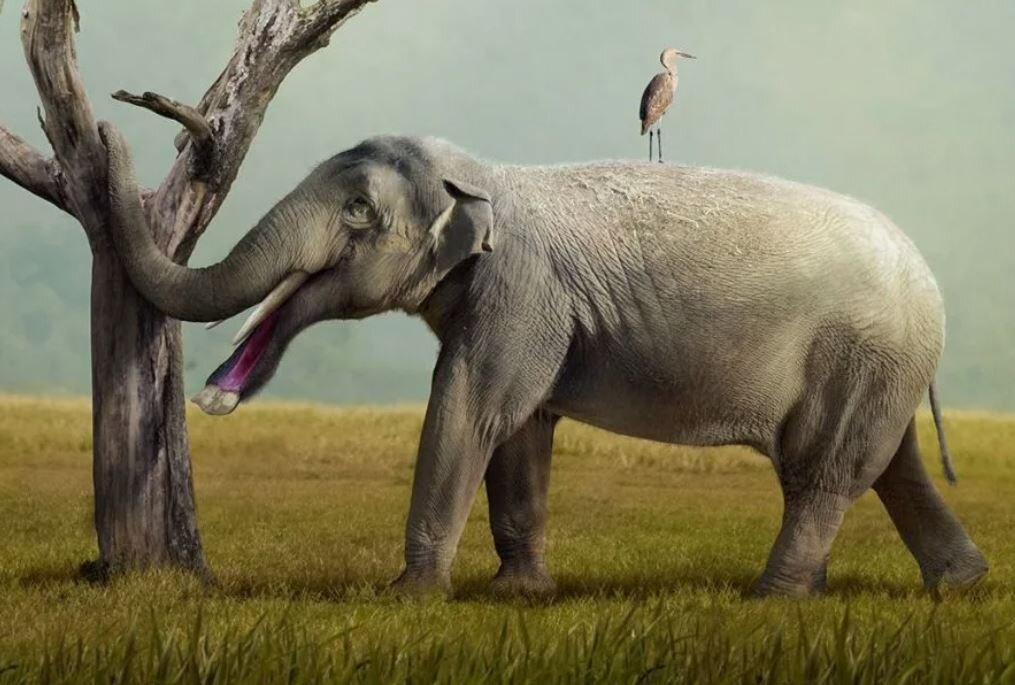
…Finally, the elephants. There used to be a great many impressive proboscideans as well—of various kinds. The platybelodon serves as an example. There were so many that the Neogene “rhinoceroses”—both the so-called ones and the real ones—suffered precisely because of the elephants, which roamed everywhere in herds and ate everything in sight. Platibelodon, as has now been established, used its trunk to extract soft wood from baobab trunks and dig up roots.
Platybelodon
But modern African elephants also knock down baobab trees—with their tusks.
It’s hard to add anything to the “elephant.” Neogene proboscideans would occupy the same ecological niche as their modern counterparts. This would be the only atypical challenge, since even the Neogene climate had already taken on modern characteristics. In Africa, at least, everything was roughly the same as it is today—only without lions, antelopes, and modern elephants.
Well, lions and Platybelodon are comparable—whether they exist or not. Crocodiles, on the other hand, were even more fearsome back then. Antelopes—and I’m serious here—were the ones that, during the Quaternary Period, drove the proboscideans to near extinction by competing for resources. But not all resources. Antelopes don’t compete for baobabs or roots at all. Consequently, modern elephants remain. Their ancient counterparts will have to compete with them—in the same niche and on equal footing.
Naturally, the outcome of such competition is predictable. Modern elephants are, at the very least, smarter. There is no longer an abundance of resources that would allow multiple species of giant herbivores to coexist. As a result, that diversity no longer exists. Elephants (two species), rhinos (two rare species), and hippos (one of the two species is rare)—and hippos are “on a roll,” at that—there simply isn’t room on the planet for any more “subgiants.”