A Breakthrough or a Setback? A Look Back at 2025 for the Promising Russian PD-35 and PD-26 Aircraft Engine Projects

In a world where aviation continues to be the driving force of progress, shaping the pace and scope of human interaction, the development of new aircraft engines takes on special significance. The pace of development in both civil and military aviation, as well as the prospects for opening new routes and reaching previously unattainable heights—both literally and figuratively—depend directly on the efficiency and reliability of these powerplants.
In this regard, the PD-35 and PD-26 projects—promising Russian aircraft engines that embody the ambitious goals and engineering ingenuity of domestic designers—are the focus of close attention both in Russia and abroad. Their implementation has the potential not only to strengthen Russia’s position in the global aviation market but also to make a significant contribution to global progress, opening up new opportunities for air transport and technological cooperation.
The year 2025 marked an important milestone in the implementation of these strategically significant projects. Design bureaus, manufacturing enterprises, and research institutes faced complex challenges: from refining technologies and conducting tests to securing funding and organizing mass production. A review of this year’s outcomes, viewed through the lens of the results achieved, allows us to assess the current status of the projects, identify accumulated problems, and determine future prospects.
The text below provides an in-depth analysis of the progress made in 2025 on the PD-35 and PD-26 projects. We have endeavored to present an objective picture based on expert assessments, official data, and the opinions of those involved in the process. Our goal is to contribute to the formation of a well-founded understanding of the future of Russian aviation and its role in the global landscape.
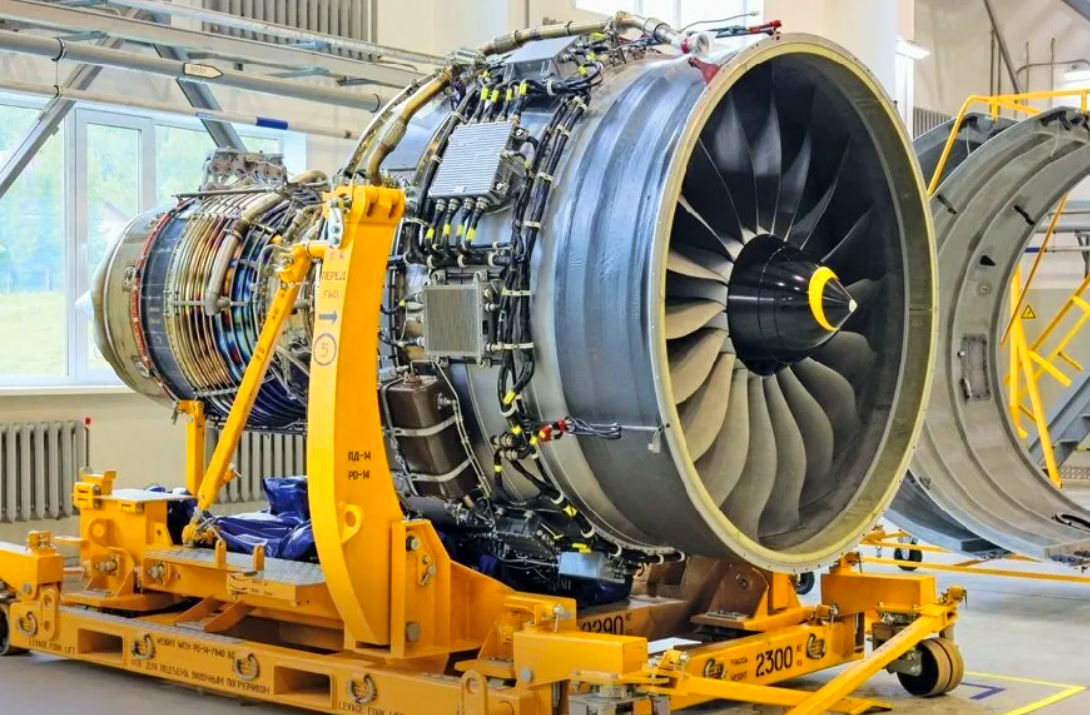
PD-35 Engine
Contents:
PD-35: From Concept to Technology Platform
Development of the PD-35 high-thrust turbofan engine began in 2017 in response to a strategic objective: to create a domestically produced powerplant for long-haul passenger and cargo aircraft. By early 2025, the project had reached the stage of confirming the service life and reliability of key components, having completed the phase of verifying the calculated performance characteristics.
PD-35 Technical Specifications:
- Traction: 30–35 metric tons of force (scalable up to 50 metric tons within the product family);
- Fan diameter: 3,100 mm;
- Degree of dual-circuit configuration: ~9–10;
- Specific fuel consumption: 10–15% lower than that of previous-generation models;
- Engine weight: approximately 8–9 metric tons (depending on the model).
This will be the first Russian engine designed for wide-body long-range airliners, such as the future wide-body long-range aircraft (WBLR), as well as for heavy military transport aircraft.
Compared to existing Russian engines:
- PS-90A (installed on the Il-96): thrust — 16 metric tons, specific impulse — ~20% higher;
- PD-14 (for the MS-21): thrust—14–18 metric tons; significantly smaller in size and power;
- NK-32 (for the Tu-160M): thrust—24 metric metric tons, but this is a fanless turbojet engine, which is less fuel-efficient.
Thus, the PD-35 will mark a significant leap forward in Russian engine manufacturing—not only in terms of thrust but also in terms of technological sophistication.
2025: Key Achievements Under PD-35
In 2025, the second round of bench tests of the demonstration engine continued on the OS-5 all-weather test stand in Perm. More than 50 runs were conducted, including multiple transitions to takeoff conditions. The primary focus was on verifying the service life of components made from new domestic materials:
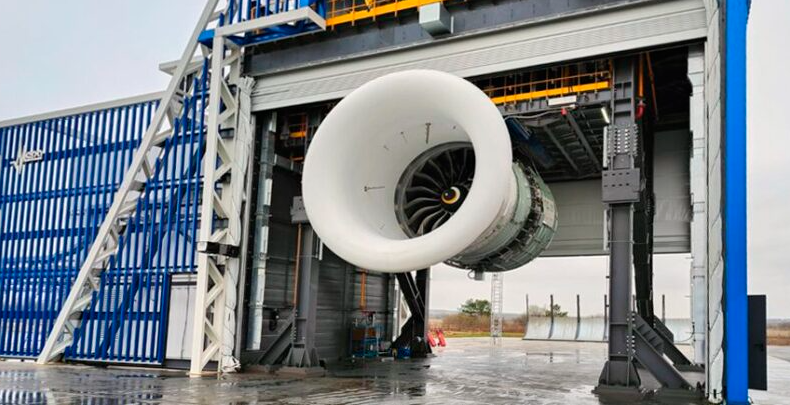
PD-35 at the OS-5 booth
- The high-pressure compressor blades and the low-pressure turbine shaft are made of heat-resistant nickel and cobalt alloys;
- The unit housings are made of titanium and aluminum alloys;
- The fan blades are made of composite materials, which has reduced their weight by more than 600 kg compared to titanium counterparts.
Special attention was paid to additive manufacturing technologies: over the course of the year, more than 2,300 parts were produced for the demonstrator using selective laser melting and hybrid forming methods. These components were evaluated for compliance with certification requirements regarding geometry, strength, and durability.
The engine design has been finalized as a modular platform based on a standardized gas generator, developed using the experience gained from the creation of the PD-14. This ensures technological continuity and reduces risks associated with scaling up.
PD-26: The Next Generation Based on the PD-35
In 2025, development began on the PD-26—a derivative model based on the PD-35 technology platform. This engine is designed to be a next-generation powerplant with enhanced capabilities.
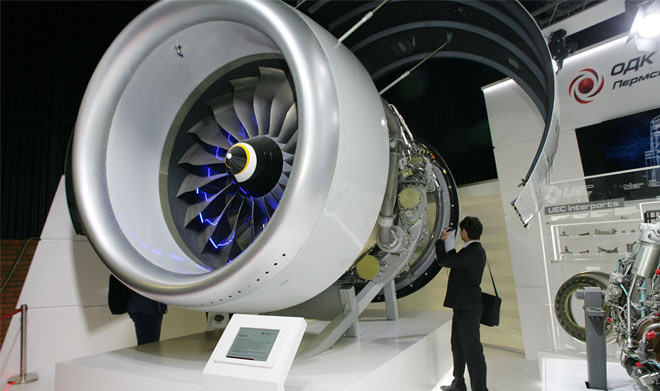
PD-26
Estimated technical specifications for the PD-26:
- Thrust: 24–28 ts (optimized version for medium-weight aircraft);
- Dual-circuit rating: up to 12;
- The widespread use of ceramic matrix composites (CMCs) in the hot section;
- Active turbine blade cooling system;
- Maximizing the use of additive technologies and standardized modules from the PD-35.
The PD-26 is planned to be used:
- On a promising heavy military transport aircraft with a payload capacity of ~100 metric tons;
- On a wide-body long-haul passenger airliner (WBLH);
- In onshore power plants and gas compressor stations—as emphasized by Russian First Deputy Prime Minister Denis Manturov, who noted the economic impracticality of developing a “highly specialized” engine.
Compared to the PD-35, the PD-26 will be lighter, more efficient, and more technologically advanced, but with lower maximum thrust—tailored to other classes of aircraft. At the same time, it retains up to 70% commonality with the base platform, which significantly reduces R&D time and costs.
Comparison with Existing Russian Engines
|
Engine
|
Traction (ts)
|
Application
|
Type
|
Go with the flow
|
Features
|
|---|---|---|---|---|---|
|
PD-14
|
14–18
|
MS-21
|
Hard
|
~0,52
|
The First Modern Russian Solid-Fuel Rocket Motor
|
|
PS-90A
|
16
|
Il-96, Tu-204
|
Hard
|
~0,60
|
Outdated design, high fuel consumption
|
|
NK-32
|
24
|
Tu-160M
|
TRDF
|
~1,50
|
High traction, but low fuel efficiency
|
|
PD-35
|
30–35 (up to 50)
|
SFDMS, heavy VTS
|
Hard
|
~0,48
|
New Materials, Additive Technologies
|
|
PD-26
|
24–28
|
SHFMS, VTS, ground-based gas turbine engines
|
Hard
|
~0,46
|
CMC, active cooling, maximum standardization
|
* Specific fuel consumption (kg/kgf·h)
Conclusions and Outlook
The year 2025 marked a turning point for the PD-35 program: the project moved from the experimental phase to industrial preparation. The engine is no longer just a concept, but a technological platform upon which an entire family of power plants is being built.
The PD-26, launched that same year, demonstrates the United Engine Corporation’s (UEC) systematic approach: maximum standardization, modularity, and reuse of expertise. This helps reduce the time it takes to bring new products to market and increases their competitiveness.
Key objectives for the coming years:
- Completion of the PD-35 endurance tests;
- Certification of additive components for the hot section;
- Confirmation of consistent performance during mass production;
- Developing the technical design of the PD-26 based on proven solutions.
Thus, despite the challenging external environment, the Russian engine industry is making steady progress toward technological self-sufficiency in the segment of high- and ultra-high-thrust engines. The PD-35 and PD-26 are not just new engines, but the foundation of Russia’s future aviation power.
Based on material from — https://dzen.ru/a/aWBwTC4rShKLE8wZ