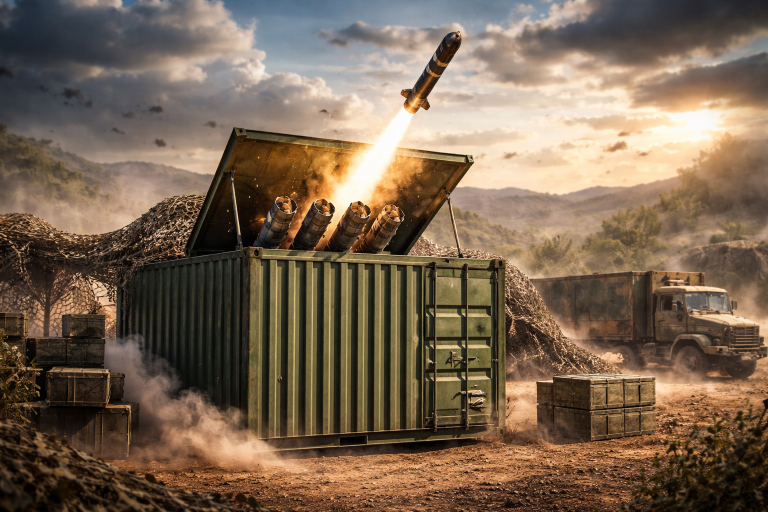
Sometimes new weapons systems look like complex and expensive systems, in which every detail emphasizes their “military” nature. But there are also cases where the opposite is true, when developers deliberately steer clear of this image. Lockheed Martin’s Grizzly container-based launch system is a prime example of such a solution. On the outside, it looks like an ordinary shipping container—the kind of which thousands are found in ports and warehouses around the world. Inside, however, it is a fully functional launch system for AGM-114 Hellfire missiles.
Old Weapons in a New Setting
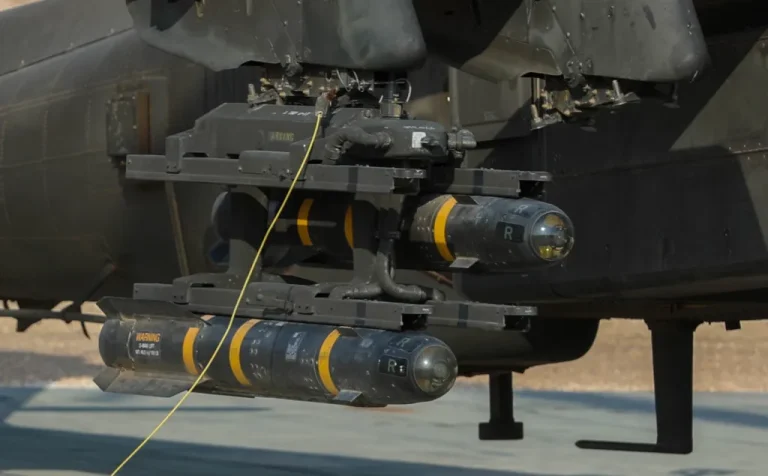
The Hellfire missile itself is by no means new. It was originally developed as an anti-tank weapon for helicopters, then became widely used on drones, and gradually evolved into a versatile precision-strike weapon. In this sense, the Grizzly does not offer anything fundamentally new in terms of the munition itself. The change lies elsewhere—in the way it is used.
Instead of a helicopter or drone as the delivery platform, a stationary or semi-mobile platform is being introduced that does not require an airfield, aircraft maintenance, or any of the associated infrastructure. Essentially, this involves transferring airborne weapons to the ground with minimal adaptation costs. And here, it is important to note that Lockheed did not start from scratch. The system is based on the existing M299 launcher, well known from helicopters, which immediately reduces both technical risks and development time.
Six months from concept to launch
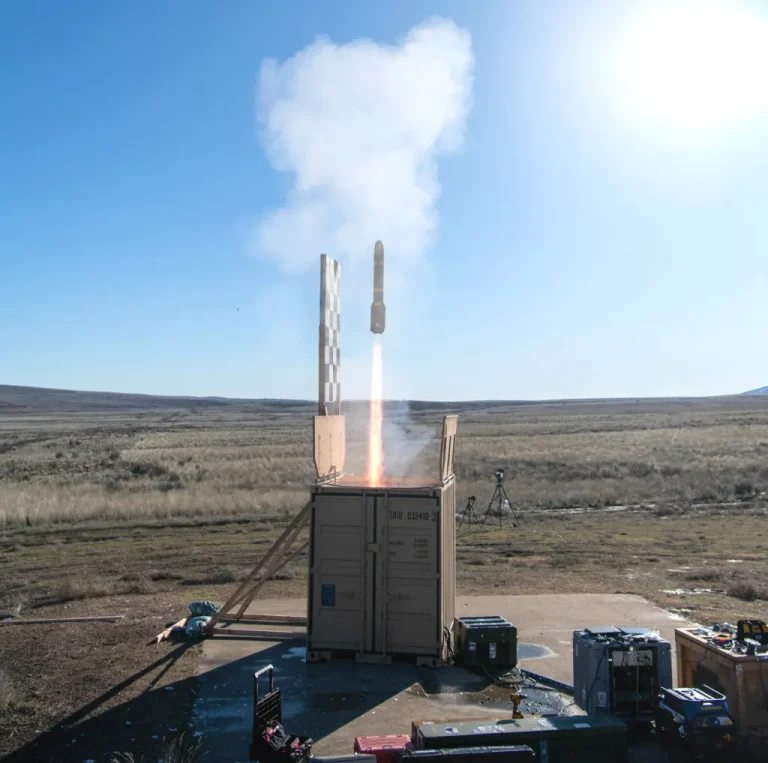
It is precisely the timeline in this case that is particularly telling. According to the developer, it took about six months from the start of work to the first actual launches. For modern weaponry, this is an extremely short development cycle, one that is possible only if the project is built using off-the-shelf solutions. Commercial components, proven missiles, and existing launch complexes—all of these factors make it possible to drastically reduce the time between the initial concept and testing.
The container’s design itself is particularly noteworthy. It is built to a standard format, which allows for the use of existing logistics infrastructure without any modifications. The lid opens upward, after which missiles can be launched, including in vertical mode. This expands the system’s deployment options—from fixed positions to installation on transport platforms.
Not just one starter, but dozens
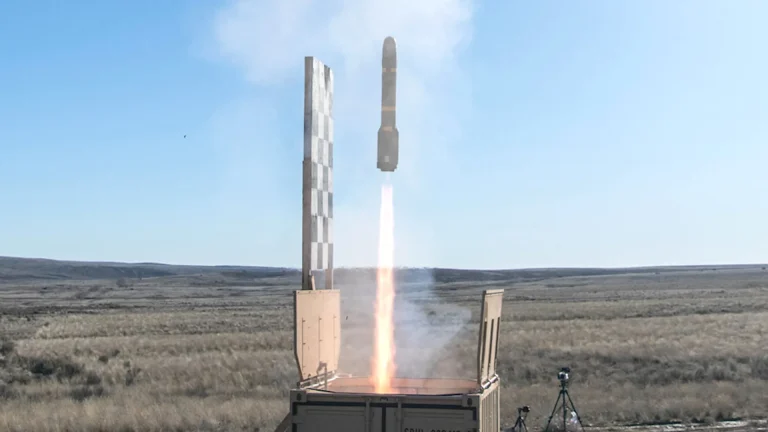
However, what matters most about the Grizzly is not the technical details, but the concept itself. A Lockheed representative summed up its essence quite accurately, noting that “another way to ensure ammunition depth is to have multiple launchers.” In effect, this means abandoning the idea of a single large and expensive system in favor of a multitude of simpler and more dispersed solutions.
Containers can be placed at various locations, moved using conventional means, and camouflaged among civilian cargo. As a result, the enemy faces not a single target, but dozens of potential positions that are extremely difficult to distinguish from one another.
Weapons You Can’t See
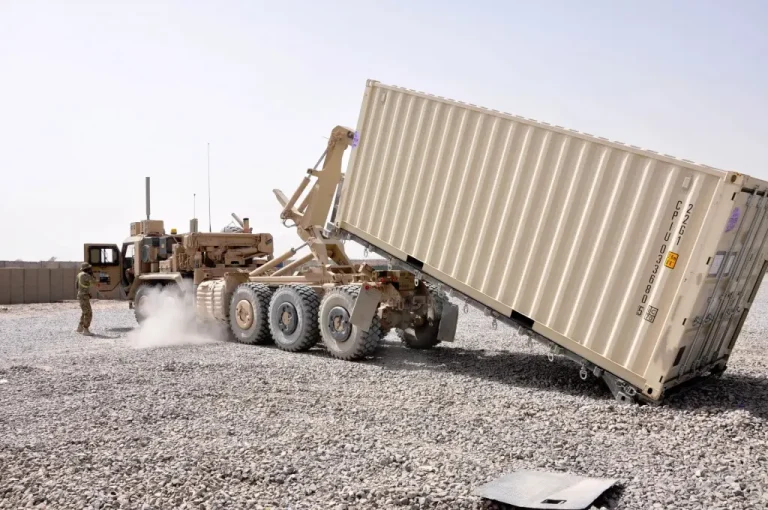
It is precisely this ability to “blend in” with the surrounding environment that makes such systems particularly interesting. The container is one of the most common objects in modern logistics. It raises no suspicion, attracts no attention, and can be easily transported around the world. If a launch system is located inside such an object, the task of detection becomes significantly more difficult. This is no longer a matter of armor protection or range, but rather a matter of uncertainty.
At the same time, the Grizzly is not viewed solely as a strike system. It can be used to counter drones, protect facilities, and establish mobile firing positions. Its ability to integrate into a common command-and-control network makes it part of a larger system rather than a standalone element.
The Logic of Modern Warfare
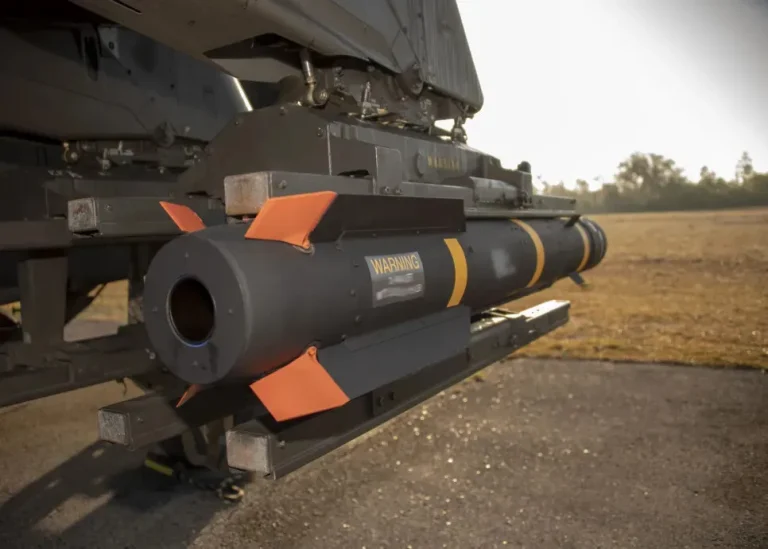
Taking a broader view, the very idea of containerized launch systems is not new. Similar solutions have emerged in the past, but it is precisely now that they are beginning to seem particularly relevant. The reason lies in the changing nature of warfare itself, where distributed systems are becoming increasingly important. Fewer large, easily detectable targets—more small but numerous elements, each performing its own function.
In that sense, Grizzly isn’t a technological revolution. The Hellfire remains the same, and so does the launcher. But the operational environment has changed: a container instead of a helicopter, logistics instead of a base, stealth instead of a show of force. And that is precisely what makes the project interesting—not because it offers a new weapon, but because of how it changes the approach to an existing one.
по материалам https://www.twz.com/air/hellfire-missile-launcher-tucked-inside-a-container-rolled-out-by-lockheed