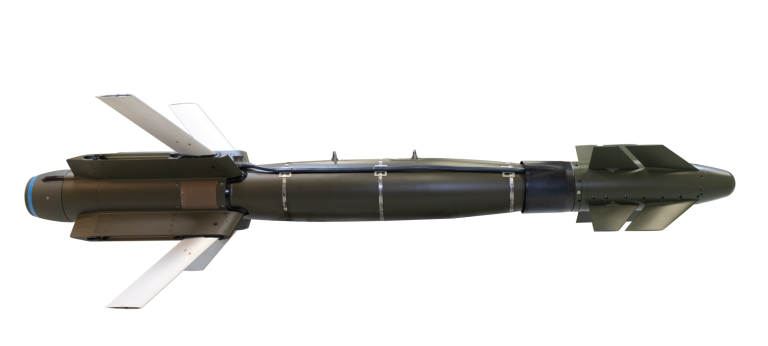
Sometimes a new weapon doesn’t emerge as a fundamentally new design, but rather as an attempt to rethink existing solutions. The French AASM HAMMER system falls precisely into this category. Technically, it is called a missile, and sometimes a guided bomb, but in reality it is something in between, and that is precisely what makes it unique.
The reason for discussing “Hammer” again is no coincidence. In recent years, the system has not only been actively deployed but has also undergone upgrades—both in terms of production and in terms of integration and operational tactics.
And when viewed in context, it becomes clear that this is not just a piece of ammunition, but an attempt to create the most flexible strike weapon possible.
Contents:
The Bomb That Became a “Rocket”
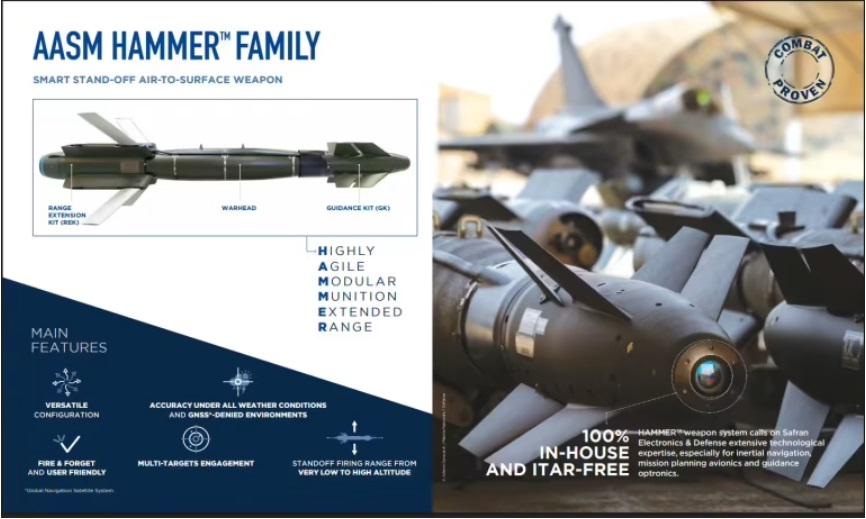
HAMMER (Highly Agile Modular Munition Extended Range) was originally designed as a kit that transforms a conventional aerial bomb into a high-precision weapon.
The following are added to the classic bomb:
- guidance module
- gliding wings
- sometimes — an accelerator
The result is a system capable of engaging targets at ranges of up to 70 km while remaining outside the air defense zone.
This isn’t just a “drop from an airplane” anymore. It’s a long-range strike—and a fairly accurate one at that.
That is precisely why the HAMMER is often perceived as a missile, even though technically it is a hybrid.
Versatility as a Core Concept
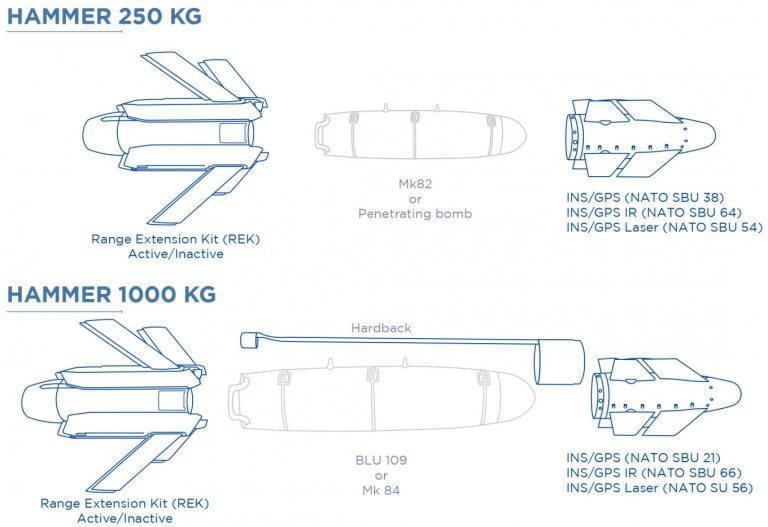
The system’s main feature is its modularity.
The HAMMER can be loaded with various types of ammunition:
- 250 kg
- 500 kg
- 1,000 kg
You can change the guidance systems:
- GPS/inertial
- laser
- infrared
This makes the system not just a weapon, but a customizable solution tailored to the task at hand.
The same platform can be configured in different ways depending on the mission—from attacking fortified targets to precision strikes.
Why It’s Relevant Again
System:
- resistant to interference
- can be used from low altitudes
- works in a challenging environment
At the same time, its main advantage is the ability to launch strikes without entering the air defense zone.
In fact, this is a solution to the very same problem that is currently shaping the development of most aviation weapons systems.
Updates — not about the rocket, but about the system
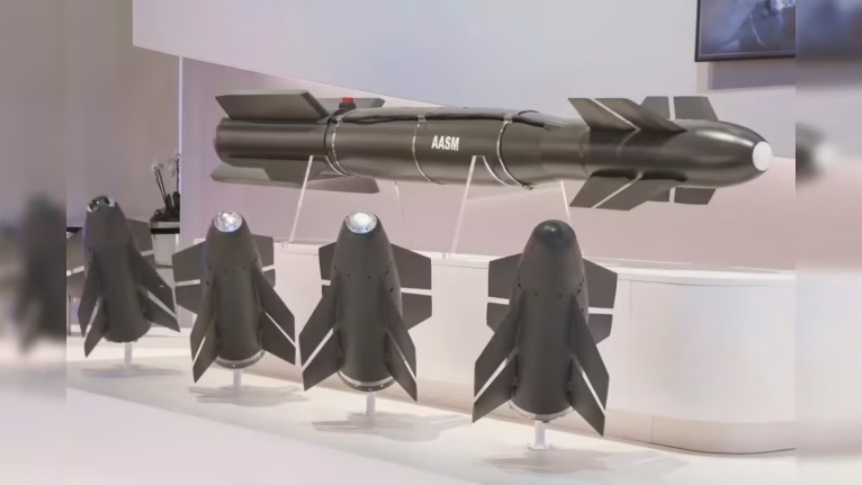
The latest news regarding HAMMER has less to do with changes to the design itself than with its development as part of a larger system.
First, this involves localizing production. India and France have agreed to jointly produce this ammunition, and the level of localization is expected to be significant.
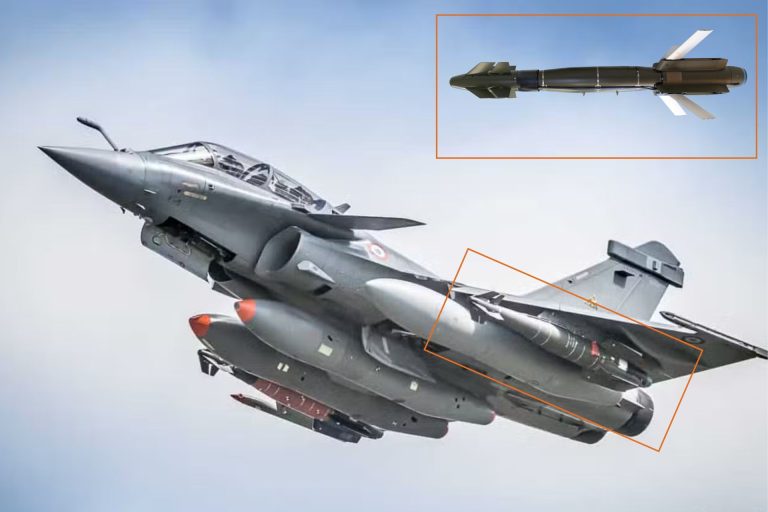
Second, the system is being increasingly integrated into various platforms—from the Rafale to other fighter jets.
And finally, the tactics for its use are changing.
HAMMER is becoming more than just a “smart bomb”—it’s part of a broader concept:
- long-range shot
- minimal risk to the carrier
- high accuracy
Between a Rocket and a Bomb
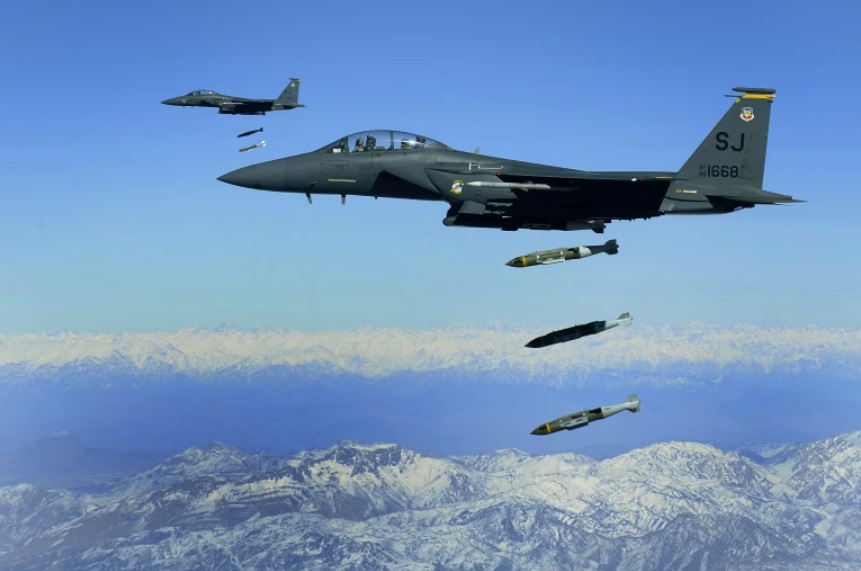
To put it simply, HAMMER occupies an intermediate position.
On the one hand:
- cheaper and simpler than a full-fledged rocket
On the other hand:
- significantly more effective than a conventional bomb
And it is precisely this balance that makes it so sought after.
In situations where not only impact force but also price is a factor, such solutions are particularly relevant.
The Final
The history of HAMMER is an example of how modern weaponry is evolving.
It doesn’t always involve creating something fundamentally new.
Often, it involves reworking something that already exists.
An ordinary bomb becomes a guided weapon.
A guided weapon becomes a modular system.
And at some point, it becomes hard to tell where the bomb ends and the missile begins.
But maybe that doesn’t matter anymore.
Because in modern warfare, it’s not the form that matters.
And here’s the result.