A Forgotten Aviation Giant: The Story of the Boeing-Vertol 301/XCH-62, an American Giant Helicopter That Was Ahead of Its Time

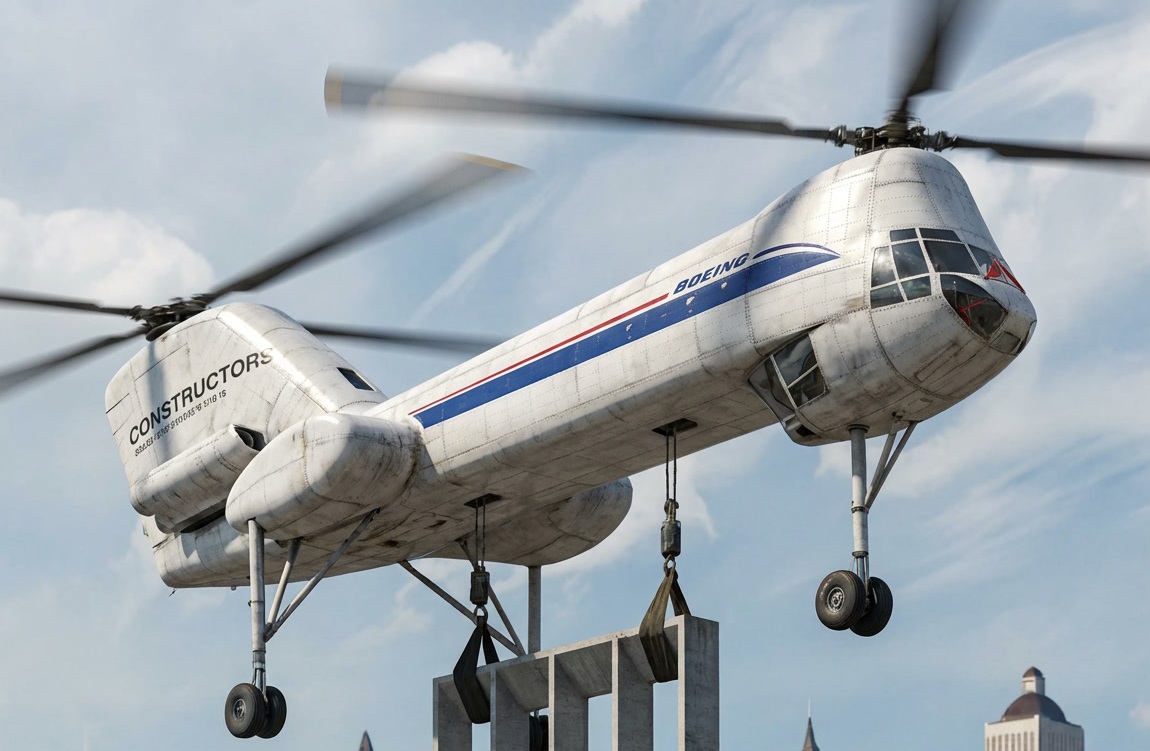
In the history of aviation, there are projects that are so far ahead of their time that they remain nothing more than the unfulfilled dreams of their designers. One such ambitious project was the American super-heavy transport helicopter, the Boeing-Vertol 301, which was given the military designation XCH-62. This aircraft was supposed to become the helicopter with the highest payload capacity of its time, but fate had other plans.
The Birth of a Grand Program
In the early 1970s, the U.S. Department of Defense launched the Heavy Lift Helicopter (HLH) program, which aimed to develop a heavy-lift transport helicopter with a payload capacity of twenty metric tons for the U.S. Army. The country’s leadership sought to avoid a repeat of the situation that had arisen earlier, when the Army funded the development of the Chinook helicopter while the Marine Corps simultaneously invested in the development of the Sikorsky CH-53A “Sea Stallion”. Both aircraft had similar specifications, which led to an inefficient duplication of efforts and resources.
Work on the new super-heavy helicopter began in 1973. Boeing-Vertol approached the project with great ambition, striving to create a truly revolutionary machine. To test the components and systems of the future “flying crane,” engineers used the experimental Boeing-Vertol 347 helicopter, which was a modified version of the Chinook. Various tests were conducted on this aircraft, during which additional wings were mounted to the fuselage and design solutions for the future giant were refined.
A design unlike any other
The XCH-62 helicopter was designed with a twin-rotor, longitudinal configuration, which had already proven its effectiveness in the Chinook family of helicopters. However, the scale of the new aircraft was truly staggering. Three Allison XT701-AD-700 gas turbine engines, each rated at 8,080 horsepower, were designed to drive two main rotors of colossal diameter. The helicopter’s size gave journalists reason to compare it to a Boeing 747 wide-body aircraft and a Lockheed C-5 “Galaxy” heavy military transport aircraft.
The helicopter’s estimated takeoff weight was fifty-three and a half metric tons, and its payload capacity reached twenty metric tons. On short-distance flights, the helicopter was capable of carrying cargo weighing more than thirty-one metric tons, which was an unprecedented feat for rotorcraft of that era. The company’s engineers also explored a variant with an increased takeoff weight of sixty-seven metric tons, which opened up even broader possibilities for the helicopter’s application.
The Downfall of Ambitious Plans
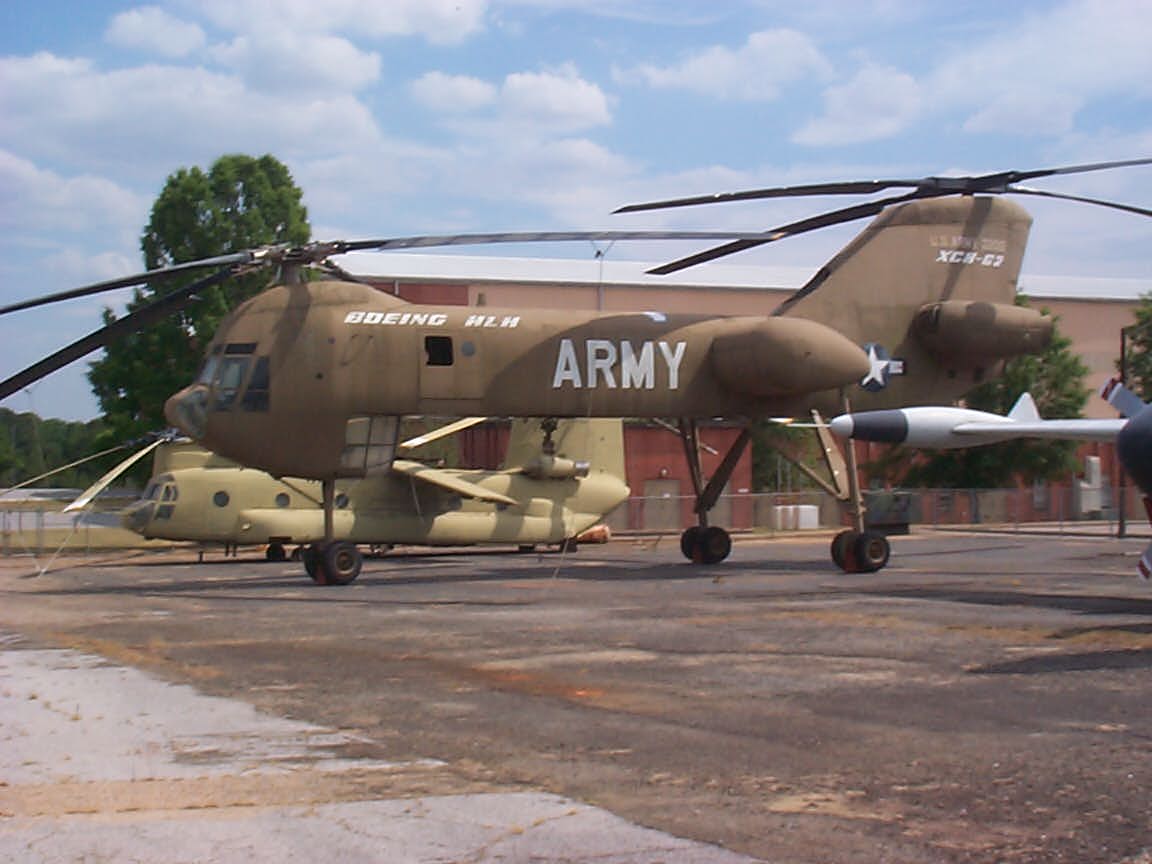
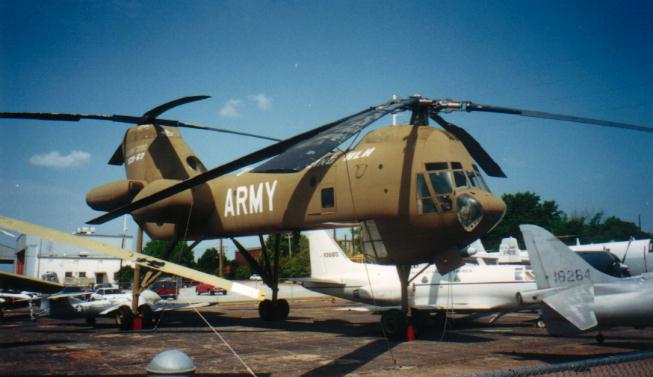
Despite the project’s technical sophistication and the military’s obvious need for such a vehicle, the HLH program ran into serious financial and political problems. In 1976, the program was canceled, and Boeing was unable to complete construction of the prototype helicopter. The sole prototype, with tail number 73-22012, was 90 percent complete but never took to the air.
In 1984, there was hope that the project might be revived. The possibility of resuming work, with the first flight scheduled for 1985–1986, was considered. However, this idea did not receive support from the U.S. Congress, and the helicopter was once again mothballed. Budget constraints and shifting priorities in the military sector put an end to the ambitious project.
The Sad Ending to a Legend
Until 2005, the non-flying XCH-62 was on display at the Army Aviation Museum in Alabama, where it served as a reminder of the unrealized potential of the American helicopter manufacturing industry. However, prolonged outdoor storage exposed to the elements led to irreversible structural damage. The condition of this unique helicopter deteriorated to such an extent that, in 2005, the decision was made to send it to the scrapyard. Thus ended the story of a machine that could have become the heaviest-lift helicopter of its time.
The Legacy of an Unrealized Project
The Boeing-Vertol 301 / XCH-62 remains in aviation history as an example of how technical ambitions clash with political and economic realities. This aircraft, which was ahead of its time, never got the chance to prove its capabilities under real-world operating conditions. Nevertheless, the experience gained during the development of this helicopter was not wasted and was used to improve other rotorcraft.
Technical Specifications
- Diameter of the main propeller: 28.04 m
- Length: 26.59 m
- Height: 9.83 m
- Curb weight: 27,025 kg
- Maximum takeoff weight: 53,524 kg
- Engine type: 3 Allison T701-AD-700 gas turbine engines
- Power: 3 × 6,030 kW
- Maximum speed: 269 km/h
- Cruising speed: 206 km/h
- Range: 2,800 km
- Combat range: 280 km
- Payload: 31,750 kg of cargo
Conclusion:
The story of the Boeing-Vertol 301 / XCH-62 serves as a reminder that even the most advanced technical solutions may go unused if they do not receive support at the highest levels. This giant helicopter could have radically transformed the capabilities of Army aviation, but it remained only on the drawing board and as a non-flying prototype that never took to the skies.