A hybrid of American and Soviet technologies. The Australian M1A1 AIM Abrams in Ukraine

During the Russia-Ukraine war, not only Russian-made armored vehicles were deployed on the front lines, but also vehicles supplied by Ukraine’s allies from around the world. Among them is the American M1A1 Abrams main battle tank, though in one of its most unusual and interesting incarnations in terms of visual and technical identification: the Australian variant, the M1A1 AIM, transferred to Ukraine in 2024.
These tanks represent a unique hybrid of Western and Soviet military thinking—not so much in their design as in the modifications made while they were already in combat operations on Ukrainian territory. For modelers seeking to accurately recreate the appearance of military equipment that participated in the conflict, this Abrams is a real find: it combines the signature features of American design, Australian operation, and Ukrainian field adaptations with elements of Soviet armor.
Origin: From the U.S. to Australia, and from Australia to Ukraine
The Australian M1A1 tanks are vehicles modernized under the AIM (Abrams Integrated Management) program, originally supplied by the United States in the early 2000s. Unlike the more modern M1A2 SEPs, the Australian Abrams tanks retained the 120-mm M256 smoothbore gun but were equipped with updated fire control systems, improved ergonomics, and enhanced protection against sub-caliber projectiles. After being withdrawn from service with the Australian Army in 2024, some of them were transferred to Ukraine.
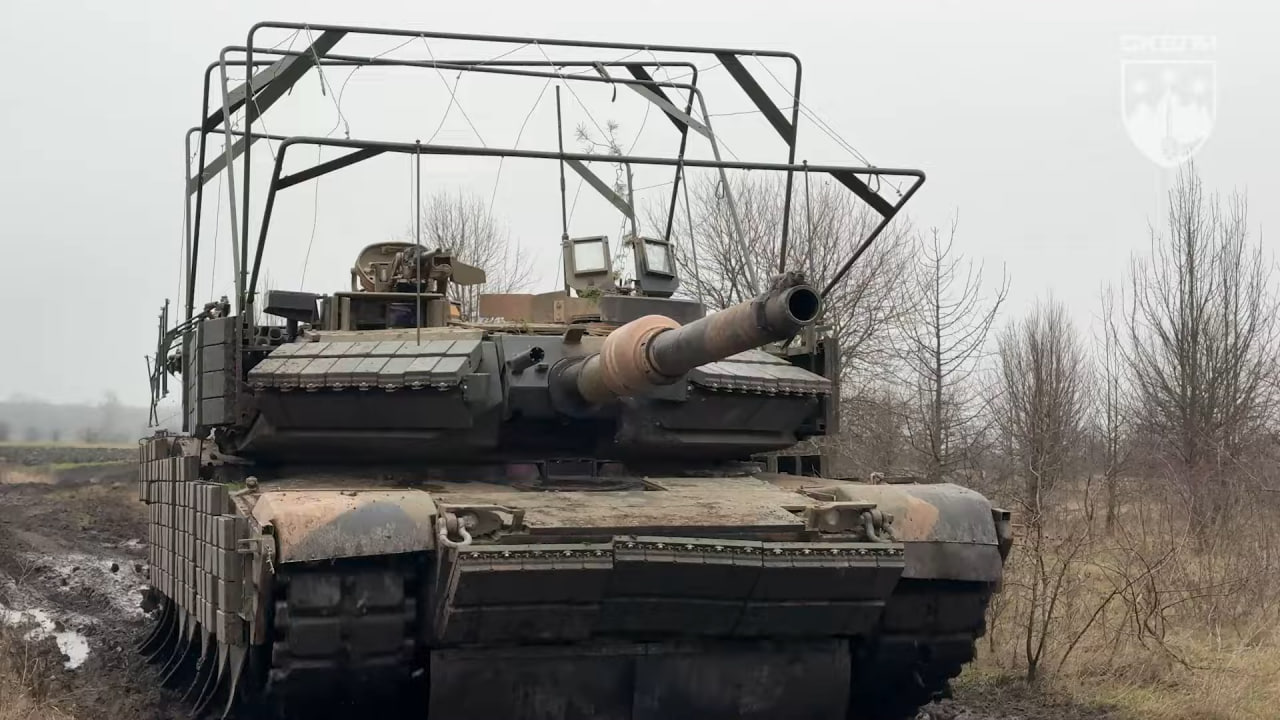
Appearance: How to Spot an Australian Abrams Tank on the Ukrainian Battlefield?
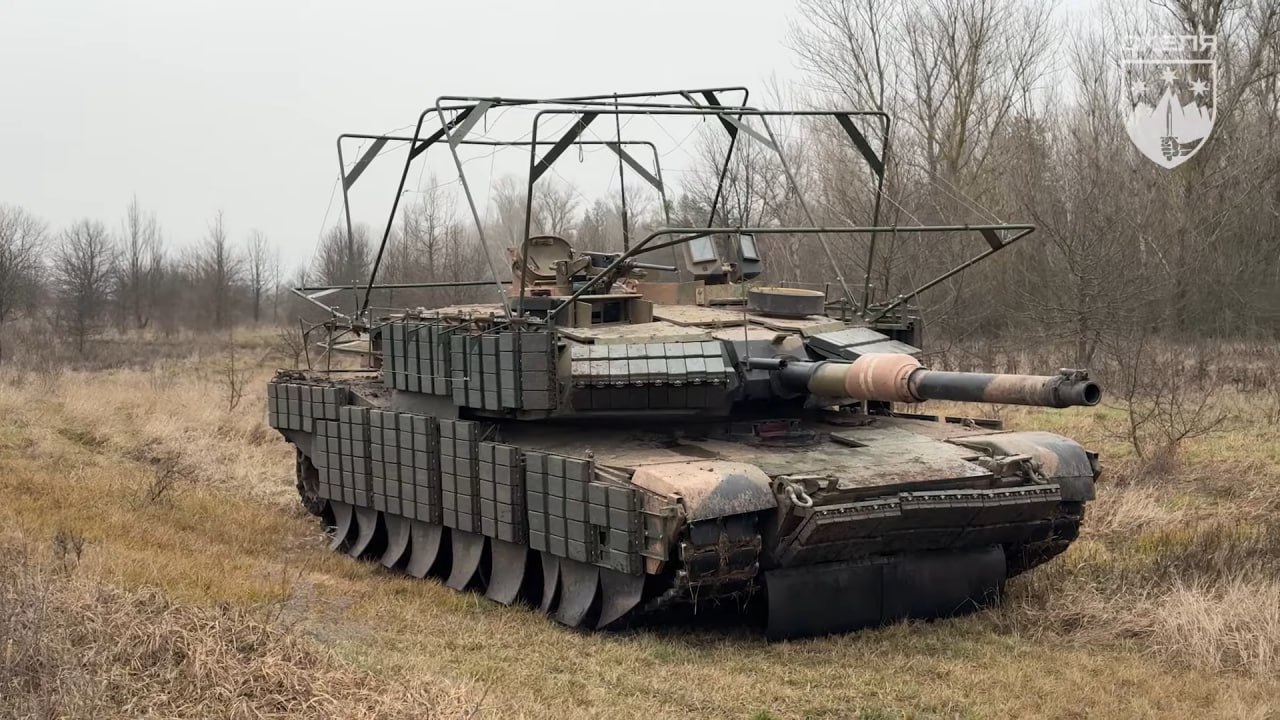
Its most distinctive feature is its original Australian camouflage pattern. It is a three-color camouflage pattern in warm shades—sand-brown, ochre-beige, and dark olive—designed for desert and savanna environments. In the Ukrainian landscape, this camouflage looks unusual and immediately stands out against the backdrop of standard American or German OLIVE DRAB/NATO Green.
This pattern is easy to distinguish even in winter or during the spring mud season—especially when compared to the American M1A1 SA-UKR tanks, which were supplied by Washington in 2023–2024 and painted in utilitarian olive-gray or NATO digital camouflage.
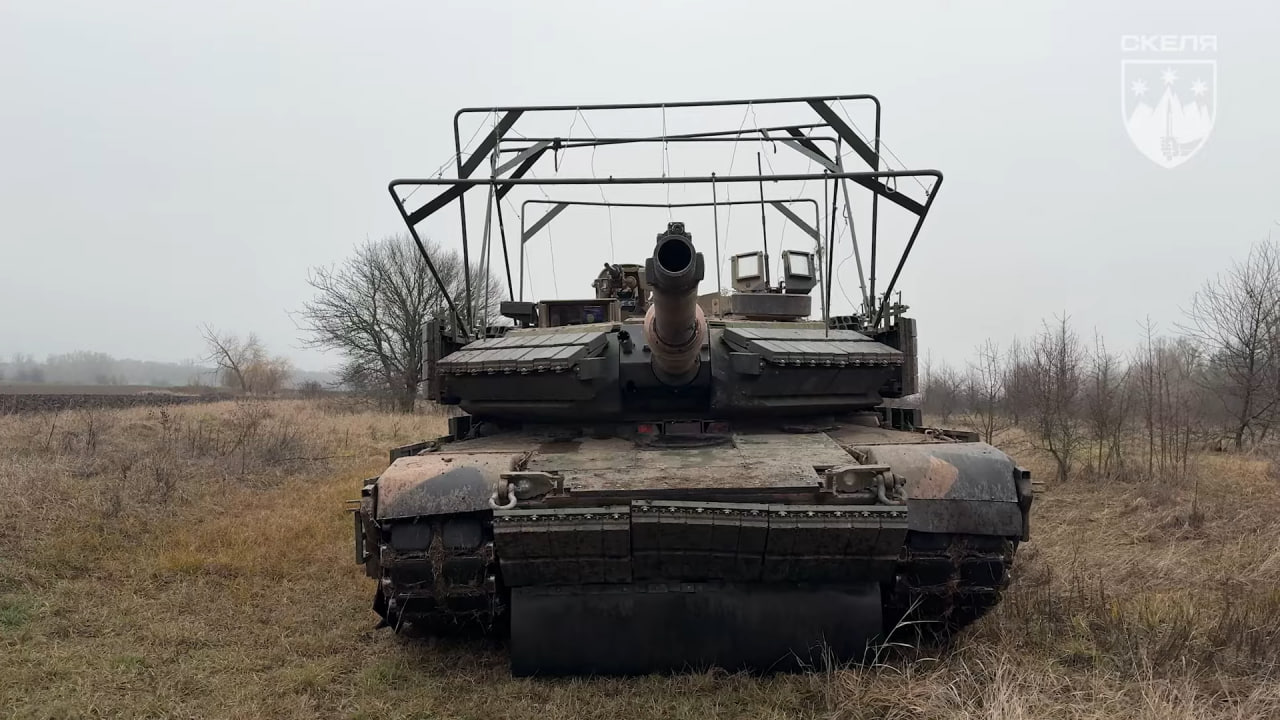
Soviet Legacy: “Kontakt-1” and Drone Defense
What makes these tanks truly unique is the field upgrades carried out by Ukrainian soldiers and technicians. Recognizing the Abrams’ vulnerability to modern threats—especially FPV drones and shaped-charge munitions—crews and maintenance units began actively implementing Soviet and post-Soviet solutions.
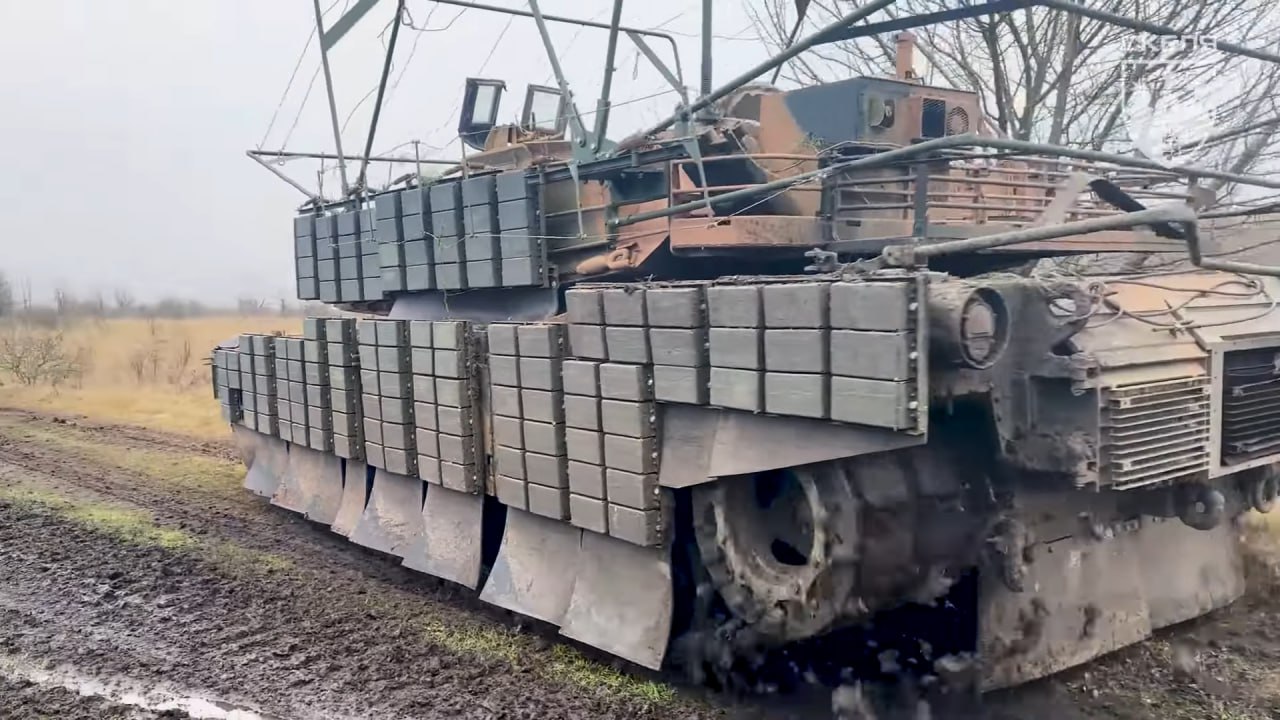
On the turret of the Australian Abrams tanks, one can see the distinctive “Kontakt-1” reactive armor blocks arranged in a wedge-shaped pattern—a configuration reminiscent of the armor on the T-64BV and T-72B3 tanks. This layout protects the turret’s most vulnerable areas—the side projections and the roof—from strikes from above. Although “Kontakt-1” was originally developed to counter ATGMs and tank shells from the 1970s and 1980s, its use against small warheads on FPV drones has proven unexpectedly effective.
In addition, additional steel armor plates—welded or bolted on using scrap materials—are often mounted on the upper frontal section (UFS) of the Abrams hull. These screens are designed to reduce the likelihood of a cumulative jet penetrating the hull in the event of a frontal hit.
Special attention has also been paid to protection against drones. Foldable metal nets have been installed on the turrets and superstructures of the tanks—lightweight yet sturdy structures capable of intercepting or neutralizing explosive devices dropped from UAVs. These nets are often made from scrap materials (rebar, scaffolding grids) and have a distinctive “homemade” look, but they save the crews’ lives.
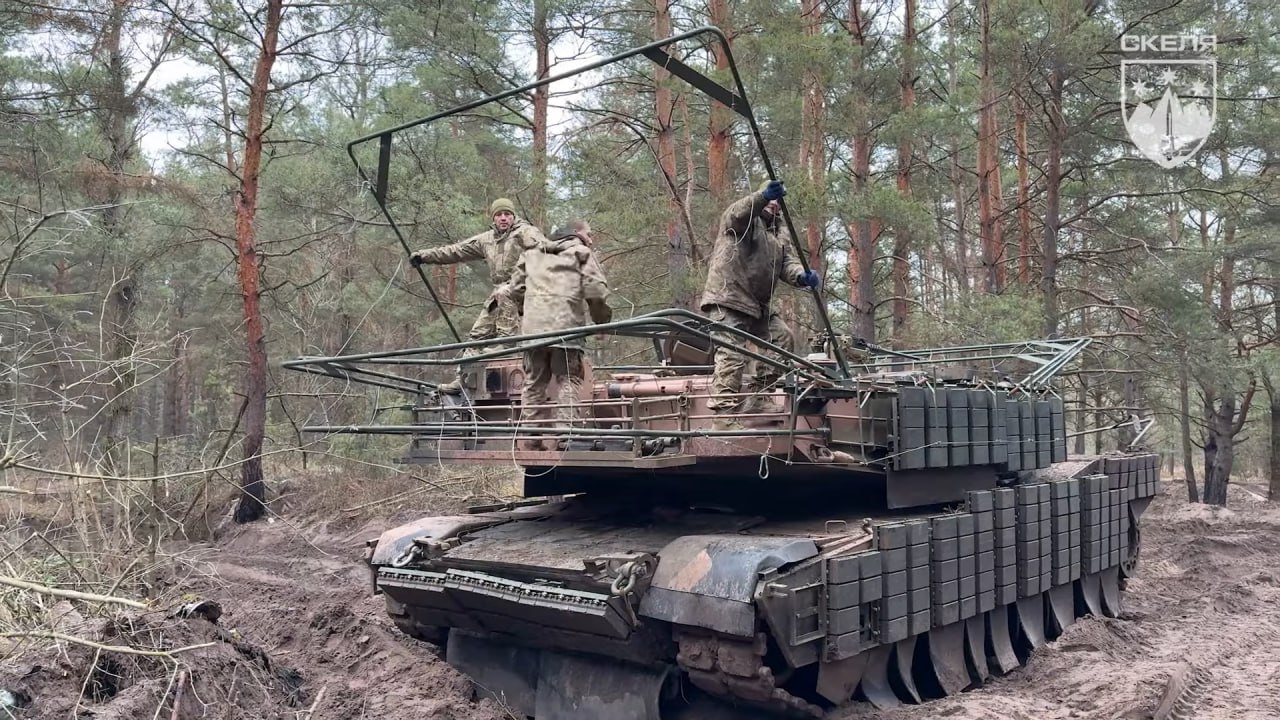
For Model Builders: Key Details for an Accurate Reconstruction
If you plan to replicate the Australian Abrams on the Ukrainian battlefield, pay attention to the following elements:
- Camouflage: three-color Australian pattern (not to be confused with American and German patterns).
- “Contact-1” on the tower: the wedge-shaped arrangement of the blocks consists not of a continuous “scale,” but of individual elements arranged at an angle.
- Mesh protection: irregular, often asymmetrical structures above the hatches, above the engine, and around the perimeter of the turret.
- High-voltage line reinforcement: custom-made steel plates, sometimes with stiffening ribs or holes.
- The absence of the “Cobra” fire control system or modern radars: this is not an M1A2, but a simplified M1A1 AIM.
Conclusion
The Australian M1A1 AIM tanks in Ukraine are not just combat vehicles, but symbols of hybrid warfare: where Western technology meets Eastern defense tactics, and battlefield experience gives rise to new ways of surviving on the battlefield. For historians, this is an example of adaptation; for the military, a lesson in the versatility of solutions; and for modelers, an opportunity to build one of the most colorful and technologically advanced models of a modern conflict.
When you create a model like this, you’re not just replicating a shape—you’re recreating a history of the intermingling of cultures, technologies, and tactics, forged in the heat of actual war.
Source of illustrations: https://t.me/alternathistory/14445