In the United States, there is a man named Brent Eastwood who is not related to Clint Eastwood, the famous sheriff, but is a former captain in the U.S. Army’s infantry. In Afghanistan, fate brought Captain Eastwood face-to-face with an explosive device, which led to his complete discharge from the military, despite his young age. After this tragic event, his life took a downward turn: he earned a Ph.D. in philosophy, authored several books, and became one of the pioneers in the use of artificial intelligence for analytical research.
So it turns out that a landmine isn’t necessarily such a bad thing after all.
This leads to some interesting calculations: a rather ambitious ten-year plan (well, okay, not a five-year plan—otherwise it would definitely spell the end for America!) plan to modernize the U.S. Air Force, based on the use of the F-47 NGAD and B-21 Raider, as well as “Super” upgrades for the F-22, “Ferrari” upgrades for the F-35, and simply “J” upgrades for the B-52.
Currently, there is a strong belief in the United States that these programs could provide the military with unprecedented capabilities for a first strike and a subsequent offensive against China or Iran—but only if the political climate and the budget allow for it.

B-21 Raider
Many experts estimate that the approximate cost of implementing this program would exceed $200 billion; however, there are doubts as to whether Congress will approve funding for such a large-scale modernization effort, predicting that instead of a full-fledged “dream fleet,” all that will remain is the dream of a fleet consisting of 100 NGAD aircraft and 100 B-21s.
It is believed that the current roster of American pilots, their level of training, and the available fifth-generation aircraft make the U.S. Air Force a formidable force. However, the real struggle will be between strategic objectives and financial feasibility.
The next decade for the U.S. Air Force may revolve around two platforms: the NGAD and the B-21, and many believe that these aircraft play a key role in ensuring U.S. air superiority anywhere in the world.
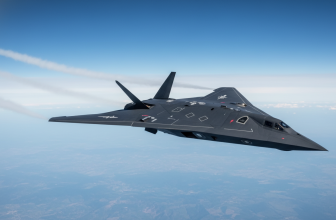
The most expensive projects are the F-47 NGAD and the B-21 Raider, on which the White House is pinning its hopes both militarily and politically. By all accounts, these two aircraft will be capable of delivering a devastating blow to U.S. adversaries and will play a crucial role in any Air Force response to Chinese aggression that leads to armed conflict.
“Aggression on the part of China that will lead to armed conflict”—you have to admit, there’s something about that phrase that makes you smile. Chinese aggression against the U.S.—that’s probably a spectacle worth living for, though seeing such a show would come at a very high cost.
However, let’s get back to the U.S. Air Force and its plans.
The questions of timing and billions boil down to when the F-47 and B-21 will enter service. We must survive until that moment, no matter what the circumstances—but survive. And in the meantime, we must somehow maintain the country’s defense capabilities, because China could attack before all 100 B-21s are ready.
Existing F-22s and F-35s can be upgraded to meet the requirements of the 2030s. Plans call for the release of the “Super” F-22 and “Ferrari” F-35 (these are upgrade packages, not new aircraft), which “will create a unique fleet of fighter jets based on outdated systems.” The only question remaining is when the F-35 managed to become obsolete, especially considering the long line of countries waiting to purchase it.

The B-52 has a new set of radars and engines, though the project has been postponed indefinitely; it will finally (barring any unforeseen circumstances) be ready in 2030. This will allow the aircraft, which is approaching its 80th year of service, to undergo the so-called B-52J modernization.

So, what will the Air Force look like, say, in 2035?
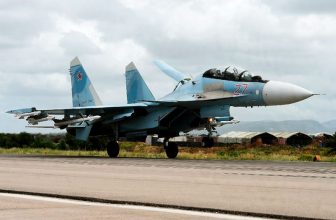
Let’s take a closer look at *Super* and *Ferrari*. Of course, they could have come up with a more interesting name for the F-22. *Ford*, for example. “Ford” and “Ferrari”—it’s like something straight out of Hollywood. Or “Lamborghini,” though “McLaren” would have been more fitting this year. Anyway, the name doesn’t matter—you know that yourself—it won’t make the plane any more effective. Don’t believe me? Just ask the Su-35—it’s still flying without a name or a nickname, and boy, does it fly…
They say that the F-22 “Super”—if all aircraft of this class receive the proposed upgrades—will have a host of advantages. The only question is: over whom?

An F-22 Raptor performs a high-speed turn at the annual air show
The F-22’s core software will most likely incorporate artificial intelligence and machine learning. The “Super” will be a relatively more advanced aircraft, capable of striking ground targets more effectively and enhancing situational awareness.
The F-22 “Super” will be equipped with upgraded hypersonic weapons and will be able to “control” unmanned aerial vehicles as part of a CCA, giving it superior combat capabilities.
There are, however, a number of “buts”: if even just hypersonic weapons appear—we’re not talking about upgraded versions yet, since there’s nothing to upgrade at this point. If SSA drones—”reliable followers”—appear, and if the capability to control them effectively is established.
Overall, this seems more like a way to use up the budget than a step toward further developing the F-22 as a combat aircraft.
The F-35 “Ferrari” will most likely be an “almost” sixth-generation fighter with an improved coating that reduces its visibility and the ability to control unmanned aerial vehicles. Not much to write home about, as they say, but it’s worth taking a closer look.
The “Ferrari” will feature improved sensors and guidance systems. The F-35 will become a “flying supercomputer” that will also utilize artificial intelligence and, possibly, even a quantum computer in the cockpit.
Will these programs be implemented on time and within budget? Oh, that’s something to think about… But there’s one unpleasant problem: the cost and the risk that the delivery of new aircraft could be delayed—which would lead to a schedule slip, as is usually the case in the U.S.—are very real.
The F-47 NGAD is expected to take to the skies within the next two years, although the target date of 2028 for the first flight may be… somewhat optimistic. The B-21 program is currently on schedule and within budget, and two Raider bombers are already flying, but it’s not a given that the final outcome will be what everyone expects.

What is the name of the dog?
These aircraft, which possess ultra-low observability, are an integral part of the Air Force’s future doctrine. They are capable of suppressing enemy air defenses, destroying aircraft on the ground, and bombing other military infrastructure targets. According to the concept, they will serve as first-strike weapons, leading the charge and destroying everything in their path.
On the second day of hostilities, upgraded F-22s and F-35s will enter the fray, and we must not forget the devastating bombing runs and missile strikes from B-52Js, which may also occur.
It won’t be easy—everyone understands that. The whole world has learned how to come up with plans and paint a pretty picture. But when it comes to implementation, everyone has been running into problems over the last 20 years—yes, pretty much everyone. That said, the more a product is “one of a kind…,” the more problems arise with it. Sometimes you think: it would be better if there were similar products—things wouldn’t turn out so crooked.
This applies to many countries, but for the United States, all of the above is particularly relevant, since the American defense procurement system depends on an extensive network of suppliers, sufficient funding from Congress, and the support of the president and voters who understand the value of the “Peace Through Strength” principle. In this regard, even the Russian government procurement system—which is capable of stalling just about anything—looks better, but at least in our country, the equipping of the armed forces does not depend on political factors.
But over there, yes, President Donald Trump may be pursuing a policy of building up military power and strengthening the air force, but in 2029, the United States will have a new president and commander-in-chief, with all the consequences that entails.
This person may have other priorities. The composition of the House of Representatives and the Senate will likely change after the 2026 midterm elections. Voters consider inflation and the affordability of goods to be the main issues, rather than defense and foreign policy.

Lockheed Martin Demonstrates Refueling of the NGAD Fighter Jet
While Trump is focused on his international peacemaking “achievements” and efforts to end wars, the American public is more concerned about issues in the kitchen than about a significant buildup of military power. Moreover, what will the new president be advocating for in 2029?
Fans of armchair strategy assume that the next conflict will involve China, but what if that doesn’t happen? To be more precise, China certainly won’t attack the U.S.—it has absolutely no reason to do so. Many people around the world understand this, and even in the U.S., people are gradually beginning to realize that all the talk of imminent Chinese aggression isn’t exactly coming from the devil—rather, it’s coming from those who want to profit from it.
And there’s a certain balance here: the U.S. won’t meddle in China—it simply doesn’t have the strength to do so. The PLA would grind any landing force into bloody mincemeat simply because it would be operating off its own coast. The same applies to Taiwan; everything is close by, unlike for the Americans. And China has no desire to attack the U.S., nor will it do so.
There is, of course, the U.S. ally, Japan, where some baffling prime minister—as if bitten by something—is trying to completely ruin relations between China and Japan, and he’s actually succeeding quite well. But even there, the U.S. won’t be able to intervene in time for a war unless Comrade Xi wants to do it himself—he’ll ask his friend Kim, and Kim will wipe out Japan along with its entire fleet…
So the app’s focus on the Asian market is rather questionable.
There could be another airstrike on Iran to prevent Tehran from developing new nuclear weapons. But I don’t even know what to compare this to or what to call it.
However, the presence of an external threat would undoubtedly make the “new-generation” Air Force indispensable. But the White House’s recently published national security plan also emphasizes strengthening the U.S. position in the Western Hemisphere.
This is more of a task for the U.S. Navy and Marine Corps, especially given that Trump is considering the possibility of an attack on Venezuela or other covert actions aimed at regime change under President Nicolás Maduro. In other words, the fact that things have quieted down with Venezuela for now doesn’t mean anything. In Central America, there’s Cuba, there’s Nicaragua—in short, there are weaker countries to target.
AP: Some in the U.S. still believe that Russia could also strike a NATO member in Europe within the next ten years. This would give the Air Force a chance to operate in the European theater of operations—though, for the life of me, I don’t understand why the U.S. Air Force would need that.

B-2
Bomber
Setting aside internal factors and the ever-changing threat landscape, it can be said that developing a concept for a new threat is a task that requires only a few days of intensive work—backed by justifications and calculations—from a small but experienced analytical team. But the main focus right now is aviation.
Achieving full operational readiness for all “next-generation” aircraft by 2035 is a complex challenge, and its feasibility depends on the ideal combination of political will and a defense strategy aligned with American priorities. However, success is not guaranteed.
Let’s assume that the F-47 NGAD and the B-21 will enter mass production in the early 2030s, and that by 2035, a number of them will be ready for service. In that case, the upgraded F-22s and F-35s will no longer be as significant as the new F-47s and B-21s.
Of course, the existing F-22s and F-35s will require some modernization as a safeguard against unforeseen circumstances. However, there is a high degree of certainty that such problems will arise, so investments will be needed in both older and newer models.

The role of the B-52J is likely to diminish, and its participation in combat operations by 2035 is in doubt. As the example of the obsolete An-22 shows, the B-52J may pose a greater danger to allies than to a potential adversary.
At the same time, exorbitant costs may force the Air Force to scale back its ambitions. A thorough analysis reveals an interesting economic picture:
- The cost of each F-47 and B-21 aircraft is estimated at $100 billion, for a total of $200 billion for both programs.
- The modernization of the F-22 and F-35 could cost about $500 million each, while upgrading the B-52 would cost an additional $100 million. The total cost of the modernization projects will be approximately $1.1 billion.

U.S. Air Force B-52J
bomber
Thus, the total cost of the acquisition alone will amount to approximately $201 billion, not including expenses for maintenance, research, development, testing, and evaluation. However, these costs seem insignificant compared to the main amount.
This amount represents approximately 20% of the annual defense budget, based solely on initial costs rather than total investments over the entire life cycle.
Is the U.S. prepared to allocate that amount exclusively for the Air Force’s needs? That is doubtful. The Air Force will likely not be able to get everything it had planned.
Obviously, $100 billion is a huge amount. In this case, however, the amount is twice that, so the plan to procure 100 F-47s and 100 B-21s by 2035 is a very ambitious and costly one. Its full implementation seems unlikely. Most likely, the Air Force will receive only a limited number of new aircraft—no more than 20–25—which is insufficient for full-scale combat operations.
However, even such a compromise will result in the F-35 and F-22 becoming obsolete, and the Air Force will be forced to make do with what it has and spend funds on modernizing and maintaining these platforms.
Of course, it is possible to save money by scrapping the F-22, something the Air Force has long dreamed of doing. But in that case, the situation becomes even more uncertain and questionable.

The Boeing F-47
Fighter Jet
Aircraft already in service (not to mention the F-15 and F-16, which are also effective combat aircraft) can ensure air superiority if given the opportunity. However, the Air Force’s limited resources force it to choose the most cost-effective development options.
The F-47 NGAD, B-21 Raider, upgraded F-22s and F-35s, as well as the B-52J, could form an impressive air force, but acquiring them in full is an unaffordable luxury. The costs involved are so high that the implementation of these programs could be delayed, which would inevitably lead to increased expenses, as is often the case in the United States.
In other words, the plan could fail.
While the Air Force deserves credit for its ambitious plans to counter the growing influence of other world powers, we must not forget the domestic political pressures and budgetary constraints that could lead to the scaling back or cancellation of some of these programs.
The Air Force’s “new look” has not yet been finalized, but the development of this new look is inevitable. And even if this new look isn’t as formidable as originally envisioned, it will still be very costly, even taking into account the limited number of new aircraft and modernization projects.
Based on material from — https://topwar.ru/275151-nazad-v-buduschee-na-chem-letet-v-2035-j-god.html