Germany Unveils the New Eurofighter Tranche 4: A Fighter Jet Designed to Bridge the Gap for Europe Until the FCAS Era

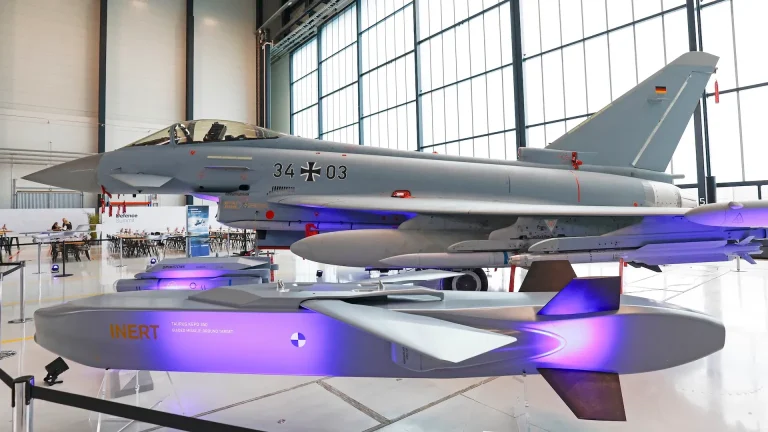
At the Manching Air Base, Airbus finally officially unveiled the latest German Eurofighter Tranche 4—an aircraft that, just a few years ago, many in Europe considered more of a stopgap solution than a full-fledged “fighter jet of the future.” But today, the situation has changed so dramatically that the Typhoon is gradually becoming Europe’s primary combat aircraft for the coming decades.
At first glance, the news seems fairly routine: Germany has received another Eurofighter as part of the Quadriga program. But if you take a closer look, it becomes clear that this is no longer the old Typhoon from the early 2000s. The new Tranche 4 is, in fact, a major overhaul of the entire platform—an attempt to transform a post-Cold War fighter into a machine designed for conflict against Russia and, potentially, China.
The irony of the situation is that the Eurofighter wasn’t supposed to last this long in the first place.
An airplane born in a different Europe
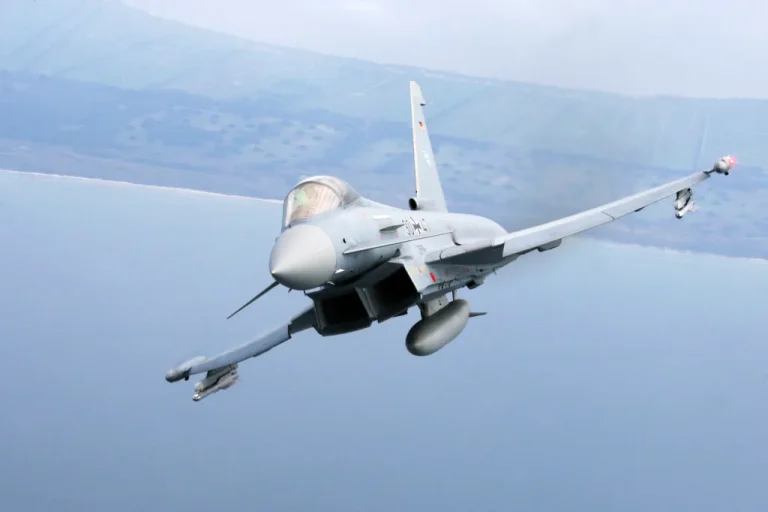
The history of the Eurofighter dates back to the final years of the Cold War, when European countries suddenly realized that relying entirely on American aircraft was becoming too dangerous.
At that time, Europe wanted its own air superiority fighter—one that was fast, agile, and designed to engage Soviet MiG-29s and Su-27s over Germany. That is exactly how the EF-2000 Typhoon came to be—a joint project between the United Kingdom, Germany, Italy, and Spain.
The plane turned out to be very European in every sense of the word.
A complex consortium of manufacturers. Constant disputes among participating countries. Enormous costs. Endless delays. While the Americans were mass-producing F-16s and F-15s, Europe was trying to create its own technological symbol of independence.
When the Typhoon first took to the skies in 1994, it seemed like a car of the future. But by the early 2000s, the situation had begun to change.
The Cold War ended. NATO shifted its focus to the Middle East. Strikes against insurgents, rather than aerial battles over Europe, became the norm. As a result, for a long time the Eurofighter seemed like a strange aircraft with no clear role—too expensive for local wars and too late for a classic superpower standoff.
Even within Germany itself, attitudes toward the program remained mixed. The Luftwaffe was being downsized, budgets were being cut, and many politicians wondered whether Europe really needed such a sophisticated fighter jet.
But then a new era began.
Ukraine Has Brought Back Europe’s Fear of a Major War
After 2022, the Eurofighter unexpectedly got a second lease on life.
The war in Ukraine has effectively shattered the illusion of a “safe Europe.” Germany suddenly realized that it once again needed not expeditionary aircraft for operations in Africa, but full-fledged aircraft capable of high-intensity air warfare.
That is precisely why the Quadriga program has taken on a whole new meaning.
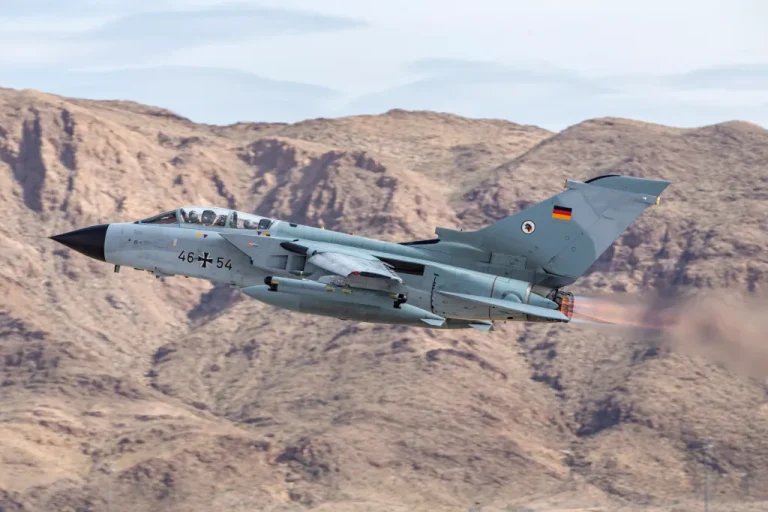
The 38 new Eurofighter Tranche 4 aircraft are intended to replace some of the older Typhoon Tranche 1 aircraft and gradually take over the roles of the retiring Tornados. But the most important thing is that these are entirely different aircraft.
The main difference with Tranche 4 is the new CAPTOR-E AESA radar.
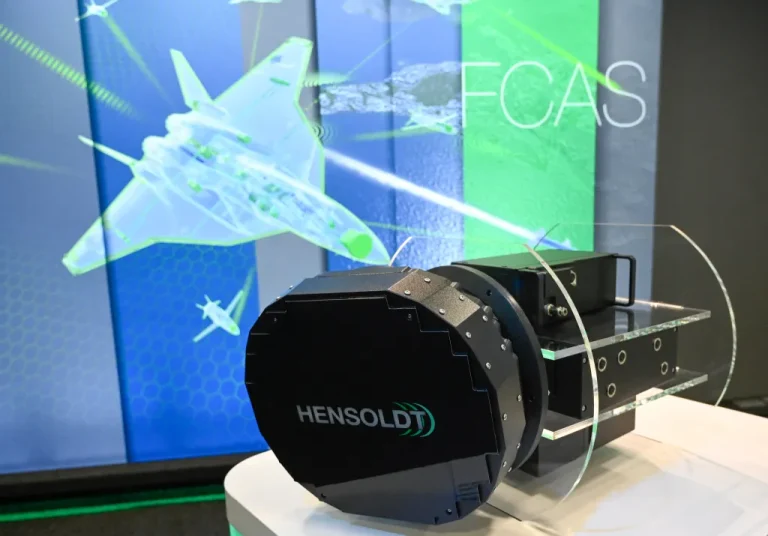
For the Eurofighter, this is practically a revolution. For many years, the Typhoon was criticized precisely for its outdated radar system. While the F-35, Rafale, and newer versions of the F-15 were transitioning to AESA radars, the European fighter jet clung to its older architecture for far too long.
Now the situation is changing.
CAPTOR-E transforms the Typhoon into an entirely different aircraft. Longer detection range, the ability to track multiple targets simultaneously, improved performance against low-observable targets, and greater resistance to electronic warfare—all of these are particularly important in modern warfare, where aircraft are increasingly becoming flying sensor platforms.
But radar is only part of the story.
A “Cold War fighter” is being turned into the European equivalent of the Growler
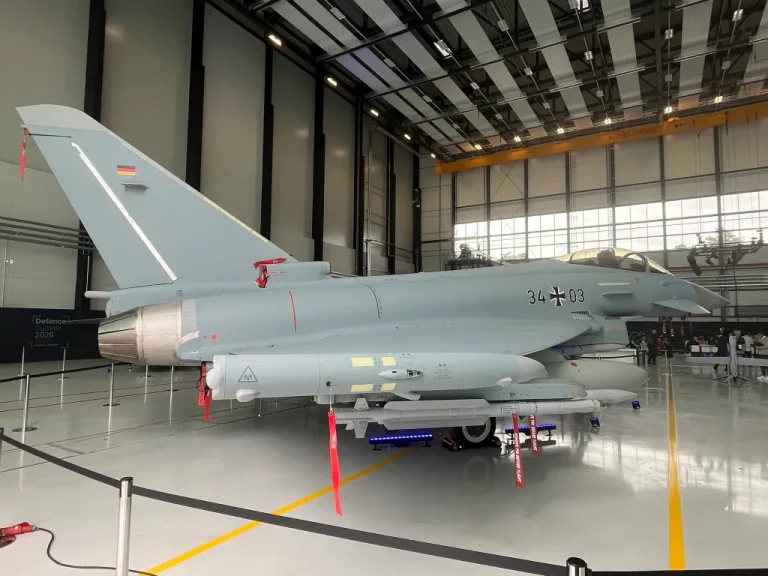
The most interesting thing isn’t even the standard Tranche 4, but what Germany plans to do with the Typhoon going forward.
Alongside the new aircraft, Berlin is actively promoting the Eurofighter EK program—a specialized version designed for electronic warfare and air defense suppression. Essentially, the Germans are trying to create a European counterpart to the American EA-18G Growler.
And that is a particularly telling point.
For the first time in decades, Germany is once again seriously preparing for war against a fully-fledged, modern air defense system—not against hypothetical “terrorists in pickup trucks,” but against a layered defense system on par with Russia’s.
To this end, the Typhoon will be equipped with Saab Arexis electronic warfare pods, AGM-88E AARGM anti-radar missiles, and new electronic intelligence systems.
In fact, the Eurofighter is gradually becoming a versatile platform for the entire European aviation sector:
— a fighter jet for gaining air superiority,
— a strike aircraft,
— a carrier for cruise missiles,
— an electronic warfare platform,
— and a potential “brain” for controlling drones.
That is precisely why Germany continues to invest so heavily in the Typhoon, despite its purchase of the F-35.
Europe is stalling until FCAS is introduced
But there is something else that is particularly important in this whole story.
Everyone fully understands that the Eurofighter is no longer the final stage in the development of European aviation. The real focus is on FCAS—the Future Combat Air System, a massive Franco-German-Spanish project to develop a sixth-generation fighter jet.
The problem is that FCAS keeps freezing up.
Disputes between Airbus and Dassault, rising costs, and political conflicts between Paris and Berlin—all of these factors are making the program’s timeline increasingly uncertain. Today, few people believe that a fully operational FCAS will be ready before the 2040s.
That is precisely why the Eurofighter unexpectedly found itself playing a crucial role.
The Typhoon is becoming a sort of “bridge to the future”—an aircraft designed to sustain the European aviation industry and the air force’s combat readiness until the next generation of aircraft arrives.
Hence Tranche 4. Hence the future Tranche 5. Hence the endless upgrades.
Because Europe understands all too well that losing its own fighter jet production now means becoming permanently dependent on the Americans.
Standby Flight
In a sense, the new German Eurofighter perfectly reflects modern Europe.
It is very complex. Very expensive. Built by a consortium of countries that are constantly at odds with one another. An aircraft designed for one era, but forced to survive in an entirely different one.
And yet, the Typhoon remains one of the most beautiful and charismatic European fighter jets of its time.
But the most important thing isn’t even the plane itself.
Today, the Eurofighter has become a symbol of anticipation. Anticipation of the FCAS. Anticipation of a new European army. Anticipation of the moment when Europe will finally decide whether it is capable of being an independent military power or whether it will remain a junior partner to the United States.
And until we have an answer to that question, it will be the old Typhoon that will keep the skies of Europe safe.
This material is based on publications from The War Zone, Jane’s, and other open sources.