Heroes of Soviet Propaganda, Anarchists and Mutineers: The Real Fates of Five Revolutionary Sailors

In June 1937, former sailor Pavel Dybenko sat among the members of a Special Session of the Supreme Court of the Soviet Union. Standing before him were Marshal Mikhail Tukhachevsky and several other prominent commanders accused of conspiracy. The verdict had already been decided: all the defendants were executed. Dybenko, meanwhile, was placed in command of the Leningrad Military District and publicly promised to continue hunting down enemies. In February 1938, however, he was arrested. Investigators declared that the former people’s commissar belonged to the same conspiracy for which he had helped condemn Tukhachevsky only months earlier. Dybenko was shot on July 29.
His story reflected the fate of an entire generation of revolutionary sailors. Soviet art transformed them into a single composite figure: the sailor’s cap, crossed machine-gun belts, determined stare and unconditional loyalty to the Party. The real sailors of 1917 were Bolsheviks, Left Socialist Revolutionaries, anarchists and politically unaffiliated rebels. They helped the Bolsheviks seize power, fought one another, joined Nestor Makhno, led the Kronstadt rebellion, built careers in the Red Army and eventually became victims of the system they had helped to create.

Pavel Dybenko: The Sailor Who Became a People’s Commissar
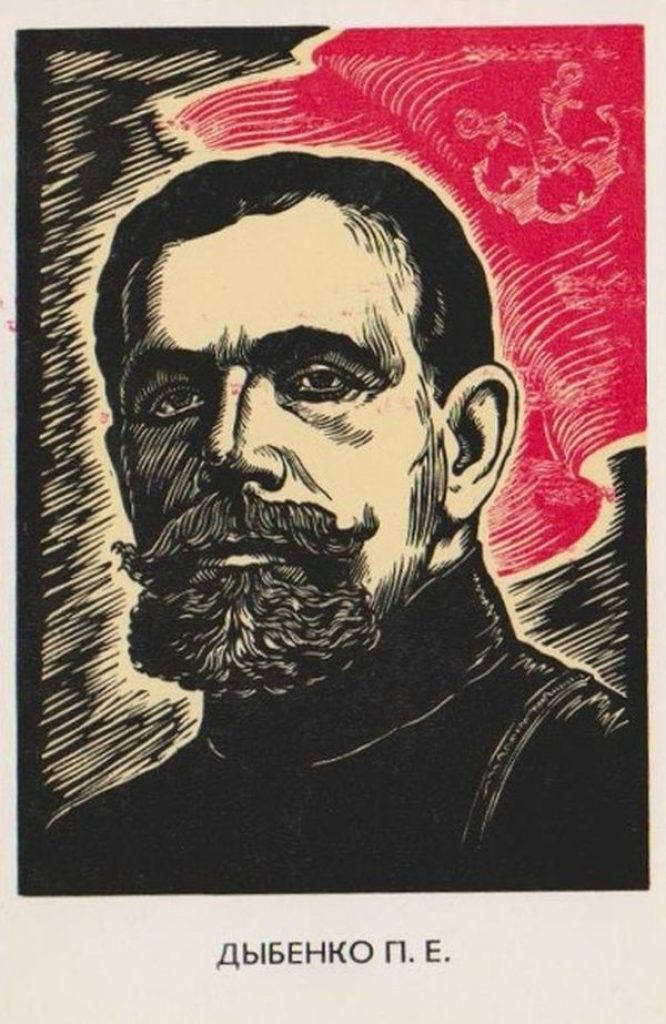
Before the revolution, Pavel Dybenko served as a shipboard electrician in the Baltic Fleet. He possessed a powerful voice, an imposing appearance and an ability to speak to the mass of sailors in language they understood. After the February Revolution, this was enough for the former enlisted man to become chairman of Tsentrobalt, the Central Committee of the Baltic Fleet.
This was not a ceremonial council subordinate to the admirals. Without Tsentrobalt’s approval, the naval command could no longer implement its most important decisions. The committee had ships, weapons and thousands of politically active sailors at its disposal. In the autumn of 1917, Dybenko sent vessels and detachments of Baltic sailors to Petrograd in support of the Bolshevik seizure of power. He was then appointed People’s Commissar for Maritime Affairs. At the age of 28, a former sailor found himself in charge of the fleet of an enormous country.
Revolutionary popularity, however, did not automatically make someone a military commander. In February 1918, Dybenko’s detachment failed to halt the advancing German forces and abandoned Narva. The people’s commissar lost his position, was arrested, expelled from the Party and brought before a revolutionary tribunal. The prosecution demanded that he be punished for the failed operation and the use of indiscriminate terror, but the court acquitted him.
Under the old regime, such a failure would probably have ended his career. The revolution allowed him to begin again. Dybenko commanded divisions and corps, participated in the capture of Crimea and helped suppress both the Kronstadt rebellion and the peasant uprising in the Tambov region. The former opponent of military discipline entered the Military Academy and later commanded several military districts.
By the mid-1930s, almost nothing remained of the former rebel. Dybenko had become part of the Soviet high command and participated in the repression of other officers. Yet his origins, past achievements and ostentatious loyalty no longer guaranteed his safety. The machine he had helped to set in motion eventually reached him as well.
Alexei Mokrousov: The Man Who Survived Several Revolutions
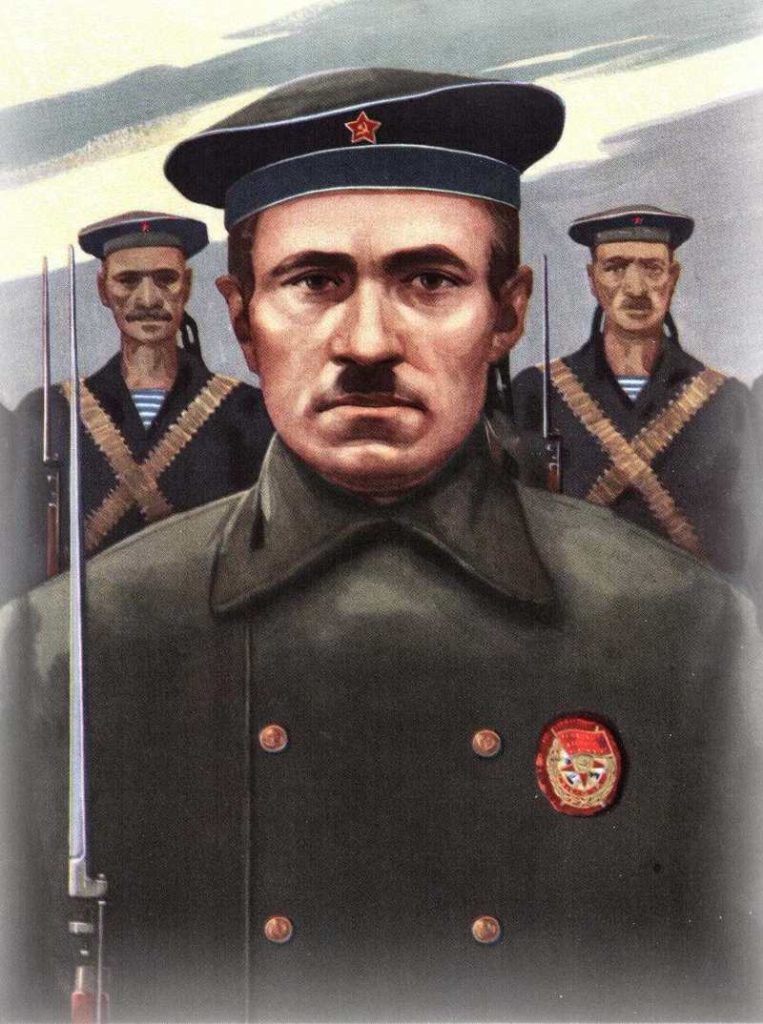
While Dybenko advanced relentlessly through the hierarchy, Alexei Mokrousov’s biography resembles an adventure novel whose author became excessively fond of unexpected plot twists. Miner, anarchist, Baltic sailor, political exile, partisan commander, participant in the Spanish Civil War, Soviet colonel and director of a tourist bureau—all of these descriptions belonged to the same man.
Mokrousov joined the anarchists during the Revolution of 1905. In 1908, he was conscripted into the navy and assigned to the destroyer Prytky, but four years later he was arrested for revolutionary activity. He managed to escape and wandered through several countries until 1917. Mokrousov returned to Russia after the fall of the monarchy.
Contrary to the later Soviet version of his biography, he was not yet a committed Bolshevik. Mokrousov remained an anarchist and joined the Communist Party only in 1928. This did not prevent him from cooperating with the Reds. During the Russian Civil War, he commanded detachments in Ukraine and Crimea, and in 1920 became leader of the Crimean Insurgent Army, which united local “Red-Green” partisan groups.
After the war, Mokrousov moved into administrative and economic work, led an expedition to Kolyma and directed the Crimean State Nature Reserve. In 1936, he was sent to Spain, where the former sailor served as a military adviser on the Aragon Front. He safely returned to the Soviet Union at the height of the Great Terror—and survived once again.
In 1941, Mokrousov became commander of the Crimean partisans. A conflict soon erupted over his methods: he was accused of drunkenness, arbitrary leadership and executions without trial. In the summer of 1942, he was recalled from Crimea and removed from his position. In another period, such accusations might have led to his execution, but following an investigation Mokrousov was returned to military service. He fought with regular units, received the rank of colonel and reached the Balkans.
After the war, the former anarchist managed a power station and a tourist bureau in Crimea. He died of natural causes in 1959. Of the five men in this story, Mokrousov was the only one to survive the revolution, the Civil War, Stalin’s purges and another major war.
Sailor Zheleznyak: A Bolshevik Hero Who Was Not a Bolshevik
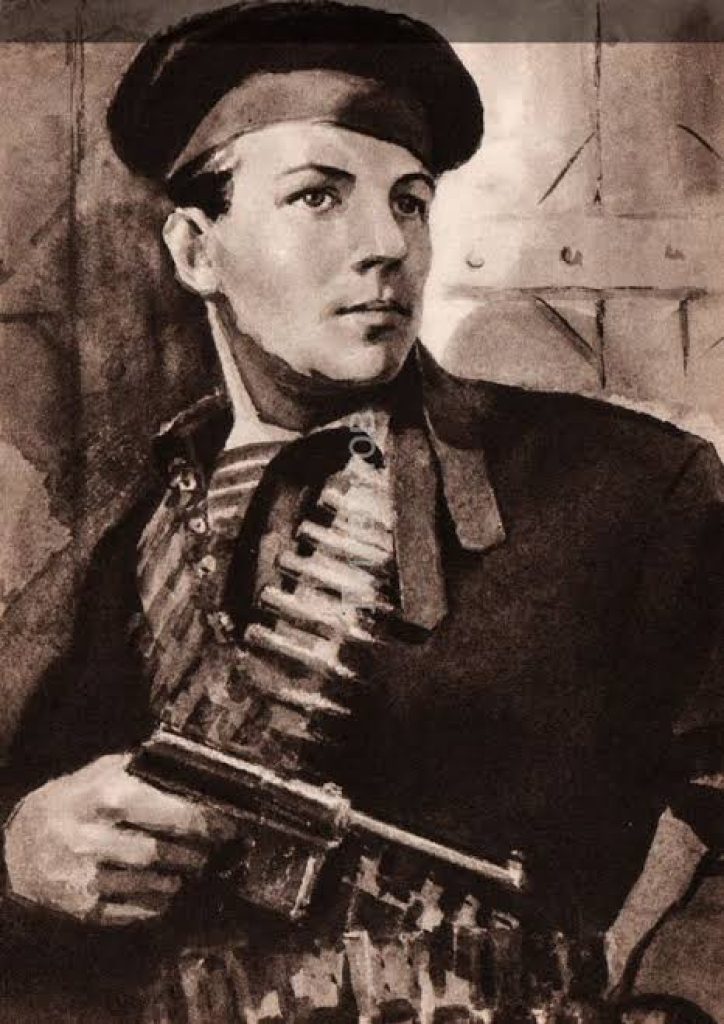
Anatoly Zheleznyakov became forever associated with a single phrase. On the night of January 5–6, 1918, he entered the hall of the Tauride Palace and demanded that the meeting of the Russian Constituent Assembly be brought to an end. Soviet history reduced his words to a famous declaration: “The guard is tired.”
In reality, the statement was longer. According to the official transcript, the commander of the guard announced that he had received instructions to clear the hall because his men were tired. But the shortened version was far more effective: it expressed the armed revolution’s contempt for politicians who continued arguing from the rostrum.
Soviet mythology transformed Zheleznyakov into a model Bolshevik, although he was a committed anarchist. In 1917, he helped defend the Durnovo villa occupied by anarchists, threw bombs at Cossacks, was sentenced by the Provisional Government to 14 years of hard labor and escaped from prison. After the October Revolution, his naval detachment proved useful to the Bolsheviks: the new regime needed armed men who were not inclined to spend too much time debating orders.
The alliance soon began to fracture. Zheleznyakov’s detachment was accused of drunkenness, robbery and insubordination and was subsequently disarmed. In the summer of 1918, Zheleznyakov sympathized with the uprising of the Left Socialist Revolutionaries, clashed with the Soviet command and spent some time hiding from arrest. It was a strange outcome: the man who had dispersed the Constituent Assembly in the name of Soviet power was almost immediately outlawed by that same power.
The Civil War made him useful again. Zheleznyakov commanded an artillery battery, worked underground in Odesa and later led a brigade of armored trains. In the summer of 1919, his armored train fought against General Anton Denikin’s forces. Zheleznyakov was badly wounded in one of the battles and died on July 26, before reaching his 25th birthday.
He died early enough to avoid a final confrontation with the victorious system. Soviet culture was therefore able to remove the anarchism, conflicts and periods as a fugitive from his biography, leaving only the sailor’s cap, the armored train and the famous phrase.
Feodosy Shchus: A Sailor in Makhno’s Army

Feodosy Shchus looked as though he were deliberately creating a future legend about himself. The former Black Sea sailor wore a hussar uniform, a sailor’s cap, long hair and an impressive collection of weapons. Contemporaries remembered him as a physically powerful man who practiced wrestling, French boxing and jujutsu.
In 1915, Shchus was conscripted into the Black Sea Fleet and served aboard the battleship Ioann Zlatoust. After the revolution, he returned to Yekaterinoslav province and formed his own anarchist detachment. In history, however, Shchus is remembered primarily as one of Nestor Makhno’s closest associates.
Behind his extravagant appearance stood an experienced field commander. Shchus led cavalry units, commanded a brigade and served on the staff of the Revolutionary Insurgent Army of Ukraine. The Makhnovists alternated between making agreements with the Bolsheviks against a common enemy and once again being declared dangerous bandits. For Shchus, this war of shifting alliances and betrayals continued for almost four years.
By 1921, the major White armies had been defeated, allowing the Soviet government to turn against its former allies. Makhno’s army had been reduced to small mobile detachments attempting to escape pursuit across the Ukrainian steppe. In June, Shchus was killed near Nedryhailiv in a battle against the 8th Cavalry Division of the Red Cossacks. A more dramatic version claimed that Makhno himself shot him after Shchus proposed ending the struggle, but there is no reliable evidence for this account.
Shchus was 28 years old. There might have been a place for such a sailor on a Soviet propaganda poster, but there was no longer a place for him in the Soviet version of history. He had chosen the wrong revolution.
Stepan Petrichenko: The Sailor Who Rebelled Against the Victors
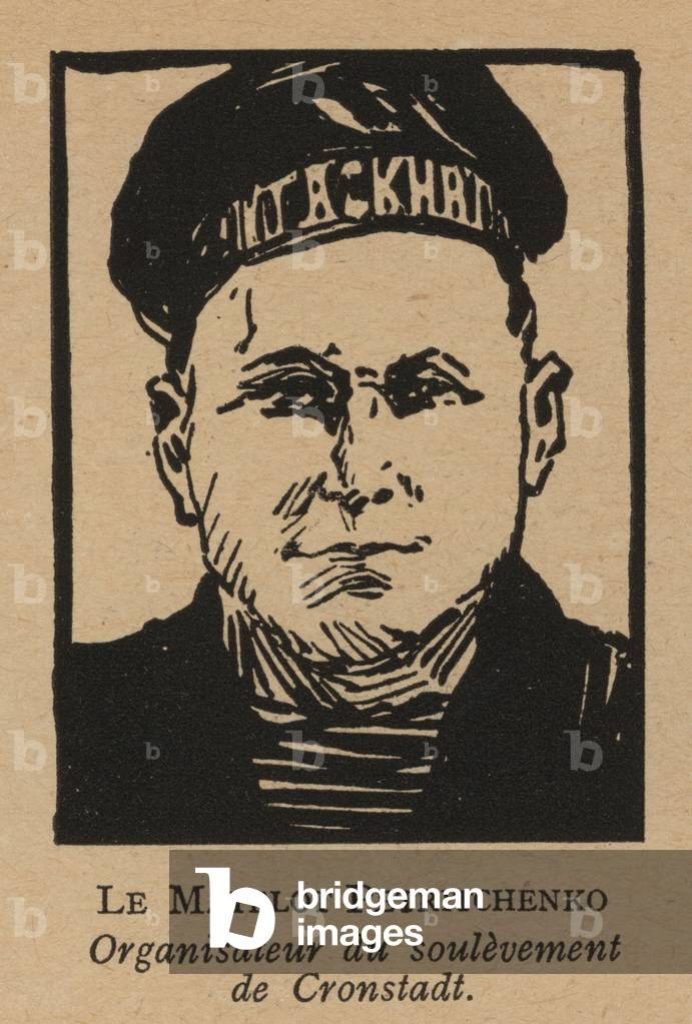
Stepan Petrichenko served as a senior clerk aboard the battleship Petropavlovsk. In late 1917, he participated in the creation of the eccentric Soviet Republic of Soldiers and Fortress Builders on the island of Naissaar near Reval. For several months, the island garrison attempted to live according to its own revolutionary rules, until the advancing German army brought the experiment to an end.
Petrichenko assumed his most important historical role three years later. By the spring of 1921, the sailors of Kronstadt—once celebrated as the pride of the revolution—had become disillusioned with War Communism, food requisitioning and the growing power of the Party apparatus. They demanded new elections to the soviets, freedom of speech for left-wing political movements and the release of political prisoners.
Petrichenko became chairman of the Provisional Revolutionary Committee. The Bolsheviks declared the uprising a White Guard conspiracy and sent Red Army units to storm the fortress. The intersection between the lives of these men was almost perfectly symbolic: among the commanders suppressing the rebellious sailors was Pavel Dybenko, the former chairman of Tsentrobalt and one of the most famous leaders of the revolutionary sailors in 1917.
After the fall of Kronstadt, Petrichenko escaped across the ice into Finland. There he worked as a carpenter and maintained contacts with other émigrés. In 1922, the former leader of the uprising began cooperating with Soviet intelligence. He probably hoped to earn permission to return home, but permission never came. Published documents confirm his complicated simultaneous connections with émigré organizations and Soviet representatives.
During the Second World War, Petrichenko was arrested by the Finnish authorities. After Finland signed an armistice with the Soviet Union, he was handed over to the Soviets. The former secret collaborator was accused of membership in a counterrevolutionary organization and links to Finnish intelligence and sentenced to ten years in the labor camps. On June 2, 1947, he died while being transferred from a camp near Solikamsk to Vladimir Prison.
The Men Who Did Not Fit on the Poster
Soviet propaganda created the ideal revolutionary sailor. He always knew what he was fighting for, unquestioningly followed the Party’s decisions and, after victory, assumed his proper place within the new state.
The real sailors were different. Dybenko transformed himself from a rebel into a military-district commander and died in the purges. Mokrousov spent his life moving between anarchism, Soviet service, partisan warfare and civilian administration. Zheleznyakov proved too anarchic even for the government he had helped. Shchus joined Makhno. Petrichenko led the Kronstadt sailors—once praised as the revolution’s strongest supporters—in rebellion against the Bolsheviks.
That was precisely why sailors played such an important role in 1917. They were not simply supporting characters serving political parties. Armed, technically trained, accustomed to collective life aboard ships and deeply hostile to the old discipline, they regarded themselves as an independent revolutionary force. The Bolsheviks managed to direct that force against the Provisional Government, but they could not completely subordinate it until after the Civil War.
On Soviet posters, the revolutionary sailor remained young, fearless and forever marching toward the future. The real men behind that image rarely lived long enough to grow old.