Ka-25 Gormon (NATO designation). The unloved stepchild of Soviet helicopter design

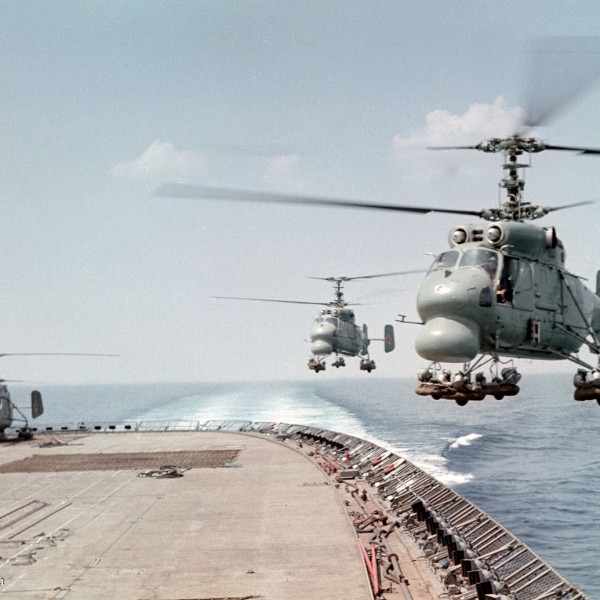
The Soviet aviation industry took pride in many achievements—from powerful bombers to high-speed fighters. However, in the history of helicopter design, there is one machine that remained in the shadows for a long time, despite its outstanding technical solutions and widespread use. This is the Ka-25 “Gormon” helicopter, an unjustly forgotten but unique project in its own right that became an important milestone in the development of Soviet carrier-based aviation.
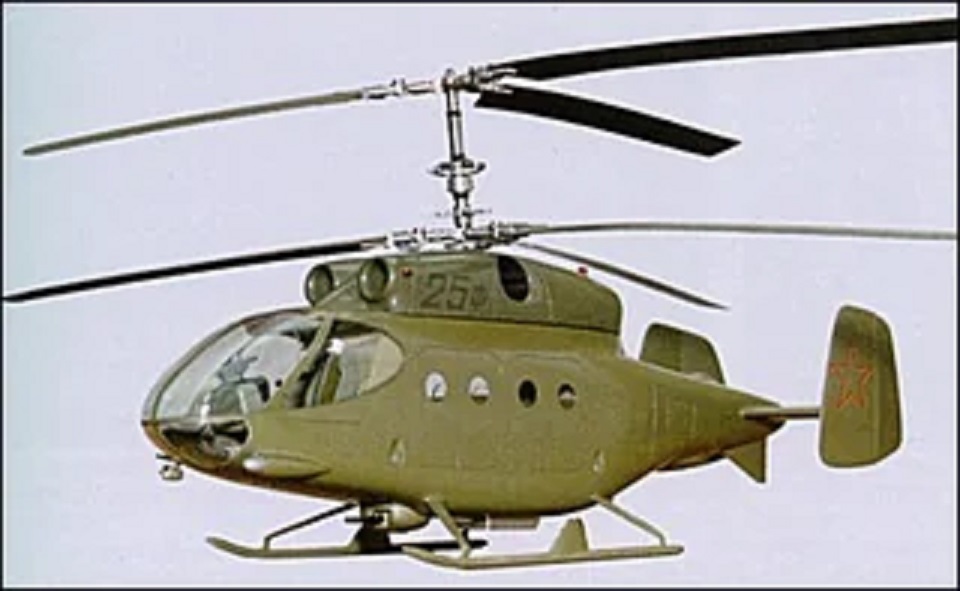
Preliminary design model of the Ka-25
The First Sign of Deck-Based Aviation
The Ka-25 made its maiden flight on June 20, 1961. Developed at the design bureau led by Nikolai Ilyich Kamov, it became the Soviet Union’s first dedicated ship-based helicopter. It served in the Soviet Navy for nearly 30 years, and its variants were also actively used in civilian applications—ranging from logging to space exploration.
Nikolai Kamov, born in 1902 and a graduate of the Tomsk Technological Institute in 1923, began his career in aviation with autogyros. As early as 1929, together with N.K. Skrzhinsky, he created the “Red Engineer”—the first Soviet autogyro. In 1940, Kamov was appointed chief designer of the helicopter design bureau, which was later named after him. It was he who laid the foundations for the Soviet school of helicopter design with a coaxial rotor configuration—a solution that eliminated the need for a tail rotor and significantly reduced the aircraft’s overall dimensions.
Technical Features: Compactness and Reliability
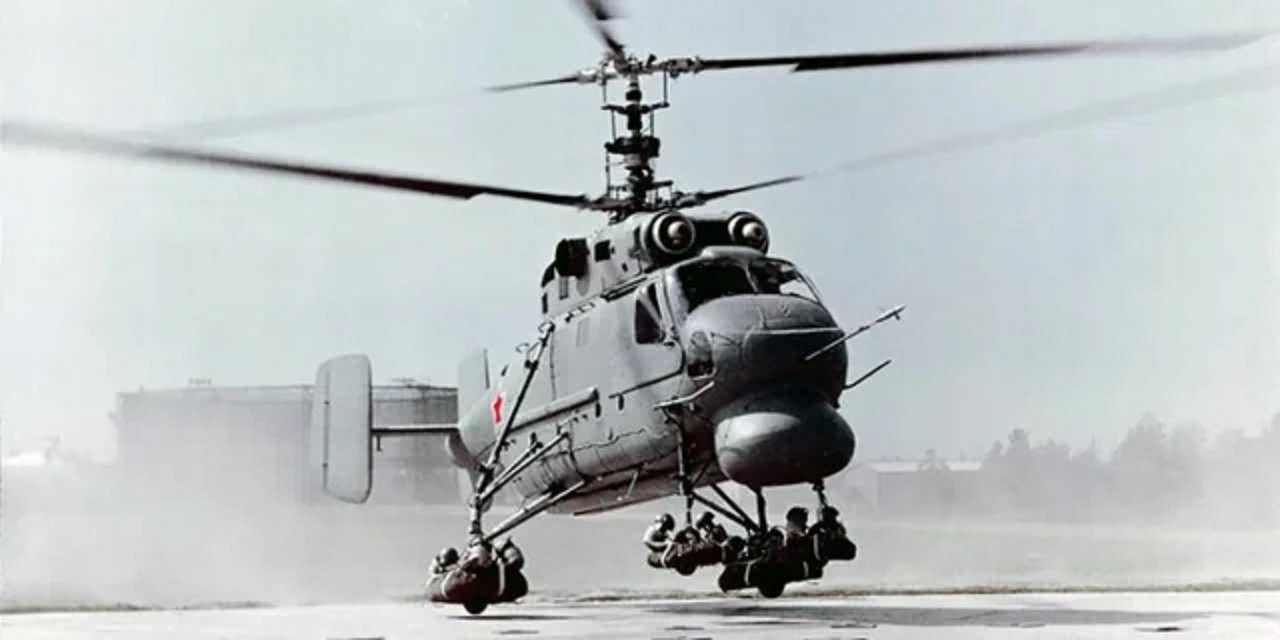
The Ka-25 became a prime example of this philosophy. Its coaxial rotors ensured a compact design—a critically important feature for carrier-based aviation. The helicopter was equipped with two GTD-3F gas turbine engines rated at 900 l.s., which were later replaced with more powerful GTD-3M engines (1,000 l.s.). The need for such an upgrade highlighted the design’s inherent shortcomings: a lack of thrust, especially when carrying a combat load or in rough seas.
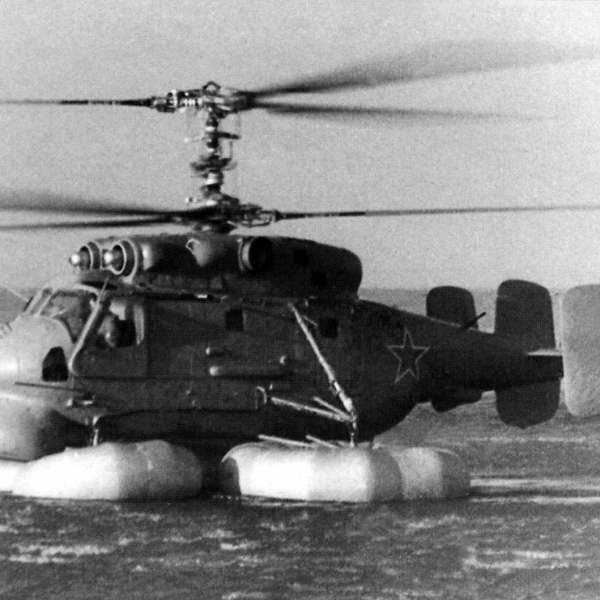
Nevertheless, the Ka-25 was remarkably stable: it could land on the deck with a pitch of up to 10° and a roll of 3°, even in winds of 18 m/s. Moreover, in emergency situations, the crew could land directly on the water—thanks to the pressurized, multi-section cylinders in the landing gear struts, which filled with compressed air in a matter of seconds.
The flight performance was modest but adequate for the mission:
- Takeoff weight: 7,200 kg
- Cruising speed: 195 km/h
- Maximum speed: 220 km/h
- Flight range: up to 650 km
- Practical ceiling: 4,000 m
The crew consisted of two pilots, and the aircraft’s payload capacity allowed it to carry 12 passengers or 1,300 kg of cargo.
Variations: From Hunting Submarines to Rescuing Astronauts
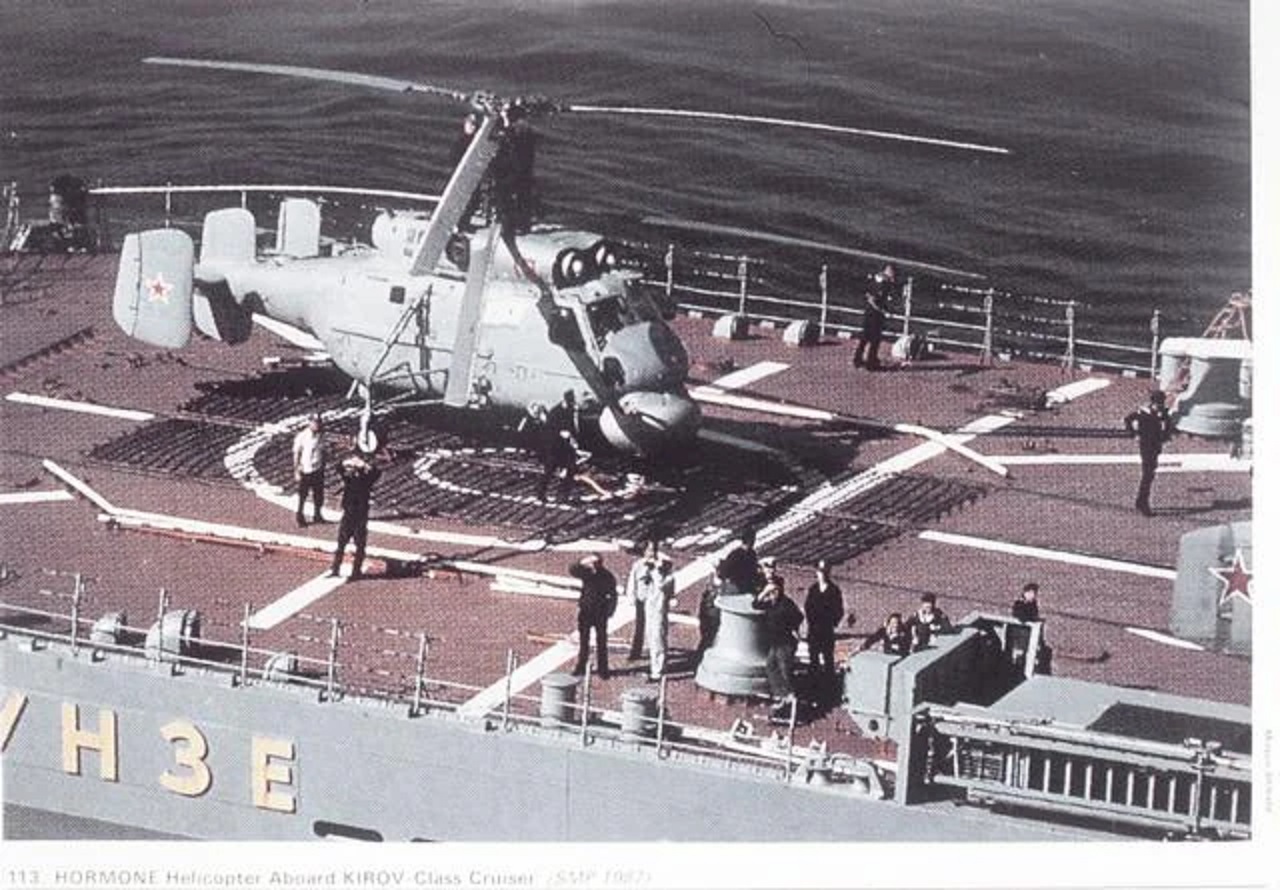
Serial production of the Ka-25 began in 1965 at the Ulan-Ude Aviation Plant No. 99 and continued until 1973. During this time, approximately 460 helicopters were produced in 18 different variants—a rare instance of such diversity in Soviet practice.
The base model was the Ka-25PL—an anti-submarine helicopter designed to combat NATO nuclear submarines. It carried a hydroacoustic station, radio hydrophones, depth charges, and torpedoes, as well as a data-processing system that allowed it to respond quickly to information from ships.
The Ka-25S—a target-acquisition helicopter—became the “eyes of the fleet.” Its omnidirectional onboard radar could detect targets at distances of up to 250 km, and its automatic data transmission system allowed for the correction of shipboard artillery and missile fire. This variant also participated in tests of intercontinental ballistic missiles, tracking the reentry of warheads into the ocean.
The Ka-25BT—a minesweeping tug used for clearing waterways—holds a special place in history. In 1974–1975, following the end of the Arab-Israeli War, a Soviet Ka-25BT participated in an international operation to clear mines from the Suez Canal, demonstrating a high level of cooperation and technical sophistication.
Civilian Career: From Forests to Space
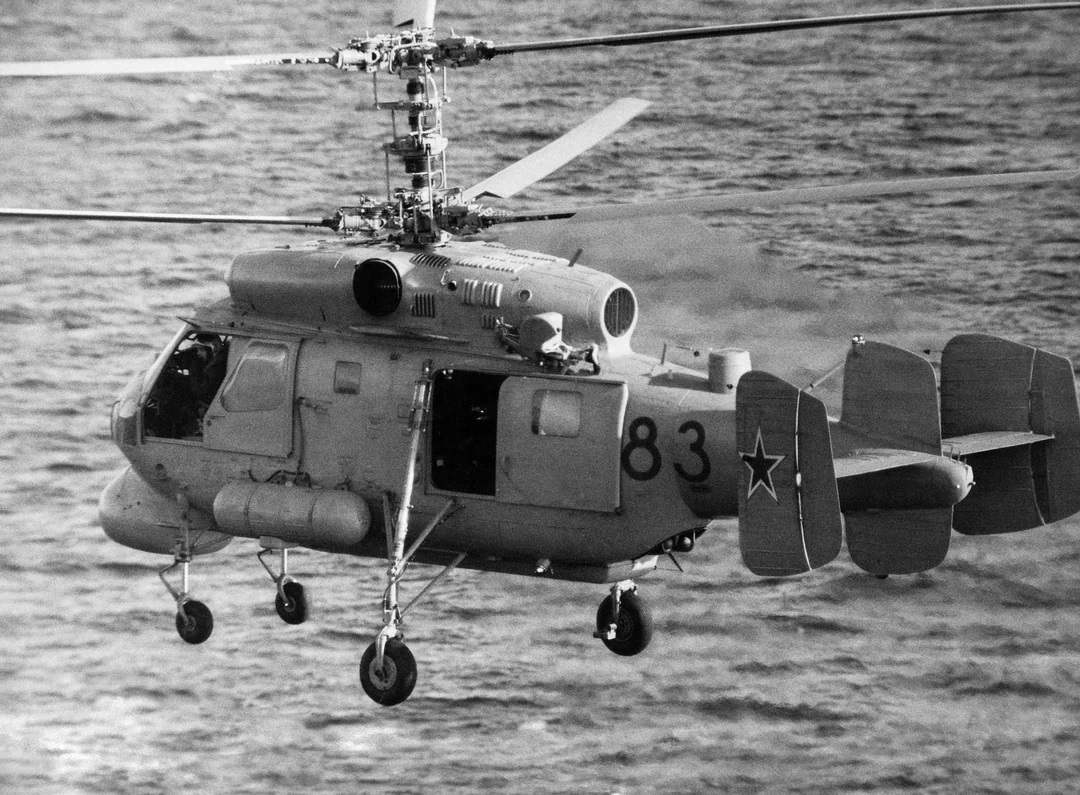
The Ka-25 was not exclusively a military aircraft. Its civilian versions were just as in demand.
The Ka-25K—“air crane”—became a true lifesaver for hard-to-reach regions. A special operator’s cockpit in the nose and an external sling system allowed it to transport loads of up to 2 metric tons—whether construction materials, equipment, or lumber.
In agriculture, the Ka-25 was used to spray fields, and in its medical version, it was used to evacuate casualties, including up to four patients in lying positions.
However, the most romantic chapter in the history of the Ka-25 is its role in space exploration. From 1968 to 1970, four Ka-25PS search-and-rescue helicopters were stationed in the Indian Ocean, where they searched for the descent modules of the Zond-5 and Zond-8 programs — the first spacecraft in history to fly around the Moon and successfully return to Earth.
The Forgotten Heir
Despite its widespread use and technical achievements, the Ka-25 rarely received the recognition it deserved for its contributions. Perhaps this was due to its unassuming appearance, “boxy” design, or excessive specialization. Perhaps it was because it was replaced by the more advanced Ka-27, which overshadowed its predecessor in the eyes of the military.
Nevertheless, Nikolai Kamov was awarded the USSR State Prize specifically for the development of the Ka-25. The helicopter itself became the foundation not only for subsequent military models but also for the civilian Ka-26—one of the most widely produced and successful Soviet general-purpose helicopters.
Conclusion
The Ka-25 “Gormon” is the story of a helicopter that accomplished a great deal but received little recognition. It wasn’t a “darling” of the press or a “star” of parades, but it was reliable, versatile, and truly indispensable. In the harsh conditions of the sea, in the remote taiga, and under the moonlit skies of the Indian Ocean—the Ka-25 quietly went about its work. And perhaps that is precisely where its true glory lies.
based on — https://ruavia.su/kamov-ka-25-the-first-soviet-combat-helicopter/