The Republic RC-3 Seabee—an aviation legend: a four-seat amphibious aircraft designed for fishing, recreation, and adventure

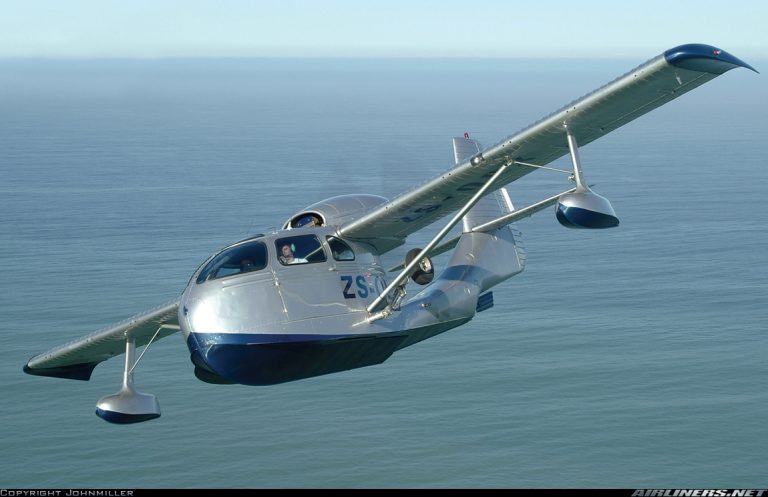
One of the most unusual aircraft in the history of light aviation is the Republic RC-3 Seabee—an American amphibious aircraft capable of taking off and landing on both land and water. This aircraft has become popular among private pilots, adventure seekers, and aviation enthusiasts thanks to its versatility and distinctive design.
How Seabee Came to Be
The Republic RC-3 Seabee was designed by engineer Percival Hopkins “Spence” Spencer and manufactured by the Republic Aviation Company in the United States immediately after World War II. The prototype made its first flight on December 1, 1945, and mass production took place from 1946 to 1947.

The aircraft was developed amid high demand for light civil aircraft in the postwar period. Republic sought to make it as sturdy, affordable, and easy to manufacture as possible, so the design utilized large, simplified components and a minimum of internal parts.
Design and Features
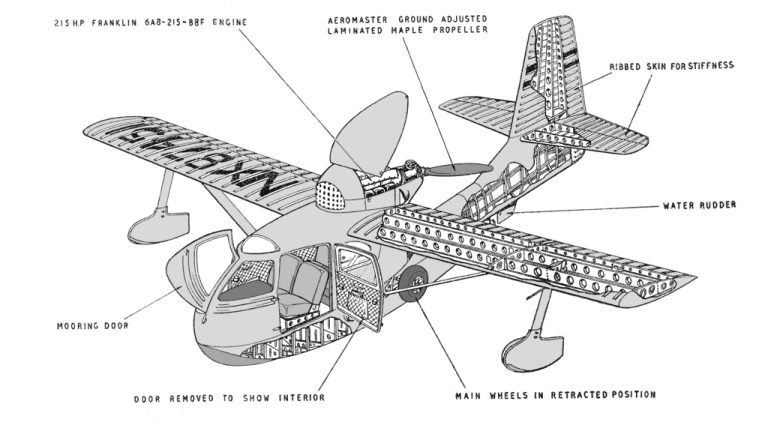
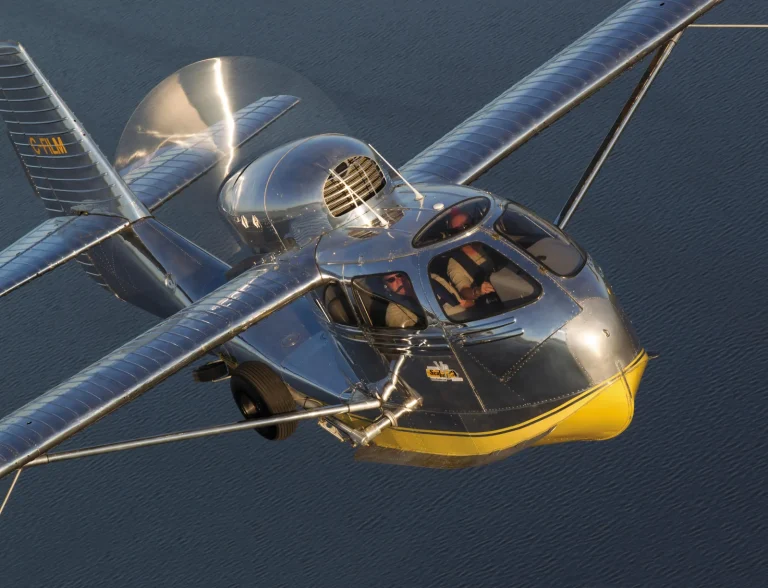
The RC-3 Seabee is a high-wing aircraft with an all-metal monocoque fuselage, which allows it to function as a seaplane. Key design features:
- A boat-shaped hull with a keel that provides good buoyancy and the ability to take off from the water;
- A retrograde (push-type) propeller system with the engine mounted above the cockpit, which reduces the risk of splashing and makes operation on the water easier;
- A retractable landing gear that allows the aircraft to use airports and bodies of water without any additional modifications;
- A spacious four-seater with a roomy trunk.
This configuration made the Seabee unique among the light aircraft of its time: it combined the characteristics of a seaplane with those of a classic light transport aircraft.
Technical Specifications
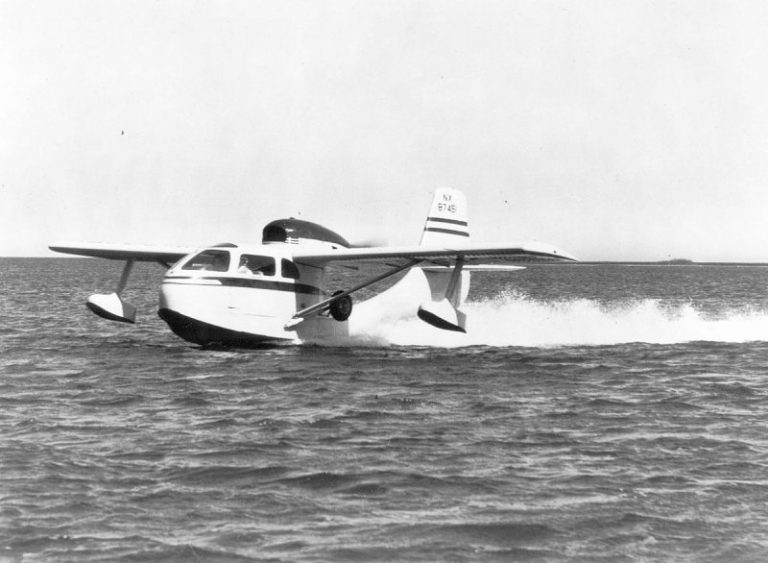
Republic RC-3 Seabee (A19840676000).
The Seabee was powered by a Franklin 6A8-215-B8F six-cylinder piston engine with an output of approximately 215 l. s., which drove a two-bladed propeller in a pusher configuration.
The machine’s main specifications are as follows:
- Wingspan: about 11.5 m;
- Length: approximately 8.5 m;
- Maximum speed: about 190 km/h;
- Cruising speed: approximately 165–170 km/h;
- Flight range: approximately 850–900 km;
- Practical ceiling: approximately 12,000 feet (~3,650 m).
These characteristics make the Seabee suitable for extended journeys through remote areas, especially where there are no airfields but there are lakes or rivers.
Where and How Seabee Was Used
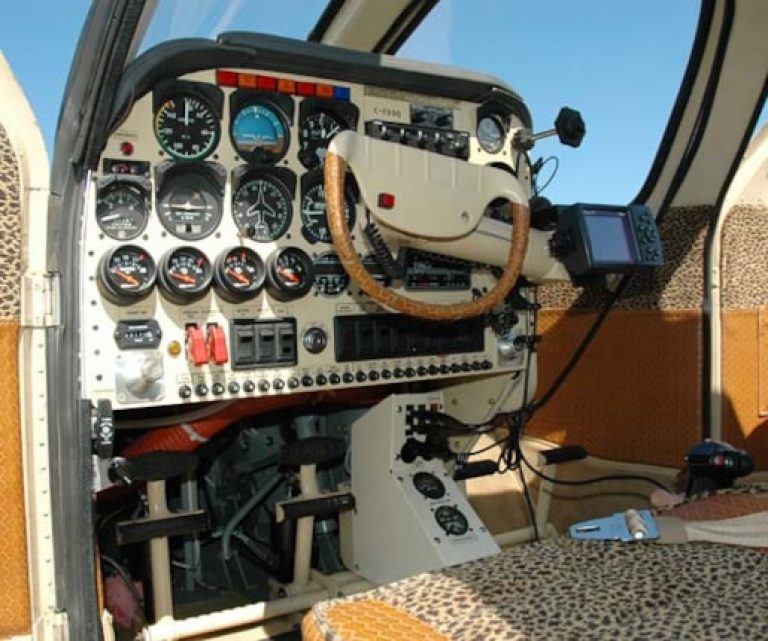
Although the project was developed for civilian use, it also had practical applications in several military branches. Various versions of the aircraft were operated by the U.S. Air Force prior to the establishment of the Air Force as a separate branch of the military, and were also used by countries such as Israel and Vietnam.
Among civilian pilots, the Seabee became popular in Canada, the United States, and other countries with numerous bodies of water and remote settlements, where its ability to land on water gave it a clear advantage over conventional light aircraft.
Why Seabee Became a Cult Classic
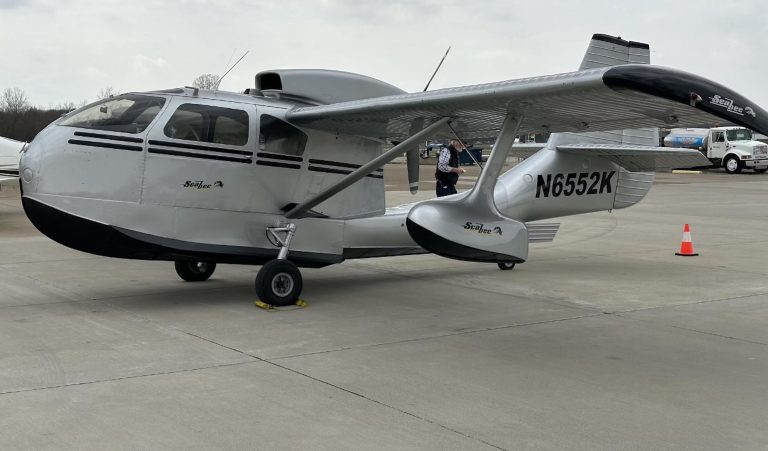
Despite its relatively short production run—only about 1,060 aircraft were built by the end of 1947—the Seabee left a significant mark on aviation history. It was distinguished by:
- simplicity of design and reliability;
- versatility of use, ranging from leisure travel to commercial air transport;
- operational flexibility that many other light aircraft of that era lacked.
Even today, dozens of Seabees continue to be flown by aviation enthusiasts, are being restored from spare parts, and participate in various air shows and sightseeing flights over water and land, demonstrating the durability and appeal of the original concept.
Conclusion
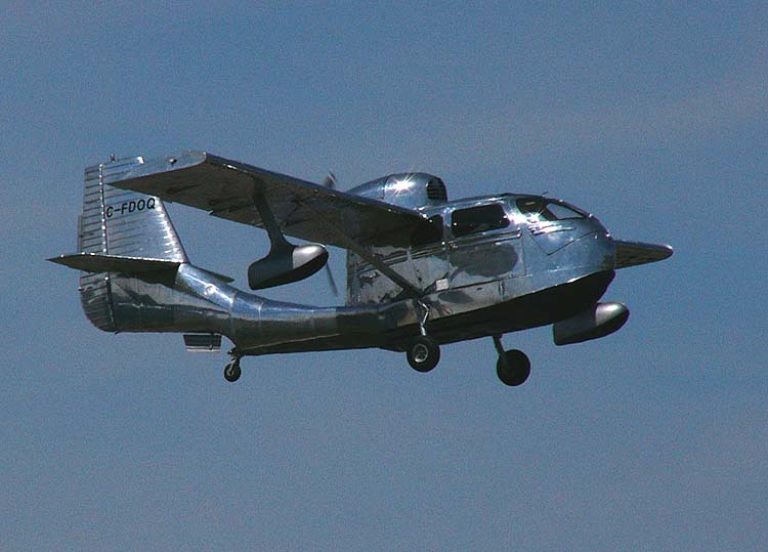
The Republic RC-3 Seabee is not just an airplane, but a symbol of a transitional era in aviation. It was developed after the war as an affordable and practical amphibious aircraft capable of opening up new horizons for amateur pilots, anglers, tourists, and wildlife explorers. Its unique combination of water and air capabilities, reliable design, and historical significance make it a standout in the history of mid-20th-century aviation.