An article from the “Main Airfield” channel on Yandex Zen, dated September 21, 2018.
Most agricultural aircraft are built according to classic designs. These are low-wing monoplans or biplanes with a box-shaped fuselage that houses the chemical spray tanks. For example, the An-2—known to every resident of the post-Soviet space as the “corn plane.” But throughout aviation history, there have been agricultural aircraft designs that stood out for their appearance. Today, we’ll talk about one of them, which hails from faraway Australia.
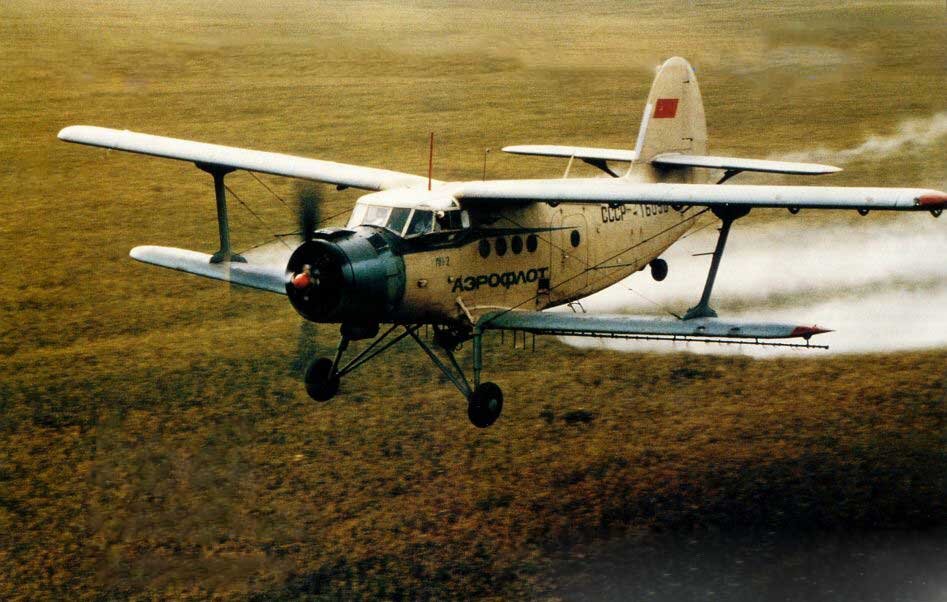
An-2 aircraft irrigating a field. 1978. Photo: Public domain
In the early 1960s, the Australian aircraft manufacturer Transavia Corporation began work on a project to develop an agricultural aircraft. They invited designer Luigi Pellarini to join the project and tasked him with creating an inexpensive and reliable aircraft that could be used both in agriculture and for transporting passengers and small cargo.
To tackle this challenge, Pellarini took the path of least resistance. He had previously developed an agricultural aircraft in New Zealand—the unusual Bennett PL-11 Airtruck. It was the PL-11 that served as the basis for the new project and largely determined its “sophisticated” appearance. The aircraft was named the Transavia PL-12 Airtruk, with the word “airtruck” deliberately altered to avoid legal claims from the Bennett company.
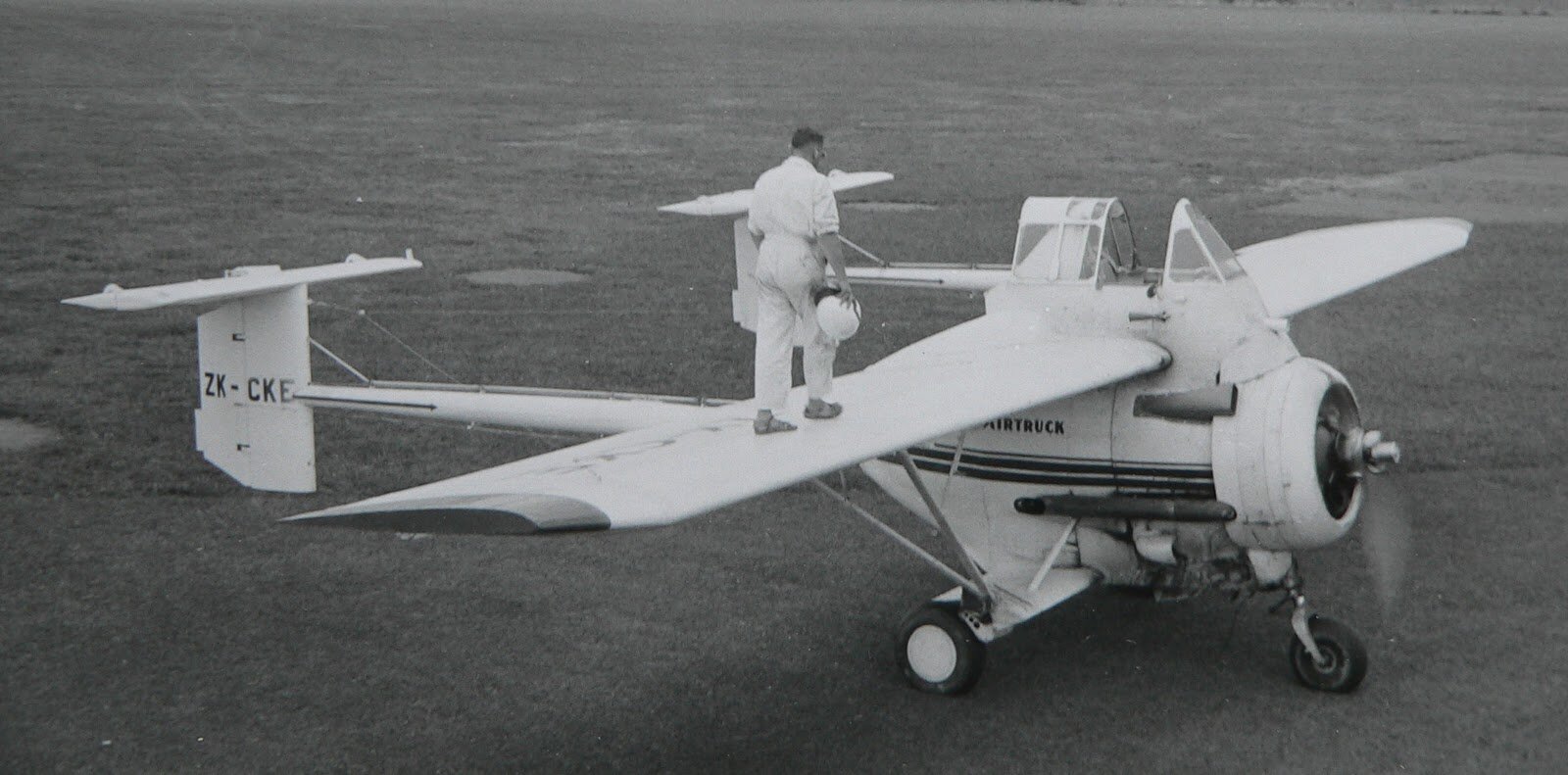
Bennett PL-11 Airtruck. Photo: nzcivair.blogspot.com
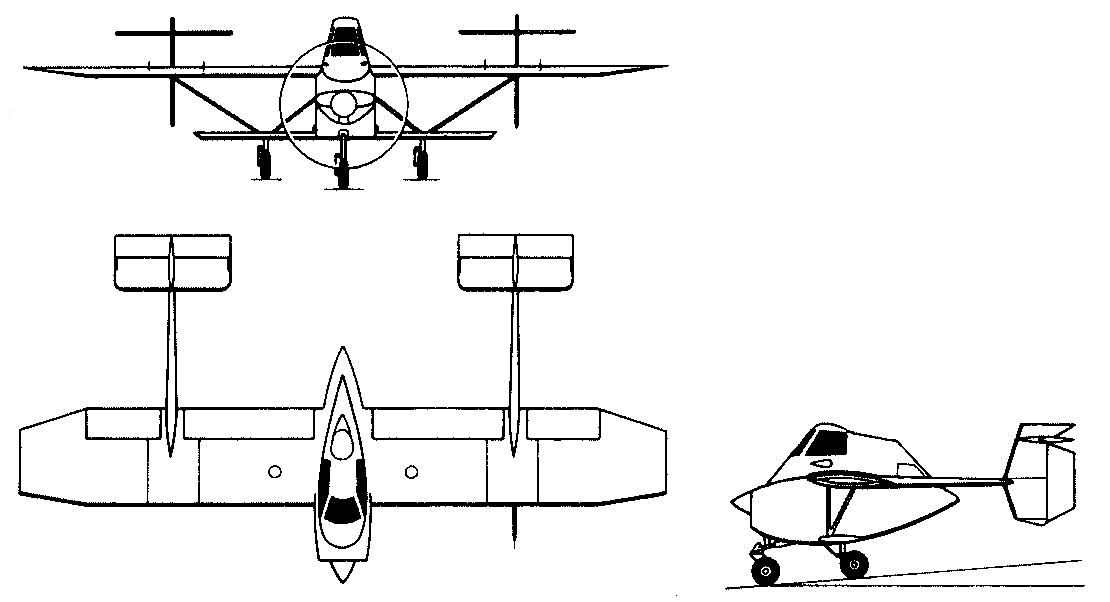
Transavia PL-12 Airtruk. Renderings. Photo: aviastar.org
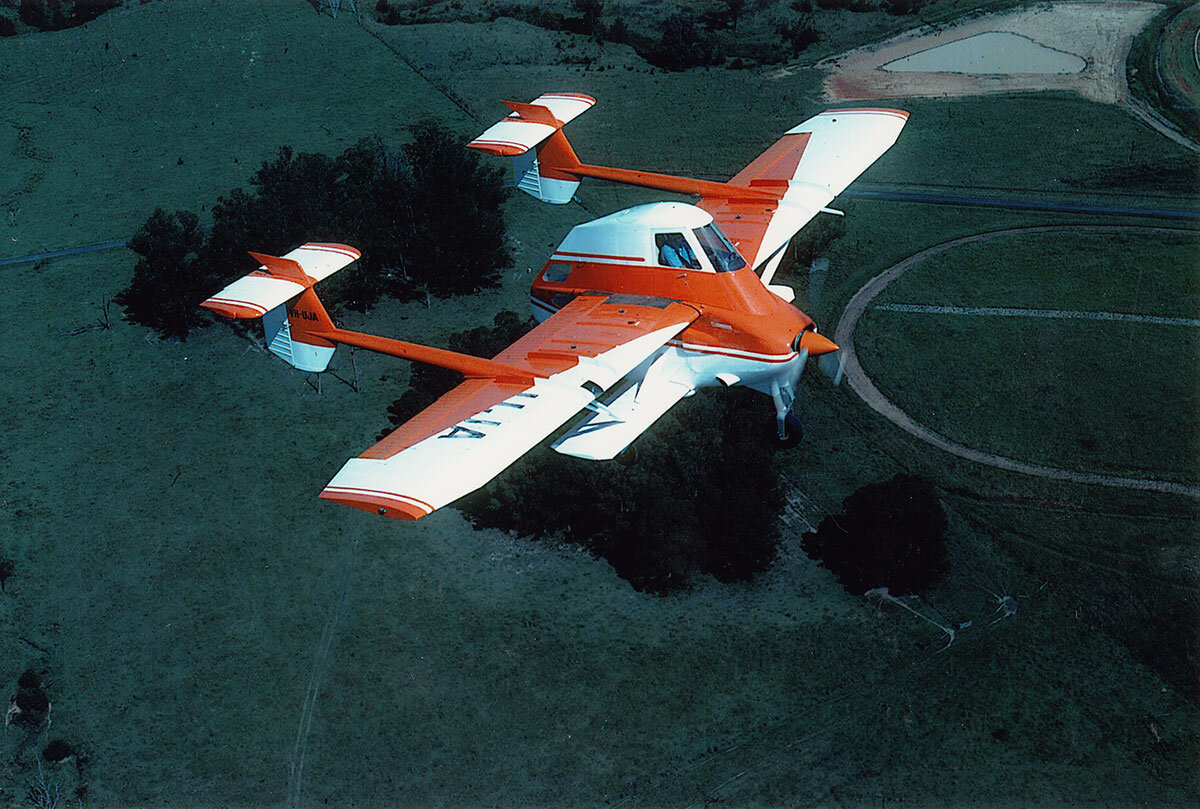
The PL-12 was smaller than its predecessor but visually remained very similar to it. Structurally, it was a one-and-a-half-wing aircraft with an unusual two-beam tailplane that was not connected by a crossbeam. A large tank holding 818 liters of liquid chemicals or 910 kilograms of dry chemicals occupied most of the fuselage. The high-mounted pilot’s cockpit provides the much-needed good visibility.
The fuselage’s truss structure is welded from steel tubes and clad with sheet metal. To simplify the design, the tricycle landing gear is fixed. The engine compartment, housing a Continental IO-520-D engine, is located beneath the cockpit.
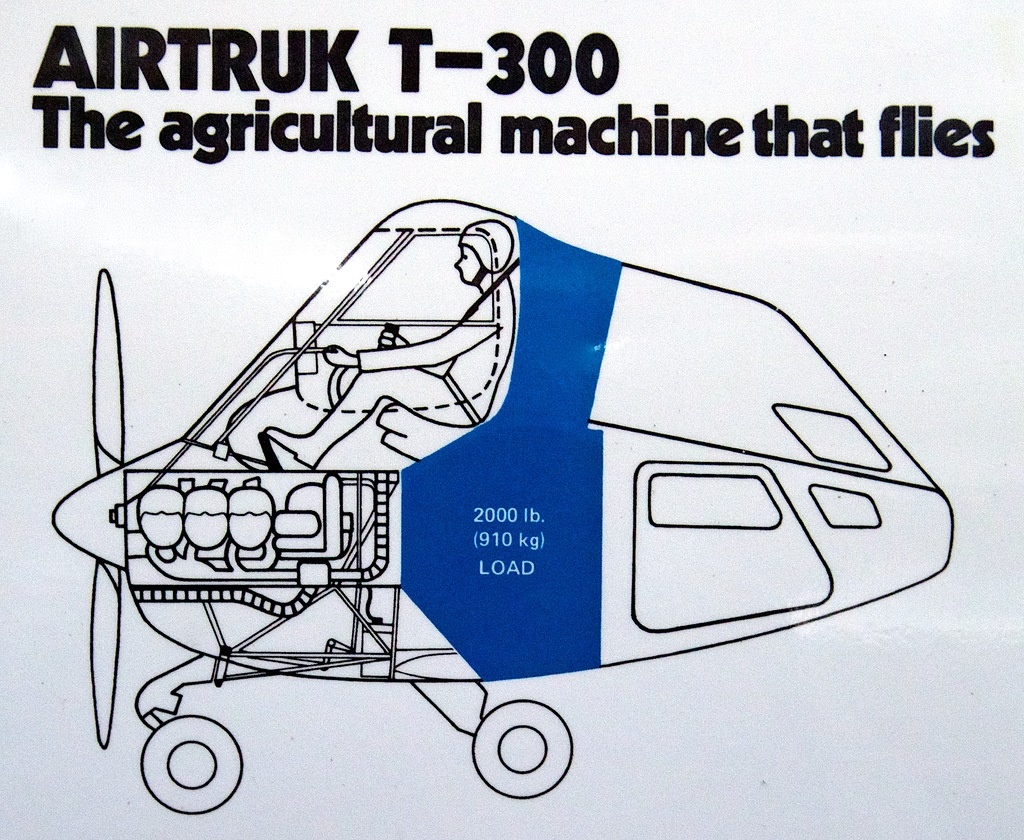
Layout of the Transavia PL-12 Airtruk. Photo: khmelikvictor.livejournal.com
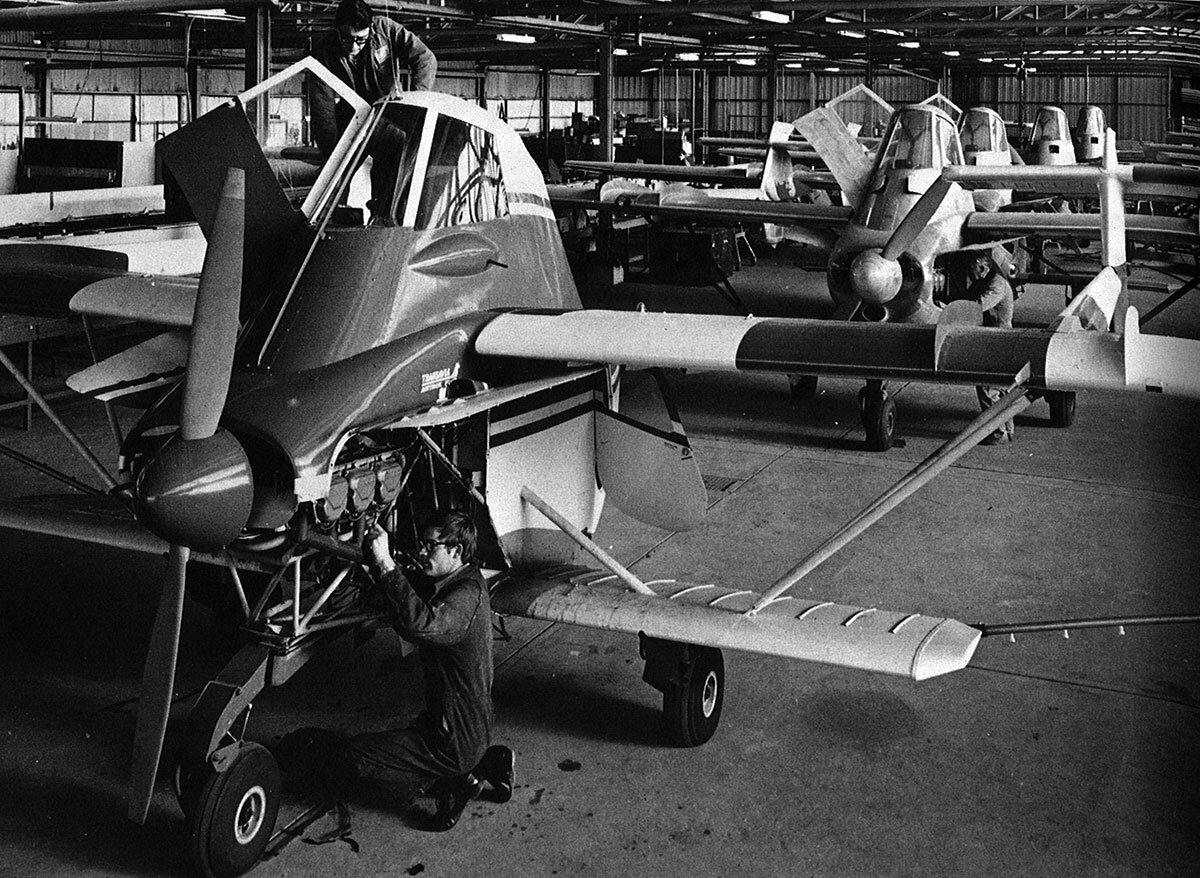
Transavia PL-12 Airtruk assembly. Photo: transfield.com.au
The 12-meter wingspan provided excellent lift but limited the aircraft’s maneuverability. On the other hand, the Transavia PL-12 Airtruk did not need to make turns or perform aerobatic maneuvers to carry out its missions. The PL-12 could cover a distance of 530 kilometers at a cruising speed of 175 km/h at an altitude of 3,200 meters. Of course, in practice, its operating altitudes and speeds were usually much lower.
The Airtruk made its first flight on April 22, 1965. The unusual design led to certain problems, which were identified during flight testing. It took a full year to make the necessary modifications, and by the end of 1965, the aircraft was ready to undergo certification testing.
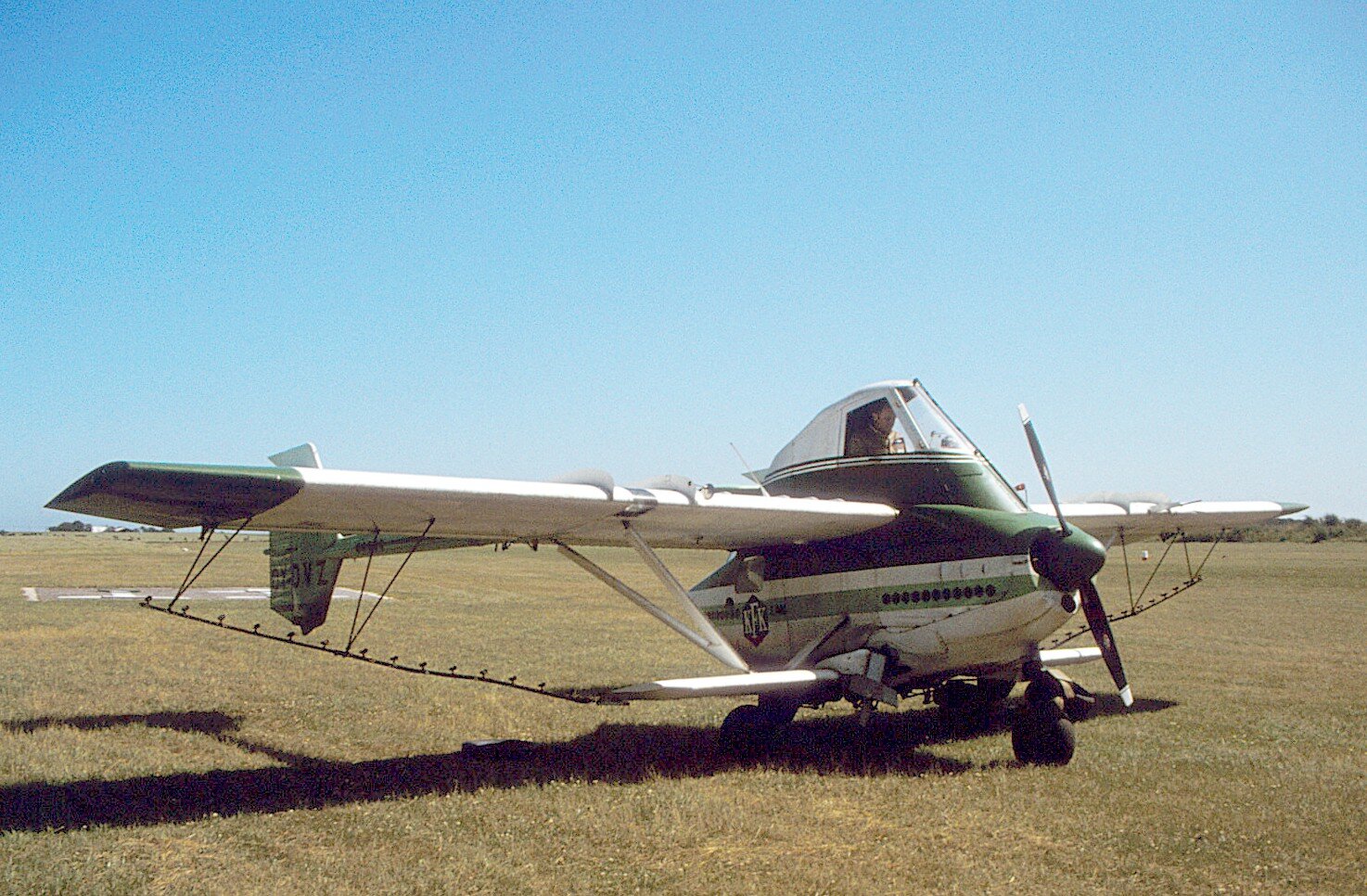
Transavia PL-12 Airtruk equipped with a sprinkler system. Photo: Joost J. Bakker
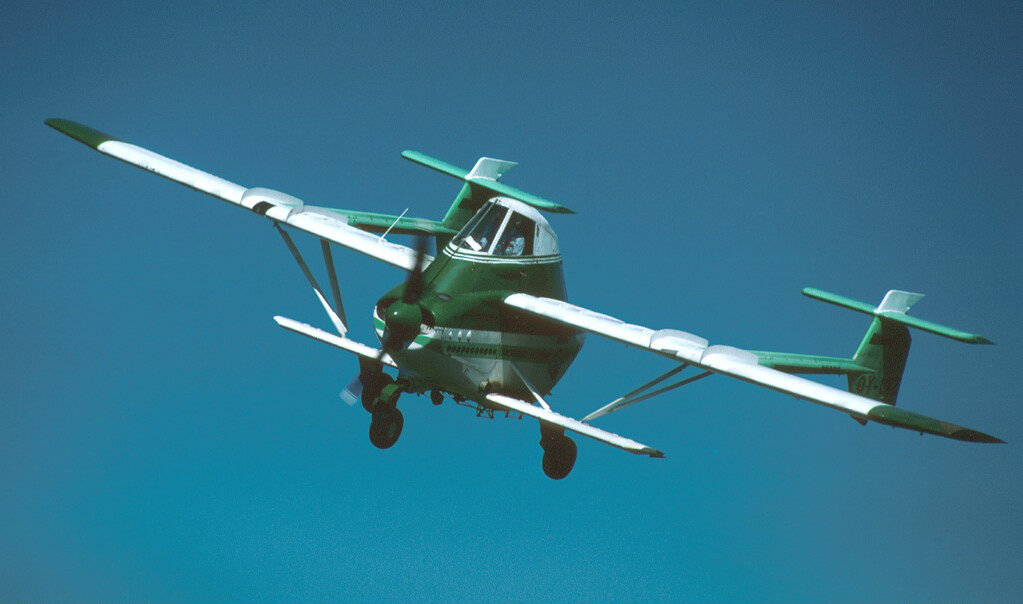
Transavia PL-12 Airtruk in flight. Photo: Eric Frikke
On February 10, 1966, the new aircraft received its airworthiness certificate, and mass production began. The first units were delivered as early as December 1966 to local customers in Australia and New Zealand. In addition to these countries, our oddball hero was operated in Denmark, India, Malaysia, Thailand, Yugoslavia, Taiwan, and in East and South Africa.
Agricultural work became the primary use for the PL-12. Operators highly valued its large fuel tank capacity, flight stability, and good visibility from the cockpit. There was also a PL-12U version—a special cargo-passenger variant in which the chemical tank compartments were replaced with passenger seats and a compartment for small cargo. The use of the aircraft by the military as a medical transport was also considered.
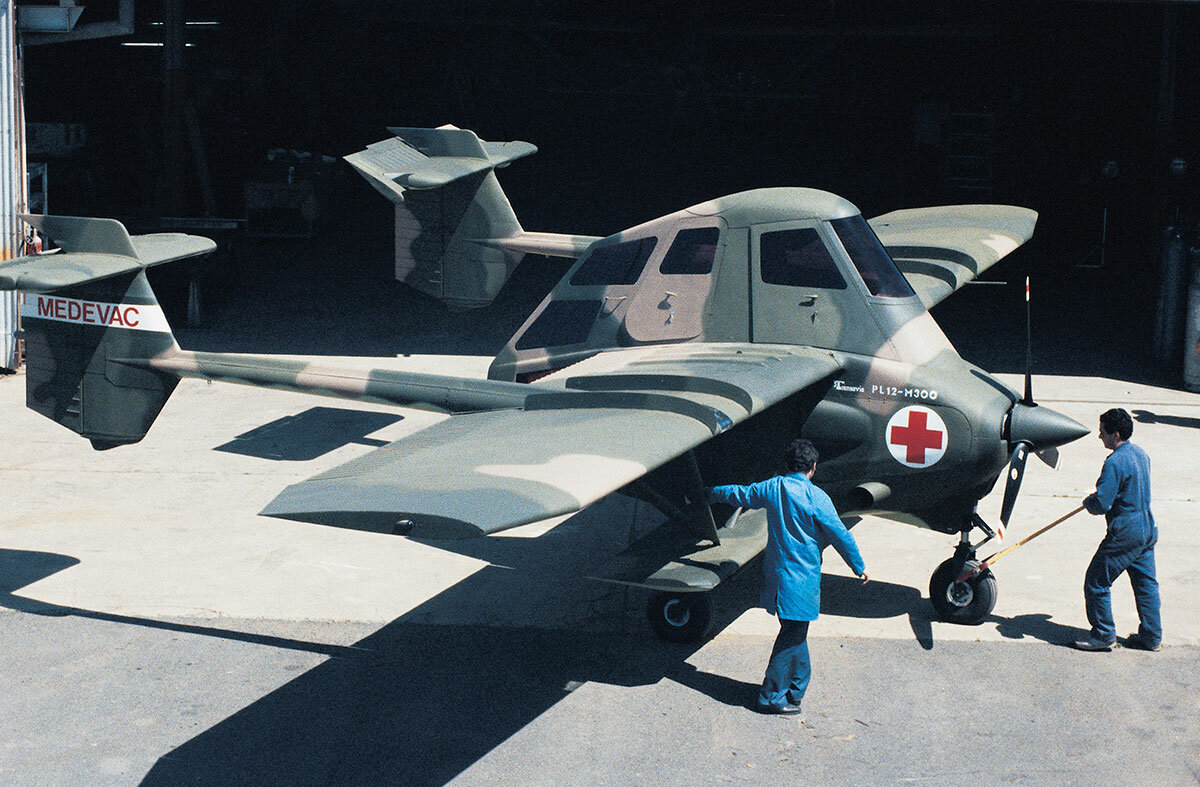
Transavia PL-12 Airtruk in a military medical configuration. Photo: transfield.com.au
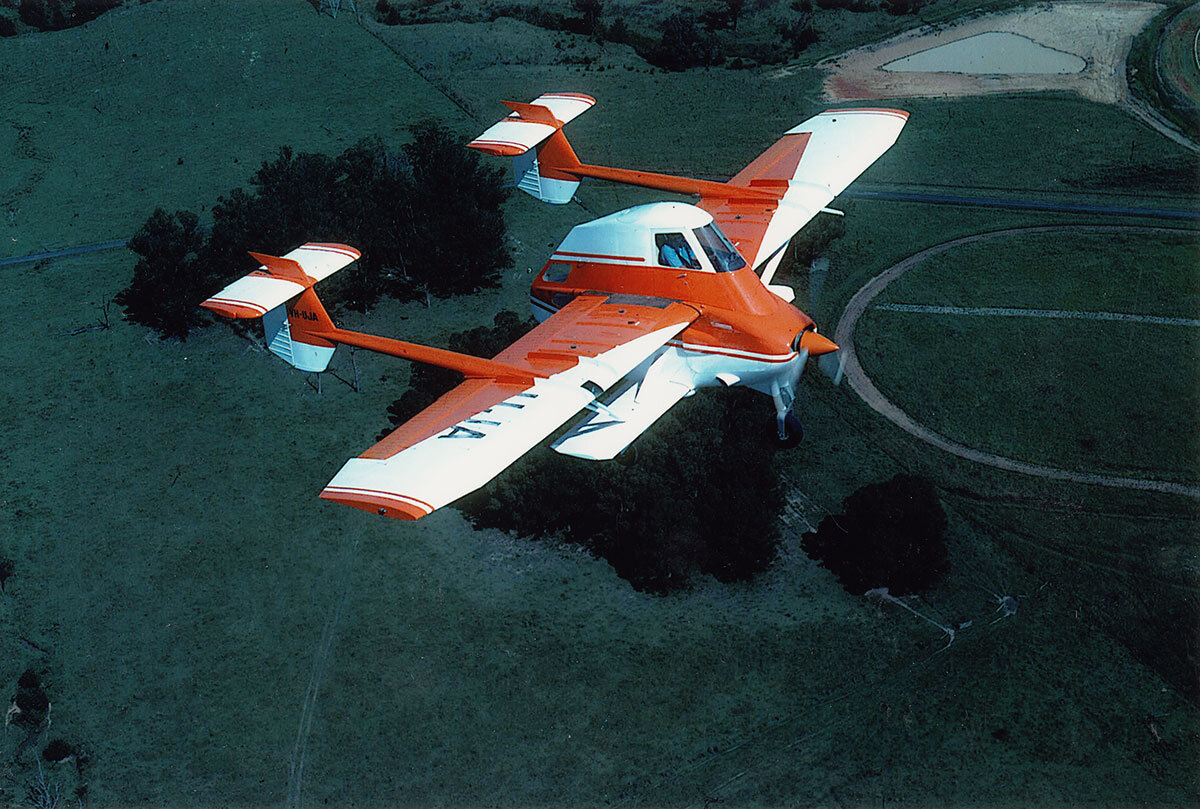
A Transavia PL-12 Airtruk in flight. Photo: transfield.com.au
The PL-12 also made an appearance in a movie. In the third film of the classic “Mad Max” series—“Under the Dome of Thunder”—the plane features in two scenes. In the credits, the Transavia PL-12 Airtruk appeared under the pseudonym “The Flying Jalopy,” which could be translated as “The Flying Jalopy.” This name was a reference to the Walt Disney cartoon of the same name.
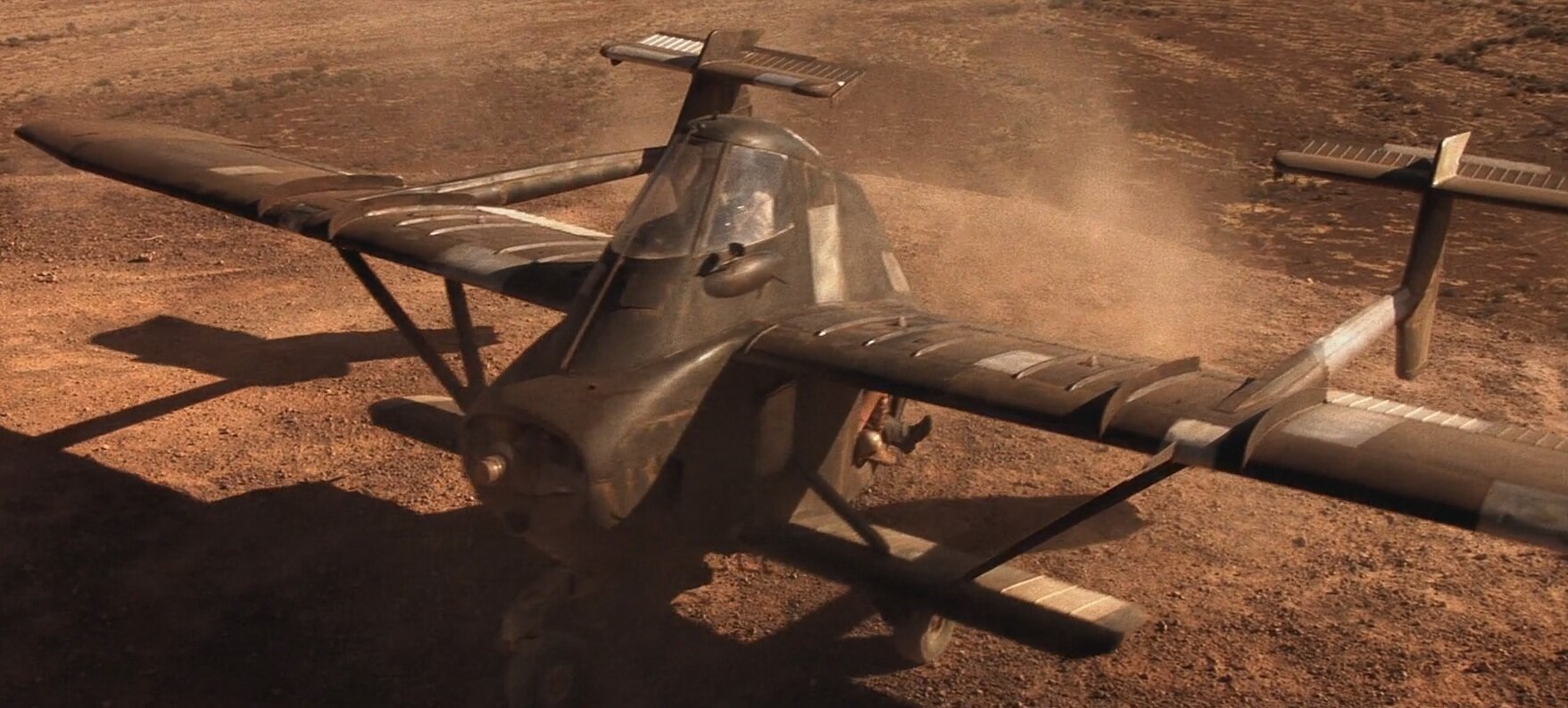
Transavia PL-12 Airtruk in the movie *Mad Max 3: Under the Dome of Thunder*. Photo: madmax.wikia.com
Despite its unassuming appearance, the Transavia PL-12 Airtruk successfully fulfilled its intended purposes. A total of 118 aircraft were produced between 1966 and 1993. Due to the aircraft’s heavy use, only 12 PL-12s remained in existence worldwide as of 2018. All of them are either in museums or undergoing restoration.