Soviet strategic bombers, of which there were almost none. The Pe-8—the rarest strategic bombers of World War II

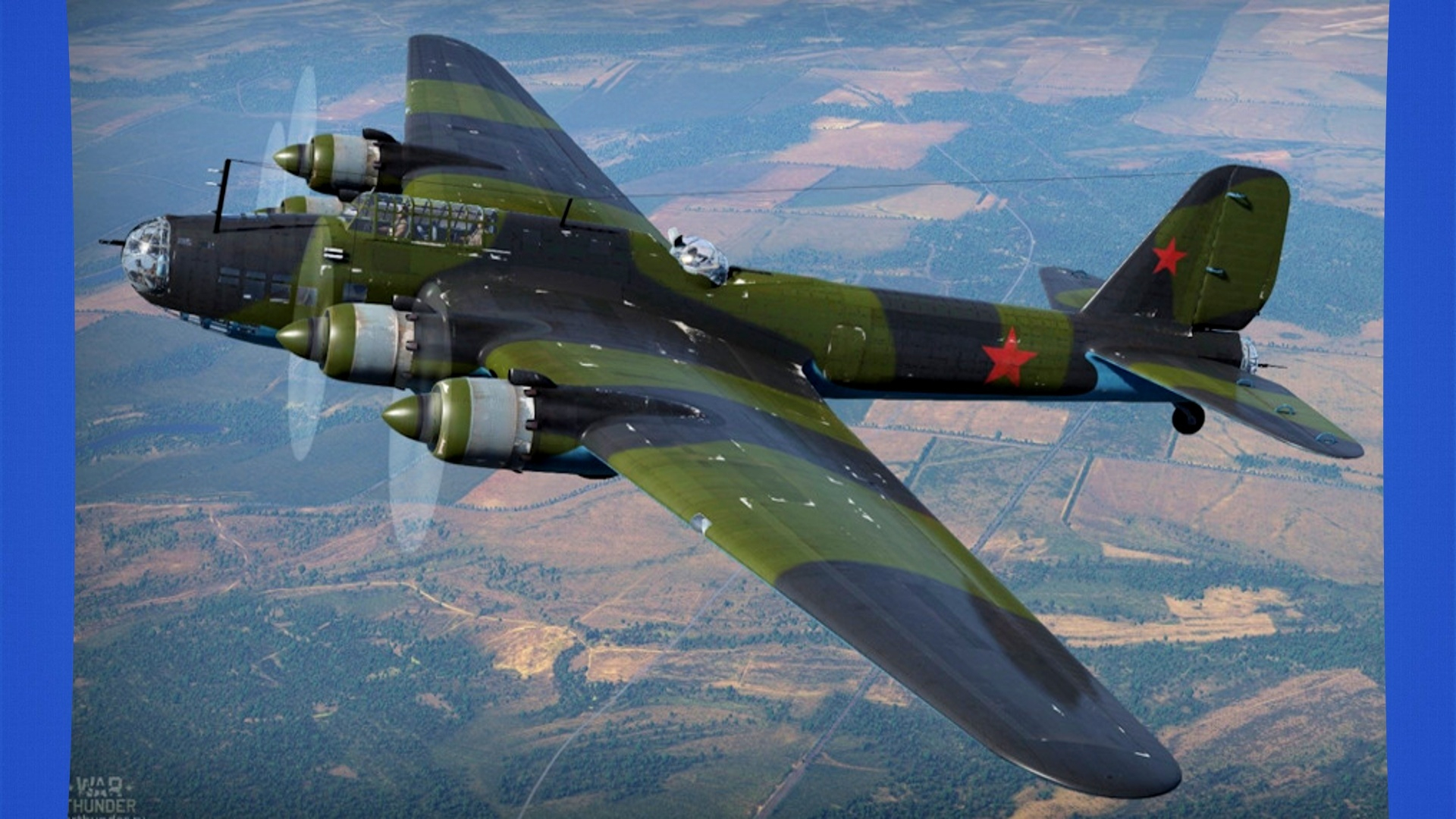
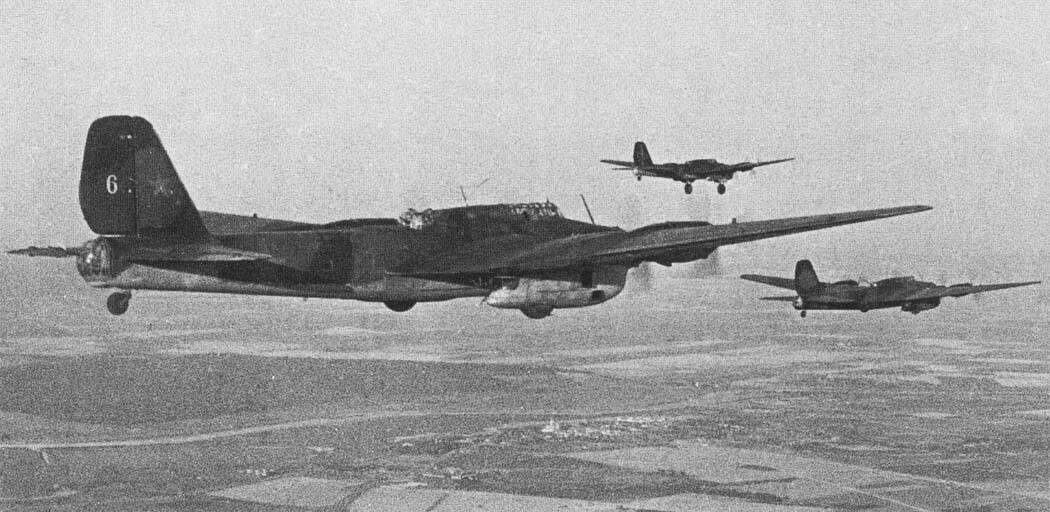
When Soviet pilots dropped bombs on Berlin for the first time in August 1941, aircraft appeared in the skies over the capital of the Third Reich that the German air defense forces had not expected to see at all: — huge four-engine bombers capable of carrying up to four metric tons of payload and flying at altitudes out of reach for most interceptors. These were the Pe-8s—Soviet “strategic bombers” created against all odds: despite the leadership’s skepticism toward the idea of long-range aviation, despite the technological backwardness of the industry, and despite the perpetual shortage of powerful engines.
Only 93 of them were built—by comparison, nearly 13,000 American B-17s were produced, and more than 7,000 British “Lancasters.” However, each of these 93 aircraft operated at the very limits of their capabilities, carrying out missions that neither the Il-4 nor other twin-engine aircraft could handle.
The Story Behind Its Creation: A Dream Shattered by Engines
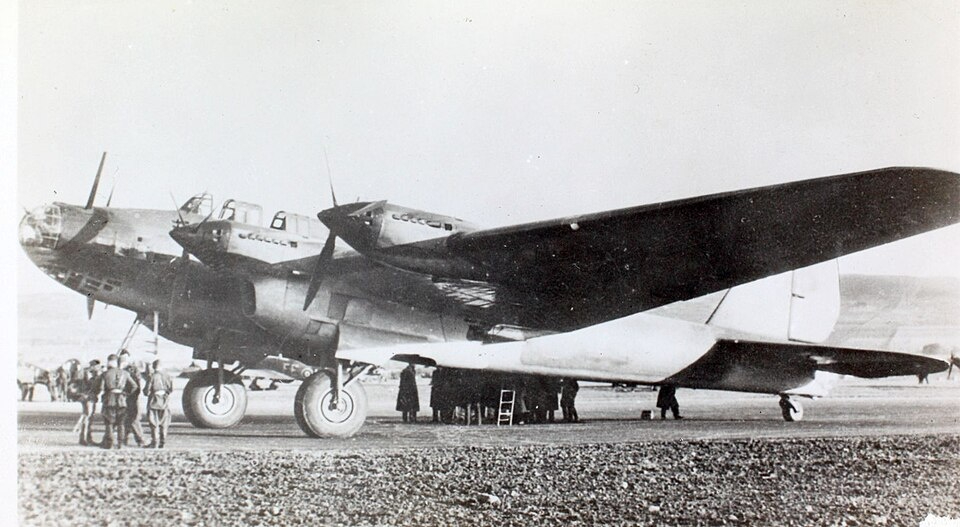
In the summer of 1934, the Tupolev Design Bureau was tasked with designing a heavy high-altitude bomber capable of flying at an altitude of 12 kilometers and reaching speeds of up to 400 km/h. Team No. 1, led by Vladimir Petlyakov—who would later design the Pe-2 dive bomber—took on the project. The first flight of the ANT-42 prototype took place on December 27, 1936, but the war broke out while the aircraft was still in the midst of a grueling fine-tuning phase.
Vladimir Petlyakov, chief designer of the TB-7 (later the Pe-8):
“We’re building an airplane whose performance is supposed to surpass anything else in the world. But it’s not the technology that’s holding us back—it’s the engines. Every time an engine fails during testing, we lose not just time, but our faith in the aircraft. And yet I believe—this plane will fly.”
The main problem was the power plant. Initially, the aircraft was equipped with M-40 and M-30 diesel engines, which operated extremely erratically at high altitudes: the fuel supply was regulated manually, and at high altitudes the engines could simply stall. The second problem was the ACN central supercharging system, which allowed the engines to develop power at altitudes of up to 10 km but took up half the fuselage and constantly overheated. During one test, the ACN caught fire right in mid-air, nearly killing the crew and destroying the aircraft.
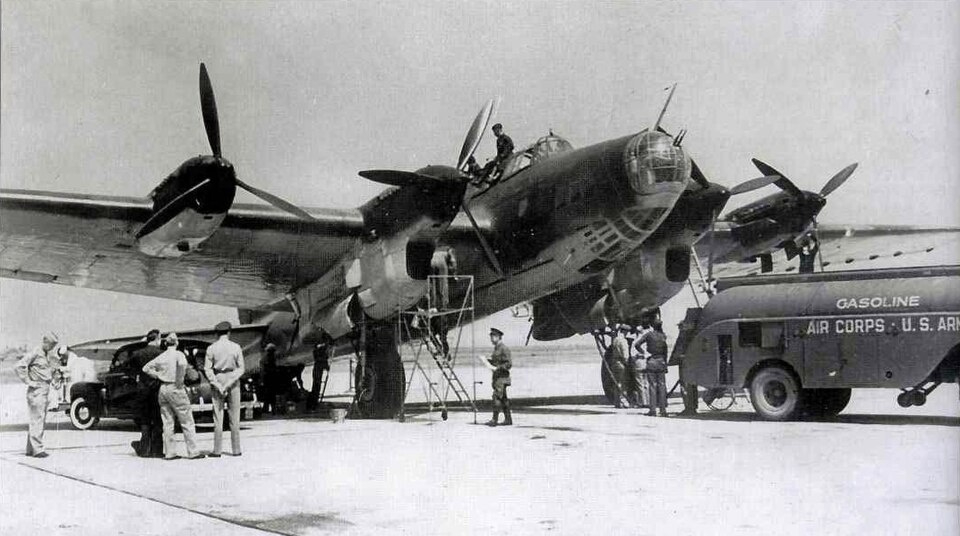
Mass production of the TB-7 began in Kazan in late 1939, but it proceeded at a snail’s pace. By the summer of 1941, only about 20 vehicles were in service.
Interesting fact: The symbol of all the trials and tribulations during development was the decision to install a fifth engine on the TB-7. The ACN was essentially a small motor that forced air into the cylinders of the four main engines. This “five-engine system” proved so unreliable that it was quickly abandoned and replaced with more powerful, naturally aspirated AM-35A engines—at the cost of a lower service ceiling.
Combat Use: Raids on Berlin and Government Missions
The Pe-8’s first combat mission took place on the night of August 10–11, 1941: seven aircraft from the 81st Aviation Division, under the command of polar pilot Mikhail Vodopyanov, took off from the Pushkin airfield near Leningrad to bomb Berlin. The mission involved enormous risk: they would have to fly over German-occupied territory without fighter escort, relying solely on altitude and the cover of night.
Of the seven planes that took off, four reached Berlin, and three returned to base. The rest were shot down by anti-aircraft fire or crashed. It was a symbolic strike—more political than military—but it demonstrated that the Soviet Air Force was capable of reaching the enemy’s capital.
Mikhail Vodopyanov, commander of the 81st Air Division, Hero of the Soviet Union:
“We were ordered to bomb Berlin. We had few planes, limited resources, and equipment that was unreliable. But we understood: we couldn’t let the Germans think their capital was inviolable. Every mission to Berlin was a game with death. But when you see the lights of the enemy city below, you realize it’s all worth it.”
The most famous “non-bombing” mission of the Pe-8 was a flight in May 1942 with People’s Commissar for Foreign Affairs Vyacheslav Molotov on board. The crew, led by Endel Pussép, made a nonstop flight from Moscow to London and then on to Washington, D.C., crossing occupied Europe and the Atlantic. This flight, which lasted several days, was a diplomatic breakthrough and proved the aircraft’s reliability.
Friends, what do you think— can these 93 Pe-8s be considered a justified use of resources, given that the same factories could have produced thousands of Il-2 ground-attack aircraft, or was the Soviet command right to preserve at least a symbolic strategic air force capable of launching retaliatory strikes against Berlin? Share your thoughts in the comments.
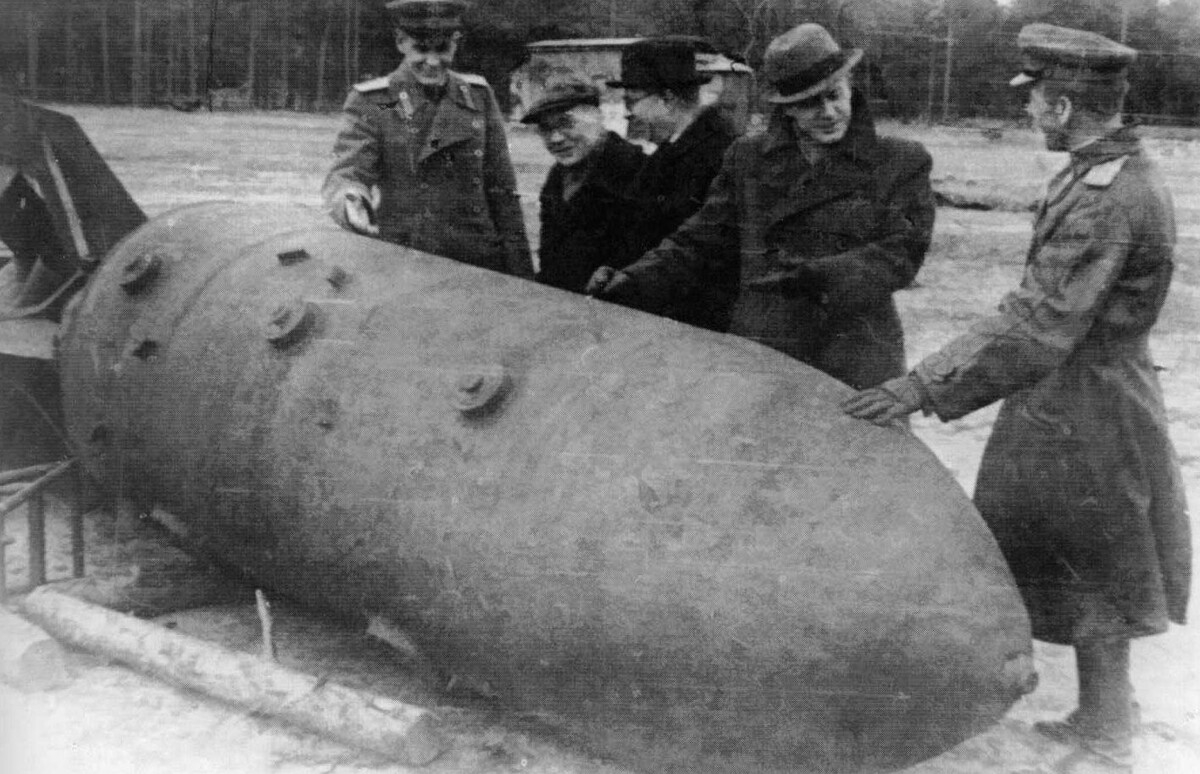
FAB-5000: 5 metric tons for the “Zeppelin”
The Pe-8’s main technical feature, which made it unique in the Soviet Air Force, was its ability to carry the heaviest aerial bomb of the war—the FAB-5000 (later upgraded to the FAB-5000NG). The five-metric-ton high-explosive bomb was designed to destroy particularly heavily fortified targets: submarines in the concrete docks of Königsberg, underground factories, railroad junctions, and especially critical facilities.
To carry out a bombing run with such a payload, special modifications were required: reinforcing the bomb racks and removing some of the defensive armament to save weight. The explosion of the FAB-5000 was so powerful that the crater reached a depth of 8 meters and a diameter of 30 meters. German soldiers nicknamed this bomb “a gift from the Russians,” although, fortunately for them, these “gifts” were delivered rarely—no more than two dozen such bombs were dropped during the entire war.
In 1944, the decision was made to retire the Pe-8 from service due to the end of its service life. In total, bombers of this type flew several hundred combat sorties—a drop in the bucket compared to the thousands of sorties flown by B-17s or Lancasters.
Comparison with Competitors and the End of His Career
In terms of its overall performance, the Pe-8 was undoubtedly a modern aircraft, comparable to foreign models, but too few were built. While the Americans could afford to lose dozens of “Fortresses” in a single raid on Schweinfurt and still ramp up production, the loss of a single Pe-8 was an irreplaceable blow to the entire Soviet long-range aviation force.
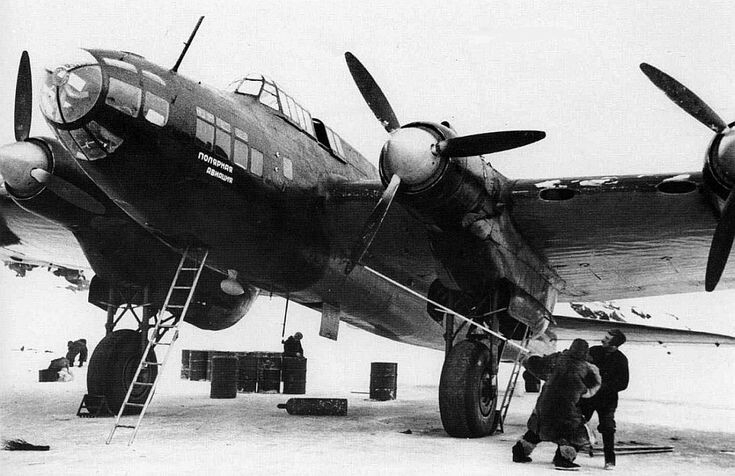
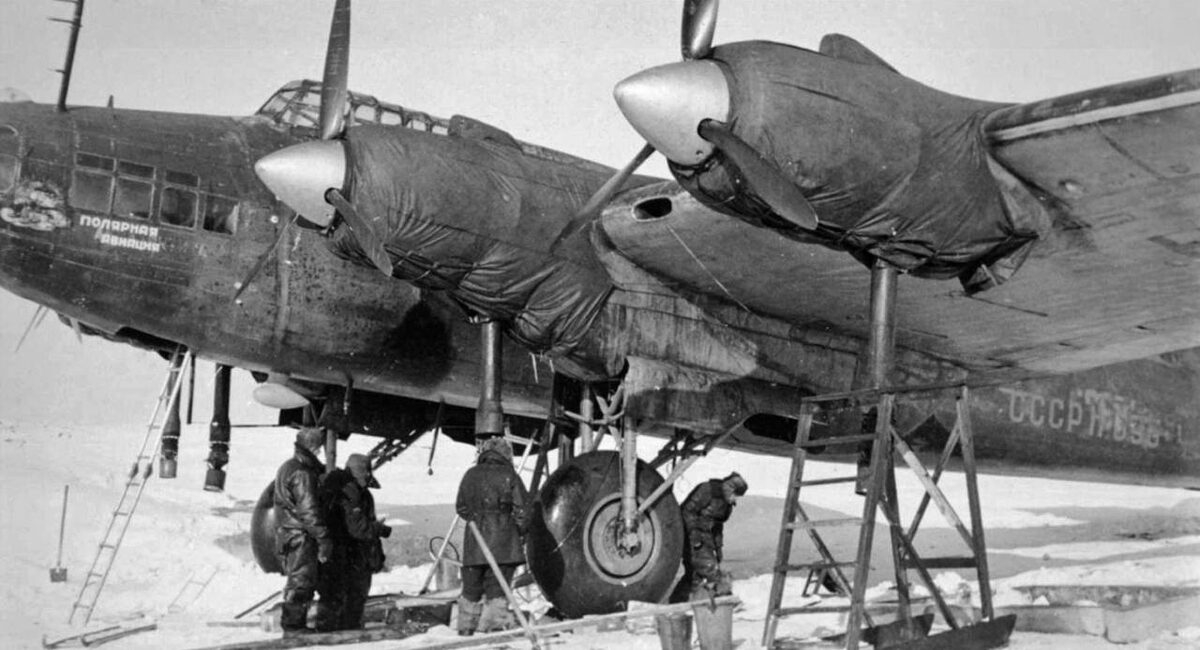
After the war, the surviving Pe-8s were used for flights to the Arctic, cargo transport, and scientific expeditions. In 1954, they were finally decommissioned. Today, not a single airworthy example remains—only a few scale models and wreckage in museums serve as reminders of the Soviet heavyweight that could have become Germany’s nemesis but never realized its potential.
Source — https://dzen.ru/a/ahPrgmkOITsT2QFL