Russian military transport aircraft following the Il-100 “Slon.” The Russian successor to the Mriya will have an even greater payload capacity than the Soviet original.

Yesterday I published an article that offered a look at Russian aircraft from the 1940s and 1950s of the 21st century—and perhaps even the second half of the 1930s. In that post, we took a retrospective look at an alternative path for aviation development. This post will focus on the future of military transport aviation—specifically, the aircraft that might follow the Il-100 “Slon.” It’s worth noting that the “Elephant” itself, by the way, hasn’t been built yet, and there are only persistent rumors that it’s under active development in design bureaus. This project does not claim to be as innovative as the Il-100 mentioned above. It is a pure “alternate history” concept created by our Western colleague, known in aviation circles under the pseudonym T-RexSlee. Nevertheless, this concept could very well become a reality, although no one has yet performed detailed aerodynamic analyses or structural strength calculations.
Historical Background: Dreams of the Late 20th Century
Aircraft with a payload capacity of about 500 metric tons had been developed previously, particularly in the late 20th century. During that period, amid the space race and global infrastructure ambitions, leading aviation powers conducted extensive conceptual research. In the Soviet Union, following the success of the An-225 “Mriya,” the Antonov Design Bureau worked on plans for its extensive modernization, such as the conceptual An-325, which was intended to serve as a full-fledged launch vehicle for advanced reusable space systems and super-heavy modules for orbital stations. At the same time, in the United States, Lockheed and Boeing were exploring the possibility of creating super-heavy transport platforms based on the experience gained from the C-5 Galaxy program and the New Large Airplane concepts. These projects involved the use of distributed power plants and new composite materials to achieve a target payload capacity exceeding the capabilities of all aircraft in existence at that time.
Reasons for Project Cancellations in the Past
However, in the twentieth century, the technology did not exist to bring such projects to the flight prototype stage. Materials science did not offer solutions capable of ensuring the necessary structural rigidity for such a massive wingspan without a catastrophic increase in airframe mass. Remote control systems and automatic damping of aeroelastic vibrations were still in their infancy. And, frankly speaking, the transport market for such aircraft was relatively limited. The collapse of the USSR and the winding down of the “Energia-Buran” program deprived Soviet developments of their main customer, and Western corporations did not see any commercial benefit in developing a highly specialized mega-transport aircraft, the operation of which would require the modernization of airport infrastructure around the world.
New Realities: The Market and the Economy
Today, the situation has changed dramatically. The market for such shipments is significantly larger than it was three decades ago. The globalization of the energy sector, the need to transport oversized wind turbine components and small-scale modular nuclear reactors, as well as the rapid development of the private space industry, have created a steady demand for super-heavy air cargo transport. Thanks to additive manufacturing, modern composites, and digital design, the aircraft themselves can be produced at a quite reasonable cost. The unit cost of transporting a metric ton of cargo over such distances becomes competitive with maritime logistics when time is of the essence.
Power plant: the heart of a giant
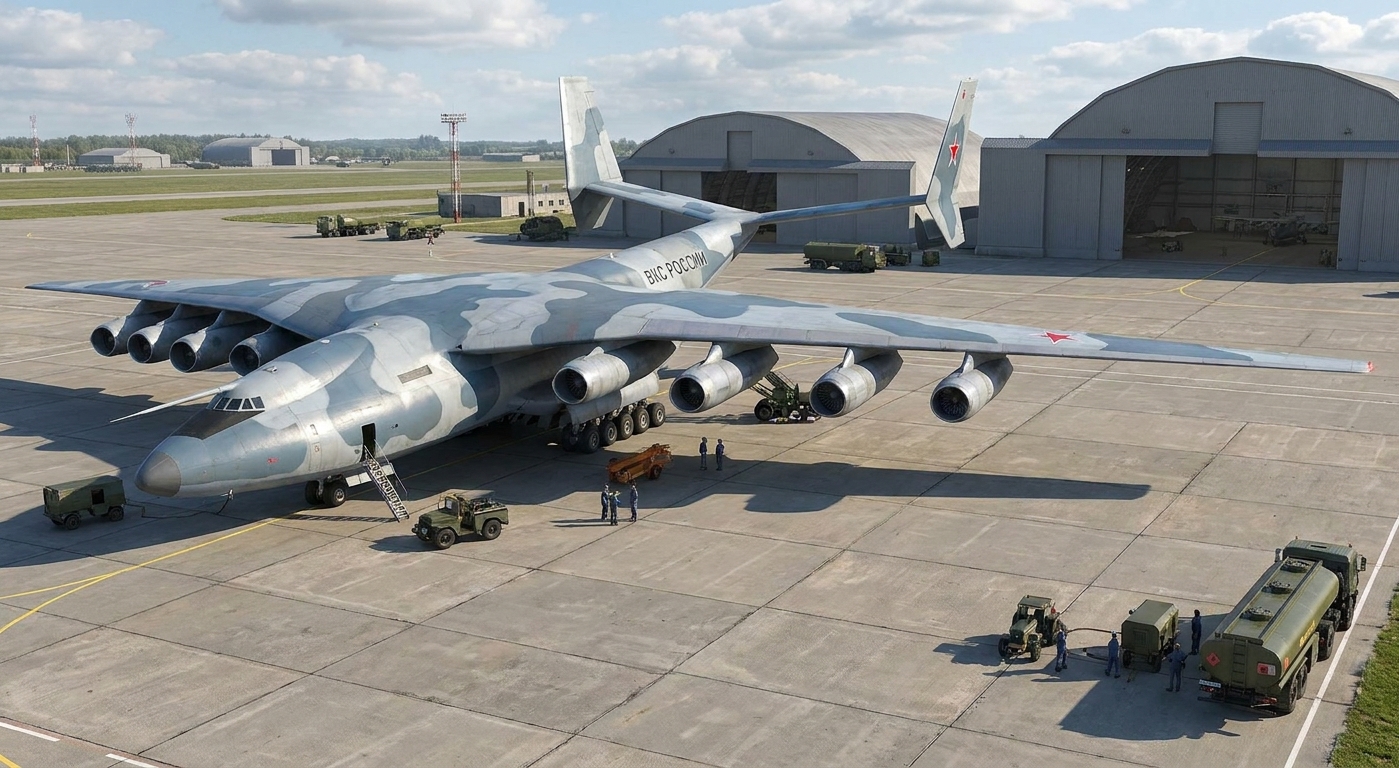
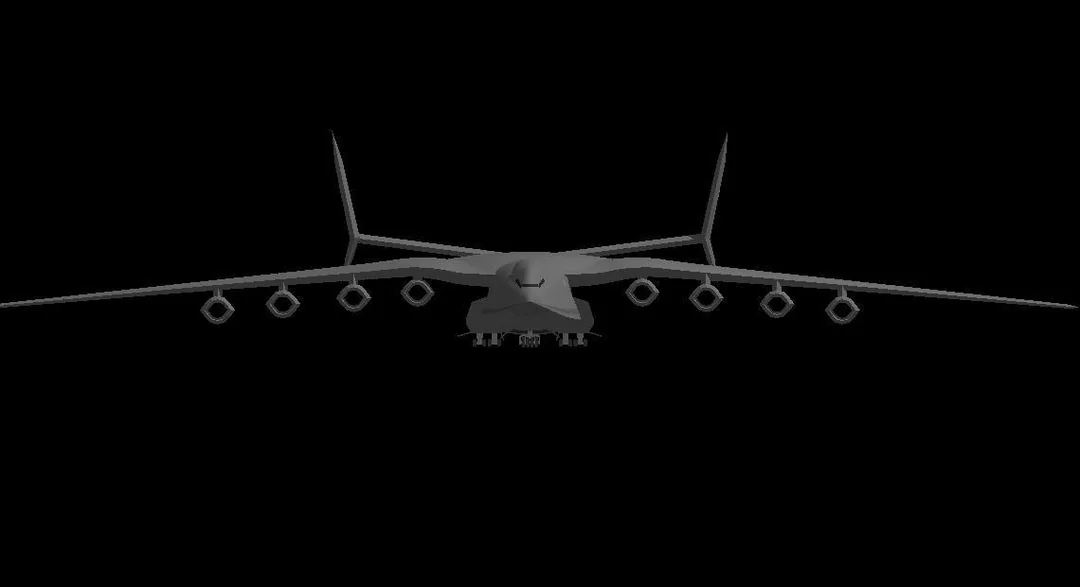
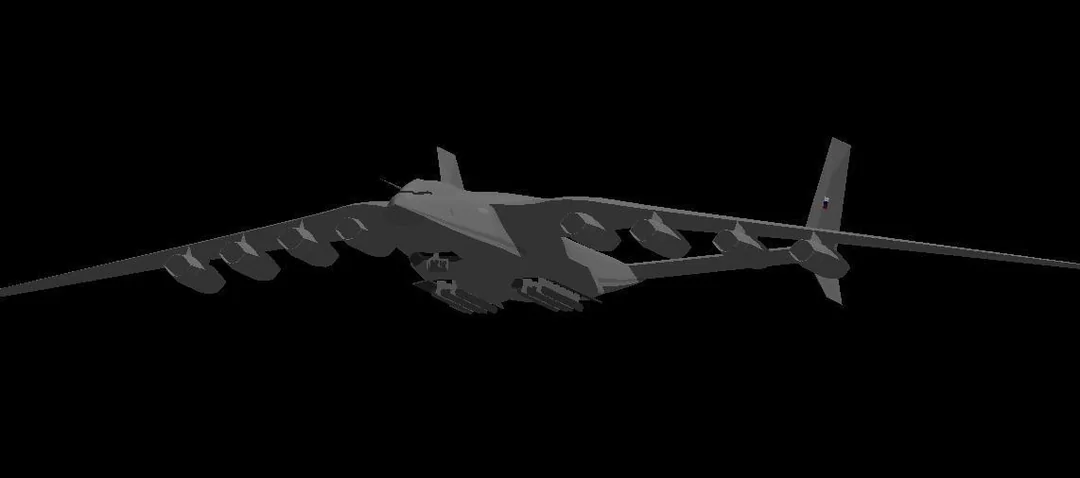
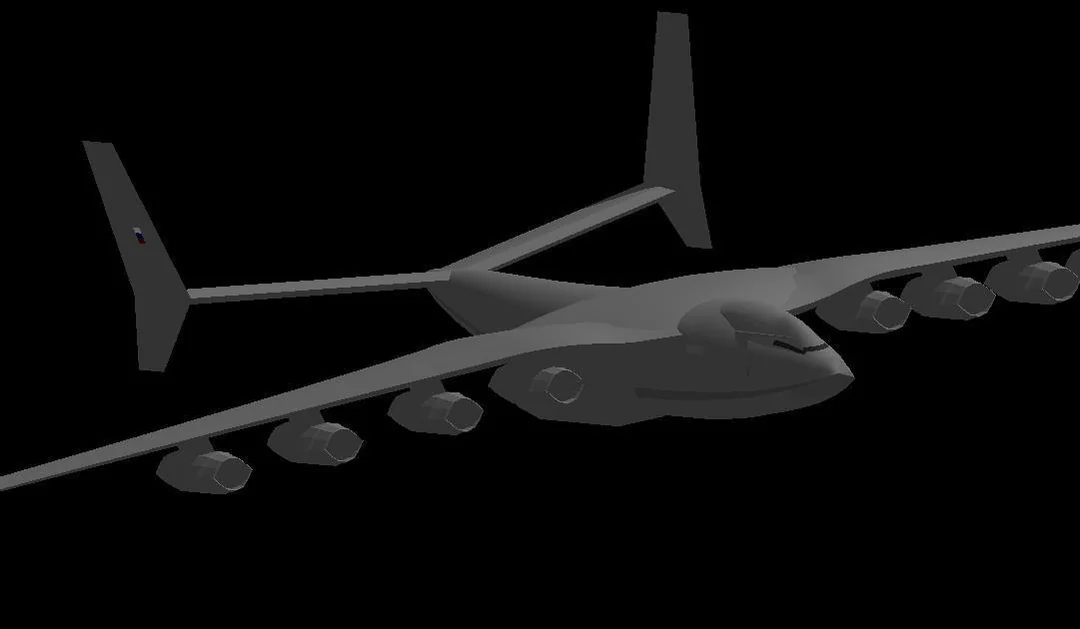
The heart of this aircraft is set to be the PD-35 engines currently under development in Russia, each with a thrust of 35,000 kilogram-forces. By comparison, the legendary “Mriya” was powered by D-18T engines with a thrust of 23,430 kilogram-forces, whose modern Russian counterpart is the PD-24 engine. Eight PD-35 engines will provide a combined thrust more than sufficient to lift a payload of 500 or even 600 metric tons. This configuration not only provides the necessary thrust-to-weight ratio for takeoff from unpaved or shortened runways but also guarantees flight safety in the event of the failure of one or even two engines—a critical requirement for super-heavy-class aircraft.
Aerodynamic Configuration and Dimensions
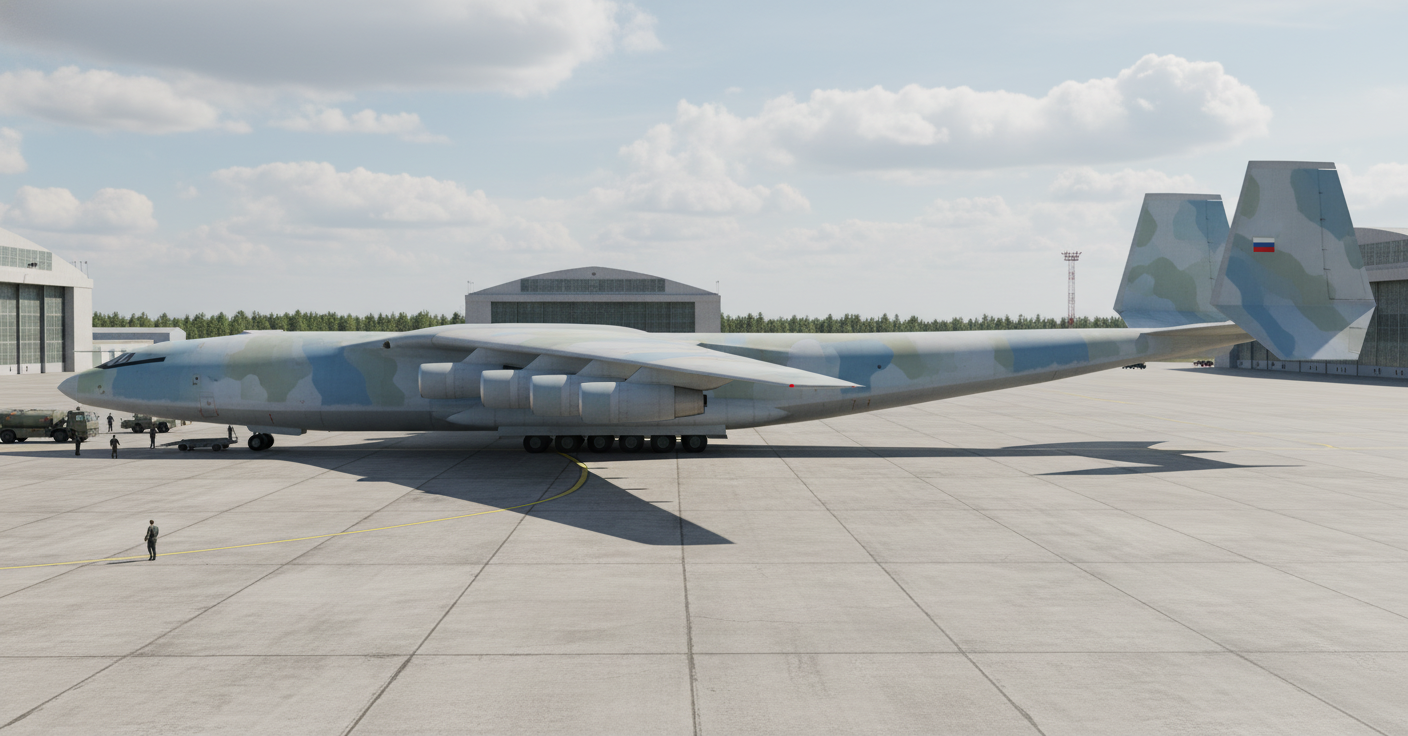
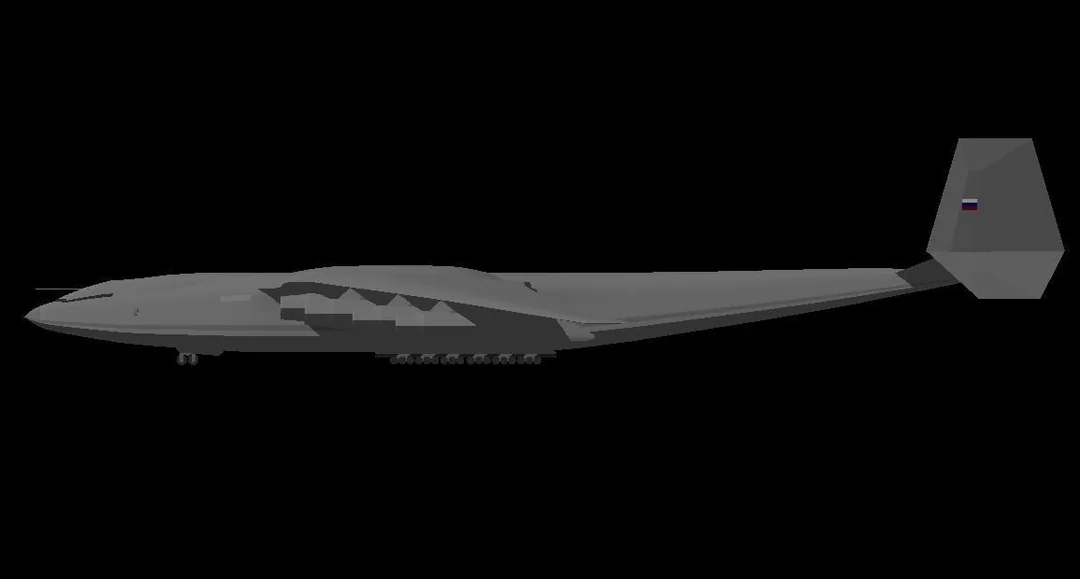
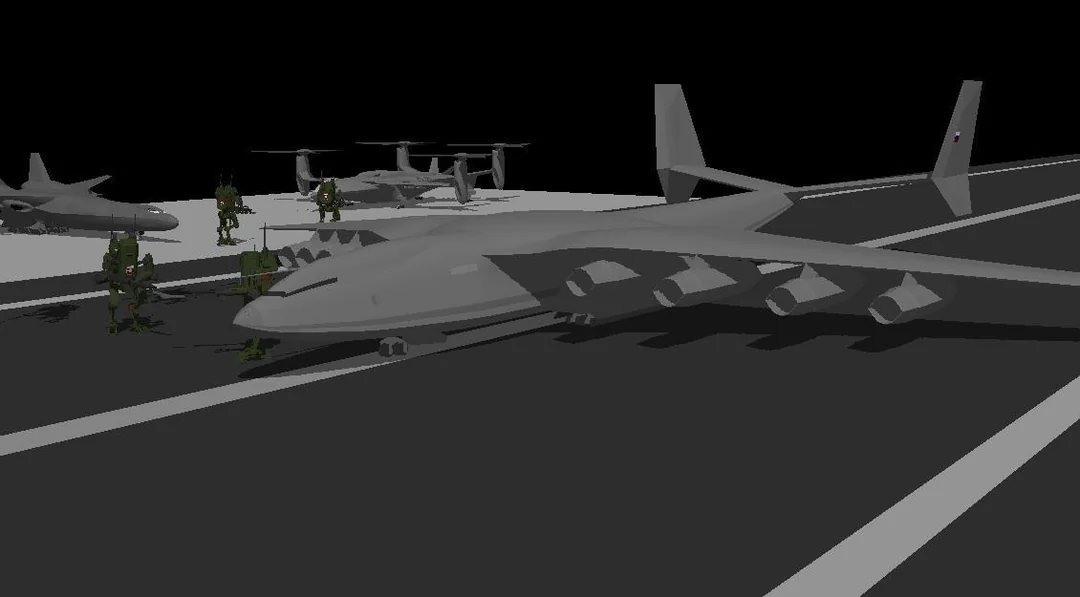
This aircraft will be simply enormous. The estimated fuselage length will be 231 meters, and the wingspan will reach 254.5 meters. By comparison, the An-225 “Mriya” is only eighty-four meters long. This scale will make it possible not only to carry space shuttles, such as the “Buran,” on external pylons, but also to transport space rockets in their entirety, fully assembled. This, incidentally, will make it possible to trade them as ordinary commodities, delivering them directly to customers’ spaceports anywhere on the planet, bypassing the complex and time-consuming procedures of maritime or rail logistics.
As for the aerodynamic configuration itself, the designer of the T-RexSlee project decided not to bother with any outlandish or untested designs, such as a flying wing or canard configurations. The future Russian aircraft will replicate the classic layout of the Soviet—and later Ukrainian—super-heavy transport aircraft, but scaled up proportionally. The high wing placement, a multi-wheel landing gear that distributes the enormous load onto the runway, and a traditional twin-tail or multi-tail configuration will ensure predictable handling and stability, as proven by decades of service by its predecessors.
Tactical and Technical Specifications:
- Wingspan: 254.5 m
- Length of the aircraft: 231 m
- Aircraft height: 36 m
- Maximum takeoff weight: 680 metric tons
- Empty aircraft weight: 260 metric tons
- Maximum load capacity: 500 metric tons
- Power plant: 8 × PD-35 turbofan engines
- Engine thrust: 8 × 35,000 kgf
- Cruising speed: 820 km/h
- Practical range with maximum payload: 4,200 km
- Practical range with a 250-metric-ton payload: 11,500 km
- Crew: 6 people
Original designs for the project:

Conclusion
The Il-140 “Bogatyr” project—even as a product of alternate history and a thought experiment by Western enthusiast T-RexSlee—compels us to seriously consider the real technological potential of the Russian aviation industry. As the successor to the “Mriya” and the logical continuation of a line that, in our alternate reality, is set to be launched by the Il-100 “Slon,” it is capable not only of filling the super-heavy transport niche but also of redefining it, setting new industry standards.
In a world where the speed of delivery for strategic and unique cargo is becoming a key factor in geopolitical and economic influence, possessing such an aerial leviathan will be an undeniable advantage. Perhaps one day these bold blueprints will be transformed into actual metal, and the sky will tremble at the roar of eight PD-35 engines, lifting a new era of Russian aviation into the stratosphere—an era where distance and size will no longer be obstacles to human genius.