A story about the German half-track motorcycle Sd.Kfz.2 HK-101 (Kleines Kettenkraftrad), or Kettenkrad, from the collection of Motomir Vyacheslav Sheyanov
Among the military equipment from World War II, there are certain models that have become the hallmarks of particular countries. German military equipment is no exception, and this applies not only to tanks. There is plenty of other equipment that is unmistakably associated with the dark German genius. First and foremost, this applies to German half-track tractors, which are unmistakable. These vehicles were not the simplest to build, but they were quite successful. Ironically, very few countries were able to produce similar vehicles, and even those were essentially direct counterparts to the German half-track tractors.
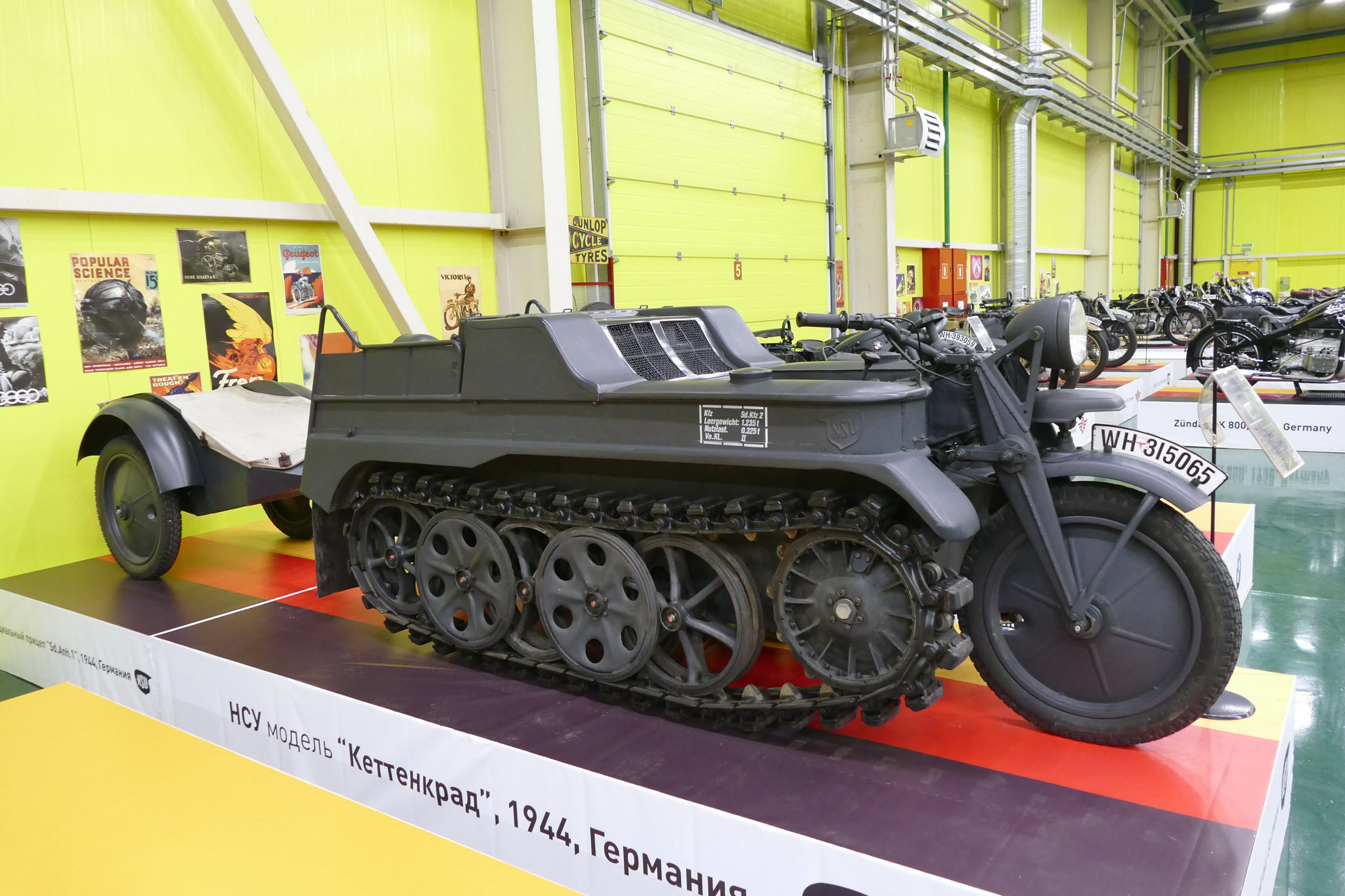
A tractor on display at Vyacheslav Sheyanov’s “Motomir” exhibition
The most notable among them is the lightest tractor, which is often referred to as a motorcycle. Of course, we’re talking about the Kettwenkrad, officially known as either the Sd.Kfz.2, the HK-101, or the Kleines Kettenkraftrad. Actually, the translation “Kleines Kettenkraftrad” is misleading, since it is by no means a tracked motorcycle. It is the same type of half-tracked tractor, just a small one. There are currently several such tractors known in Russia. One of them is in the collection of Motomir’s Vyacheslav Sheyanov, and that’s what we’ll be talking about today.
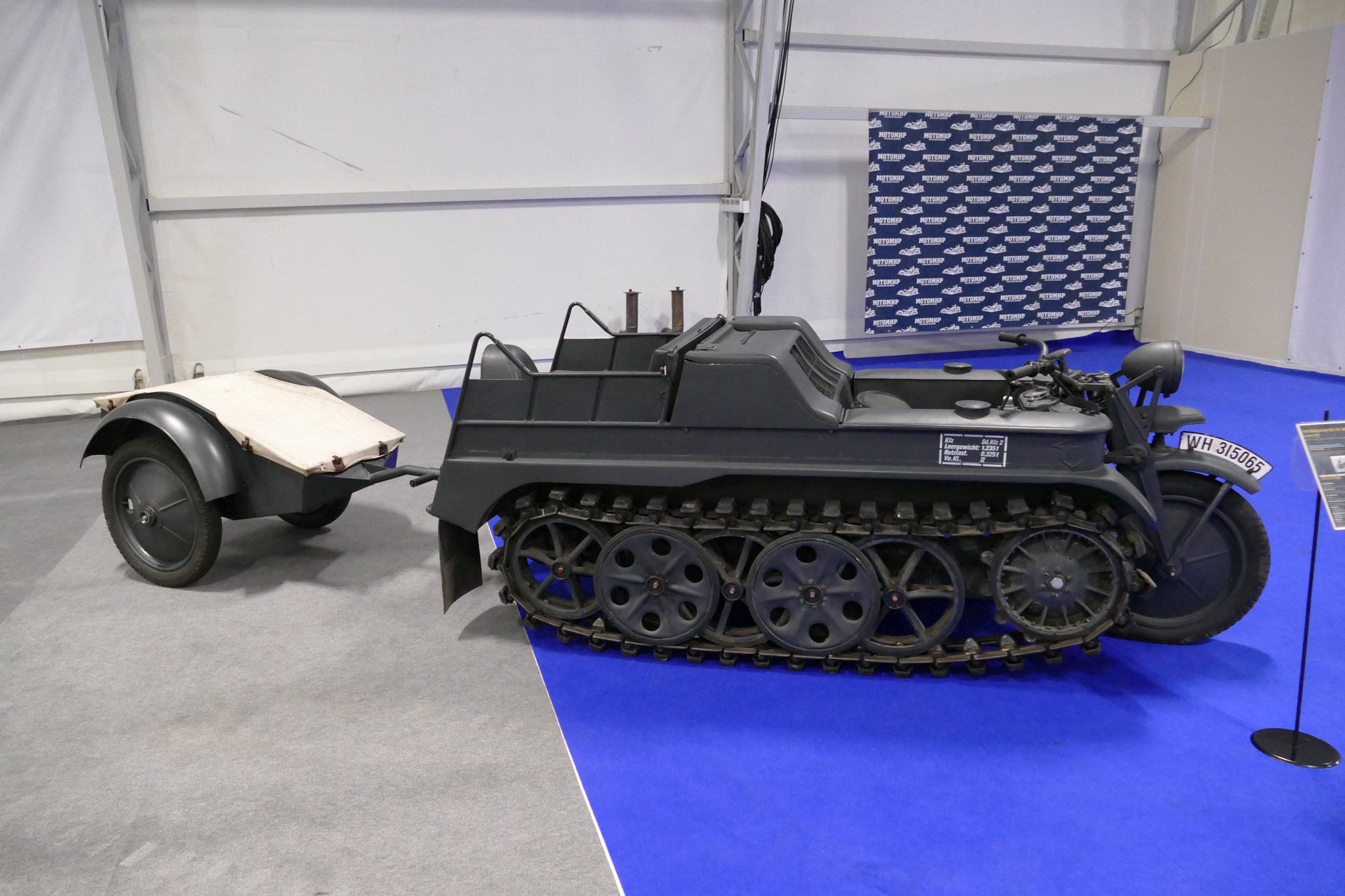
He spent some time at Patriot Park
Initially, the German half-track tractor lineup consisted of two models—the 8-metric-ton Sd.Kfz.7 and the 12-metric-ton Sd.Kfz.8. It was later expanded to include the 1-metric-ton Sd.Kfz.10, followed by the 3-metric-ton Sd.Kfz.11, then the 5-metric-ton Sd.Kfz.6, and finally the heaviest model, the 18-metric-ton Sd.Kfz.9. Based on operational experience, it was decided to optimize the family of half-track tractors. The new family, the HK, was intended to include the HK 300 (1-metric-ton), HK 600 (4.5-metric-ton), HK 900 (8-metric-ton), HK 1600 (18-metric-ton), HK 2400 (24-metric-ton), and HK 3500 (35-metric-ton) tractors.
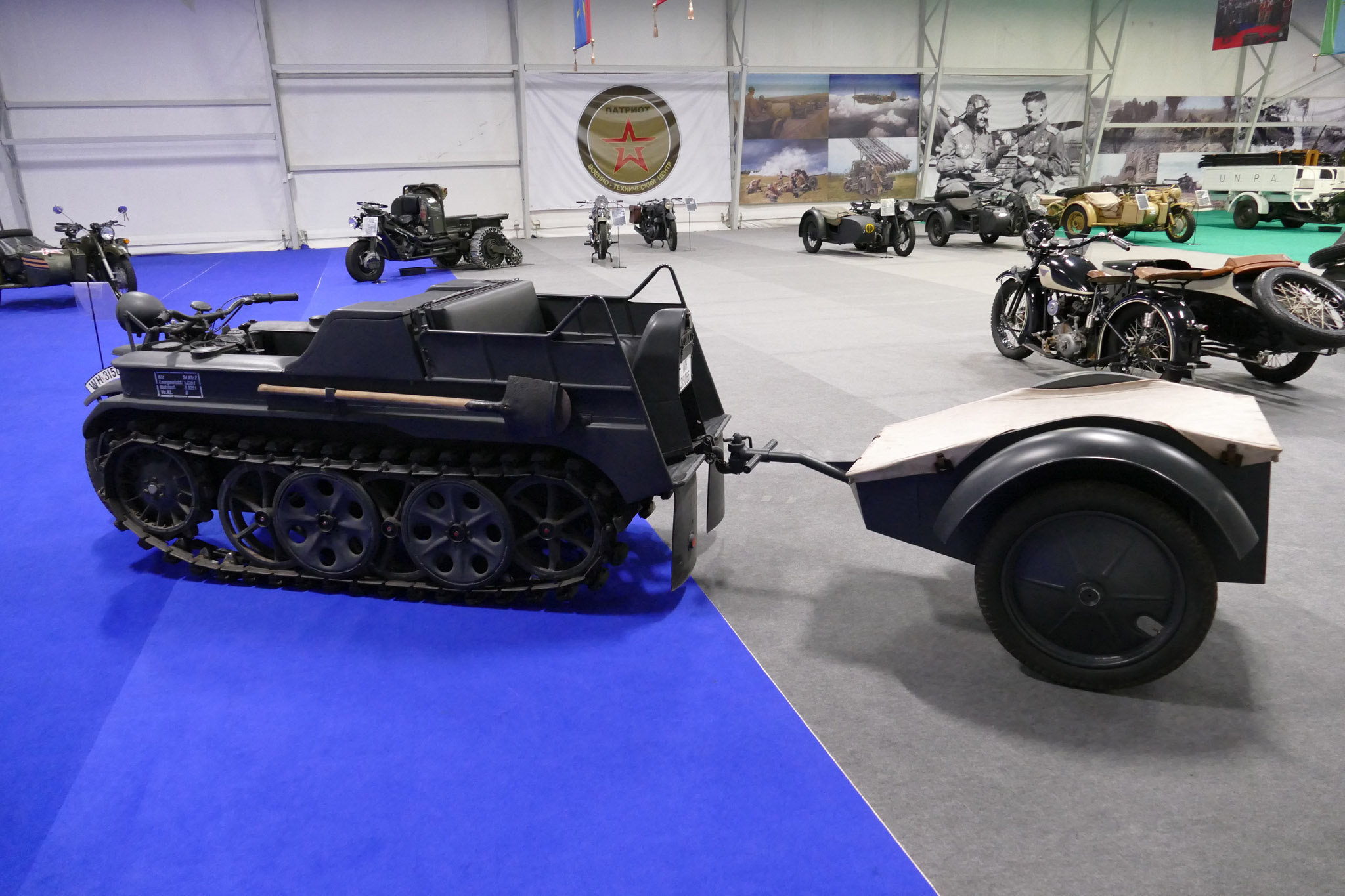
The tractor is shown together with the Sd.Ah.1 trailer
None of these tractors ever went into production, and only four prototypes were actually built. However, a very different fate awaited the smallest tractor in the HK-100 family, which was the last to be introduced. The need for it arose in 1938, when German airborne units wanted a small vehicle in their inventory. It had to fit inside a Junkers Ju 52 military transport aircraft and be capable of towing either a 3.7 cm Pak antitank gun, a 2 cm Flak 30 automatic anti-aircraft gun, or a 75-mm 7.5 cm Gebrigskanone 15/28 mountain gun. The latter gun was introduced due to growing interest in such tractors from mountain infantry units.
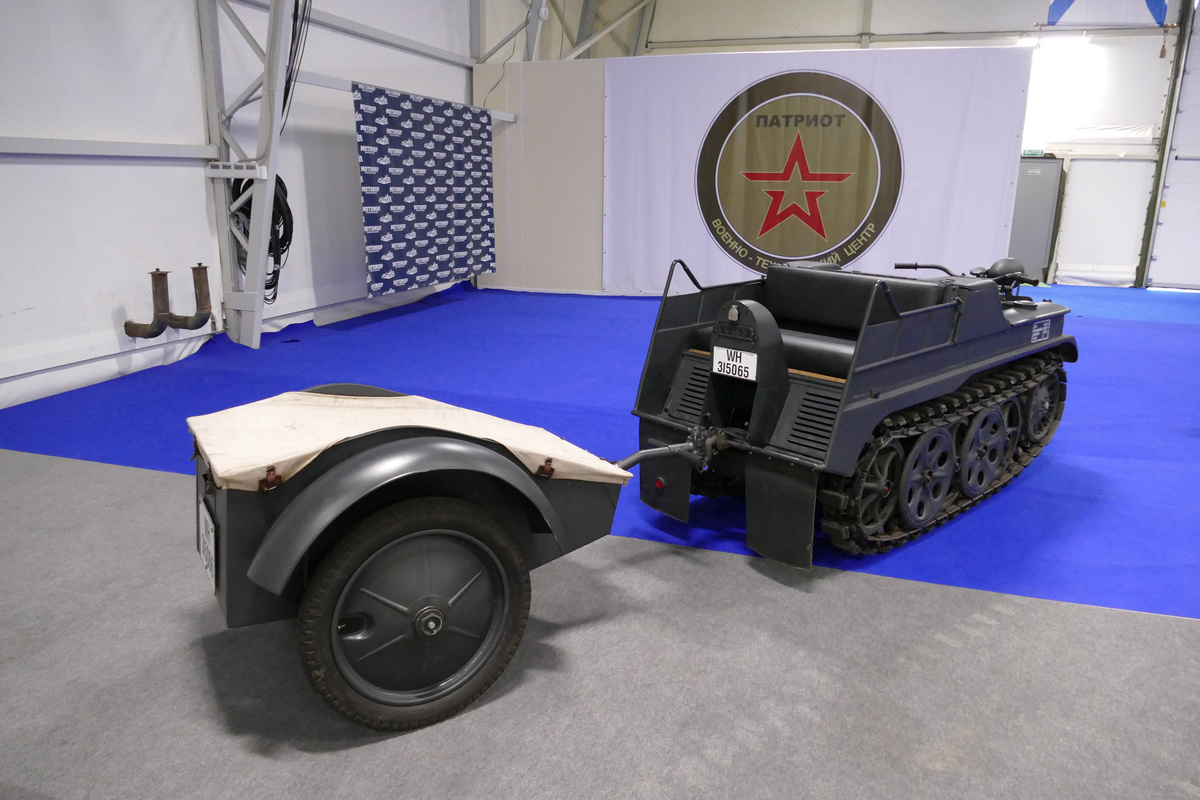
It appeared after the decision was made to begin mass production of the tractor
Initially, the paratroopers wanted something weighing around 800 kg, which would have made it possible to airdrop the tractor. However, that was a bit too much, and the risk of damaging the tractor upon landing proved to be too high. The development of the tractor was entrusted to NSU Motorenwerke AG, with Heinrich Knipkamp himself leading the project. Judging by the fact that he personally drove these tractors, they were his favorite creation. In that sense, it’s no surprise that the HK-101 was the only model in the family to reach mass production.
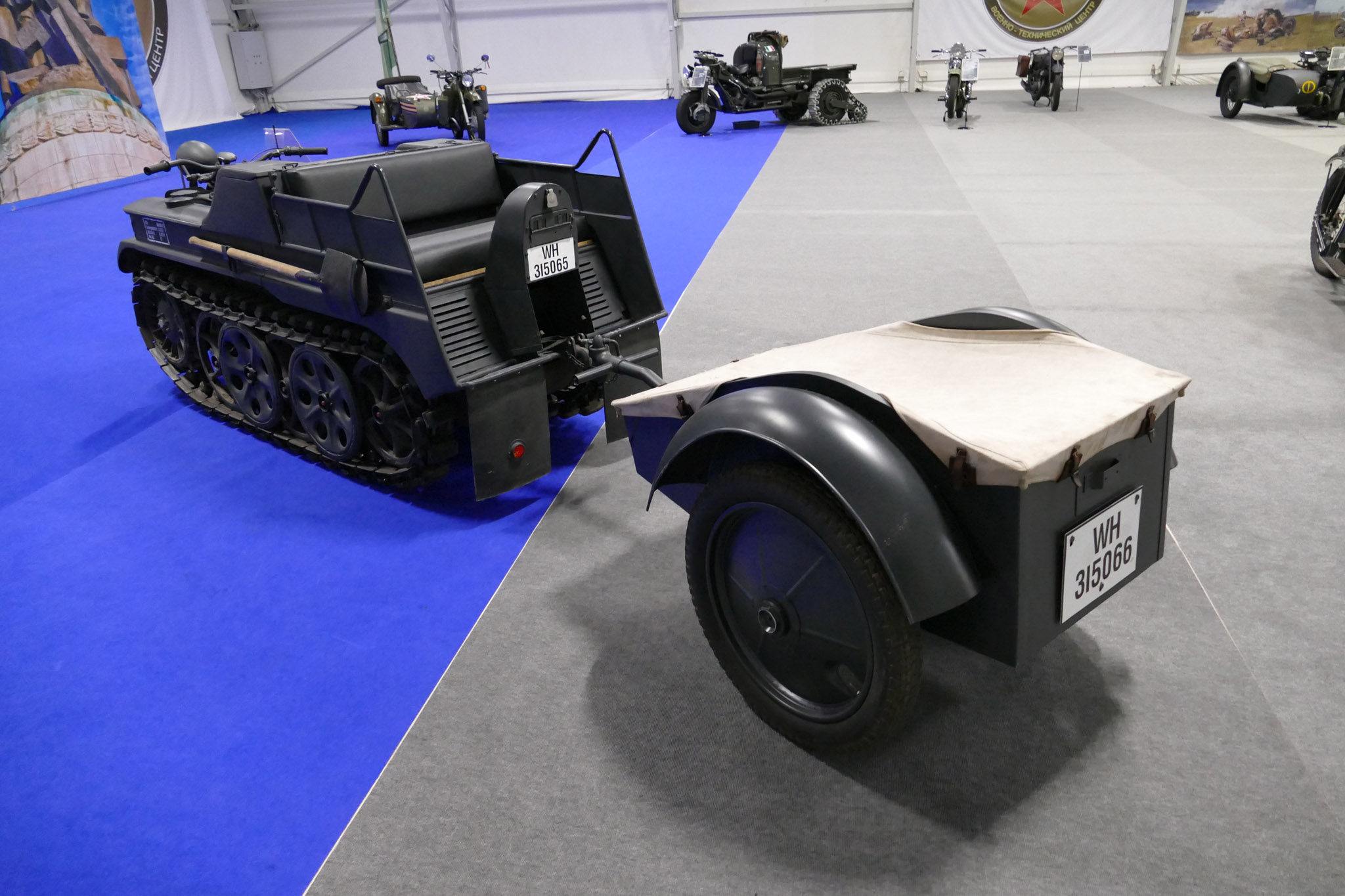
The first mass-produced tractor units appeared in late 1941
The requirement to create the most compact tractor possible resulted in a vehicle with a very dense layout. It’s also very narrow, which is why it looks like a motorcycle from the front. There was absolutely no room for two wheels here, so a motorcycle-style fork was used. In fact, it looks exactly like a motorcycle fork. In reality, there’s almost nothing motorcycle-like about it; in fact, the HK-101 owner’s manual recommends removing the front wheel when driving on rough off-road terrain, because it acts like an anchor.
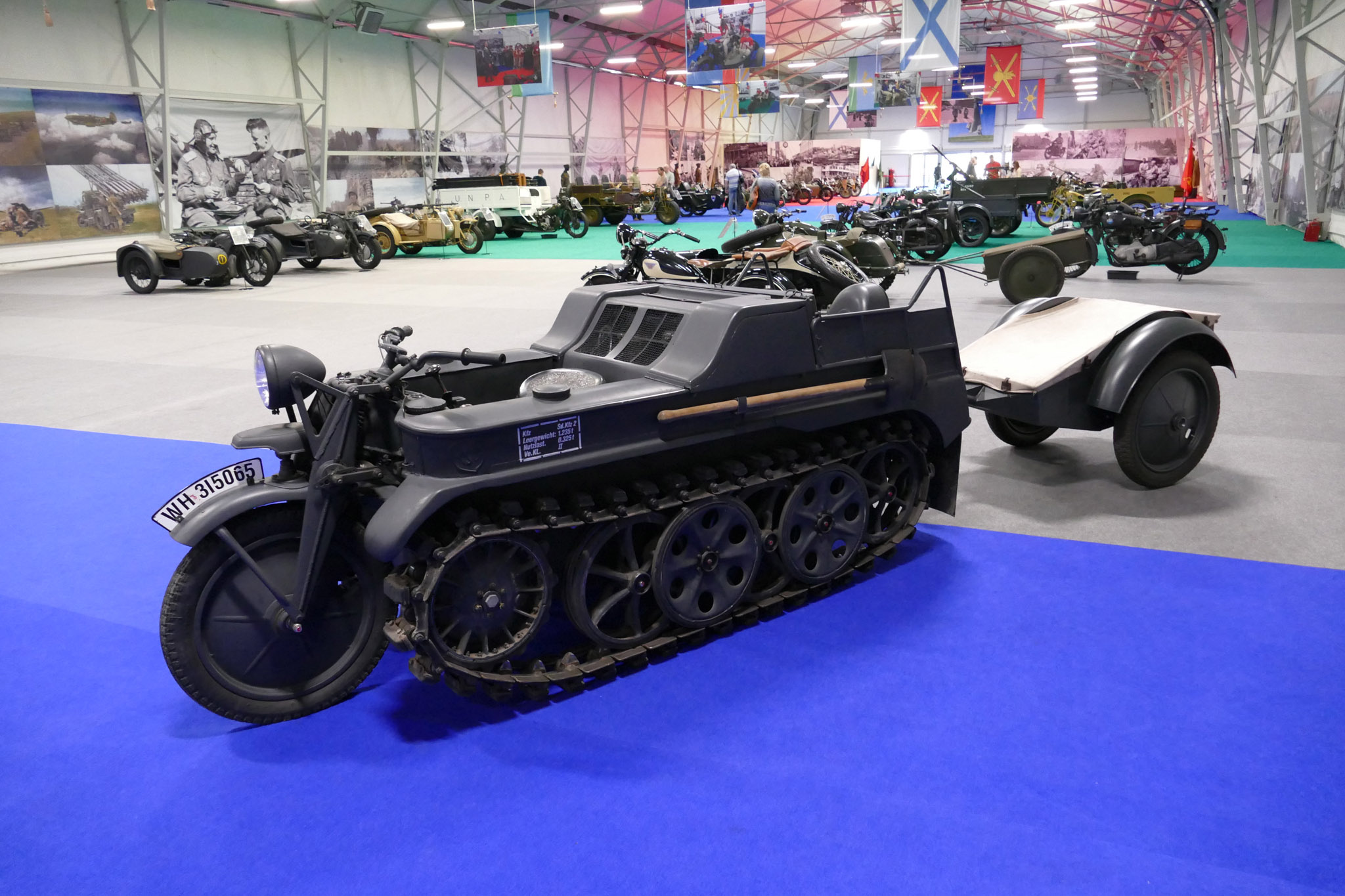
The Kettenkrad began to appear on a truly massive scale in 1942
In other words, this is a typical Knipkamp 3/4-track tractor—that is, a tracked vehicle with a front wheel necessary for maneuvering on roads. However, the manual refers to the tractor as a “Kleines Kettenkraftrad.” And this has played a very cruel trick on those unfamiliar with the vehicle’s characteristics. At certain steering angles, the side clutches engage. At high speeds, this poses a risk of overturning, and many people who thought it was a motorcycle have lost their lives as a result.
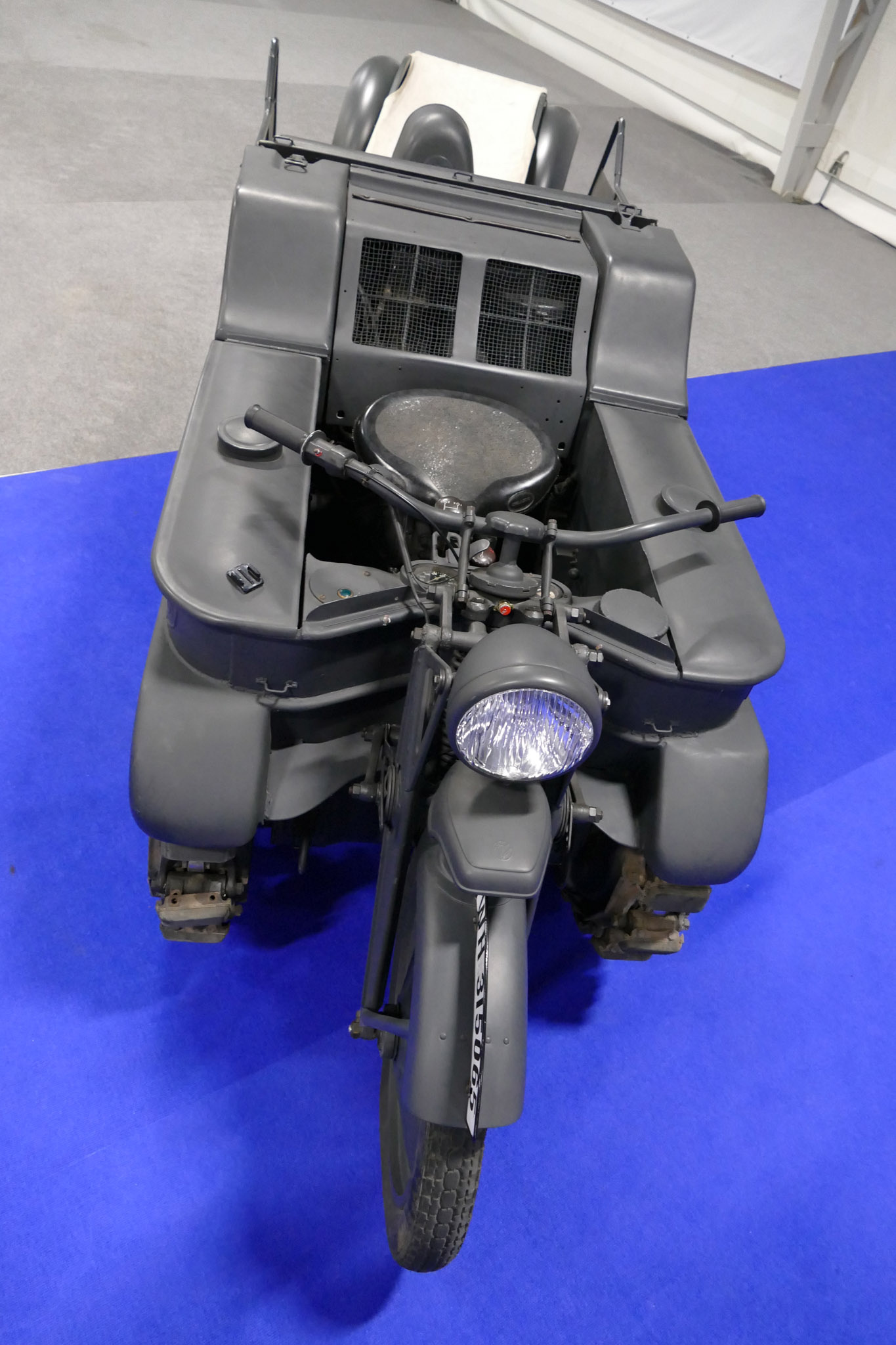
This is what the tractor looked like in the second half of 1942
As mentioned above, the Sd.Kfz.2 was originally a highly specialized transport vehicle, initially intended for airborne units, and later also for mountain infantry units. They needed something capable of replacing mules. As a result, the initial production run of the Kettenkrad—as it was quickly nicknamed by the troops—was very modest. In 1940, NSU produced only 142 of these vehicles, but by 1941, production had risen to 419 units. The Kettenkrad made its combat debut during the operations in Greece and the landing on Crete.
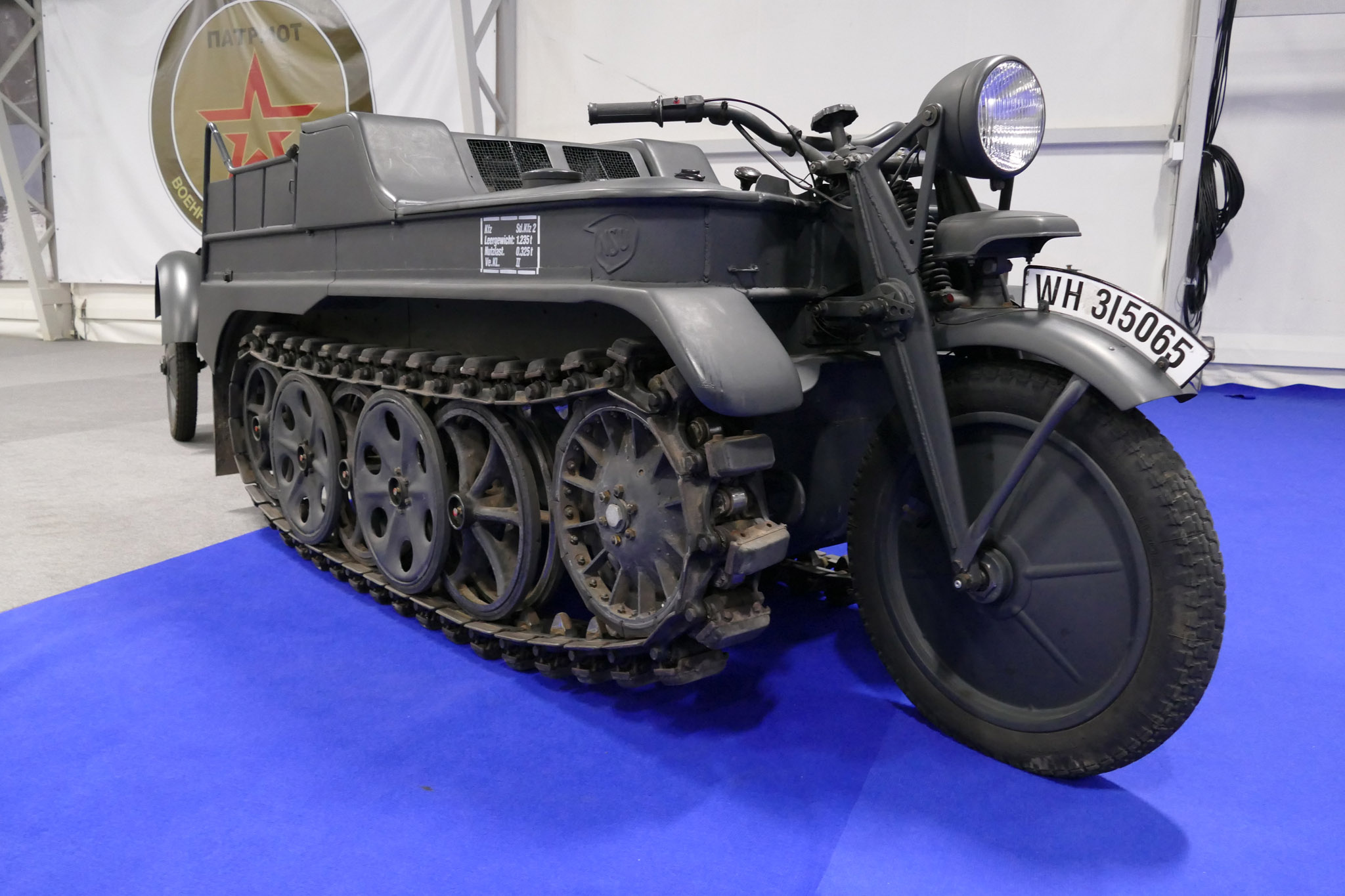
Nine different changes were made in 1942
As early as the second half of 1941, the first specialized variants of the vehicle began to appear. For example, the signal corps vehicles “kleines Kettenkraftrad für Feldfernkabel” (Sd.Kfz. 2/1) and “kleines Kettenkraftrad für schweres Feldkabel” (Sd.Kfz. 2/2). However, the tractor gained real popularity for other reasons. When fall arrived, it became clear that this “motorcycle” could plow through terrain where a regular motorcycle would get completely stuck. At the same time, it could carry three people and tow a trailer, a gun, or something similar behind it.
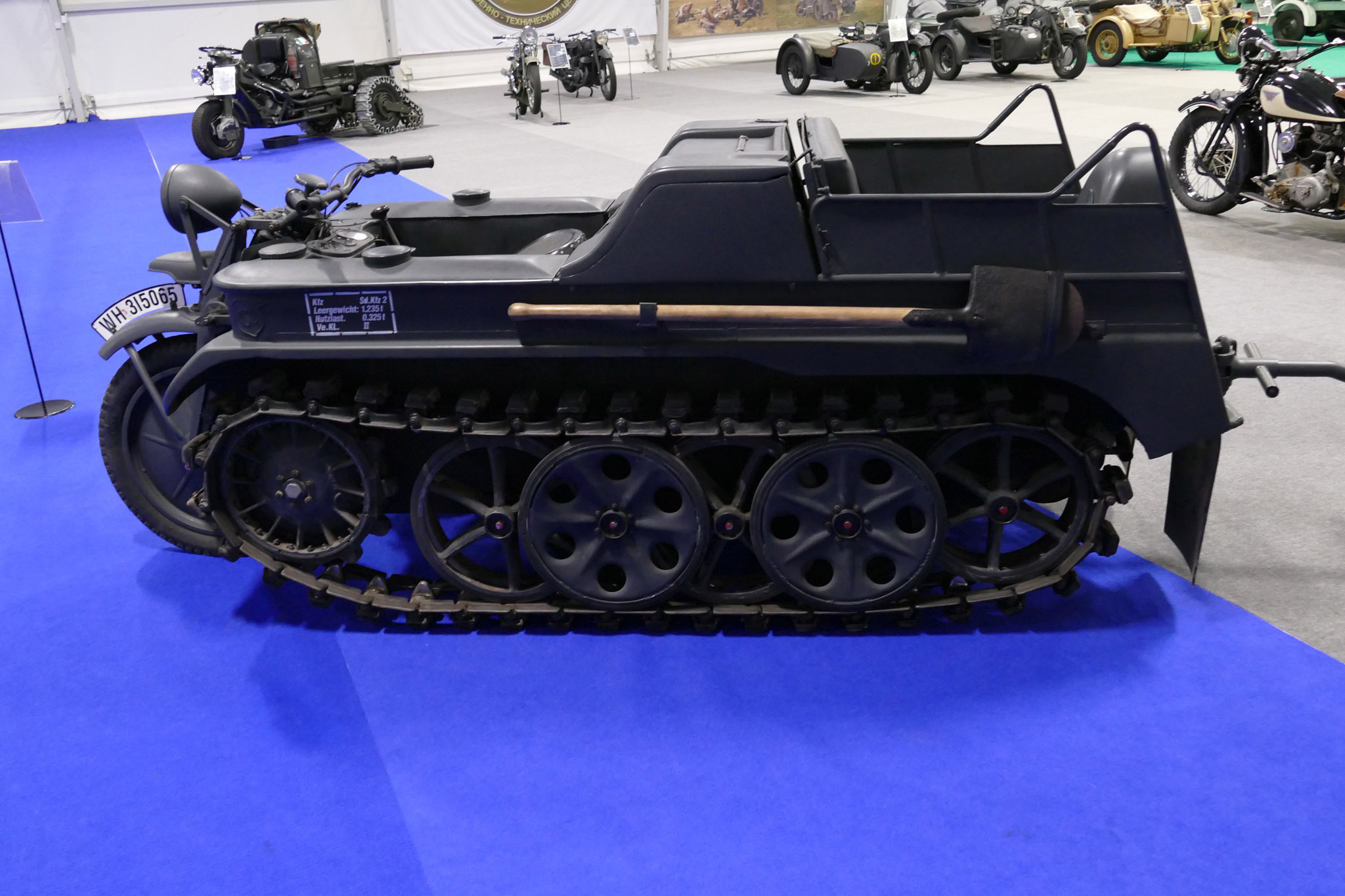
For this reason, the appearance of the Kettenkrad from that period was quite varied
As a result, 967 tractors of this type were delivered in 1942 alone, and that was just the beginning. Moreover, the vehicle itself began to undergo gradual changes. In 1941 alone, seven different changes were made, and in 1942, nine more modifications were introduced. That said, it would be somewhat rash to rely solely on the items listed in the factory records. This is because actual vehicles sometimes contradict the details of modifications listed in authoritative sources—especially regarding the timing of specific changes. This is precisely what happened with the vehicle featured in this article.
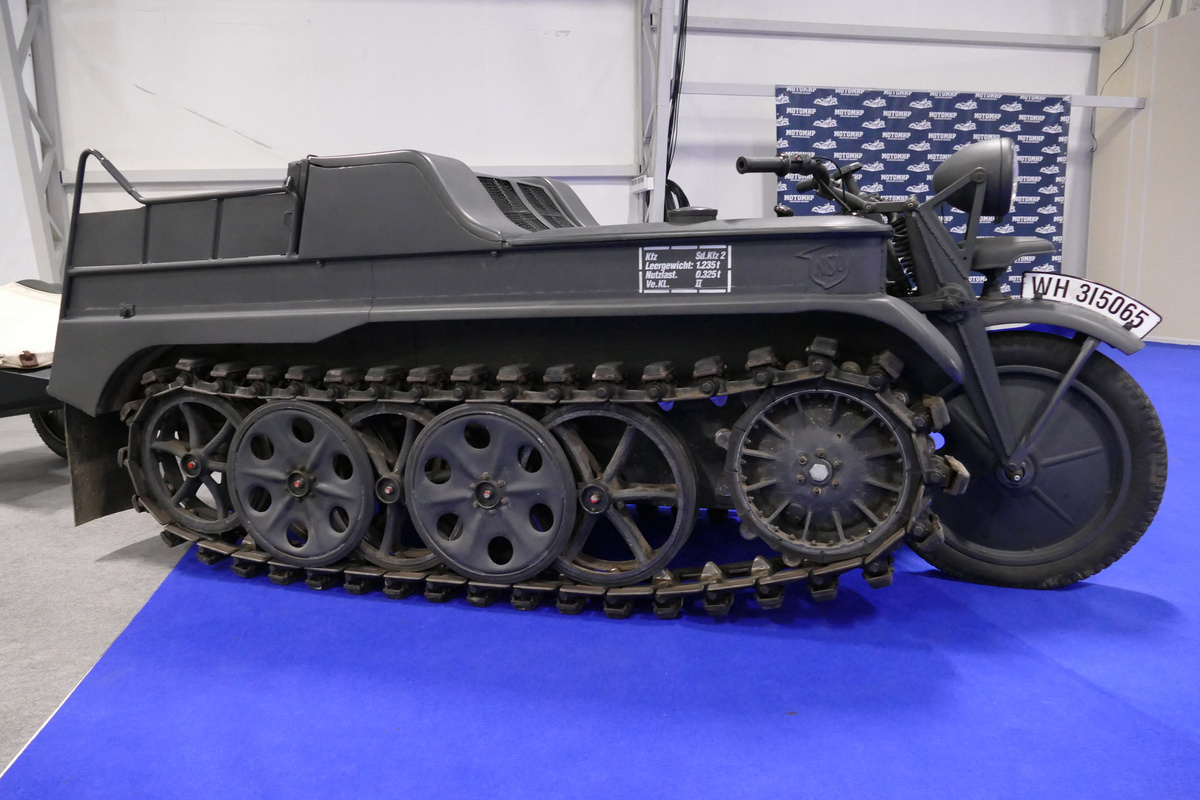
In 1942, more than 950 tractors of this type were delivered
The Kettenkrad became a truly mass-produced vehicle in 1943. The Stoewer company joined the production effort, having been relieved of its responsibility for manufacturing “standard light” passenger cars. However, production volumes were very low at first: in 1943, only 100 tractors were delivered from Stettin, while NSU delivered 2,440 Kettenkrads. The arrival of a second manufacturer was the reason why the NSU logos disappeared from the sides of the body. In fact, this is why Kettenkrads with logos are a rarity. Only about 1,500 of them were produced.
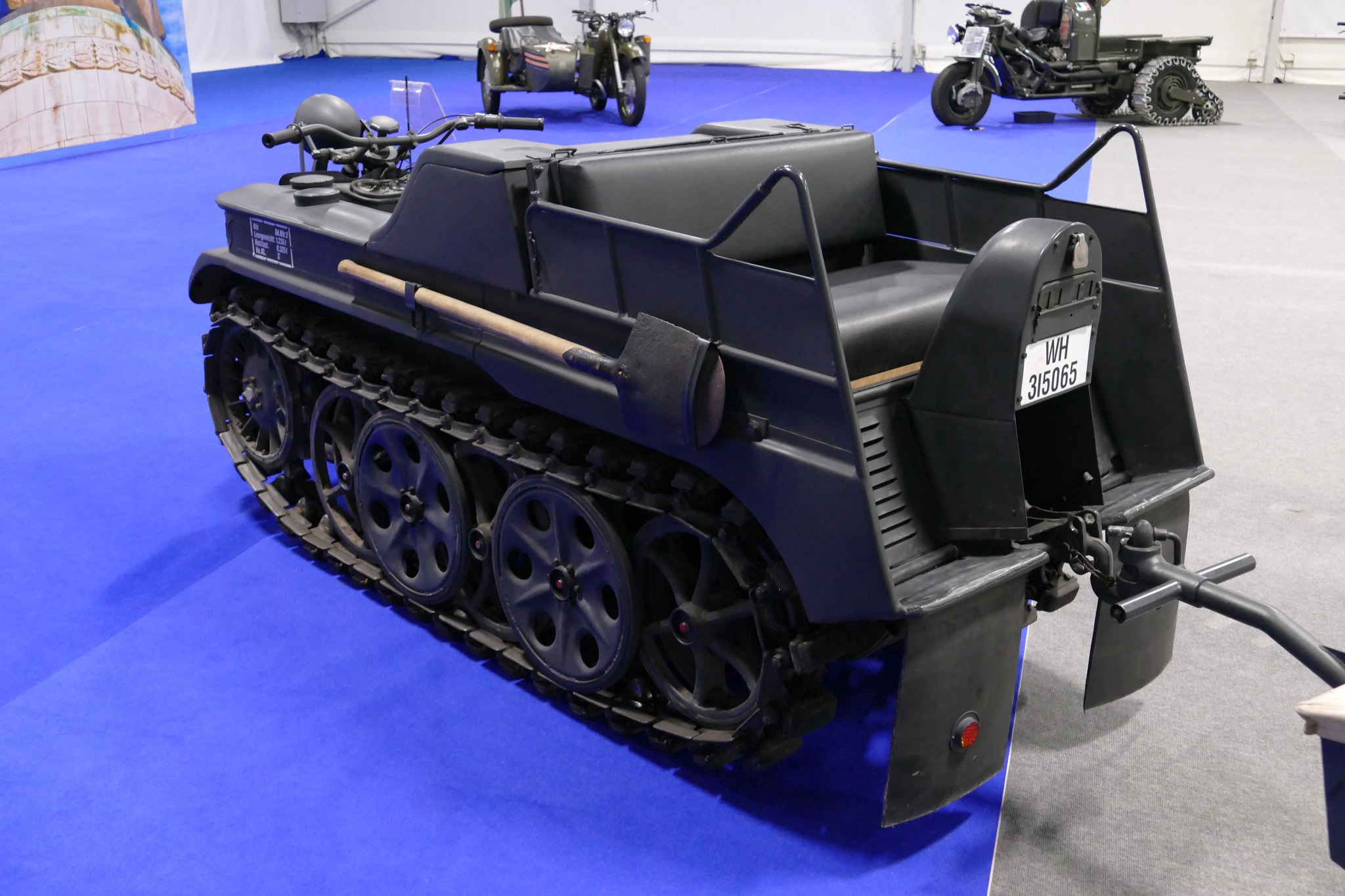
Today, early Kettenkrads are extremely rare
The Kettenkrad took on its classic appearance toward the end of the war. The headlight was eliminated, and other simplifications were introduced. As a result, production soared. In 1944, NSU delivered 3,315 tractors, and managed to deliver another 288 in 1945. Stoewer delivered 1,130 Kettenkrads in 1944 and another 100 in 1945. Then Stoewer called it quits, and Stettin became the Polish city of Szczecin. Production of the HK-101 at NSU, however, continued for some time. Now rebranded as agricultural tractors, about 500 more were built.
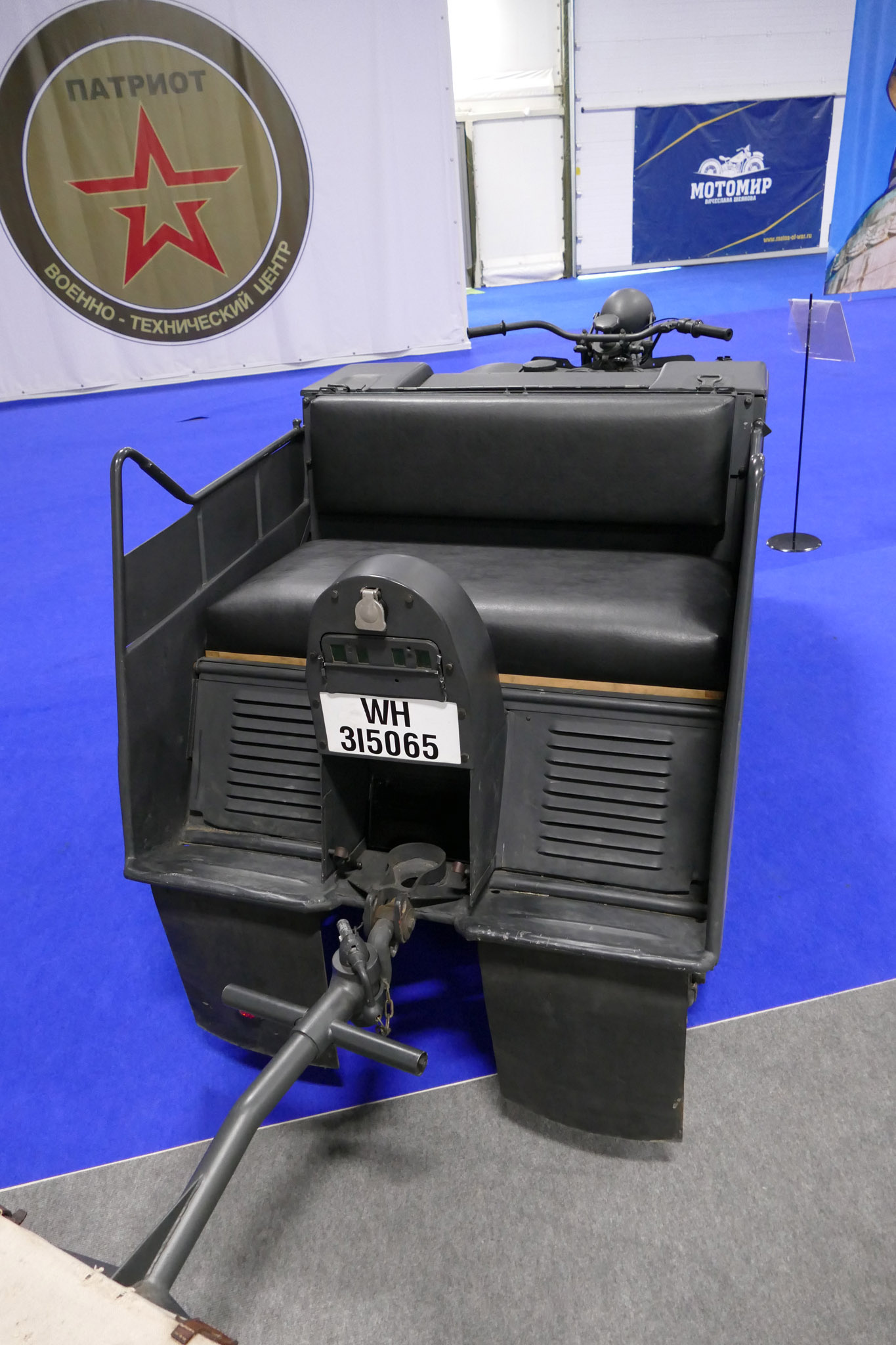
This protrusion beneath the stern light is sometimes dated to 1943. But it clearly appeared earlier
Strictly speaking, it was precisely its use as a civilian mini-tractor that ensured the Kettenkrad’s survival in the postwar period. Of course, it wasn’t particularly simple, especially when it came to the undercarriage, but there were no problems with spare parts. Plus, it had a very common engine, from the Opel Olympia. Gradually, the number of these tractors appearing in museums and private collections is growing. And one of the main sources of these additions is former farm workers found in abandoned barns. Yes, such discoveries still happen.
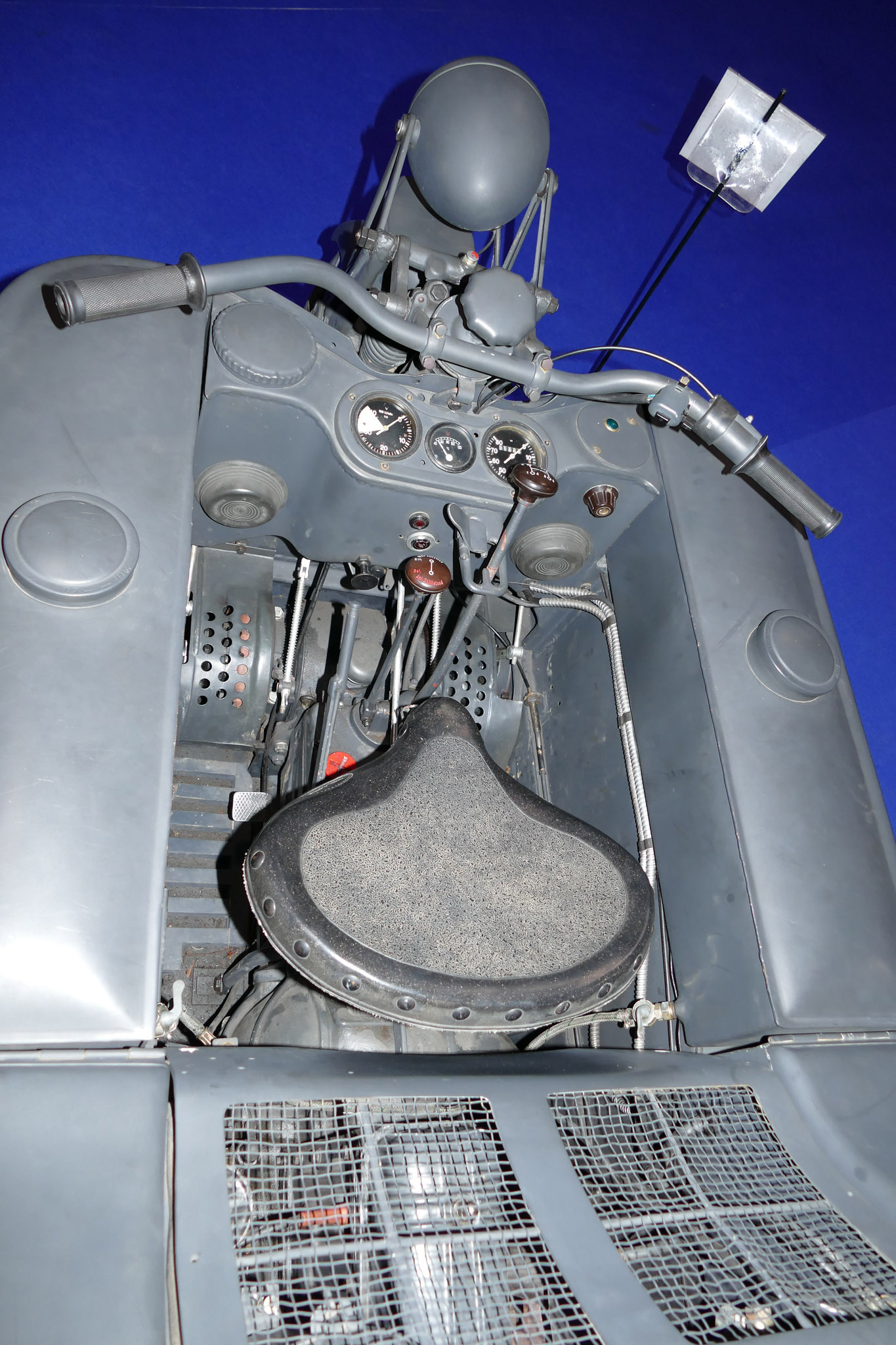
The links connecting to the swivel mechanisms are visible from the front
At the same time, the vast majority of such finds are tractors manufactured between 1943 and 1945, as that was when most of them were produced. Incidentally, resourceful people in the Czech Republic are rebuilding the “tubs” of these tractors, which is yet another source of new additions to the Kettenkrad ranks. Generally speaking, the vehicle is rare, but once at Militracks, Kettenkrad enthusiasts put 17 of them on display at once. This drove the price of the tractors down by about half. Of course, the price eventually crept back up, since these vehicles only get more expensive. Still, it’s an amusing fact.
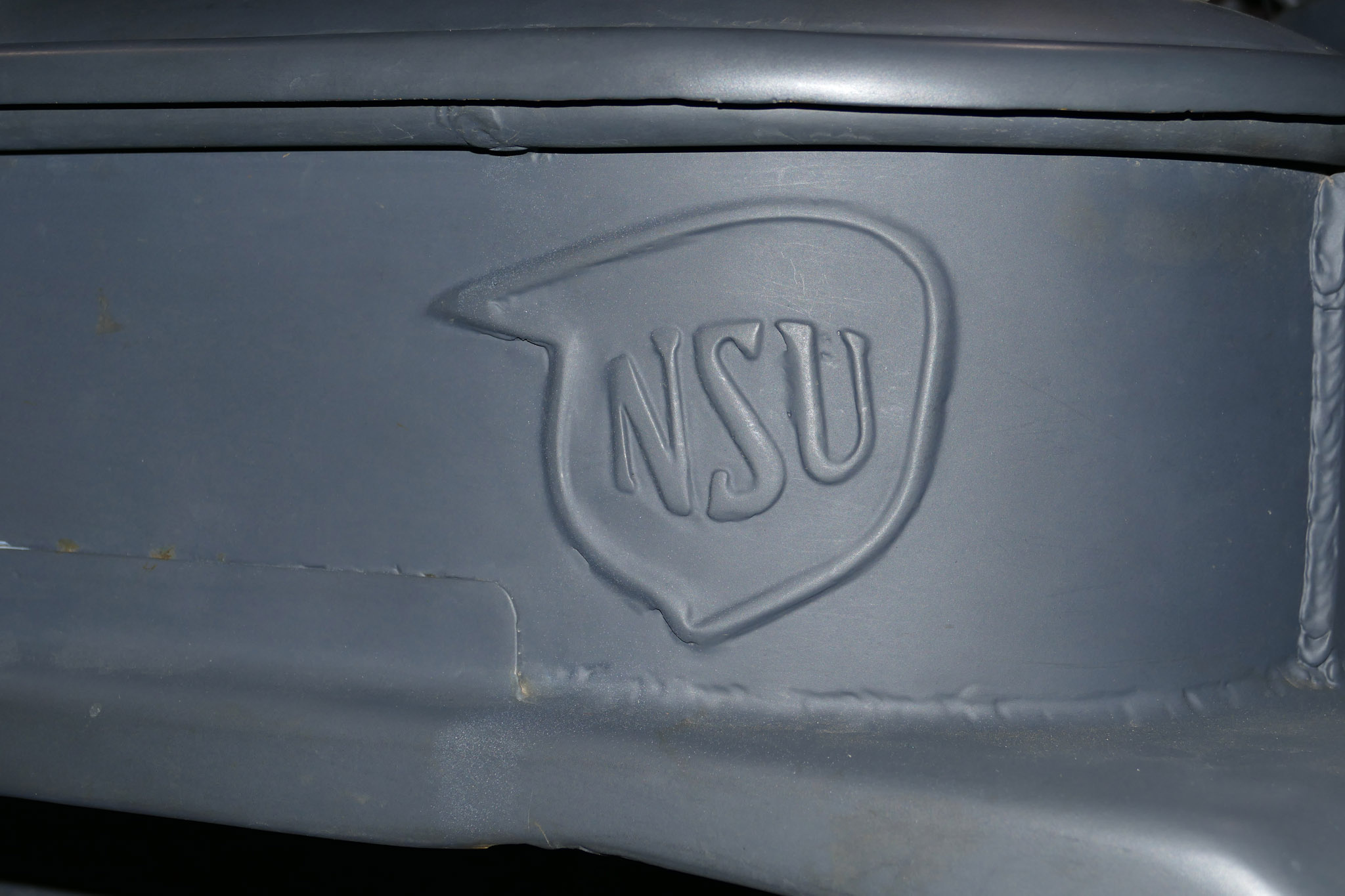
That logo disappeared in 1943
In the case of the tractor from Vyacheslav Sheyanov’s Motomir collection, this tractor belongs to the large-series tractors that began production in late 1941. It was preceded by 70 vehicles from the first test series and 500 vehicles from the large trial series. Strictly speaking, that is why there were so many changes in 1941. In fact, the large-scale series—which was intended not only for paratroopers, mountain infantry units, and signal corps personnel—underwent just as many changes. And this has given rise to some misconceptions, particularly regarding the tractor’s appearance.
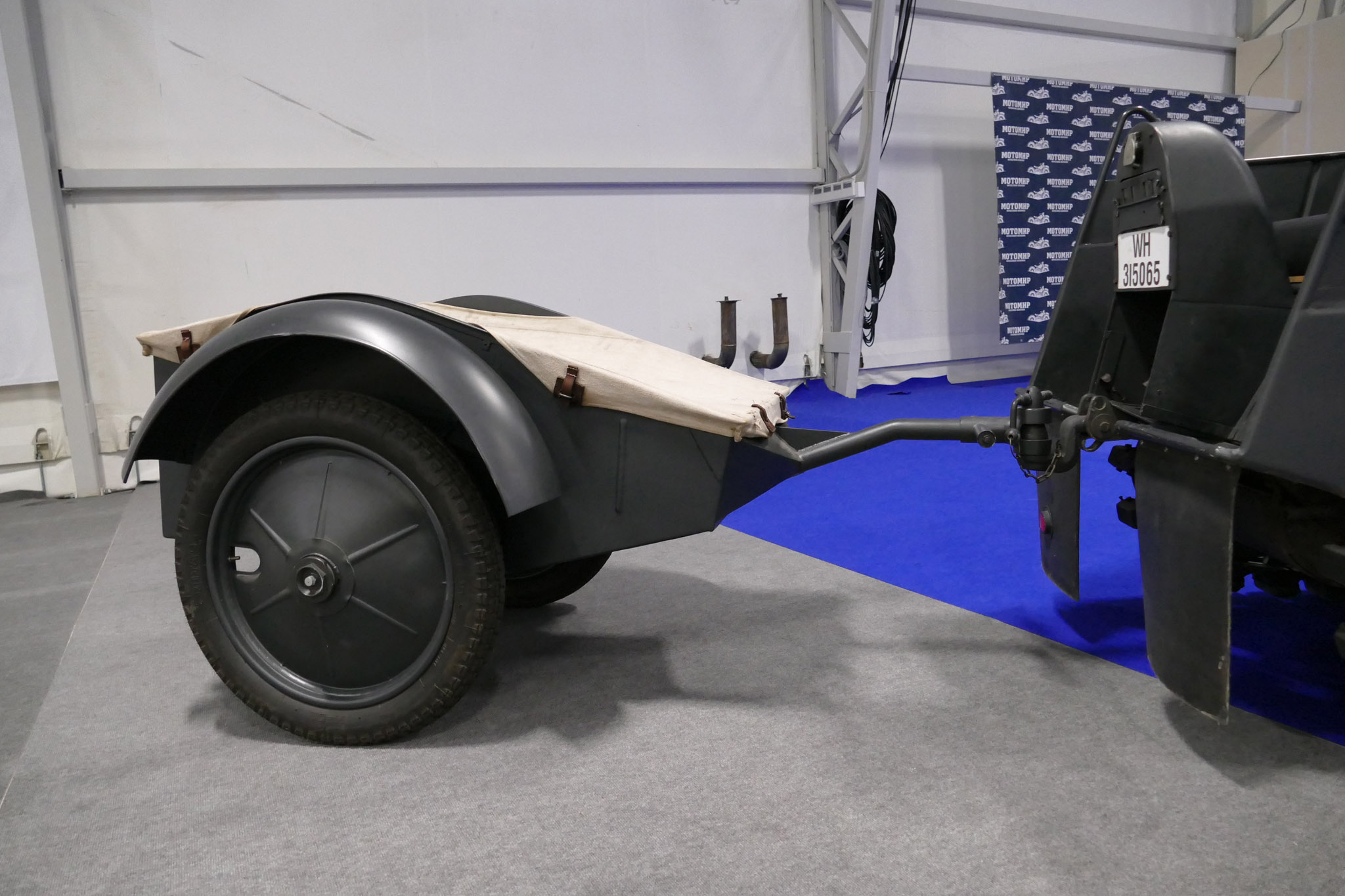
The Sd.Ah.1 trailer was notable for its versatility
One such misconception concerns the shape of the rear bumper, on which the Notek taillight is mounted. There are three known versions of this bumper; the first, angular version was officially installed on the first 542 tractor units. That is, almost until the end of 1941. Later, on the last vehicles of a large production batch, a new, more technically advanced protrusion was introduced, though it was also quite angular. Finally, starting with vehicle No. 1,515, a rounded design was introduced, which became the classic version. This part is usually what people look at to determine whether a vehicle is early or late production.
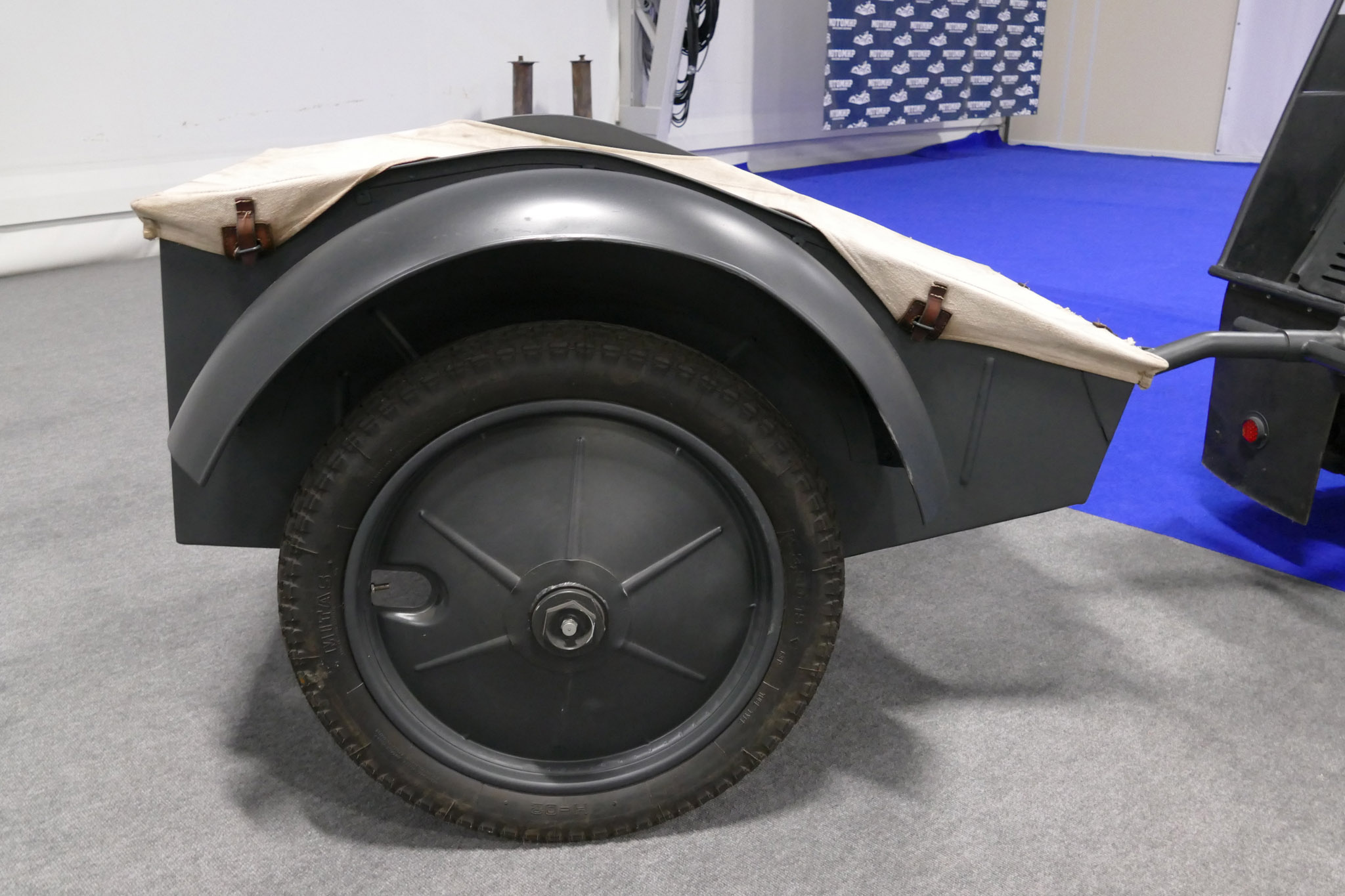
It existed in at least three versions
So, there’s a tractor in Kubinka that was manufactured in 1942, captured sometime in the second half of 1942, and tested in the fall and winter of 1942. And it already has that very rounded protrusion design. In other words, as early as the second half of the year, it already had something that, according to the paperwork, shouldn’t have been there. The vehicle from Vyacheslav Sheyanov’s Motomir collection has exactly the same configuration. In short, there are the official records, and then there are the actual vehicles that have survived in their original configuration. And sometimes they don’t quite add up.
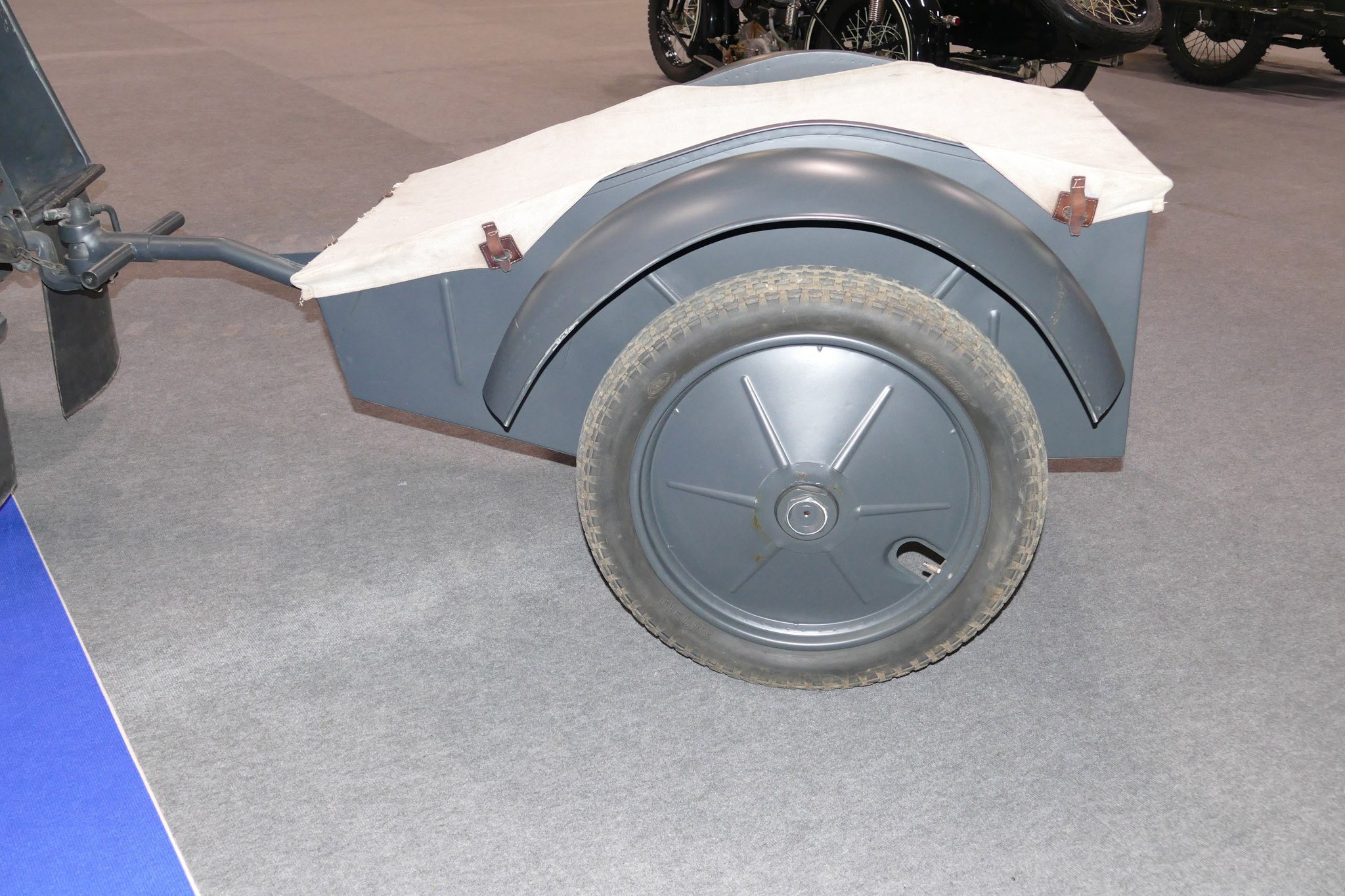
When empty, the trailer could float
The tractor is shown in its standard configuration, along with its standard trailer, the Sd.Ah.1 (Anhänger (1 achs.) für kleines Kettenkraftrad). It was introduced at the same time as the start of mass production of the Kettenkrad. The trailer is quite technologically advanced; when empty, it has positive buoyancy. In other words, it won’t sink in mud. It existed in several variants, including versions for signalmen. Infantry wagons (If.8) were often hitched to the Kettenkrad, sometimes several at a time.
Like the other exhibits at Vyacheslav Sheyanov’s Motomir, this tractor is in good working condition and runs when needed. If you’re ever in Samara, be sure to stop by—no other museum in the world has this many military motorcycles. Even seasoned motorcycle enthusiasts will find something here to surprise them.