The Future of Russian Aircraft Engines. What Kinds of Aircraft Engines Will Replace the PD Series in Russia?

Do you know how the Russian aircraft industry resembles Hollywood these days? They’re always making prequels and sequels there, squeezing every last drop out of iconic franchises. It’s the same here, only instead of superheroes, we have engines. With bated breath, we followed the saga of the PD-35, the mighty engine with 35 metric tons of thrust. It was predicted to play a role in a blockbuster with China (the joint CR929 project), but the partnership didn’t work out, and the partners went their separate ways.
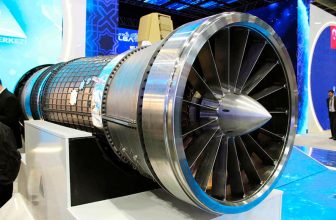
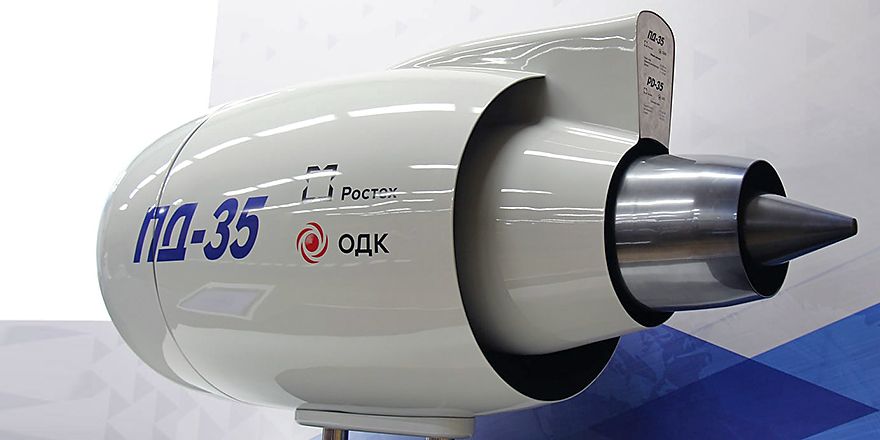
And so, in September 2025, the engine was ceremoniously unveiled to the president in Perm. Beautiful, powerful, standing on a display stand… But there’s no plane underneath it. It’s a comical situation: there’s an engine, but no airliner. It’s as if you’d bought a super-high-tech engine from Ferrari, but the car itself still only exists on paper. But jokes aside, because in reality this wasn’t just an expensive exhibit—it was a technological time capsule. And now we’re going to talk about what will grow from this “seed.”
Grandpa’s PD-35 Technology
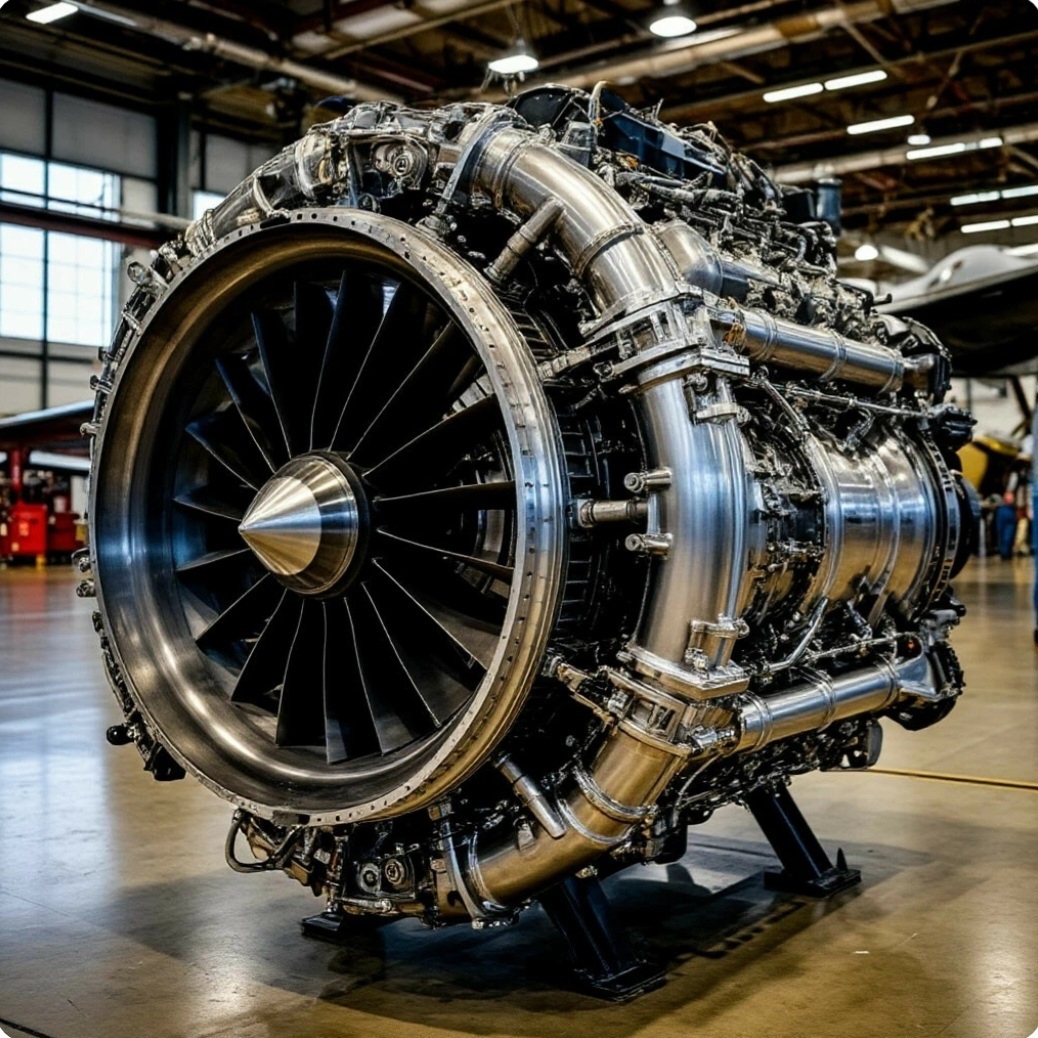
To give you an idea of the scale: the PD-35 isn’t just an engine—it’s a scientific and technological breakthrough encapsulated in titanium and heat-resistant alloys. It incorporates about 20 cutting-edge technologies, including composite fan blades, which Putin personally felt (and, they say, approved the texture of).
But using that much power on one’s own for peaceful purposes is an unaffordable luxury. So a bold and wise decision was made: not to discard the development work, but to use the “35” as a basis for creating an entire line of smaller engines. It’s just like cooking: you make a huge pot of broth, and then divide it into jars for soup, sauce, and gravy.
And this is where things get really interesting. While the PD-35 is a technology demonstrator—a “flying laboratory” for ideas—its “offspring” already have very specific applications.
PD-26: A Workhorse with Ambitions
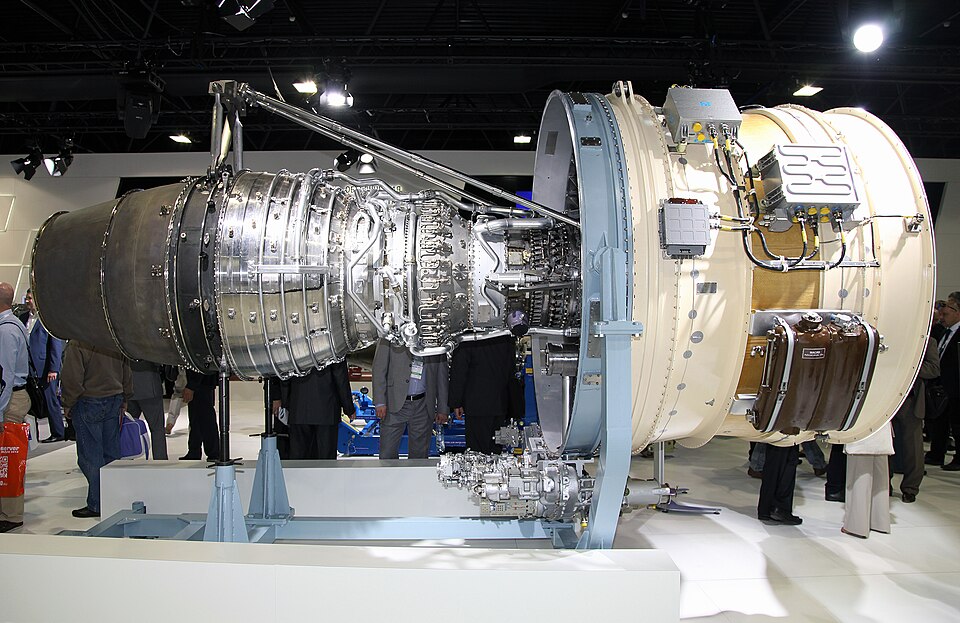
Comrade PD-26 was the first to emerge from the shadow of the “thirty-fifth.” This isn’t just a “smaller engine”—it’s the new striking force of our air force. Imagine this: take the gas generator from the PD-35 (that is, its very heart) and slightly “throt back” it so that it produces 26 metric tons of thrust instead of 35. Why? Because that’s exactly the 26 metric tons the military requested for a future transport aircraft (the Il-100 project or its equivalent).
And this is where our beloved Russian ingenuity comes into play. Manturov (who’s a shrewd businessman) stated: developing an engine exclusively for military use is economically short-sighted. Here’s the plan: it’s for both the military and the civilian market! In other words, the PD-26 will not only power heavy transport aircraft but may also become the powerplant for a new wide-body aircraft. For example, for the mysterious MS-21-500 (the name, of course, is as clunky as an old email password, but it sounds impressive).
This engine has already undergone bench testing and has reached takeoff conditions multiple times. In other words, this is no longer just theory, but hard-core practical experience. Its main selling point is versatility. It is designed to fill two huge niches at once: military transport and civilian long-haul aviation.
What’s next? The lineup of the future
Now let’s take a look at what kind of engines our planes will be equipped with in 10 to 15 years. After all, the industry doesn’t just live for today—it also looks to the future.
For the youngest children (light aircraft):
Piston engines are the ones calling the shots here. For example, the brand-new M105 (115 l.s.), which was unveiled in 2026, or the APD-500 (developed by CIAM based on the “Aurus”). The irony is that we’re learning to make even seemingly simple things, like an engine for a light aircraft, because imported Rotax engines are no longer available. But now we’ll have our own “Sheptala” aircraft for pilot training and agricultural aviation.
For regional aircraft (TVRS-44 “Ladoga,” Il-114-300):
The TV7-117ST reigns supreme here. It’s a workhorse with about 2,800 l.s. of power. Sure, it’s not a cover model, but it’s as reliable as a rock. It’s already available in two versions designed for different tasks.
For “Superjets” and short-haul aircraft:
PD-8—now that’s a real champ. They say the Superjet handles more smoothly with it. And what’s interesting is that engines like this usually last 10–12 years, but this one apparently lasted only six—when things get tough, you won’t be flying quite the same way.
For the MS-21 (medium-range):
There’s no question about it—the PD-14. Our beauty, which is already carrying passengers. But the designers are looking ahead: for the extended version of the MC-21 (with 200+ seats), 14 metric tons of thrust might not be enough. That’s why there are rumors about boosting the PD-14’s thrust to 16–17 metric tons.
Heavy artillery (wide-body aircraft and transport planes):
And this is where those very “successors to the PD-35” will take center stage. The PD-26 to start with, and then… Then, perhaps, they’ll return to the original PD-35. After all, if we do decide to build our own twin-engine wide-body aircraft (an alternative to the Boeing 787 and Airbus A350), then 35 metric tons per engine is exactly what the doctor ordered.
A table for those who like to break things down into categories.
Airplane Today’s Engine Tomorrow’s Engine (Outlook):
- Light Aircraft (LMS-901) VK-800SM, imported APD-500, M105
- Il-114-300 / “Ladoga” TV7-117ST TV7-117ST (upgrade)
- Sukhoi Superjet 100 PD-8 PD-8 (possibly scaled)
- MC-21 PD-14 PD-14 (boosted to 16–17 metric tons)
- There is no new wide-body aircraft (project) PD-26 / PD-35
- Heavy-lift transport aircraft to replace the An-124: PD-26 / derived from the PD-35
The funny thing is that…
The current situation with engines is like that joke about the hedgehogs who cried, but kept getting pricked and kept eating the cactus. In other words, we kept developing them. We got ourselves into the business of building top-tier engines, an area where we lacked expertise (thanks to the ’90s and the 2000s, when it was easier to just buy a “Boeing”), and now we’re going through this process with wheels.
The PD-35, even without an aircraft, isn’t a failure. It’s our “bench-top lab.” It’s like buying the most powerful computer just to type in Word. Silly? Yes. But at least you know that when “Cyberpunk 2077” comes out, it’ll run flawlessly on ultra settings.
It’s the same here. The Chinese CR929 project (now simply called the C929) went down the drain, but we still have the technology. And now, when we decide to build our own giant, we won’t have to start from scratch—we’ll just pull the blueprints off the shelf.
What do you think?
And now, dear readers, here’s a tough question: Do you think our economy can support the development of a full-fledged wide-body aircraft (similar to the Il-96, but based on new technologies), or will we limit ourselves to military transport aircraft and the MS-21?
And here’s a second question (with a bit of a jab): Is the name “MS-21-500” a brilliant marketing move, or just the desperation of people who’ve run out of ideas for names? Maybe you have some better suggestions? “Vityaz,” “Scythian,” “Dad” (since it’s so big)? Leave your ideas in the comments—let’s have some fun with this together!
The most optimistic forecast: In 10 years, we’ll stop thinking of “Boings” and “Airbuses” as a nightmare. The main thing is that funding doesn’t dry up and that the engineers’ hands grow from the right place. And, by all accounts, that’s exactly where they’re growing from.
Source — https://dzen.ru/a/aZh_k9iSwn75oAiD