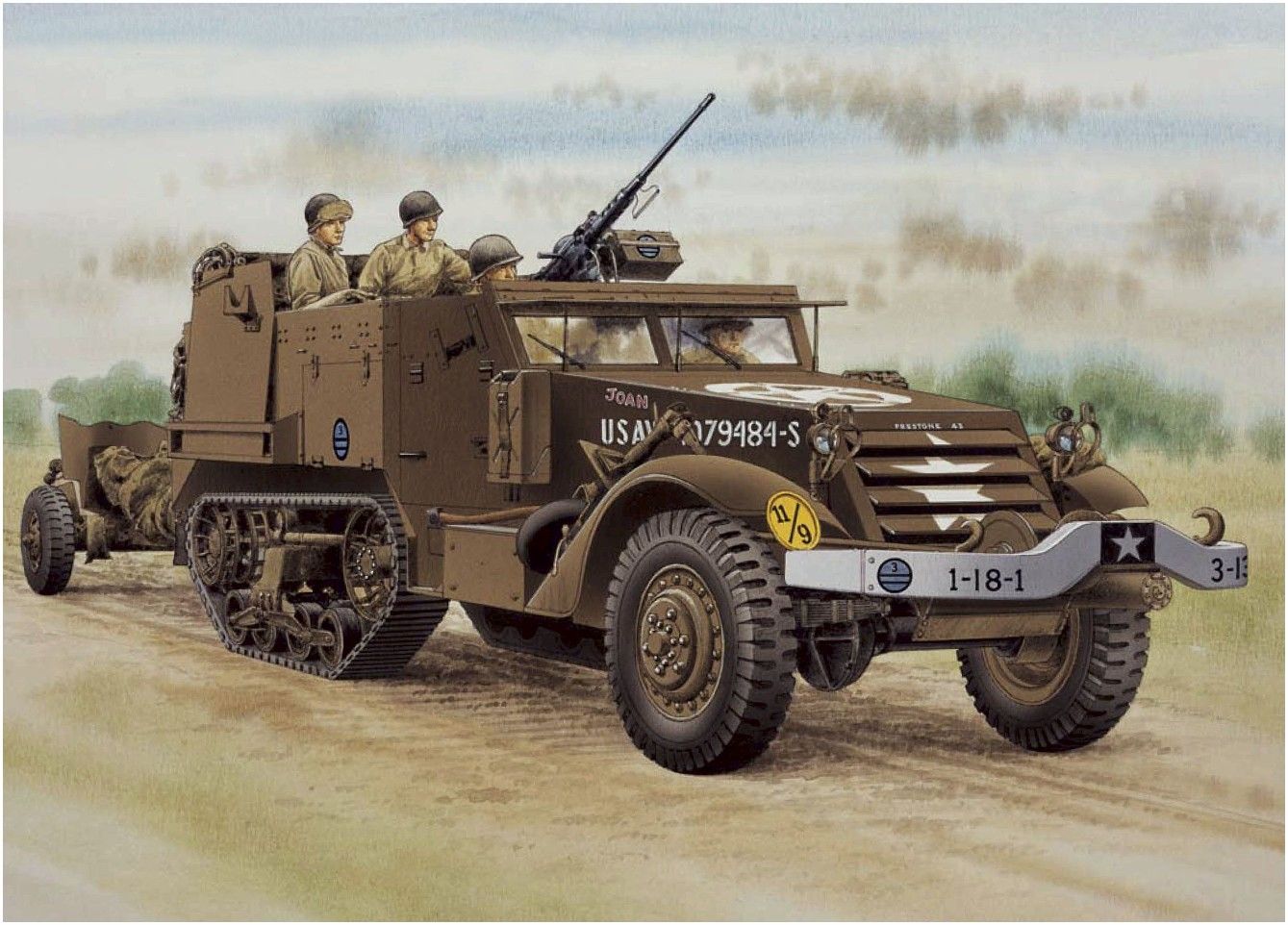
The History of American Half-Track Armored Personnel Carriers, Better Known as Half-Tracks
The need for off-road vehicles arose even before the start of World War I. The military became the primary customers for such vehicles, as this type of equipment was too complex, expensive, and fuel-intensive for civilians. Three main categories emerged fairly quickly: three-axle vehicles, all-wheel-drive vehicles, and half-track vehicles. Each category had its own advantages and disadvantages, and it took quite some time to determine the optimal solution.
A half-track version of the Jeffrey Quad all-wheel-drive truck. Unfortunately, it’s too slow.
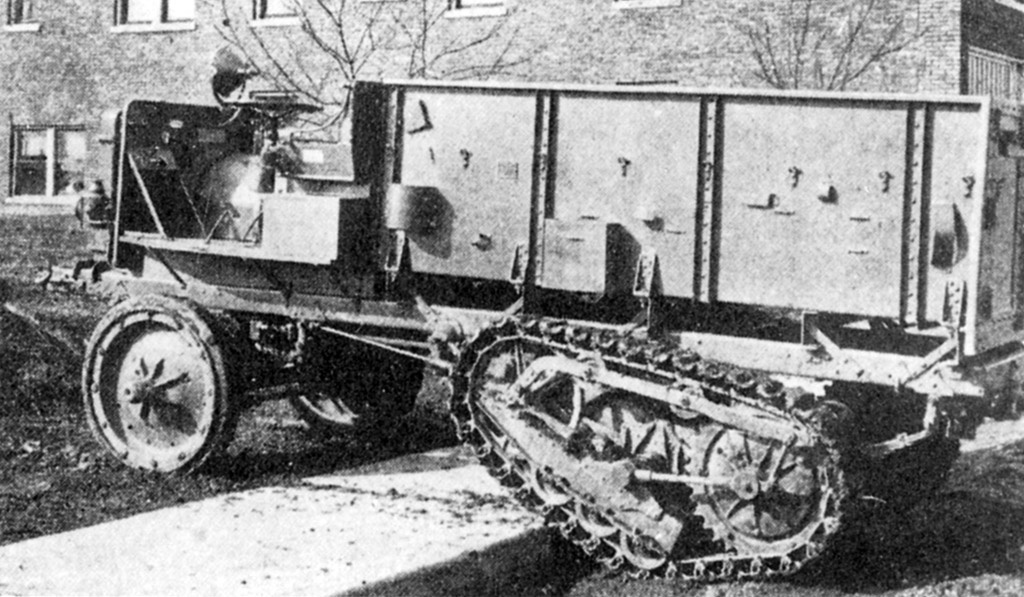
A half-track version of the Jeffrey Quad all-wheel-drive truck. Unfortunately, it’s too slow.
During the interwar period, as well as during World War II, the half-track design underwent active development. Adolf Kegress was the first to successfully build a half-track vehicle. The ideas of this talented French engineer bore rich fruit, and not only in France. His ideas were best implemented in the United States. It took some time, but eventually what would later be called the “half-track” appeared there. Of all the half-track vehicles, these proved to be the most successful, and they remained in service for more than a decade.
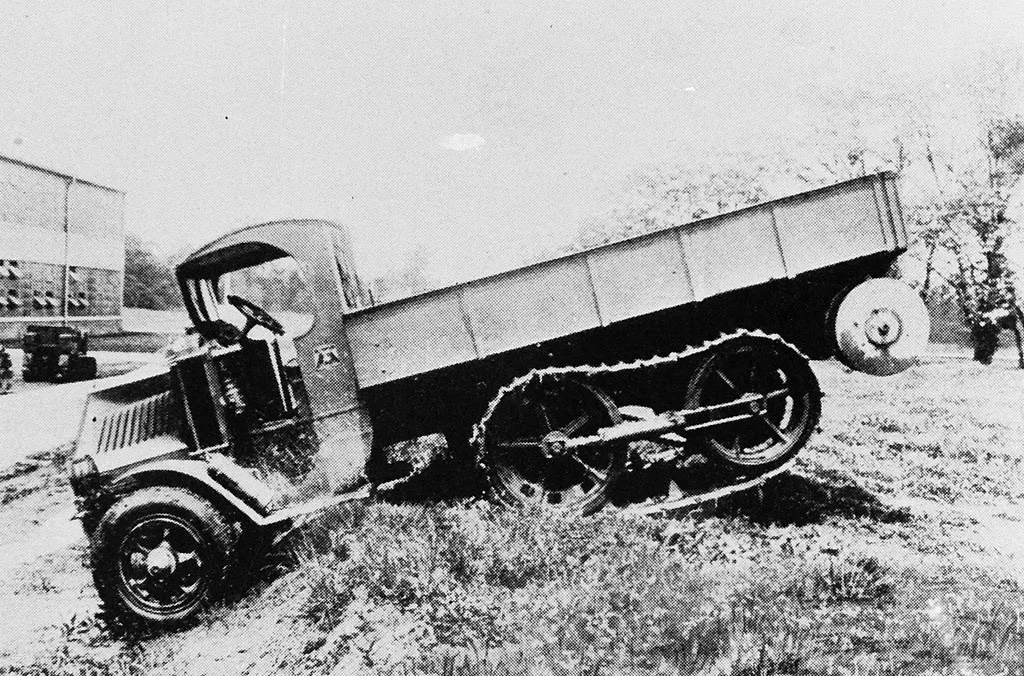
Christie’s experiments proved more successful, but they also didn’t make it into production
It’s not hard to explain why the half-track design was so popular. At that time, pure tracked vehicles were very slow, while wheeled vehicles had limited off-road capability. All-wheel drive had already appeared during World War I, but it was expensive and complicated. Therefore, an intermediate solution was developed. In other words, a standard truck was fitted with a tracked undercarriage in place of the rear axle. This resulted in a vehicle that had off-road capability comparable to that of tracked vehicles but could travel at higher speeds.
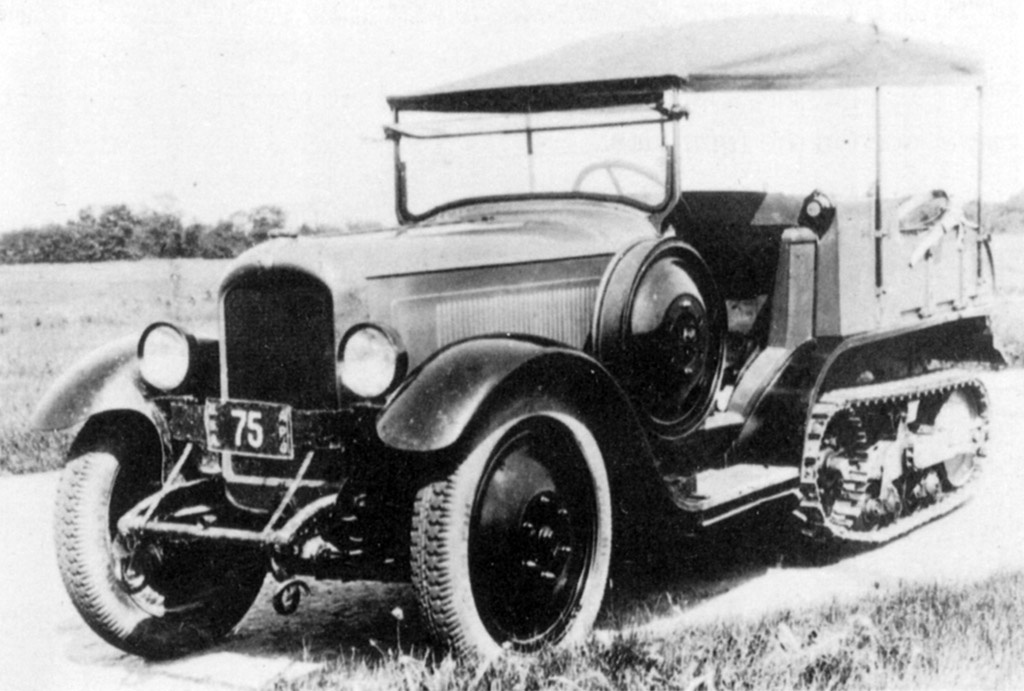
The Citroën-Kegresse P 17 played a key role. Its example made it clear which direction to take.
That was the theory, but in practice, the situation was different. For the most part, the resulting prototypes had off-road capabilities comparable to those of tracked vehicles. But their speed also turned out to be very similar to that of tracked vehicles. This was because the engines were underpowered, and the tracked undercarriages were similar to those of tractors. In this sense, Adolf Kegress was a true genius. Instead of using a conventional tractor undercarriage, he designed a lightweight structure with a rubber-fabric track. This allowed for higher speeds, and the vehicle itself turned out to be much lighter.
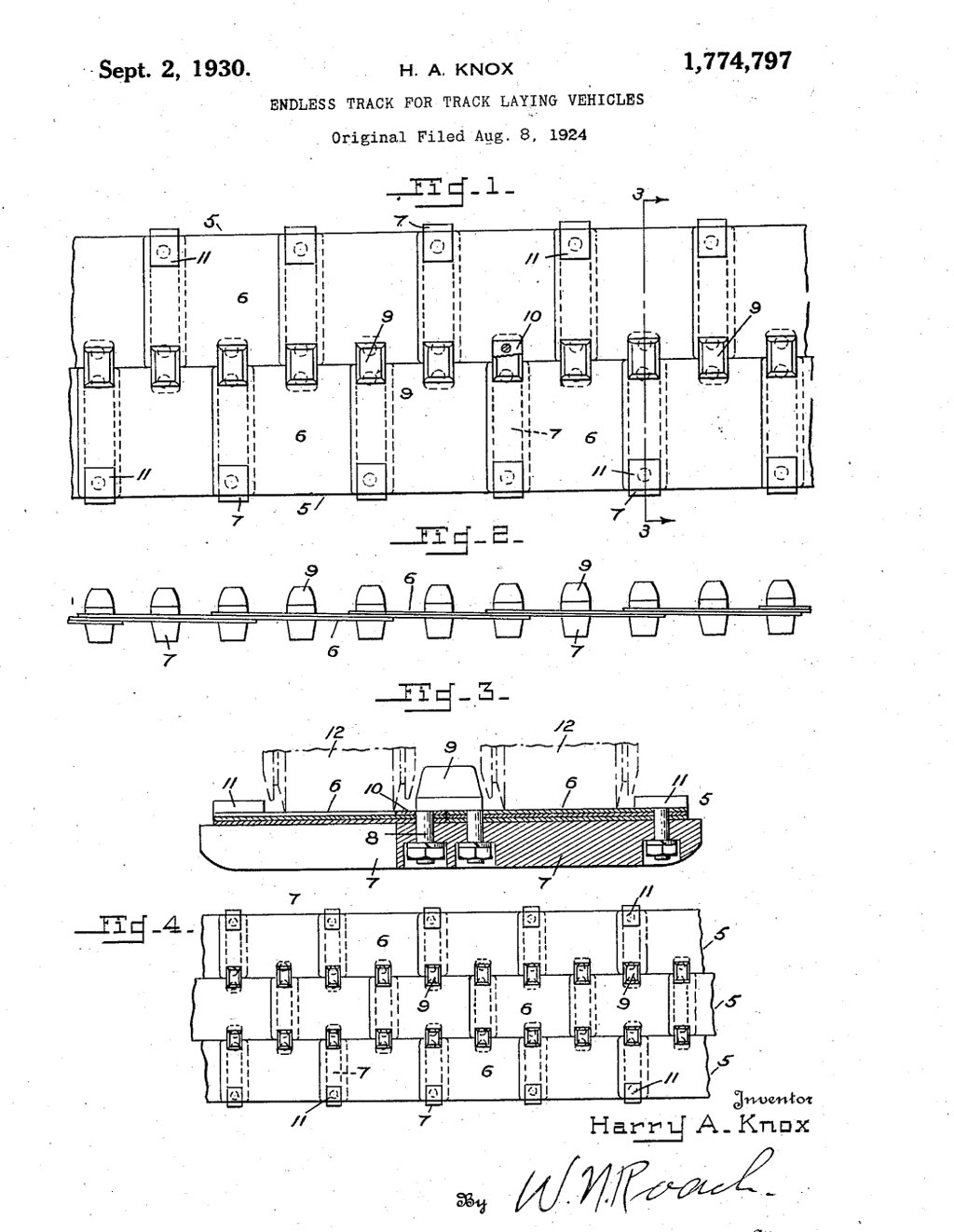
Harry Knox’s work on rubber-tracked tracks for a half-track tractor
The American industry began developing half-track vehicles as early as World War I, creating, among other things, the first all-wheel-drive half-track. It was then that the term “half-track” first came into use. The problem remained the same—the vehicles were too slow. John Walter Christie also worked on half-track designs. It must be said that his system proved more successful than those of others at the time. The lightweight design, featuring large-diameter support rollers and Christie’s signature tracks, provided higher speeds. Unfortunately, this design also proved unsuitable for use by the U.S. Army.
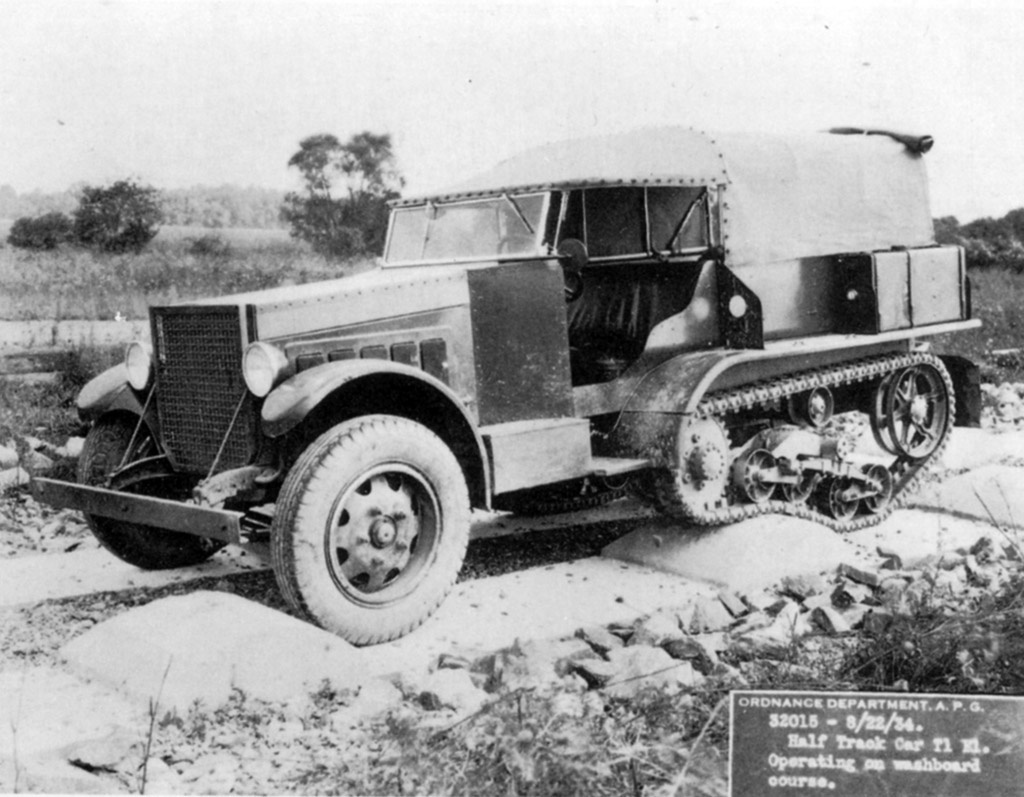
The T1 E1 halt-track car, the first American “halt-track” vehicle, which set the course for the development of this concept
In 1925, the U.S. military was first introduced to Citroën-Kegresse vehicles. From the very beginning, these vehicles were considered as artillery tractors for the M1897 75-mm guns. They had taken a close look at the French vehicles on more than one occasion, and the U.S. military liked the idea of rubber-fabric tracks. They also liked the vehicle’s overall layout. But there were two things they didn’t like—the vehicles were too small, and their engines lacked sufficient power. And it’s hard to argue with them on that point. The French tractors had a long-standing problem with low engine power, which significantly reduced their effectiveness. In any case, the French influence on the further development of American half-track vehicles is clearly evident.
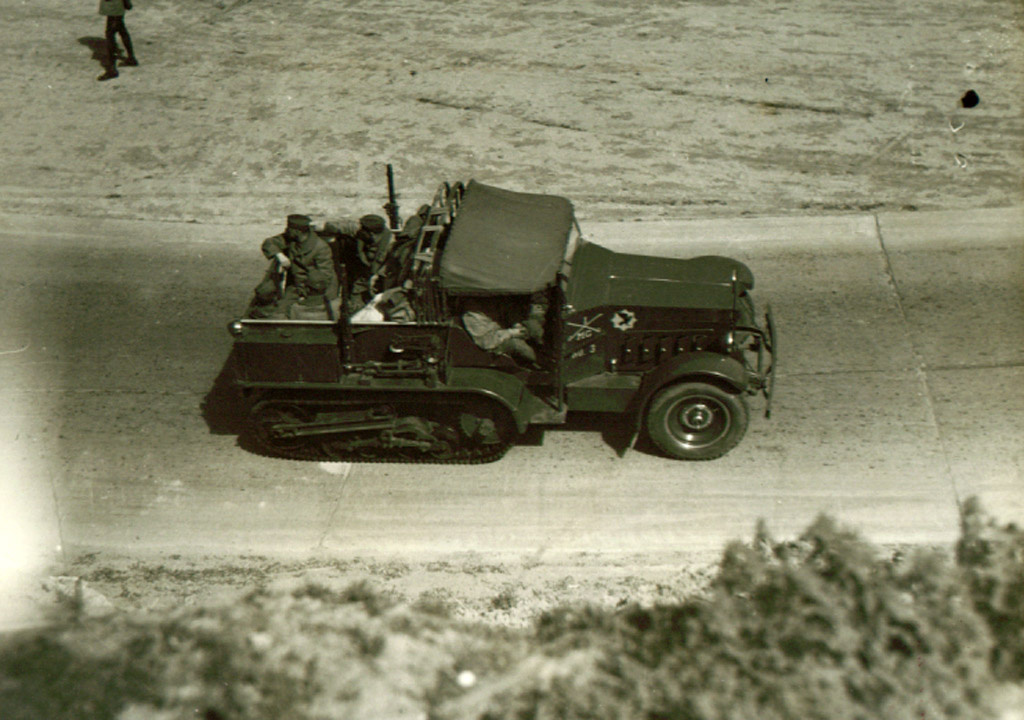
The 1934 Maneuvers
Harry Knox, who had considerable experience in designing passenger cars and trucks, played a key role in the development of the “Halftracks.” In 1918, he joined the Ordnance Department, later assuming one of the key positions in the development of tank chassis. Meanwhile, his work was by no means limited to tanks alone. In 1931, work began on high-speed tracked tractors. The design was based on Kegress’s ideas, but the vehicle itself turned out to be quite different. Starting with the fact that the American tractor was originally designed to be semi-armored, and ending with a much more powerful engine.
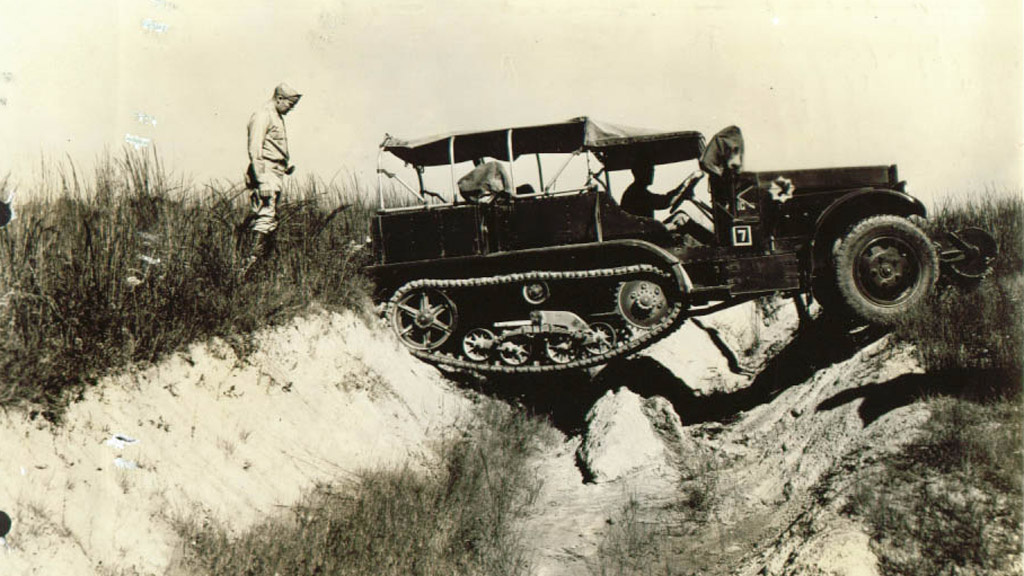
Halt-track car M1, the first production version of the American halt-track, 1938 model
The T1 halt-track car, introduced in 1931, featured an original chassis, though the Vickers Mk.E suspension was easily recognizable. The vehicle was powered by a 115-horsepower Cadillac engine. With a curb weight of 2,850 kg, it could reach speeds of up to 67 km/h. For the early 1930s, these were very respectable figures. The T1 family of half-track tractors was largely experimental, as it was developed with limited funding. And there were plenty of problems. Nevertheless, these vehicles became a common sight during U.S. Army maneuvers.
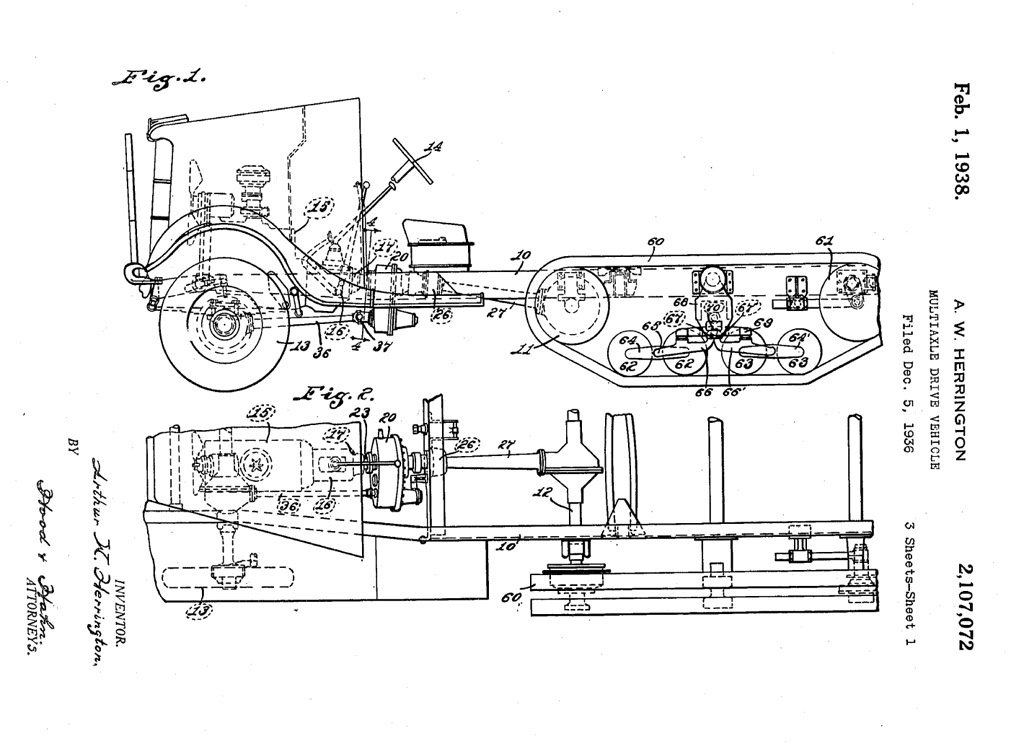
Final configuration of the half-track chassis, patented by Arthur Herrington
During the development of the T1 model, Harry Knox continued to experiment with the undercarriage. Various types of track belts were tested, and the suspension was gradually modified. Naturally, his VVSS suspension was also put to use, though the idea of using rollers with a fairly large diameter proved unsuccessful. However, the version with two pairs of small-diameter rollers worked well. A new track was also developed. By this time, Adolf Kegress had already abandoned the rubber-fabric track in favor of an all-metal one. In the U.S., his idea was perfected, eliminating the problem of structural failure. In addition, they managed to do away with the metal shoes, which had complicated the design and added unnecessary weight.
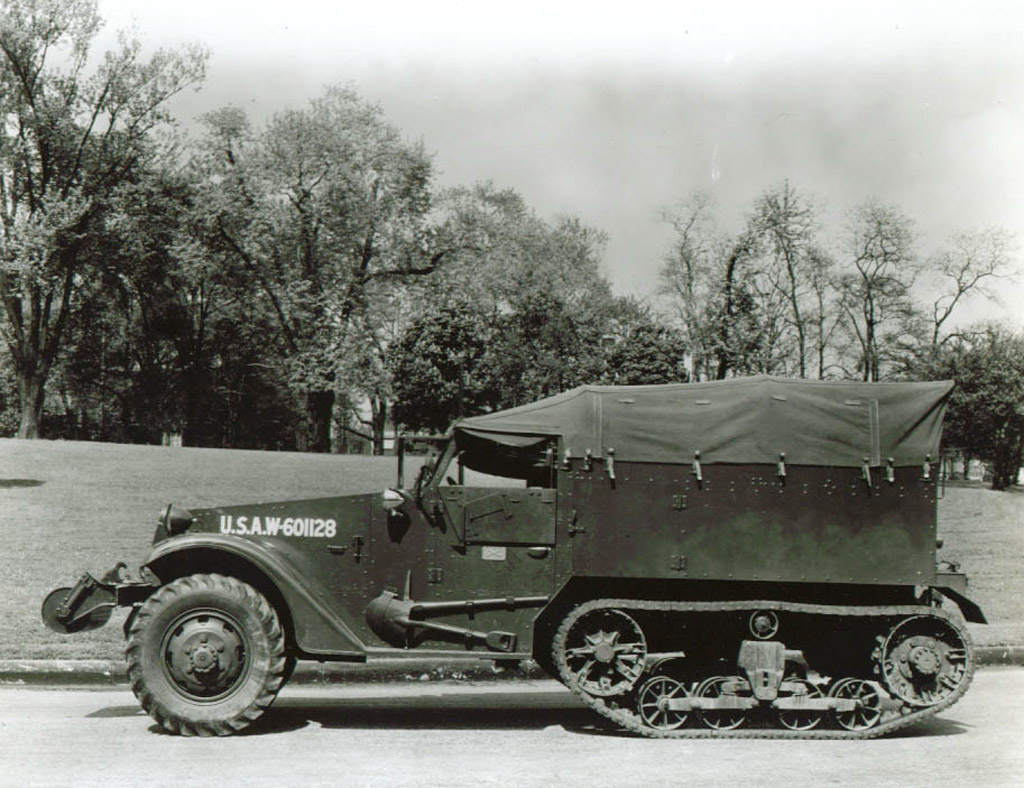
Halt-track car, the direct predecessor of the M2 Halt-track car
We succeeded in creating the optimal half-track in collaboration with Marmon-Herrington. Our partnership with Arthur Herrington resulted in the perfect chassis, featuring all-wheel drive, which solved one of the key problems facing tracked vehicles. All-wheel drive allowed the vehicle to handle off-road terrain with greater confidence, and the chassis itself didn’t look like a cuckoo clock, unlike the German models. However, there was one catch: the vehicles built in collaboration with Marmon-Herrington were unarmored tractors, and these did not catch on with the Americans. As early as 1938, the idea arose to convert the M2A1 scout car (M3) into a half-track scout car. This led to the creation of the T7 half-track armored personnel carrier. Thus, by 1939, the concept of an optimal half-track vehicle had taken shape.
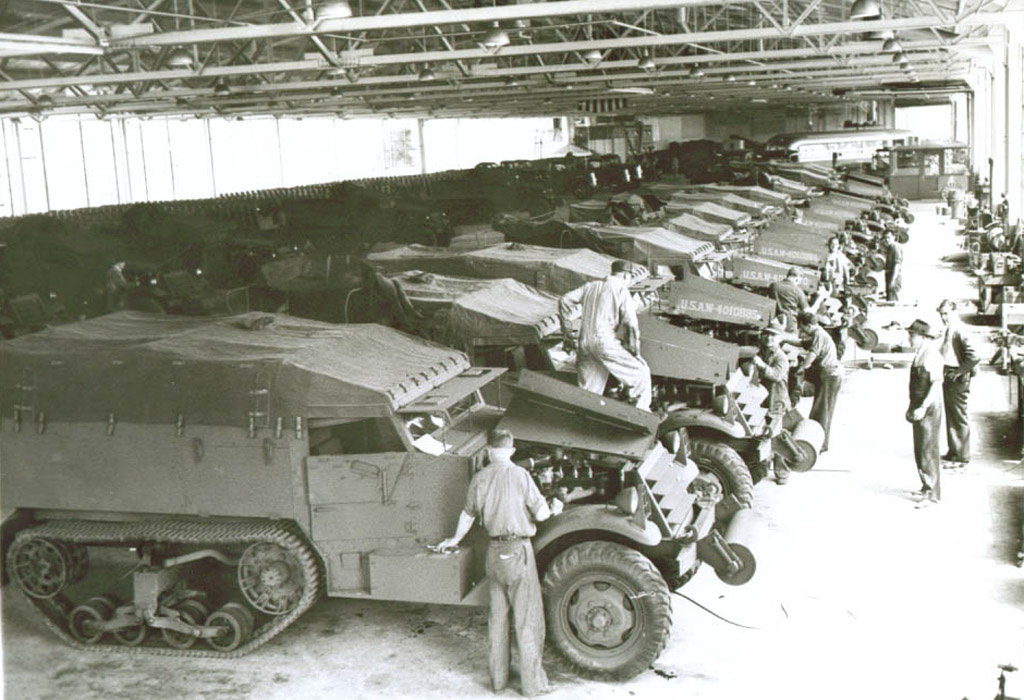
Сборка Half-track Car M2 силами White Motor Company
The culmination of this effort was the creation of the T14 half-track scout car, which was based on the M3A1 scout car. American engineers did not simply modify the “scout”; instead, they developed a new chassis. It was equipped with a new 147-horsepower engine, which provided decent power-to-weight ratio. In fact, it was higher than that of comparable German models, and the vehicle itself was armored. Its closest counterpart turned out to be the German Sd.Kfz.11 half-track, whose armored version is known as the Sd.Kfz.251. Now, the T14 half-track scout car—a modified version of which was adopted on September 19, 1940, as the Half-track Car M2—looked more interesting. With a curb weight of 9.7 metric tons, its specific power output was 16.9 metric horsepower per metric ton. Even the base version of the Sd.Kfz.11 had a specific power output of 14.1 metric horsepower per metric ton (originally lower). This resulted not only in a higher top speed (72 km/h versus 53 km/h) but also in better off-road capability. It is worth noting once again that the front axle on Knipkamp’s tractors was non-driven.
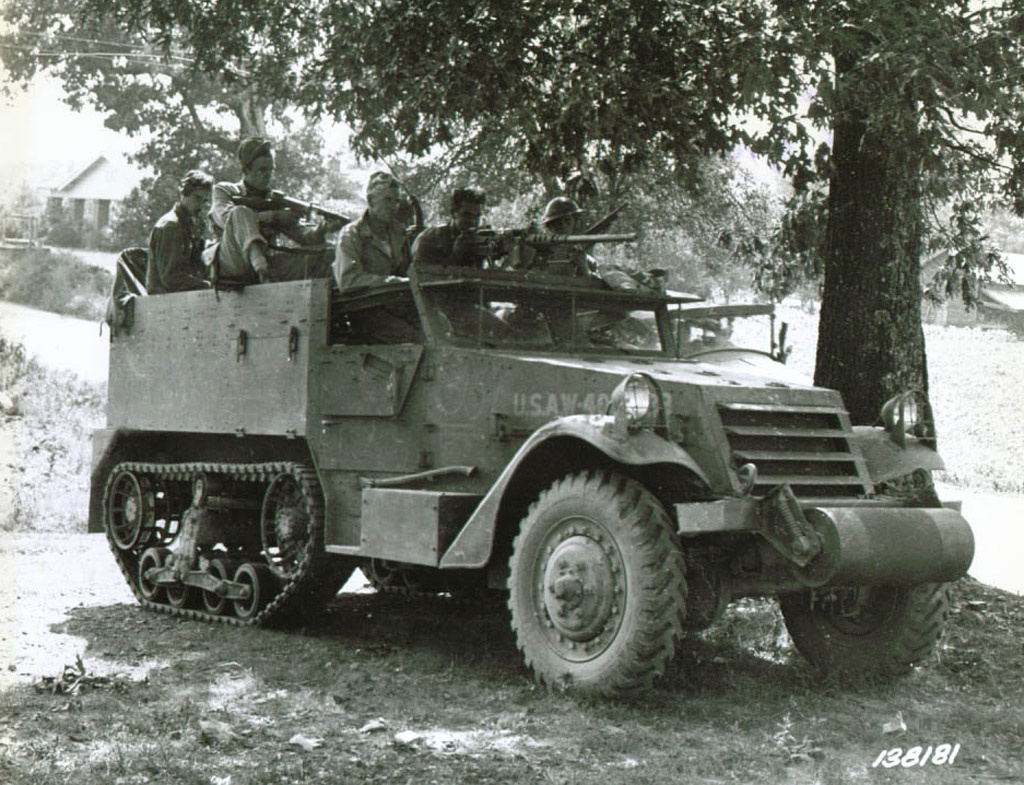
They very quickly became widespread in the U.S. Army
However, the key factor was not even the vehicle’s specifications, but its cost. The Sd.Kfz.11 cost 22,000 Reichsmarks, while the Sd.Kfz.251 cost 22,560 Reichsmarks. The Half-track Car M2 cost 6,974 U.S. dollars, which was about one-third cheaper than the Sd.Kfz.11. The long-wheelbase Half-track Car M3 model was used as an armored personnel carrier. Both vehicles were armed, not with a rifle-caliber machine gun, but with a 12.7-mm Browning M2HB. It gets even more interesting. The 3-metric-ton tractor, the most “popular” model in terms of field artillery, only surpassed the 1,000-unit production mark in a single year—in 1941—for the Germans. And even at the peak of production, it barely exceeded 1,500 vehicles. Meanwhile, 3,565 M2s alone were delivered in 1941, and in 1942, the U.S. Army received another 4,735 tractors. In total, 13,058 M2/M2A1s were delivered.
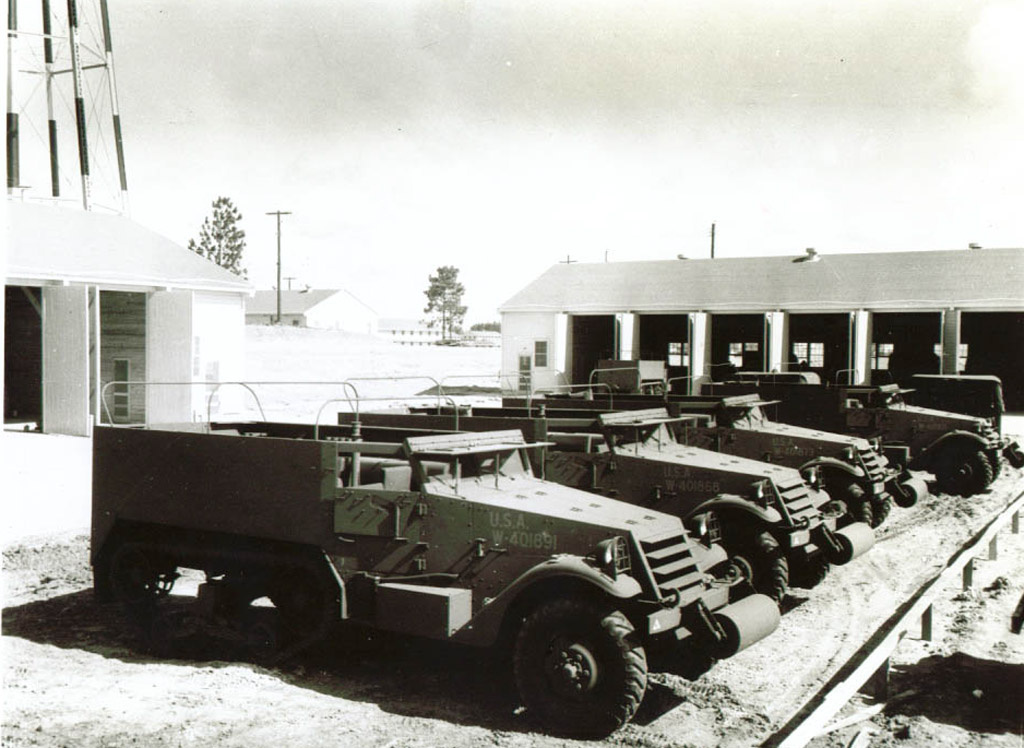
M3 Half-Track Armored Personnel Carriers
And that’s just the tractor; far more half-track armored personnel carriers were produced. In 1941 alone, 1,859 M3 Half-Track Cars were delivered, and production of the APC subsequently increased significantly. Export models of the Half-track Car M5 and M9, manufactured by IHC (International Harvester), also began to appear. Together with these, a total of 26,270 armored personnel carriers were delivered. Moreover, unlike the Germans, we are talking specifically about armored personnel carriers, not all vehicles in general. In this sense, the Germans’ calculation is very deceptive, since a significant portion of the Sd.Kfz.251 were not armored personnel carriers at all. As a result, half-tracks were supplied on a massive scale to the Allies of the anti-Hitler coalition, especially during 1943–45.
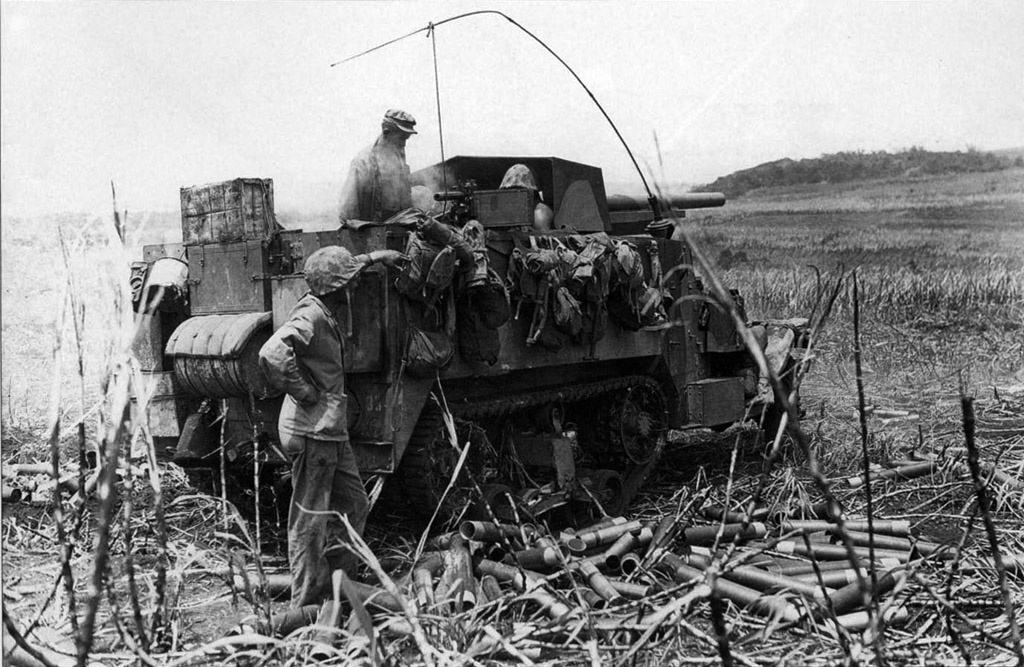
The GMC T12 (M3) was the first American mass-produced self-propelled gun; some examples remained in service until 1945
For the U.S. Army, half-tracks became a real lifesaver. This was especially true in 1941, when the infrastructure for self-propelled artillery was just taking shape. Naturally, this infrastructure was far from ideal. The half-track chassis had a limited load capacity, and there were also restrictions on the guns’ elevation and traverse angles. Nevertheless, American half-track self-propelled guns were used quite extensively starting in 1941. In fact, the GMC T12 became the first American self-propelled gun to be used in combat. In the case of the ZSU, the half-track chassis proved to be quite successful. These were by no means mere stopgaps; they remained in service even after World War II.
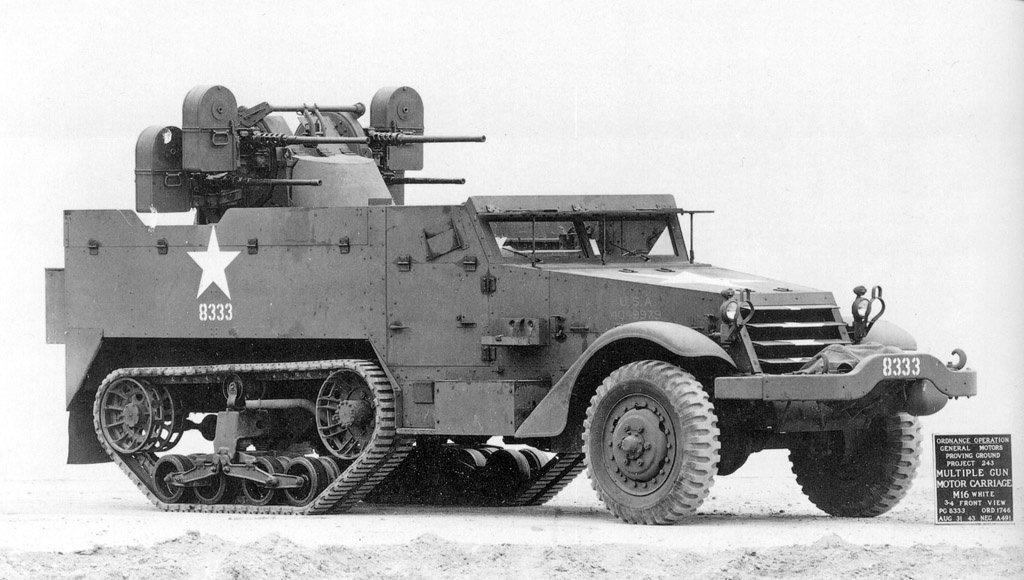
The MGMC M16, the most widely used American anti-aircraft gun
The production volumes of the Haltraks were impressive. They were produced for only a short time—from May 1941 to March 1944. During that period, 53,625 units were delivered, of which 14,297 were manufactured as self-propelled guns. Subsequent models were developed as fully tracked vehicles, since their mobility approached that of half-track designs, and their layout proved to be more effective. Nevertheless, unlike German half-track vehicles, the American half-tracks did not disappear. Their service, including combat service, spanned many decades. This was due in no small part to their successful design and relative simplicity. Although not perfect in every respect, American half-tracks proved to be the most successful half-track vehicles.
List of Sources:
-
-
- US NARA
- Half-Track: A History of American Semi-Tracked Vehicles, R.P. Hunnicutt, Presition Press, 2001
- US Signal Corps
-