52 tanks destroyed in 75 days. We reveal the tactics of the top tank ace of 1941. How did Lavrinenko work wonders on the battlefield?

In October 1941, near Orel, four Soviet T-34 tanks engaged the superior forces of the Wehrmacht’s 2nd Panzer Army. The result: 15 German tanks destroyed in a single battle, and the infantry saved from certain defeat.
This daring counterattack was led by 27-year-old Lieutenant Dmitry Lavrinenko. A native of the Kuban village of Besstrashnaya, he more than lived up to its name. In just two and a half months of fighting, Lavrinenko destroyed 52 enemy tanks, becoming the most prolific tank ace of the anti-Hitler coalition.
Here is the story of a tank sniper who adapted infantry ambush tactics to multi-metric-ton armored vehicles, and the secret behind his incredible effectiveness.
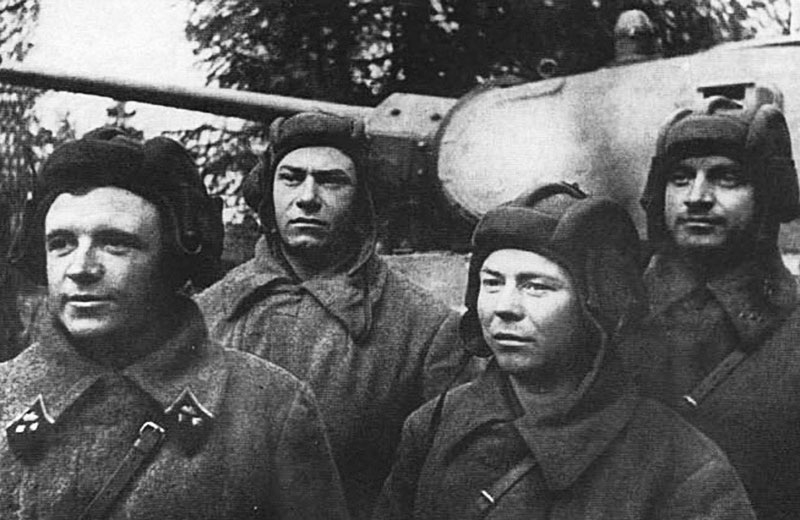
The Iron Conveyor Belt of Death and the Paradoxes of Tank Duels
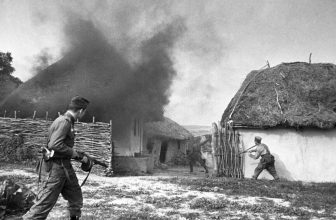
September 1941. The front line is crumbling under the onslaught of German mechanized wedges. The war has reached a stage where the scale of the losses is beyond comprehension.
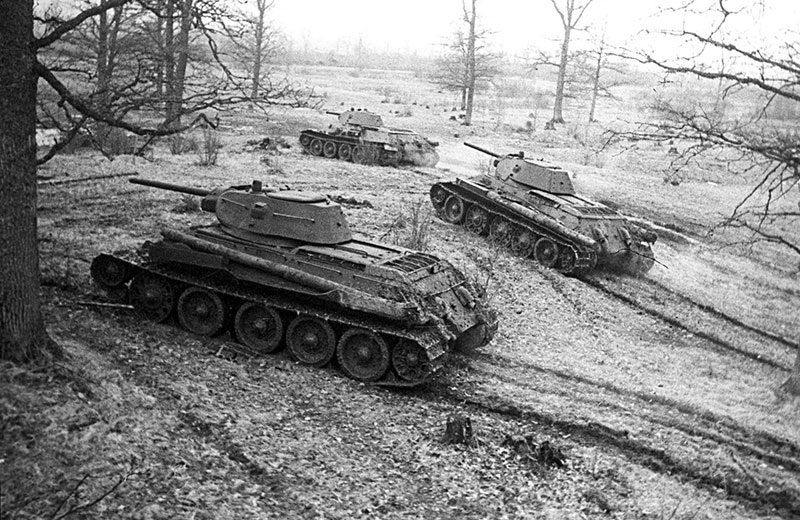
The Wehrmacht is advancing toward Moscow, throwing massive reserves into the offensive. Tank battles have turned into a brutal game of survival, where every second, every caliber, and every millimeter of armor counts.
Any war inevitably turns into a contest. Historians are still meticulously counting the armored vehicles that were destroyed.
German troops, who fought throughout the campaign from start to finish, produced extremely capable commanders. Their names are well-known in Western accounts: Michael Wittmann destroyed 132 Allied vehicles, Otto Karius—150, and the all-time record holder, Kurt Knispel—168.
But if we look at the forces of the anti-Hitler coalition, Soviet officer Dmitry Lavrinenko stands out as the undisputed record-holder. And therein lies the main historical paradox: he racked up his total of 52 tanks in a fantastically short period of time—just 75 days.
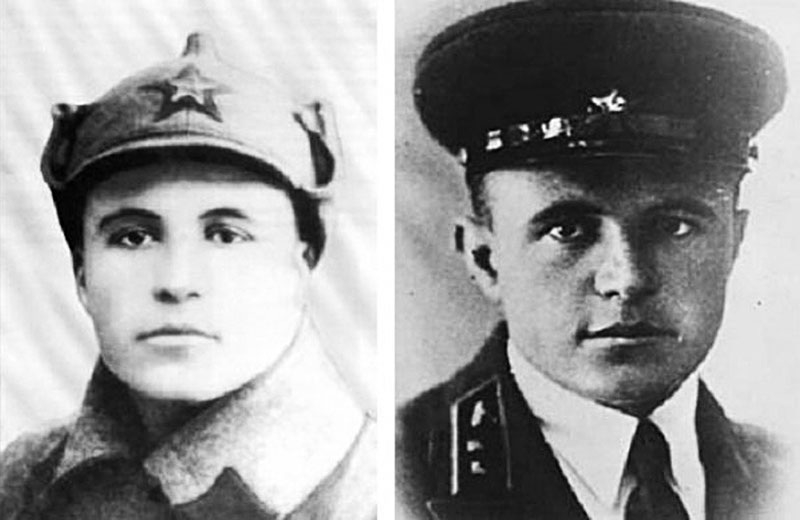
It took German commanders years of continuous combat to surpass the 100-victory mark. The Soviet lieutenant’s average was nearly 0.7 vehicles destroyed per day. In fact, in just two months, one man wiped out an entire German tank battalion.
It is impossible to understand this phenomenon without delving into the technical realities of 1941. The Soviet T-34 medium tank, which rolled off the assembly line in the fall of 1940, immediately demonstrated its superiority on the battlefield. Its decent armor and powerful gun came as an unpleasant surprise to the Germans. But the technical specifications reveal only half the story.
A German tank commander enjoyed a tremendous luxury. He could focus entirely on leading his crew and searching for targets, since a separate person—the gunner—was responsible for firing. Soviet tankers of that era did not have that privilege.
In the T-34, the commander served as the gunner. He had to personally bring the target into the crosshairs, enduring tremendous physical and psychological strain.
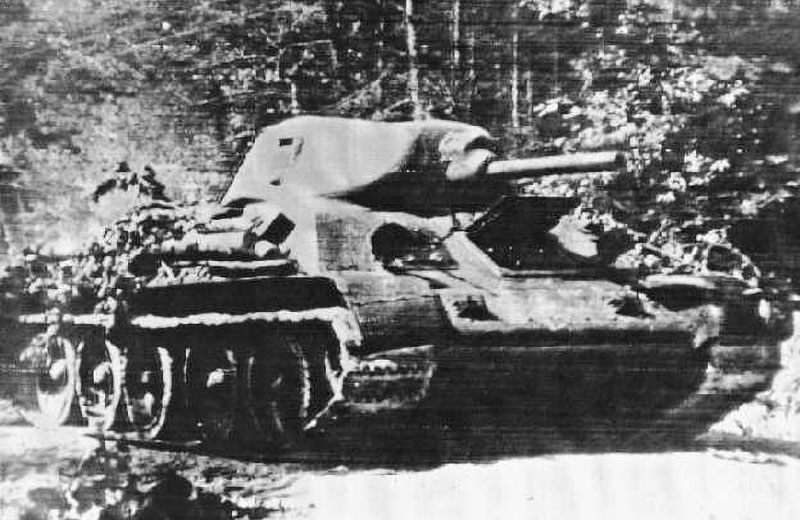
While the German officer calmly scanned the horizon from the commander’s turret, Lavrinenko combined tactical leadership with precision work at the gun’s optics. He earned his victories solely through his own keen eye.
Kuban Blood and a Sniper Scope
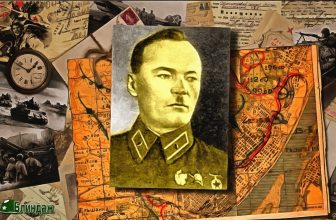
Dmitry Fedorovich Lavrinenko was born on September 10, 1914. A descendant of the Kuban Cossacks, he never allowed circumstances to break his fighting spirit, engaging in battle even in the most hopeless situations.
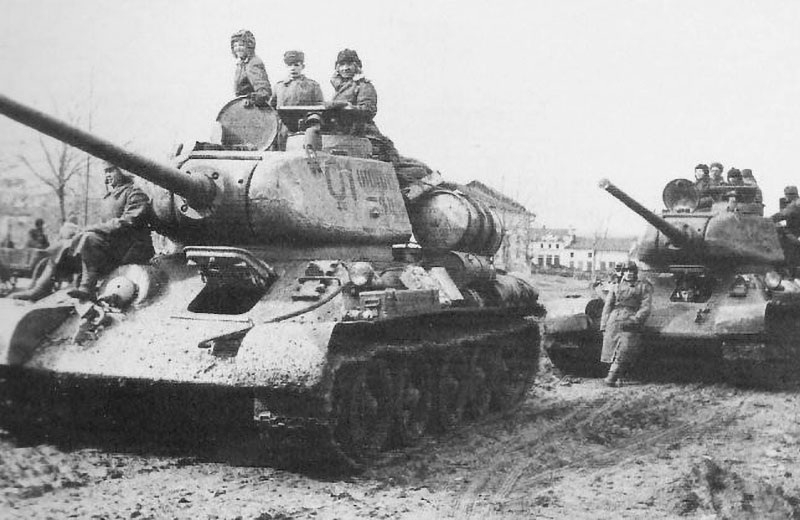
In the fall of 1941, Lavrinenko defended Moscow as a tank platoon commander in the 4th Tank Brigade. He brought a significant advantage to the armored forces: before the war, Dmitry had been an excellent sniper. He masterfully applied his ability to shoot accurately at long ranges to the T-34’s gun.
You’d think that with such talent, it would make sense to take out the enemy from a distance. But Lavrinenko developed a completely different, deadly risky style. He preferred close-quarters combat.
The Battle of David and Goliath in *The First Warrior*
On October 6, 1941, this tactic faced its most severe test. Near the village of Pervy Voin in the Oryol region, a battle unfolded that resembled the biblical clash between David and Goliath.
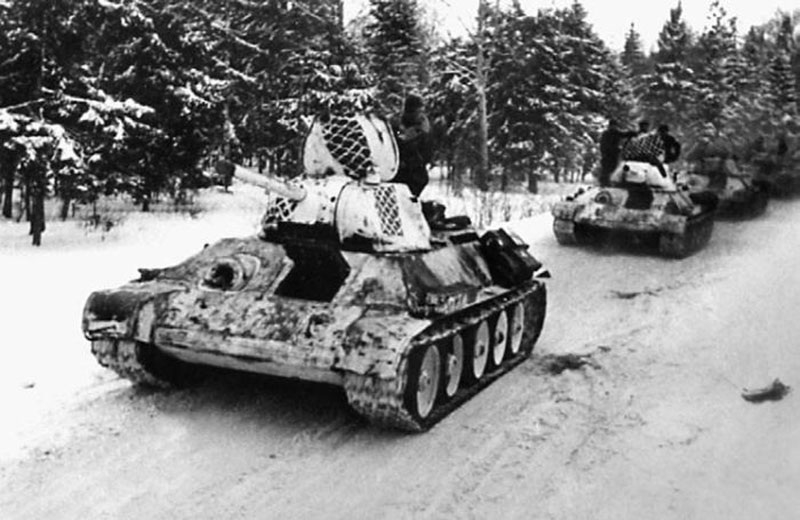
The situation was becoming catastrophic. The Soviet infantry found itself trapped, facing the threat of total annihilation by the forces of the Wehrmacht’s 2nd Panzer Army. And then Lavrinenko appeared. He had only four vehicles. Four medium tanks against a steel armada.
Instead of a positional firefight, the lieutenant relies on the element of surprise. He masterfully uses the terrain, hiding multi-metric-ton vehicles behind trees and in the contours of the landscape. The Germans advanced, unaware of the ambush, until it was too late.
Soviet tanks burst out of cover at tremendous speed, closing the distance to a suicidal 150–300 meters. It’s hard to miss at point-blank range, but even the T-34’s armor offers no protection against return fire at that distance.
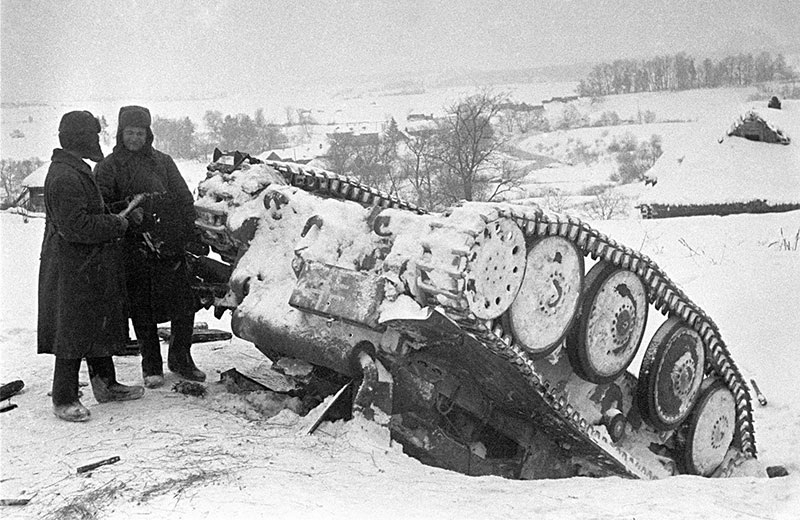
The shock to the German crews was so great that this tiny group managed to destroy 15 tanks. The daring attack gave the infantry what it needed most—time to retreat. That same day, Lavrinenko’s platoon also saved a mortar company from certain destruction.
A Master of Tactics and Cool Calculation
By December, Dmitry had established a reputation as an unrivaled tactician.
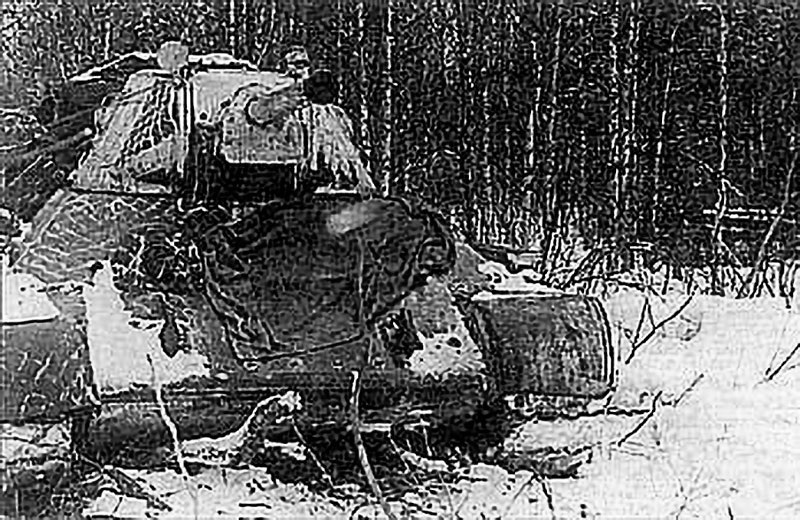
He proved that desperate courage goes hand in hand with cold calculation. Lavrinenko never launched a blind attack; he always carefully assessed the disposition of his forces and any hidden threats.
His sniper’s composure was evident in his ability to wait. The tanks blended into the terrain, turning into ghosts. They materialized right in front of the German columns, fired point-blank, and vanished faster than the enemy could raise their turrets.
December brought the long-awaited turning point. The Red Army launched a counteroffensive, driving the exhausted divisions away from the capital. During those days, Lavrinenko’s tankers took the German garrison in the village of Gryady by surprise. The strike was swift—the enemy was routed, and the road to Pokrovskaya was cleared.
The euphoria of victory often leads to a blind rush. But Lavrinenko halted the attack just in time. His instincts didn’t fail him: it soon became clear that powerful German defensive positions had already been established along the road. Had he ventured in there, the tanks would have been surrounded.
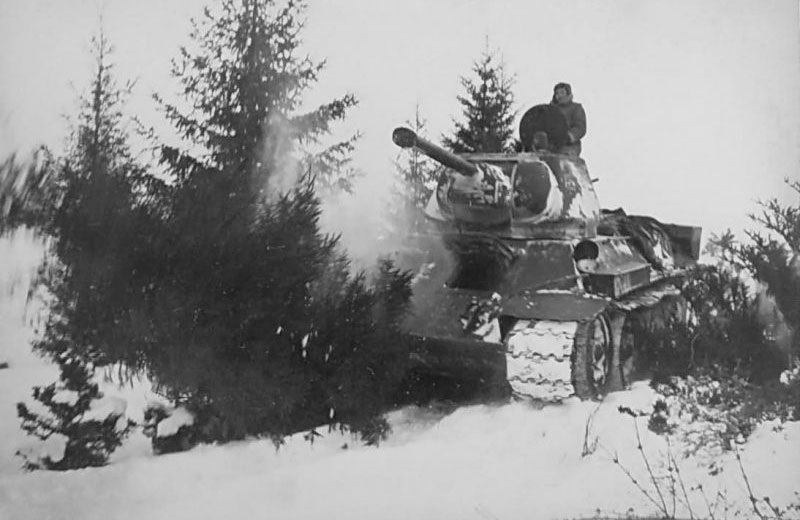
It seemed as though this officer could foresee everything. He survived under heavy fire and emerged victorious from duels at pistol range. The logic of war suggested that such an ace was bound to perish in a massive tank battle, fighting back until his last shell.
But war has no logic—only blind chance. On December 18, 1941, near Volokolamsk, the lieutenant was killed. It wasn’t an armor-piercing shell in fair combat that killed him, but a random piece of shrapnel from a mortar round on a snow-covered field.
A Legacy Left Behind in the Fields of the Moscow Region
Dmitry Lavrinenko was posthumously awarded the title of Hero of the Soviet Union for destroying 37 German tanks. Later, another 15 tanks were added to the official tally, bringing the total to 52.
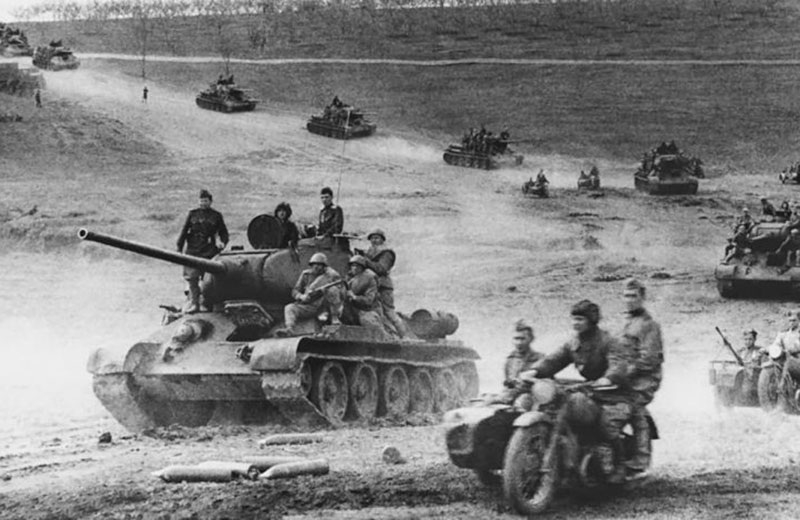
The difference between a Soviet ace and his German counterparts isn’t just a matter of numbers. Wittmann, Karius, and Knispel fought under comfortable conditions, where the commander gave orders and the gunner fired. Lavrinenko blurred the line between man and machine.
He was the brain, the eyes, and the trigger of his tank. Fifty-two times, he personally calculated the trajectory, aligned the crosshairs with the enemy’s armor, and fired a shell at the target.
His success is a bitter reminder of what the Soviet tank school could have achieved had it not been for the colossal losses of the first few months. Lavrinenko embodied the qualities of an ideal commander: the composure of a sniper, the audacity of a tactician, and the concern of an officer who valued the lives of his soldiers above blind heroism.
The Final
Dmitry Lavrinenko’s story challenges our conventional understanding of mechanized slaughter.
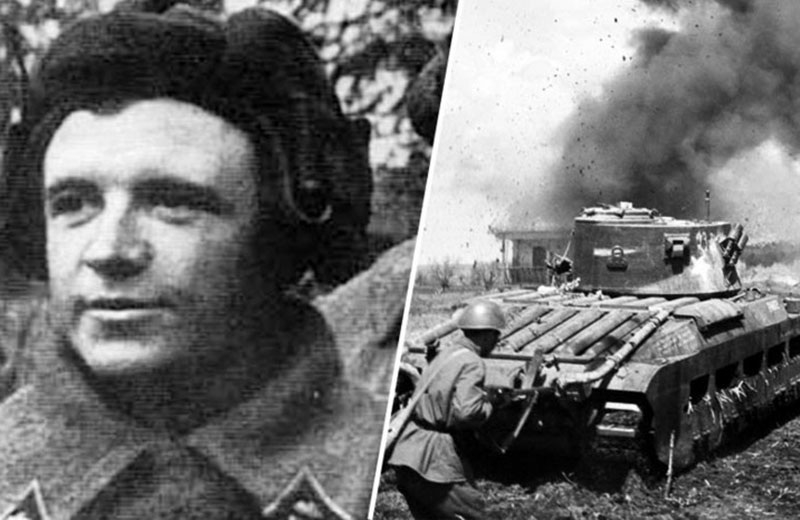
A professional sniper team proved capable of breaking the backbone of the advancing army. A Soviet lieutenant demonstrated that a tank is not merely a self-propelled gun, but a tool for subtle tactical maneuvering.
What do you think—if that Kuban Cossack hadn’t been killed in ’41 and had made it all the way to Berlin in one of the new T-34s with a separate gunner, what would his personal kill count have been? Would he have been able to surpass Knispel’s all-time record, or was it precisely the extreme conditions of the defense of Moscow that forced him to push himself to the absolute limit?
Source — https://dzen.ru/a/af8zVepgM30wAkHf