The Forgotten Soviet General Who Halted the Wehrmacht in June 1941 and Led a Counteroffensive Across the Border

The summer of 1941 was the most difficult period for our people during World War II—entire armies were trapped in encirclements, cities were lost daily, troops fought their way out of encirclements, and in some places, battalions and divisions were taken prisoner, while others fought their way back to their own lines—though by no means everyone succeeded.
The Reich was advancing steadily eastward, and we were trying to slow its advance, buy time, and prepare our reserves—there was no other option
These chapters of history are well known.
But there were other examples as well—the heroic actions of border guards, as well as certain units of the Red Army, which managed to repel the offensive and even hold their line for some time.
But there were even some amazing stories.
One example is the 87th Rifle Division, which was commanded by Major General Filipp Fedorovich Alyabushev.
He isn’t exactly a household name—clearly not in the same league as the Marshals of Victory—and you won’t find portraits of Alyabushchev hanging in schools.
His division not only repelled the initial attack but also launched a counterattack, driving the Germans back.
To understand why this happened specifically to Alyabushchev’s unit, it’s probably worth taking a look at his biography.
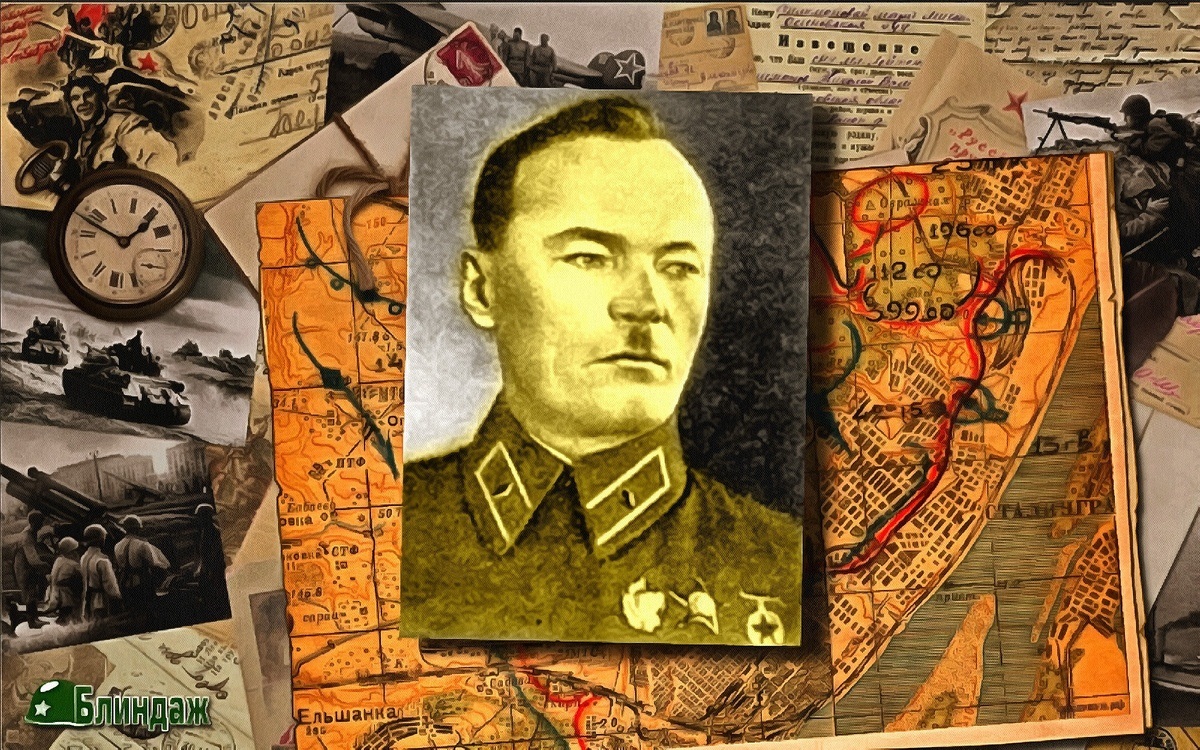
A commander for whom the war did not begin in 1941
Philip Alyabushev is not a staff officer.
By June 1941, he was an experienced combat officer.
At first, there was the Russian Imperial Army, which was fighting against Austria-Hungary.
After the revolution, he joined the Red Army.
He took part in battles and grew as a commander.
In 1938, Alyabushova was transferred to China as a military adviser.
At that time, the Soviet Union was actively assisting the Republic of China.
Even back then, the Japanese controlled Beijing, Shanghai, and Nanjing. It seemed as though the Chinese troops would yield to an army that was a cut above them.
But Soviet specialists—including pilots, staff officers, and an artillery specialist—brought the Chinese up to speed.
Alyabushev was one such teacher.
He taught others, and as a military officer, he evaluated his own work and analyzed how the enemy operated.
We were able to refine our defensive skills and counterattacking tactics.
It was there that he realized how important it is not just to hold the line, but to disrupt the enemy’s offensive momentum, and to recognize when to regroup, go on the defensive, or, conversely, launch a counterattack.
All of this requires practice, and that is exactly what Alyabushov gained in China.
The Mannerheim Line
After his trip to China, Alyabushov was assigned to a new unit—the 123rd Rifle Division, which was soon to enter the Soviet-Finnish War.
The Winter War will be a serious test.
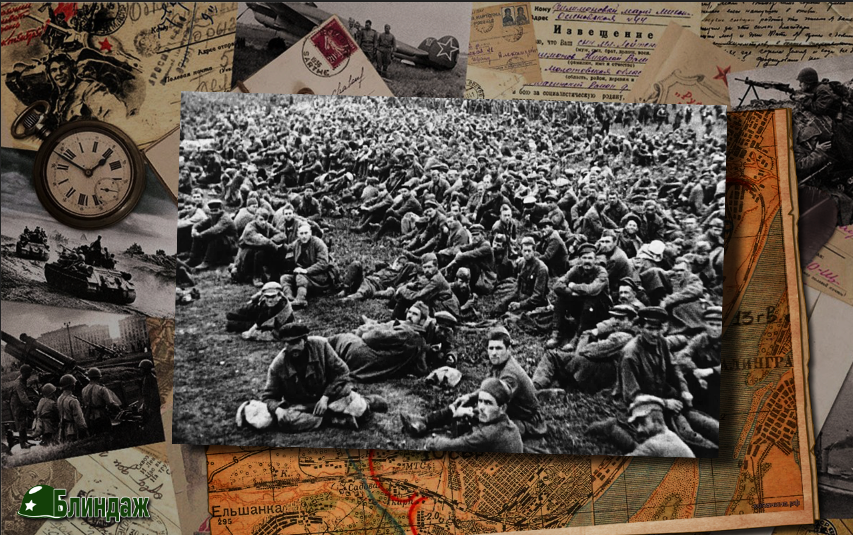
Finnish fortifications, freezing temperatures, wooded terrain, intelligence challenges, and, as a result, heavy casualties—Moscow had envisioned the campaign as simpler.
Alyabushov’s subordinates proved themselves up to the task.
In February 1940, Alyabushov’s division broke through the Mannerheim Line—the main line of defense that had been under construction for several years.
On February 11, the division launched an offensive.
Two days of intense combat and thorough preparation in the days leading up to the operation helped them break through a 7-kilometer-long sector.
By February 17, the Red Army had already advanced to the second line of the Finnish defenses.
It’s a respectable result.
Alyabushev was awarded the Order of Lenin, and 26 soldiers (!) from his division were named Heroes of the Soviet Union.
By the summer of 1941, he was a general who had earned his stripes on the battlefield, not one trained in a command post.
Perhaps this was the reason for the successful operations on June 22–23, 1941?
The Germans did not expect to be repelled
After his successful actions in the Soviet-Finnish War, Alyabushov was transferred to another key area of operations—Western Ukraine.
Tensions in Europe were rising, which meant that reliable personnel were needed at the border.
He also took command of a new unit—the 87th Infantry Division.
Location: Volodymyr-Volynskyi.
On the morning of June 22, 1941, Wehrmacht units—the German 44th and 298th Infantry Divisions, part of Army Group South—were already here.
But something went wrong.
There were well-prepared defenses in the Vladimir-Volynsky area.
Its garrisons were ready for battle from the very first hours of the war.
Despite the artillery fire and air attacks, there was no panic; it was very difficult, but the defenders put up an organized resistance.
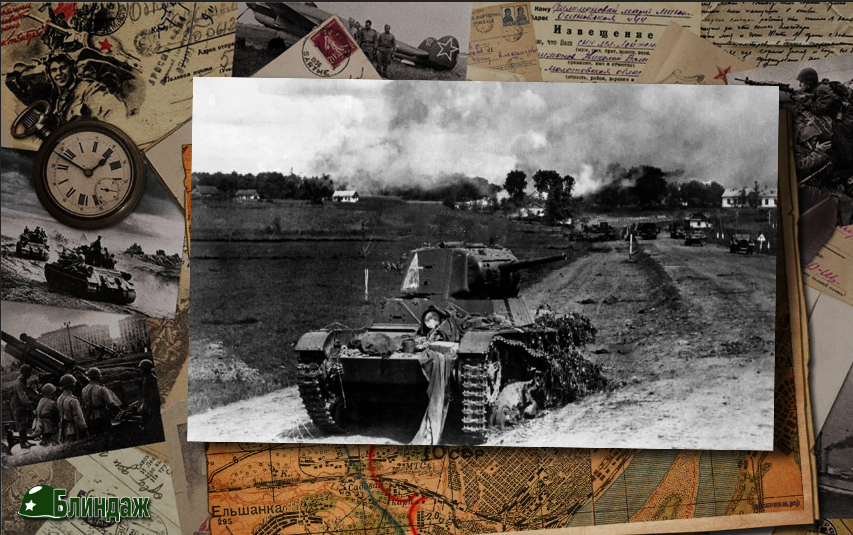
And here, Alyabushev himself played an important role—the commander did not want to remain on the defensive; he understood both the complexity and the hopelessness of the defensive position in the face of a massive German offensive…and was preparing a counterattack.
Counterattack
It was a risk. The situation was changing by the hour.
Communications were unstable, and there were occasional reports of German forces breaking through the battle lines.
The most dangerous situation was west of the city—that is where units of the 87th Division launched their attack.
The Germans had not planned any defensive actions and did not expect the Red Army troops to be ready to launch a counterattack in the coming hours.
That wasn’t realistic.
As a result, the enemy was pushed back in a wedge formation ranging from 6 to 10 km.
They quickly established communication; given the configuration of the front, this garrison was already behind German lines.
But he was prepared to keep fighting and took all necessary steps to prepare the position for defense and for further offensive operations.
Next, two companies of the 87th Division crossed the Western Bug River and established a foothold on the opposite bank—now enemy territory.
Nonsense for those days.
Everything is well-organized and done professionally.
Not only did they repel the enemy, but they also drove them back into their own territory.
Unfortunately, they were unable to build on their success; the front collapsed in the sectors adjacent to the division’s, and the Germans had far greater forces.
Both companies that had crossed the river refused to retreat and engaged the numerically superior enemy forces.
No one ever came back…
Why This Fight Was More Important Than It Seems
According to available information, the counterattack near Volodymyr-Volynskyi prevented the timely deployment of the Wehrmacht’s 14th Panzer Division.
The German command had to redeploy the 13th Panzer Division to this sector.
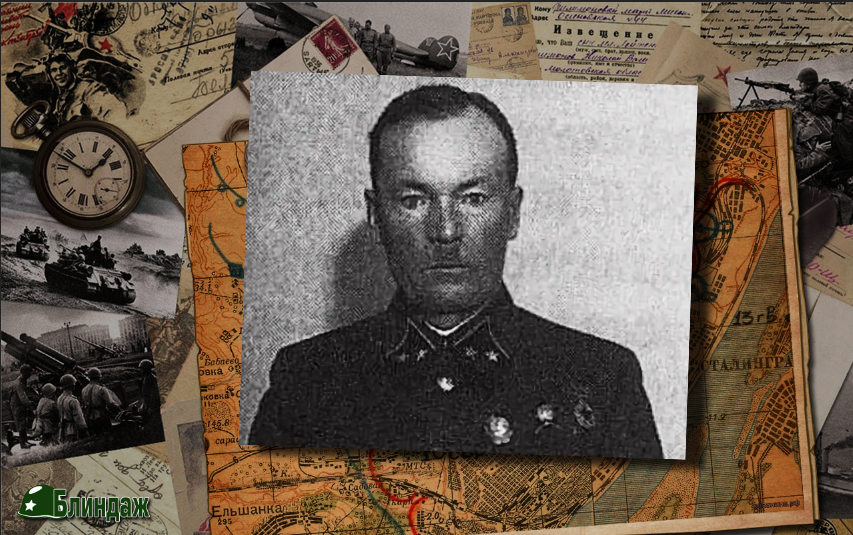
And that, in turn, meant a setback in the carefully planned offensive schedule.
For a plan involving a lightning war, such delays were critical.
A day here, a few hours there, the need to change routes and replenish supplies—all of this kept throwing a wrench in our plans.
Thanks to Alyabushov’s 87th Division.
The General’s Last Mission
On June 25, 1941, the situation for the 87th Division was becoming critical.
The Germans had broken through the front lines in neighboring sectors and were in a position to encircle the division’s positions; moreover, they had transferred reserves to this area.
After several days of such fighting, Alyabushev began organizing a retreat to the east.
Unfortunately, Filipp Fedorovich was not there that day—he had left with his staff on a reconnaissance mission and unexpectedly ran into a German advance unit.
Philip Fyodorovich Alyabushev was killed in action.
And so ended the life of a commander who, in the early days of the war, managed to do the impossible—to stop the enemy right where it had planned to pass through in a single day.
He accomplished his mission.
Why is he not really remembered?
In the history of the war’s early days, there are many names that have been overlooked.
Border guards, commanders of fortified areas, tank crews, artillerymen, and signalmen—many of them fell before their heroic deeds could be recorded in award documents and newspaper articles.
Alyabushev turned out to be one of those people.
He did not have a high-profile postwar career.
He did not write his memoirs.
He did not participate in the Victory Day parades.
He never became a marshal whose name later appeared in textbooks.
But perhaps that is precisely why his story is so important.
She reminds us that the summer of 1941 was not just a time of defeats. It was also a time of incredible resistance and courage.
Today, his name is rarely mentioned in conversations about the Great Patriotic War.
There are no streets named after him, no large monuments, and none of the usual array of anniversary-themed stories.
How were Alyabushchev’s actions received?
In 1965, 20 years after Victory Day, he was posthumously awarded the Order of the Patriotic War, 1st Class.
He wasn’t a Hero of the Soviet Union—back then, given the overall situation at the front, such titles weren’t handed out; there were more pressing matters.
But to be honest, it was precisely these commanders and these divisions that did the most important thing in the first hours of the war: they showed the Wehrmacht that it wouldn’t be a walk in the park.
And the first serious blow to the blitzkrieg plan was struck not in the high command headquarters or in the pages of directives where further actions were being planned, but there, near Vladimir-Volynsky, where soldiers of the 87th Rifle Division advanced to confront an army that, just yesterday, had considered itself invincible.
Source — https://dzen.ru/a/afddFCRkumx4ZXy7