Battles After Victory: Where the Red Army Finished Off the Nazis After May 9, 1945—Little-Known Operations Against the Last Pockets of Resistance

The defeated Third Reich lay in ruins, but the fighting did not end there. After the document on complete and unconditional surrender was signed, tens of thousands of soldiers from the Wehrmacht, SS units, and their henchmen continued to wage fierce battles across Europe and the Soviet Union. The article below explains how the USSR brought the Great Patriotic War to a close.
Turbulent Courland
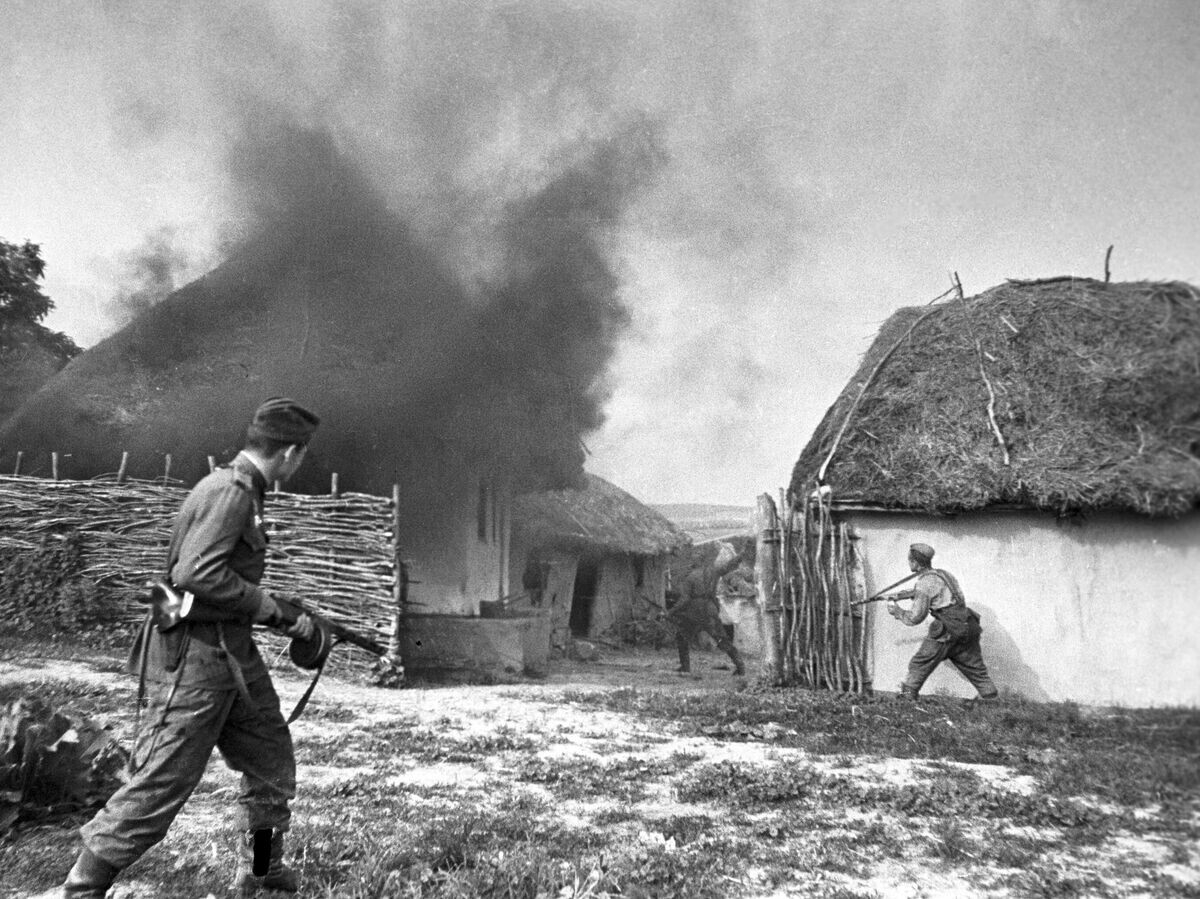
The triumph over Nazi ideology after May 9, 1945, was beyond doubt, but the complete destruction of the enemy was yet to be achieved. Battles that took place outside the generally accepted chronological boundaries eventually faded into the background of the final battles of the Great Patriotic War. At best, people recall the Prague Operation and the elimination of the remnants of SS units near the village of Slivice, which concluded on May 12.
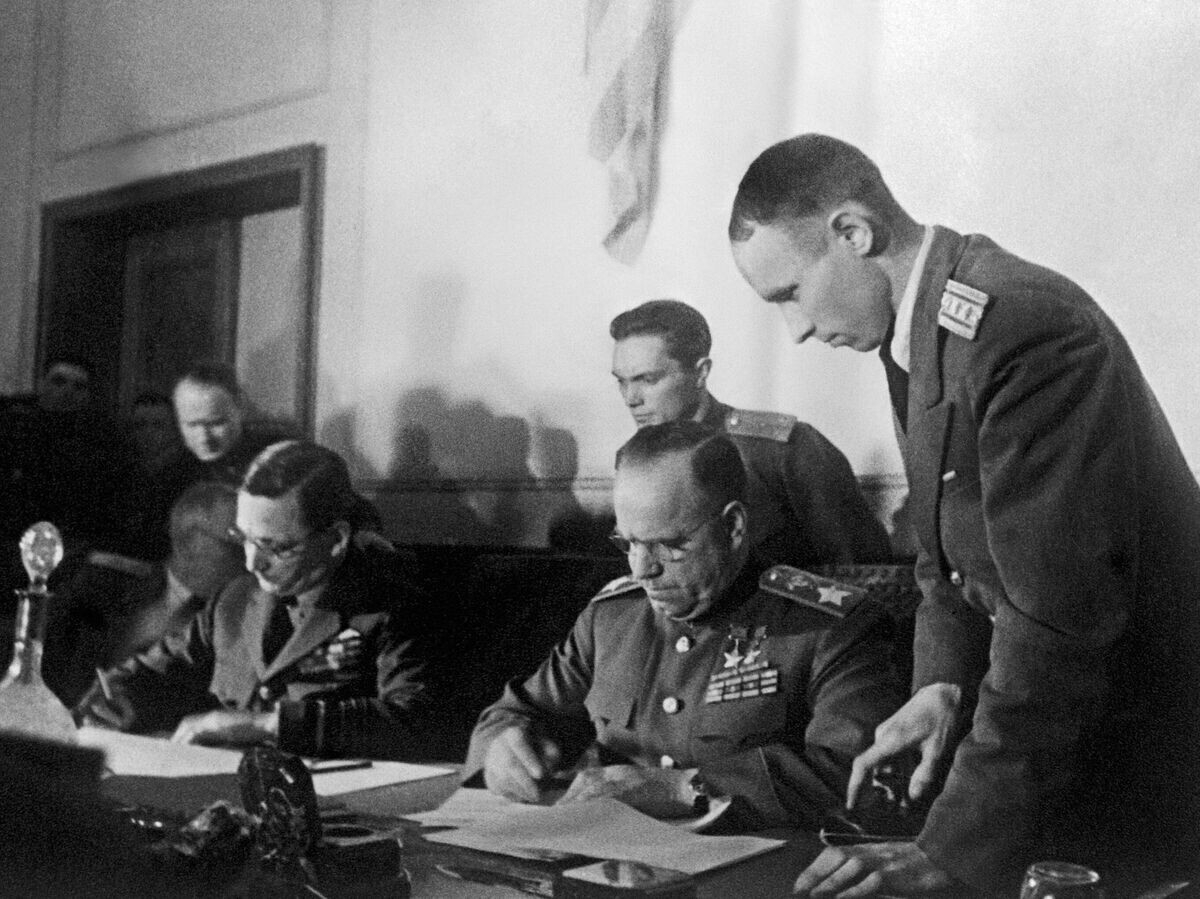
The signing of the document on the unconditional surrender of the German armed forces in Karlshorst, Germany, on May 8, 1945. Photo: RIA Novosti / Georgy Petrusov However, fighting continued in Latvia. Army Group “Courland,” numbering up to 200,000 men, was completely surrounded by land but maintained a naval link with Germany via the harbors of Liepāja and Ventspils.
On May 8, Colonel General Karl Hilpert, commander of this group of armies, announced the surrender. Nevertheless, many Wehrmacht soldiers and officers refused to lay down their arms. Some hoped to flee by sea to Sweden (about twenty thousand had managed to do so the day before), while others sought to break through to East Prussia and, from there, attempt to link up with Anglo-American forces.
The Baltic Fleet and the Soviet Air Force intercepted naval convoys carrying fleeing Nazis. On land, by mid-May, approximately 190,000 Germans had been taken prisoner, including 42 generals. Red Army soldiers, NKVD officers, and SMERSH agents thoroughly searched the forests in the area of the former Courland Pocket, periodically falling into ambushes and engaging in firefights. On May 22, a battle took place with a group of 300 SS men from the 6th Army Corps under the command of SS-Obergruppenführer Walter Krüger. The Nazis were annihilated; Krüger committed suicide.
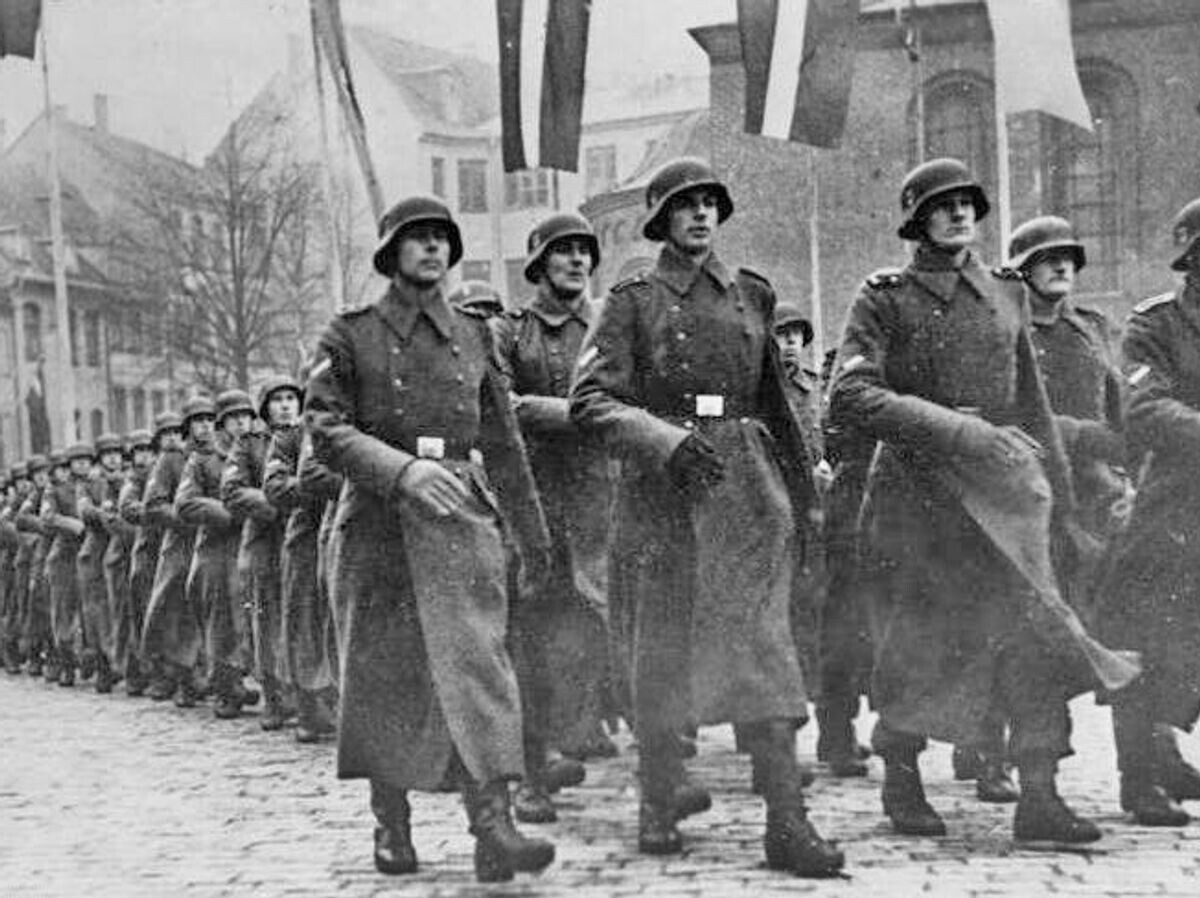
Parade of Latvian SS Legionnaires in Riga. 1943 | CC BY-SA 3.0 / Bundesarchiv /
Nazi collaborators shot Soviet soldiers, police officers, and ordinary civilians in the back. The conflict in the Baltic states gradually escalated into a large-scale counterterrorism operation that did not end until ten years later.
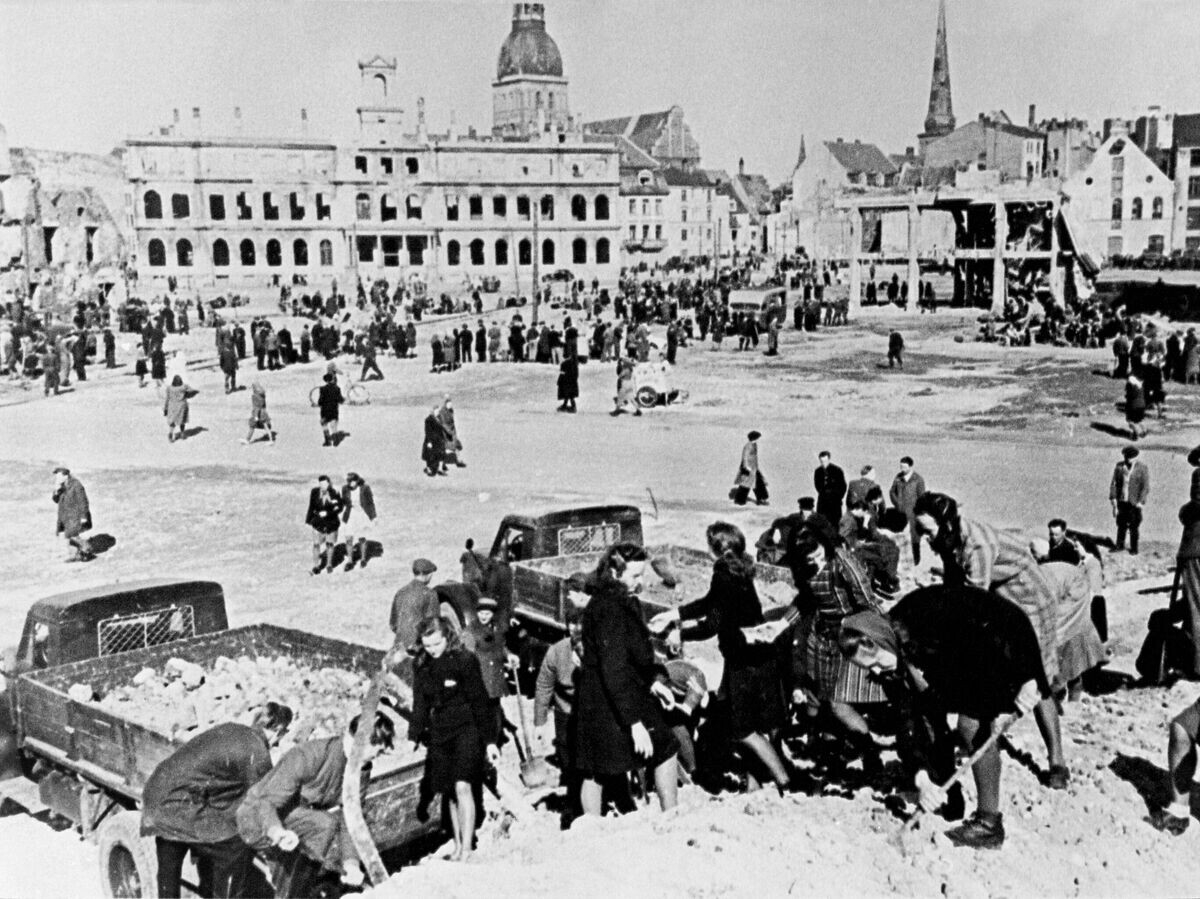
Riga in the first days after its liberation from the Nazis by the Red Army. City residents are clearing debris from the central square. | © RIA Novosti / RIA Novosti
Later than expected
OUN-UPA* units were active on Ukrainian territory. The ranks of Bandera and Shukhevych’s supporters were bolstered by legionnaires from the defeated SS Division “Galicia,” punitive forces from police units, and the “Nachtigall” battalion. Many fighters had been trained at German intelligence schools.
The leadership of the Ukrainian SSR called on the population to put an end to internal strife and unite. On May 20, 1945, an amnesty was granted to the Bandera followers, despite the war crimes they had committed during the Great Patriotic War.
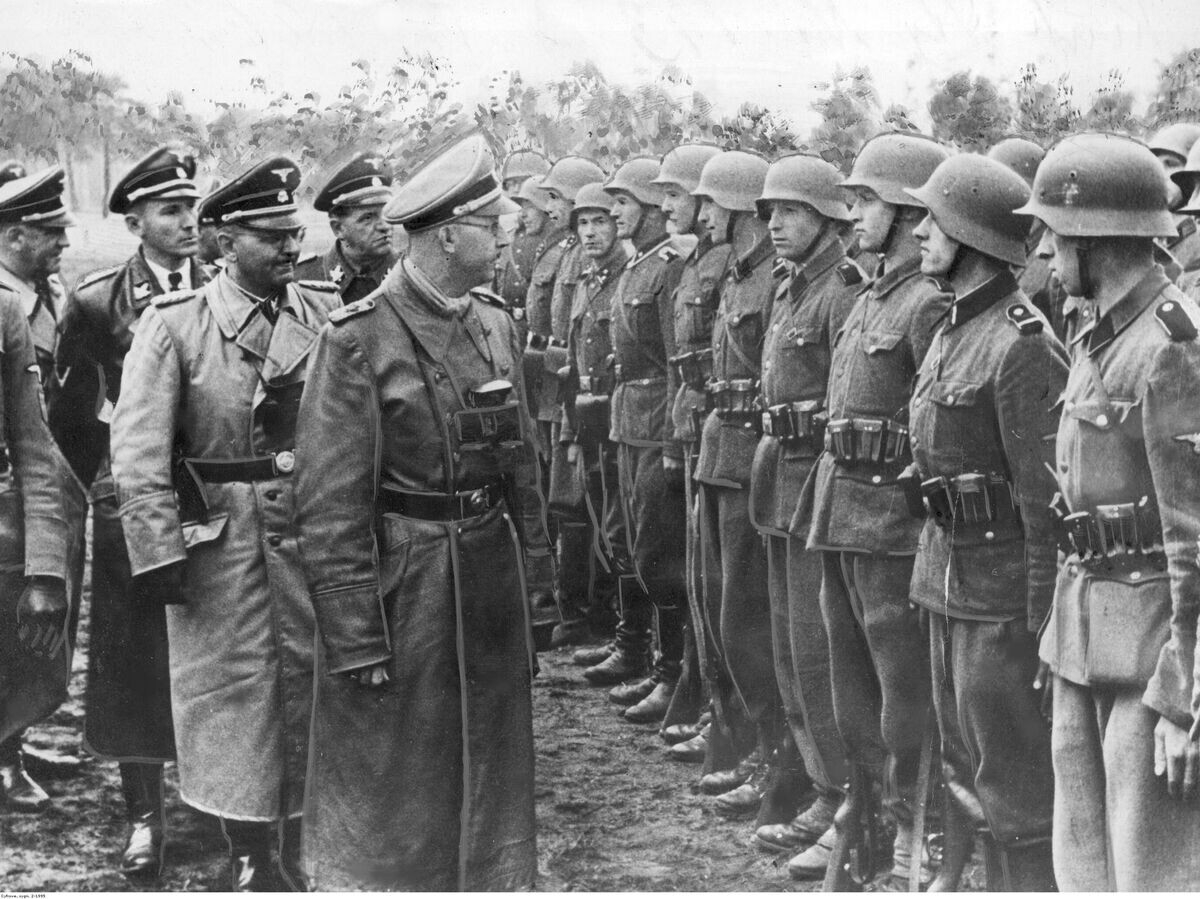
Heinrich Himmler and Otto Vechter, Governor-General of the Galicia District, inspect soldiers of the 14th SS Division “Galicia” | © Public domain
However, this did not yield any results. In the forested areas of the western regions, the militants established a network of camps. The Banderites not only attacked the military but also terrorized the civilian population. They harbored a particular hatred for schoolteachers—between 1946 and 1947, 402 teachers were killed.
At the same time, the nationalists were armed like a full-fledged army. In 1945 alone, during Soviet military operations to eliminate these gangs, 64 mortars, 68 anti-tank rifles, 12,000 rifles, 3,400 submachine guns, 2,500 revolvers (including foreign-made ones), and 17,400 grenades. The number of bandits themselves reached 50,000.
To assist the troops in western Ukraine, anti-guerrilla battalions were formed under the auspices of local police departments, and tens of thousands of local residents joined them. The situation was soon turned around. By 1948, no more than 8,000 people remained in the underground.
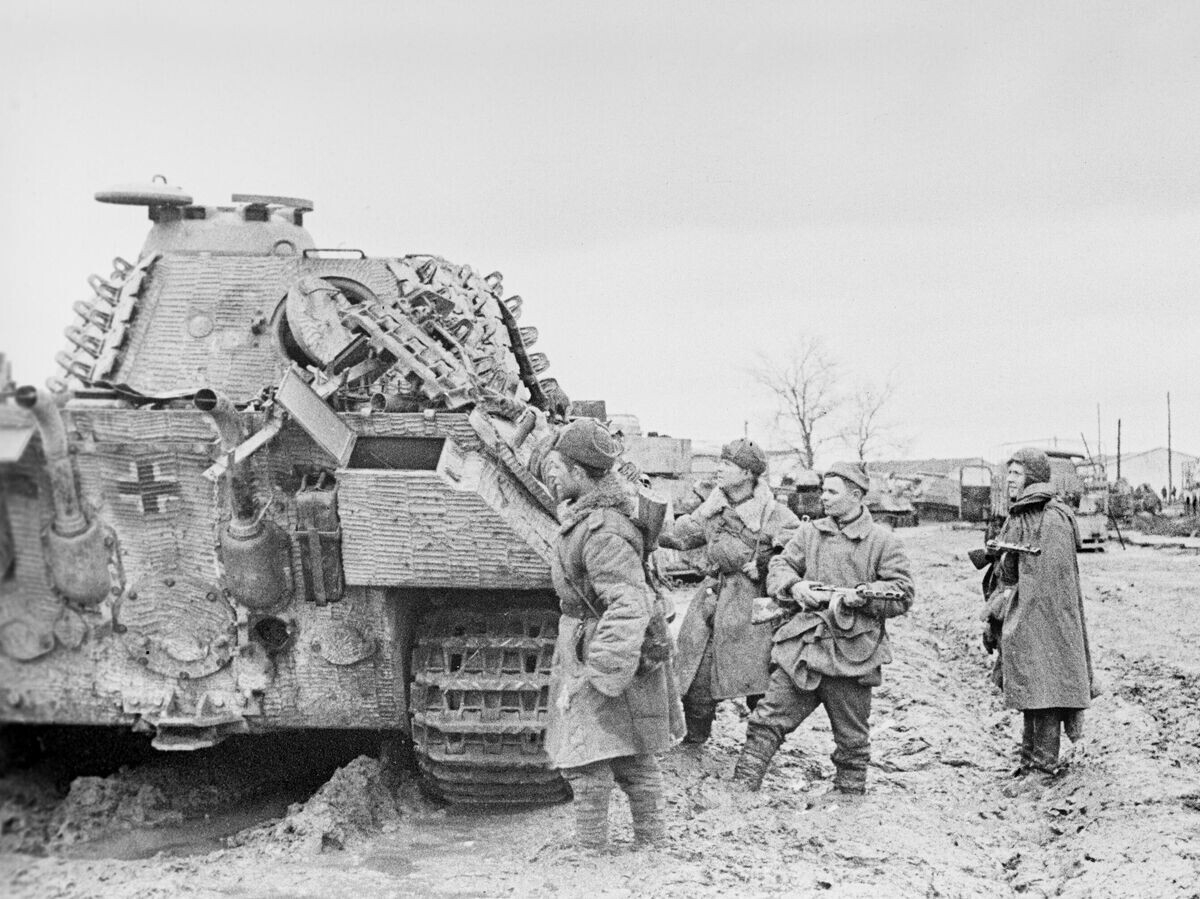
Soldiers of the 2nd Ukrainian Front inspect a German Pz.Kpfw. V Ausf. A “Panther” tank captured in the city of Uman three days after the city was liberated from Hitler’s forces | © RIA Novosti / Israel Ozersky
“All of this continued until 1956—and even much longer than that. It’s not customary for us to talk about it. But the last bandit who fought against us—albeit not in Ukraine, but in another part of the country—was captured in October 1964 by a Ministry of Internal Affairs regiment with dogs: he resisted until they threw a grenade and killed him. A single man posed a threat. Even just one. Can you imagine how serious the situation was in Ukraine?” recalled Soviet intelligence veteran Colonel Georgy Sannikov, who had been fighting the Bandera followers since 1944.
The last Ukrainian nationalist to emerge from the forest was Ilya Oberishin. For forty years, he had been in hiding, fearing the Soviet authorities and lacking any identification documents. It was not until December 1991, when the fate of the USSR was already sealed, that the elderly Bandera supporter decided to come out into the open.
Hunting Werewolves
As early as 1944, SS-Reichsführer Heinrich Himmler instructed SS-Obergruppenführer Hans-Adolf Prütsmann to form a militia to carry out sabotage operations behind Soviet lines, which was named “Werwolf” (translated from German as “werewolf”).
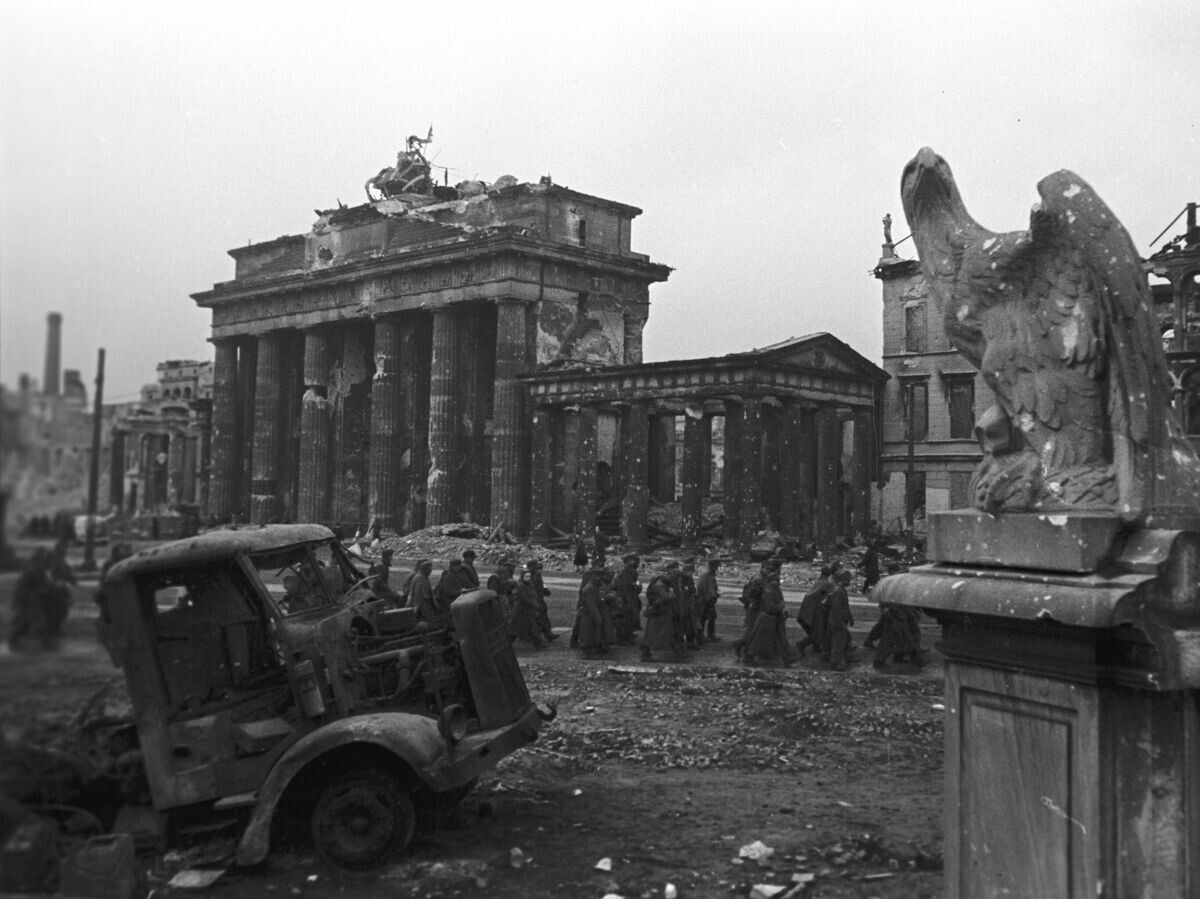
A
column of captured German soldiers at the Brandenburg Gate on May 2, 1945 | © RIA Novosti / Oleg Knorring
Previously, Prütsman had commanded the SS in occupied Ukraine, where he was involved in the extermination of the civilian population and the suppression of partisans. The “Werewolves” were predominantly made up of older men and teenagers from the Hitler Youth, but there were also police officers and SS members among them.
On May 2, 1945, Hitler’s official successor, Admiral Karl Dönitz, ordered the “Werwolf” to cease hostilities and lay down its arms. Not everyone obeyed the order. Terrorist attacks began in the Allied occupation zones of Germany.
On May 15, three Red Army soldiers were killed near the Berlin Botanical Garden. Two days later, a Soviet officer was shot dead in the city. In 1946, the Berlin administrative building was bombed—fifteen people were killed or wounded. The retaliatory measures were commensurate: roundups and raids were carried out, which often ended in armed clashes.
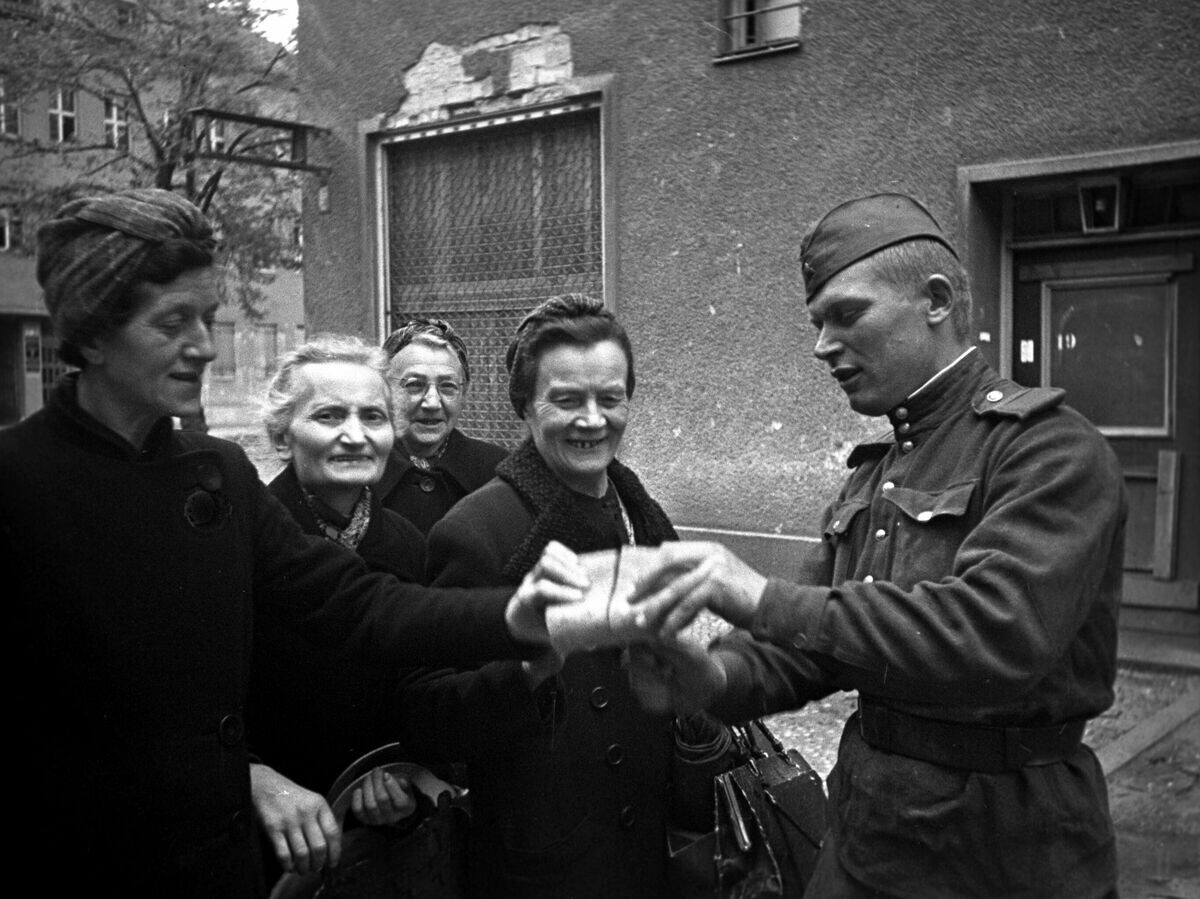
A
Soviet soldier distributes bread to women in Berlin | © RIA Novosti / Oleg Knorring
In October 1945, Lavrentiy Beria reported to Stalin on the elimination of 359 “Werwolf” sabotage groups, with 92 of them (more than a thousand people) having been eliminated in Saxony alone. Gangs of Nazi fanatics were also active in the Kaliningrad Oblast of the RSFSR, where a German population remained. Fascist groups had prepared numerous secret bunkers containing weapons and supplies. Individual pockets of resistance were documented by Soviet authorities in reports from 1946 and 1947.
However, the Nazis failed to ignite a guerrilla war. The overwhelming majority of Germans refused to fight for Hitler’s empire, which had already been destroyed. Effective actions by the NKVD and SMERSH made it possible to virtually eliminate the last “werewolves” of the Reich by the early 1950s.
Based on material from — https://dzen.ru/a/agFjxVU4_3gzOE-w