65 km/h and a T-34 Turret. What Would the Unusual British-Soviet Cromwell Mk. XXXIV (Cromwell-34) Hybrid Have Been Like?

One of the problems with operating armored vehicles supplied to the USSR under Lend-Lease was the use of foreign ammunition, which was often incompatible with Soviet guns. This applied to both British and American tanks. Even identical calibers did not necessarily mean that ammunition was interchangeable. For example, the American 76 mm M1 tank gun could not fire the standard ammunition used by the Soviet F-34 gun of the same caliber. Consequently, imported vehicles also required deliveries of specialized ammunition, complicating logistics. However, it would be an exaggeration to suggest that ammunition shortages were widespread, although supply disruptions did occur.
One possible solution was to install Soviet weapons on Western tanks. Such experiments were actually conducted. In particular, in 1941, the USSR developed a version of the British Matilda tank armed with a 76.2 mm ZiS-5 gun, which received the designation F-96 after modification. However, the project never entered mass production.
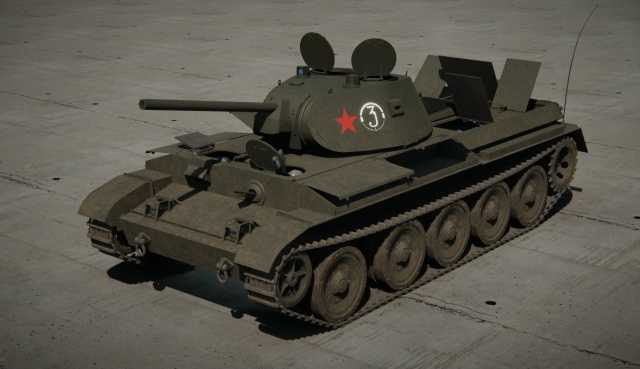
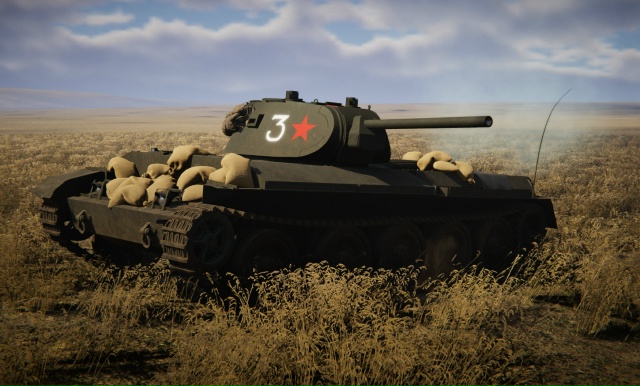
But what if a similar modernization had been carried out on the British Cromwell cruiser tank? Soviet engineers could have gone considerably further, replacing not only the gun but the entire turret with one taken from the T-34. Today, we will examine precisely such an unusual hybrid, designated the Cromwell-34.
Six Cromwells That Changed Nothing
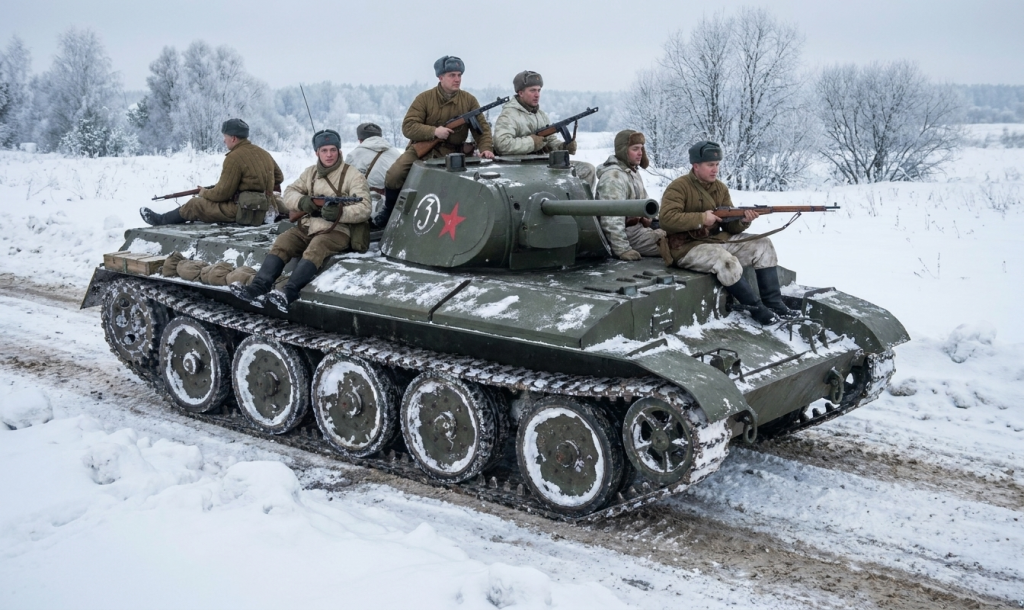
In actual history, British Cromwell tanks saw virtually no combat service on the Soviet-German front. In 1944, a small batch of six Cromwell IV tanks was delivered to the USSR exclusively for testing. The vehicles arrived in Baku in August and were subsequently sent to the proving grounds at Kubinka.
The test results were mixed. Soviet specialists highly praised the British tank’s mobility, which was provided by its powerful Rolls-Royce Meteor engine. However, in terms of overall characteristics, the Cromwell was considered inferior to the American M4A2 Sherman, which was already well established in Red Army service. As a result, further purchases were rejected.
Naturally, nobody would have developed a new turret or reorganized production lines for the sake of just six vehicles. But let us imagine that events took an entirely different course.
Cruiser Tank «Cromwell»
British Hulls for Soviet Turrets
Our historical point of divergence occurs in early 1943. The British government offers the Soviet Union deliveries of Cromwell cruiser tanks. However, the Soviet side puts forward an unusual condition: the vehicles must be supplied without turrets or armament. In return, British factories receive an order for specially modified hulls prepared for the installation of Soviet turrets.
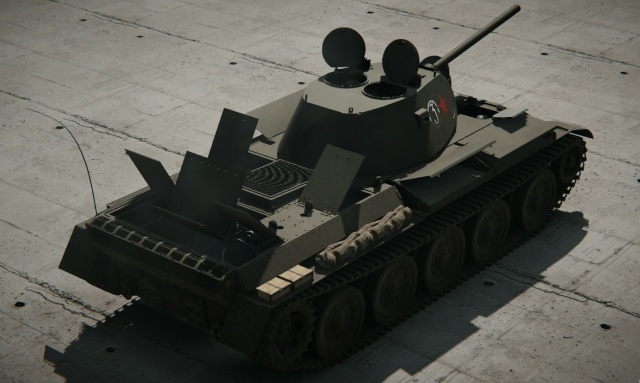
The main modification concerns the turret ring diameter. On the real Cromwell, it measured approximately 1,524 mm, but in our alternative reality, British designers create an export version with a 1,420 mm turret ring, corresponding to that of early T-34 tanks. This requires modifications to the turret mounting structure, supporting elements, and sections of the hull roof.
In June 1943, the two countries sign an agreement for the delivery of 1,500 such chassis. British factories continue producing tanks for their own armed forces, while the special order is fulfilled through an additional production program. The first hulls arrive in Murmansk in the autumn of 1943.
Special workshops are established at local ship-repair facilities for final assembly. Completed Soviet turrets, guns, machine guns, and the necessary equipment are delivered to these workshops by rail. Thus, only British chassis are transported across the North Atlantic, while final assembly takes place on Soviet territory.
The first batch of twenty vehicles leaves the workshops in December 1943. The new tank receives the designation Cromwell-34.
British Speed and a Soviet Gun
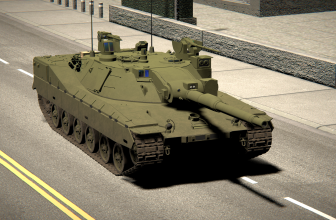
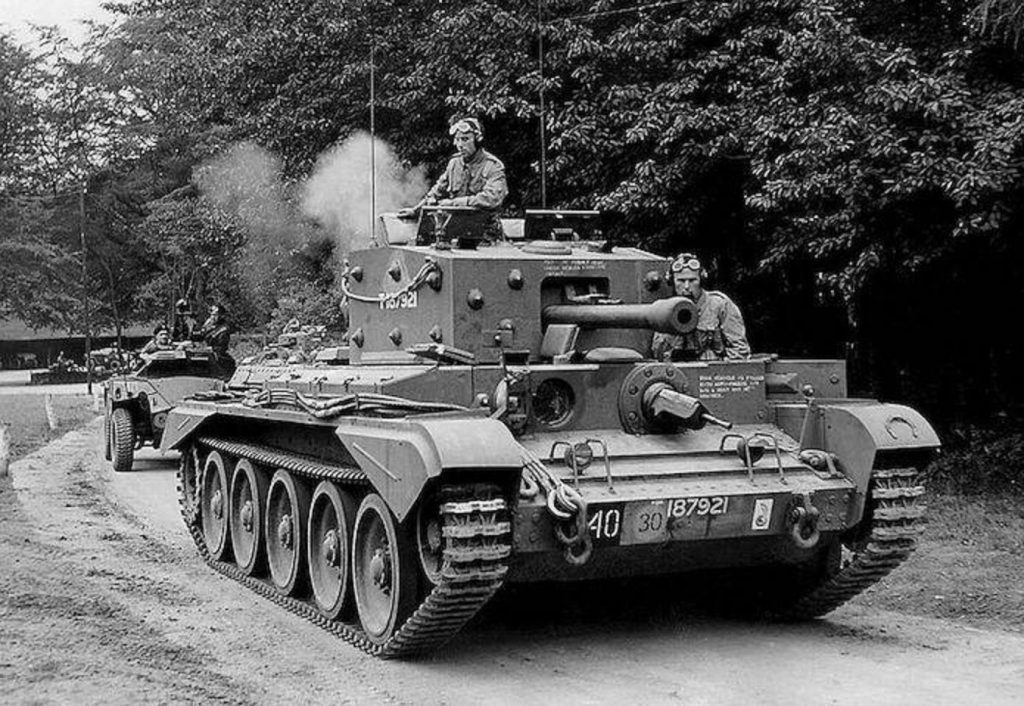
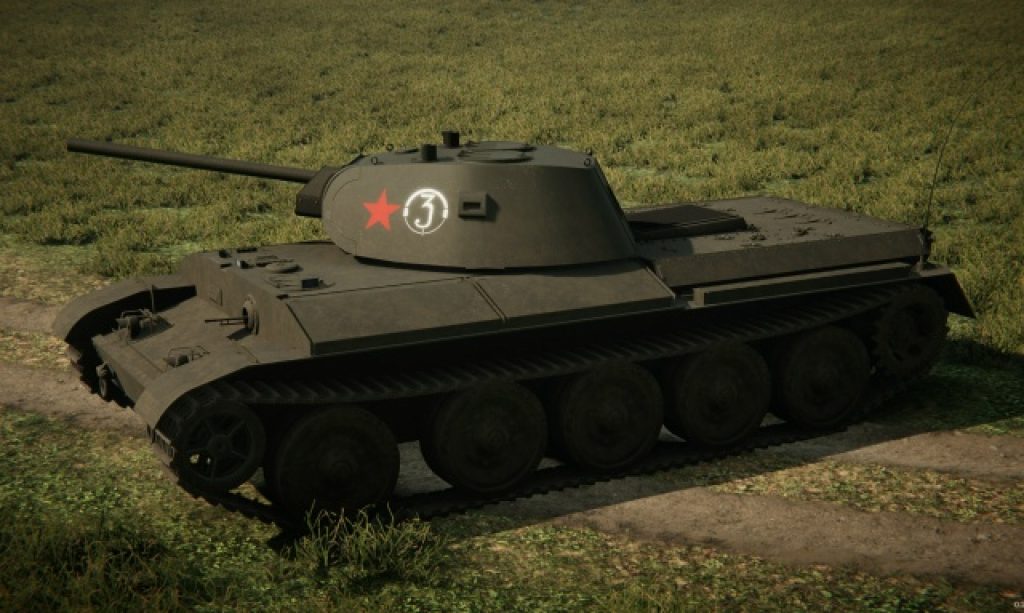
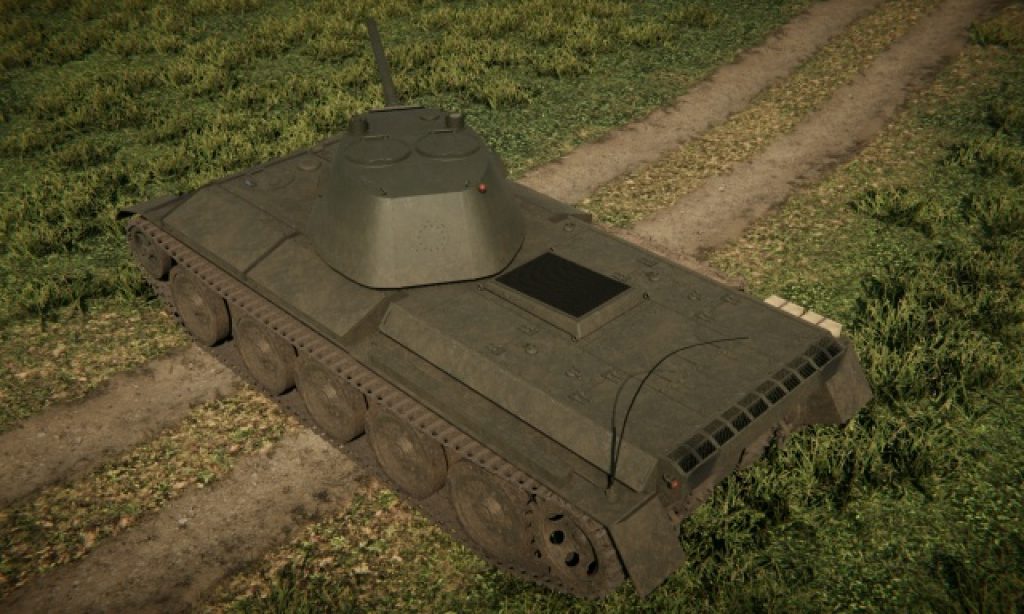
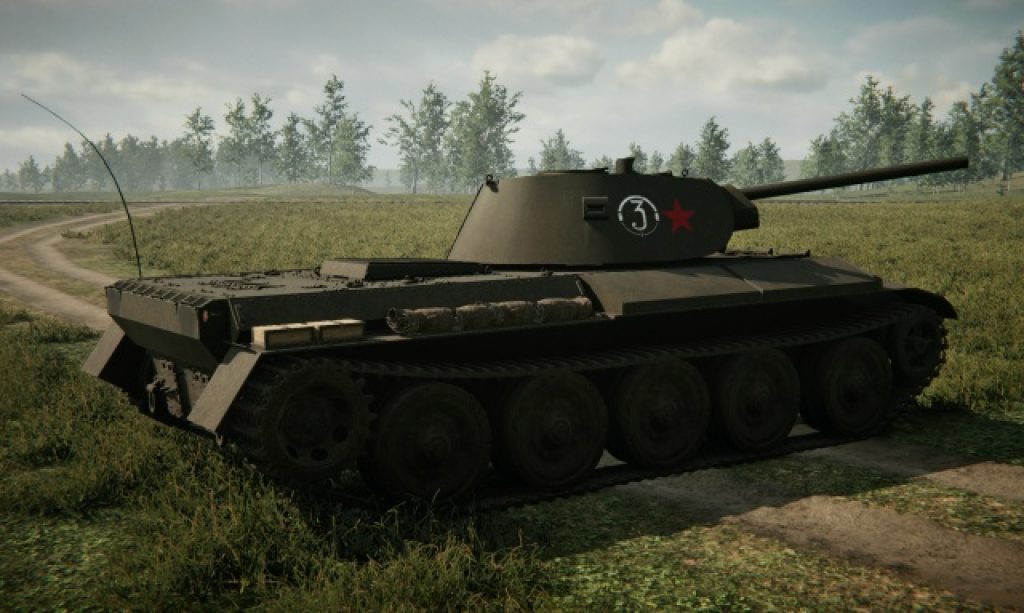
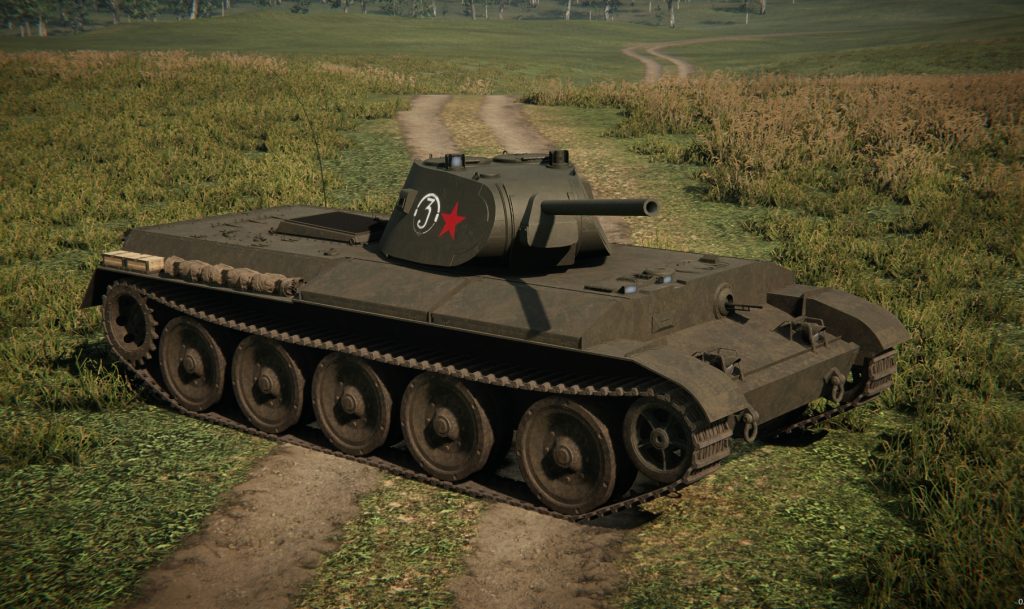
The resulting vehicle represents a fascinating combination of British and Soviet engineering traditions. From the Cromwell, it inherits the hull, running gear with Christie suspension, transmission, and powerful Rolls-Royce Meteor gasoline engine. From the T-34, it receives the turret, complete with armament, sights, and crew arrangement.
The new tank’s greatest advantage is its mobility. Its 600 hp twelve-cylinder engine allows the 24-ton vehicle to reach speeds of up to 65 km/h on roads. Its power-to-weight ratio reaches an impressive 25 hp per ton, significantly exceeding that of the standard T-34.
Instead of the standard British 75 mm gun, the tank is equipped with a Soviet 76 mm K-21D, an alternative modification of the F-34. This allows the vehicle to use the same principal types of ammunition as Soviet T-34 tanks.
However, the design also has its disadvantages. The two-man turret of the early T-34 forces the commander to perform the duties of gunner as well, limiting his ability to observe the battlefield. Furthermore, the hybrid’s armor protection is not designed to withstand direct confrontations with heavy German tanks.
Technical Specifications of the Cromwell-34
General Characteristics:
- Combat weight — 24 tons.
- Crew — 4.
- Engine — Rolls-Royce Meteor, V12 gasoline engine.
- Engine displacement — 27.1 liters.
- Power output — 600 hp at 2,270 rpm.
- Power-to-weight ratio — 25 hp/ton.
- Maximum speed — 65 km/h forward, 10 km/h in reverse.
- Transmission — 5 forward gears, 1 reverse gear.
Armor Protection:
- Hull front — 73 mm (lower plate), 25 mm (middle plate), 82 mm (upper plate).
- Turret front — 45–82 mm around the gun mantlet, 45–75 mm on the frontal section, 45 mm on the turret cheeks.
- Hull sides — 48 mm on the upper section, 32 + 16 mm on the lower section.
- Turret sides and rear — 45 mm.
- Hull rear — 12–32 mm.
- Hull and turret roofs — 18 mm.
- Engine compartment hatches and hull floor — 12 mm.
Armament:
- Main gun — 76 mm K-21D, an equivalent of the F-34.
- Barrel length — 42.5 calibers (3,230 mm).
- Estimated armor penetration — up to 100 mm.
- Reload time — approximately 4 seconds when using the seven rounds stored in the first-stage ammunition rack.
- Gun elevation and depression — from −6.5° to +20°.
- Turret traverse speed — up to 20°/s.
- Vertical gun laying speed — up to 4°/s.
- Secondary armament — two 7.62 mm machine guns.
- Ammunition capacity — 75 rounds.
All these characteristics belong to the author’s alternative-history design. It should be emphasized that the claimed 100 mm armor penetration depends on ammunition type and engagement distance, while a four-second reload would only be achievable under ideal conditions.
First Battles in Ukraine
By the spring of 1944, Soviet industry has assembled approximately 250 Cromwell-34 tanks. The first vehicles are assigned to tank units of the 1st Ukrainian Front, where they undergo their combat baptism during the Proskurov-Chernovtsy Offensive.
The new tank performs particularly well when pursuing a retreating enemy. Its high speed allows tank units to bypass German defensive positions, intercept roads, and capture river crossings. Meanwhile, its 76 mm gun is perfectly capable of dealing with German armored personnel carriers, light vehicles, and field fortifications.
However, encounters with Panthers prove considerably more dangerous. The British running gear offers no protection against powerful German anti-tank guns, while the Soviet cannon can no longer reliably penetrate the frontal armor of newer German tanks.
Consequently, Soviet commanders gradually begin employing the Cromwell-34 primarily as a vehicle for exploiting breakthroughs rather than providing direct infantry support in the most heavily fortified sectors of the front.
From Belarus to Berlin
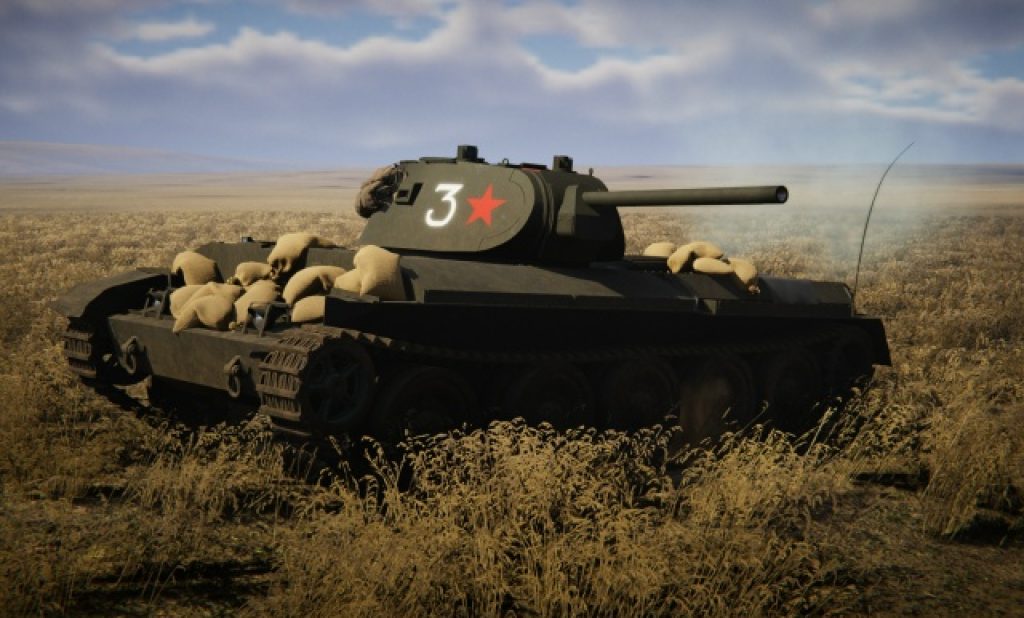
By the beginning of Operation Bagration in the summer of 1944, the Red Army already possesses approximately 450 such vehicles. They operate mainly in independent tank regiments attached to mechanized formations.
It is in Belarus that the advantages of the British-Soviet hybrid become particularly apparent. Once German defenses have been breached, Cromwell-34 tanks can advance rapidly along roads, moving ahead of heavier armored vehicles. However, their mobility is considerably restricted in marshy terrain, while their gasoline engines require high-quality fuel.
By the end of 1944, deliveries of British hulls have reached approximately 1,000 units. However, production gradually begins to decline. The Soviet Army is increasingly reequipping with T-34-85 tanks, which possess a significantly more powerful gun and a proper three-man turret.
The last Cromwell-34 tanks enter service in the spring of 1945. Some participate in fighting on German territory, primarily performing reconnaissance, convoy escort, and breakthrough exploitation missions.
In total, approximately 1,400 such tanks are assembled during the war in our alternative reality.
Instead of an Afterword
Could such a hybrid really have appeared during World War II? From a technical standpoint, this conversion was possible, although it would have required substantial modifications to the hull and turret ring. The main obstacle would probably have been not engineering difficulties, but the economic viability of the project.
In actual history, Britain desperately needed cruiser tanks for its own armed forces, while the USSR already possessed enormous T-34 production capacity. Therefore, supplying British hulls and subsequently fitting them with Soviet turrets would hardly have provided a decisive advantage.
Nevertheless, within the framework of alternative history, the result is a fascinating vehicle. Fast, relatively light, armed with a familiar Soviet gun, and capable of operating alongside standard T-34s, it could have found its own niche on the battlefield.
What do you think? Would the Cromwell-34 have been a successful combination of British mobility and Soviet firepower? Or would the costs of developing and producing such a hybrid have made it completely pointless compared with the mass production of the T-34-85?
Sources
https://m.vk.ru/wall-207635553_21399
https://www.tankarchives.com/2016/03/cromwell-english-dictator-in-soviet.html
https://dokumen.pub/soviet-lend-lease-tanks-of-wwii.html
https://tanks-encyclopedia.com/ww2/soviet/matilda-mk-iv-zis-5/