Not a Panther, but a Supercharged Panzer IV. What Could the Pz.Kpfw. IV Ausf. H1 Have Become, and Why Was It a Sensible Alternative?

However, the Germans paid a high price for this technological sophistication. The Panther proved complex, expensive, and extremely unreliable, especially during its first months of service. In 1943, dozens of newly built tanks broke down before they even encountered the enemy. Meanwhile, the older Panzer IV, although inferior to the Panther in firepower and protection, was much better understood by both the manufacturing industry and maintenance units.
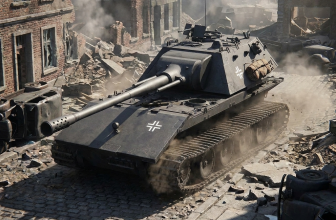
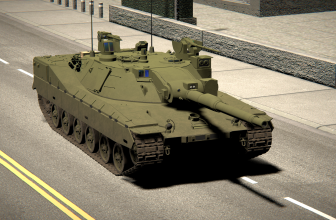
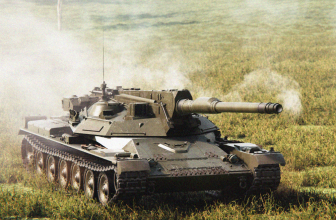
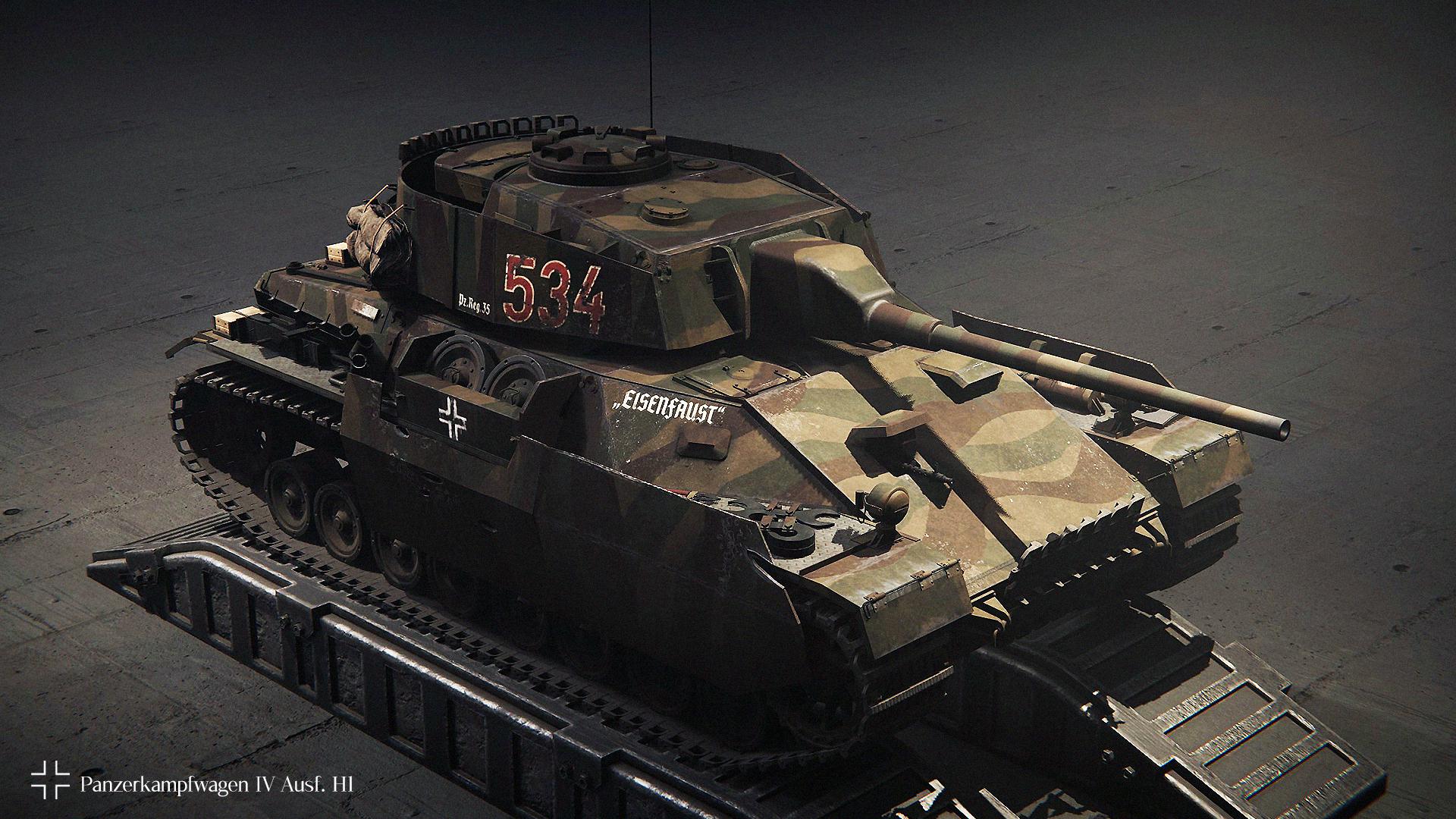
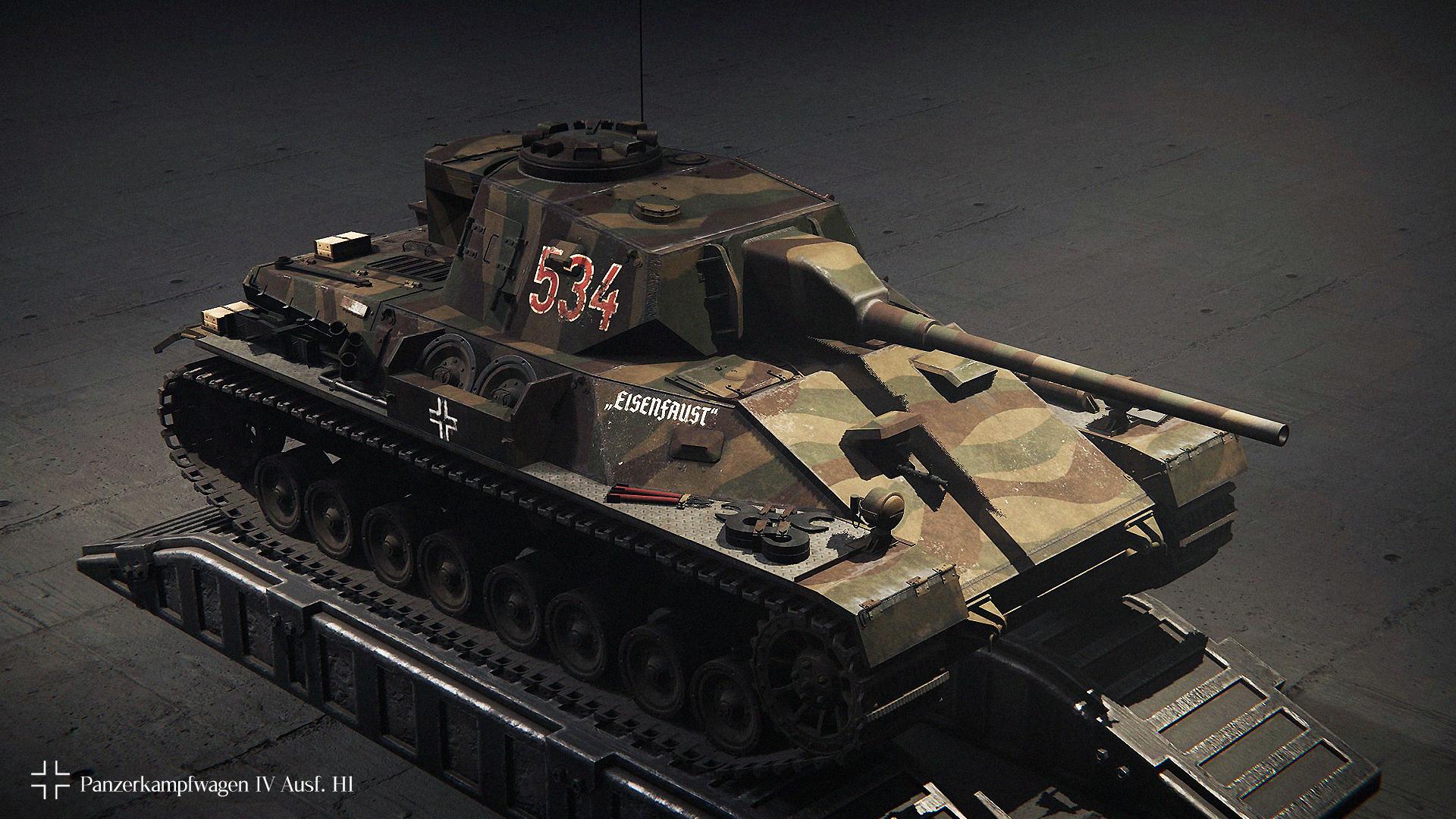
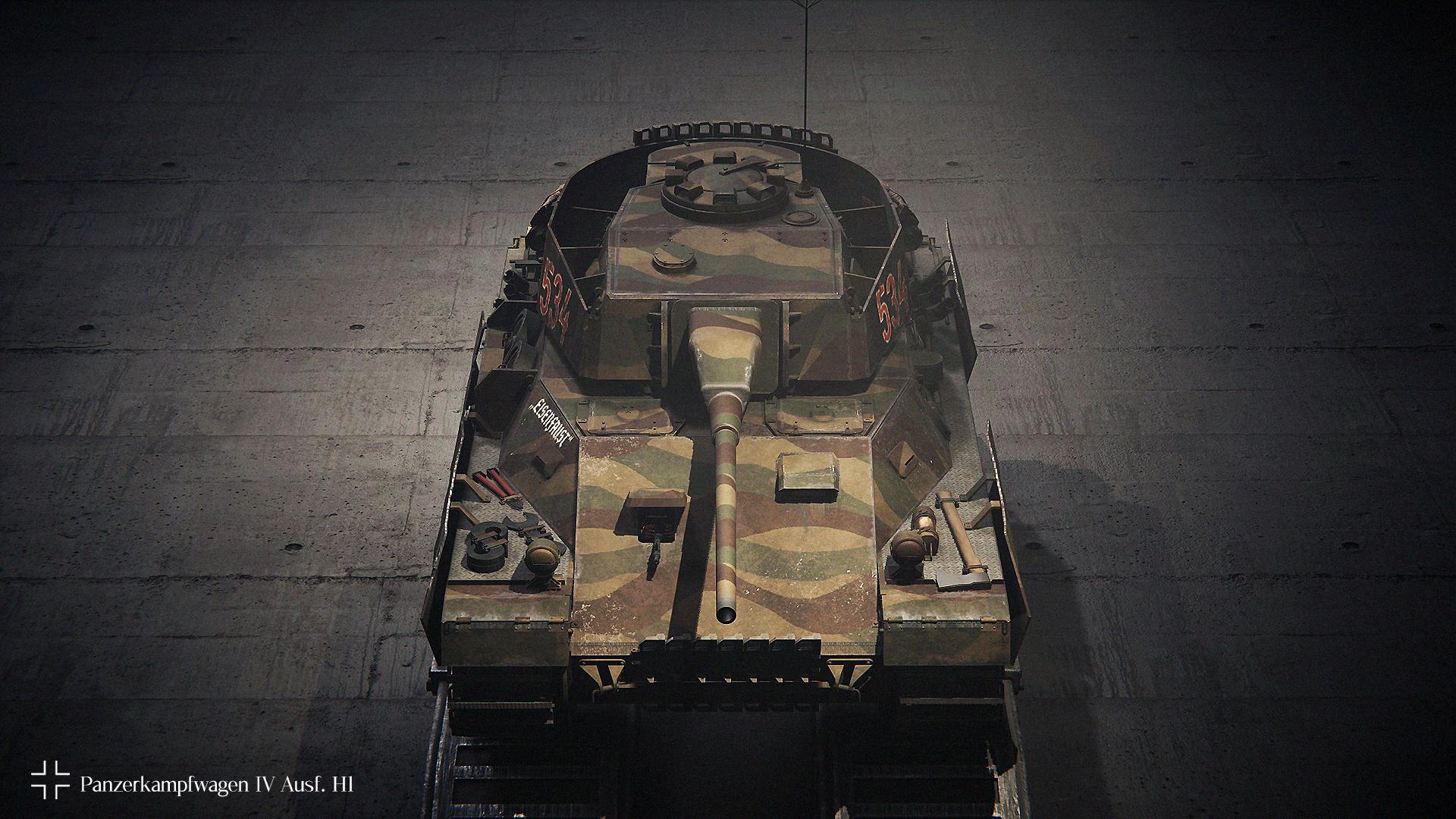
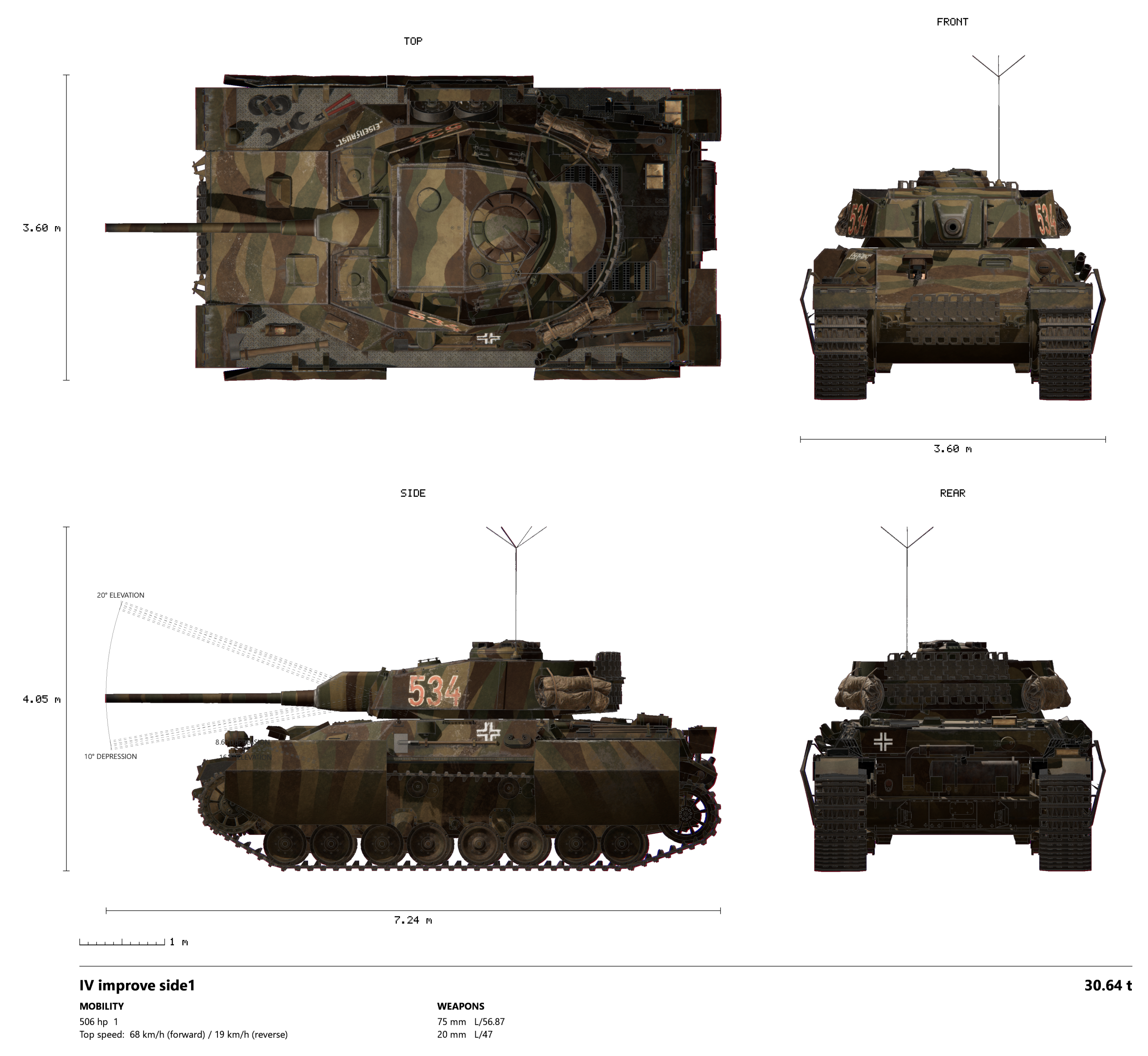
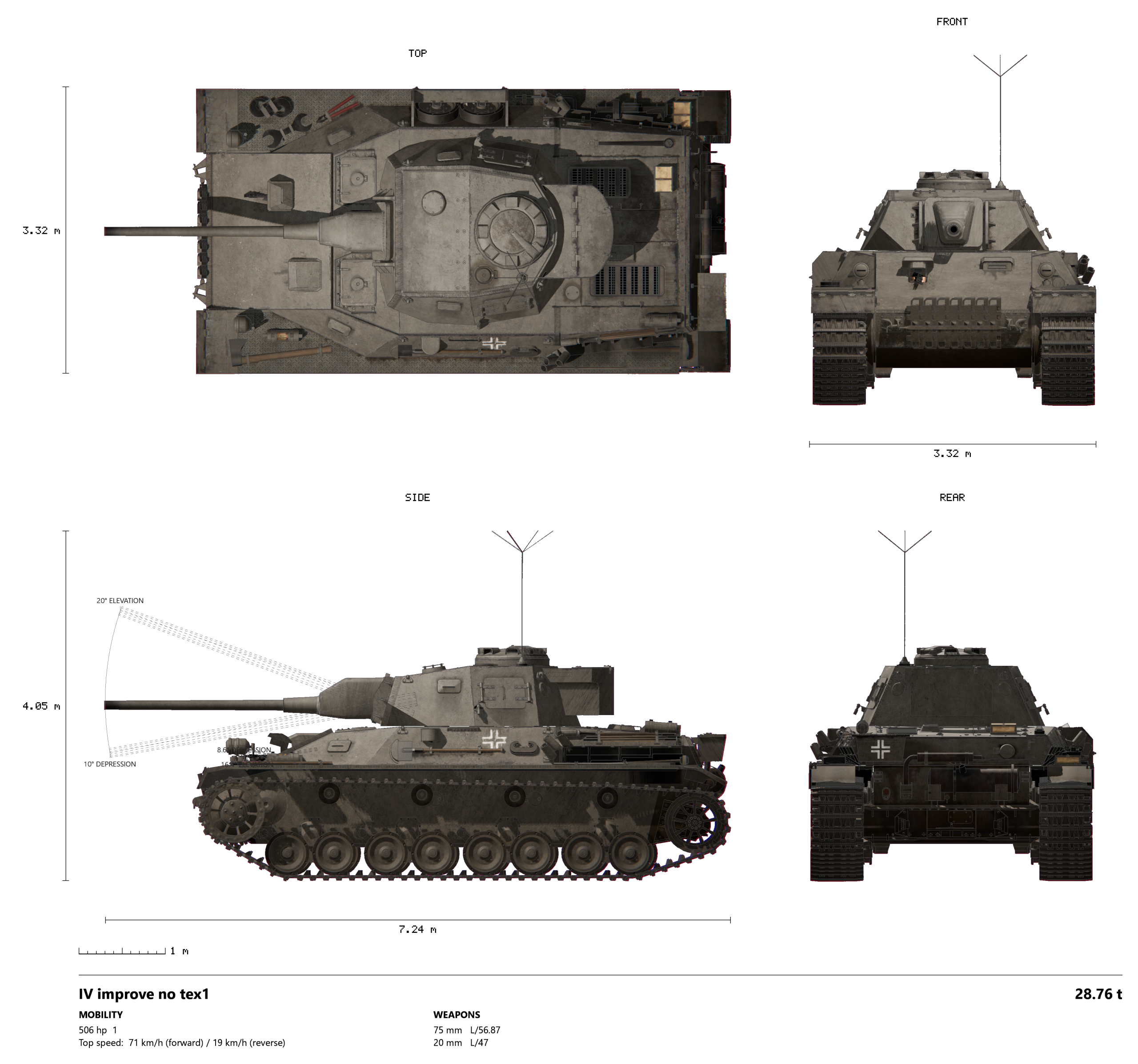
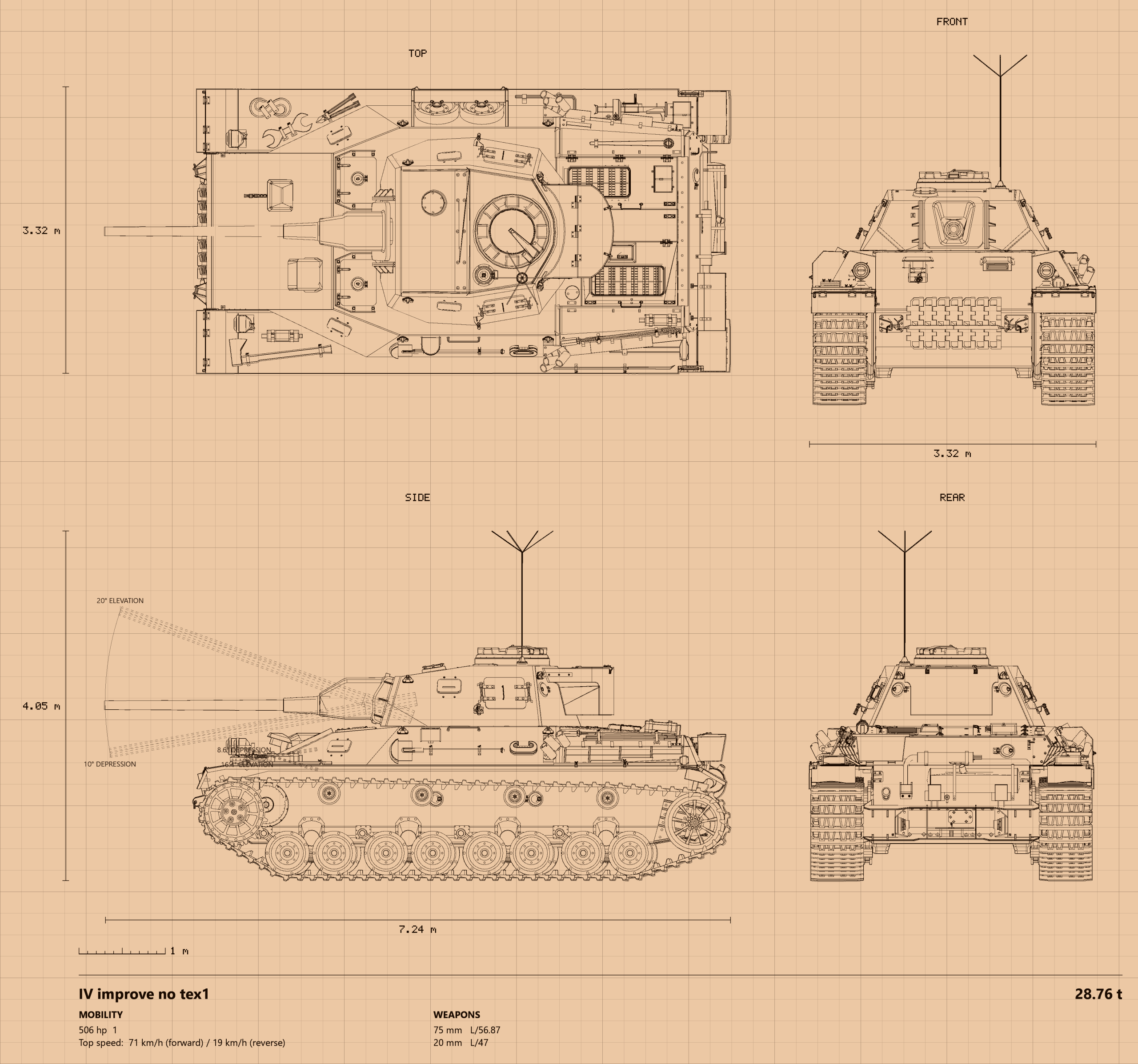
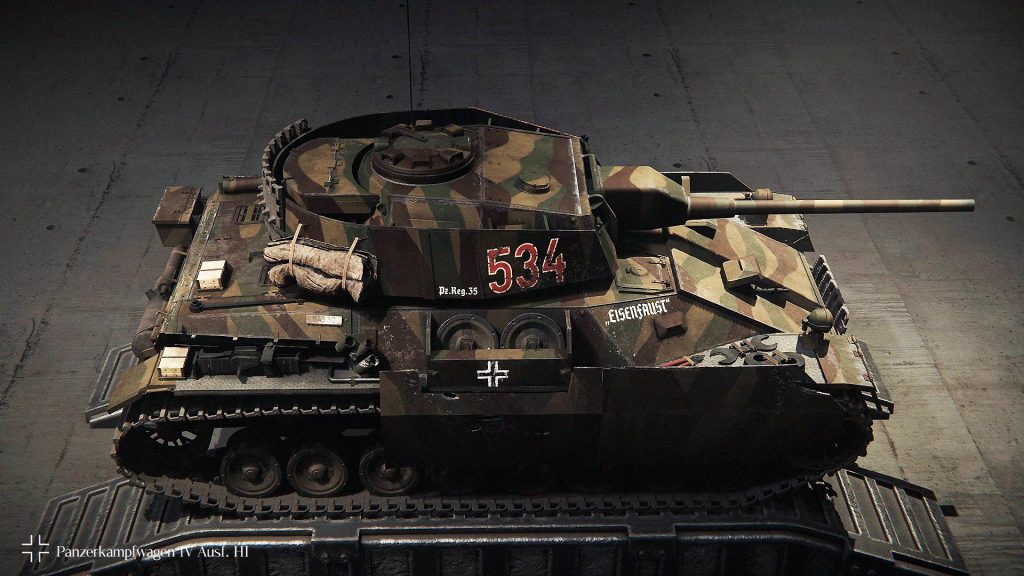
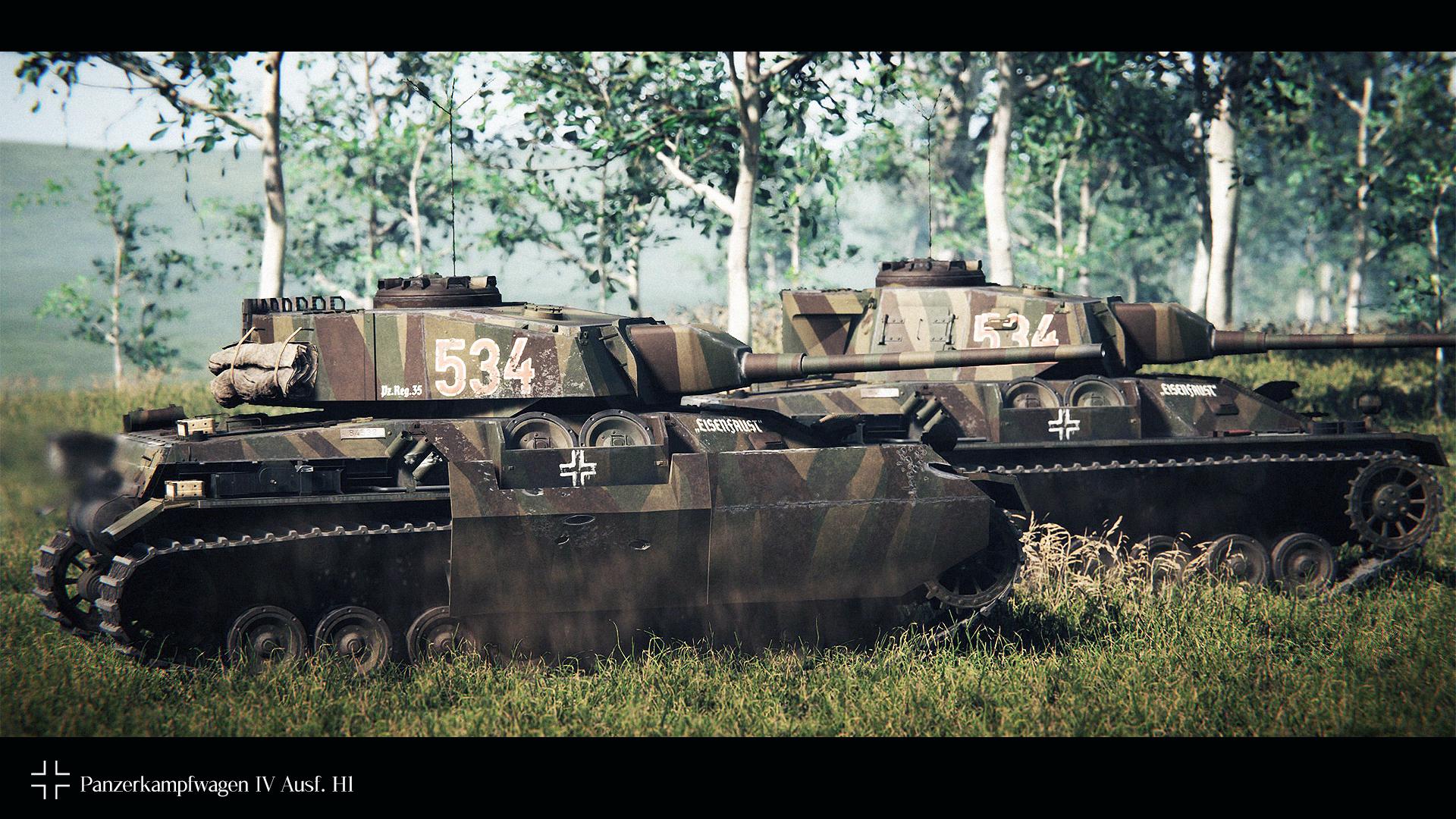
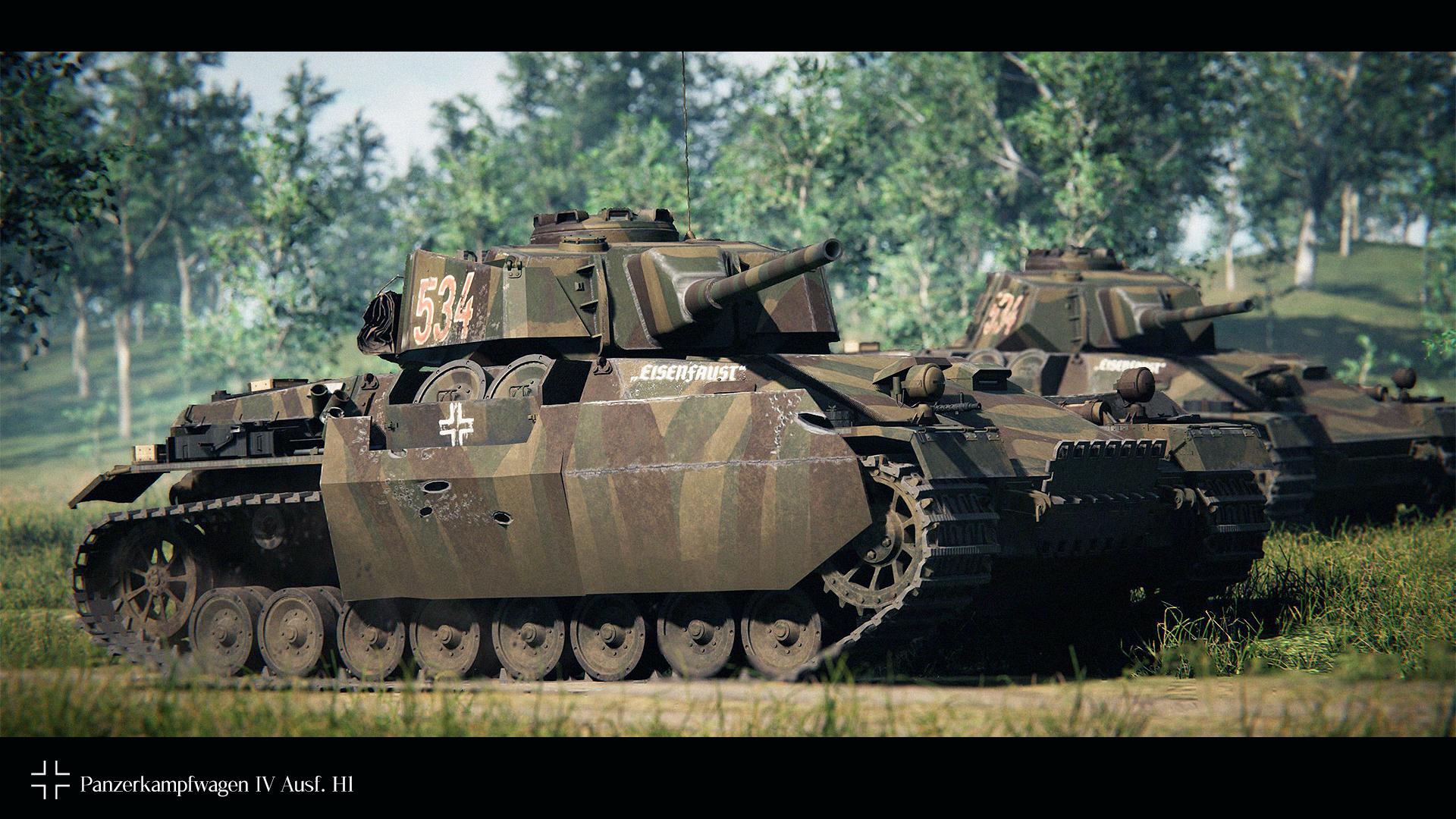
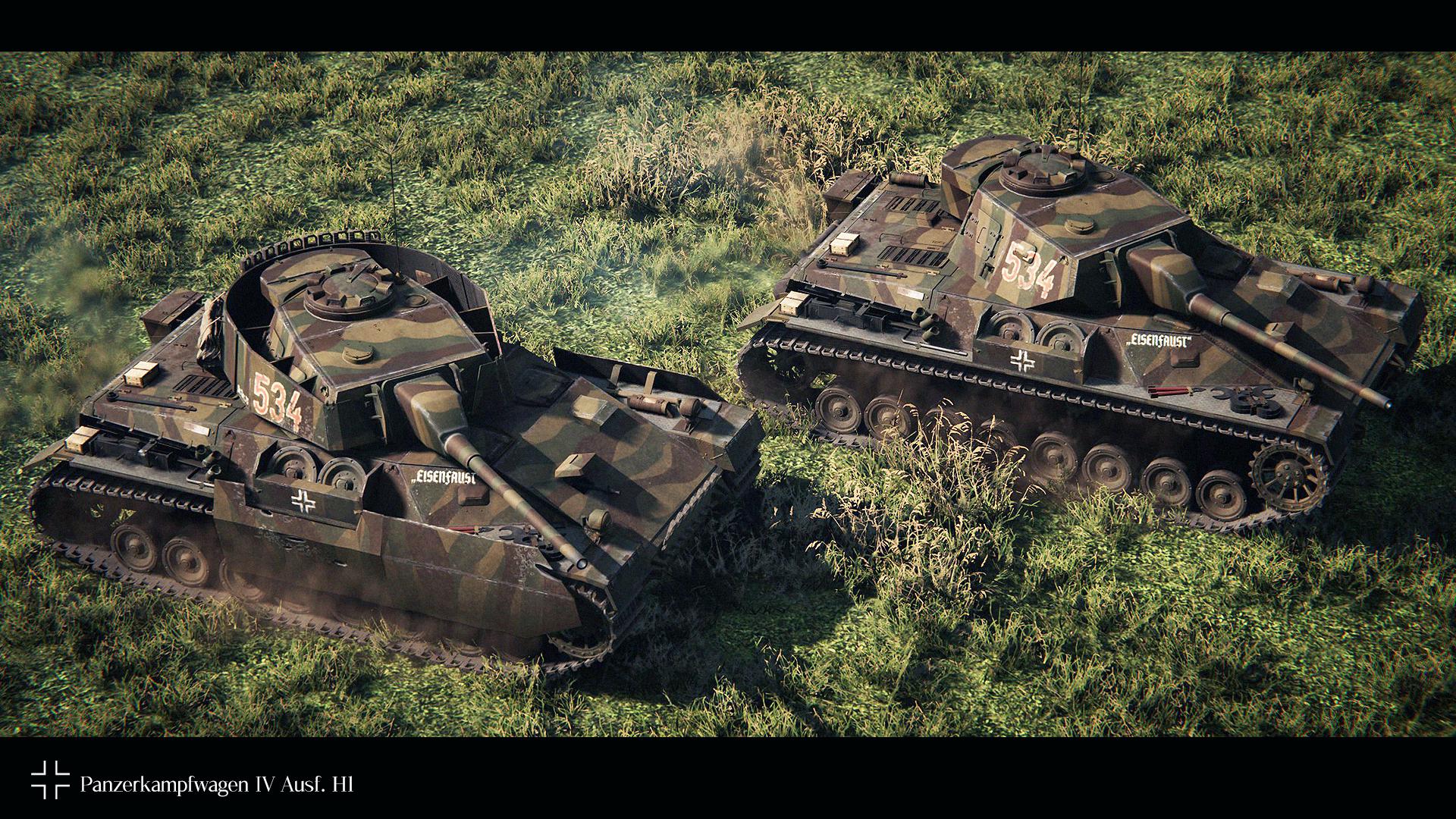
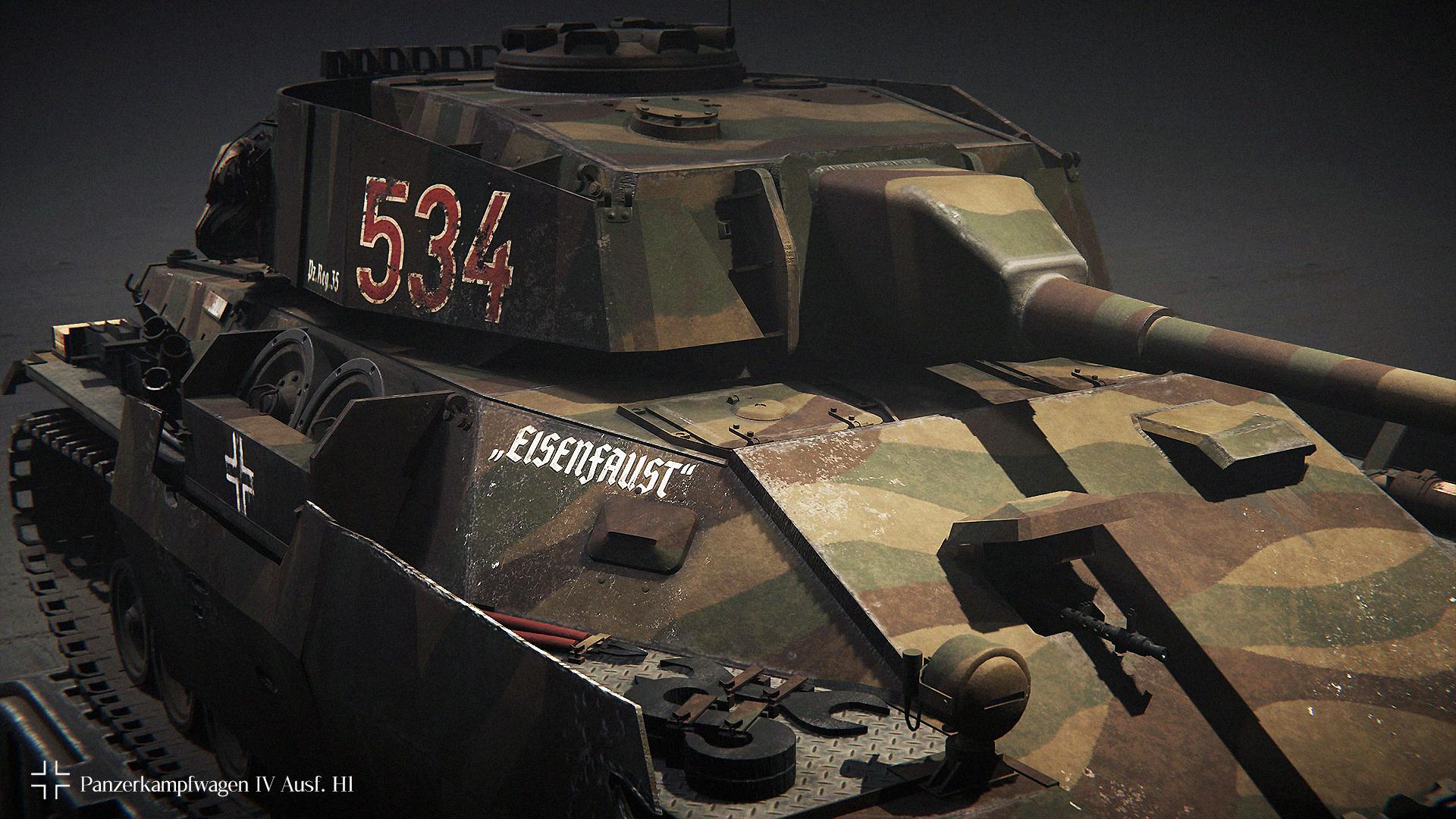
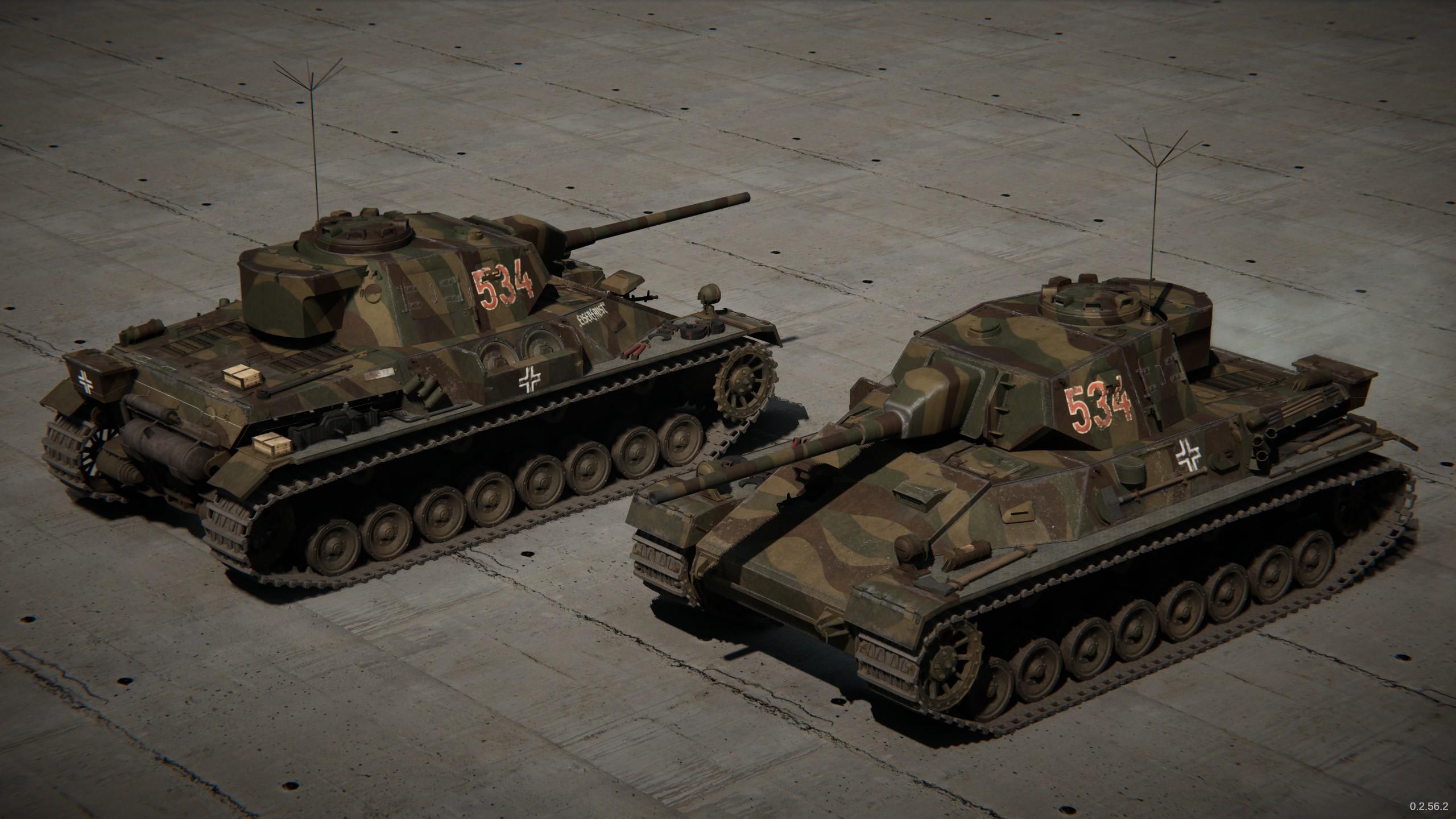
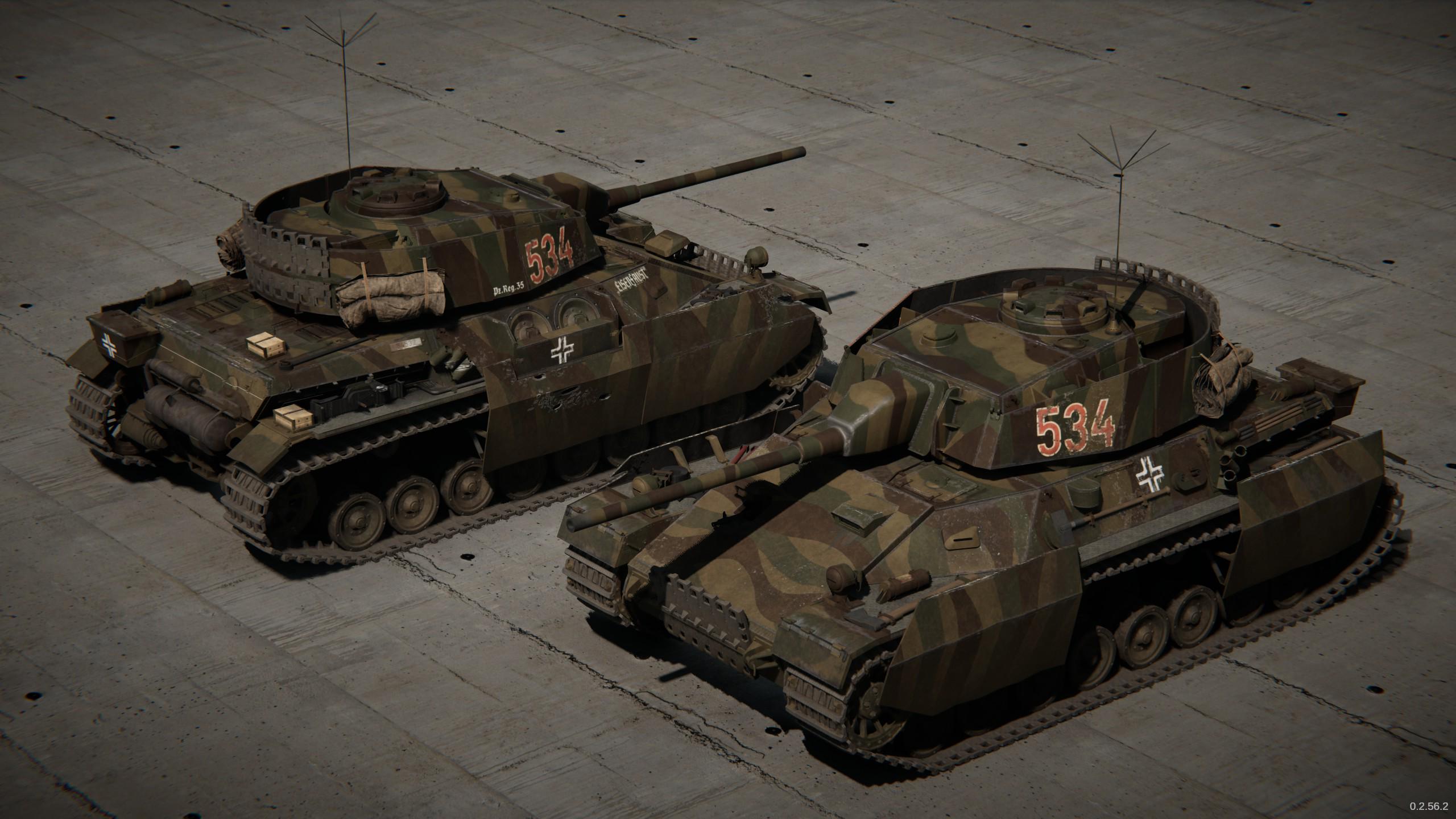
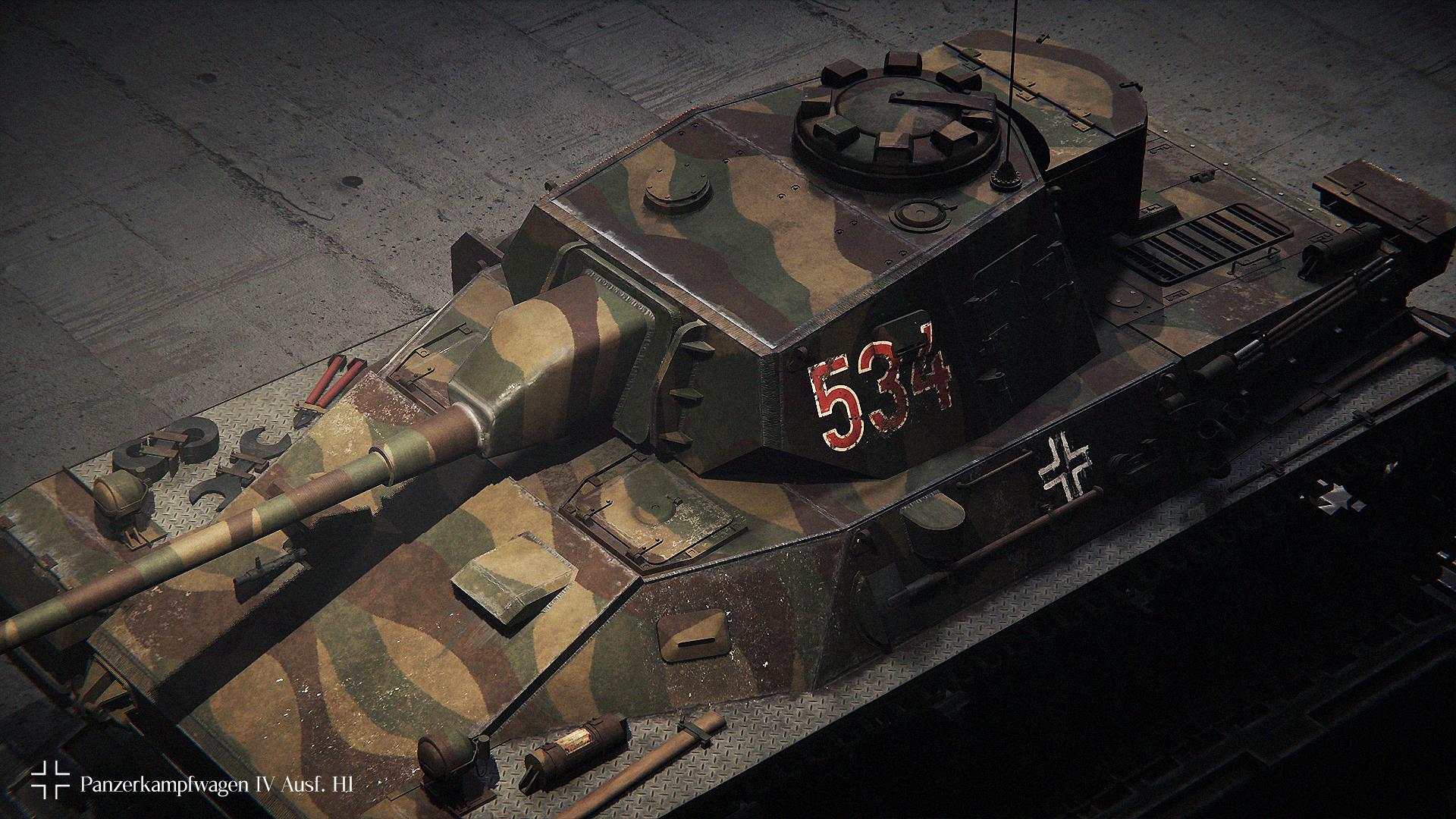
But what if the German High Command had decided not to rely on an entirely new tank and instead devoted its resources to a comprehensive modernization of the proven Pz.Kpfw. IV? This is precisely the kind of vehicle our Western colleague MAFIALAA envisioned when he created the alternative Pz.Kpfw. IV Ausf. H1 in the tank design simulator Sprocket. Its distinguishing features included sloped frontal armor, reinforced 20 mm armor skirts, and wider tracks. We will take this concept a step further by equipping it with the advanced 75 mm KwK 44/1 L/70 gun and imagining how its history might have unfolded.
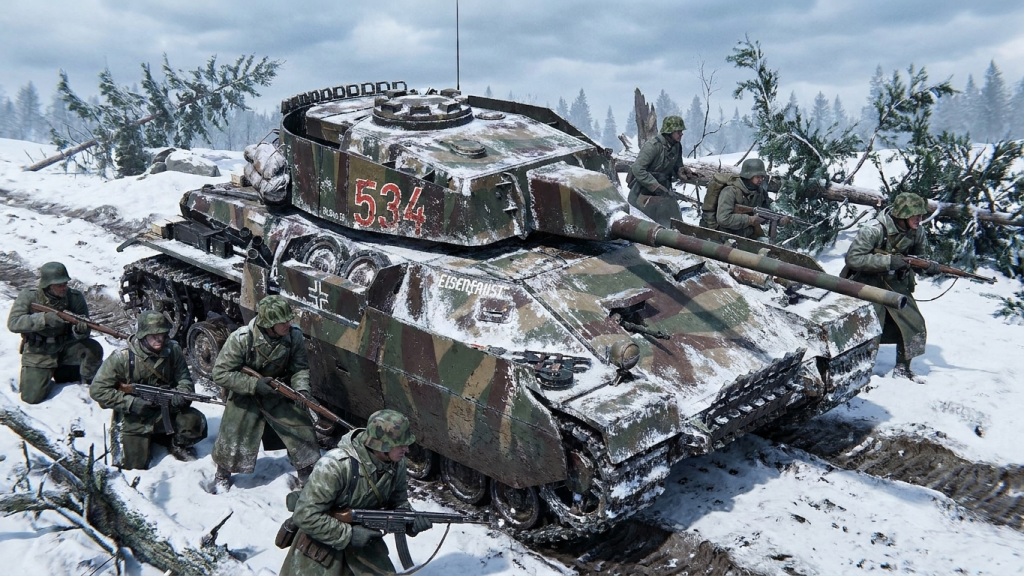
Why Might the Germans Have Abandoned the Panther?
Our alternate-history divergence begins in late 1942. The German Army Ordnance Office examines the results of fighting on the Eastern Front and concludes that the continued increase in tank weight cannot go on indefinitely.
Significantly, there were genuine historical grounds for such a decision. As early as December 31, 1942, Krupp proposed a modernized Pz.Kpfw. IV featuring sloped frontal armor plates. The project also included modifications to the running gear.
In reality, this program was never developed further, and the Panther became Germany’s principal next-generation medium tank.
In our alternate history, however, events take a different course.
In the spring of 1943, the German High Command decides to retain limited Panther production while concentrating its main efforts on a comprehensive modernization of the Pz.Kpfw. IV.
The new tank receives the designation Ausf. H1. The first prototype appears in the autumn of 1943, and mass production begins in the spring of 1944.
New Armor for an Old Tank
The most noticeable difference of the H1 is its redesigned hull.
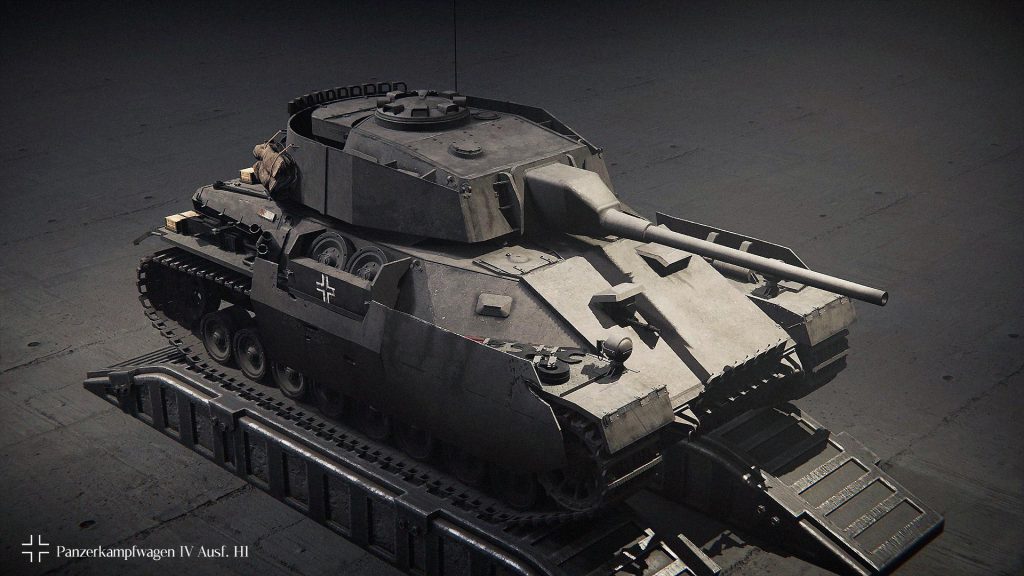
Instead of the nearly vertical upper frontal armor plate, a sloped plate 60 mm thick is installed. Thanks to its considerable angle of inclination, its effective thickness is significantly greater than its nominal thickness.
The lower frontal plate retains a more conventional configuration but also receives additional protection.
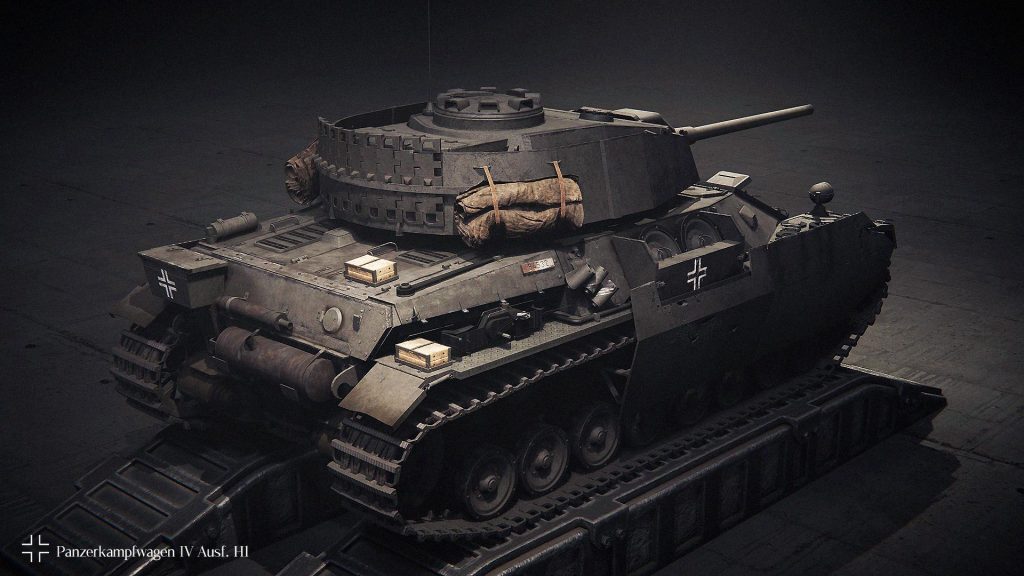
The hull sides are protected by 20 mm spaced armor skirts, replacing the thin standard Schürzen. These improve protection against certain types of anti-tank ammunition, although they also noticeably increase the vehicle’s weight.
To compensate for the additional weight, engineers widen the tracks, reinforce the suspension, and redesign certain transmission components.
As a result, the tank becomes considerably heavier than the production Ausf. H while retaining most of the components already familiar to German manufacturers.
Pz.Kpfw. IV Ausf. H1 with and without armor skirts:
The Main Weapon: A New 75 mm Gun
The most challenging aspect of the modernization is replacing the standard 75 mm KwK 40 L/48 gun.
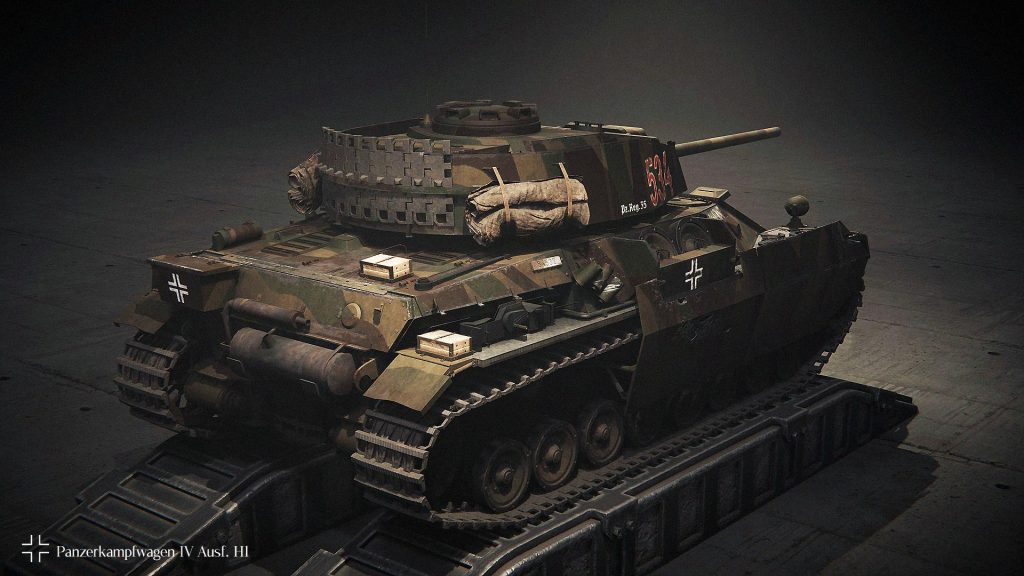
In its place, the tank receives the 7.5 cm KwK 44/1 L/70, which was being developed for the prospective Panther Ausf. F.
The new gun retains ballistic performance close to that of the famous KwK 42 but features a redesigned recoil mechanism and no muzzle brake.
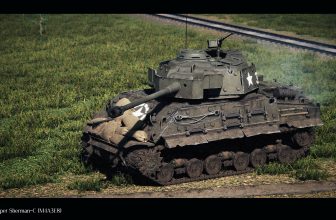
The modernized Panzer IV can now engage T-34-85s and American Shermans at considerably greater distances.
However, installing such a powerful gun requires a new turret. The designers therefore develop a lightweight version of the Schmalturm, taking into account the limited turret-ring diameter of the Pz.Kpfw. IV.
In reality, German engineers considered similar solutions but encountered serious limitations involving weight, dimensions, and chassis strength. In our scenario, these problems are partially overcome through an earlier start to development and structural reinforcement.
Engine and Running Gear
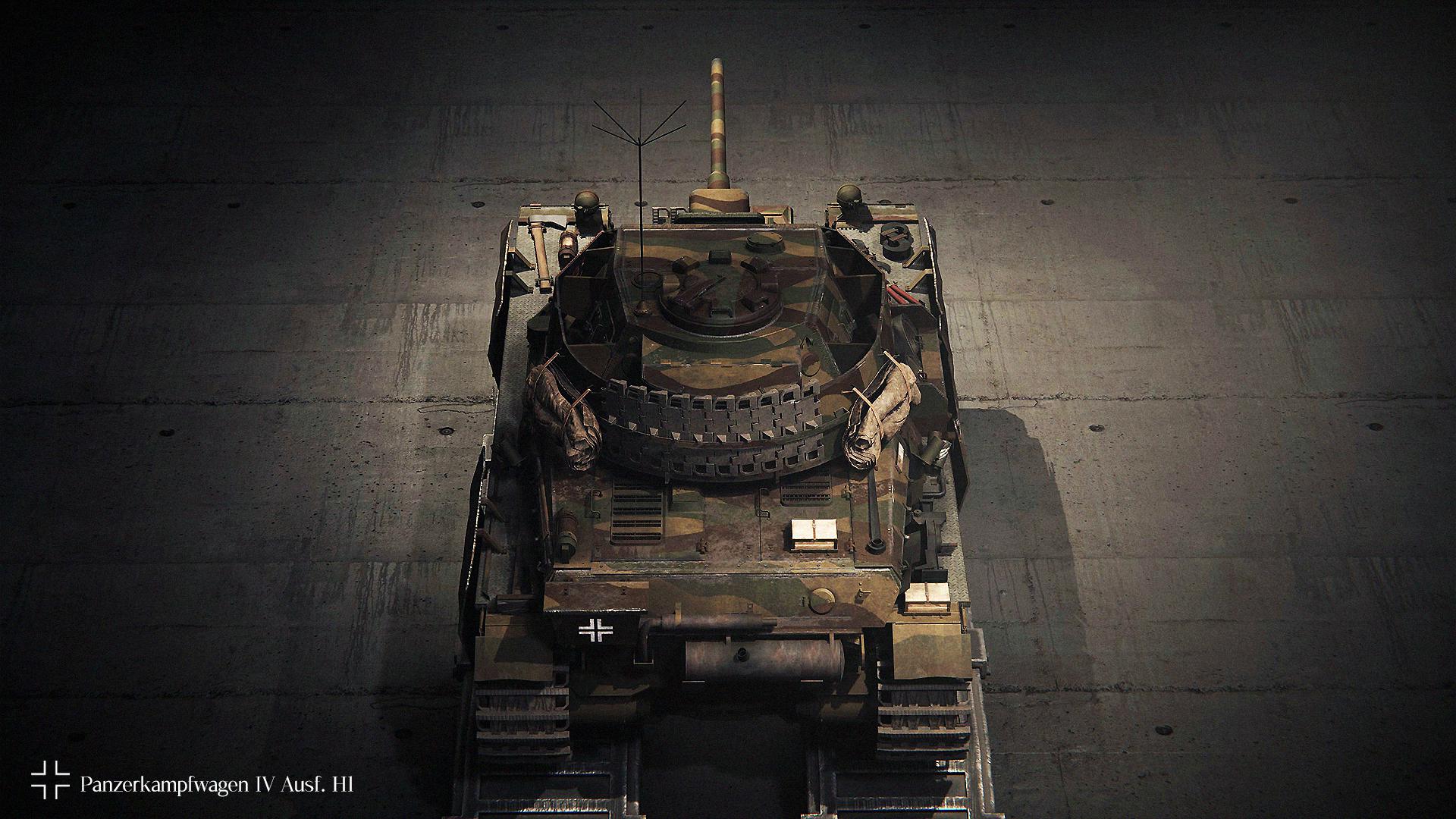
The H1’s increased weight becomes one of its most serious problems. The standard 300 hp Maybach HL 120 can no longer provide sufficient mobility.
Consequently, a tuned version of the engine producing approximately 350 hp appears in 1944. Reinforced final drives and stronger suspension components are also installed.
Nevertheless, the modernized Panzer IV cannot match the Panther’s mobility. Its maximum speed is approximately 35 km/h, with considerably lower speeds over rough terrain.
On the other hand, its relatively compact dimensions, simpler maintenance, and use of established manufacturing technologies prove to be significant advantages.
Even so, reliability problems cannot be completely eliminated. The increased weight places additional stress on the running gear, meaning that the first production vehicles require further modifications.
Technical Specifications of the Pz.Kpfw. IV Ausf. H1
Estimated specifications of the alternative production vehicle of 1944:
-
Combat weight — 32 tonnes.
-
Crew — 5.
-
Hull length — 5.9 m.
-
Overall length, including gun — approximately 8.8 m.
-
Width — 3.2 m.
-
Height — 2.65 m.
-
Main armament — 75 mm KwK 44/1 L/70.
-
Secondary armament — two 7.92 mm MG 34 machine guns.
-
Ammunition capacity — 60 rounds.
-
Frontal hull armor — 60 mm at a steep angle.
-
Frontal turret armor — up to 100 mm.
-
Hull side armor — 40 mm.
-
Additional armor skirts — 20 mm.
-
Engine — uprated Maybach HL 120.
-
Engine power — 350 hp.
-
Maximum speed — 35 km/h.
-
Road range — approximately 180 km.
-
Suspension — reinforced leaf-spring suspension with wider tracks.
All the specifications listed above are estimates developed for this alternate-history scenario, not data from an actual production vehicle.
First Battles in Hungary and the Ardennes
The first production H1 tanks enter service in the summer of 1944. However, initial production rates remain low because manufacturers must master the new turret and reinforced running gear components.
By December, approximately 350 vehicles have been built.
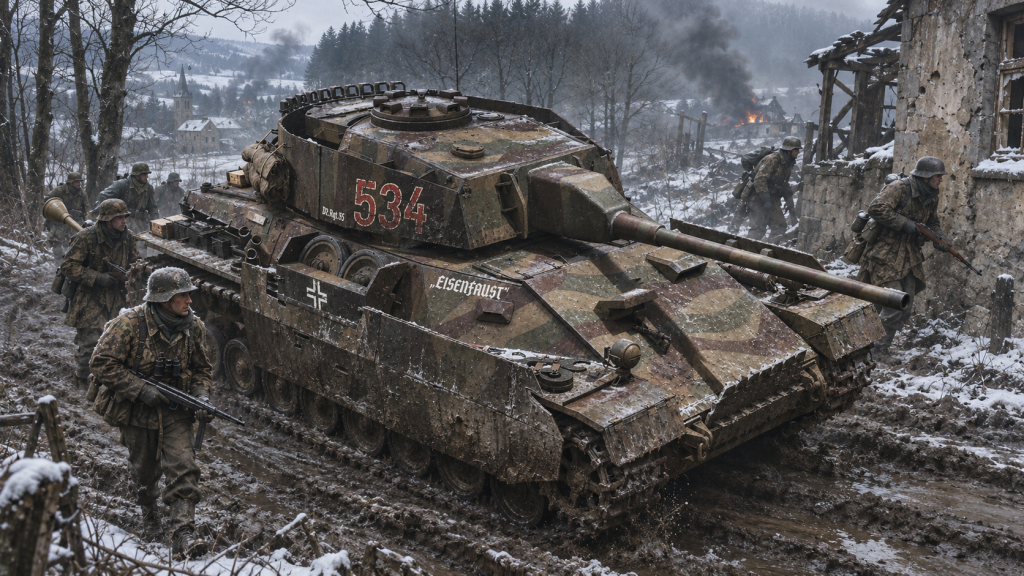
The modernized Panzer IVs see their first large-scale combat deployment during the Ardennes Offensive. Their new 75 mm gun proves dangerous to American medium tanks, while the sloped frontal armor improves their chances of surviving enemy hits.
Nevertheless, fuel shortages, destroyed bridges, and Allied air superiority limit the effectiveness of the new vehicles.
In early 1945, H1 tanks also appear in Hungary, where they participate in German attempts to relieve the besieged garrison of Budapest.
Here, the tanks operate successfully from ambushes and prepared defensive positions. However, encounters with Soviet IS-2 heavy tanks demonstrate that even the new long-barreled gun does not guarantee superiority.
By May 1945, German industry in our scenario has managed to produce approximately 900 Pz.Kpfw. IV Ausf. H1 tanks.
This is considerably more than might be expected from an entirely new vehicle of comparable complexity. However, this result is achieved primarily through the use of existing production lines.
Could the Modernized Panzer IV Have Replaced the Panther?
This brings us to the central question: would abandoning mass production of the Panther really have been a sensible decision?
On the one hand, the H1 would have been easier to manufacture, repair, and operate. It used a design already familiar to German industry while approaching the Panther in terms of firepower.
On the other hand, the modernization potential of the Pz.Kpfw. IV had been almost completely exhausted. The increased weight overloaded the running gear, internal space remained limited, and the new vehicle was still inferior to the Panther in terms of protection.
Consequently, the H1 cannot be considered a complete replacement for the heavier medium tank. Rather, it could have represented a successful compromise for mass production during a prolonged war.
Could the H1 Have Prolonged the Third Reich’s Existence?
By 1944, Germany was already in a strategically hopeless position. The Allies’ superiority in industrial production, air power, and resources left no realistic prospect of victory.
However, the introduction of a more numerous and sufficiently powerful medium tank could have complicated Allied offensive operations.
In Hungary, several hundred additional vehicles armed with long-barreled 75 mm guns would have posed a serious threat to Soviet armored formations. In the Ardennes, more reliable and compact vehicles could have enabled German units to maintain their combat effectiveness for longer.
Under certain circumstances, this might have delayed breakthroughs of individual defensive lines by several weeks. Prolonging the war by several months, however, would have required changes not only in tank production but also in fuel supplies, the air situation, and overall strategy.
The principal advantage of the alternative Pz.Kpfw. IV Ausf. H1 lay not in its absolute superiority over the Panther, but in the possibility of obtaining more combat-ready vehicles with comparable industrial resources.
Ultimately, MAFIALAA’s project clearly illustrates another possible path for German armored vehicle development: instead of continually increasing design complexity, Germany could have pursued the systematic modernization of an already established tank.
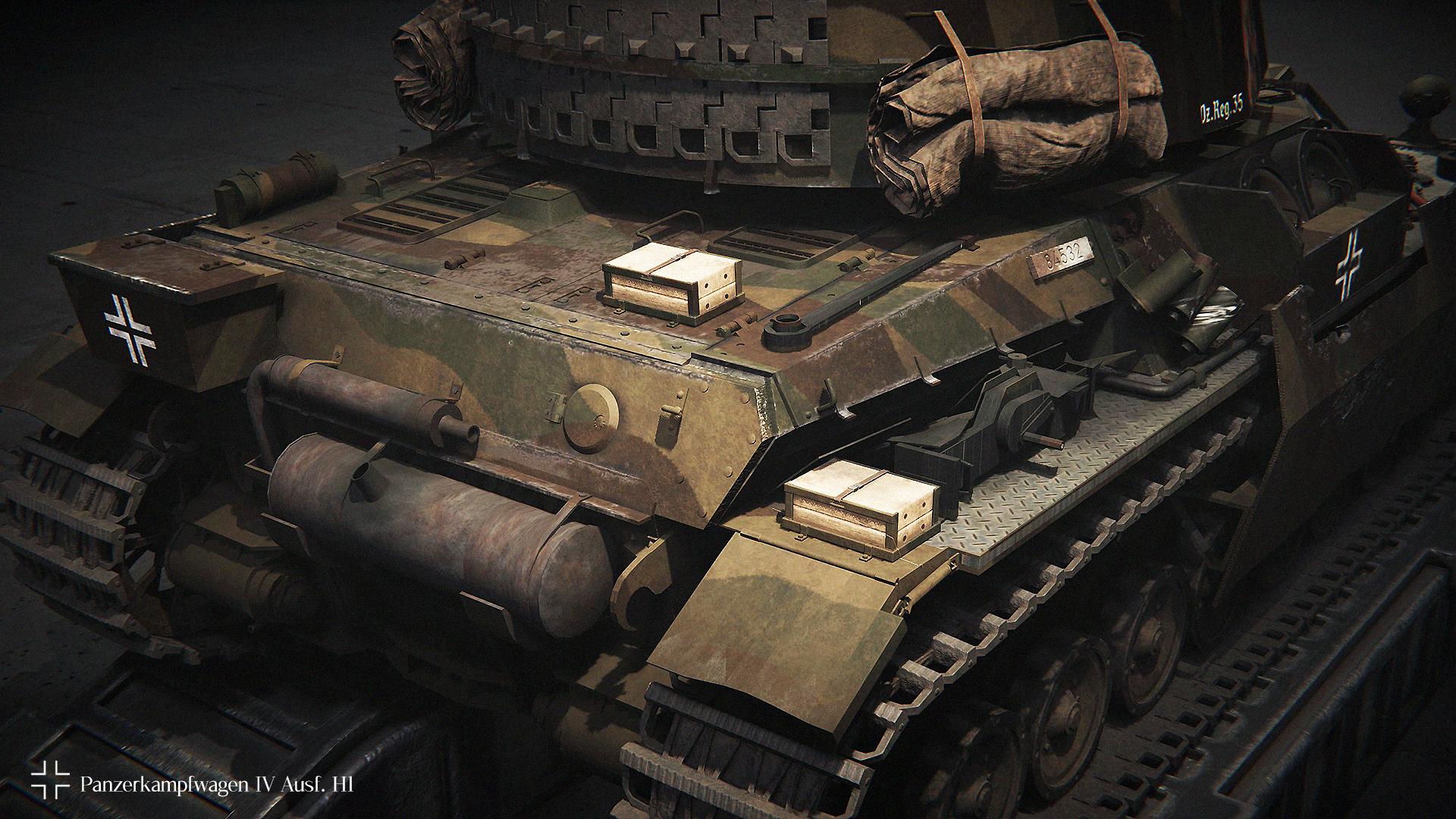
Source: MAFIALAA — Panzerkampfwagen IV Ausf. H1, Reddit / SprocketTankDesign