The AH-64 Apache is getting 30-mm shells with remote detonation—a new defense against drones

Modern battlefields are being increasingly transformed by small, inexpensive, and numerous drones. They fly high, fast, and often close to the ground, making it more difficult for traditional air defense systems to counter them. The solution to this problem is the retrofitting of existing platforms—including the legendary AH-64 Apache attack helicopter.
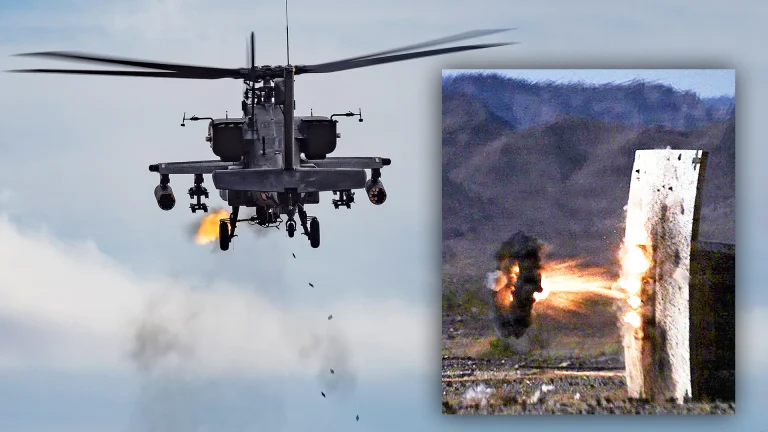
It was recently reported that this combat helicopter will be equipped with a new type of ammunition for its 30-mm cannon—proximity-fuzed rounds, designed specifically to combat drones and other small aerial targets.
Contents:
Why Is This Important?
The AH-64 Apache is one of the most widely used and effective attack helicopters in the world. Its powerful M230 Chain Gun has long proven itself in combat, engaging tanks, armored vehicles, personnel, and fortifications. But against fast-moving, small targets—such as quadcopters or tactical UAVs—traditional ammunition is not as effective: it is necessary to hit a target with a diameter of just tens of centimeters that is flying at high speed or maneuvering sharply.
Herein lies the key point: a remotely detonated munition can explode in the immediate vicinity of the target, creating a cloud of shrapnel and significantly increasing the chances of hitting it, even if a direct hit was not achieved.
What are these shells?
These are new 30-mm guided munitions with a proximity fuse (i.e., they detonate upon approach). They are equipped with a special sensor (usually radar or optical) that detects the target’s approach and triggers the warhead to detonate when the target enters the “correct” zone.
This makes them similar in principle to:
- anti-aircraft ammunition with a remote-detonation fuse,
- as well as modern ammunition for air defense assault rifles,
which explodes above the target, creating a destructive cloud of shrapnel.
For Apache, this means the helicopter gains a far more effective weapon against drones, kamikaze missiles, and even small aircraft than conventional “armor-piercing” or fragmentation rounds without remote detonation.
How It Works in Combat
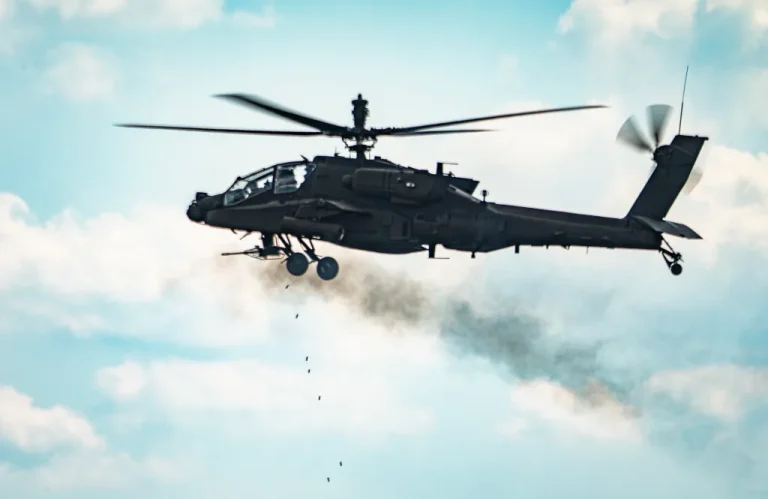
Such ammunition is particularly useful in situations where:
- the target is small and difficult to make out against the sky or the ground;
- the object rapidly changes its course and speed;
- A high density of hits is required without the need to hit the exact center of the target.
An explosion at a certain distance creates a “cloud” of shrapnel that spreads out in the space around the point of detonation. If a helicopter gun fires toward the target, this cloud significantly increases the likelihood that some of the shrapnel will intersect the trajectory of a drone or other small target.
Simply put: you don’t need to hit a small moving target directly—it’s enough to detonate the projectile nearby.
Why This Is Useful for Apache
The AH-64 is already equipped with a fire control system featuring high-precision guidance, thermal imaging and optical sensors, a laser rangefinder, and automatic target tracking algorithms. But the munition itself remained unchanged for decades: it detonates only upon impact with a target or its surface.
Now, with proximity-fused munitions, the Apache gains:
- an increased likelihood of downing high-speed UAVs;
- the ability to engage small aircraft at long ranges;
- reducing the risk of “misses” against unstable, evasive targets;
- more effective performance in environments with visual or sensory noise.
This doesn’t turn the Apache into an air defense helicopter, but it makes it a much more versatile strike platform—one capable of responding to the new threats of the 21st century.
How does this fit into the trends in drone warfare?
In many armies around the world, traditional air defense systems are running out of resources, while UAVs are becoming increasingly common and inexpensive. Rather than chasing after every little drone with expensive missiles, the following logic emerges:
“It’s better to have a cheap, fast, and effective way to take out dozens of small targets in a short amount of time.”
And proximity-fused munitions are precisely part of this logic. They make it possible to use existing platforms (helicopters, aircraft, armored vehicles) and significantly expand their “area of engagement”—not only against large targets, but also against small, fast, and numerous ones.
Conclusion
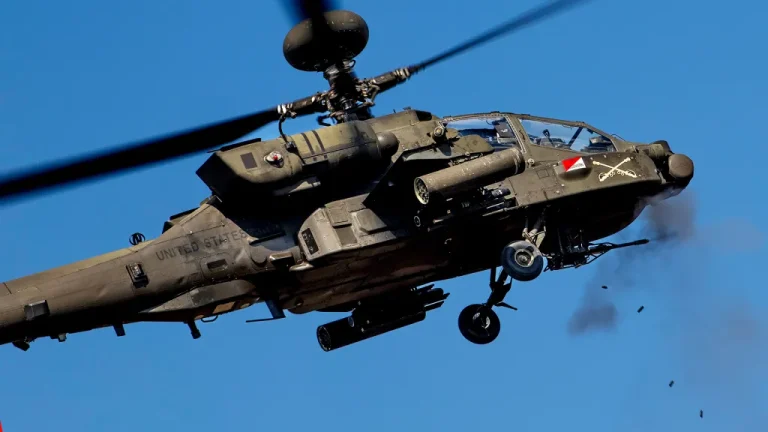
The introduction of 30-mm remote-detonation ammunition on the AH-64 Apache is more than just a cannon upgrade. It is a response to the new challenges of aerial warfare, where drones and kamikaze missiles are becoming widespread and inexpensive threats.
These shells:
- increase the probability of hitting small targets;
- reduce reliance on a single direct hit;
- increase the versatility of a traditional attack helicopter;
- are integrated into modern guidance and target designation systems.
This is exactly how militaries are adapting to the challenge posed by drones: not only by developing new air defense systems, but also by repurposing existing combat platforms so that they can effectively respond to threats that, until recently, seemed minor.