Is it really possible to "hack" the F-35's software the way you can with an iPhone? What the Dutch Minister of Defense said

Imagine a conversation about a modern fighter jet—not about its speed or armament, but about its “computer brain.” This is exactly the picture painted by Gijs Tuinman, the Dutch State Secretary for Defense, as he raised one of the most unusual topics in modern aviation: according to him, the F-35’s software could theoretically be hacked or modified, much like how users “hack” smartphones—a process known as a jailbreak.
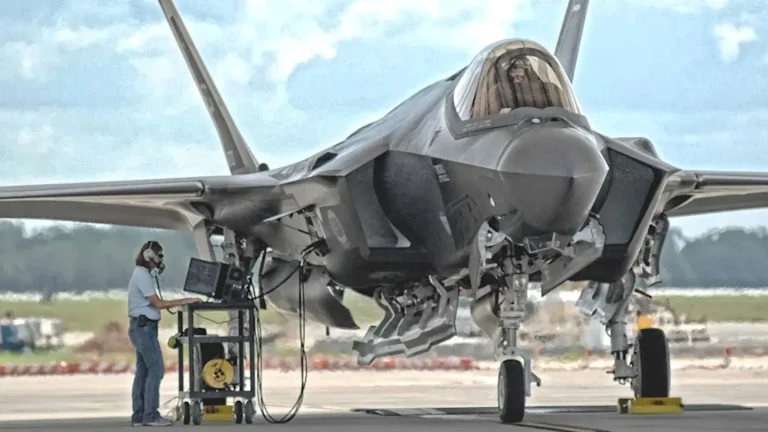
This metaphor was mentioned on the BNR Nieuwsradio podcast and sparked a heated debate—not because anyone is seriously planning to rewrite a fighter jet’s code in a school garage, but because it touches on a very real problem: the dependence of European air forces on software supplied by the United States.
Contents:
What exactly did Teynman say?
According to the Dutch politician, if the United States decides in the future to discontinue support for software updates or access to “mission data,” F-35 operators will have the technical capability to modify the aircraft’s software code “just like on an iPhone.” The phrasing was striking and caused quite a stir—even Teynman admitted that this wasn’t exactly what he should have said, but he still expressed the idea directly.
Why is this important? The F-35’s operations are based on a complex information ecosystem: a network of cloud-based updates and logistics data, originally known as the Autonomic Logistics Information System (ALIS) and now gradually being replaced by the Operational Data Integrated Network (ODIN). These networks are responsible for:
- aircraft software update,
- loading tactical “mission files,”
- Exchange of vehicle status and combat data.
Mission data isn’t just software; it’s information about the enemy’s air defense systems, optimal route calculations, sensor operating modes, and weapon systems. Without it, the F-35 loses some of its capabilities, has a much harder time adapting to rapidly changing situations, and its survivability decreases.
The “jailbreak” option—what does that mean in practice?
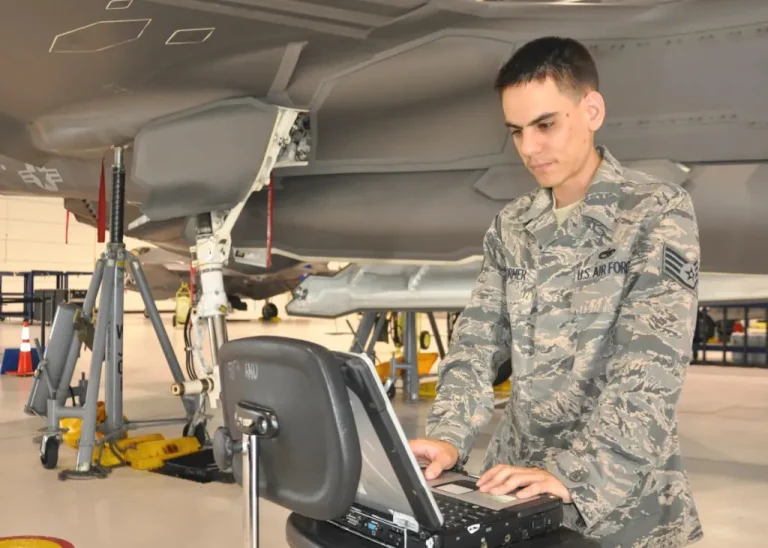
Teynman did not explain the technical mechanism, and experts emphasize that replacing the F-35’s software is not quite the same as a typical smartphone hack. The aircraft itself and its data operate on an extremely complex software framework that may contain millions of lines of code and multi-layered security systems.
Most likely, by “jailbreak,” the minister was referring to a general principle: if access to updates or data is blocked, it is possible to find a way to ensure the aircraft operates autonomously, including by developing proprietary software or circumventing the manufacturer’s restrictions—although this is technically very difficult.
There is a single instance in the history of the F-35 program where the aircraft has demonstrated significant independence from U.S. systems: the Israeli variant of the F-35, the F-35I “Adir,” is equipped with its own software, which was developed and managed by Israeli specialists under a separate agreement with the United States.
Why is this a topic for discussion?
Teynman’s statement came amid heightened diplomatic tensions between the U.S. and several European allies, including on issues of defense and strategic autonomy. Some European countries fear that political decisions in Washington could affect technical support for their military equipment, including critical updates necessary for security and combat readiness.
For this reason, discussions are underway in Europe regarding its own approaches to cybersecurity and the maintenance of complex systems such as the F-35, should it become necessary to act without U.S. consent or in the event that updates are discontinued.
But there are some nuances
It is important to understand that:
- The term “jailbreak” is used metaphorically here—as a way to describe the ability to bypass built-in restrictions;
- The technical feasibility of doing this has not been publicly confirmed or documented;
- Even a theoretical workaround could create new security risks and result in a loss of interoperability with other NATO systems.
In addition, U.S. officials, responding to such statements, emphasized that none of the operating countries has a so-called “kill switch”—a mechanism that would allow the U.S. to remotely disable the aircraft. This remains part of the official policy of the F-35 program.
What Does This Mean for Europe?
Using the iPhone as an example to illustrate his point, Teynman touched on a deeper issue: the degree of dependence on suppliers in the age of digital warfare. If ground-based network systems, updates, and tactical data are centralized, losing access to them at a critical moment could limit the combat capability of an entire fleet of aircraft.
Consequently, discussions about the possibility of the aircraft operating “off-network” or with its own software stack have become a major topic of conversation within NATO and among European nations that actively use the F-35 as their primary combat platform.
Conclusion
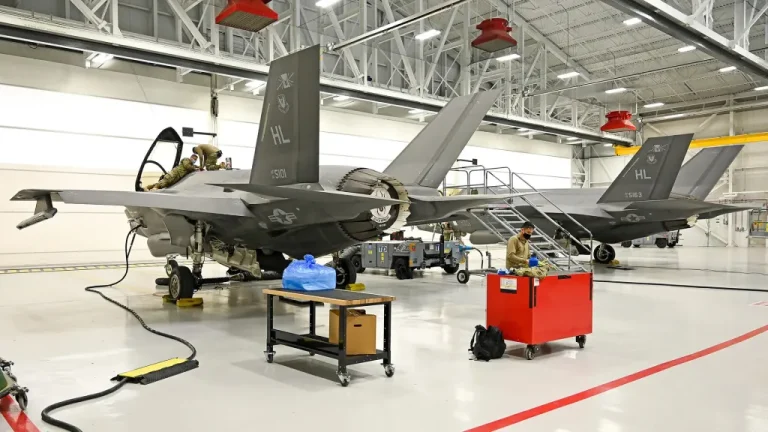
The Dutch defense minister’s statement that the F-35’s software “can be hacked just like an iPhone” is a powerful metaphor that reflects deep concerns about dependence on the supplier and over-the-air updates.
This doesn’t mean that the aircraft is easy to “break” or that its code can be rewritten overnight. But it does raise questions about:
- the autonomy of the allies,
- the strategic sustainability of military systems,
- cybersecurity at critical moments.
It is precisely this debate—about the balance between technological integration and operational independence—that may have longer-term implications for the future of military aviation.
source https://www.twz.com/air/f-35-software-could-be-jailbreaked-like-an-iphone-dutch-defense-minister