A Canopy and a Weapons Bay Door: What Could China Learn From Just Two F-35 Parts?

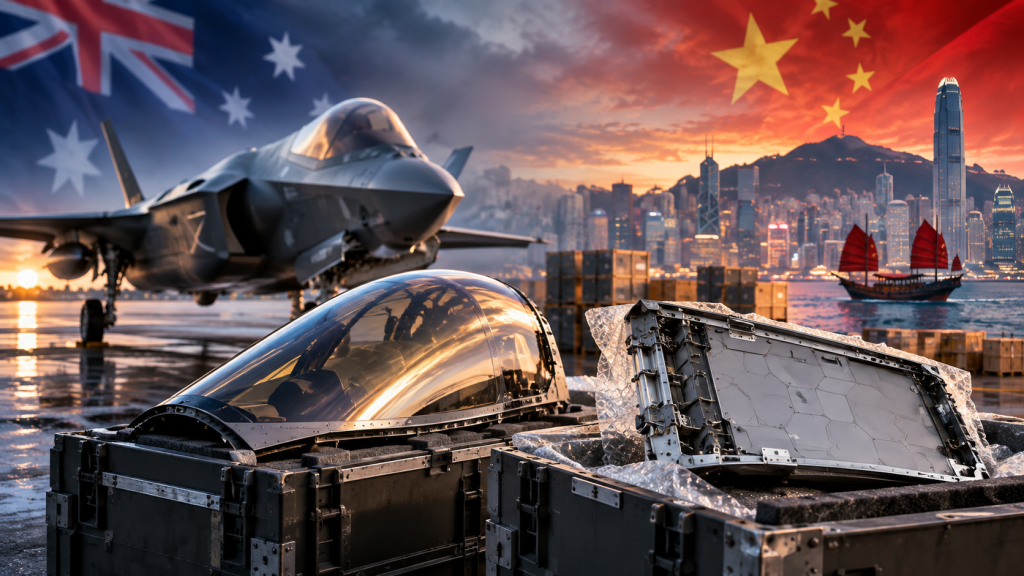
In late May 2026, a shipment left Australia for the United States that, under normal circumstances, would hardly have attracted any media attention. It contained components removed from a Royal Australian Air Force F-35A and sent back to the United States. But they never reached their intended destination. Somewhere along the international logistics chain, the route changed, and parts from one of America’s most advanced combat aircraft ended up in Hong Kong.
According to U.S. media reports, the shipment included two particularly interesting items: an F-35 canopy and an internal weapons bay door. The Pentagon launched an investigation, the F-35 Joint Program Office began efforts to recover the equipment, and Australia started examining its own part of the supply chain. The reason for the diversion has not yet been publicly established. Australian Defence Minister Richard Marles has stressed that, according to his understanding, the lost items were not sensitive equipment.
At first glance, the story sounds almost absurd. China did not obtain an F135 engine, an APG-81 radar, a mission computer, or electronic warfare equipment. It got a canopy and a door.
So why did two unserviceable aircraft parts trigger a Pentagon investigation?
The answer is much more interesting than the story of a package sent to the wrong destination. A modern stealth aircraft does not begin inside a computer. Stealth exists literally on its surface — in materials, coatings, joints, edges, manufacturing tolerances, and components that may look completely ordinary from the outside.
At the same time, the incident exposes an unexpected vulnerability in the F-35 program. Keeping thousands of these aircraft operational around the world requires a global support system in which parts are constantly moving between air bases, warehouses, repair facilities, contractors, and countries.
This creates a contradiction: one of the most technologically protected aircraft in the world is supported by one of the most globalized military logistics networks ever created.
Why Would a Single Door Be Interesting?
Stealth aircraft are often understood primarily in terms of their unusual shapes. That leads to an obvious question: if the F-35’s general appearance is already known from thousands of photographs, air shows, and public displays, what could anyone possibly learn from one weapons bay door?
But geometry is only part of the problem.
The F-35 reduces its radar signature not only through the shape of the airframe, but also through the construction of its external surfaces, the way components fit together, and the use of specialized materials. For an engineer, therefore, an actual production component can potentially be valuable even without the rest of the aircraft.
The weapons bay door is a particularly interesting example.
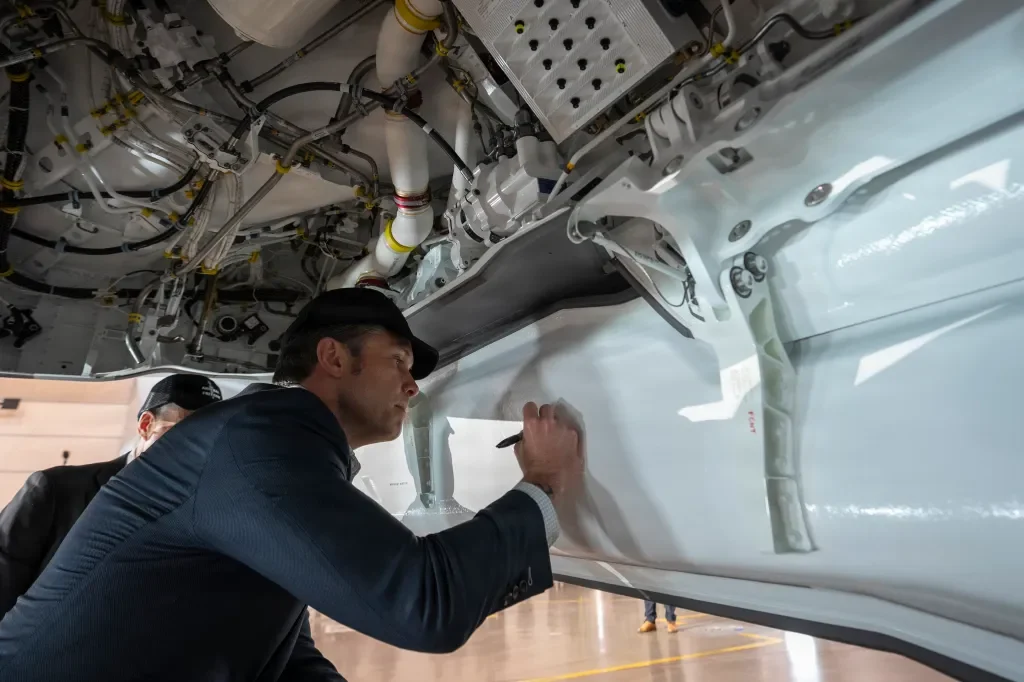
The entire purpose of internal weapons carriage is to prevent missiles and bombs from hanging beneath the wings and increasing the aircraft’s radar signature. When the bay is closed, its doors become part of the F-35’s external surface.
That means their shape, edges, fit with surrounding panels, and materials all matter.
A physical sample allows engineers to ask questions that photographs cannot answer. How is the component constructed internally? What layers does it contain? What materials were used? How are the structural elements joined? How precisely are the edges manufactured? How is the surface coating applied? And how does it deteriorate after operational use?
The War Zone has highlighted precisely this distinction: the potential value of a real component lies in the ability to examine it physically, although neither the condition of the missing parts nor the amount of useful information that could actually be extracted from them is publicly known.
That limitation is important.
Obtaining an F-35 weapons bay door does not mean obtaining the secret of F-35 stealth.
A modern combat aircraft is a system made up of thousands of interconnected engineering solutions. Studying one component does not reveal the aircraft’s software, sensor performance, electronic warfare capabilities, or actual radar cross-section.
But even a relatively small physical sample can be useful to engineers in a different way: it can allow them to test assumptions they have already made.
The Canopy May Be Even More Interesting
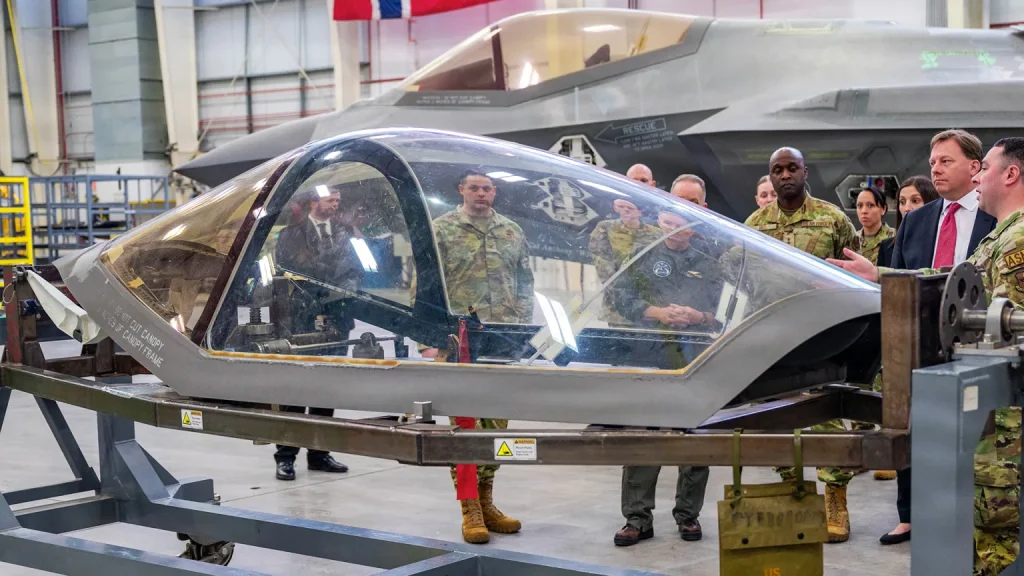
The cockpit canopy presents a different problem.
On a conventional aircraft, a transparent canopy primarily has to provide the pilot with good visibility, withstand aerodynamic loads, and protect the cockpit from the environment. A stealth aircraft adds another requirement.
Behind that transparent canopy is the cockpit.
And inside the cockpit are the ejection seat, instruments, structural elements, and numerous objects capable of reflecting electromagnetic energy.
Leaving the cockpit completely “transparent” to radar would therefore be undesirable.
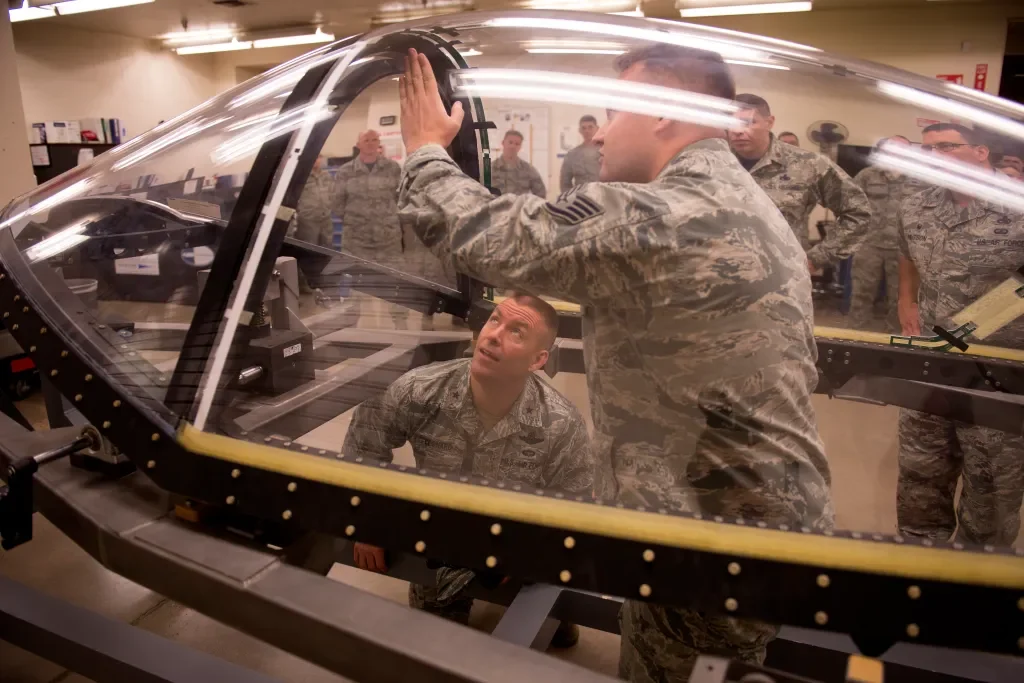
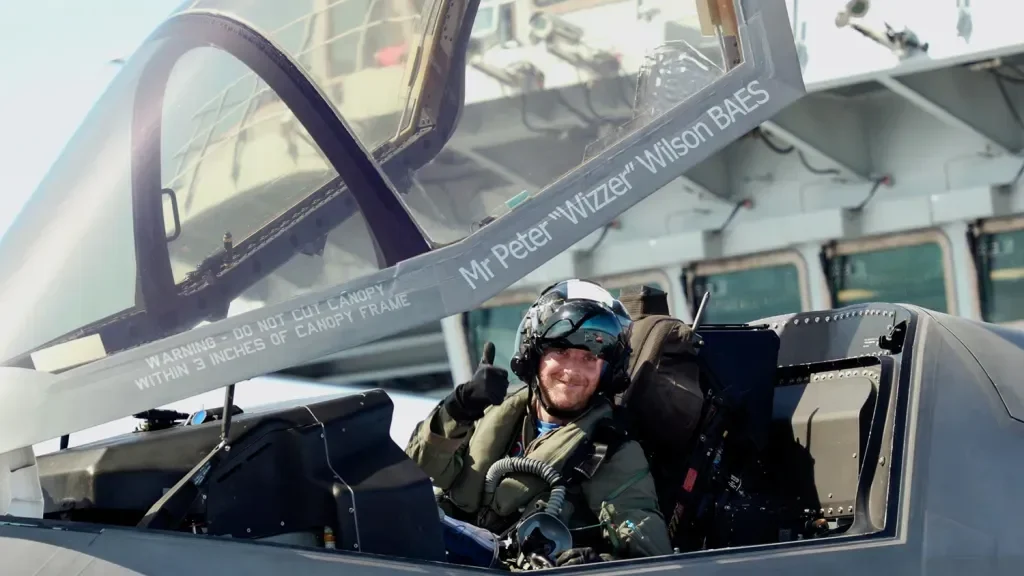
The canopy of a modern stealth aircraft consequently becomes part of the overall signature-reduction system. A physical sample could potentially reveal another set of characteristics: material structure, coatings, and electromagnetic properties.
Again, however, a clear distinction has to be made between established facts and speculation.
We do not yet know the condition of the particular Australian canopy, what coatings remained intact, or whether anyone actually had the opportunity to conduct a detailed laboratory examination. The Australian government has publicly stated that the missing components were not considered sensitive equipment. The investigation is continuing.
So the sensational conclusion that “China obtained F-35 technology” is not supported by the evidence currently available.
A more accurate description is this:
China may have obtained physical samples of two components from the external structure of a stealth aircraft.
How useful those samples might be depends on their condition, construction, and who actually gained access to them.
But the most surprising part of the story comes next.
How Could F-35 Parts Travel Halfway Around the World in the First Place?
It is easy to think of the F-35 as an American aircraft sold to allied countries.
The actual program is much more complicated.
The F-35 was designed as an international system. The aircraft is operated by several branches of the U.S. military and by a growing number of foreign users. Production of components is distributed among companies in different countries, while maintenance has gradually been organized around an international network of repair facilities, warehouses, and transportation routes.
The U.S. Government Accountability Office showed in 2019 just how extensive this system was expected to become.
The initial model was relatively straightforward: components moved between foreign operators and the United States.
The future network looked completely different.
GAO identified potentially 132 shipping routes between participating countries and 2,162 routes between F-35 sites. Components were expected to move between bases, warehouses, and repair facilities regardless of the country or company in which they originated.
That is the key to understanding the current incident.
For the F-35 program, sending a component from Australia through an international transportation network is not inherently unusual.
That is how the system is supposed to work.
Imagine hundreds of aircraft scattered across North America, Europe, Japan, and Australia. A component fails. It is removed. A serviceable replacement is available somewhere in the global pool. The defective component is sent to a specialized repair facility. Once repaired, it does not necessarily return to the same aircraft — or even the same country.
This reduces the number of expensive spare parts that each individual operator needs to keep in storage.
But there is a price.
The parts have to travel.
The F-35 Belongs to a Country. Many of Its Spare Parts Belong to a Global Pool
This is one of the more unusual features of the program.
The U.S. Air Force, Navy, Marine Corps, and foreign participants do not each maintain completely independent spare-parts systems for their individual fleets. A significant part of F-35 support revolves around a shared global pool.
GAO describes the current Global Support Solution as a network of manufacturers, commercial and government repair facilities, and base and regional warehouses around the world. Participants share many sources of support, including spare parts, repair capacity, and training.
From an economic perspective, the idea is extremely attractive.
Every air base does not need to stock a complete inventory of expensive components.
Every country does not need its own repair facility for every piece of equipment.
Instead, several specialized centers can be established, and components can be sent wherever the necessary expertise exists.
Now look at the same system from a security perspective.
Every shipment creates a route.
Every route involves documentation.
A carrier.
A warehouse.
A customs procedure.
A transit hub.
Someone entering an address.
Someone receiving the shipment.
And an information system that is supposed to know where every particular component is located.
The larger the network becomes, the more places there are where something can go wrong.
The Most Interesting Part: The Americans Warned About This Years Ago
This is where the 2026 incident becomes particularly revealing.
The problems surrounding F-35 global logistics did not appear yesterday.
In 2019, GAO published a major report on the program’s supply system and reached an uncomfortable conclusion: the network for moving spare parts was not sufficiently mature.
Representatives of the program and its contractors acknowledged that development of the global support system was roughly three to four years behind where it needed to be. One reason was that, during the earlier stages of the program, more attention had been paid to producing aircraft than to creating the system required to support them over decades of service.
According to GAO, contractors had underestimated the complexity of building a network that required export and import approvals, licenses, and specific arrangements across nearly every participating country.
There were also problems with accountability.
GAO found that the Department of Defense did not have all the necessary information about spare parts it had purchased, where they were located, and what they were worth. At the same time, thousands of components were awaiting repair, while spare-parts shortages were directly affecting aircraft readiness.
One might assume that seven years later all of this would have been completely resolved.
But in June 2026, GAO returned to the F-35 support system.
The program had clearly matured. The Pentagon was shifting some functions away from contractors and toward government organizations, North American warehousing responsibilities were being transferred to the Defense Logistics Agency, and transportation of components for deployed U.S. forces was moving toward U.S. Transportation Command.
Yet as of August 2026, GAO’s recommendation concerning proper accountability for the global spare-parts pool was still classified as only partially implemented. The watchdog was still waiting for documentation from the F-35 Joint Program Office showing that corrective measures had been fully completed.
And around the same period, the story of the Australian canopy and weapons bay door emerged.
That does not prove a direct connection between the two issues.
But the coincidence illustrates the scale of the challenge.
Managing a global pool of components for thousands of extraordinarily complex aircraft has become an engineering and organizational system in its own right — closer to running an international industrial network than maintaining a conventional military aviation unit.
Why Build Such a Complicated System at All?
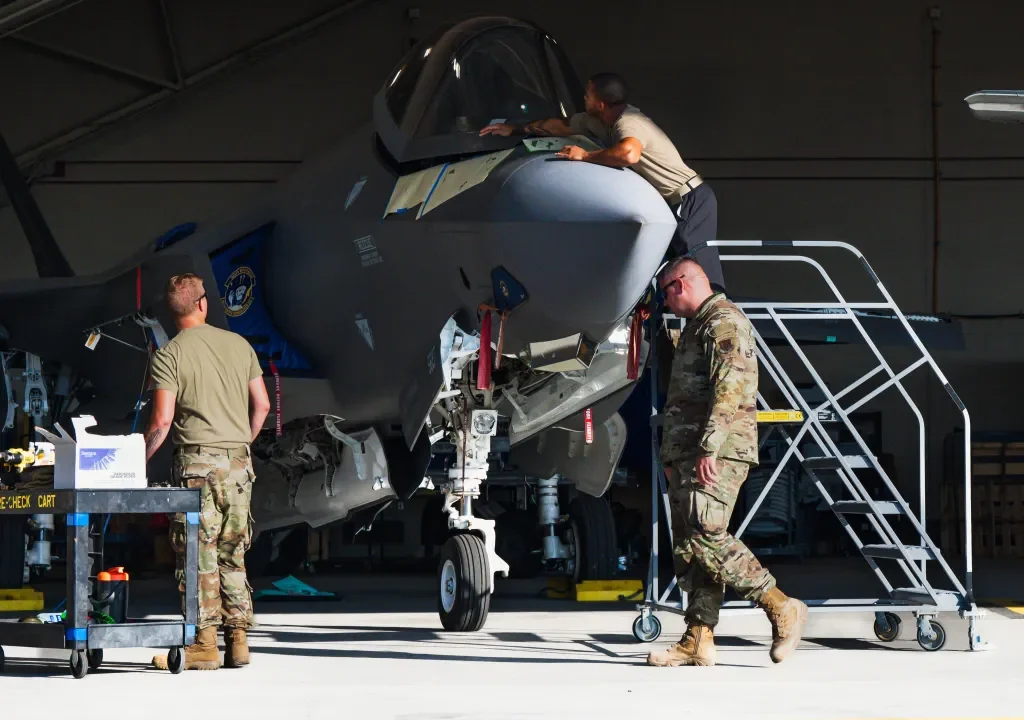
Because the alternative is extremely expensive as well.
Imagine that Australia had to support its F-35 fleet entirely on its own.
It would need domestic stocks of almost every critical spare part, repair facilities for a huge range of components, additional equipment, specialists, and a permanent reserve of expensive hardware.
Japan would need the same.
Italy.
Norway.
The Netherlands.
The United Kingdom.
Every operator would effectively have to maintain a smaller copy of the American support system.
Across a large international fleet, that would create enormous duplication.
A global pool allows resources to be distributed.
If a particular component is needed by an aircraft in Australia today, it can be sent there. Tomorrow, the same type of component might be required in Europe. It could be repaired in a third country.
But the efficiency exists precisely because the components move.
And that means it is impossible to demand that the system be both maximally global and completely static.
That is the real F-35 paradox.
The Larger the Fleet Gets, the More Complicated the Network Becomes
During the early years of the program, the problem involved a relatively small number of aircraft.
The scale is completely different today.
According to the Associated Press, the global F-35 fleet has already grown beyond 1,200 aircraft, with the fighter operated or ordered by a large number of countries.
Every additional aircraft means more flight hours.
More maintenance.
More replaced components.
More shipments.
More warehouses.
More routes.
At the same time, the support system is already under pressure. A June 2026 GAO report found that sustainment costs continue to rise while readiness remains below established goals. The Pentagon has launched a $13.7 billion effort intended to improve F-35 readiness by 2030, but GAO has also warned about limitations in the industrial base’s ability to produce sufficient quantities of spare parts.
This creates another contradiction.
The movement of components cannot simply be drastically reduced in the name of security.
Doing so could reduce aircraft readiness.
But these components also cannot be treated like ordinary commercial cargo.
Some of them are physical pieces of one of the most technologically sophisticated combat aircraft ever built.
China Did Not Get an F-35. But the Incident Still Matters
It is important not to turn a real incident into a spy thriller.
There is currently no public evidence that Chinese specialists dismantled the components, examined their coatings, or extracted classified information from them.
Nor is there evidence that the shipment was deliberately diverted as part of an intelligence operation.
Australian Defence Industry Minister Pat Conroy explicitly declined to speculate about possible espionage while the investigation remains underway.
So the claim that “China stole F-35 technology” would currently be unsupported.
But the opposite conclusion — that these were simply two useless old parts — is also too simplistic.
A physical sample of a modern aircraft component can have intelligence and engineering value precisely because it allows analysts to test things that previously could only be estimated indirectly. That is especially relevant when the components come from the external surface of a stealth aircraft.
How much value these particular parts actually had remains unknown.
That is one of the questions the investigation now has to answer.
But there is a much larger issue than the fate of two components.
The F-35’s Most Important Secret Had to Be Shipped Around the World
The story of the F-35 is usually told through its engine, stealth, radar, computing architecture, sensors, and weapons.
But a fleet numbering in the hundreds — and eventually thousands — exists only because an enormous invisible machine operates behind it.
Someone has to identify a malfunction.
Find a replacement component.
Move it to the other side of the world.
Collect the defective part.
Determine which facility can repair it.
Process the export paperwork.
Move the shipment across borders.
Return the component to the global pool.
And know where it is at every stage of that journey.
Without that system, the F-35 stops being a global combat aircraft and becomes a very expensive machine sitting on the ground waiting for a spare part.
That is why what happened to the Australian F-35 components is about more than the possible technical value of a canopy or a weapons bay door.
It exposes a fundamental contradiction at the heart of the program.
For the F-35 to operate almost anywhere in the world, its spare parts must also be capable of traveling almost anywhere in the world.
And the same global system that makes this possible inevitably creates new points of risk.
Perhaps the investigation will find that this was simply a shipping error. Perhaps it will establish that the components had little meaningful technical value and that nobody had time to examine them. Other explanations remain possible as well. Until the investigation is complete, choosing one of them would be speculation.
But one conclusion can already be drawn without speculation.
In the 21st century, protecting the secrets of a combat aircraft is no longer just a matter of guarding a design bureau, securing a server, or locking a hangar.
Sometimes the weakest point in a high-technology military program is far more mundane.
It is the shipping label on a crate that was supposed to arrive in one country — and ended up in another.