Rockets Under the Rotors: Bell Unveils an Armed Concept of the MV-75 Tiltrotor for the U.S. Marine Corps

Bell Textron has unveiled a new next-generation tiltrotor concept for the U.S. Marine Corps—this time in an armed configuration. The aircraft, based on the MV-75 Cheyenne II design, is shown carrying anti-ship cruise missiles and other munitions.
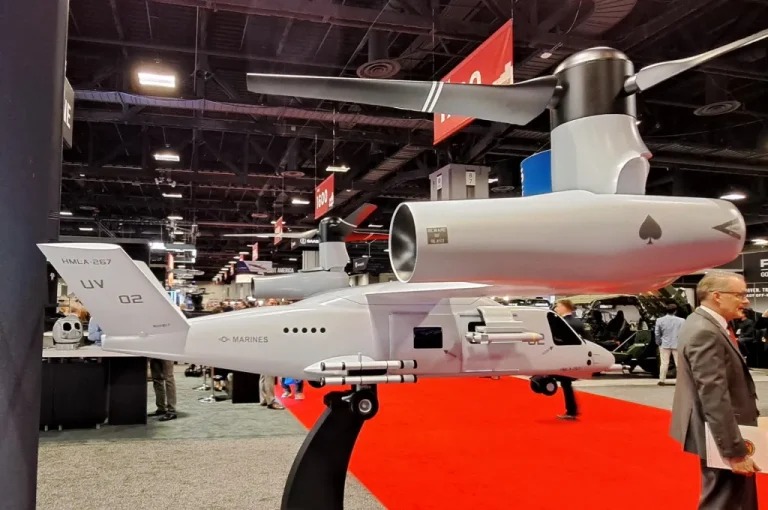
The demonstration is taking place at the Modern Day Marine exhibition in Washington, D.C., where a scale model painted in the colors of the Marine Corps’ 267th Light Attack Helicopter Squadron is on display. It is this unit that currently operates the AH-1Z Viper and UH-1Y Venom—the aircraft for which a replacement is being sought.
Against this backdrop, the command is stating outright:
all possible options are being considered.
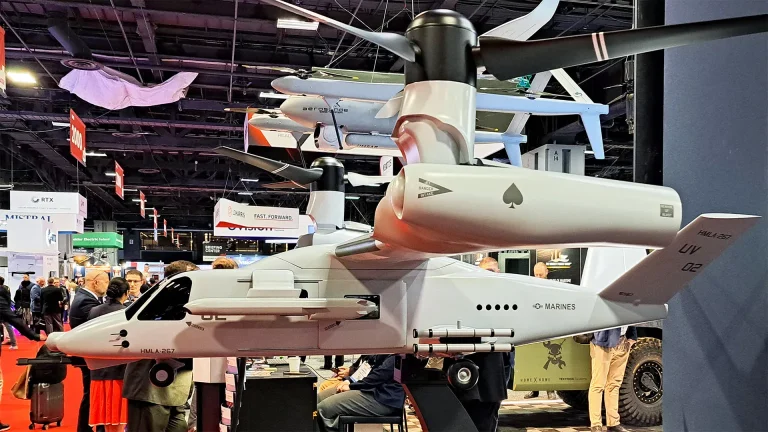
What the concept looks like
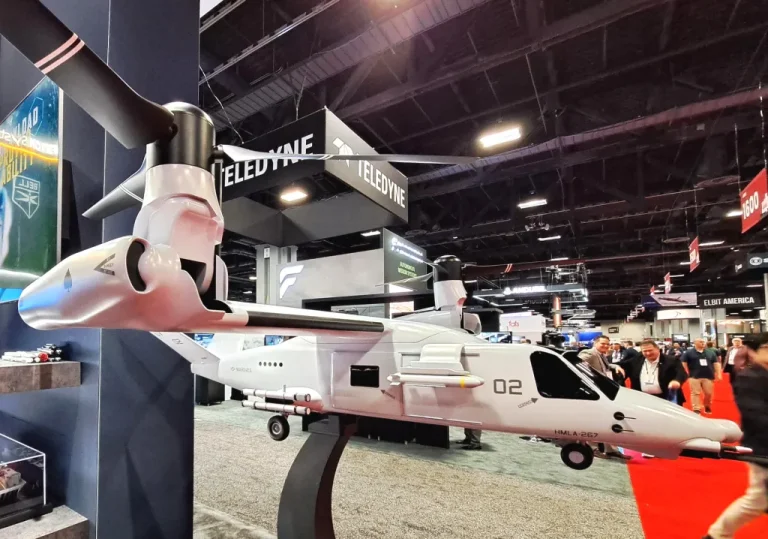
The main feature of the model shown is its armament.
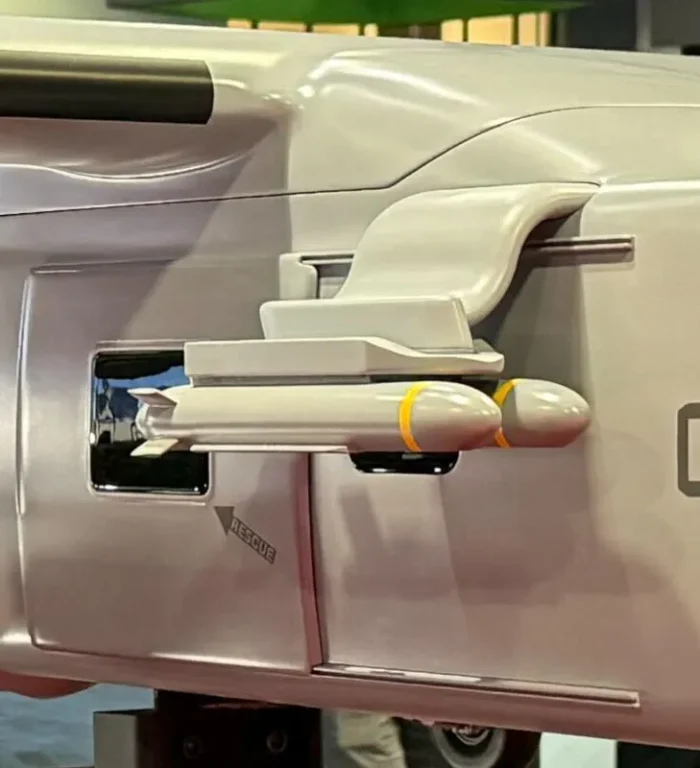
The tiltrotor was equipped with short wings featuring pylons located on either side of the front section of the fuselage. The primary weapons are mounted on these pylons.
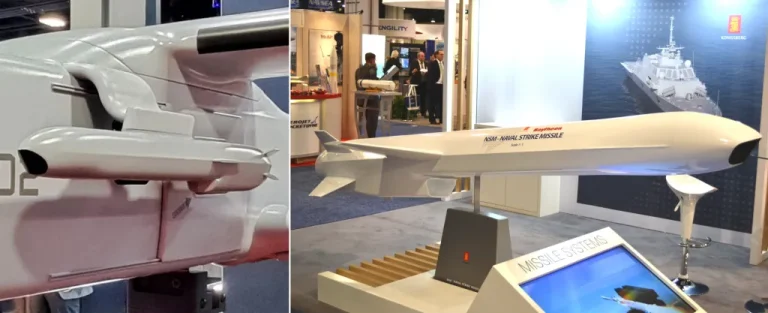
On the left is an anti-ship missile system—the Naval Strike Missile—which has already been adopted by the Marine Corps in its coastal version and is in use by the Navy.
On the right are two more compact missiles that embody the concept of the next-generation PASM high-precision munitions. They are based on L3Harris’s Red Wolf—a lightweight and relatively inexpensive cruise missile.
Visually, these systems also resemble Lockheed Martin’s CMMT family—versatile “missile platforms” capable of performing a variety of tasks, ranging from strike missions to electronic warfare and target simulation.
Multi-tiered armament
The concept isn’t limited to rockets mounted on pylons.
In addition, the following are provided for:
— launchers on the side fairings of the landing gear
— capability to deploy loitering munitions, such as the ALTIUS-700M
—
openings in the fuselage sides for launching drones or munitions via universal tubular launch systems
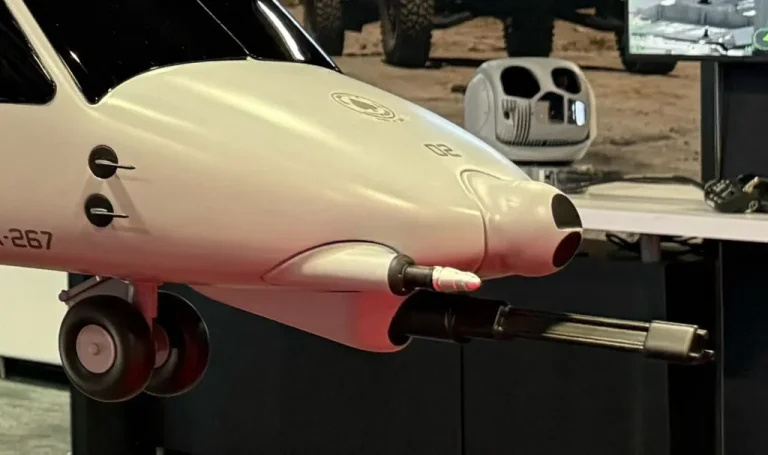
In addition, a turret with a cannon is mounted on the nose—its layout corresponds to the 20-mm M197 system used on the AH-1Z. A more advanced variant, the XM915, may be used in the future.
Thus, the configuration shown combines several types of weaponry at once:
missiles, drones, and cannons.
Sensors and Range
The model is also equipped with a sensor turret featuring electro-optical and infrared surveillance systems, as well as an in-flight refueling probe.
This directly indicates that the aircraft is designed for long-range operations. According to the company’s estimates, even in its basic configuration, the tiltrotor is capable of covering distances of over 1,000 nautical miles with a short takeoff.
This range, combined with speed, is the key difference from conventional helicopters.
Design Limitations
Despite its extensive armament, the concept also has design limitations.
As Bell points out, the placement of weapons must take into account the rotation path of the rotors. Any forward-firing ammunition must safely pass beyond the zone of operation and fit within the fuselage’s dimensions.
This imposes restrictions on the placement of pylons and the types of weapons that can be used.
Context: Search for a replacement for helicopters

The concept’s emergence is directly linked to the Future Attack Strike (FASt) program, under which the Marine Corps is defining requirements for future aviation.
We’re talking about replacing:
— AH-1Z
Viper — UH-1Y Venom
as well as the partial phasing out of missions previously carried out by the AV-8B Harrier II and the aging F/A-18C/D Hornet.
At the same time, the command emphasizes that various approaches are being considered:
— manned
aircraft— unmanned systems
— optionally manned platforms
— conventional helicopters and tiltrotors
There is no clear-cut solution yet.
This isn’t the first time something like this has happened
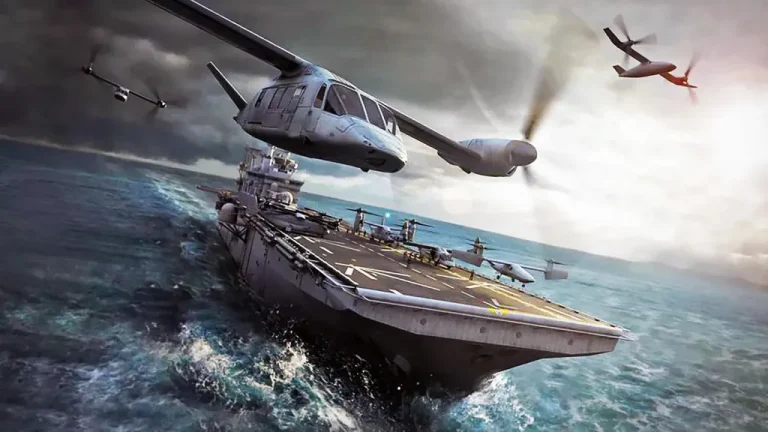
It is worth noting that Bell has previously demonstrated armed versions of the V-280/MV-75 platform, including variants for maritime operations, with both external and internal weaponry.
Even naval versions with folding wings and propellers were considered, capable of operating from ships, including Arleigh Burke-class destroyers.
They also discussed working in conjunction with the V-247 Vigilant unmanned tiltrotor aircraft.
Conclusion
The MV-75 shown here is not a finished prototype, but rather a demonstration of the platform’s capabilities.
But the demonstration itself is important:
it underscores that the tiltrotor is viewed not only as a transport vehicle, but also as a platform for strike weapons.
As the U.S. Marine Corps is still in the process of defining its requirements for future aviation, such concepts are becoming part of the discussion.
And right now is the stage when “all options are being considered.”