A Historic Turning Point. Israel Suffers Its First Defeat in the War Against the Arabs—What Lies Ahead for the Middle East?

Since its founding in 1948, Israel has been constantly at war with its Arab neighbors. In these wars, it has faced true giants—such as Egypt and Syria—whose populations are ten or more times larger than Israel’s. Any one of these wars could have been Israel’s last, yet the Jewish state, not without the help of its American allies, emerged victorious in every one. This often surprised many, given that Israel’s adversaries were supported by the Soviet Union.
At the same time, neighboring Lebanon was the weakest of all of Israel’s adversaries, and it seemed certain that there could be no problems there. But Israel’s current military operation against not even a state, but the religious organization “Hezbollah,” is clearly not going according to plan. And everything points to Israel suffering its first defeat in history. But let’s take it one step at a time.
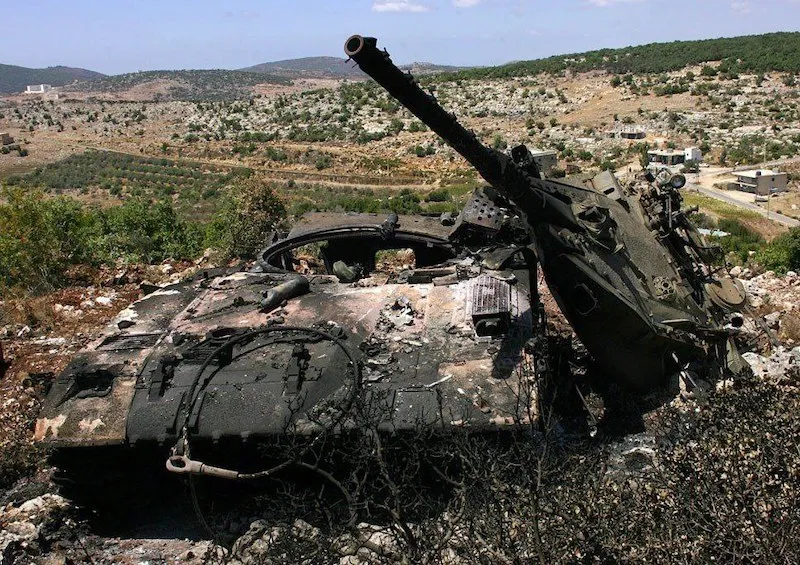
A New Enemy: Who Is “Hezbollah”?
“Hezbollah” didn’t just spring up overnight: the movement took shape in 1982 as a force opposing Israel’s occupation of Lebanon. It is a Lebanese Shiite organization that relies on support from Iran—more specifically, the Islamic Revolutionary Guard Corps. Throughout the Syrian civil war, Hezbollah fought on Assad’s side, which provided it with diverse contacts—including with Russia—and access to modern weapons.
Hezbollah’s use of unmanned aerial vehicles against the Israel Defense Forces has become one of the key elements of asymmetric tactics in the region. As of spring 2026, this trend continues to grow. Contrary to common perceptions of “homemade drones,” Hezbollah’s UAV arsenal is well-structured and draws on the Iranian school of unmanned systems. It includes Mirsad reconnaissance and strike drones, Ayoub long-range drones, Iranian Shahed loitering munitions, “drone-missile” class guided munitions Almas, as well as a large number of homemade FPV drones equipped with warheads based on high-explosive fragmentation grenades.
The division of tasks is as follows: loitering munitions are designed for precision strikes against armored vehicles, radar stations, and surveillance systems; FPV drones operate at close range in real time, maneuvering around terrain and cover; reconnaissance UAVs identify positions and provide fire support. The attacks are directed primarily at IDF personnel and equipment in southern Lebanon and at military targets in the border zone.
The Technological Solution and Its Limitations
Small drones flying at extremely low altitudes and taking advantage of the rugged mountainous terrain of southern Lebanon pose a serious challenge to traditional Israeli air defense systems. In its basic configuration, the “Iron Dome” is optimized to intercept jet-propelled projectiles and missiles, not low-flying, stealthy targets. Radars often fail to detect such targets in time; intercepting them is economically unfeasible due to the enormous cost difference between an anti-aircraft missile and a cheap drone. At the same time, the UAVs themselves successfully attack the very radars that cannot detect them.
It would be unfair to describe the situation as one-sided. Over the past two years, the IDF has deployed—and continues to expand—a whole range of anti-drone systems. These include the Iron Beam laser system, with a reported cost per shot of about two dollars; the naval version of the “Iron Dome” C-Dome, the specialized anti-drone systems Drone Dome and Skylock Dome, the Smash 2000 electro-optical sights for countering small drones, and electronic warfare systems based on Elbit and IAI platforms.
The effectiveness of this defense layer is mixed. Israeli anti-drone systems demonstrate high effectiveness against single UAVs and small groups of UAVs, but falter during massive swarms and in mountainous terrain, where optical and radar systems lose their fields of view. The Iron Beam laser, which was expected to be a “silver bullet,” is limited by weather conditions and the fire rate of a single unit—it works superbly against a single target, but not against a swarm. In other words, a technological solution exists, and it is a serious one. However, none of the systems listed fully resolves the problem, and their deployment cannot keep pace with the rapidly escalating threat posed by Hezbollah.
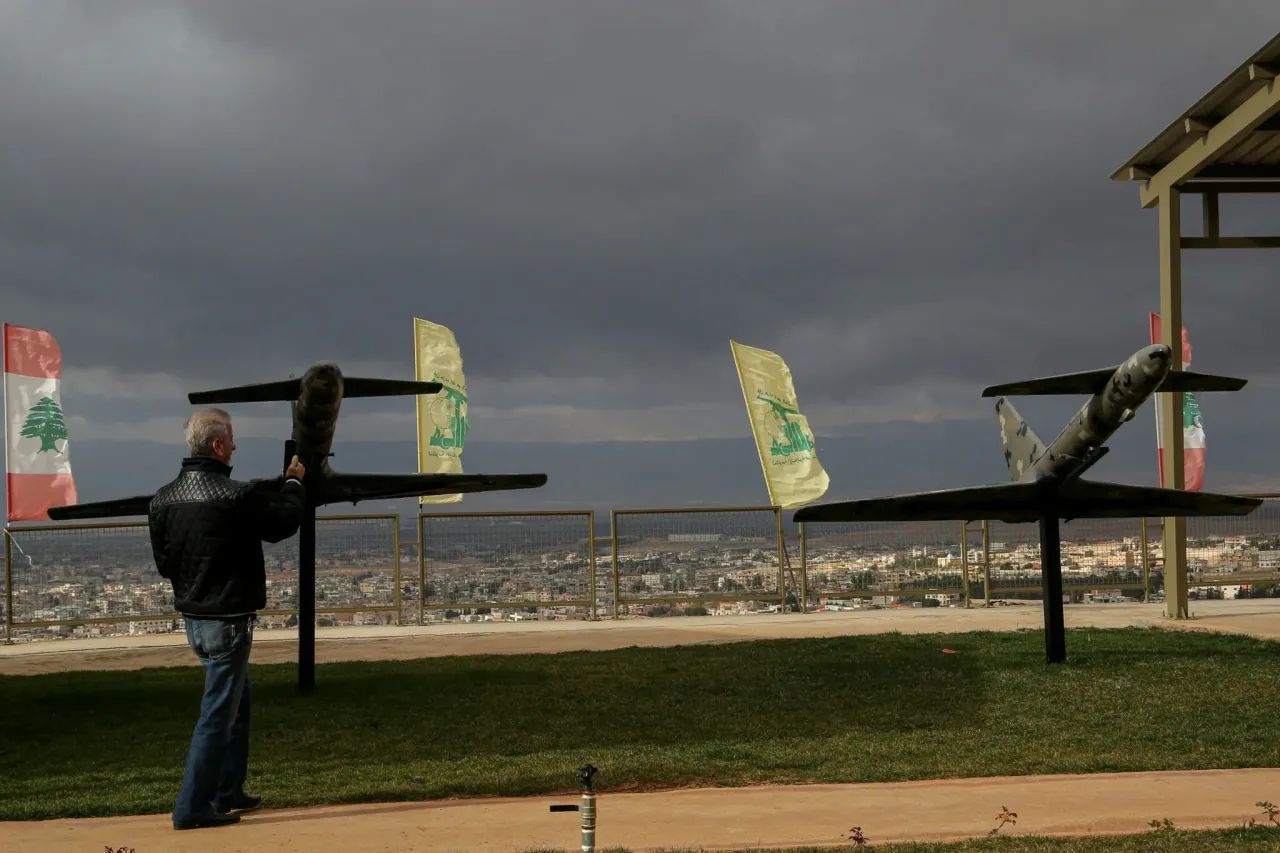
What weapons does Hezbollah have?
Contrary to the widespread perception of primitive, homemade drones, Hezbollah’s arsenal of unmanned aerial vehicles has a well-defined structure and is based on the Iranian school of UAV development:
- Mirsad-1/Mirsad-2 — reconnaissance and strike drones based on the Iranian Mohajer. They are used to gather intelligence and carry out precision strikes on targets near the border.
- Ayoub is a long-range reconnaissance drone that has been known since 2012, when one such drone penetrated deep into Israeli territory as far as the city of Dimona.
- The Shahed-101 and Shahed-131 are Iranian kamikaze drones that are being supplied to Hezbollah via Syria. Russia is using the same platforms in Ukraine under the name “Geran-2.”
- Almas is an Iranian “drone-missile” class guided projectile designed to engage armored vehicles. — Homemade and semi-homemade FPV drones, some equipped with high-explosive anti-tank warheads from RPG-7 rocket-propelled grenade launchers—these are mass-produced, inexpensive expendable weapons.
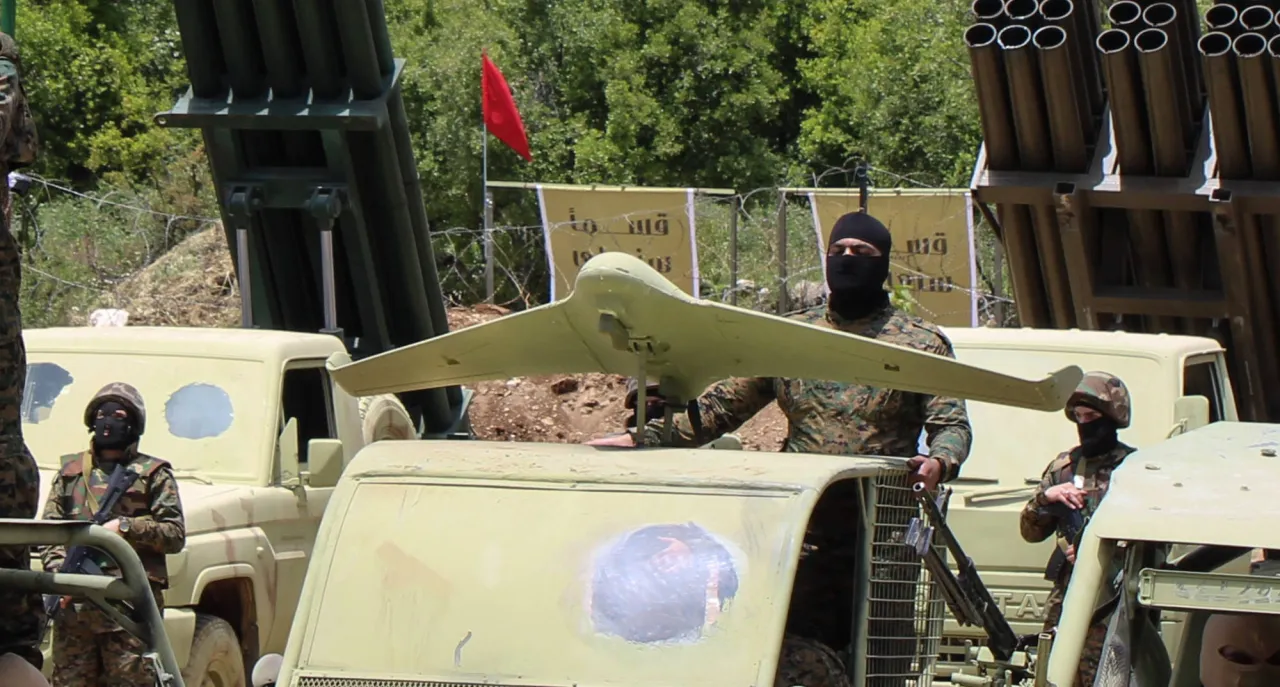
The division of responsibilities is as follows:
- Kamikaze drones—precision strikes against armored vehicles, radar stations, surveillance systems, and fortified positions.
- FPV drones—real-time engagement of targets at short ranges, using terrain and cover to bypass defenses.
- Reconnaissance UAVs—detecting enemy positions, providing fire support, and studying the performance of Israeli air defense systems.
The attacks are mainly directed at IDF personnel and equipment in southern Lebanon, as well as at military targets in the border area. This is a front-line tactic—without penetrating deep into Israeli territory. At least for now.
Small drones flying at extremely low altitudes and taking advantage of the rugged mountainous terrain of southern Lebanon pose serious challenges for Israel’s traditional air defense systems. According to Reuters and The War Zone, the standard version of the Iron Dome is designed to intercept guided projectiles and missiles, not low-flying, stealthy targets. Radars often fail to detect such targets in time; interception is economically unfeasible due to the cost difference between a Tamir anti-aircraft missile (about $50,000) and a cheap drone, which costs two to three orders of magnitude less. Furthermore, the UAVs themselves successfully attack radars that fail to detect them: a prime example was Hezbollah’s strike on an Iron Dome system position in the area of [specify location] on [specify date].
Hezbollah’s use of drones is multifaceted: drone launches are synchronized with the operations of anti-tank missile systems (primarily the “Kornet” and its Iranian copies, the Dehlavieh), artillery, and its own air defense systems (including man-portable air defense systems and Iranian short-range air defense systems). This allows them to inflict maximum damage on ground forces and restrict the Israeli army’s movements in the border zone.
Three Factors Holding Back the IDF
The first factor is Hezbollah’s asymmetric tactics. The organization has long since ceased to be merely an armed group and has evolved into a highly organized, semi-regular force that employs methods of asymmetric warfare. Southern Lebanon is a mountainous region with dense vegetation and an extensive network of underground tunnels, bunkers, and camouflaged positions that has been built up over the past twenty years. This neutralizes Israel’s advantage in armored vehicles and aviation. The strategy relies on the widespread use of inexpensive drones and modern anti-tank guided missiles. Instead of head-on clashes, the tactics involve small, mobile groups that deliver precision strikes and quickly withdraw.
The second factor is war on multiple fronts and strategic exhaustion. The IDF is forced to divide its forces between the Gaza Strip, the West Bank, and the northern front against Lebanon. This depletes resources—both material and human. The fatigue of the army and society is a separate factor: prolonged mobilization of reservists, mounting casualties, and psychological burnout. It is one thing to consider the mindset of the prime minister sending soldiers to Lebanon, and quite another to consider the mindset of the soldiers, who understand that Benjamin Netanyahu will not go into battle alongside them.
The third factor is problems with air defense and intelligence. Israel’s main disappointment is the revealed vulnerability of the “Iron Dome” against low-flying, small drones and massive rocket barrages from short ranges. Intelligence is also struggling. Israeli intelligence agencies are not always able to uncover Hezbollah’s camouflaged positions and supply chains in southern Lebanon. Hezbollah has pre-established positions there, including a tunnel system that, according to experts, surpasses Hamas’s infrastructure in Gaza in terms of length and engineering complexity.
The Human Cost: PTSD and Suicide
The problem of suicide among IDF service members is becoming increasingly acute. According to Israeli media reports, the trend is alarming: while 17 completed suicides were recorded in 2023, there were already 21 cases in 2024 and 22 cases in 2025—the highest number in the last 15 years. Over the past year and a half, 279 suicide attempts have been recorded in the IDF.
The majority of cases—both completed and attempted—involve conscripts and service members in combat units who are directly engaged in combat operations. There is a direct link to PTSD and combat stress: prolonged deployment in a conflict zone, a constant threat to one’s life, and the death of fellow soldiers—all of which have a devastating effect on mental health. This contrasts with the public image of the IDF, which is always portrayed as “an army surrounded by enemies, ready to repel any aggression.” In Israeli society and the media, accusations are being leveled against the army leadership for concealing the true scale of the problem and the losses—in order to prevent a decline in morale.
Three Scenarios for the Future
Based on the current state of affairs, three possible scenarios are emerging.
- The first is a ceasefire along the “Blue Line.” The parties maintain the status quo: Israel acknowledges that a military solution is impossible in the foreseeable future, and Hezbollah agrees to scale back the intensity of its attacks in exchange for the withdrawal of some Israeli forces. This is the most likely but least sustainable option—any provocation would shatter the fragile balance.
- The second scenario is an escalation reaching the level of the Iranian conflict. A Hezbollah strike deep into Israel, resulting in heavy casualties, would force the IDF to launch a large-scale operation, drawing Iran into the conflict. This scenario carries the risk of a regional war and direct U.S. involvement.
- The third scenario is a protracted war of attrition. The current dynamics persist for years: creeping losses, drone warfare, psychological burnout among the Israeli public, and Hezbollah’s gradual displacement of Israeli forces from the border zone. An Afghan-style scenario played out in Lebanon.
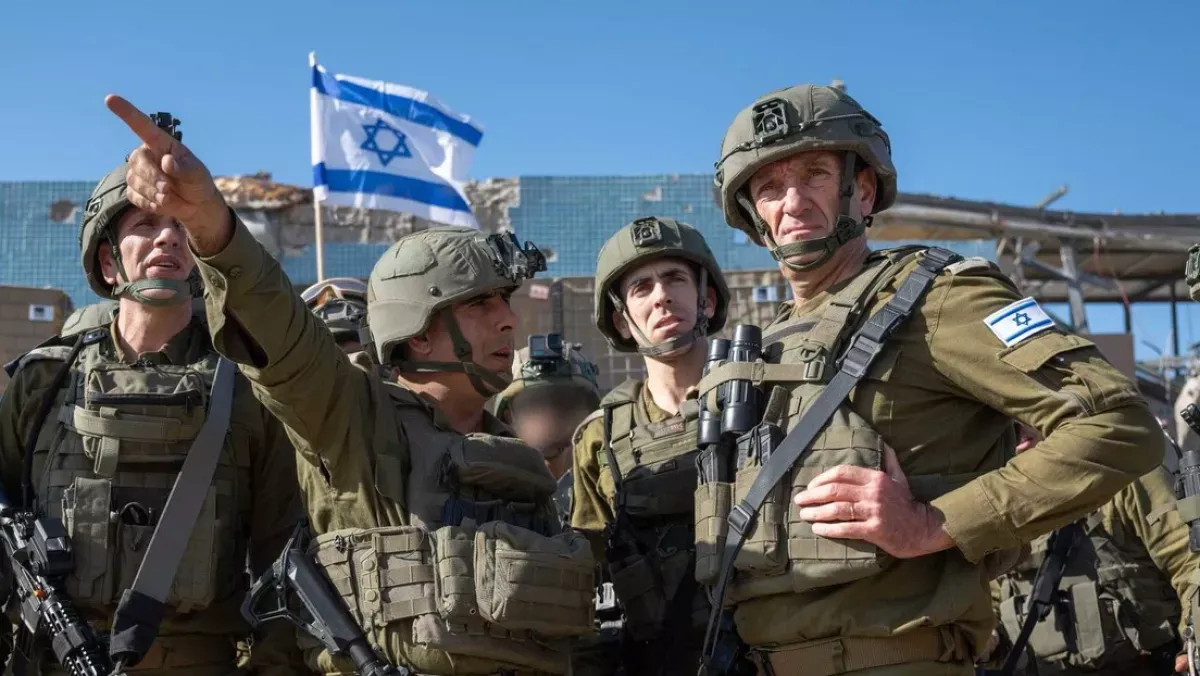
Which scenario plays out depends not so much on the IDF as on the ability of Israeli society to keep up the pace. War fatigue may prove to be a stronger factor in Israel than Tel Aviv anticipates. Under these circumstances, the very notion of a “victory” over “Hezbollah” in the military sense seems increasingly unrealistic. The Middle East stands on the threshold of a new historical turning point, the consequences of which could upend the regional balance of power for decades to come.