A Missile That Can Be Mass-Produced by the Thousands: Why the U.S. Is Developing a Cheap "Tomahawk Clone"

Modern warfare has unexpectedly run up against a wall—not in technology, but in mathematics. The world’s most advanced missiles cost millions of dollars each, and their stockpiles prove alarmingly limited when a conflict drags on. Against this backdrop, a new logic has emerged: it’s better to have a thousand “good enough” missiles than a few dozen perfect ones. It was precisely this idea that gave rise to the RAACM-ER project—a low-cost cruise missile with a range comparable to that of the “Tomahawk.”
A New Race: Not for Range, but for Price
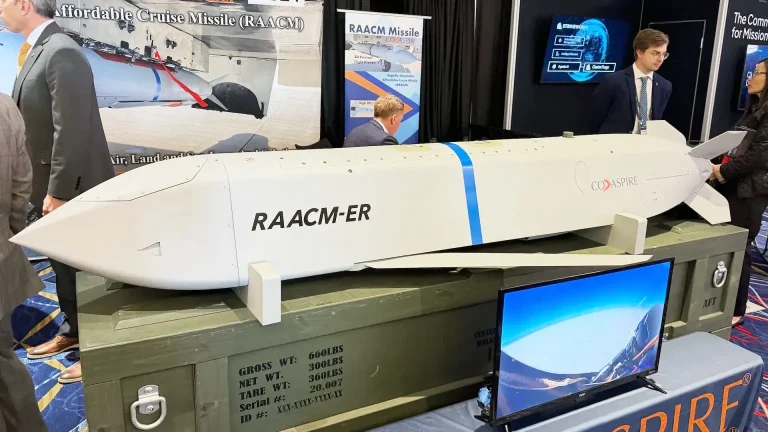
In the spring of 2026, CoAspire unveiled a new version of its missile—the RAACM-ER (Extended Range). Formally, this is an evolution of an earlier design, but in essence, it is a different weapon, created for a new reality: mass war of attrition.
The key figure that immediately stands out is a range of more than 1,000 nautical miles (about 1,850 km).
That’s already on par with heavy cruise missiles, such as the naval “Tomahawk.” But the key point here isn’t the range—it’s how much such a flight costs.
Modern missiles like the Tomahawk cost millions of dollars each. The
RAACM-ER is designed to be a fundamentally cheaper weapon—cheap enough to be mass-produced, rather than having to be used sparingly.
The Rocket as an Industrial Product
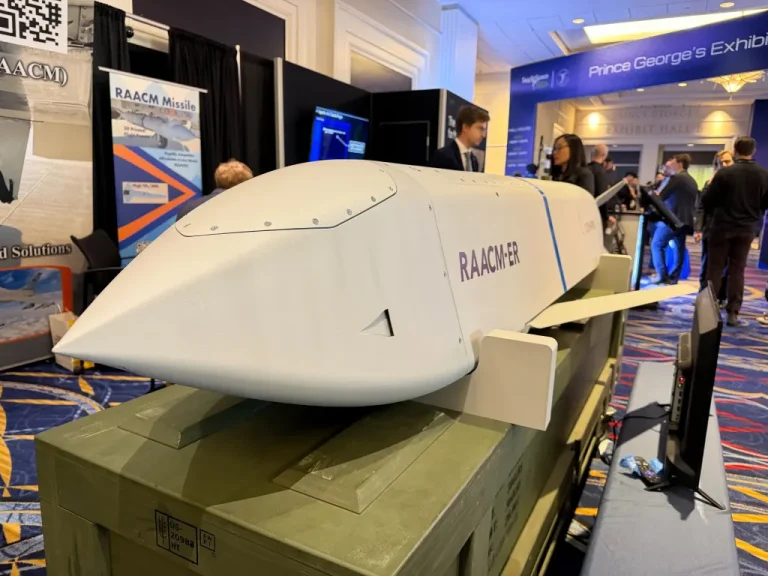
The main difference between the RAACM and conventional cruise missiles lies in the manufacturing approach. There is none of the “precision” engineering typical of high-end weapons. Instead, the focus is on modularity, simplification, and even 3D printing.
The basic idea is simple: the rocket doesn’t have to be perfect—it just has to be good enough, but cheap and quick to manufacture.
The dimensions also reflect the design concept: the original version of the RAACM was roughly comparable in size to a 500-pound JDAM aerial bomb.
This means it can be mounted on a wide range of aircraft without requiring significant modifications.
At the same time, the new version of the ER increases its fuel capacity through design optimization—which is what gives it that “Tomahawk-like” range.
Versatility as a Weapon
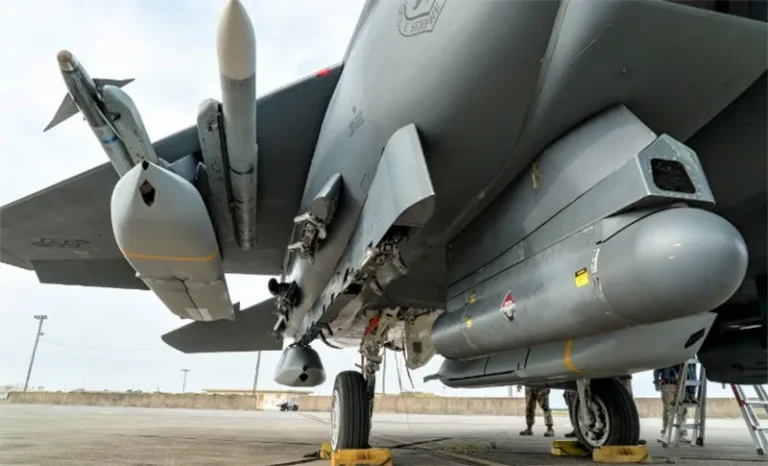
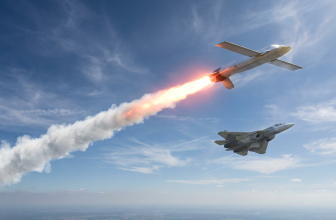
RAACM-ER is designed from the ground up to be as flexible as possible. It can be launched:
— from
aircraft — from ground-based installations —
from ships
For ground-based and sea-based launches, the rocket is equipped with an additional launch booster that ejects it from the container, after which the turbojet engine ignites.
This transforms the missile not merely into a piece of ammunition, but into a versatile component of a weapons system—a sort of “disposable tool” for various branches of the military.
Why was this even necessary?
The answer lies in recent conflicts. The widespread use of missiles and drones has revealed a simple fact: even the wealthiest armies are running out of ammunition faster than expected.
During operations in recent years, the U.S. has spent billions of dollars on missiles in just a short period of time.
And this has sent a warning signal: the current “expensive but effective” model does not scale well.
RAACM-ER is an attempt to transform the economics of war itself—to ensure that missiles can not only be launched but also quickly replenished.
Quantity vs. Quality
At the heart of the entire concept lies an almost forgotten idea: quantity, in and of itself, is a force.
Whereas the focus used to be on missiles that were as well-protected and inconspicuous as possible, a different approach is now emerging—to overwhelm the enemy’s air defense system with a large number of targets. Even if some are intercepted, the rest will get through.
The RAACM-ER isn’t quite as “invisible” as its more expensive counterparts, but it makes up for this with quantity and price.
This is no longer just a weapon—it’s part of a new tactical approach, where it’s not each individual missile that matters, but the barrage of them.
Between a drone and a “big” rocket
It is interesting to note that the RAACM-ER occupies an intermediate position between strike drones and conventional cruise missiles.
On the one hand, it’s cheaper and simpler than traditional systems.
On the other hand, it’s faster, more accurate, and potentially more resilient than most drones.
In fact, a new class of weapons is emerging—“mass-produced cruise missiles”—which are intended to fill the gap between expensive, high-precision strikes and inexpensive but vulnerable drones.
Conclusion: A New Philosophy of War
The RAACM-ER isn’t just another missile. It’s a symptom.
A sign that even the world’s most technologically advanced armies are beginning to return to the basic principles of war: supplies, production, and wearing down the enemy.
You can have the perfect weapon.
But if you don’t have enough of them, they’ll lose to the side that has more.
And it seems that developers are starting to take this into account today.