Iran Is Asking for the S-400 Again. Why Is Moscow Reluctant to Sell Its Best Air Defense System?

In early November, a meeting took place in the Kremlin that initially looked like another routine round of Russian-Iranian negotiations. Mohsen Rezaei, secretary of Iran’s Supreme National Security Council, delivered a message from the country’s supreme leader to Vladimir Putin. The official statements were deliberately cautious, mentioning regional security, bilateral relations, energy projects, and a possible gas pipeline.
According to Western media reports, however, a much more specific issue was discussed behind closed doors: the delivery of Russian S-400 surface-to-air missile systems to Iran. Tehran reportedly considers obtaining these systems one of its most important defense priorities. Yet neither Moscow nor Tehran has confirmed a contract, disclosed the number of systems requested, or even announced Russia’s agreement in principle to sell them.
This is an important distinction. Russia has not officially decided “not to supply the S-400.” What exists is persistent Iranian interest, years of negotiations, and no final agreement. The absence of a deal is what makes the story particularly interesting. Why has one of Russia’s closest strategic partners, which already operates Russian-made S-300 systems, still not received the more advanced S-400?
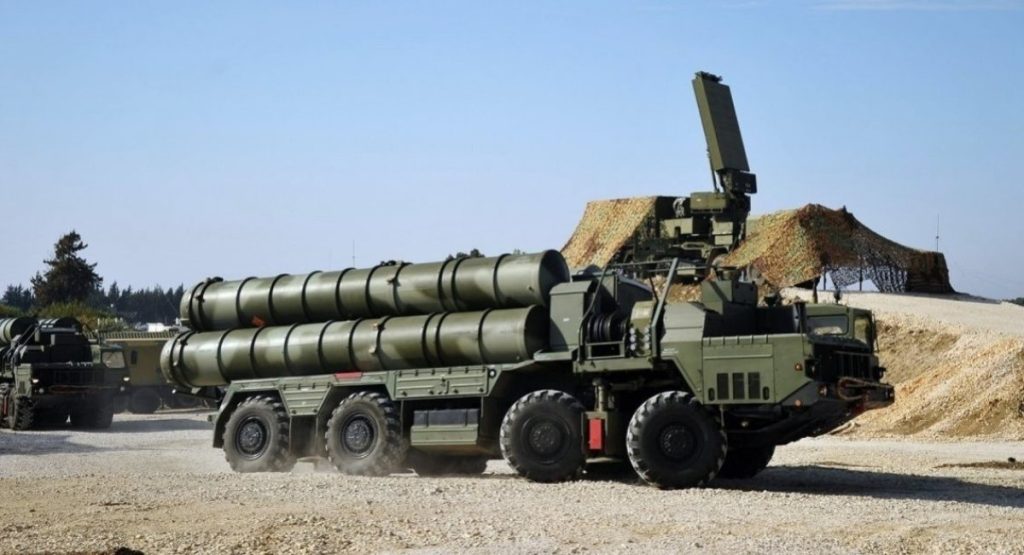
Why Iran Wants the S-400
Iran’s air defense network is a complicated mixture of Soviet, Russian, Chinese, and domestically developed systems. It includes Russian-supplied S-300PMU-2s, aging S-200s, Tor-M1 short-range systems, Chinese-derived weapons, and Iran’s own Bavar-373 long-range air defense system.
For years, Tehran has officially claimed that the Bavar-373 is comparable to the Russian S-400 and even superior to it in certain respects. Such statements sound impressive during military exhibitions and parades, but real air defense performance depends on much more than the advertised range of a missile. Radars, communications, automated command systems, crew training, resistance to electronic warfare, and integration with other weapons are no less important.
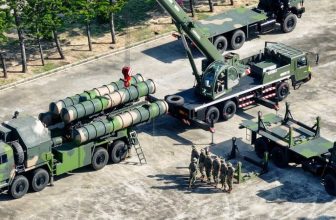
The S-400’s value does not lie solely in its missiles. It is an entire network of detection systems, command posts, radars, and launchers capable of employing several types of interceptors. Its export configuration can include the long-range 40N6E, the 48N6 family, and the smaller 9M96E2 missile.
The manufacturer claims a maximum engagement range of up to 380 kilometers against aerodynamic targets and up to 60 kilometers against ballistic threats. Actual performance depends on the type and altitude of the target, the missile selected, terrain, and the availability of external targeting data.
For Iran, the ability to threaten hostile aircraft before they can launch stand-off weapons would be particularly valuable. S-400 units could also expand the defensive perimeter around nuclear facilities, command centers, missile bases, and major industrial areas. A handful of battalions, however, could not transform Iran into an impenetrable fortress.
One Regiment Cannot Protect the Entire Country
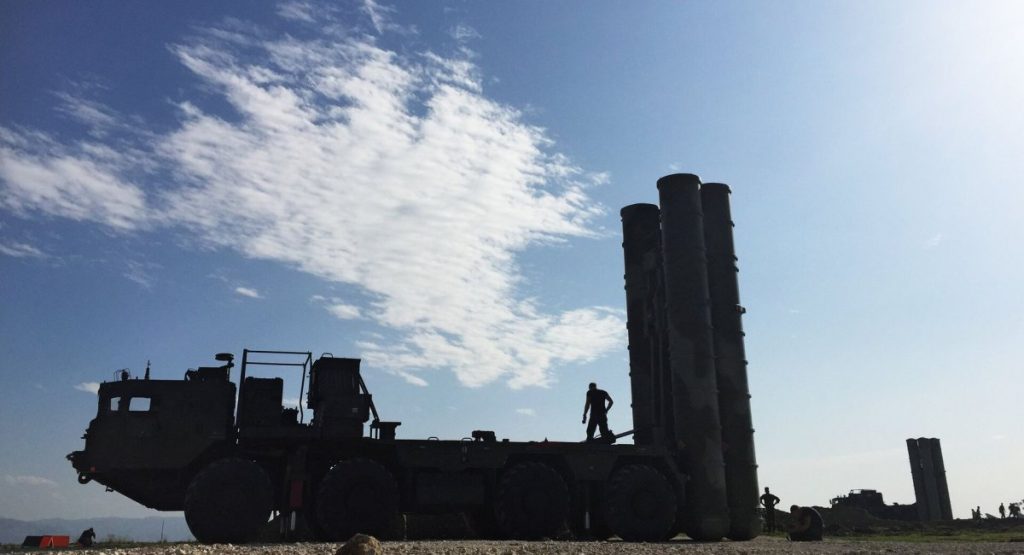
Iran covers approximately 1.65 million square kilometers. It stretches more than 2,000 kilometers from east to west, has mountainous terrain, and contains numerous military and industrial facilities requiring protection. Even a very long-range air defense system cannot control such an enormous area on its own.
The advertised engagement range of 380–400 kilometers applies mainly to high-altitude targets under favorable conditions. Against low-flying cruise missiles and drones, the effective detection and engagement range is limited by the radar horizon. Mountains, urban development, and the curvature of the Earth can conceal an aircraft or missile flying only a few dozen meters above the ground.
The S-400 therefore needs to operate as part of a layered air defense network. Heavy missiles engage targets at long range, medium-range systems such as the Buk or Iranian Khordad family cover the next defensive layer, while short-range weapons, electronic warfare systems, and decoy positions protect the S-400 launchers and radars themselves.
A single S-400 regiment might strengthen the defense of Tehran or several strategically important nuclear facilities. Protecting Iran’s principal industrial regions, Persian Gulf coastline, missile infrastructure, and command centers would require a much larger force. At that point, the purchase would cease to be a symbolic delivery and become a multibillion-dollar national program.
The S-400 Cannot Simply Be Loaded Onto a Ship
Exporting a modern air defense system is far more complicated than delivering several launchers and a few dozen missiles.
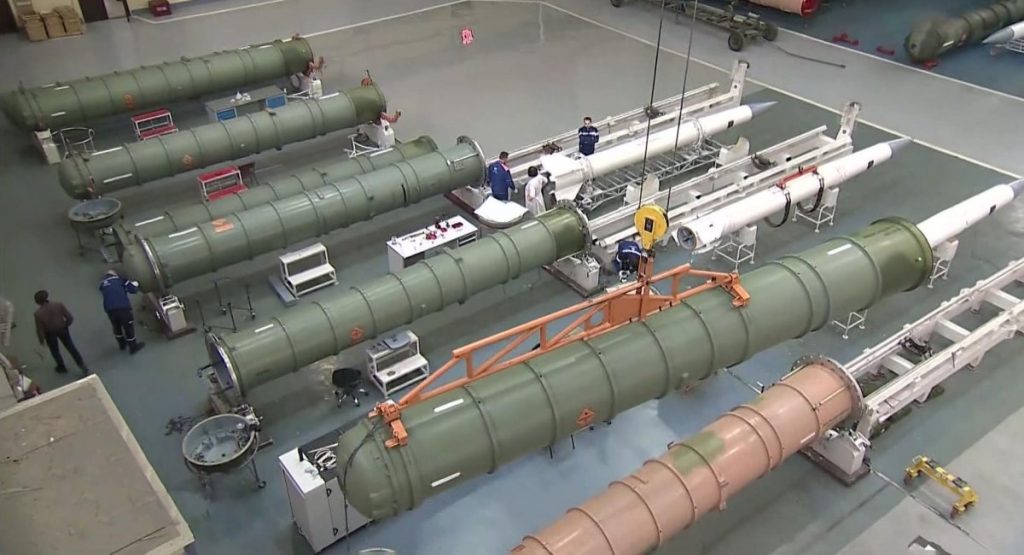
A complete package includes a command post, multiple types of radar, communication equipment, transporter-loader vehicles, generators, spare parts, maintenance facilities, and the missiles themselves. Prepared positions must be constructed, secure data links established, and the new system integrated with Iran’s existing radars and command network.
The scale of the logistical operation can be illustrated by the Turkish contract. Delivering the first batch of S-400 equipment to Turkey required more than 30 military transport aircraft flights. Before that, Turkish personnel underwent training in Russia.
Iranian crews would also need to learn how to maintain the system, operate its different missiles, and coordinate it with the country’s wider air defense network. Initial training would take months, while achieving full operational capability could require years.
In theory, the process could be accelerated by sending Russian specialists together with the systems. But that would draw Moscow far more deeply into Iran’s defense. If the S-400s entered combat, questions would immediately arise over who operated the radars, maintained the missiles, and authorized engagements.
A Politically Expensive Sale
The greatest obstacle may not be technical but political.
Russia is developing a strategic partnership with Iran, but this does not amount to a formal military alliance. The comprehensive strategic partnership agreement expands defense cooperation but contains no automatic mutual-defense commitment.
At the same time, Moscow has tried to preserve working relations with Israel, Saudi Arabia, the United Arab Emirates, and other regional powers. Selling the S-400 to Tehran would alter the military balance and almost certainly trigger pressure from countries that regard Iran as a direct threat.
For Israel, the deployment of S-400 systems around Iranian nuclear facilities would mean revising existing air operation plans, placing greater reliance on stealth aircraft, electronic warfare, and long-range stand-off weapons. For the Gulf monarchies, such a sale would signal that Moscow had moved decisively into Tehran’s camp.
As long as no contract is signed, Russia can use the possibility of an S-400 delivery as leverage in negotiations with several sides. Once the systems are transferred, that diplomatic asset is spent.
The Risk to the S-400’s Reputation
There is another, less obvious reason for Russian caution.
Iran’s air defense network is under constant observation by foreign intelligence services. Any deployed S-400 system would be studied using satellites, electronic-intelligence aircraft, and unmanned reconnaissance platforms. Potential opponents would try to record radar operating modes, identify unit structures, and locate weaknesses in communication links.
If the system were successfully bypassed, suppressed, or destroyed, the consequences would be both military and commercial. The S-400 is one of the most prominent products of Russia’s defense industry. A poor combat performance could damage its reputation far more than any advertising campaign could repair.
Delivering only a limited number of battalions would make this risk even greater. Their positions would be relatively easy to identify, while the absence of a complete layered defense would make them more vulnerable. Iran could therefore receive an expensive but highly localized shield, while Russia risked exposing the technical characteristics of its best-known export air defense system.
Russia Needs the S-400 Too
Long-range air defense systems cannot be produced overnight. Manufacturing their radars, command posts, specialized vehicles, and missiles depends on limited industrial capacity. Russia must simultaneously protect its own strategic facilities, fulfill existing export obligations, and support systems already in service.
A potential Iranian order would therefore compete not only with other foreign customers but also with Russia’s domestic requirements. A rapid delivery would probably require Moscow to transfer already manufactured equipment, divert systems intended for another customer, or change existing deployment plans. Producing an entirely new regimental set would take considerably longer.
Under these circumstances, Moscow may prefer a more limited package: additional missiles and spare parts for Iran’s existing S-300PMU-2 systems, new radar stations, electronic warfare equipment, short-range air defense systems, or assistance modernizing the national command network. Such measures could strengthen Iran without transferring a complete S-400 formation.
The Delivery Is Possible, but the Price Would Be High
Iran is clearly interested in the S-400. The system could strengthen the protection of its most important military and government facilities while raising the potential cost of any air operation against the country. Several battalions, however, would not close Iranian airspace.
An effective nationwide defense would require several regiments, hundreds of missiles, an extensive radar network, trained personnel, and short-range systems to protect the S-400 batteries themselves. Such a program could cost billions of dollars and take years to implement.
The absence of a contract does not necessarily mean that Russia has issued a final refusal. Moscow is more likely calculating what would be more valuable: transferring a strategic weapon to Iran or retaining the S-400 as a military and diplomatic bargaining chip.
As long as negotiations continue, Russia preserves its freedom of action. Iran can hope that the desired systems will eventually arrive, other regional powers must account for that possibility, and Moscow avoids making an irreversible commitment.
That may be the S-400’s greatest value in the Middle East today: it has not yet been delivered, but the possibility of its appearance is already influencing regional politics.